Ugo Rivolta European Architecture Award 2011
At the end of March 2011 the Architects Chamber of Milan announced the third edition of the Ugo Rivolta European Architecture Award with the aim of selecting the finest social housing projects built across Europe and bring them to the attention of a wider public.
Back in 2007 by its first edition the award received recommendations for forty-six works; approx the half of them were from Italy, the rest were from Austria, Spain, the Netherlands, Portugal, Switzerland and Bulgaria. The winner was Guillermo Vasquez Consuegra with his social housing complex in Rota, Càdiz.
In 2009 the second edition received recommendations for forty-two projects from twelve European Countries, extending significantly the geographical representativeness of the award.

The jury of the 2009 edition, chaired by the winner of the first one Guillermo Vàzquez Consuegra, awarded the prize to Kis Peter and Valkai Csaba – Kis Péter Építészmuterme, the young Hungarian architects who designed the “Práter Street Social Housing” in Budapest. The project shows how, with simplicity and economy of resources, architecture can respond to the demand for social housing in sensitive and high density urban areas.
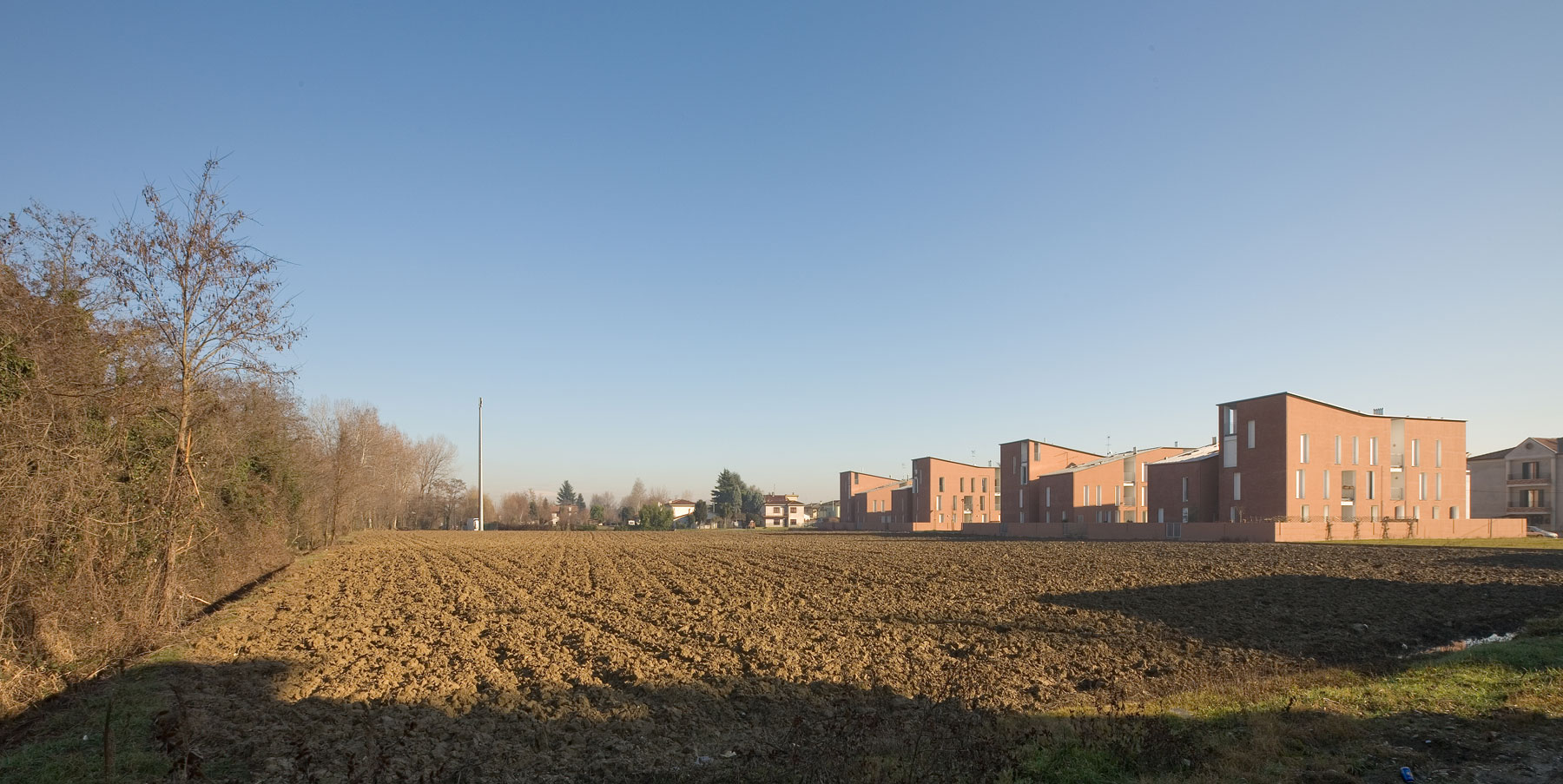
Three further projects received an honourable mention: Giorgio Macola e Adolfo Zanetti for the social housing project in Forte Gazzera (Italy);
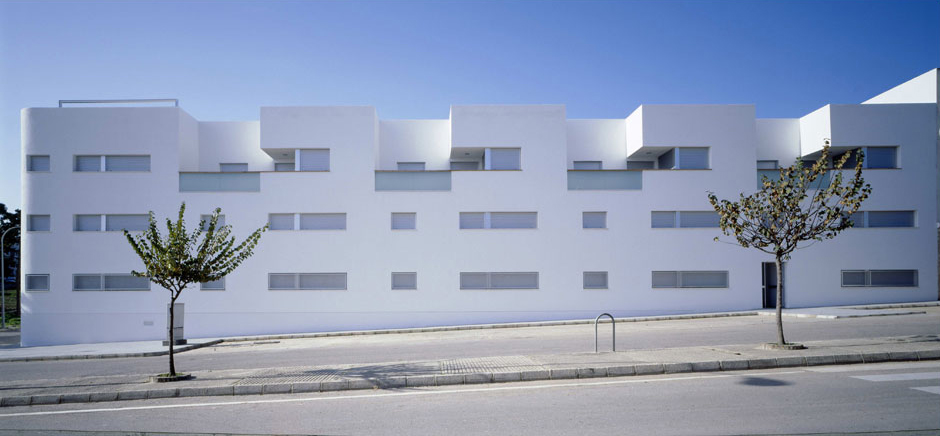
Javier Terrados Cepeda for the social dwellings in Conil de la Frontera (Spain);
 Agence Kagan Architecture for the social housing complex in Port Saint Martin, Rennes (France).
By the third edition the award confirms its intention of becoming an international point of reference for research and debate in this area, highlighting the importance of the overall quality of the built environment and the crucial role of architectural design for environmental, social and economic sustainable urban development.
Deadline for submissions to the first phase of the Award is 19th Mai 2011.
Further information on the website of the Architects’ Chamber of Milan.
Click here to download the award notice and the application form in english language.
 Présidée par Jan Olbrycht député européen, président de l’Intergroupe, le 9 février au Parlement Européen de Bruxelles en présence de 200 architectes et parlementaires. Médiation Rob Doctor président du FEPA, organisation Yvette Masson Zanussi directrice du FEPA.
Jan Olbrycht : “Avons-nous l’utilité d’une politique urbaine européenne ? Les questions urbaines doivent-elles rester de la compétence exclusive des autorités locales ?”.
Rob Docter : “les politiques ont perdu le lien à l’architecture, comment redonner place à l’architecture au sein des politiques européennes ?”. Les défaillances de la stratégie de Lisbonne ont rappelé l’importance des villes dans la création des richesses. La Commission, dans sa volonté affirmée d’aborder le programme “Europe 2020” dans les meilleures conditions, revisite la politique de subsidiarité après l’adoption des chartes successives sur les villes durables.
Philosophie, villes, développement : les aires urbaines en Europe de quoi parlons-nous ?
Thierry Paquot, citant Fernand Braudel : “la ville est un heureux accident de l’histoire”, poursuit “l’urbanisation planétaire se fait avec ou sans la ville” selon des formes qui peuvent ne pas “faire ville”. Bidonvilisation, mégapolisation, urbanisation diffuse, et enclaves résidentielles sécurisées prennent de l’ampleur. Se référant à la pensée d’Heidegger (l’homme simple mortel se doit d’être présent au monde et à autrui, installer, construire des mondes), il porte le débat sur l’urbain comme “écologie fondamentale” et nous incite à repenser la création de notre environnement (ce qui nous entoure), caractérisé par l’envahissement croissant de nos techniques.
Andrea Colantonio, chercheur à la LSE, se demande quelle diversité prennent les formalisations de la subsidiarité au sein de l’Union Européenne : l’approche intégrée reste, pour lui, la seule politique qui mette en valeur la coopération entre les pôles urbains face à la concurrence et la compétition exacerbées par le marketing des villes.
L’architecture dans les aires métropolitaines, approches créatives nouvelles, interventions
1 – Visions innovantes Trois architectes invités parlent de leur “vision”, un concept piège.
Winy Maas (MVRDV) ironie cynique aidant, se décrit comme un visionnaire, “le vert est devenu une sorte de religion” s’interrogeant sur le sens des observations contradictoires sur la place de l’écologie dans l’architecture, la politique, l’économie, la technologie et jette dans “le rêve vert” les bases d’une argumentation refondée par l’analyse et l’expérimentation.
Jacques Ferrier évoque “la ville sensuelle”, revendique la place des sens dans la conception de la ville, un paysage urbain fusionnant nature et architecture. La mégalopole devient habitable : chaque bâtiment est porteur de son propre paysage.
Jana Revedin, présidente de la Fondation LOCUS, cofondatrice du Global Award for Sustainable Architecture, veut un retour aux engagements sociétaux. La durabilité n’est pas une mode mais bien une responsabilité socio-politique, citant Ivan Illich “la convivialité doit remplacer la productivité”.
Ces contributions d’architectes révèlent de graves insuffisances dans l’analyse philosophique et politique qui pénalisent la profondeur de leurs réflexions sur l’urbain. Il faudra que Jana Revedin cite l’architecte indien B V. Doshi : “le logement doit être considéré comme un processus et non un produit” pour exprimer que les agences d’architecture pourraient, à l’heure de la globalisation, être des “entreprises d’humanité”, porteuses de valeurs universelles.
Cette première partie de la conférence reflétant bien le fossé entre catégories d’acteurs, Rudolf Niessler, commissaire européen à la Direction des politiques régionales, conclura : “les villes sont les partenaires clefs, sources de croissance intelligente et inclusive”.
Xavier Troussard, commissaire européen à la Direction éducation et culture, affirmera que l’architecture est une composante de la créativité préservant la diversité culturelle de l’Europe, l’architecte joue le rôle d’“intégrateur” stimulant créativité, culture et innovation, ressort de la dynamique économique des villes.
2 – Vers le nouvel Agenda urbain de l’UE
Henk Ovink, directeur du département national de planification des Pays-Bas, souhaite une meilleure combinaison entre visions technocratiques et ambitions culturelles, une réconciliation entre Europe, nations et villes, une décentralisation et une responsabilisation à tous niveaux de gouvernance, une expérimentation sans crainte.
Sir Albert Bore, maire de Birmingham, représentant le Comité des Régions et Michael Parkinson, exprimant toute l’importance de cet Agenda urbain européen, invitent, par une “renaissance” urbaine à surmonter les disparités économiques et sociales entre villes européennes, à une politique de “villes compétitives” concept qu’ils opposent à croissance par concurrence, à valoriser les besoins locaux et les compétences à disposition.
Puisant dans ses propres expériences de participation urbaine sous le terme de “Baukultur : équilibre entre produit et processus”, Michael Braum explique : le développement du projet urbain implique la transparence pour que toutes les parties forment un tout. La Baukultur oblige à allier transdisciplinarité professionnelle et participation encadrée pour obtenir un résultat à la hauteur de l’exigence finale de qualité.
Conclusions par les membres du Parlement européen Isabelle Durant, vice-présidente du Parlement européen (les verts) : “jusqu’à présent les questions urbaines ont été décidées par des personnes dénuées de motivation”, appelle à une gouvernance à plusieurs niveaux, une approche intégrée de gouvernement horizontal, telle la “Convention des maires” portant sur “l’urbanité”. Déplorant la faiblesse de la recherche urbaine européenne, elle prône un soutien renforcé, une formation des élus locaux : “la ville doit entrer dans les débats du Parlement”.
Joost van Iersel, du CESE : “le principe de subsidiarité a créé un vide de compétence et un vide juridique au sein de la Commission”, encourageant l’assemblée à interpeller le Comité des Régions et la Commission sur les questions urbaines. danger ce chantier de cohésion engendrer de sens pour de nombreux européens.
Le FEPA entend reconduire ces échanges, prémisses d’un lien entre architecture, ville et démocratie liées aux territoires en Europe. Architectes, urbanistes, y ont un rôle important à tenir en tant que praticiens et professions réglementées. Réaliseront-ils rapidement que plus de démocratie ne peut conduire qu’à plus d’architectures, qu’ils sont liés à ce destin politique ?
Rob Doctor le dira : “villes durables, urbanité vivable, ne seront pas le produit d’un accident, architectes et Union européenne doivent s’engager ensemble”.

Jan Olbrycht
Jan Olbrycht conclut : “le débat technique doit être organisé dans un lieu éminemment politique, les disparités vont s’aggraver en Europe. La subsidiarité fut jusqu’ici prétexte au non-engagement”. La Commission européenne s’intéresse désormais aux villes, les objectifs d’“Europe 2020” en dépendent. Les multiples contradictions de l’Europe risquent cependant de mettre en danger ce chantier de cohésion engendreur de sens pour de nombreux européens.
Le FEPA entend reconduire ces échanges, prémisses d’un lien entre architecture, ville et démocratie liées aux territoires en Europe. Architectes, urbanistes, y ont un rôle important à tenir en tant que praticiens et professions réglementées. Réaliseront-ils rapidement que plus de démocratie ne peut conduire qu’à plus d’architectures, qu’ils sont liés à ce destin politique ?
Rob Doctor le dira : “villes durables, urbanité vivable, ne seront pas le produit d’un accident, architectes et Union européenne doivent s’engager ensemble”.

Didier Prost
Article publié par Didier Prost (Culture et Société, International Unsfa) sur PA n°36 / MARS 2011
Pour plus d’informations, http://www.unsfa.com
For those who are not familiar enough with the French language and would like to know more about the conference organised by the European Forum for Architectural Policies Efap-Fepa, on their website a comprehensive documentation is available, including transcription of some contributions, a video and some related articles from the Press.
A walk around the European Parliament
Guided tours (like the ones in Sofia and Almeria) and random walks (like the one in Paris) are a rather privileged way to experience a city. It means having more time to spend in and a preferential access to some places. The usual way to experience a city is to go from one place to another for some purpose: going to work, to school, to visit something or someone, to go shopping or anything else. Some days ago I was attending a conference at the European Parliament in Brussels, a rather famous place so that it has renamed the neighborhood, the so-called European Quarter, with a lot of talk about all over Europe. Instead of waiting half an hour for a taxi I decided to walk from my hotel back and forth, to see how the city around the European Parliament looks like from the pedestrian point of view.
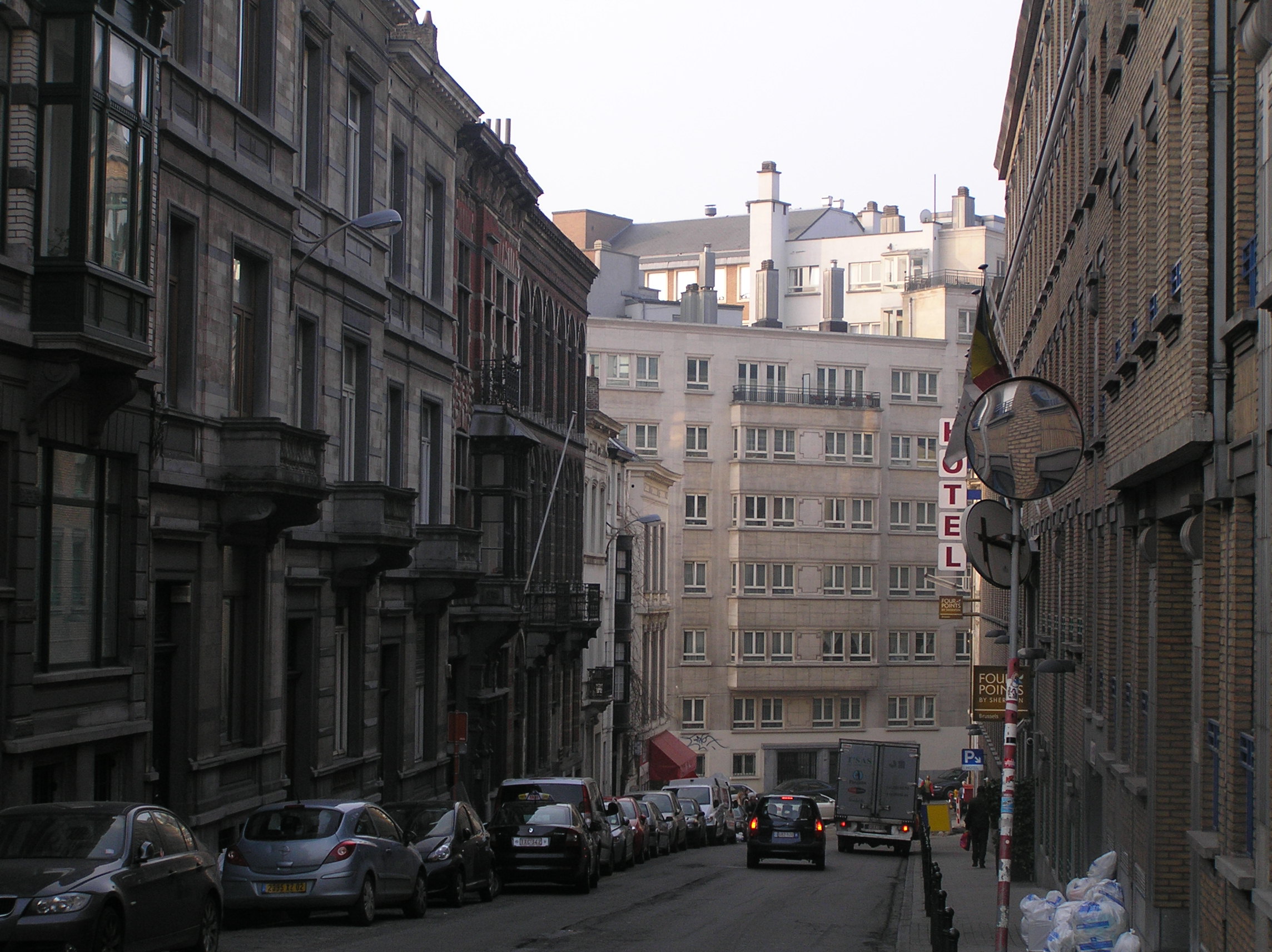
The hotel is located between the quite elegant and exclusive Avenue Louise and Ixelles, a nicely mixed neighborhood of Brussels or, more precisely, one of its 19 Communes.
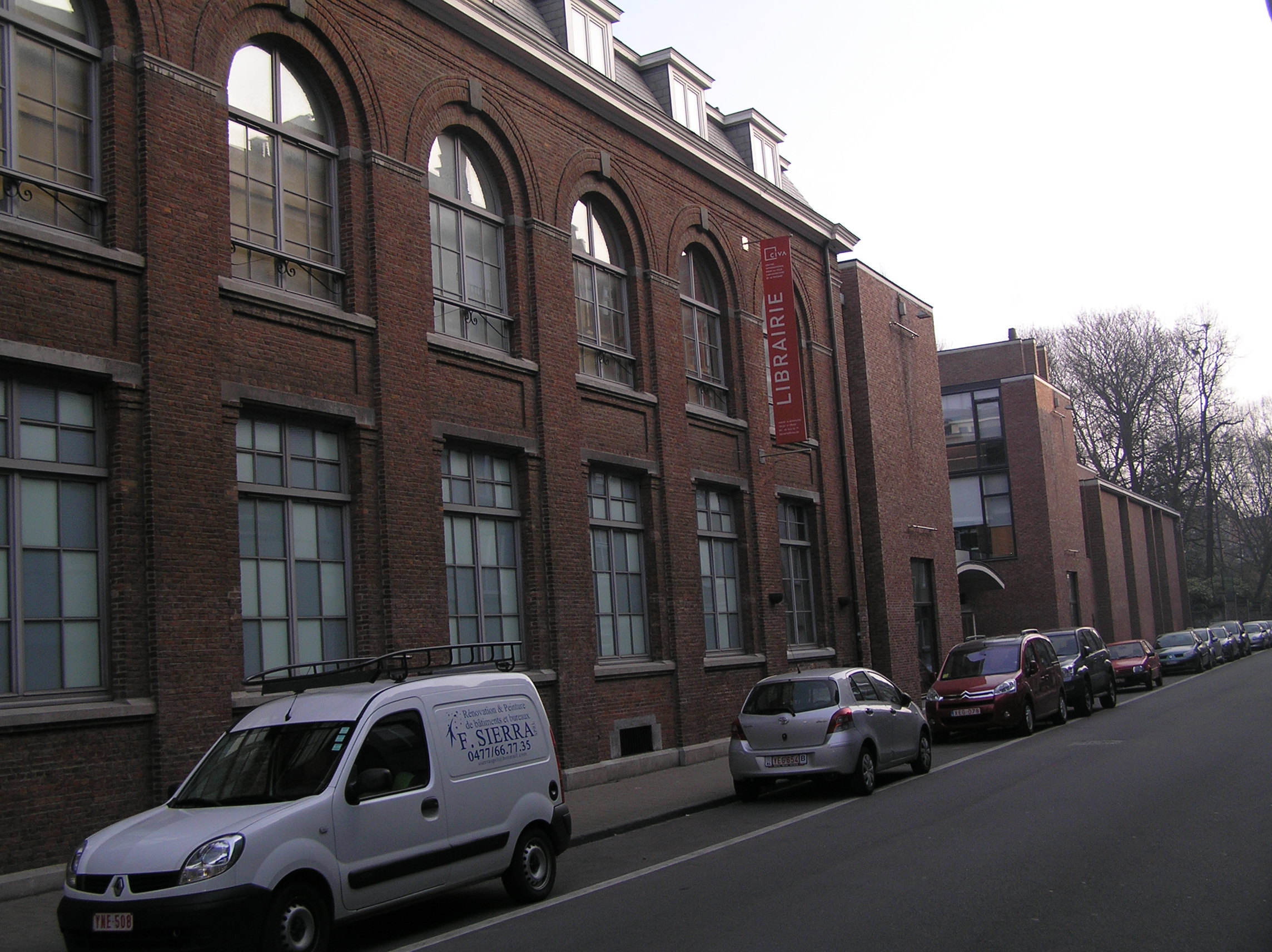 On the top of the street there is the Belgian foundation for architecture and landscape CIVA where you can easily find nice little exhibitions, have a coffee, buy at the bookstore or read some in the well furnished and open access library.

 Streets are generally clean and well maintained. Street furniture is varied: some recent pieces in art nouveau style coexist with some random fittings occupying walkways without real justification.

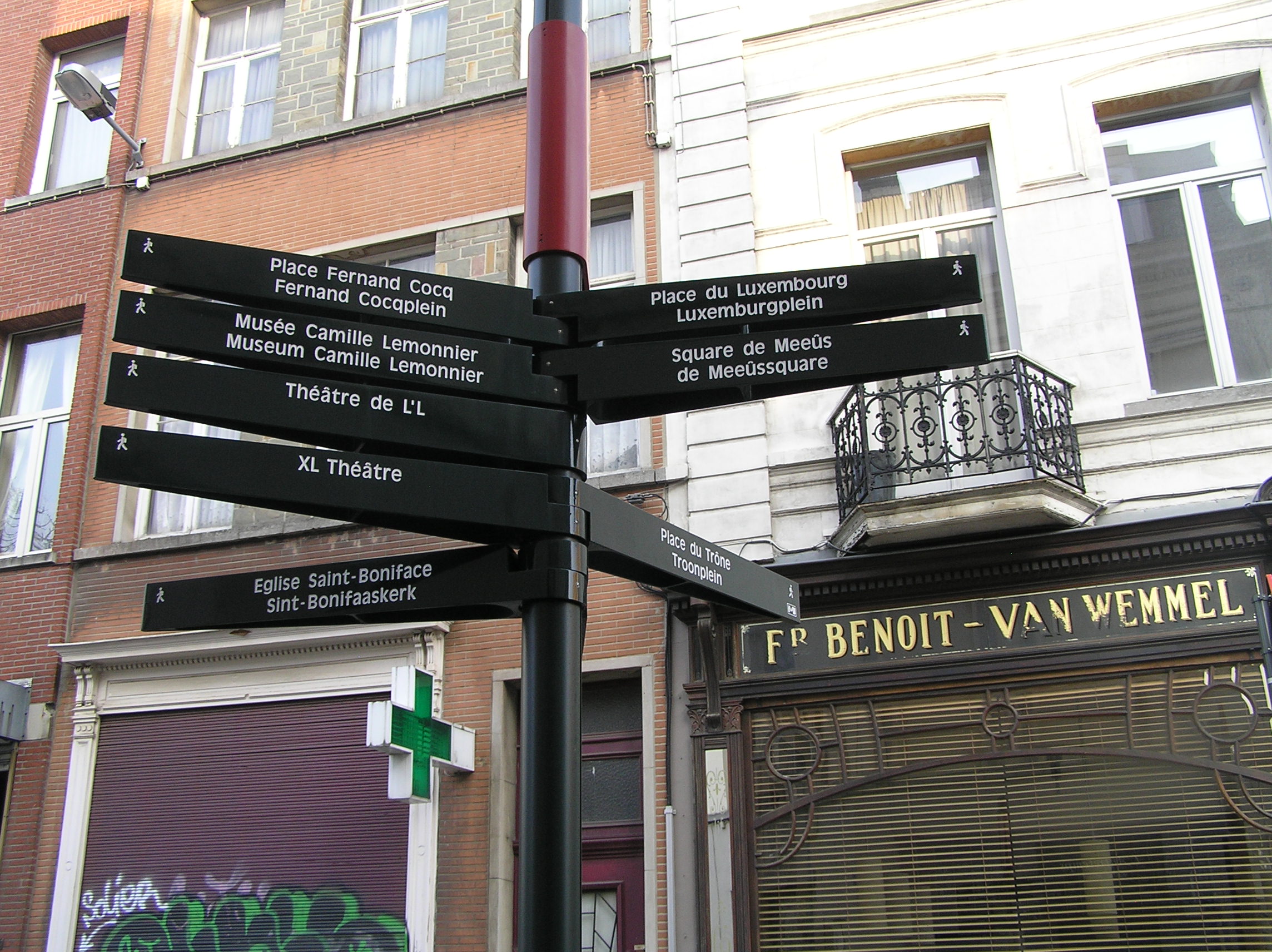
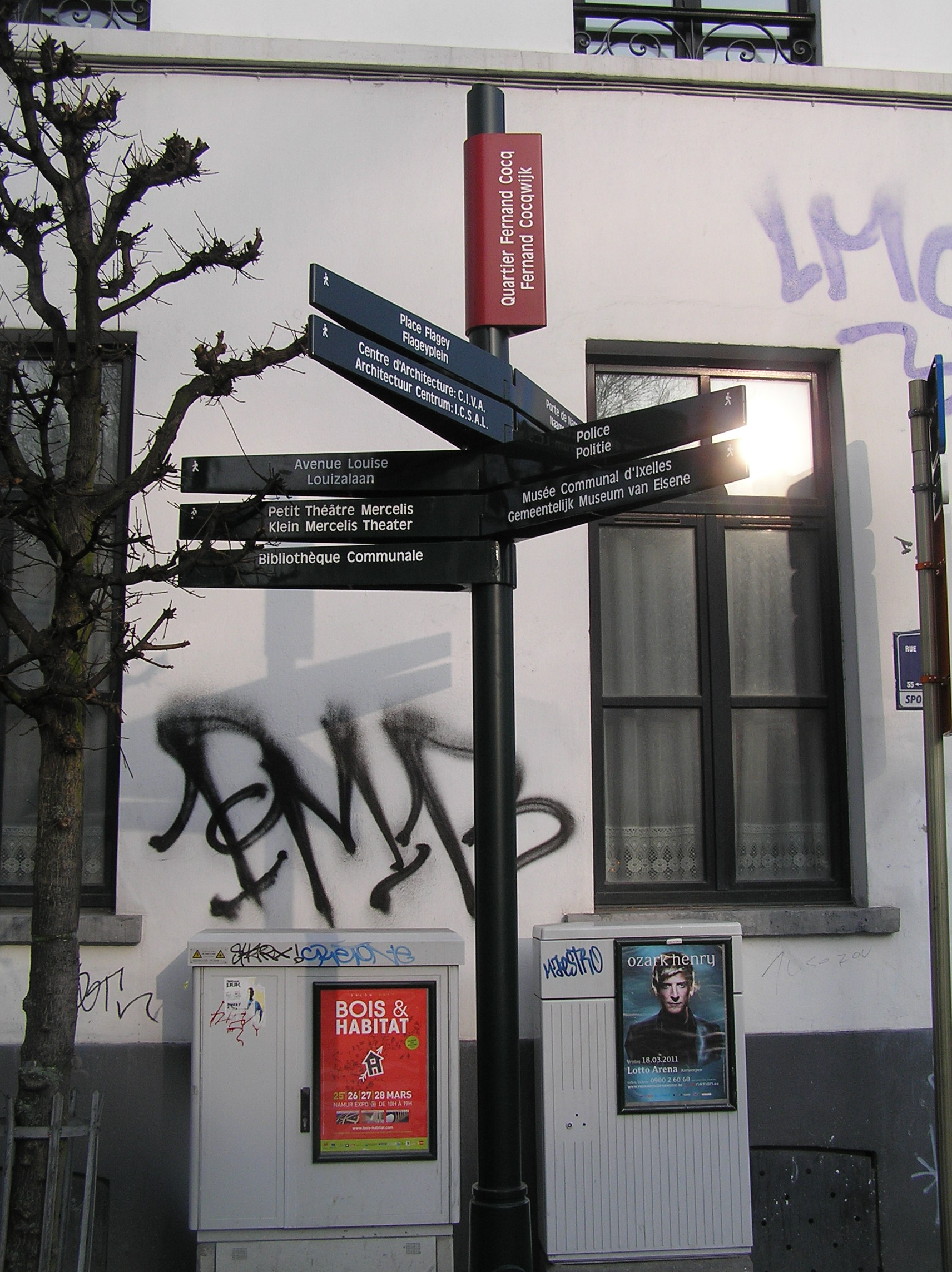 Pedestrian signs provide a great help to walking people like me. They give you the feeling to be independent in finding your own way, they are discrete, not intrusive and well placed at the main crossroads.

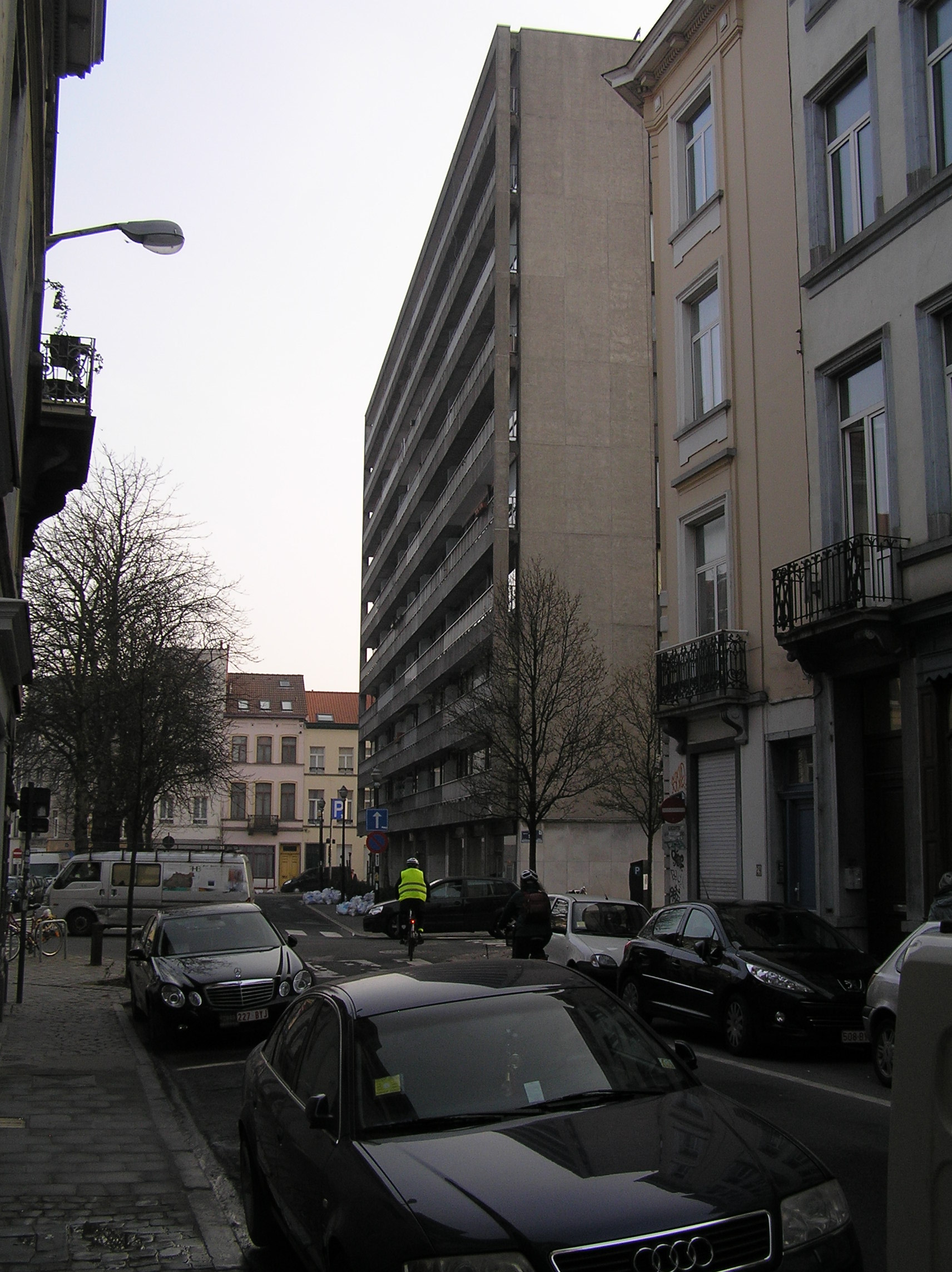
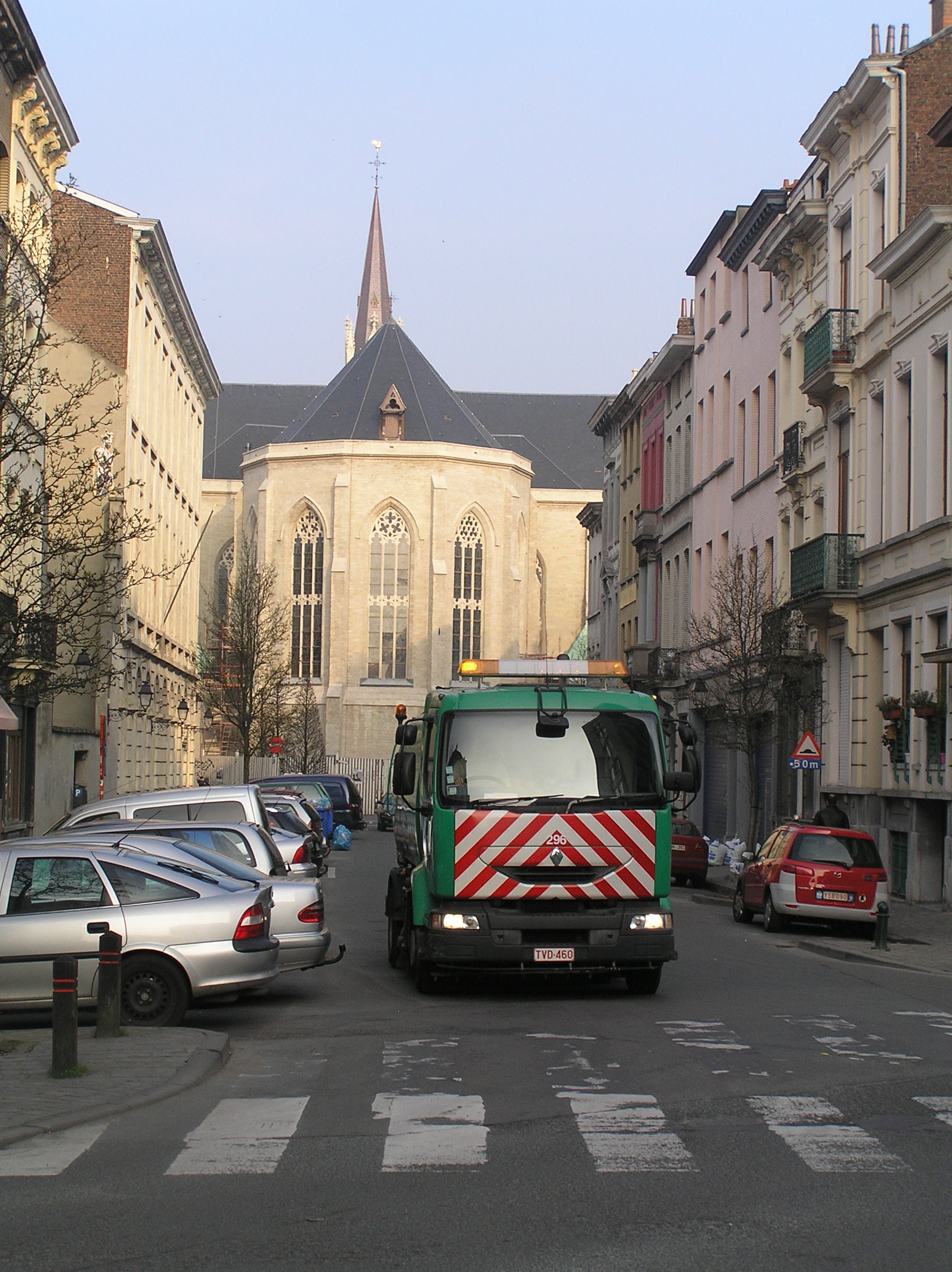
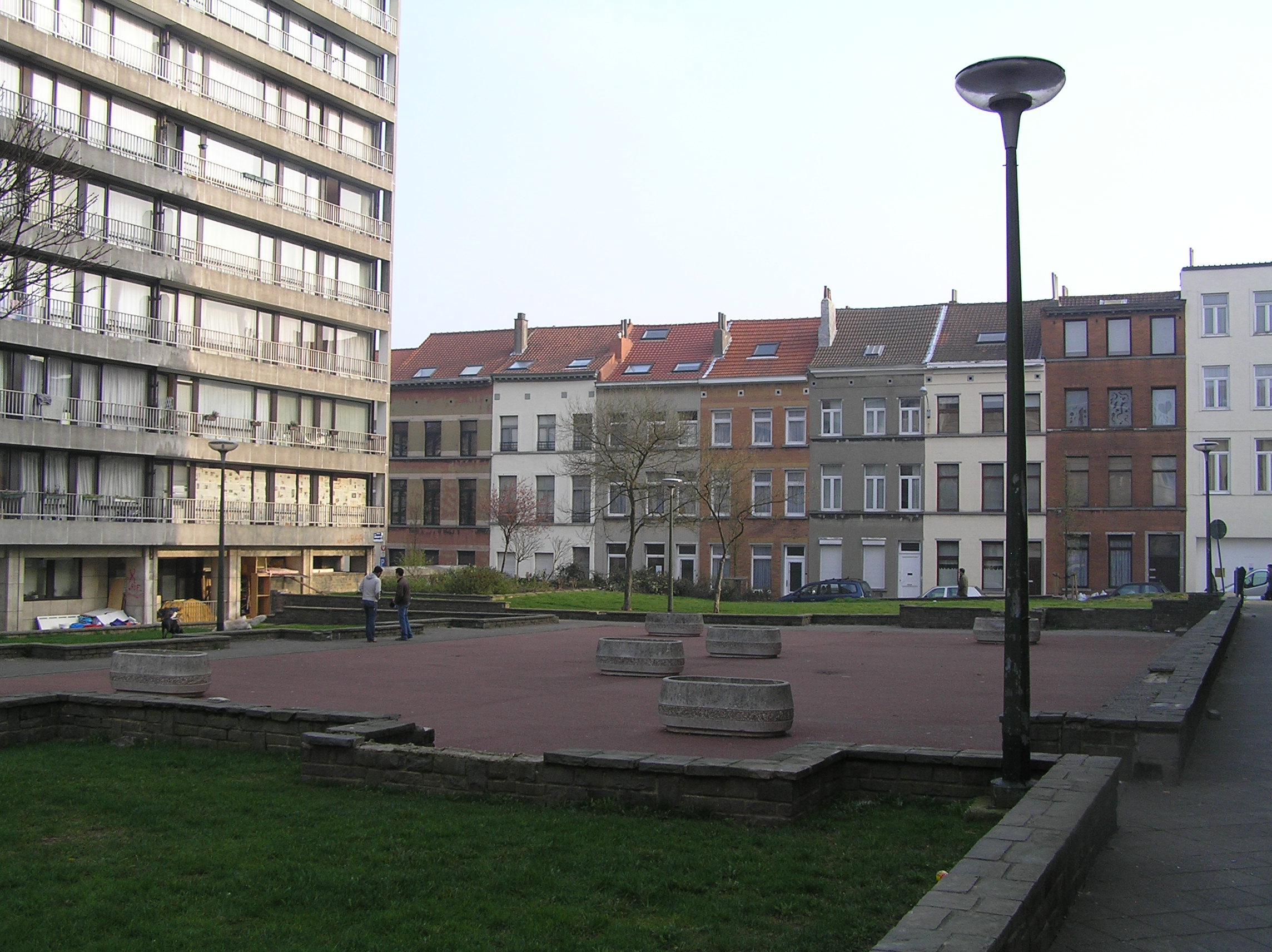 The urban fabric has been subject to some radical replacement projects which in the meanwhile are – at least functionally and visually – more or less integrated.

 In some streets the ground-floor is occupied by every kind of small shops and restaurants.
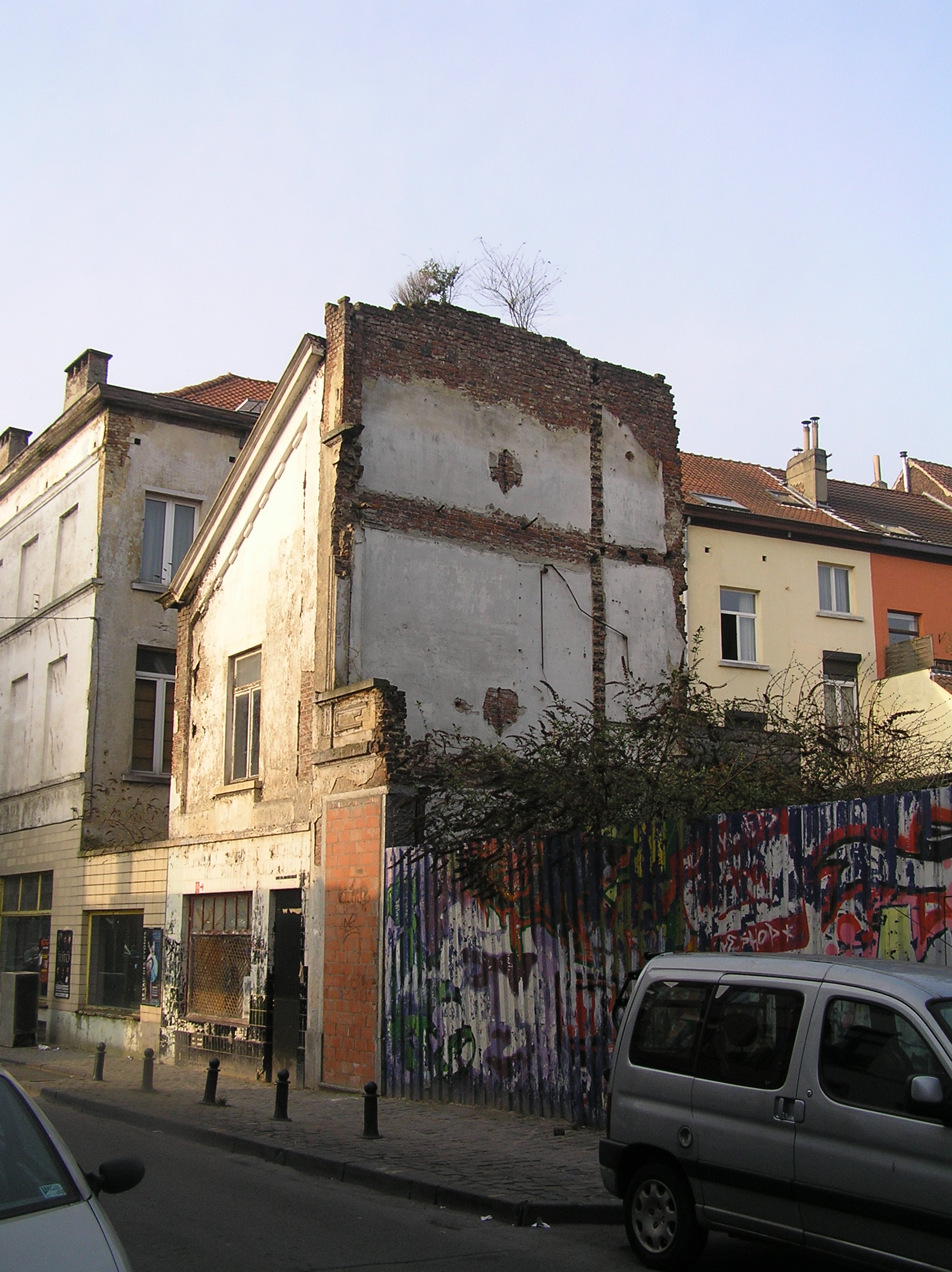 Now and then there are still development projects on hold…
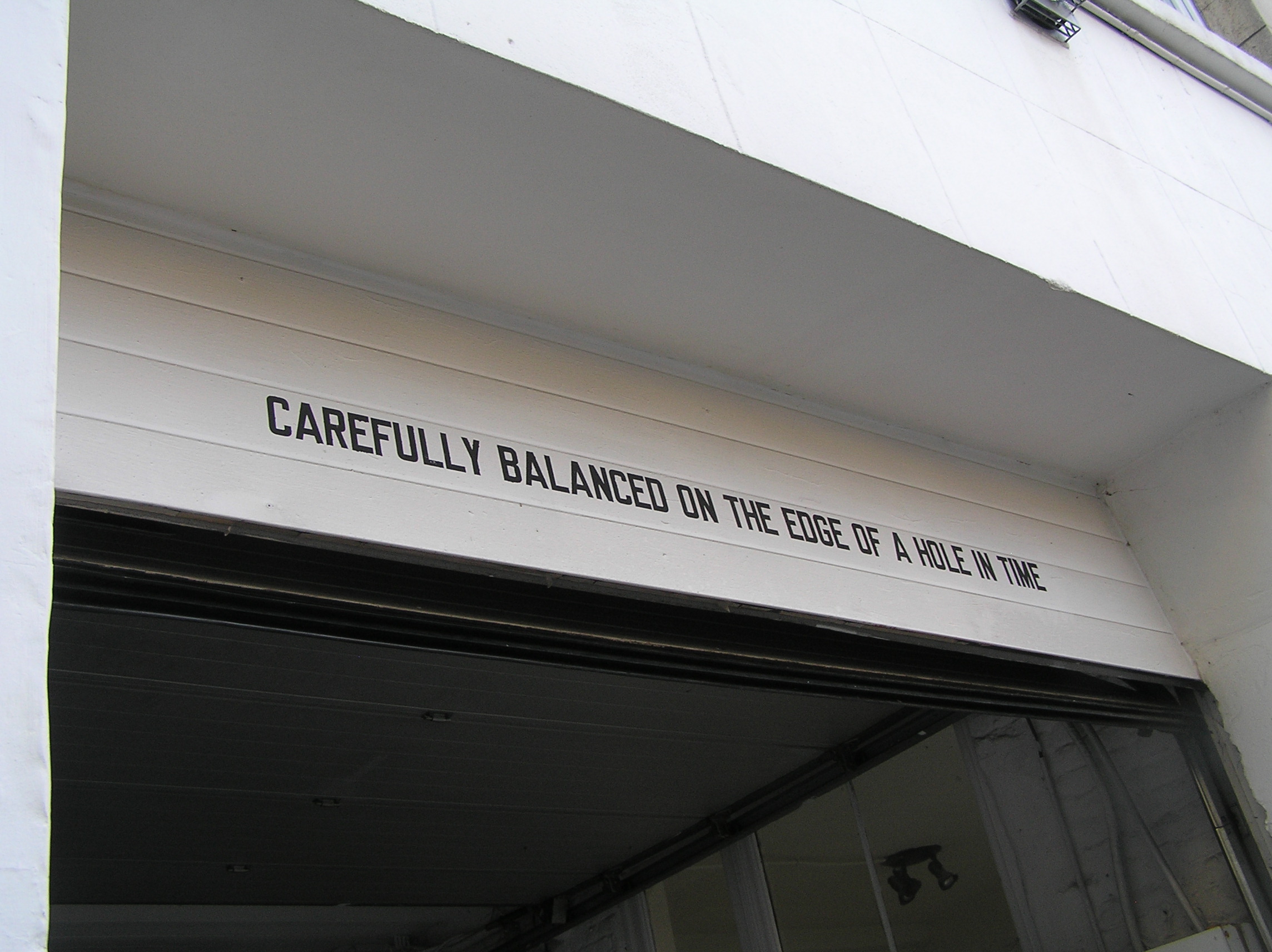 and creative people well accommodated in the foldings of the economic mainstream.
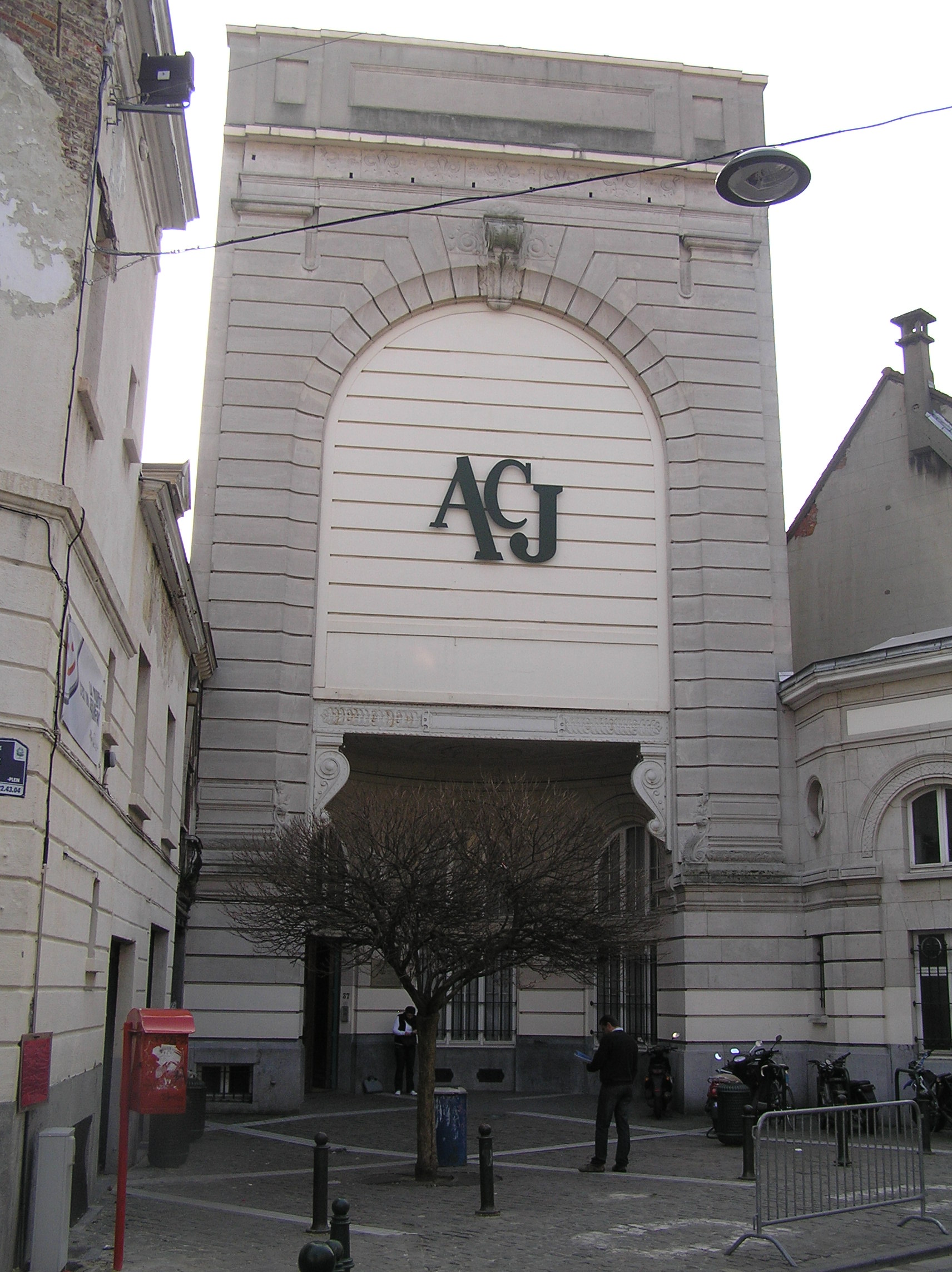 A technical high school with an elegant entrance in front of a nice and comfortable little square. In the picture it is empty, but on my way back in the afternoon it was crowded with students.

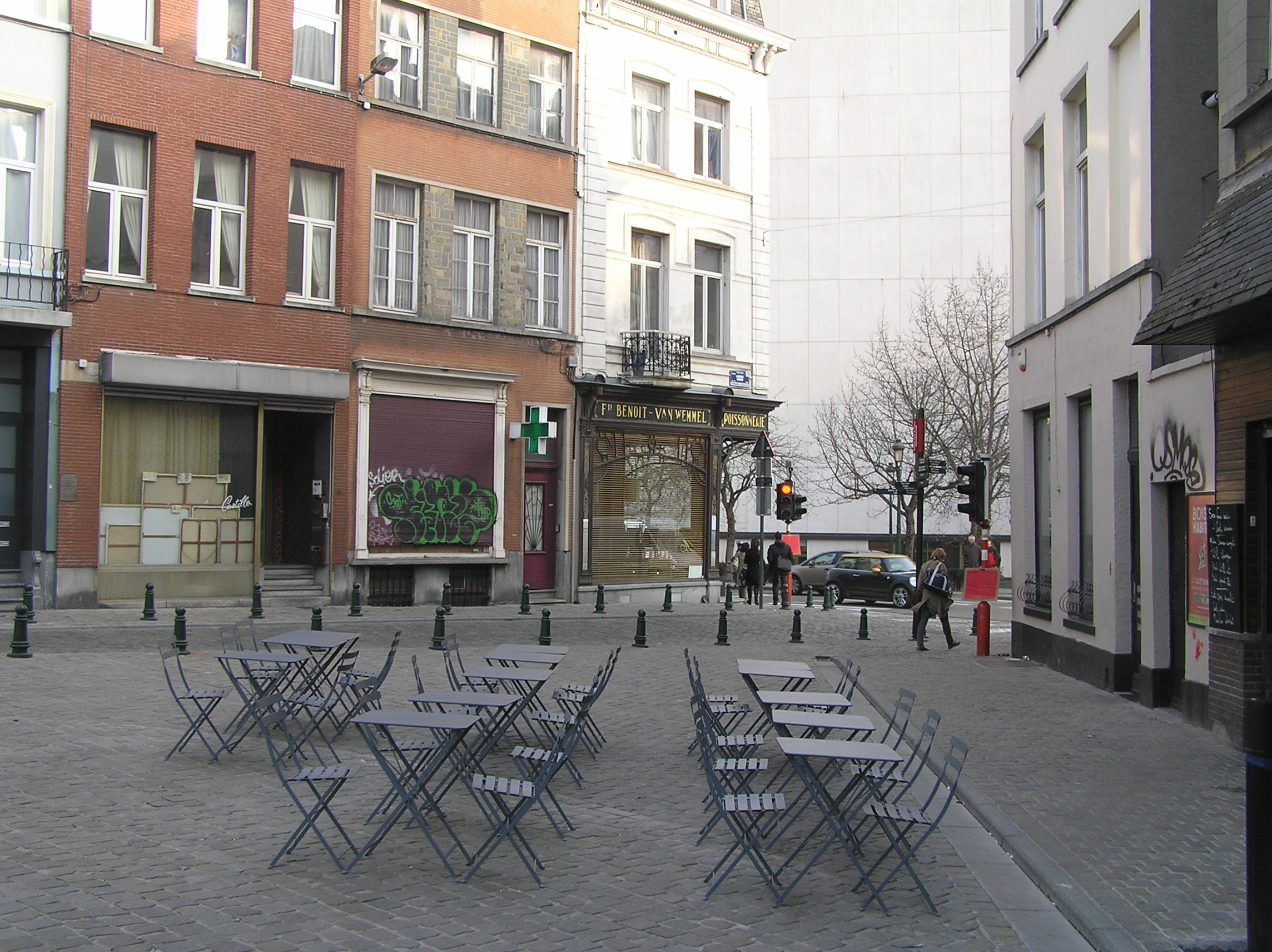
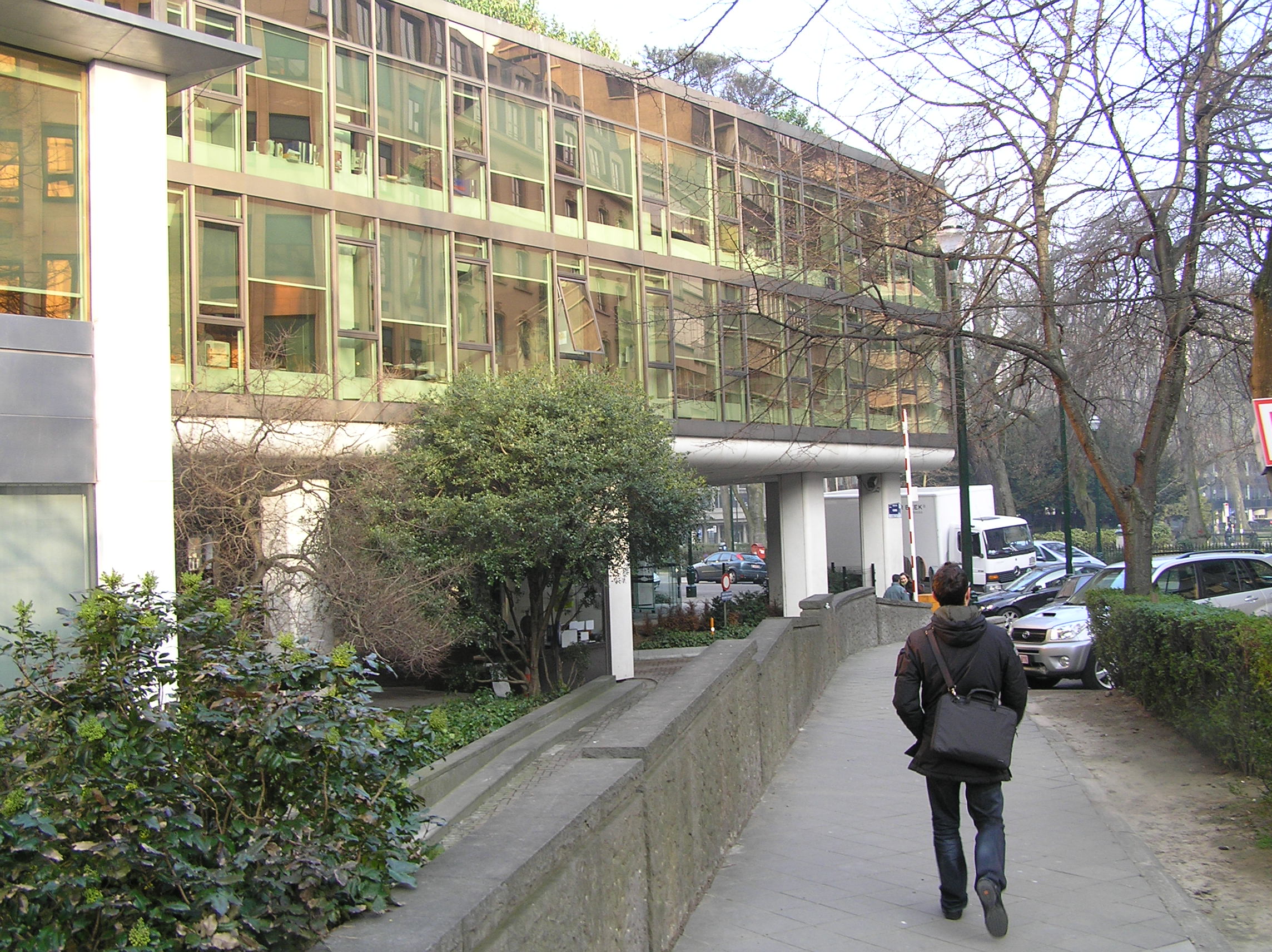
 Almost arrived at Place de Luxembourg, the main access to the Parliament premises. Across the street you see one of the buildings occupied by the DG Research of the Commission.
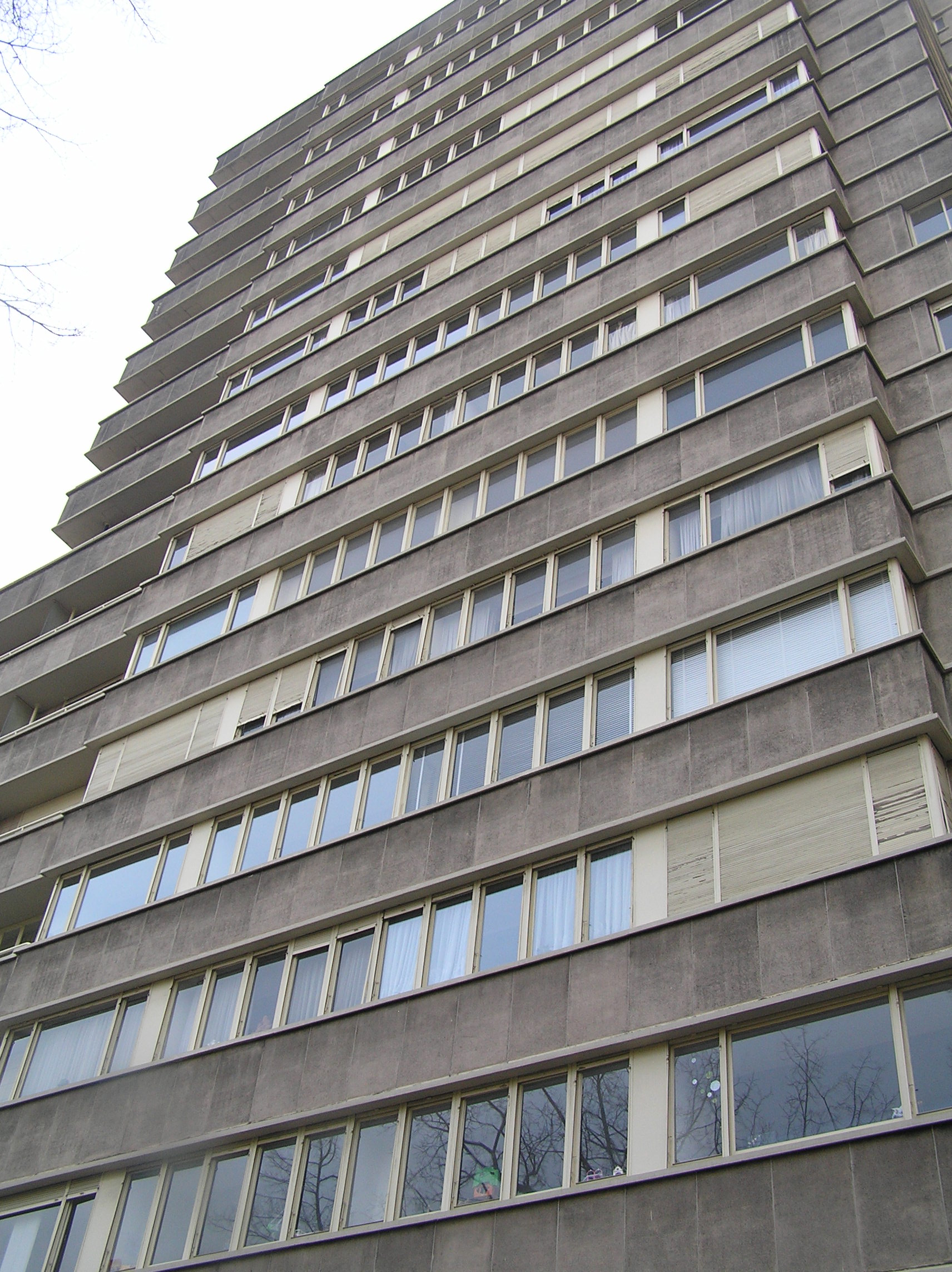
 It is definitely an old-fashioned ’70 office building with its bronze mirrored curtain wall, but it is well maintained and fits in the urban fabric, so that it does no harm at all.
 Place de Meeus marks the beginning of the European quarter. A tiny and precious garden squeezed among heavy traffic, modern high-rise and historical buildings.

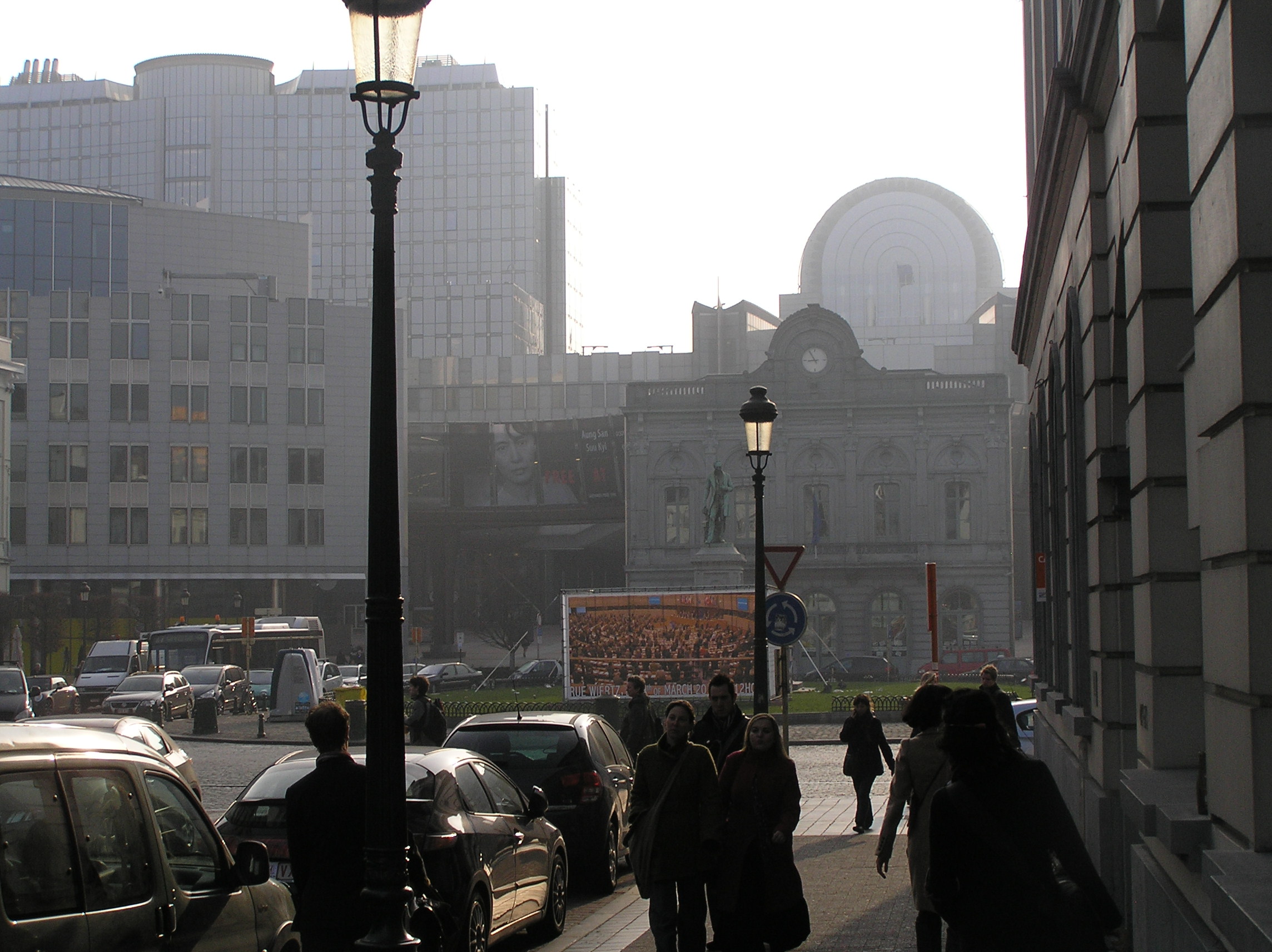 Peak-hour pedestrians flowing to the European buildings across Place de Luxembourg.

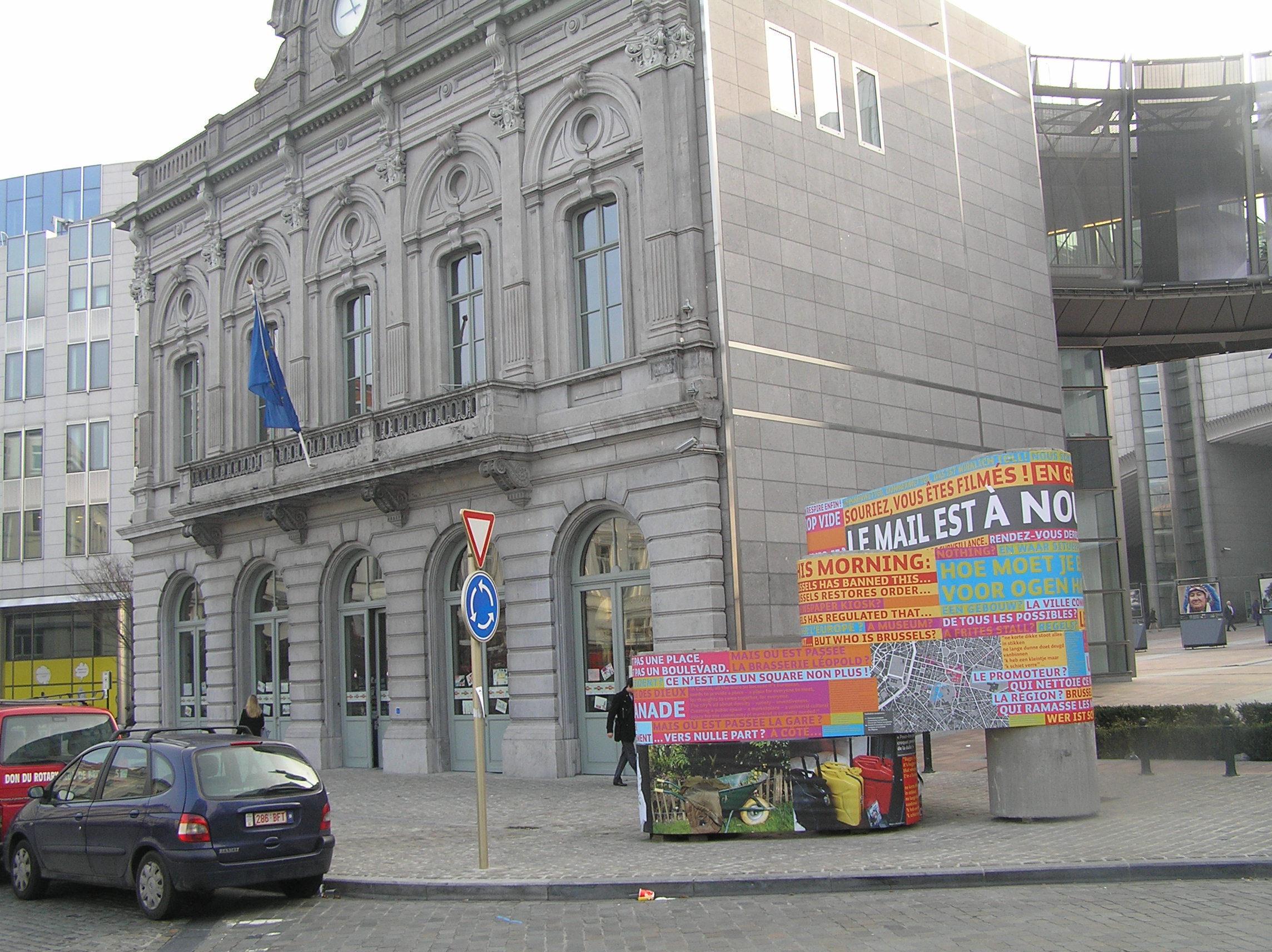
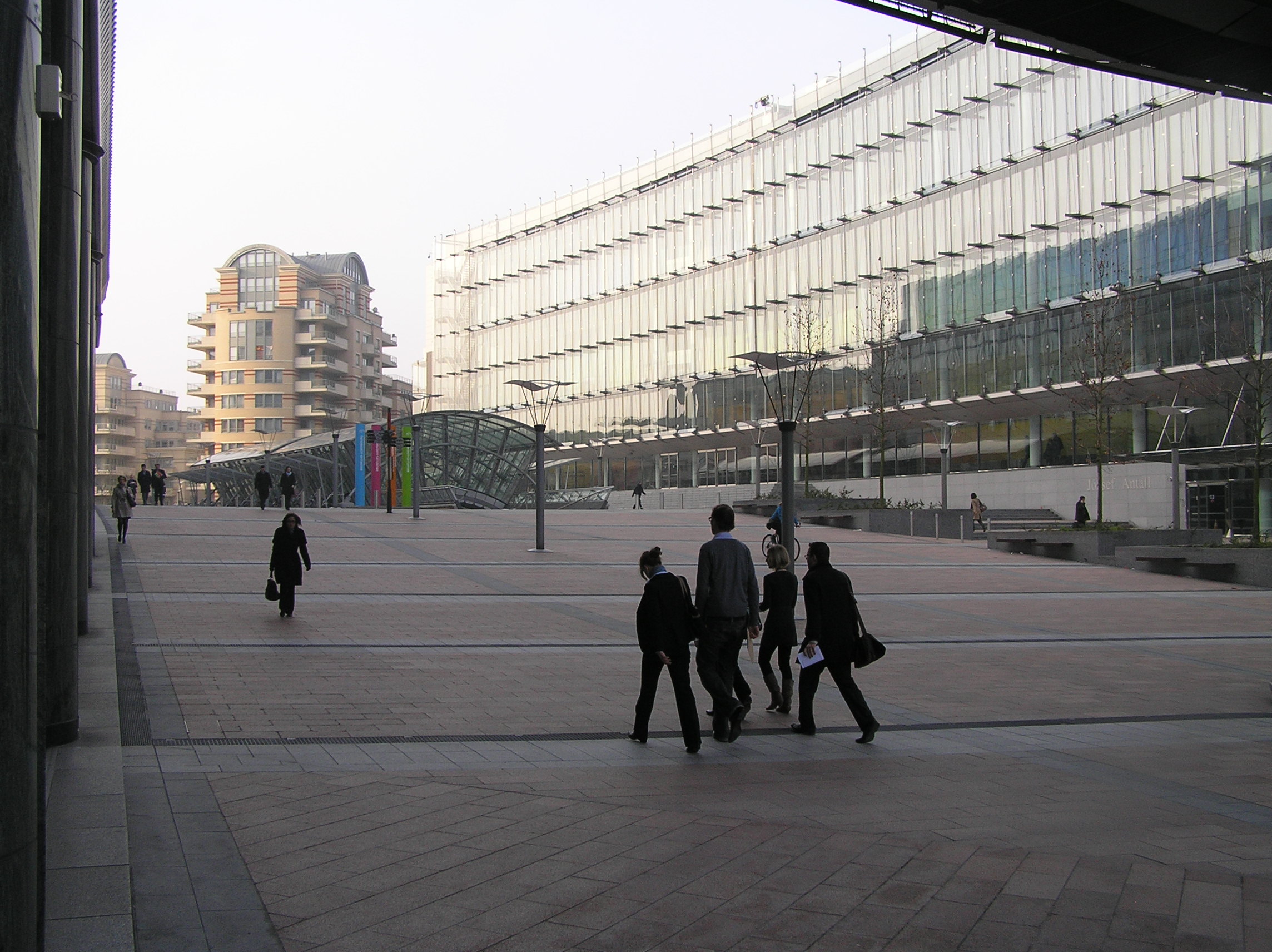
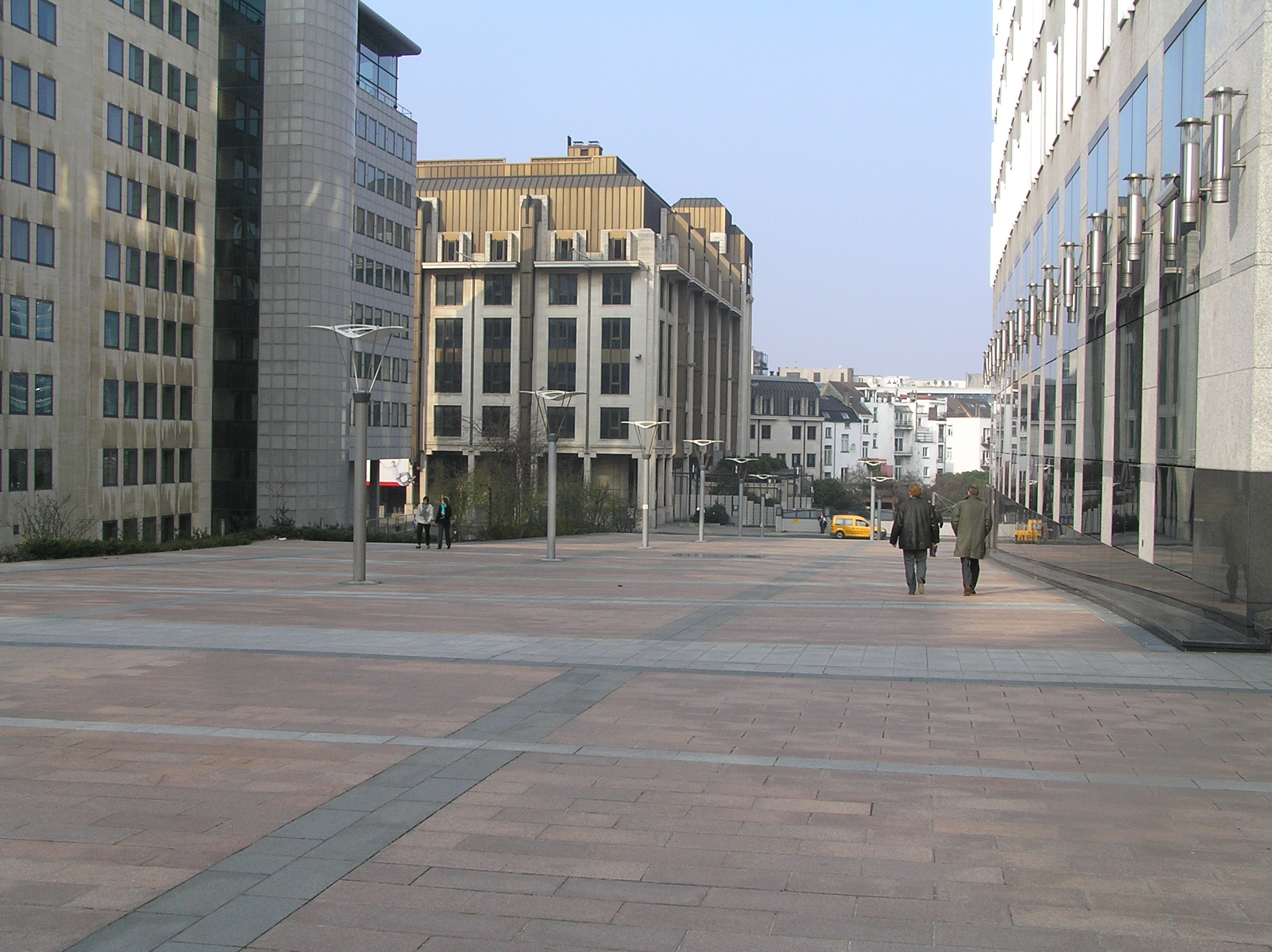
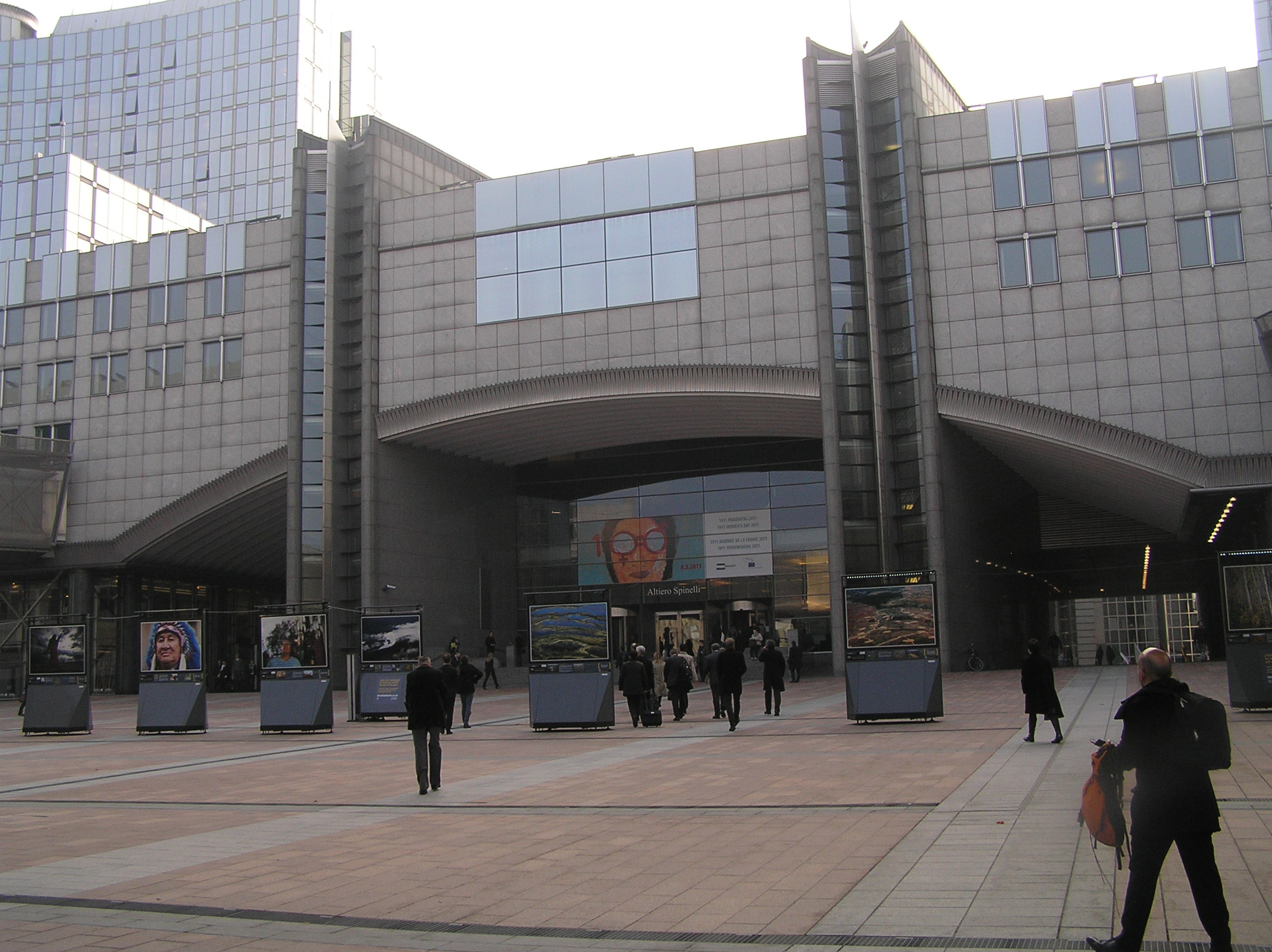 The recently accomplished entrance to the European Parliament from Place de Luxembourg features a large pedestrian square with curved glazed bridges and grey stone, stainless steel and glass facades.
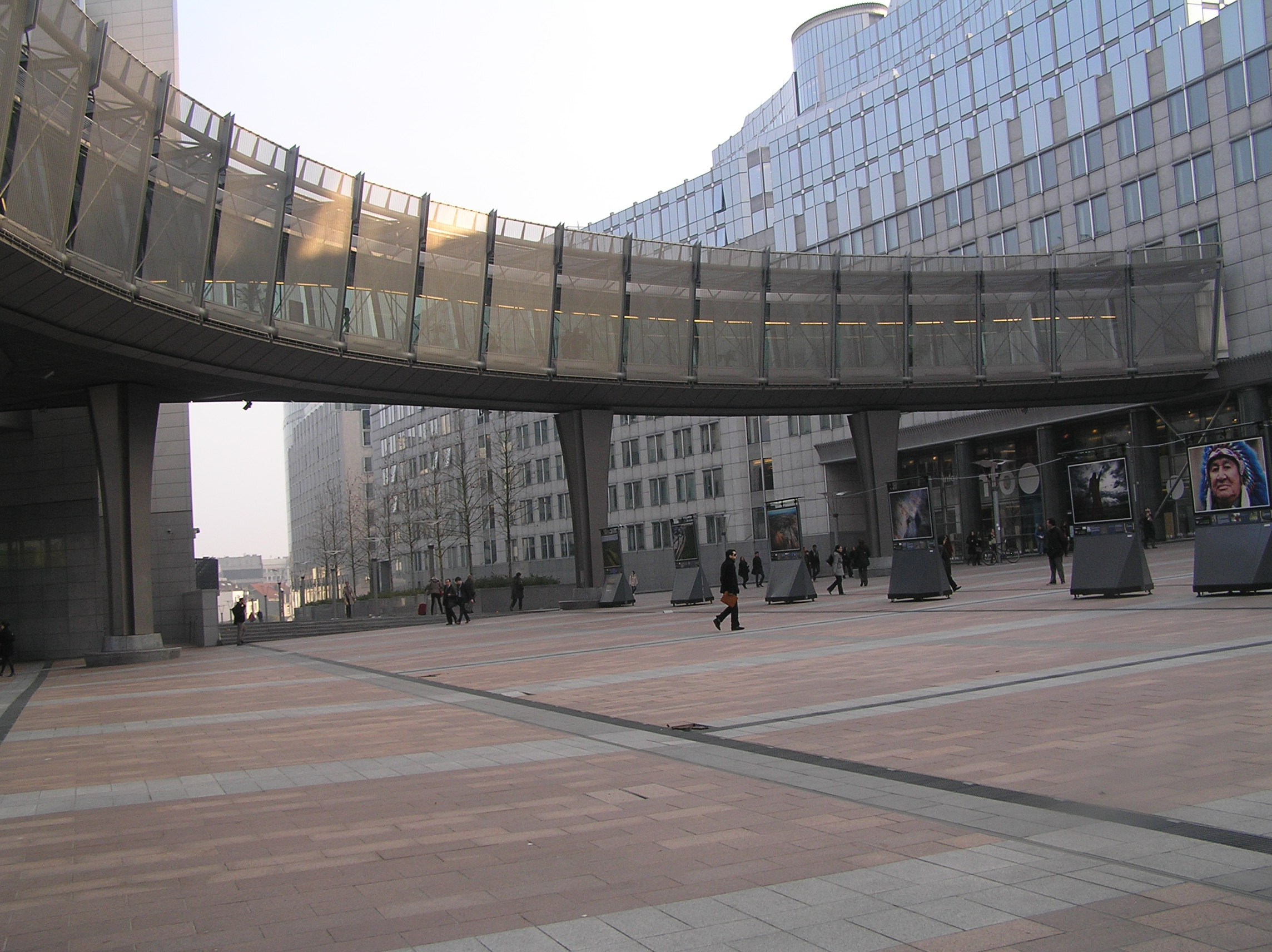
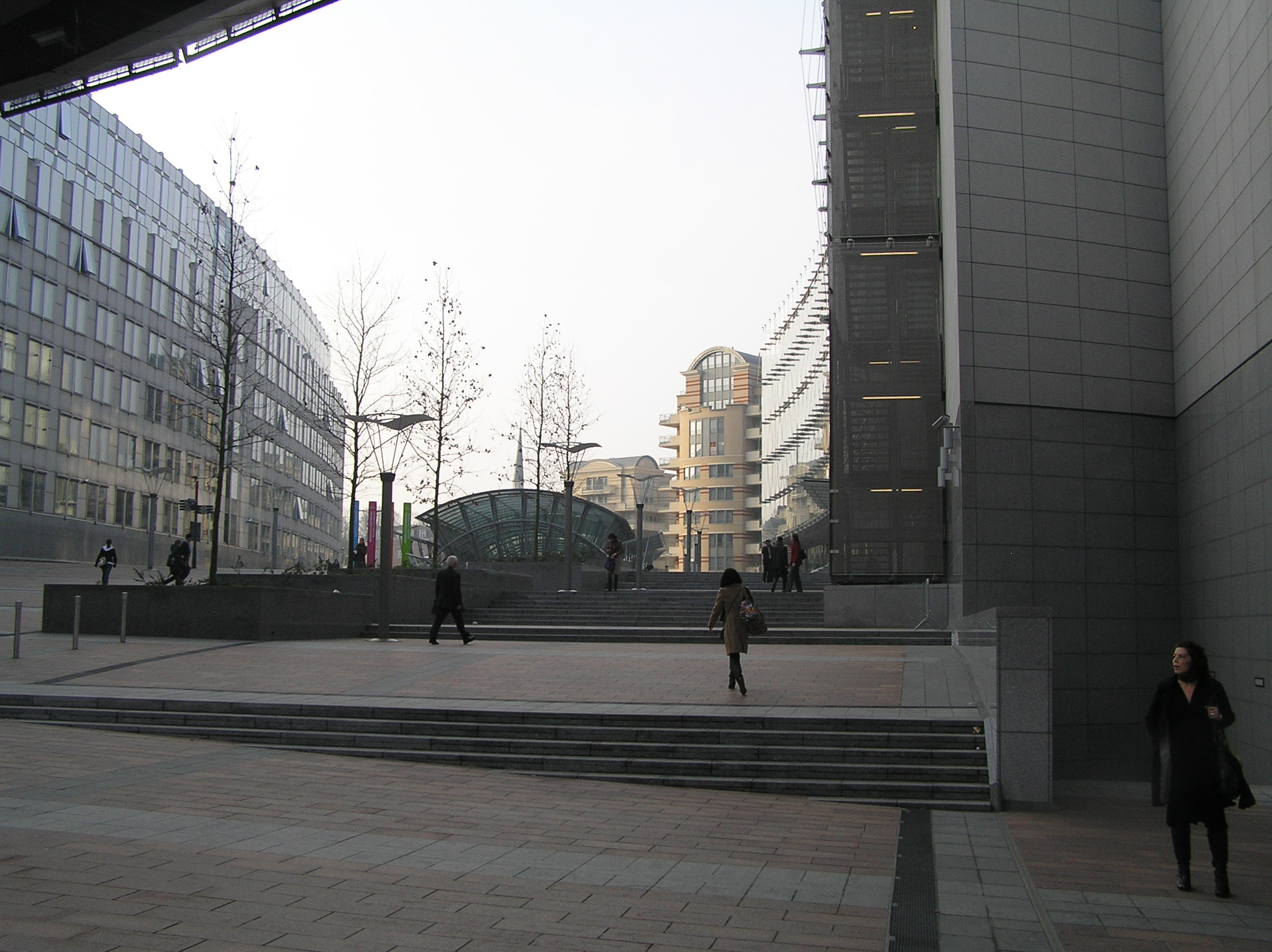
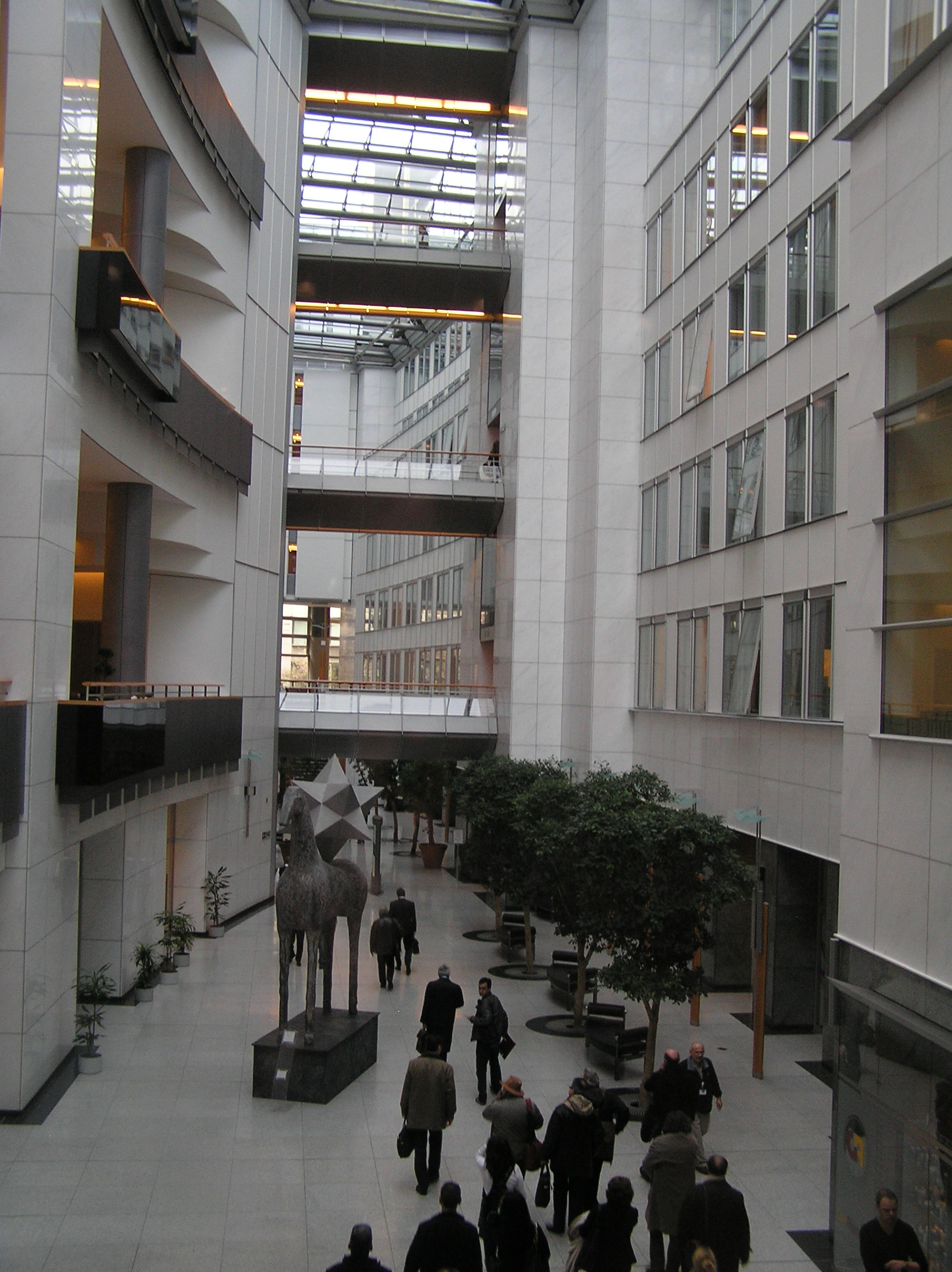 A view from the pedestrian plaza inside the Parliament’s building.
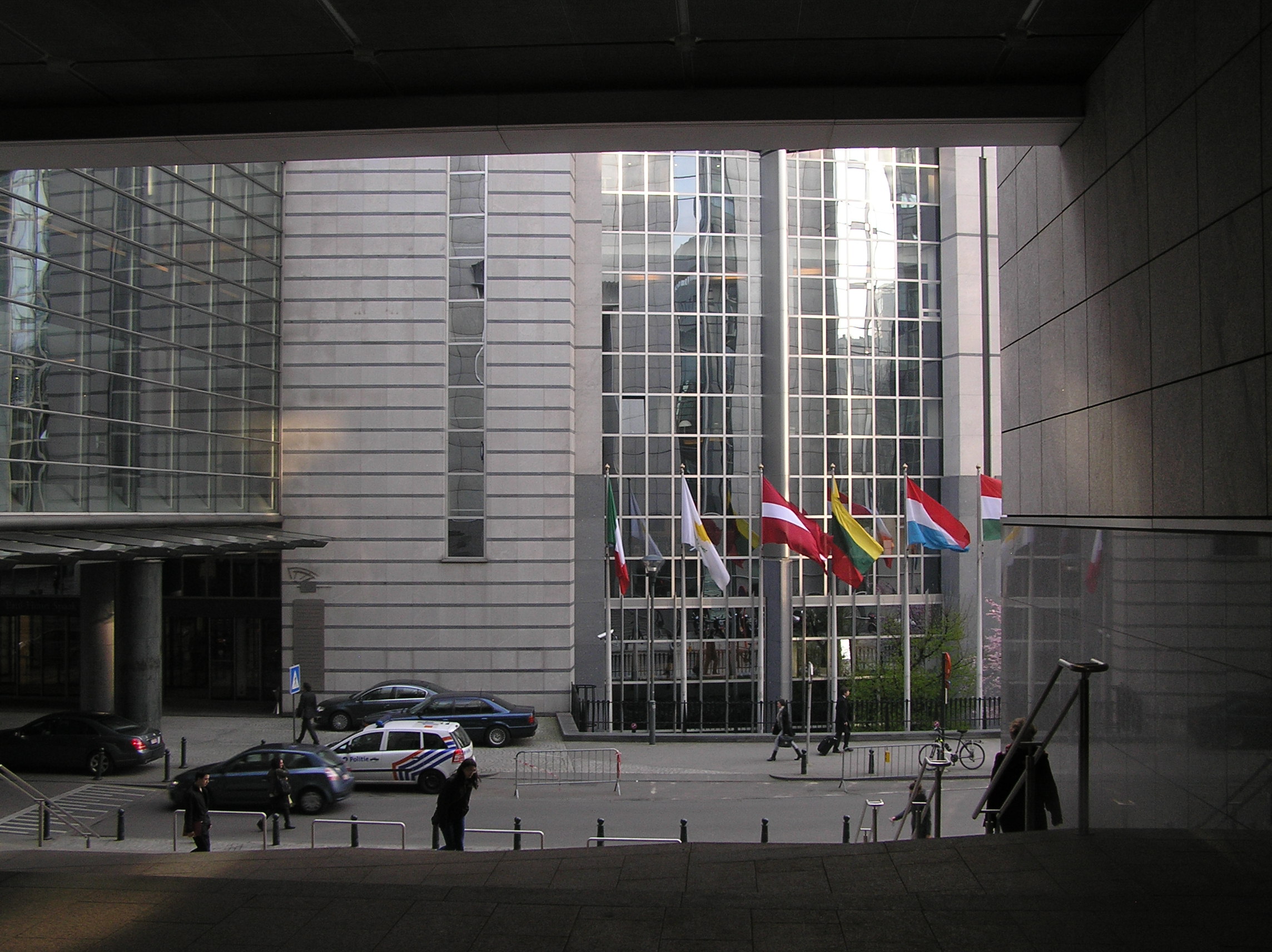 Under the bridge-building I get through to another access to the Parliament where taxis are waiting in a row.

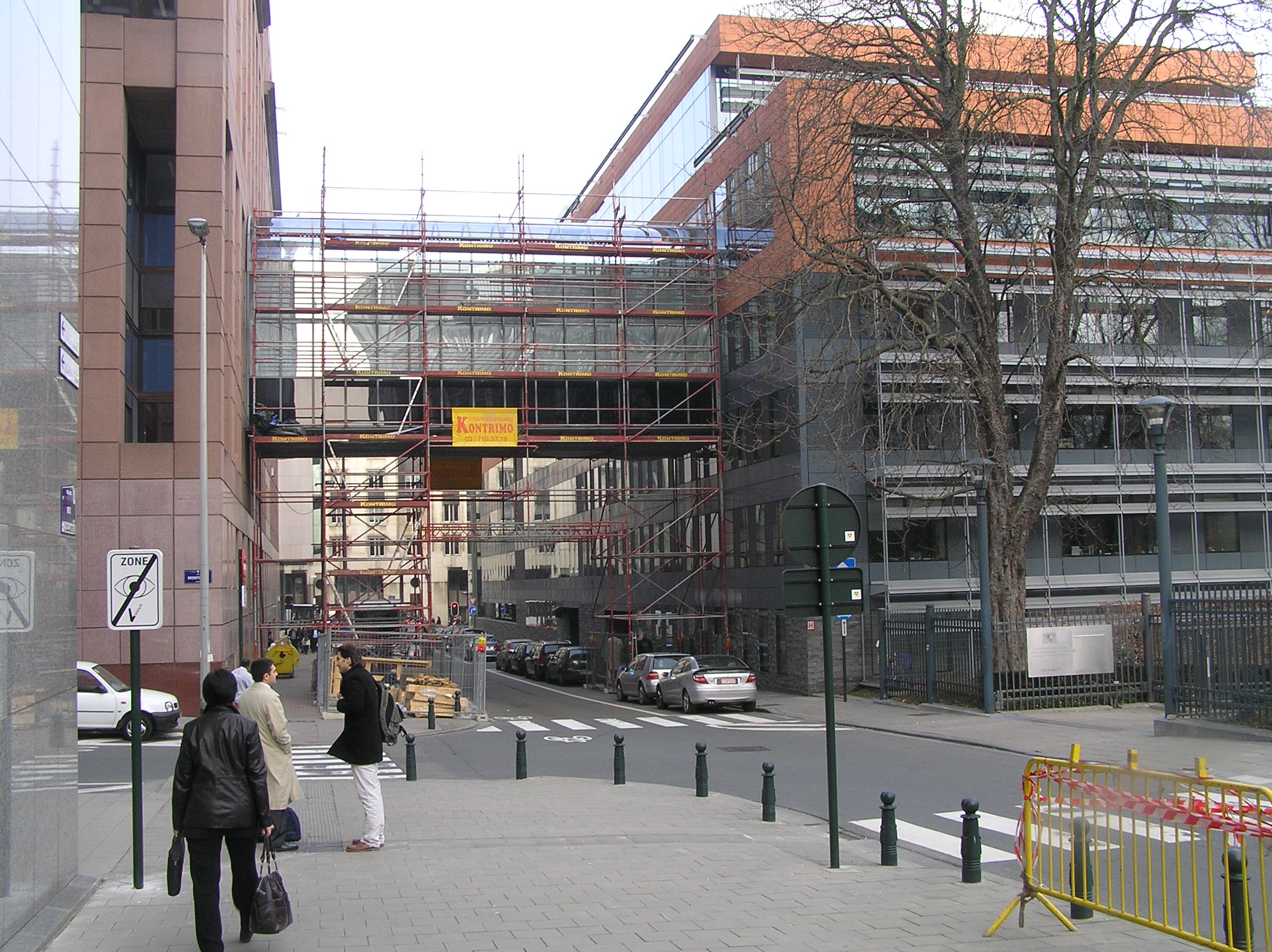 Another multi-storey sky-walk connects two sections of the Parliament’s premises.
 From Leopold park the buildings looks like a spaceship landed in a Nineteenth Century urban park.
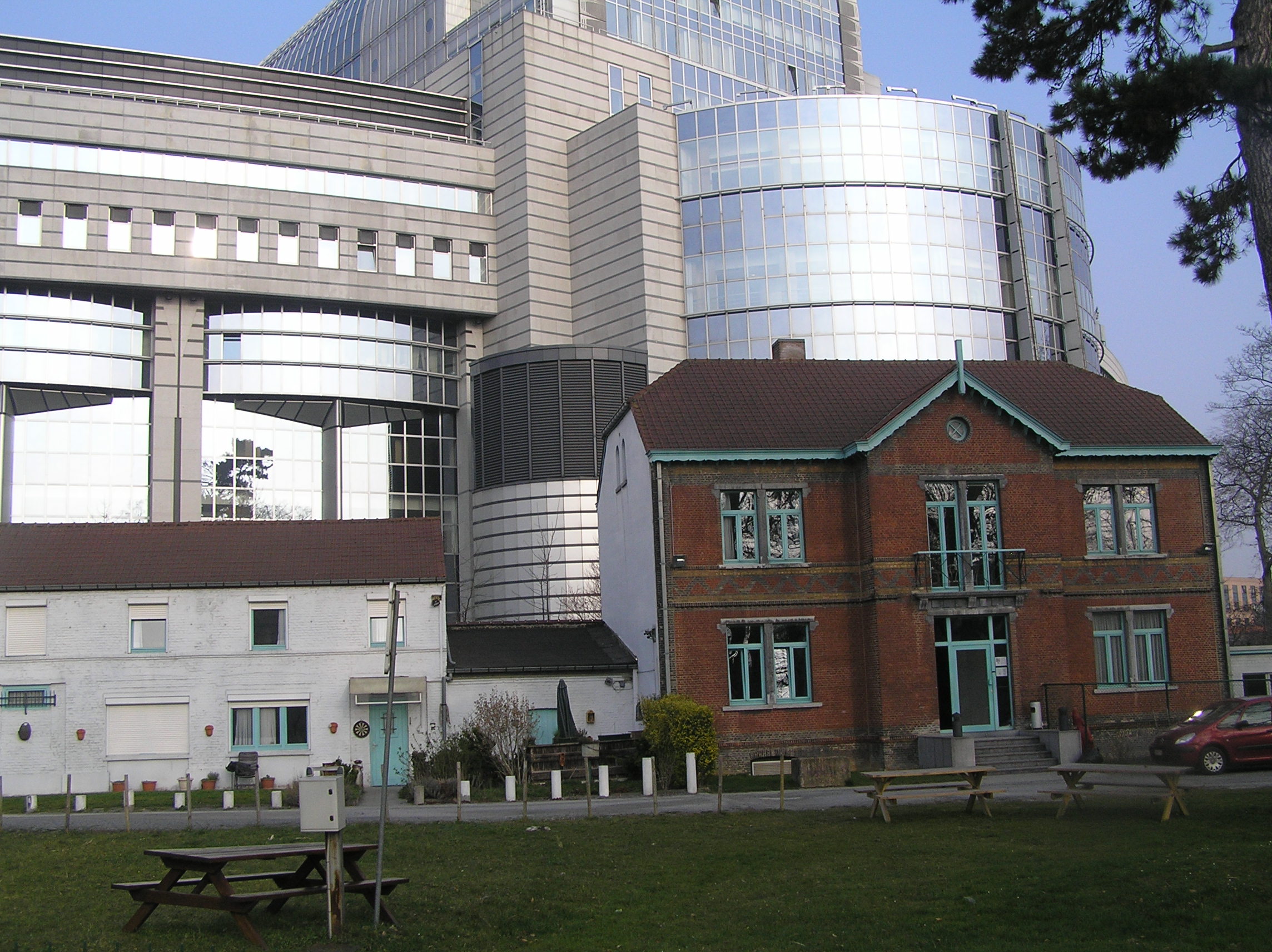 This is not a photomontage.

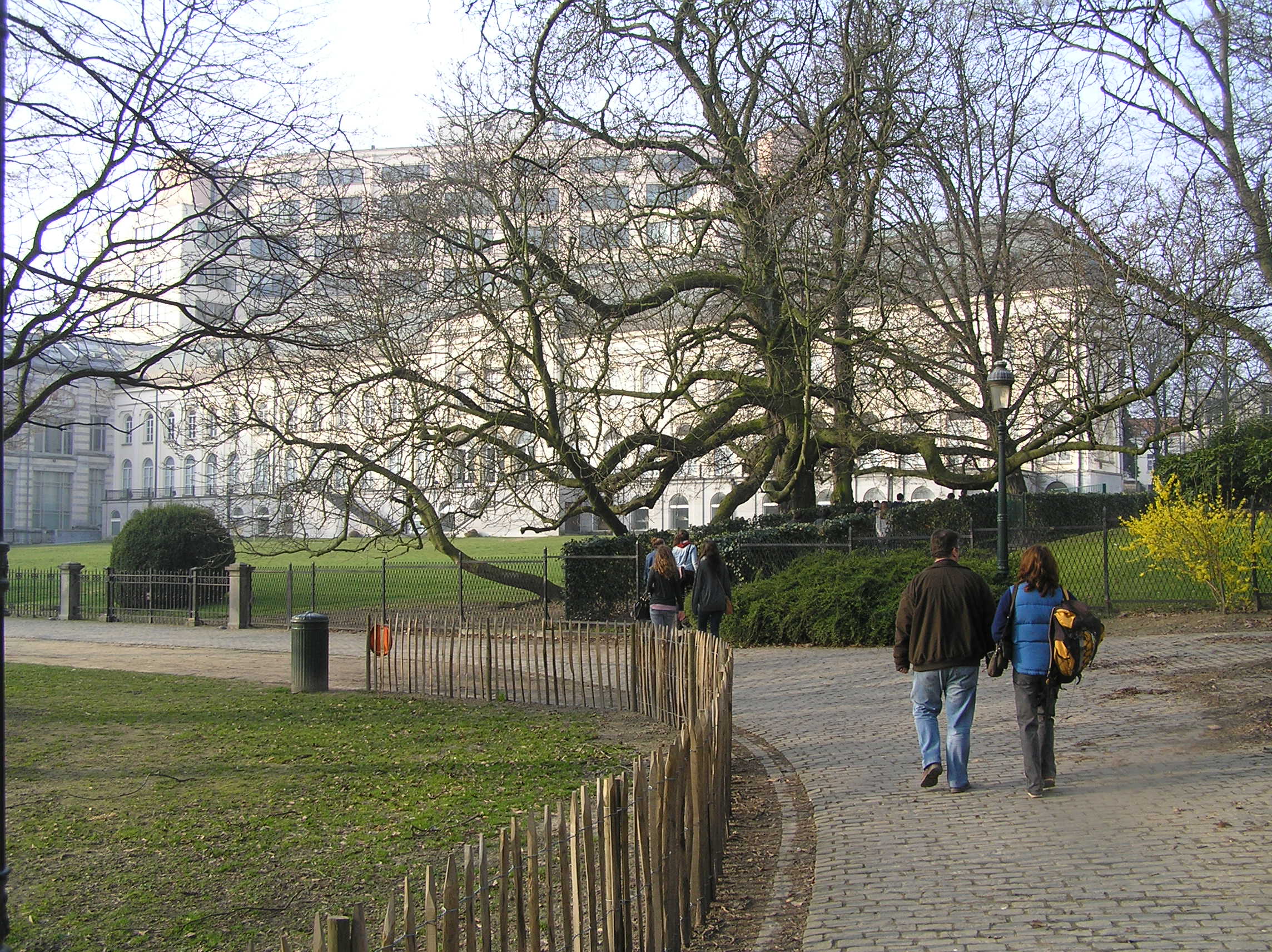 Luckily Leopold Park and its historical buildings, a.o. the Solvay Library, the Solvay School of Commerce and the Royal Belgian Institute of Natural Science, has the dimension and the strength to face and balance the new buildings. The comparison among old and new is somehow worrying, but I think that also the historical buildings are contemporary, they are not another but the same side of this European coin.

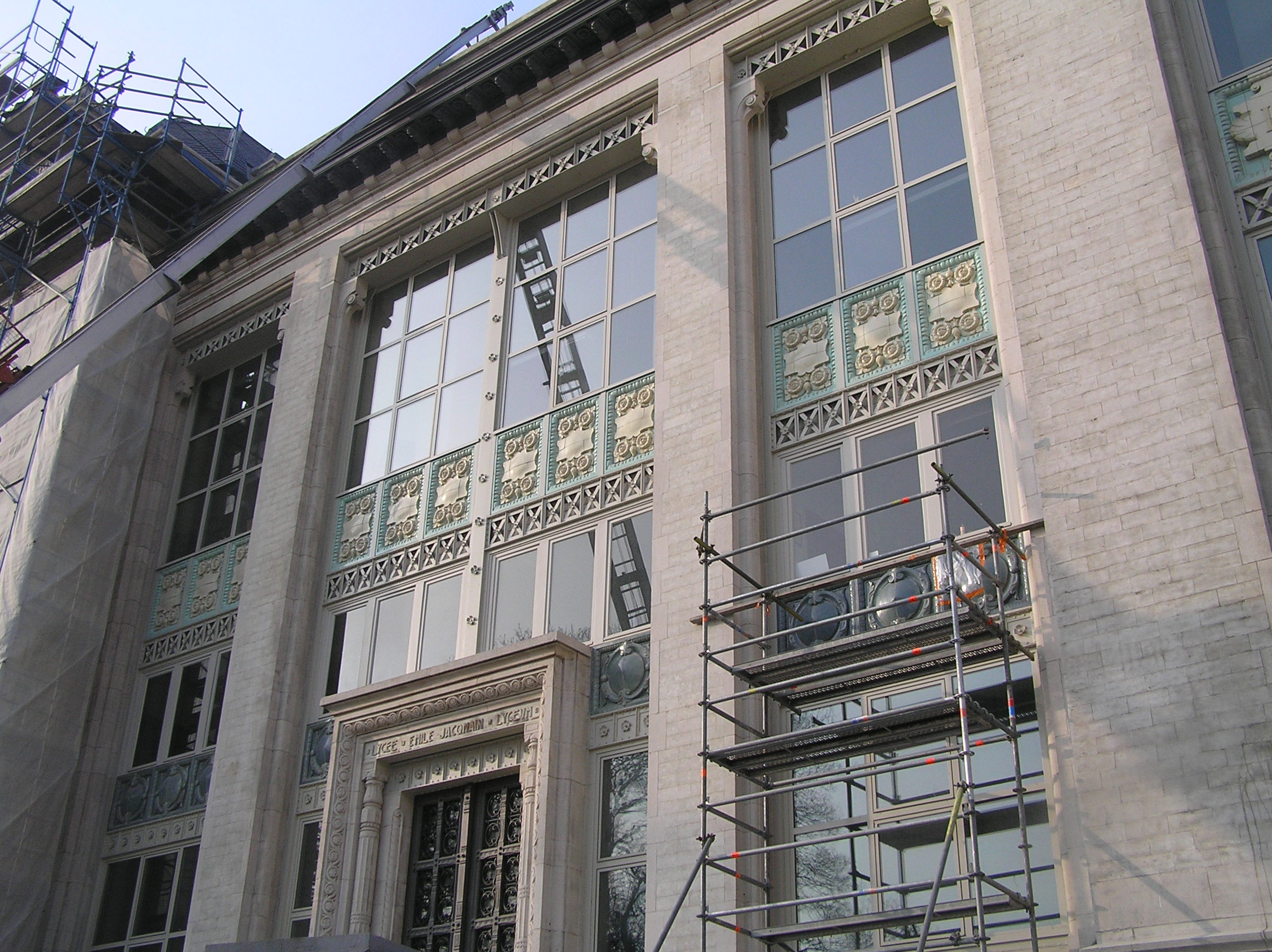
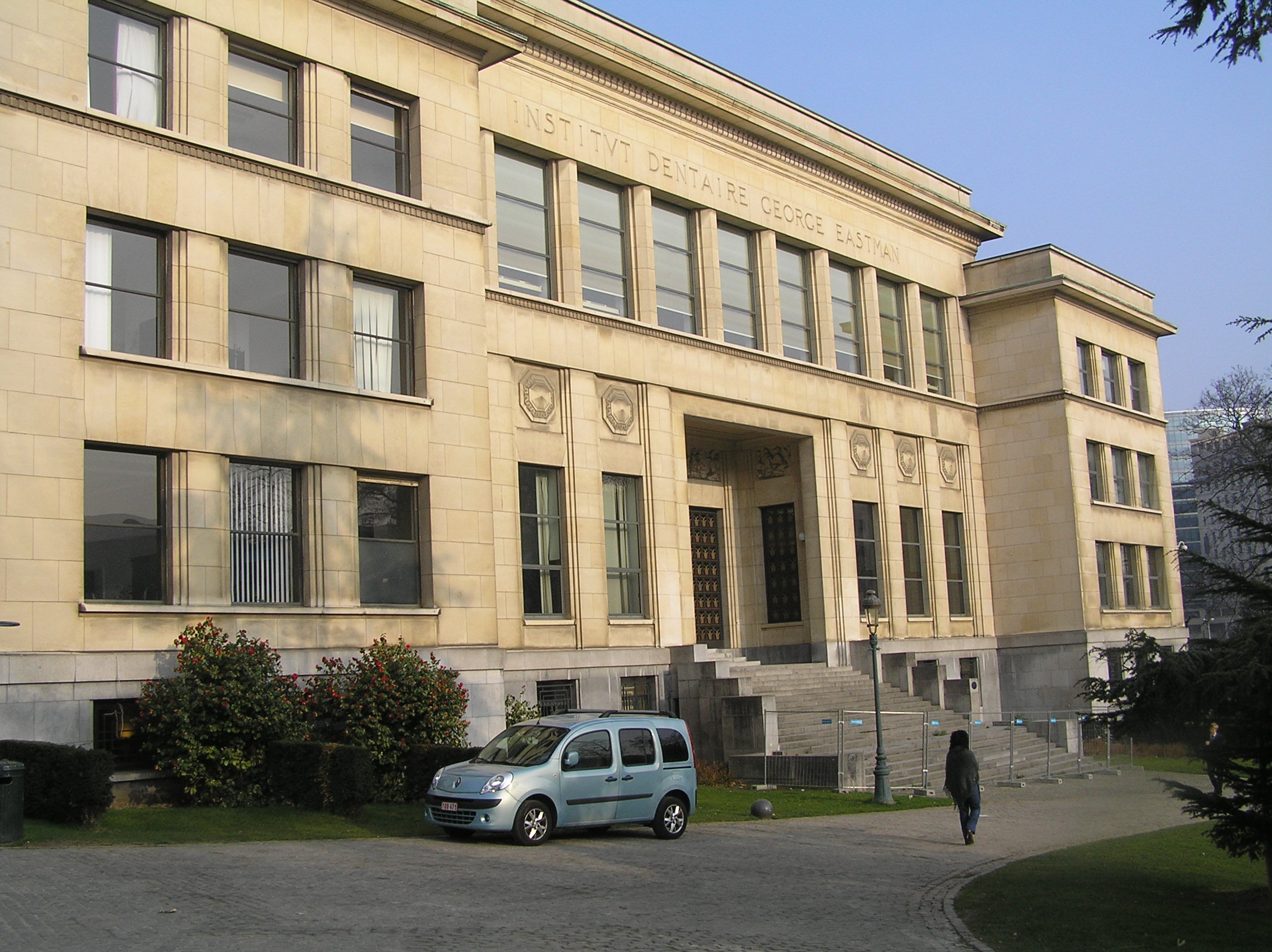
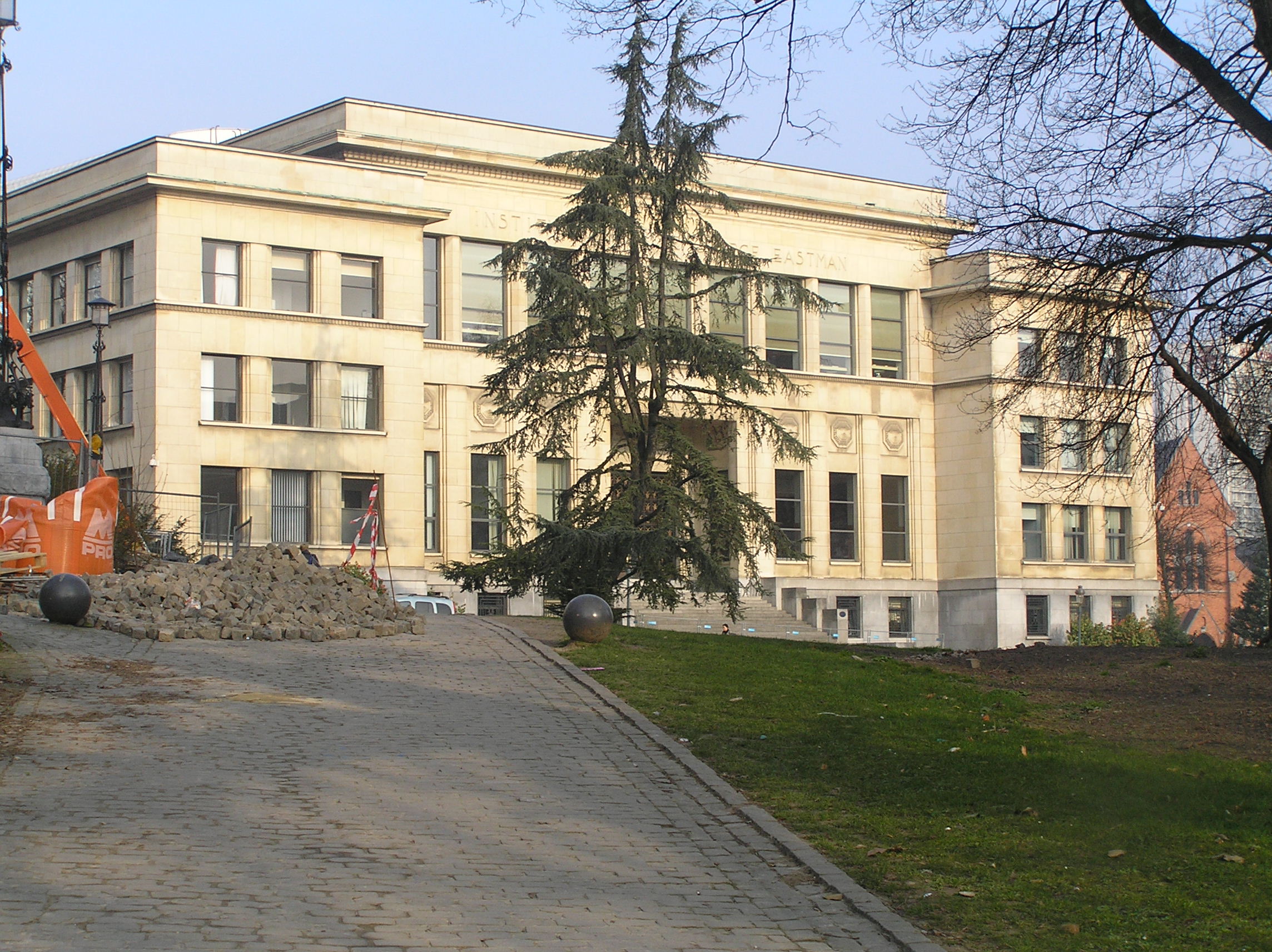

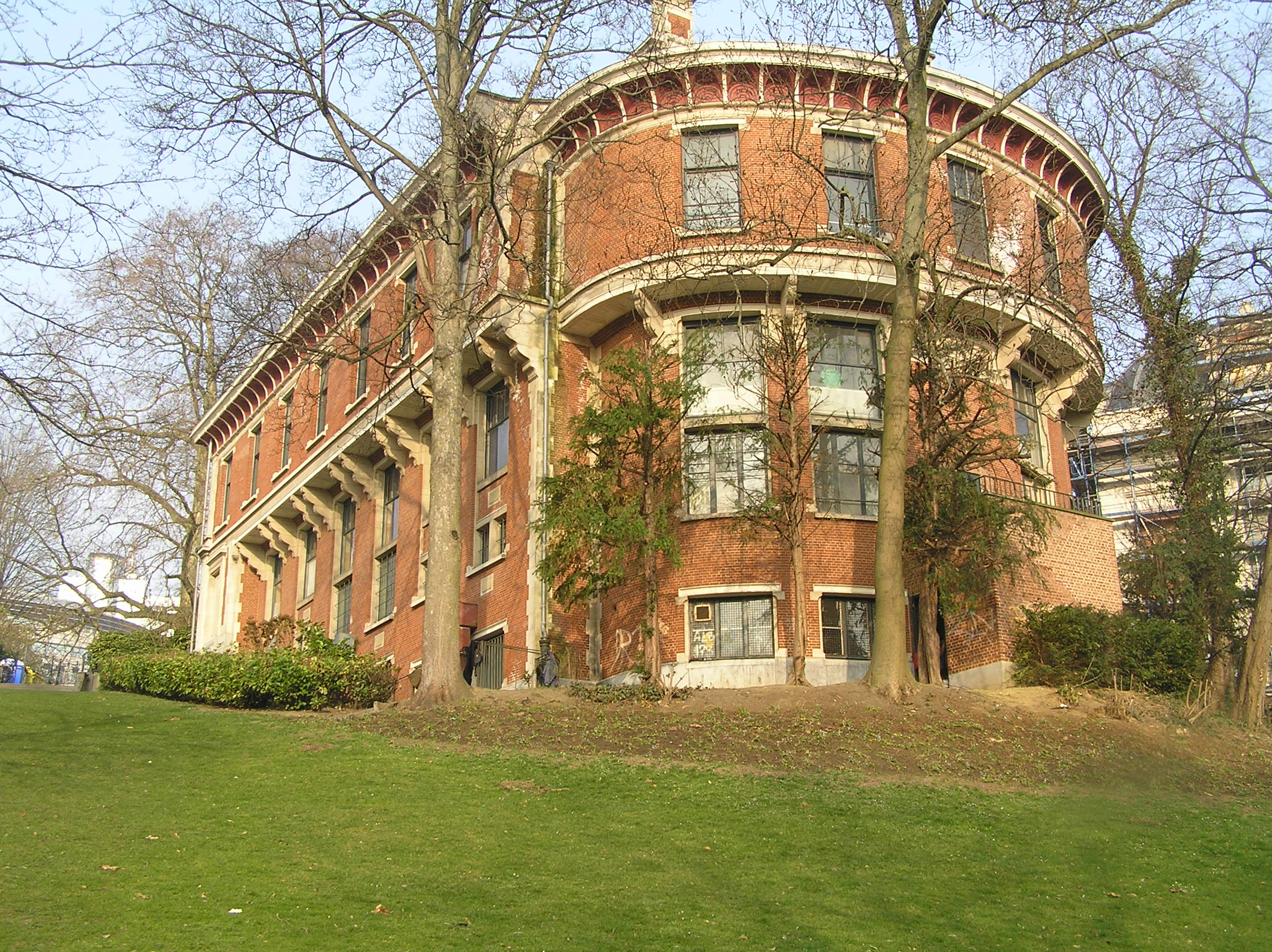

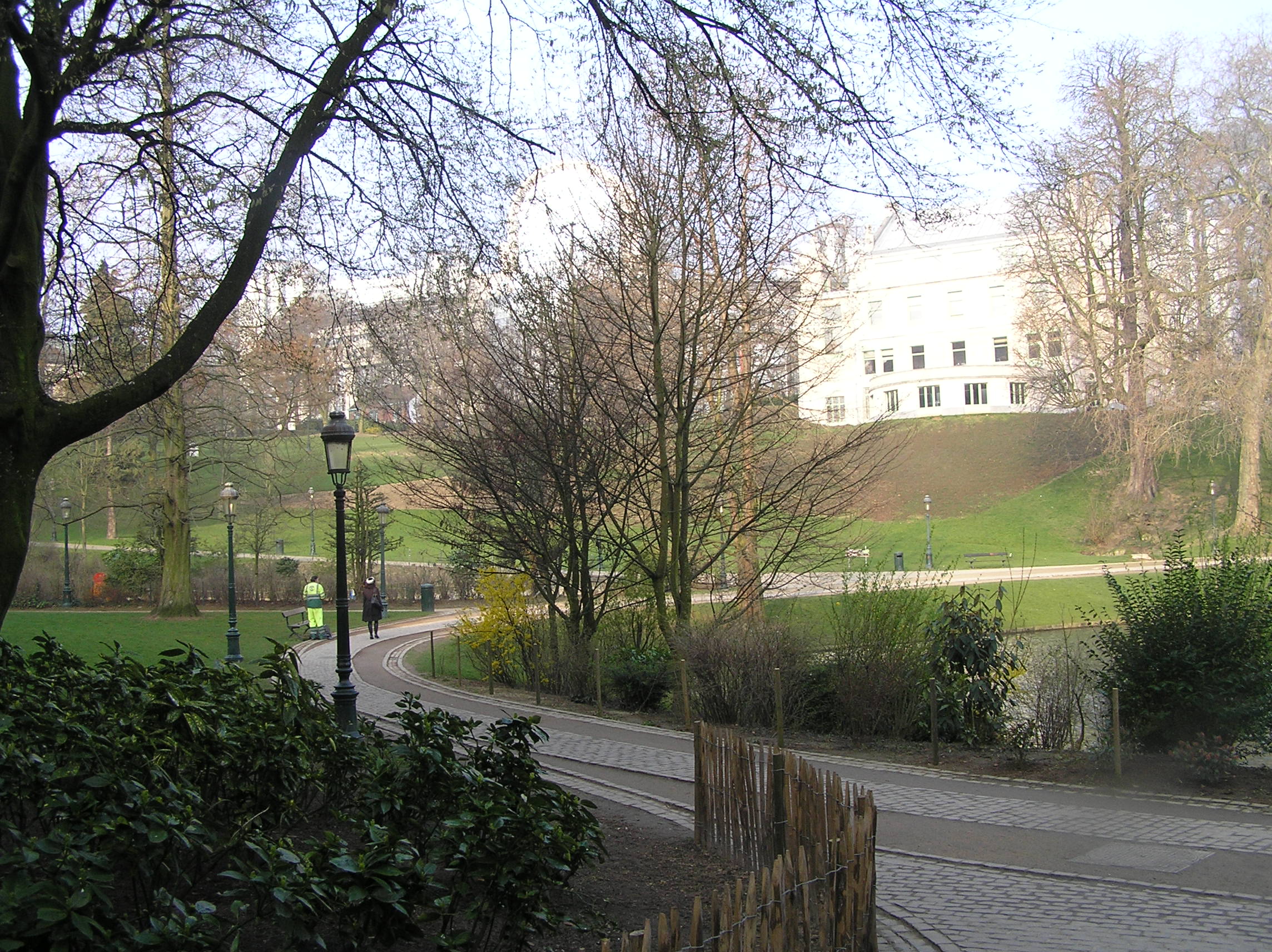
 Unfortunately the premise I am going to is outside the park, I have to jump again into the traffic, for a short walk.
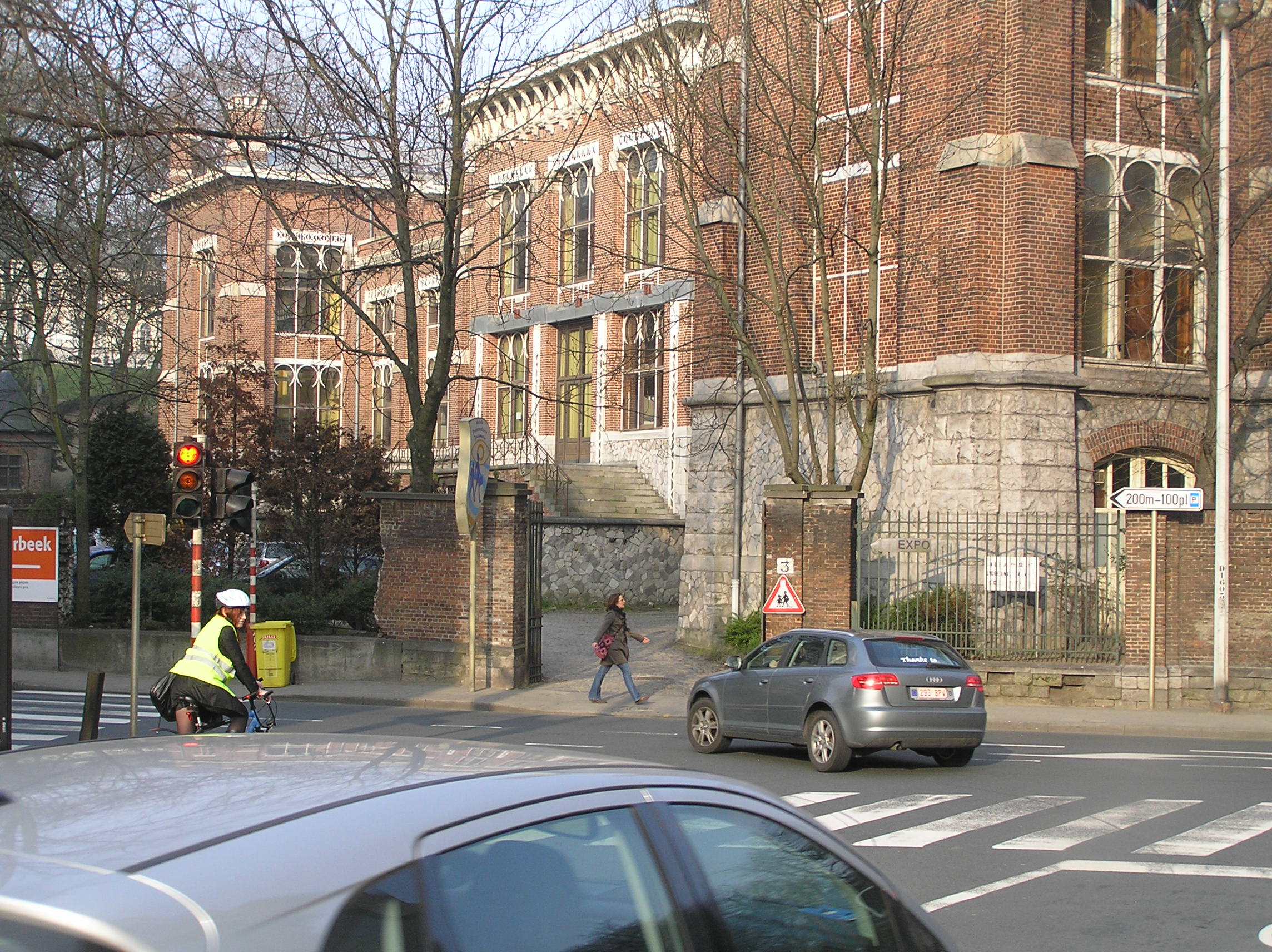
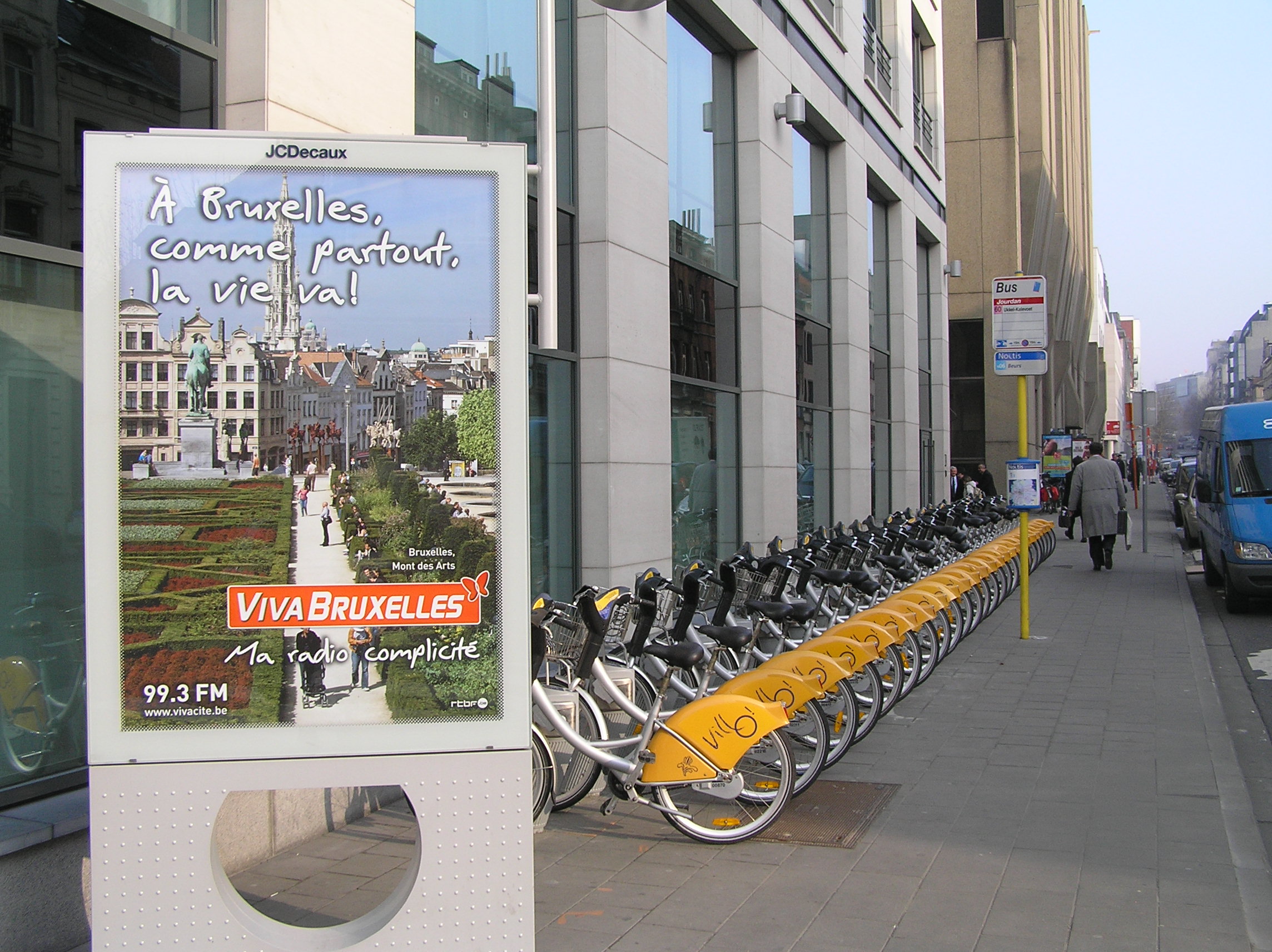 A long row of public bicycles marks the entrance to the Borschette Centre where I will spend the day.
 On may way back I like to change the route a little bit, but first I want to cross Leopold Park again.
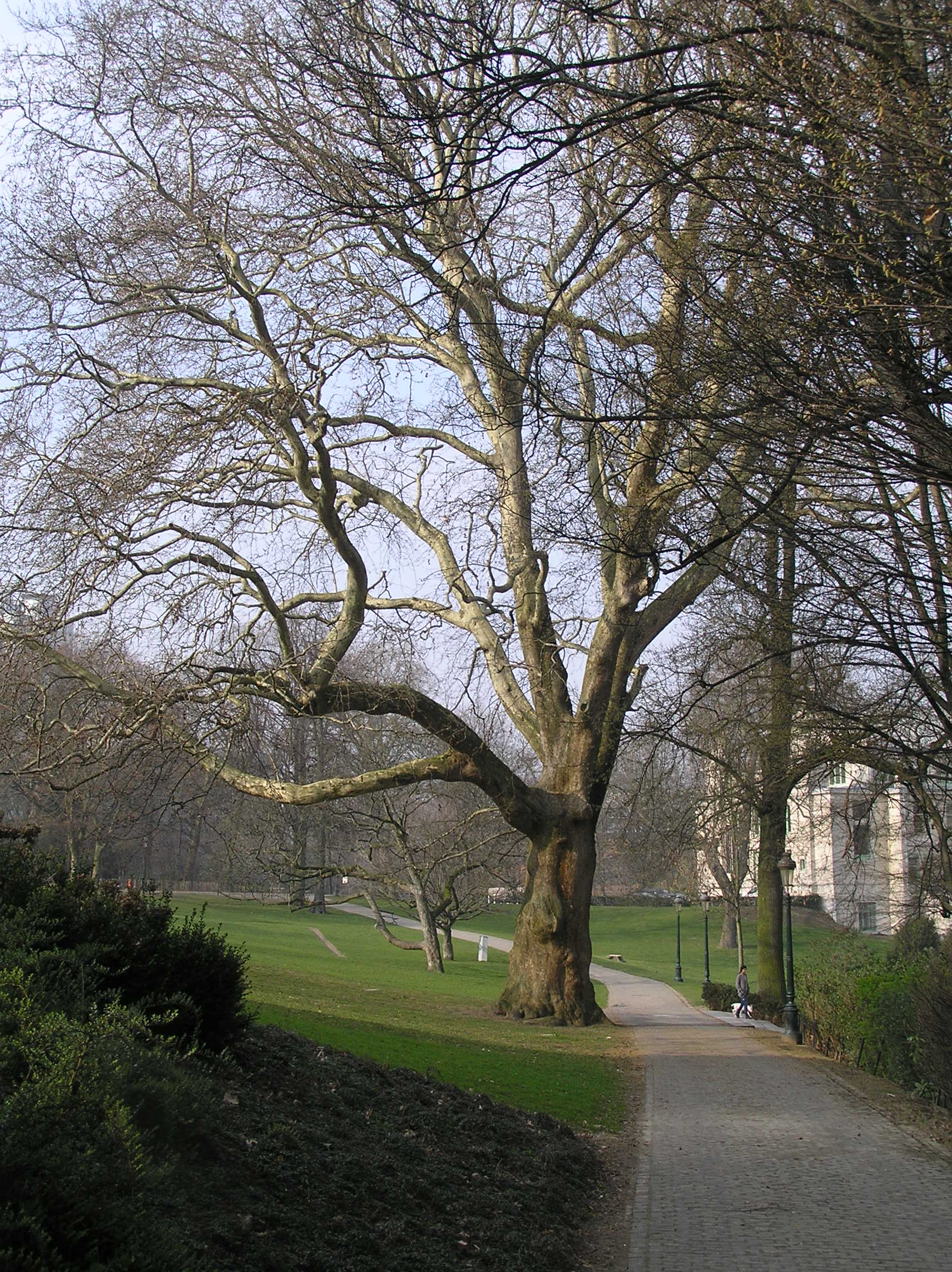
 Behind the huge Paul-Henri Spaak building there is also a basketball and football pitch with few kids playing.
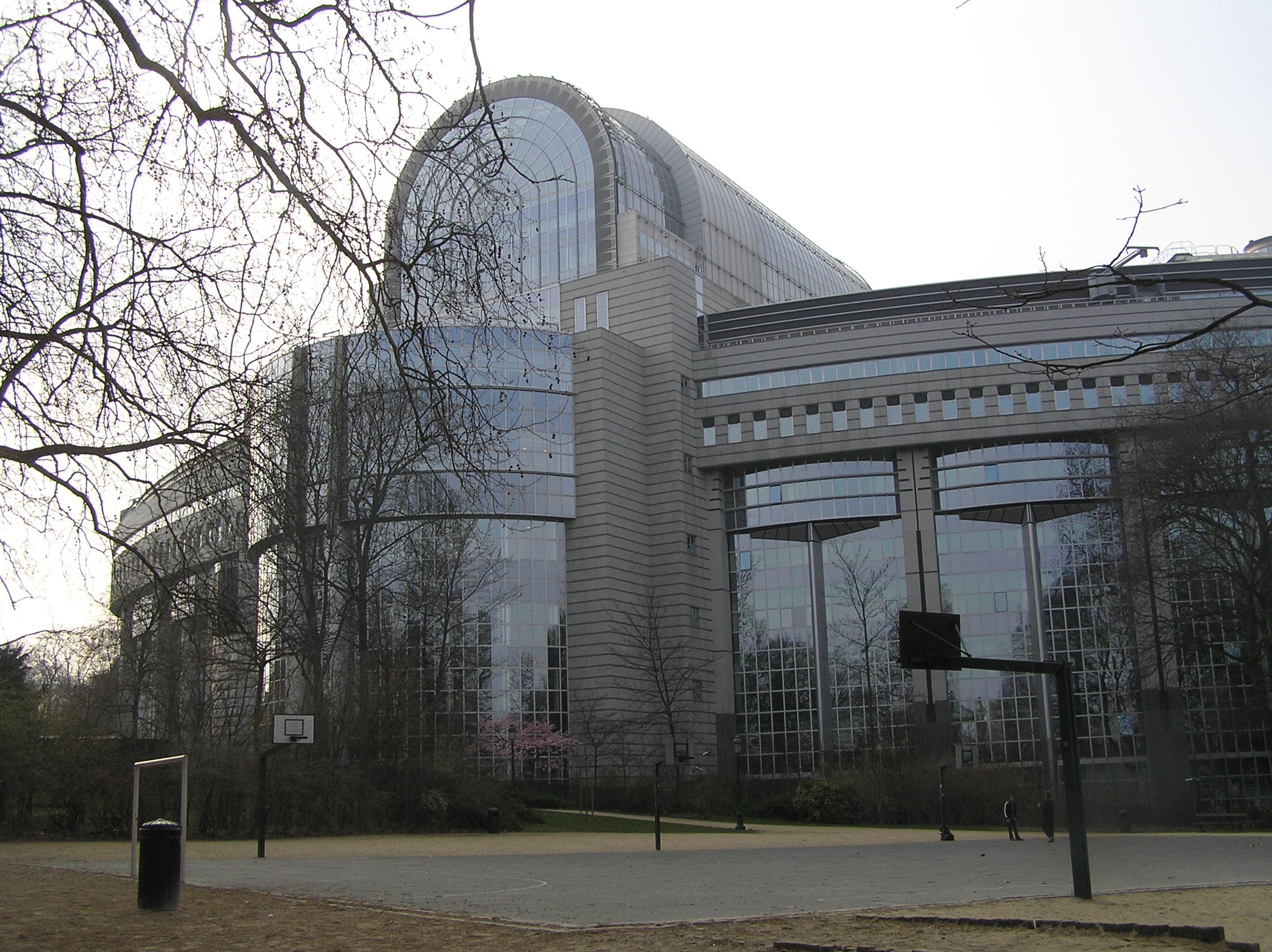

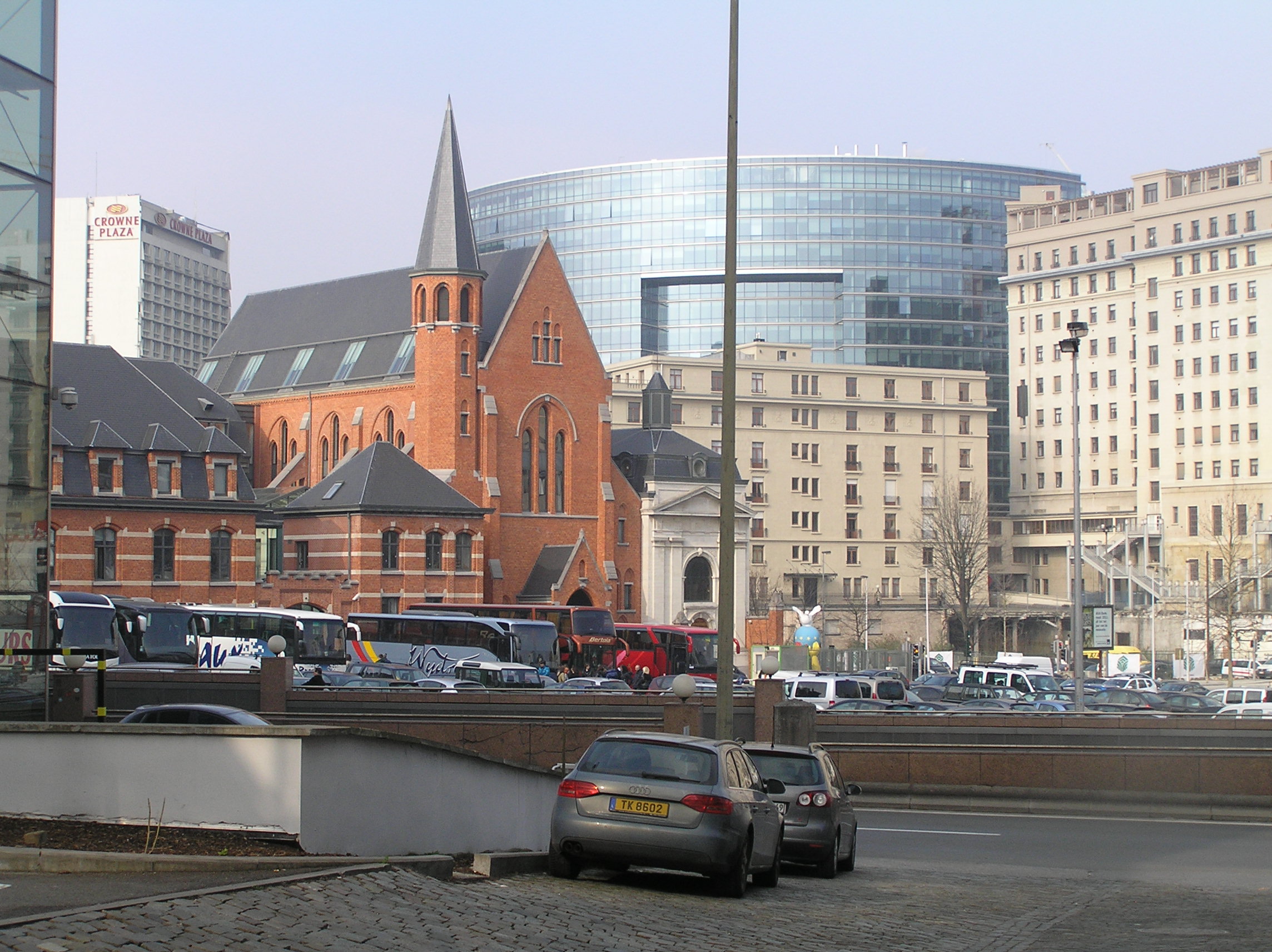
 Seen from the other side the skyline is a shiny example of the collage city.
Every new building is connected to the adjacent one with sky-walks so that the European officers do not have to lose time or mix-up with ordinary people on the streets.
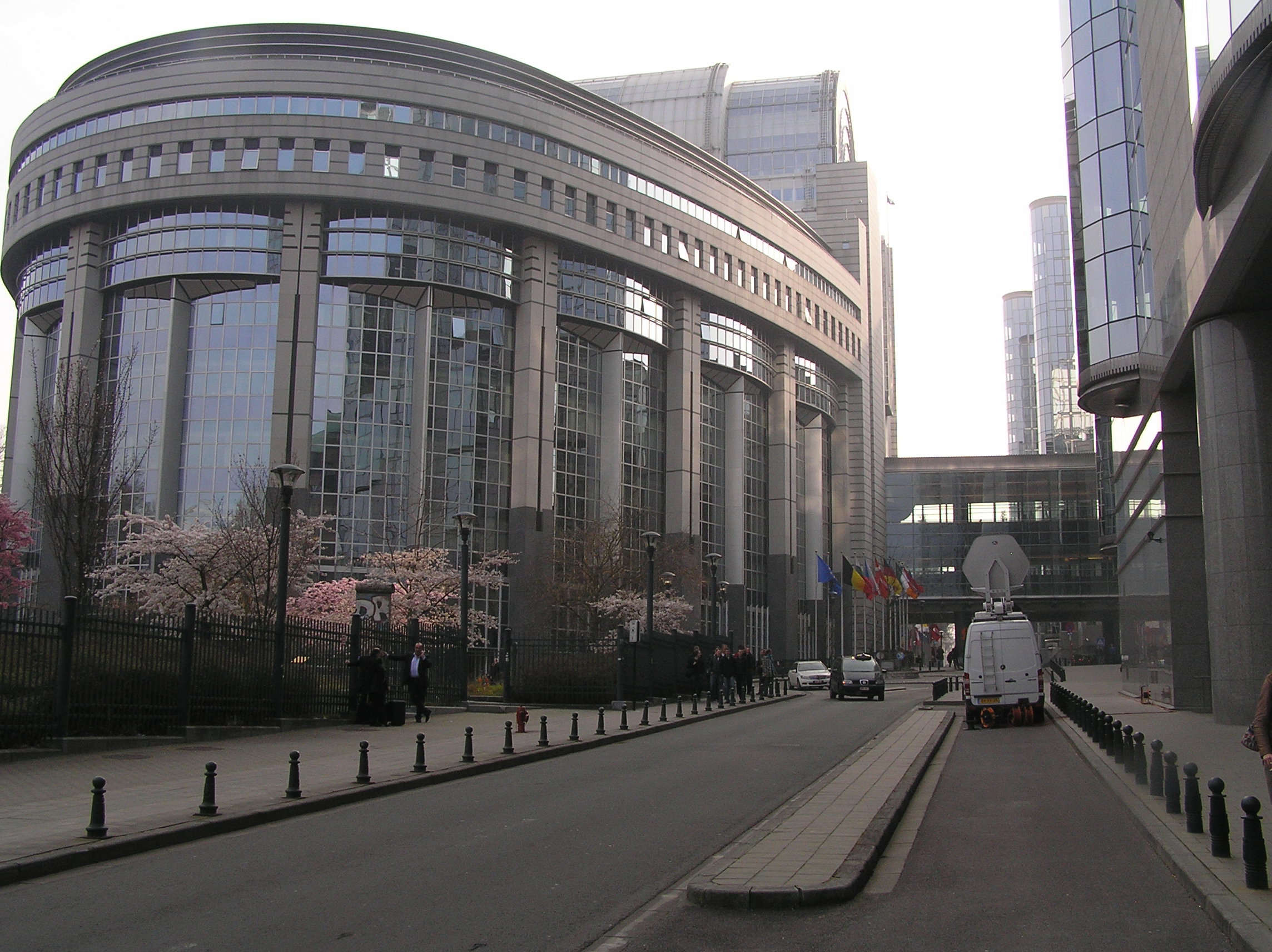
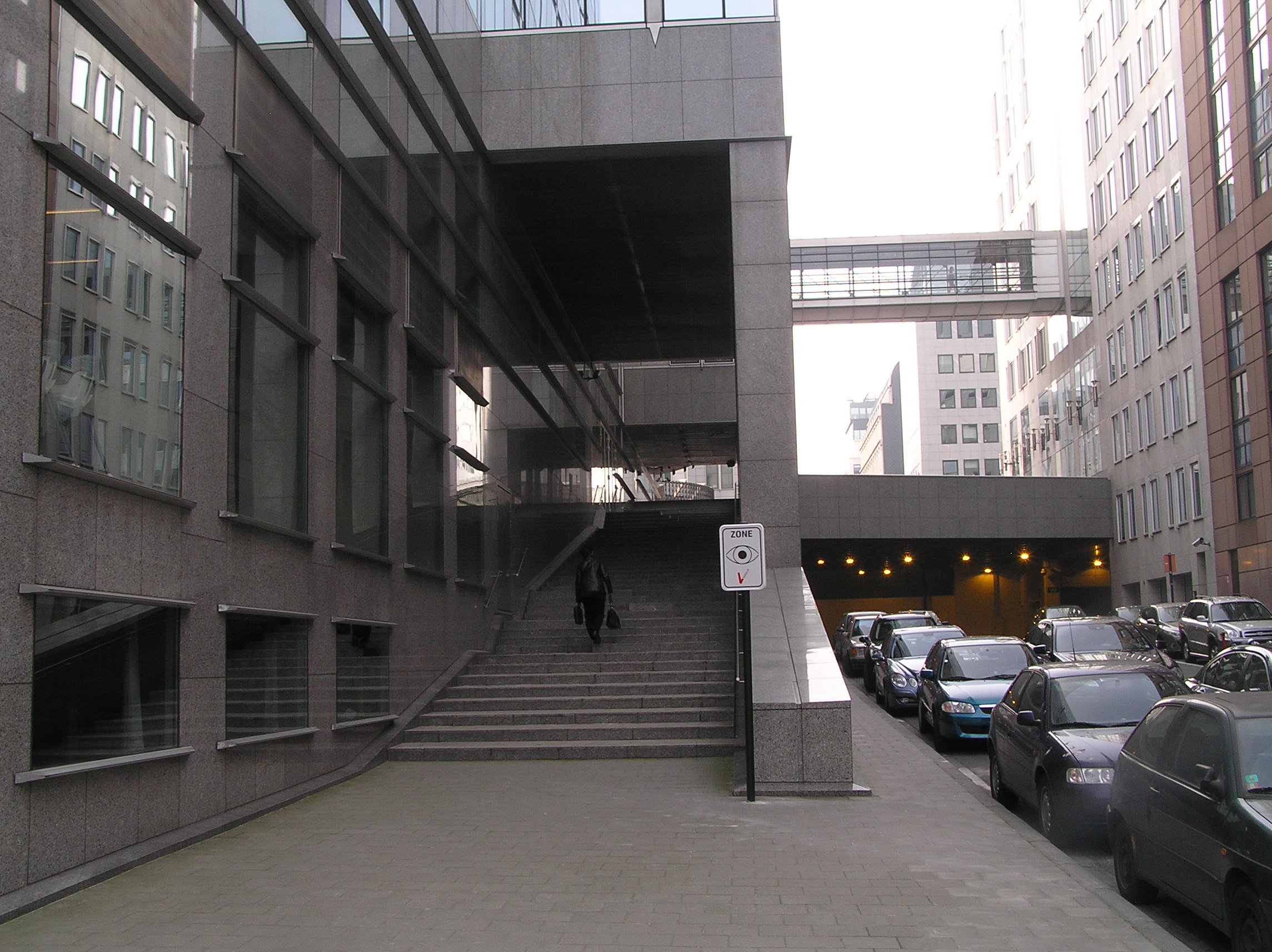
 With all these sky-walks no wonder that the pedestrian plaza is empty and, due to the grey granite stone, it clearly reminds a large-scale cemetery.
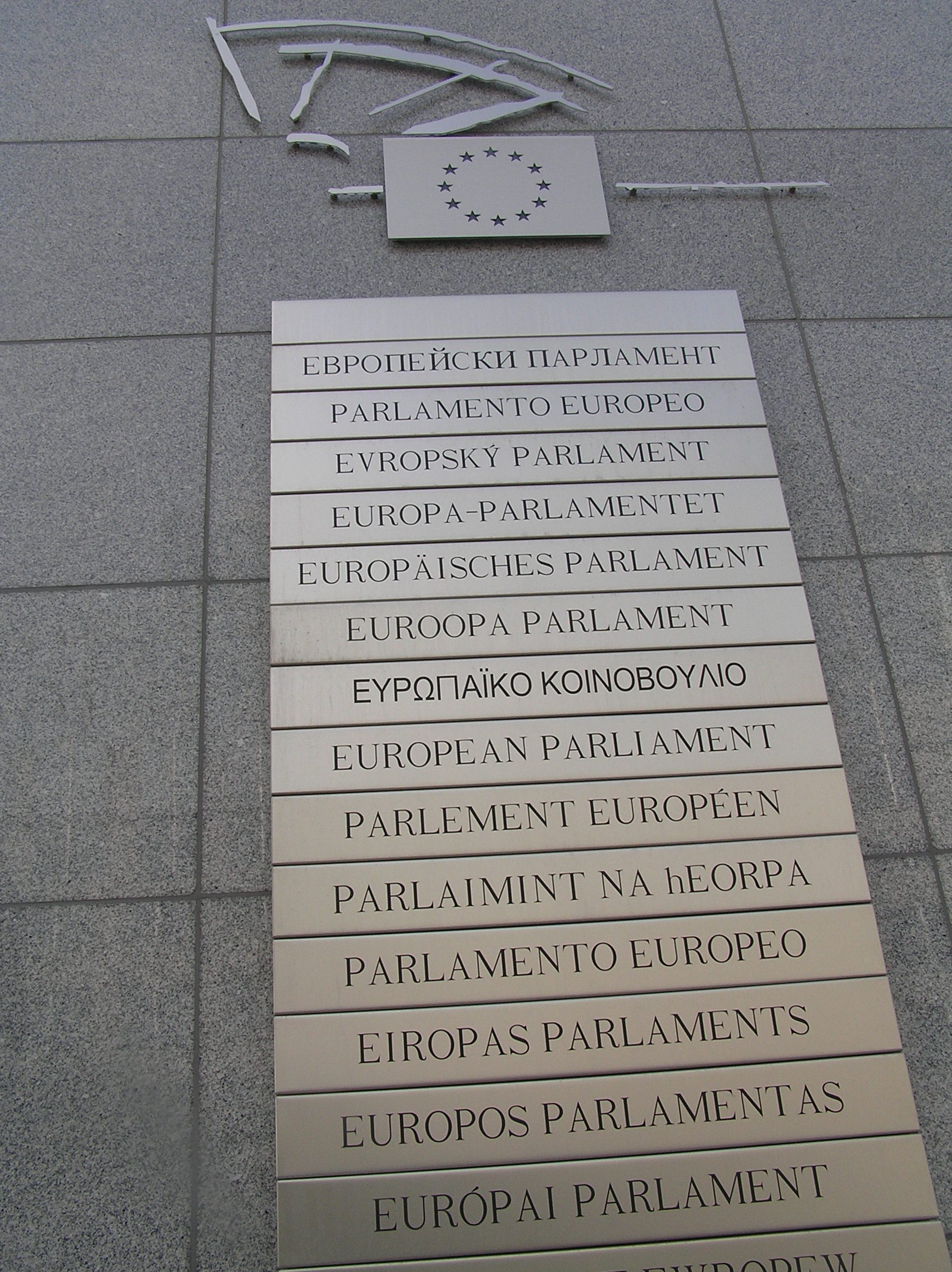 with multilingual engravings.
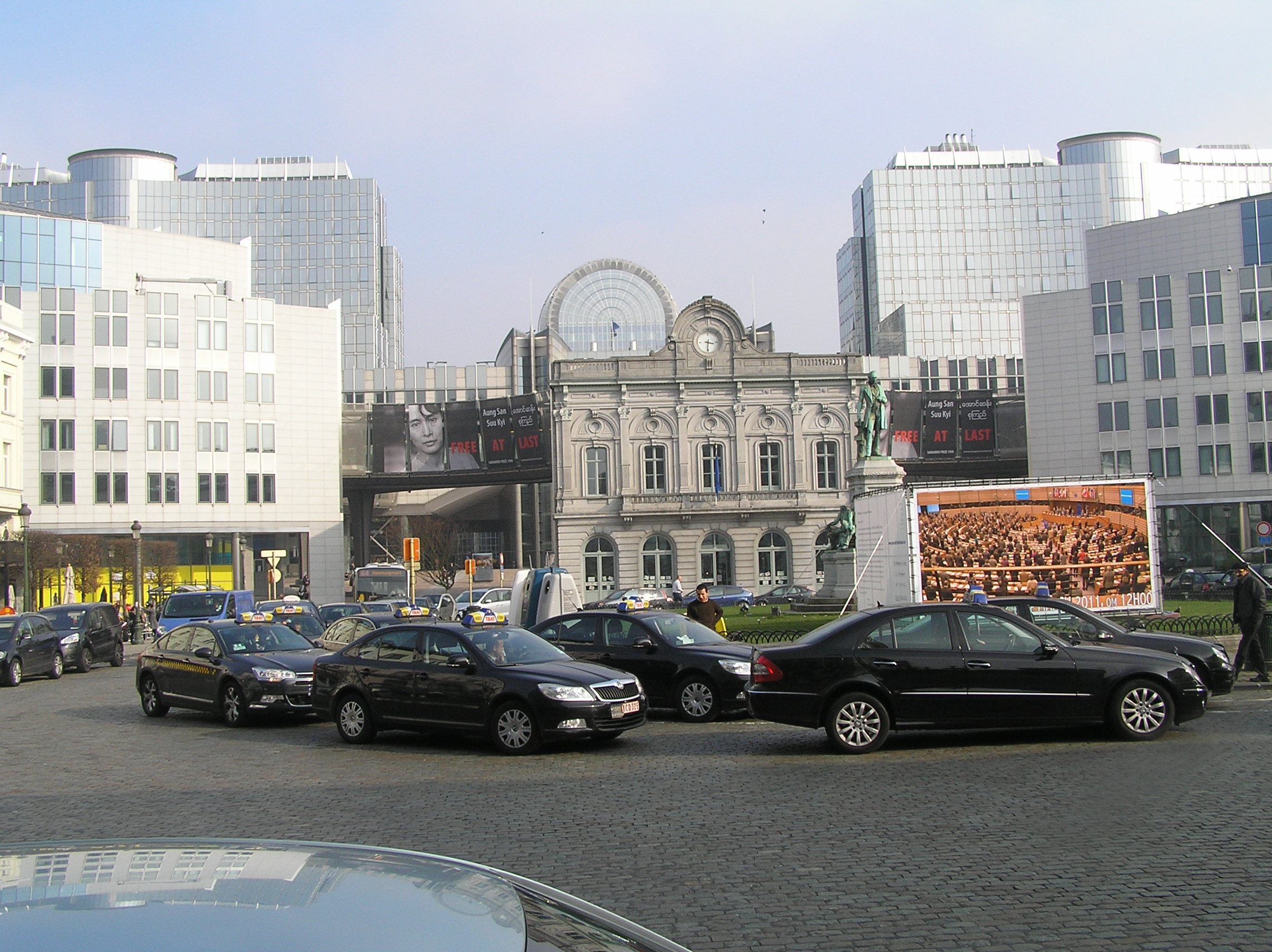 Coming to Place de Luxembourg, despite the heavy traffic, I have the impression to go back to life!

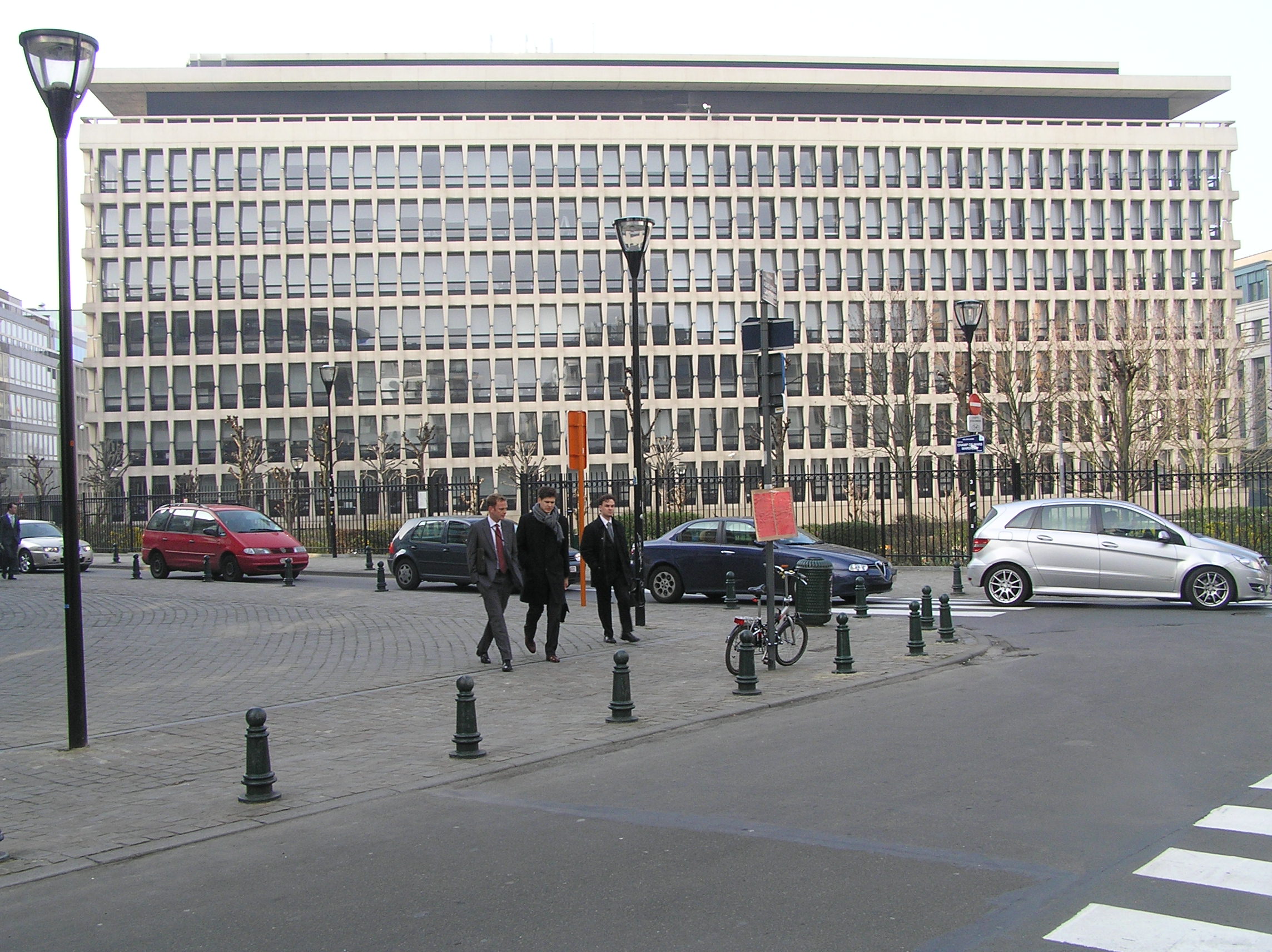 Office building do not have to be heavy and monotonous. This is the seat of a famous multinational dutch bank.
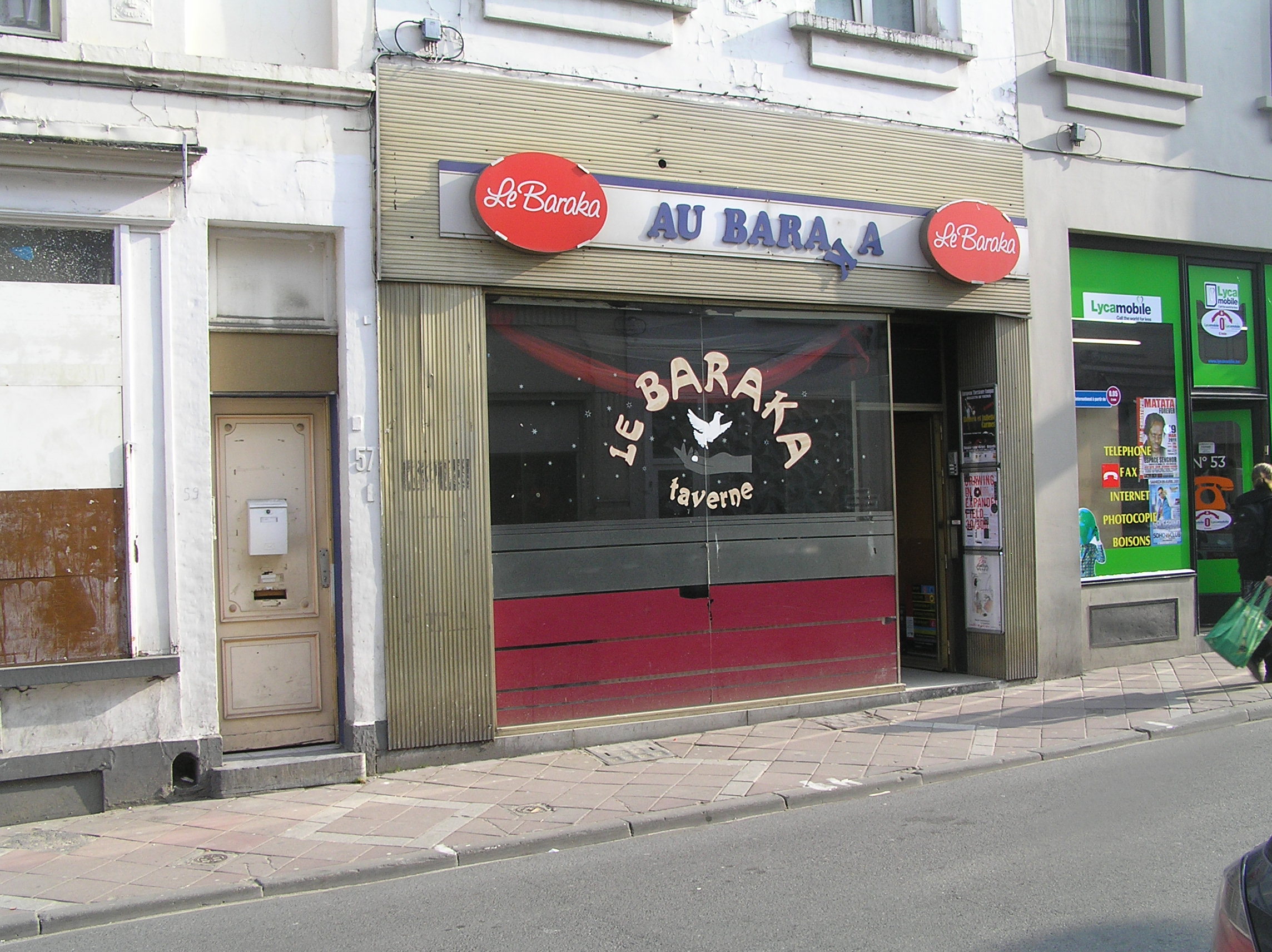
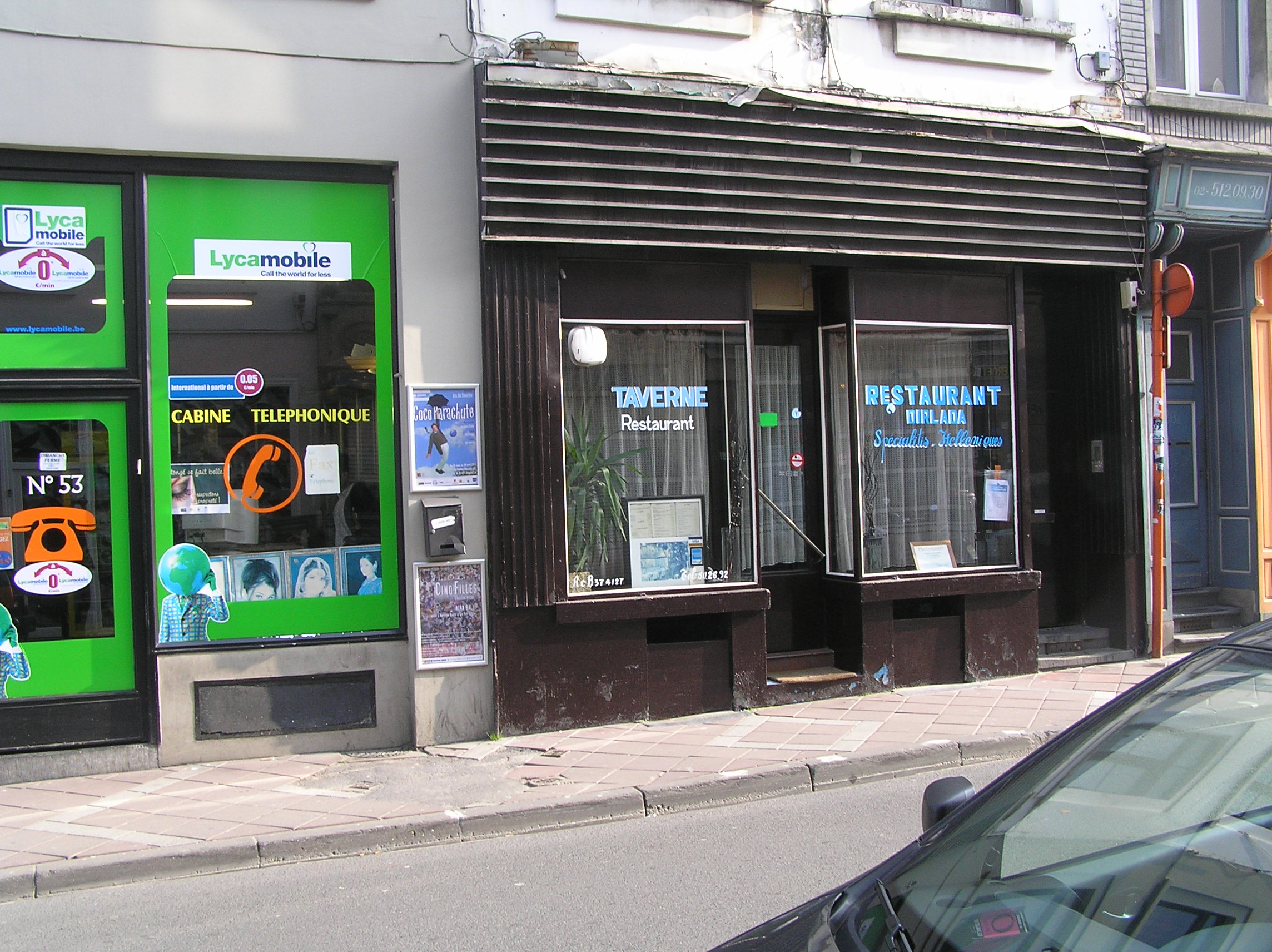 Back in Ixelles, the discordance with the European Quarter is evident, but the two part take advantage of each other.
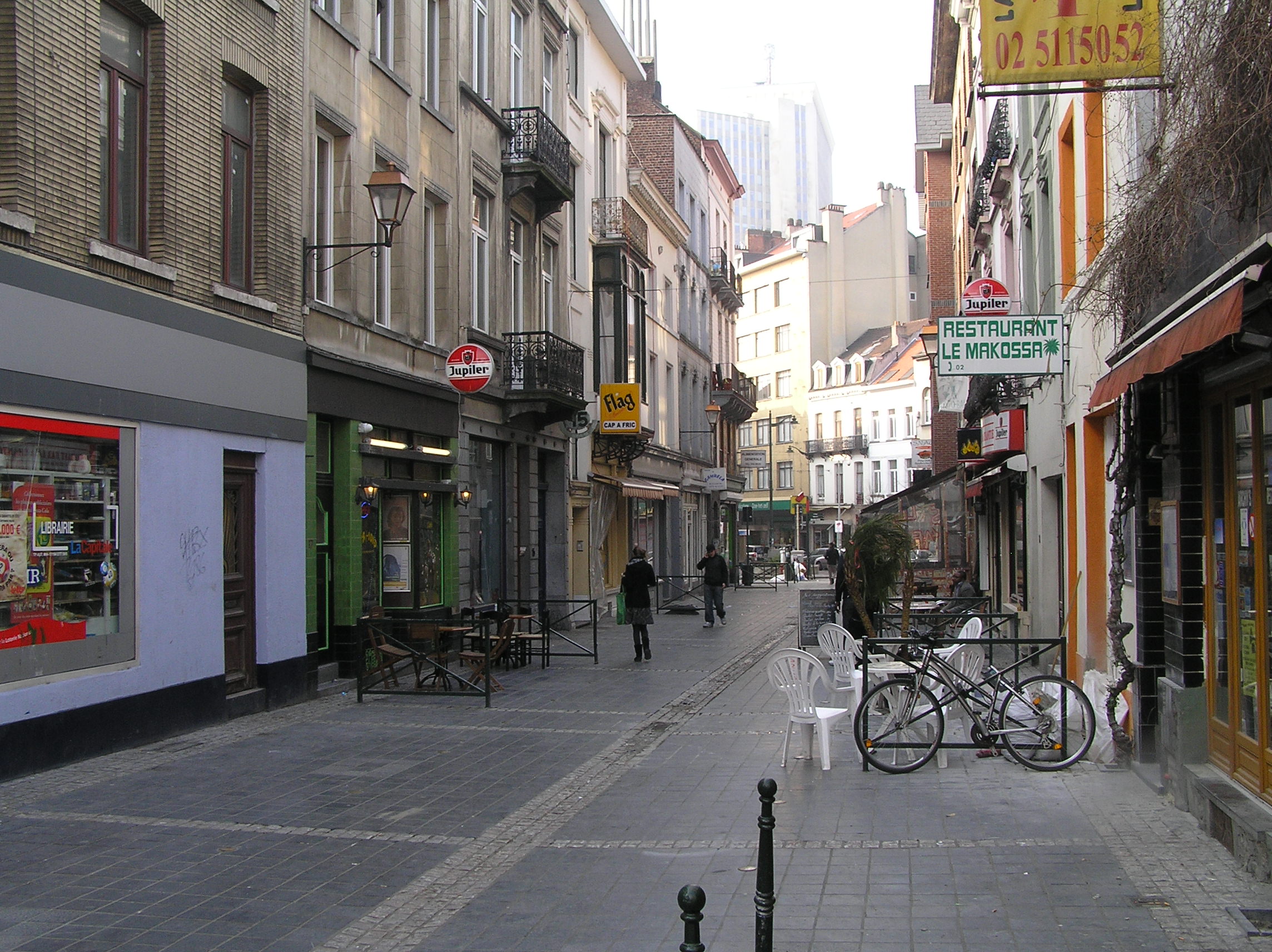

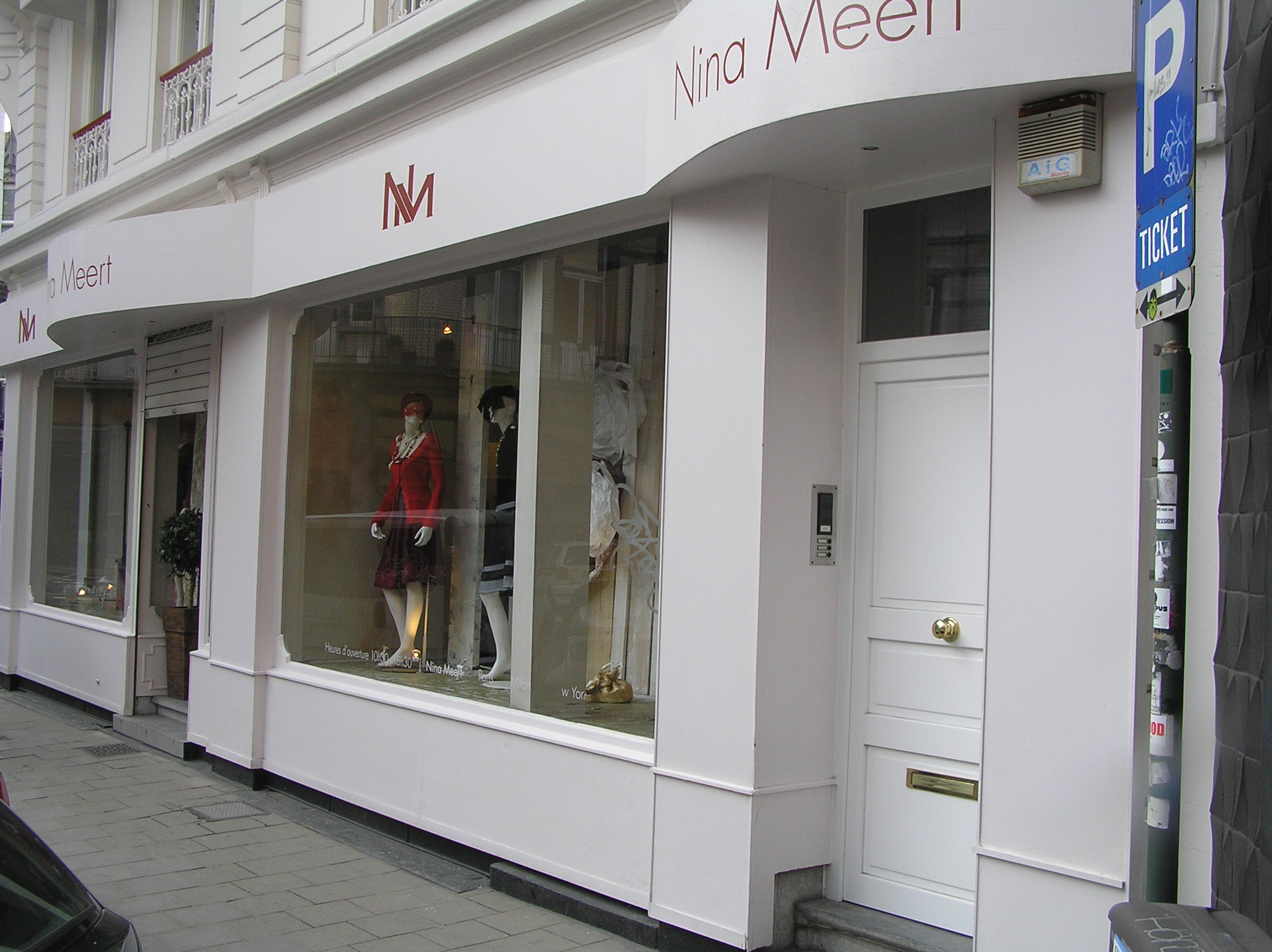
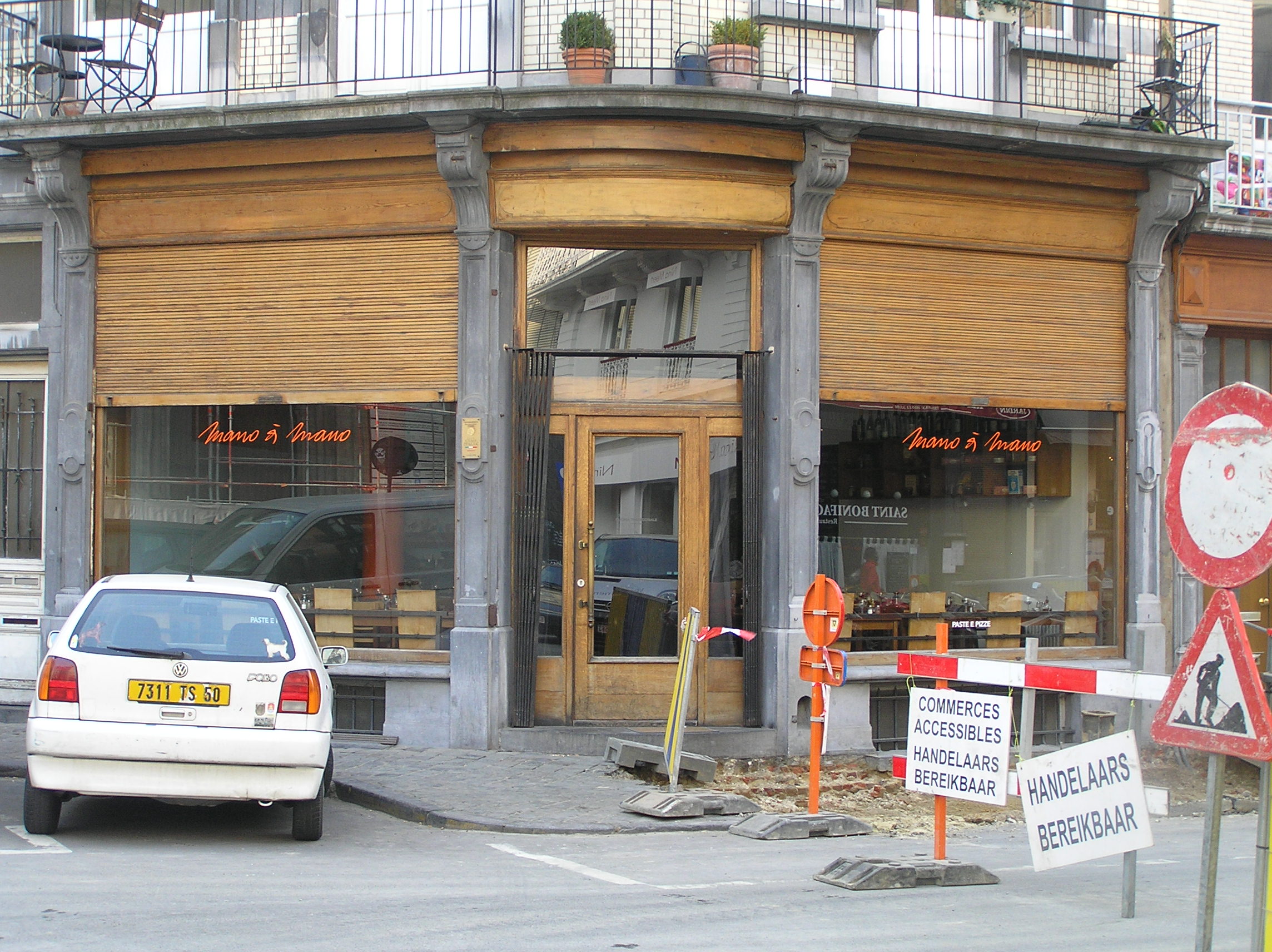
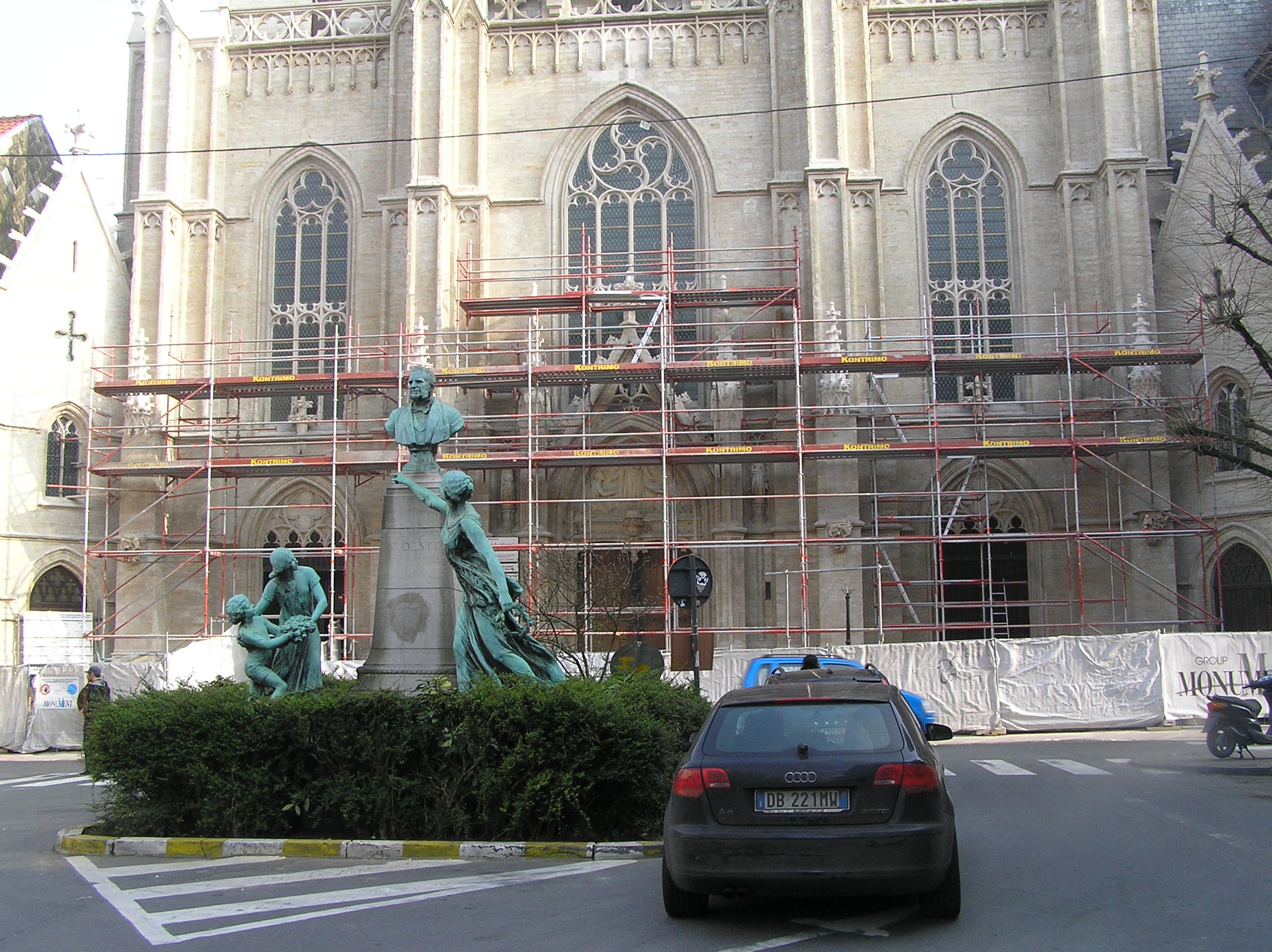

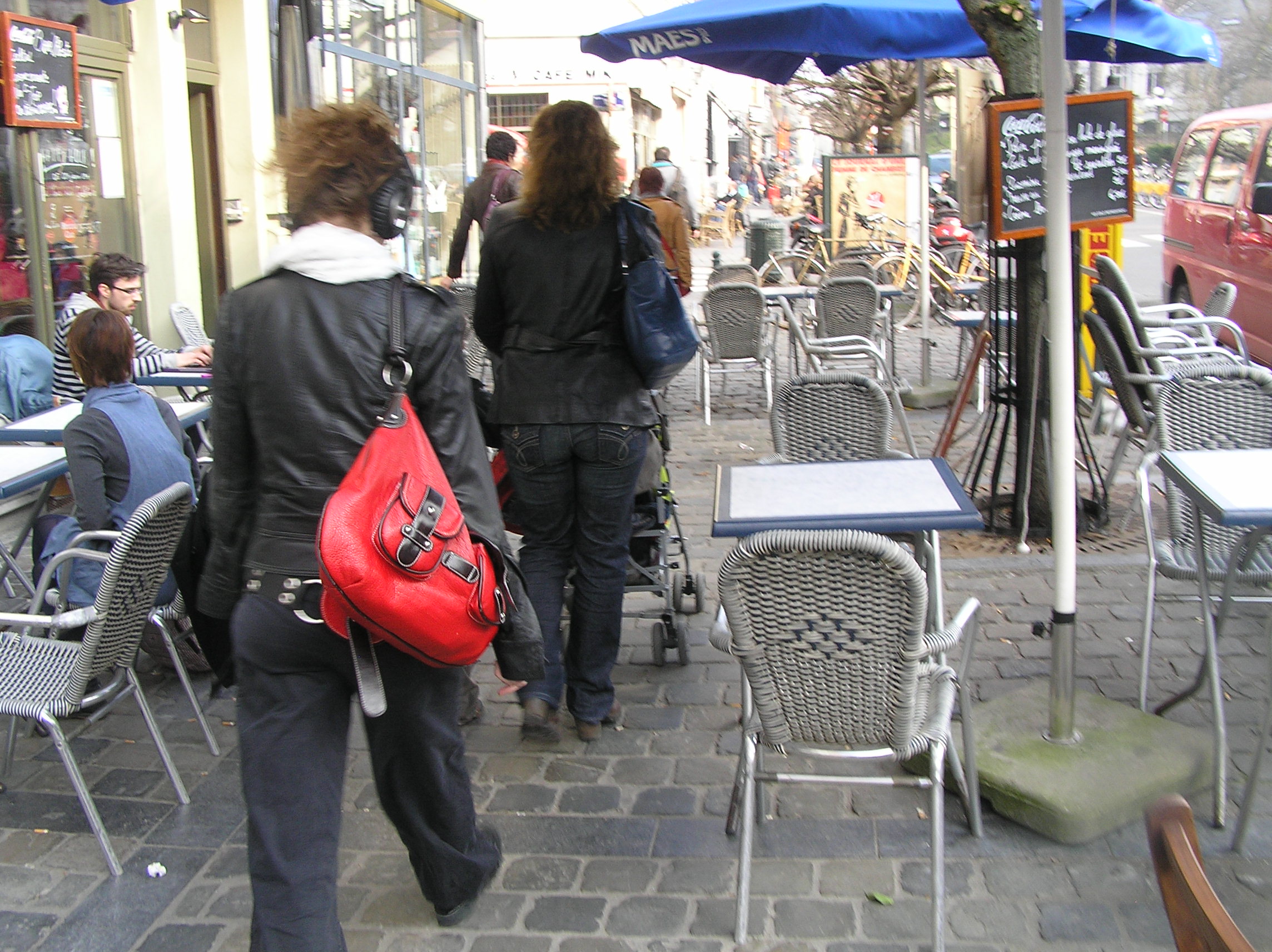 Lively walkways and unconventional public space design with friendly atmosphere.
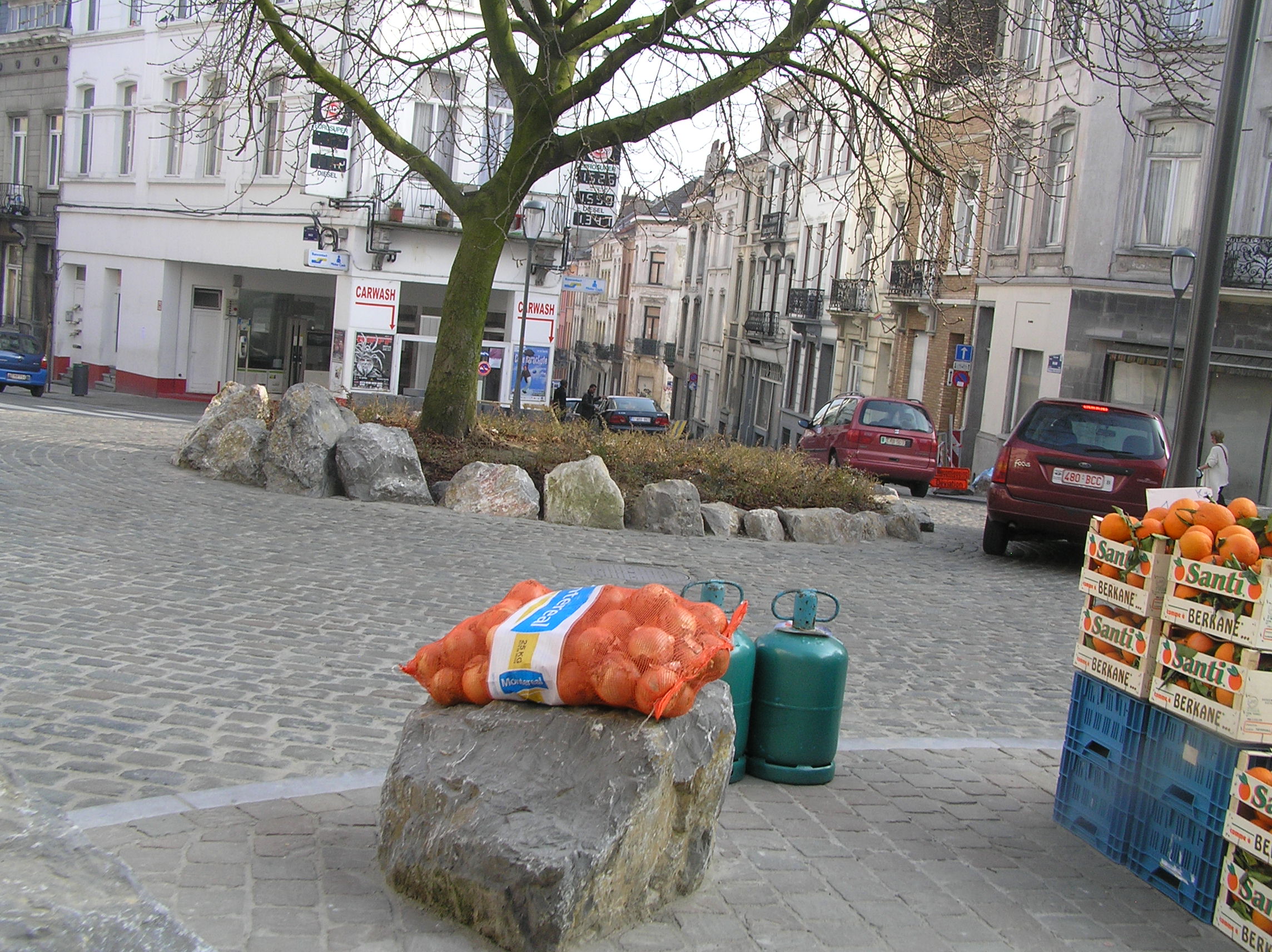
 On my way back I wanted to pass by Place Flagey, the former national radio and orchestra building with recently realised underground parking
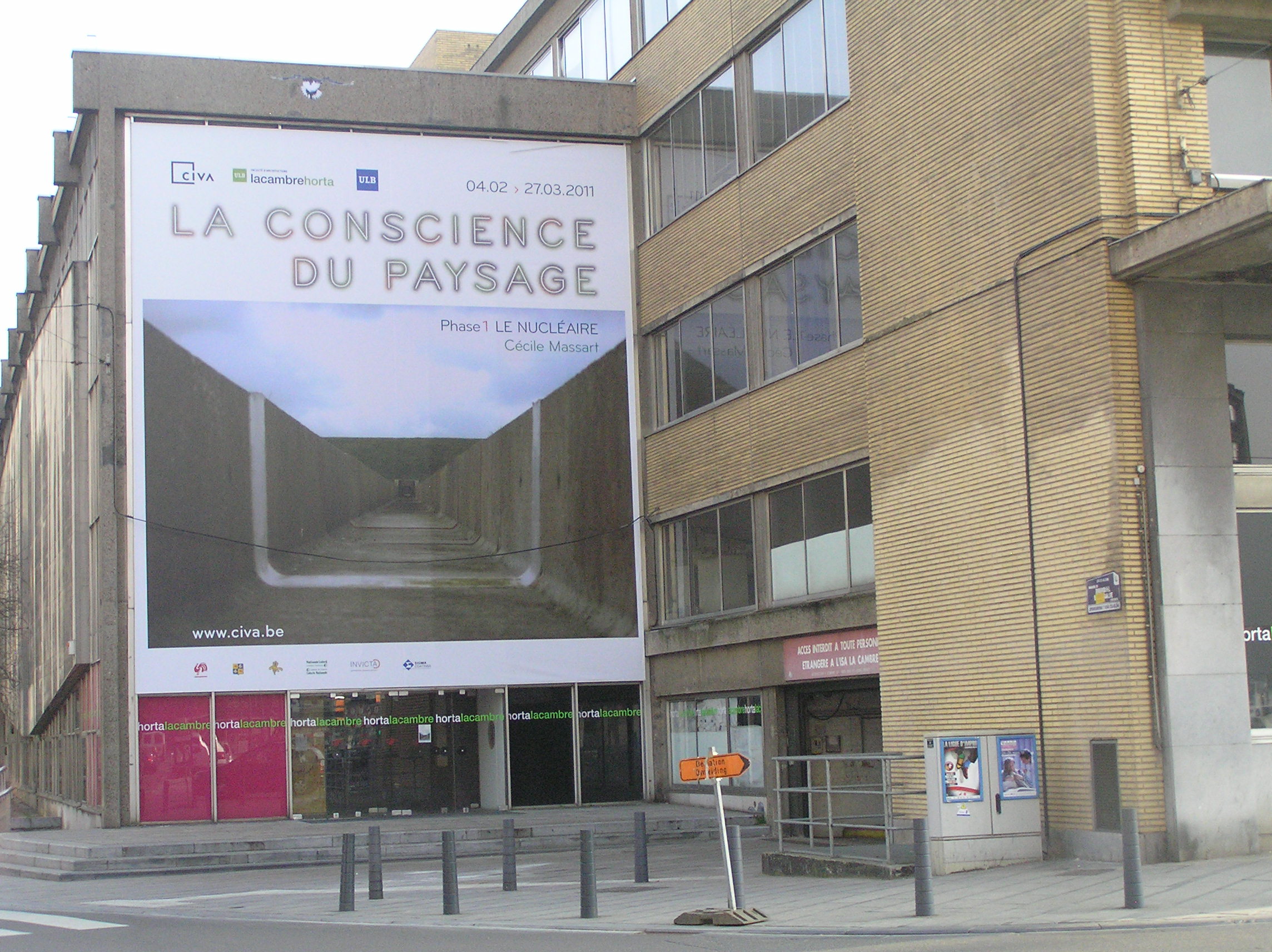 On the side of the Flagey building there is the entrance to la Cambre, one of the architectural schools of the city.
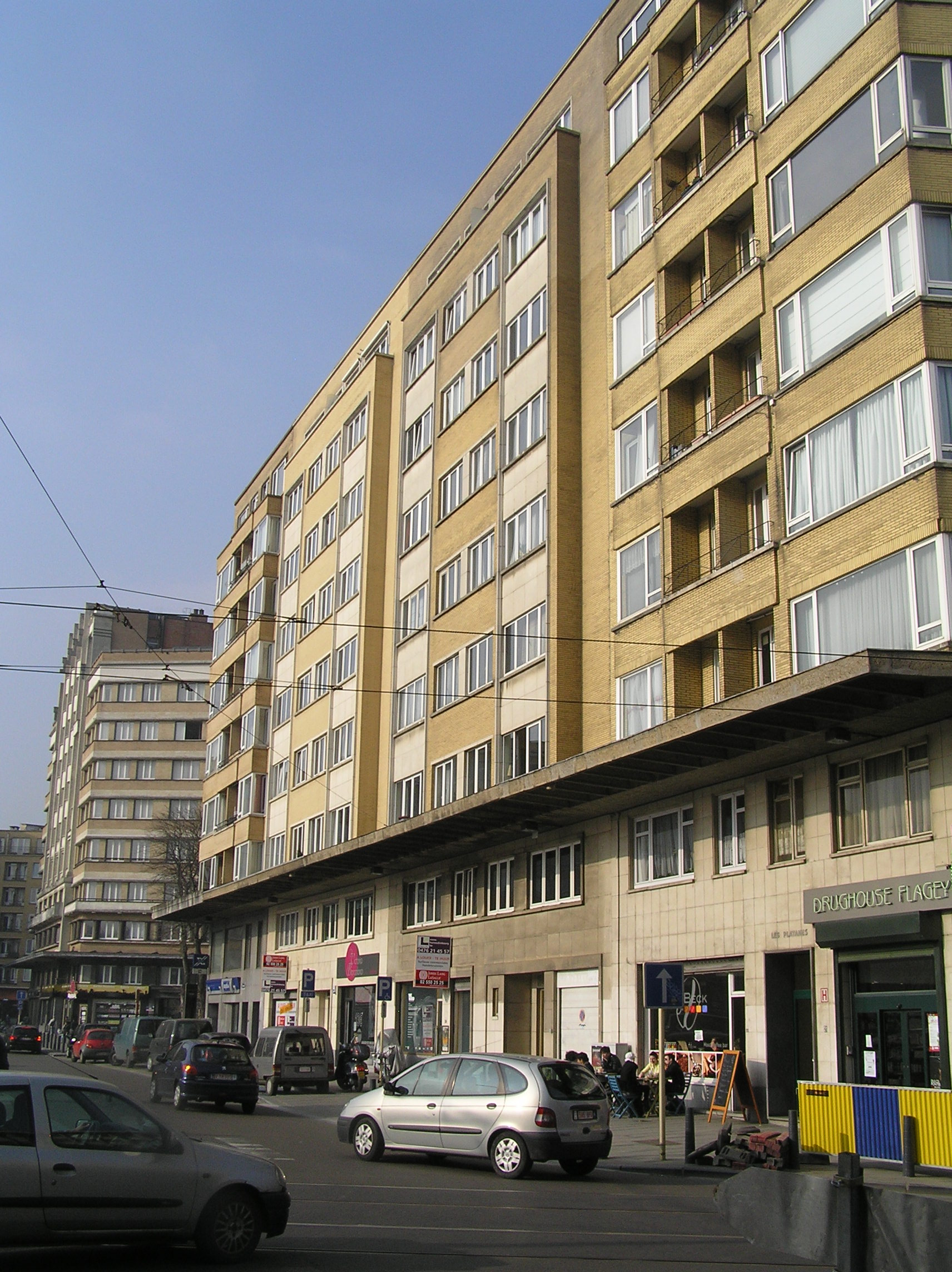
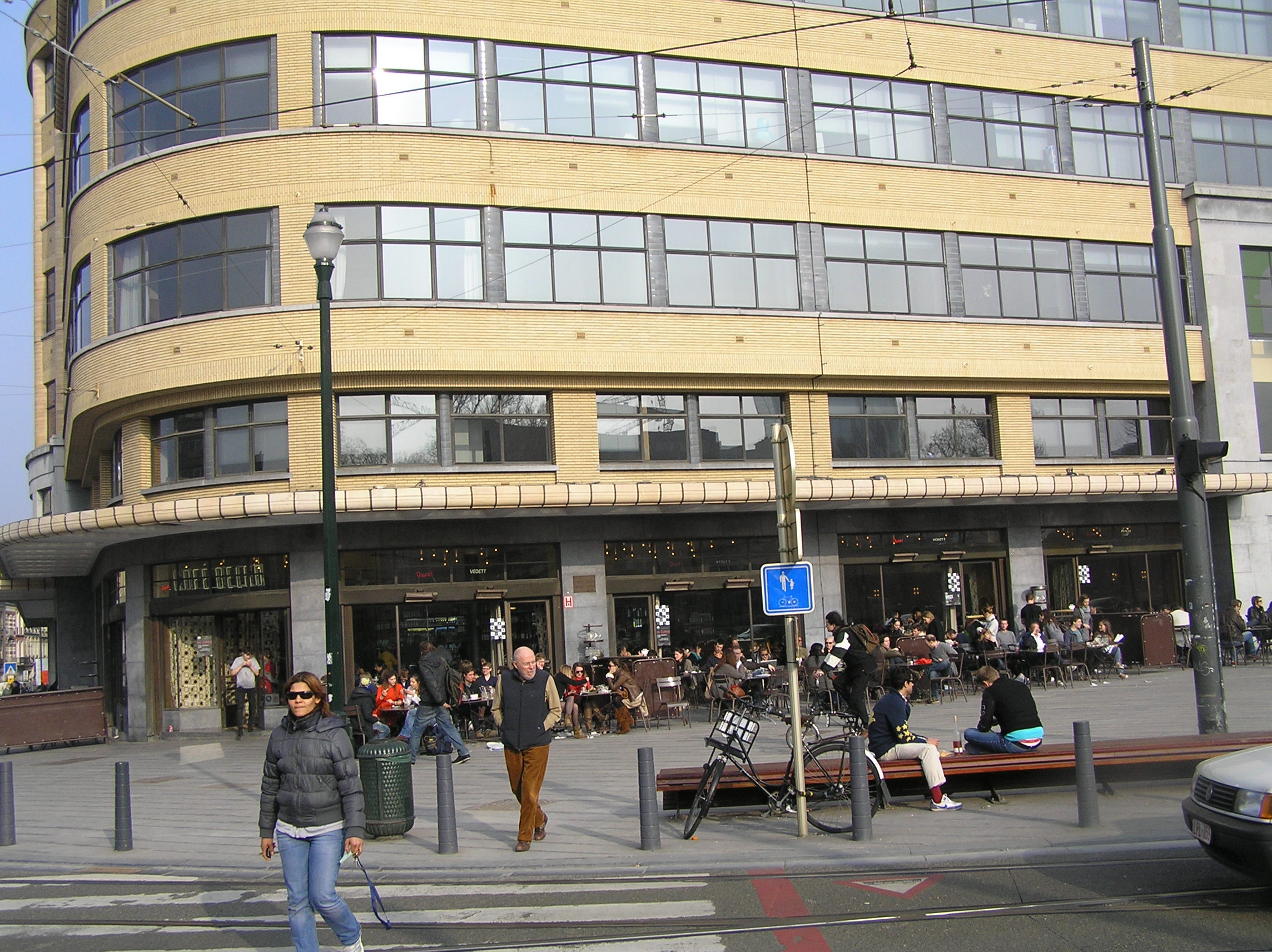 the Cafe Belga
 The new tram station with its trees allegory and a flat glass covering that will never be transparent as it was meant to be.

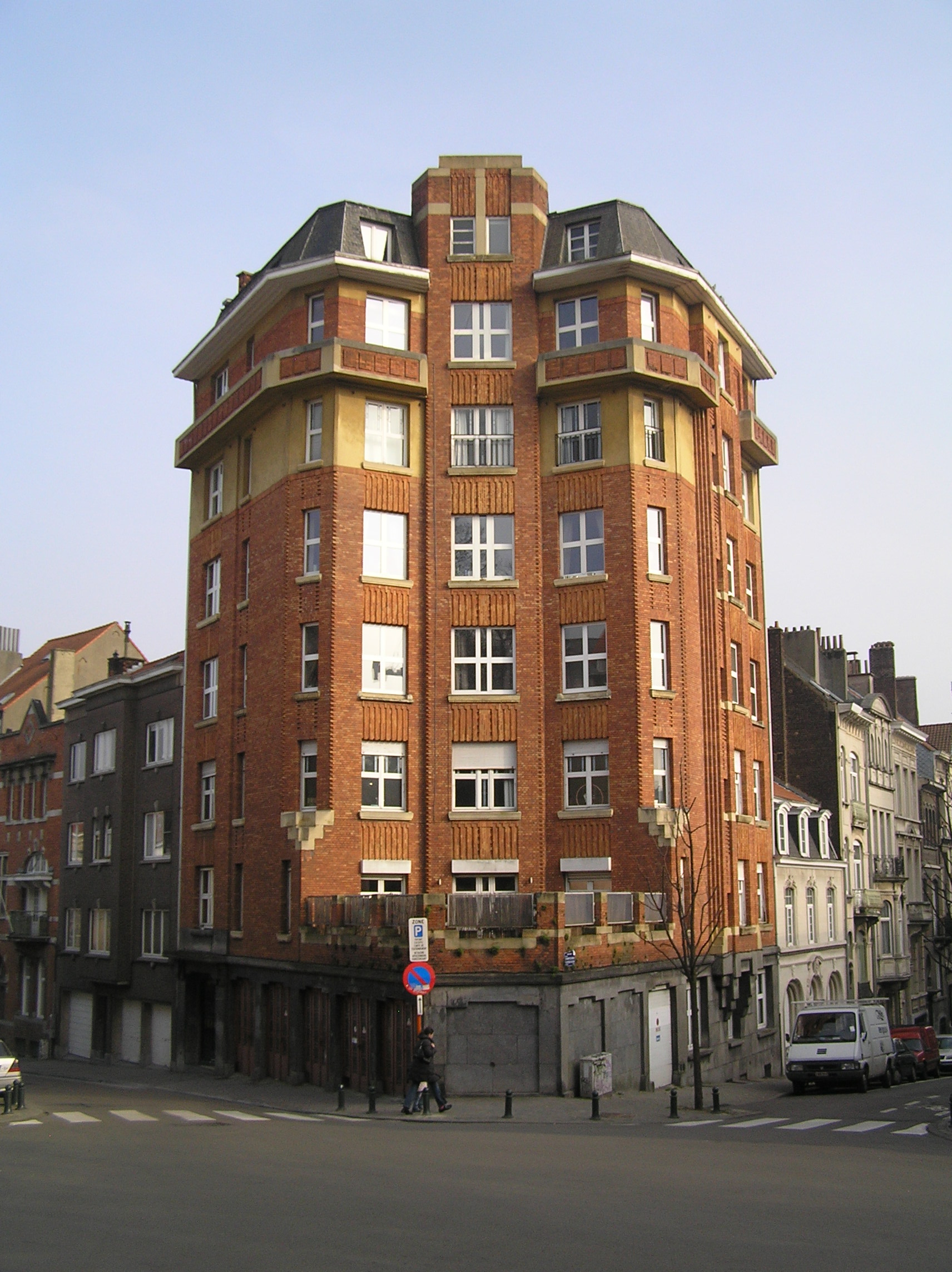
One of my favourite buildings between Flagey and Avenue Louise
Almeria
Some more pictures from Almeria, over one month after my short visit there. This time not about la Chanca and not at all something that will give a full picture of the city. Just a few more pictures about some parts of the city: the airport, the way from the airport to the harbour, a view of the harbour from the hotel at sunset, with the “cargadero de mineral” where iron minerals from the inland where poured into the cargo boats. A walk to the city centre up to the beautifully refurbished town hall, one of the central sqaures with palm trees and white marble flooring, small one- or two-storey houses with large entrance doors and large windows with individually and prominently designed grills, the Alcazaba Fortress and its wonderful moorish garden, a view on the popular quarter with flat roof terraces and moorish urban pattern, the house of cinema and so on. This is what I happened to see between the sessions of a very intense 3-days Urbact workshop. The peak of an iceberg of cultural stratification that the city hs to offer to the visitor. Good Bye Almeria.
Barrio La Chanca /2
My experience of la Chanca in Almeria included visits to old and new buildings, public buildings and open spaces, spontaneous architecture and social housing projects. The following pictures may give an idea of the space and the atmosphere around the neighborhood, at least from my very subjective point of view.

These are a couple of views over La Chanca from the Alcazaba, the moorish fortress that dominates the city.


Signboard of the main public school of the neighborhood.

Some views of the narrow and steep streets of the neighborhood. Some of them have dead ends like in the moorish urban fabrics. Most of the houses are low, with flat roofs, individual painting and the facade is decorated with colorful broken tiles.


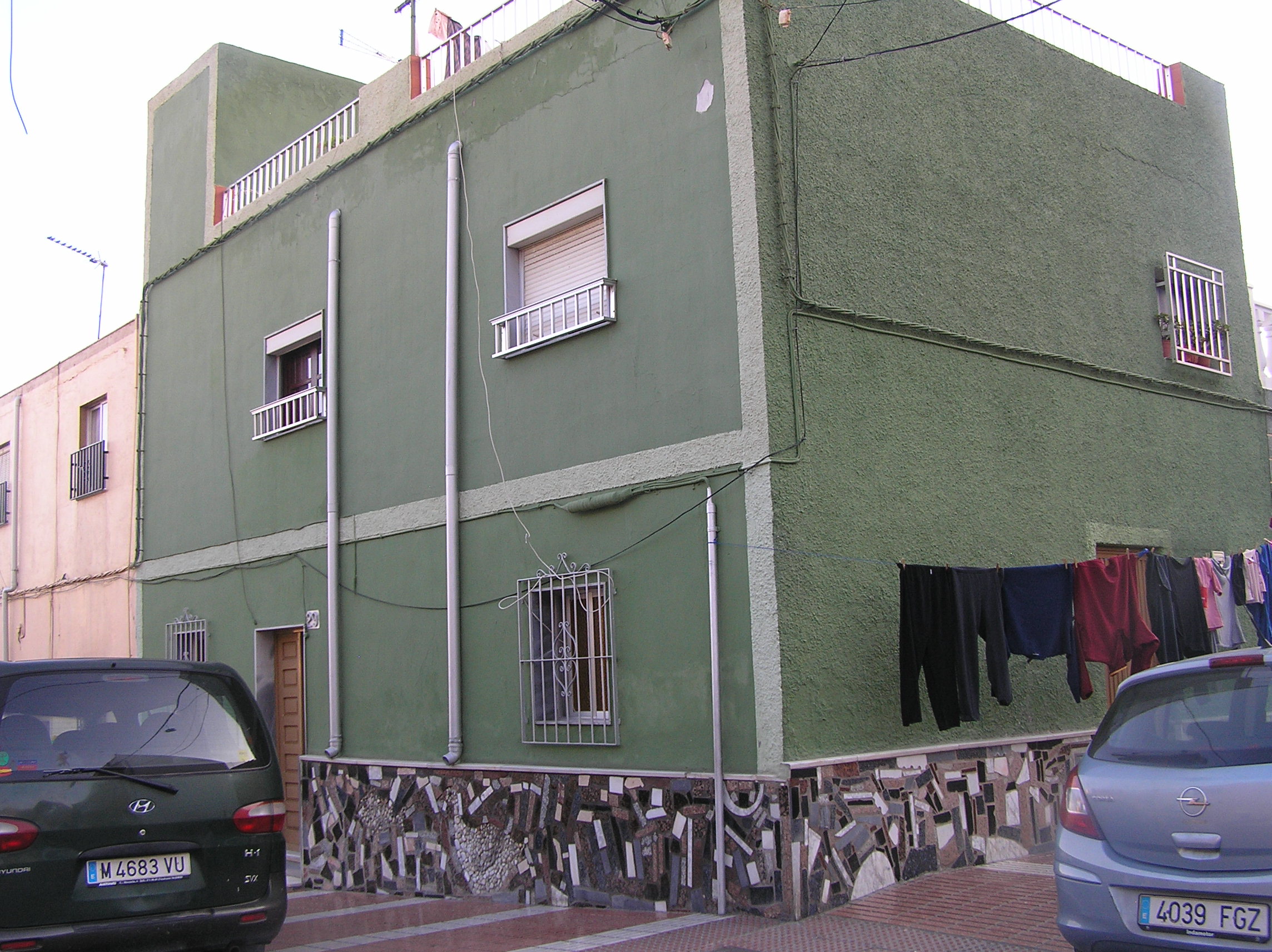

Football and basketball playground below the caves


Sustainable and (eco-) friendly mobility patterns

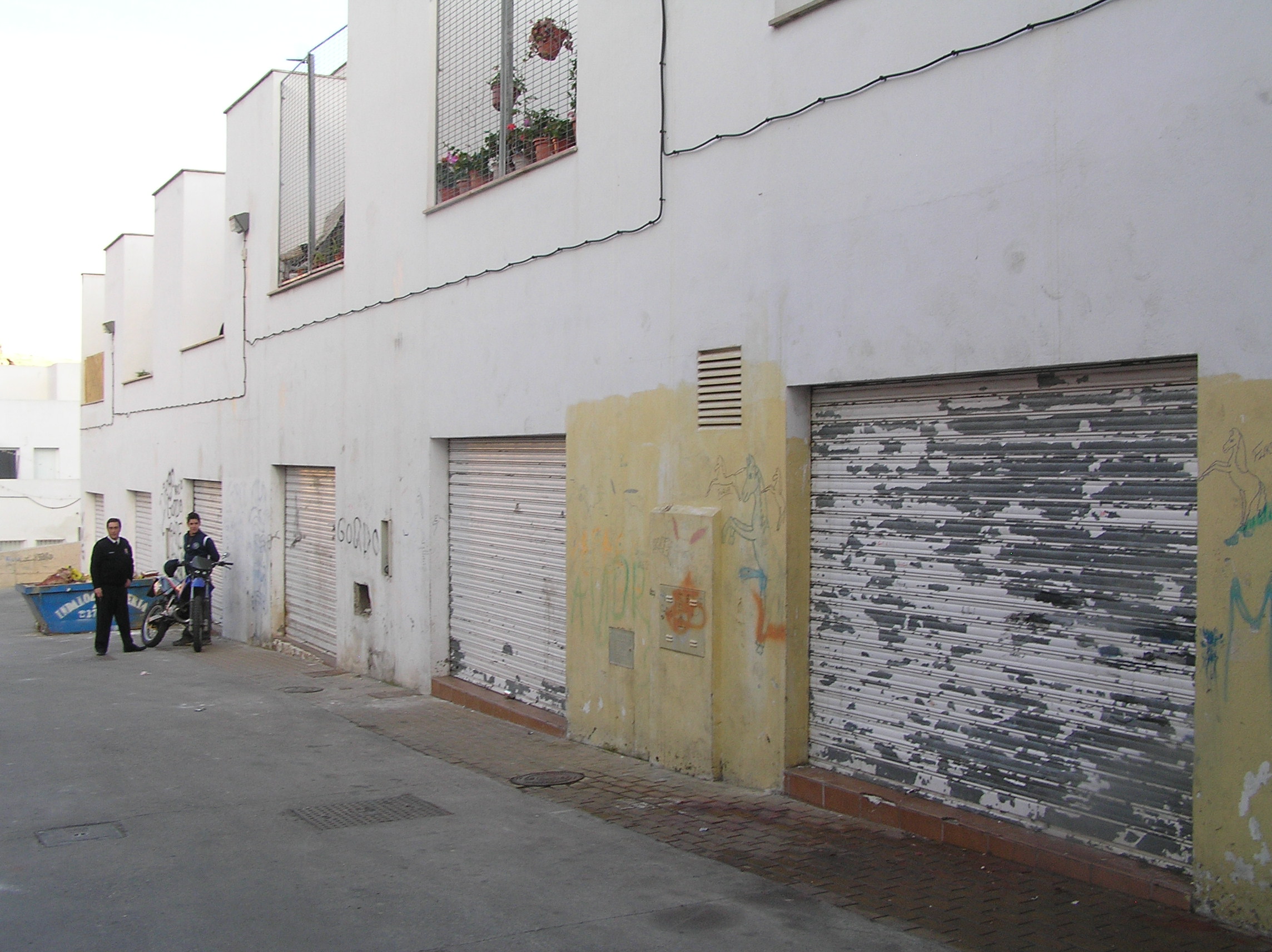
Recently built social housing estate, from the good side
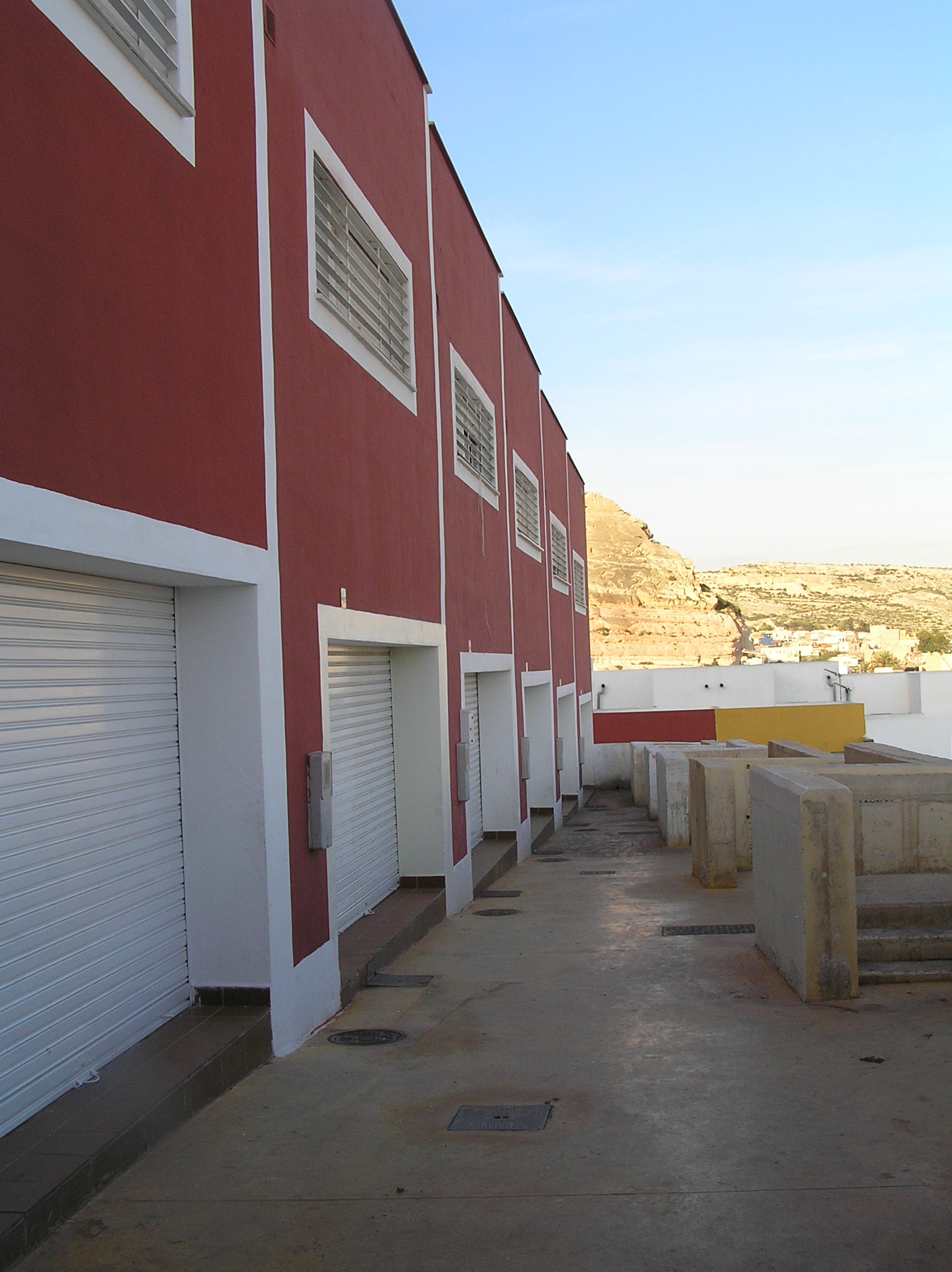
and from the less good side
View from la Chanca to the abandoned cave dwellings and la Alcazaba.


 Well Designed and Built