Españistán – Spanish Housing Bubble for Dummies – @AleixSalo
This is the version with English subtitles of an amazing cartoon about the recent Spanish economic crisis caused by the housing bubble. It is not really new, as a matter of fact it has been seen some 5,5 millions times so far on YouTube, but I saw it today first time (thanks to Urbanculturalstudies) and I found it brilliant!
The original version is on the YouTube channel of Aleix Saló, together with other amazing animations.
Bravo, bravissimo!
Ricciarda Belgiojoso about Urban Soundscapes
In the context of the URBACT Capitalisation process 2012 last November I organised a two days seminar in Milan in which the manifold aspects of urban policies to improve energy efficiency in the built environment were presented and discussed. Experts with technical background (engineers, architects, planners), from the public administration, university, research, finance and economy were involved and last, but not least Ricciarda Belgiojoso brought a very interesting contribution about art practices creating urban soundscapes, something I was absolutely not aware of. Here is the abstract of her presentation with some pictures, references and links where you can even listen to the soundscapes.
This paper would like to draw your attention to a matter that regards us all, every day: the sound of the urban environment. We are used to looking around us, we are less used to listening to what happens around us. And yet, the noises we produce reveal our way of life, and learning to master them is a necessity.
Noise policies in the European Union generally ask for protective actions and noise reduction measures, indicating the levels of the maximum possible intensity of noises produced by road-traffic and airplanes, and asking for silent areas. But in the last years a new and more complex approach to the matter has been devepoled: we consider the quality of noises more than their quantity in decibels. We evaluate the effects of noises on our life and we prefer thinking about managing noises instead of simply reducing them. Noise may be useful and necessary, it may qualify, as well as disqualify, a built environment.
The first researches about this topic were made in the 70s by R. Murray Schafer, composer who started a series of studies on the acoustics of the environment formulating the concept of soundscape and defining a Sound Design procedure for correcting, improving and tuning the environment [1]. A soundscape (from sound and landscape) is an acoustic field of study, such as a music work, a radio program or an acoustic environment.
The final question will be: is the soundscape of the world an indeterminate composition over which we have no control, or are we its composers and performers, responsible for giving it form and beauty?[2]
Murray Schafer created an interdisciplinary research field focused on the effects of soundscape on people. This was the first step in an intriguing investigation, open to extra-musical contributions, on the relationship between us and our aural environment. Schafer’s studies regarded physical and medico-social analysis of acoustic phenomena in post-industrial society, and considerations about the impact of these phenomena on man’s physiology. There are now various centers of research all over the world dedicated to this topic. Common aim is to respect and improve the relation between man and the built environment.
Architects should be able to master the fundamentals of acoustics and psycho-acoustics, such as the propagation of sound waves and their reaction depending on the shape and materials of the obstacles they encounter. If a room where speech must be clearly heard is required, the architect will proceed in a certain fashion; if, on the contrary, the requirement is for a dull or richly resonant room, the architect will proceed in a different fashion[3].
Reasoning about mastering noise, instead of reducing it, is necessary to conceive buildings in function of their aural properties. To obtain the necessary acoustic conditions for an appropriate usage of space, the fundaments of acoustics, such as propagation, reflection, diffraction, absorption and reverberation of sound, must be applied consciously in designing the dimension, the shape and the materials of buildings. Regular forms for example reinforce sound reflection, while indented forms accentuate the phenomenon of diffraction and diffuse sound in different directions. Stone, metal, wood, etc. must be chosen on the basis of the desired phonic consequences. Tall and thick trees over 7 meters wide may reduce sounds up to 4 dB, while groups of trees between 15 and 40 meters deep may reduce them up to 12 dB[4].
While in noise control sound is seen as a cause of human discomfort, the soundscape approach considers the acoustic environment as a resource. Rather than focusing on unwanted sounds, it concerns sounds people desire. The fact a sound is desired or not largely depends on the context, but generally people prefer sounds such as moving water, sounds of nature like birds, animals, wind blowing in the trees, and sounds of people like voices singing and laughing and footsteps[5].
Acoustic environments in outdoor places consist of sounds produced by different sources. In a pleasant acoustic environment preferred sound will be dominant. In acoustic design terms, instead of specifying the level of dB sounds should not overcome, we should rather be sure that wanted sounds are not masked by unwanted sounds. Acoustic objectives should consider accepted sounds in a specific place (e.g., moving water, nature, speech, music, church bells), unwanted sounds (e.g., not be able to hear the traffic noise), and the extent of masking required (e.g., complete or partial masking).
For designing soundscapes, we may find interesting ideas in experimentations made by artists and musicians, that in the last decades have been interested in interpreting urban spaces.
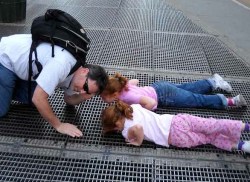
© Max Neuhaus, Times Square, New York 1977-92 2002-permanent work
(photo via Chris Thompson News)For example Times Square by Max Neuhaus (1939-2009), a representative example of his Place Works, emerges from a pedestrian isle in New York in the middle of Times Square, between Forty-fifth and Forty-sixth street, between Broadway and Seventh Avenue. This is probably the most public space worldwide, accessible twenty-four hours a day. A large speaker is placed below the tube’s grids, and sounds pass through. Neuhaus inserts in the crossroad a mass of sound, invisible and intangible, and radically transforms the environment. The installation is not simply reproducing sounds, it consists in a process generating sound and producing events. It dialogues with people passing by, altering their perception of the surroundings.
© Bill Fontana, Sound Island Arc De Triomphe, 1994
Sound Island, by Bill Fontana (1947), installed in 1994 in Paris, connected the sounds of the sea in Normandy to the Arc de Triomphe, broadcasting them live through forty-eight loudspeakers hidden in the façade of the monument. The sound of the ocean waves breaking against the coast was heard in one of the most noisy and visited sites in the world, constantly surrounded by an abundant traffic flux. The breaking of the ocean waves provoked a particular acoustic effect, masking the traffic noise and estranging people from the real context. Cars circling around seemed silent. A strong tension between the urban real context and the new soundscape was created.
© O+A Traffic Mantra, Trajan Forum, Rome 1991
Since 1990 sound artists O+A (Bruce Odland and Sam Auinger) have been working on sounds of the urban environment altering them with mechanical devices and making music out of them. In 1991 they conceived Traffic Mantra, at the Fori Traianei in Rome. Impressed by the resonance effect of roman amphoras, they decided to work on the antique vases found on place to create their installation. The traffic noise resounded in the amphoras and was filtered, amplified and re-diffused on place, superposing to the existing soundscape an intoned version of it. Low and high frequencies of busses, cars and motorbike engines activated the amphoras, creating a weird atmosphere made of harmonic sounds changing continuously.
Nikola Basic, Sea Organ, Zadar, Croazia
In 2005 in Zara (Croazia) Nikola Basic created a sea organ along a promenade 70 m long, on a staircase facing the sea. The moving water inside the tubes presses the air columns in 35 pipes emanating sounds through a series of holes along the scalinade. The pipes are tuned to chord tones according to the local musical tradition. The result is a very pleasant urban musical attraction for people walking on the pier.
References
Augoyard, Jean-François (ed). A l’écoute de l’environnement. Répertoire des effets sonores. Marseille: Editions Parenthèses, 1995.
Belgiojoso, Ricciarda. Costruire con i suoni. Milano: Franco Angeli, 2009.
Blesser, Barry and Salter, Linda-Ruth. Spaces Speak, Are You Listening?. Cambridge, MA: MIT Press, 2007.
Brown, A.L., & Muhar, A. An approach to the acoustic design of outdoor space. Journal of Environmental Planning and Management, 47, 827842, 2004.
Chelkoff, Grégoire et al. Entendre les espaces publics. Grenoble: Cresson, 1988.
Kang, Jian. Urban Sound Environment. London New York: Taylor and Francis, 2007.
Labelle, Brandon. Background Noise. Perspectives on Sound Art. New York: Continuum, 2007.
Sacks, Oliver. Musicophilia: Tales of Music and the Brain. USA: Vintage Books, 2007.
Schafer, R. Murray. The Tuning of the World. New York: Knopf, 1977.
Truax, Barry. Handbook for Acoustic Ecology. Vancouver: ARC, 1978.
Zhang and Kang, Jian, “Towards the evaluation, description, and creation of soundscapes in urban open spaces”, Environment and Planning B: Planning and Design, 34, 6886. 2007.


[1] R. Murray Schafer, The Tuning of the world. New York: Knopf, 1977.
[2] Ibid., p.5
[3] Cfr. Barry Blesser and Linda-Ruth Salter, Spaces Speak, Are You Listening?. Cambridge, MA: MIT Press, 2007.
[4] Cfr. Jan Kang, Urban sound environment (Taylor & Francis: London, 2007)
[5] Zhang & Kang, 2007 Towards the evaluation, description, and creation of soundscapes in urban open spaces. Environment and Planning B: Planning and Design, 34, 6886
Here is the report about the workshop sessions on “Tackling Fuel Poverty” organised and managed by Paul Ciniglio at the URBACT Annual conference in Copenhagen. This is an extremely urgent matter as stated by the organisers of the conference at the European Parliament (Cecodhas Housing Europe and the Urban Intergroup) on 22nd of January.


Facilitator: Paul Ciniglio,
First Wessex
UK
Fuel poverty can be defined as the inability to keep a home adequately warm at an affordable cost. A common definition of fuel poverty, used in several European countries, is where a household pays more than 10% of its disposable income on annual fuel bills. Recent studies undertaken in Western Europe reveal that 12% of all households are living in fuel poverty by this definition.
Fuel poverty is particularly prevalent in Europe’s social housing sector, representing some 25 million homes, as occupants are typically on lower than average national household incomes. The issue however, is certainly not limited just too social housing and it is estimated that tens of millions of people across the continent are adversely affected by the situation. Fuel poverty is heavily influenced by the combination of the energy performance of a home and household income, although external factors such as…
View original post 1,606 more words
The URBACT Annual Conference in Copenhagen offered the possibility for urban practitionners to discuss and exchange about the 6 capitalisation workstream mentioned in the previous post. Workstream Building Energy Effiency in European Cities organised two sets of four parallel sessions. Here is the short but very rich report of the workshop managed by Kleopatra Theologidou.
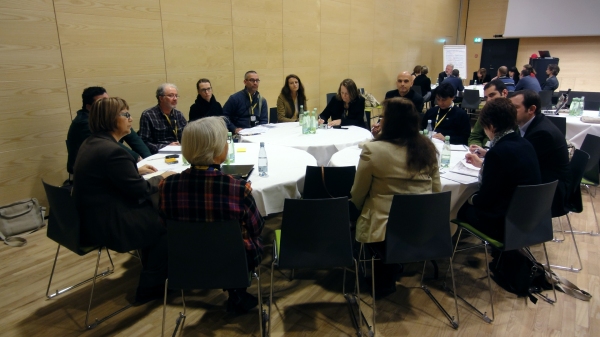
Facilitator: Kleopatra Theologidou,
Architect, MA Conservation Studies
City of Veria, Greece
The workshop started with a short introduction about the importance of protecting and enhancing the historic centres of the cities, where historic and traditional buildings hold a central role to their image and identity. It was pointed out the importance of keeping these buildings alive and to achieve this, the only way is to ensure their continuous and proper use, which means that they should respond to current needs, namely alterations. A major theme under discussion nowadays is energy efficiency. Till recently, however, heritage was out of this discussion at a European level as dealing with certificates and standards, because the improvement of the energy efficiency of historic buildings means alterations which seem to influence the integrity and the historic values of the buildings.
The introduction was further referred to the different thermal behaviour historic and traditional buildings…
View original post 1,643 more words
Building Energy Efficiency in European Cities | My Presentation @URBACT Annual Conference in Copenhagen
This is the 3 minutes presentation I held in the plenary session of the 2012 URBACT Annual Conference in Copenhagen last December 3rd.
The subject was Building Energy Efficiency in European Cities and the presentation followed the ones of the other 5 URBACT capitalisation workstream coordinators: Hans Schlappa / Shrinking Cities: Challenges and Opportunities, Alison Partridge / More Jobs Better Cities, Eddy Adams / Supporting Young People Through Social Innovation, Iván Tosics / Against Divided Cities in Europe and Sally Kneeshaw / Motivating Mobility Mindsets.
It was meant to be an introduction before the thematic workshops sessions taking place during the two days conference and, although unexpectedly interrupted by the speech of Commissioner Hahn who had to leave the conference shortly after, I think we succeeded in representing the 6 main issues addressed in a concise and lively way.
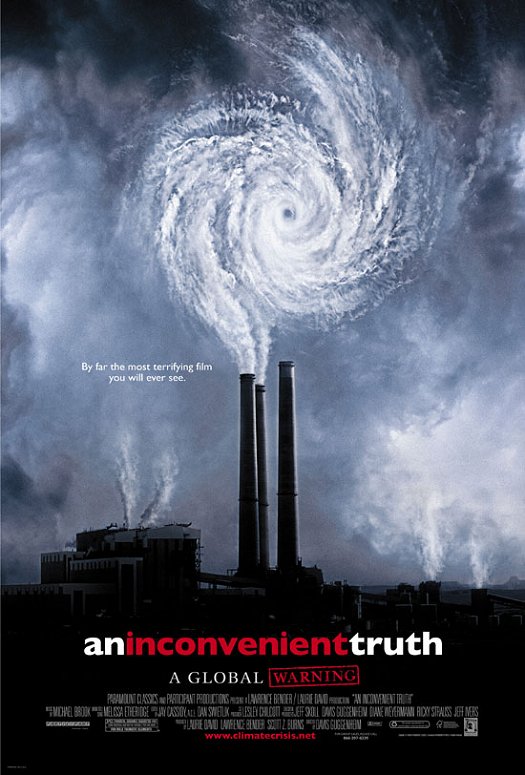
In the early seventies the first oil crisis brought the western countries to think about energy as a limited resource. My parents installed double windows on the north side of our flat and aerodynamic became relevant in the design of cars.
A new awareness about mankind environmental footprint on heart began to spread,
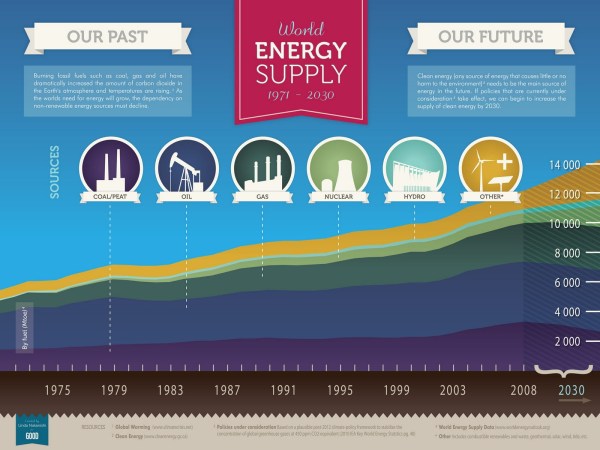
but in the end energy consumption continued to rise as the inevitable price to pay for progress and GDP growth.
At the turn of the century, increasing energy prices, approaching depletion of fossil fuels and climate change raised awareness among populations and decision makers
speeding up technological innovation to find new and better energy use patterns.
Today the world of energy supply and consumption has become more and more differentiated, complex and unpredictable,
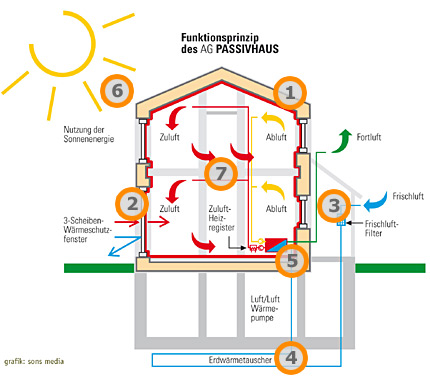
but at least two things have clearly emerged: the building sector accounts for an average 40% share of primary energy use and – what is even more important – it has by far the greatest energy-saving potential, both in terms of embodied energy and energy consumption.
Increasing awareness of energy-saving potential of the building sector led to definition of several energy efficiency standards,
certifications and assessment processes,
and also to major legislative initiatives at European level, such as the Energy Performance of Buildings Directive (EPBD).
The recent re-cast of the EPBD sets very strict rules for new buildings
witnessing a certain political will to progress in this direction, but it has substantially missed the opportunity to set precise and ambitious targets with regard to retrofitting the existing buildings stock.
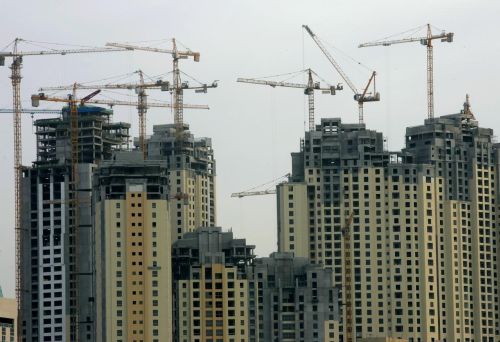
As a matter of fact the cities we are going to live in tomorrow are to a very large extend the same cities we are living in today. In many EU countries far too many new buildings have been built in the last decades, despite a rather stable demand, sealing too much soil and creating a situation of oversupply.
The greatest challenge is represented by increasing energy efficiency in the existing city and the existing building stock!
We were just in the middle of these reflections, when the global financial crisis arrived: subprime crisis,
sovereign debt crisis
and rising of the new world economic powers
challenging the old European civilisation have made the way to a more energy efficient urban environment more difficult, but even more necessary!
Unemployment, poverty, social segregation, slow innovation, decreasing marge of manoeuvre of the nation states in front of the global financial flows… All these threats seems to deserve a much higher degree of priority than urban and environmental issues. Is it really like this? Will we be able to tackle those issues first and take care of our cities when things will be settled?
The experts involved in URBACT Workstream “Building Energy Efficiency in European Cities don’t think so. On the contrary we think that Retrofitting our cities and buildings is the main road to get out of recession as it involves the following dimensions: 1) creating employment that cannot be delocalised; 2) boosting the economy both at national and at local level mobilising a long supply chain; 3) improving social cohesion addressing the worst kind of poverty which is arising in the EU, fuel poverty and addressing segregation in the large housing estates; 4) driving innovation both in components and processes; 5) safeguarding the environment on the way to adaptation to climate change, by cost-efficiently reducing soil sealing, CO2 emissions and demolition waste; and last but not least 6) retrofitting our cities will also strengthen and energise European culture, a cultural model which is largely based on high density urban life in the compact city model – an invaluable and not replicable asset of all small and medium size European cities , which, by the way, are the URBACT cities.
So, we know WHAT we want to do, we know WHY we have to do it and we have also some ideas about HOW to do so, and we would like to share these ideas with you in the sections of our workshop “Building Energy Efficiency in European Cities”











-
Stimulate retrofitting demand making retrofitting attractive for owners and occupiers (Emilio D’Alessio)
-
Solving the conflict between heritage value and energy efficiency in buildings and neighbourhoods (Kleopatra Theologidou)
-
Tackling fuel poverty, reducing the energy bill (Paul Ciniglio)
-
Sustainable finance tools to boost economy (J Owen Lewis)
Each of them has adopted a specific approach and working method.
Related articles
- Reports from Copenhagen workshops: 1)What can cities do to improve energy efficiency in historic buildings? By Kleopatra Theologidou (buildingenergyefficiency.wordpress.com)
- Let’s Get (Energy) Fit for the Retrofit Revolution! An URBACT article by Paul Ciniglio (welldesignedandbuilt.com)
- Some notes on the Urbact Conference (atlanticcities.wordpress.com)
 Well Designed and Built