A new “Basket” for Urban Quality Indicators
As Chairman of the Work Group Urban Issues of the Architects’ Council of Europe I have submitted the following paper to the Member States and Institutions representatives taking part to the drafting process of the Reference Framework for European Sustainable Cities (www.rfsustainablecities.eu). The document refers to the issue of selecting an approach and a number of urban quality indicators at european level to support sustainable urban development strategies.
Taking into account the physical dimension of urban policies: the greatest challenge for the “Basket of Indicators” of the Reference Framework for European Sustainable Cities (RFSC)
INTRODUCTION
According to one of the 8 characteristics of the Bristol Accord on Sustainable Communities cities must be Well Designed and Built and the Leipzig Charta has reinforced this statement by underlining the fundamental role of architecture and urban design for the future of sustainable European cities. Furthermore the EU Urban development Ministers’ in Marseille have recognised “the importance of urban statistics and comparative indicators at the European level and of the coordination of the information in order to be able draw a comparative picture between cities and to benchmark them;”
CHALLENGE
The ACE welcomes the great effort that is made to include into the RFSC Web tool the so-called “soft” aspects of quality of life, which is a fundamental aspect of territorial capital and city attractiveness towards investment and high skilled mobile workers.
The basket of indicators of the RFSC has to be a “Smart” one, sensible, attractive and inspiring local authorities to make use of them. It has to be felt as an opportunity and possibly provide an immediate reward, in terms of a new kind information that can help to move forward.
The greatest challenge of the basket of indicators is to include clear specifications regarding experiences and methodologies to monitor and assess the quality of the built environment from the morphological point of view, in other words, the tangible, but not barely measurable value of urban fabrics, streets, squares, monuments, public buildings, residential buildings etc. in their social, economical, environmental, historical and cultural dimension.
GENERAL REMARK
Many sets of indicators have already been produced to monitor and enhance the quality of the urban environment, also at European level (e.g. Urban Audit and European Common Indicators), but none of them has succeeded in taking adequately into account the physical and morphological dimension of cities.
In general terms all kinds of indicators must fulfil a number of requirements: they must be accessible (data must be easy to get over an adequate period of time), understandable (provide a strong statement regarding the issue addressed), easy to be shared (public administrators and citizens must get the message at a glance), reliable (not only scientifically, but especially in the common sense: they don’t have to generate misunderstandings) and finally they must be owned by the community (they are sensitive political tools, they need strong consensus).
As a consequence of the above mentioned requirements all kinds of indicators, including those aiming at improving the quality of the built environment, must be defined and agreed at local level (Subsidiarity) in a participative process (Good Urban Governance) and exploiting the opportunities given by new telecommunication technologies (Information and Knowledge Economy) in order to increase impact and minimise costs.
THE RFSC BASKET OF INDICATORS
The RFSC Web tool will provide a European framework for the elaboration and agreement of set of urban quality indicators at local level (municipality, metropolitan area or region) bringing a sensible added value to the ongoing debate on quality of the built environment. The EU institutions have learned a lot from local good practices (e.g. through the Urbact Programme and other dissemination networks).
The EU is required to take a leading role in the sustainable development of territories and cities, encouraging good practices, providing incentives and technically supporting local authorities.
DIFFERENT APPROACHES TO INDICATORS
Option 1
There are various approaches to build set of indicators that can serve the purpose in different manners. Most of them are derived from the economic and sociological methodologies and reflect an analytic/quantitative approach. They are based on the measurement of the variation of a certain number of significant values measured in specified intervals. The variation of each indicator provides an information regarding a specific policy objectives. The amount of people in certain streets at certain hours, people using public transport, walking or cycling to work, tourist visiting a city, visitors going to museums, sqm green space per inhabitant within the city borders, green field converted into building sites, brown field converted into green areas, starting or closing businesses, crime rate, employment rate, local, national or international accessibility rate, average residential rent price per sqm, public housing stock, wildlife species, plants and trees, etc. these are well-known examples of indicators.
This approach can have a more or less solid scientific and statistic background, aiming at being as much objective as possible. As a matter of fact the number of people walking in the streets does not say anything about how they feel, the number of businesses cannot well describe the economic situation of a neighbourhood and the amount of green space does not make a better urban environment if they are not adequately maintained and accessible. Moreover this approach needs a lot of resources and its conclusions are very hard to communicate (see for instance the EU Urban Audit or the “Kompass” Indicator project in Germany).
The lack of communication is a major problem because if indicators are not shared they miss the opportunity to stimulate public awareness. One of the most important prerequisites of indicators is to be easy to be understood and shared in the public and contribute to change citizens behaviours for the better. The “American” way to indicators is conscious about this danger and reacts putting less emphasis on scientific stringency and more on participation and communication (see for instance 1991 founded Sustainable Seattle).
Option 2
A recent evolution of this methodology is given by the definition of a single indicator of urban quality that includes references to many others, in a “synthetic” approach. Everybody knows the most famous indicator of this kind which is the Gross Domestic Product, and a very interesting debate about it (see the famous Stieglitz/Senn/Fitoussi report). As far as urban issues regards we can find a brilliant example of a “synthetic” indicator in the Seattle-based “Walkscore”: a value between 0 and 100 given to every point of a web-based map (each point is an address) as the result of an algorithm. “Walkscore.com ranks communities nationwide (and soon, globally) based on how many businesses, parks, theatres, schools and other common destinations are within walking distance of any given starting point.”
According to the developers of this rapidly expanding software, walkable city will have a centre, whether it is a main street or a public space, enough people for businesses to flourish and for public transit to run frequently, mixed income population and mixed use to satisfy in a reasonable space all needs of everyday life, affordable housing located near businesses, parks and public space, pedestrian and cycling oriented design, schools and workplaces close enough that most residents can walk to and from and all the range of amenities that make a high quality neighbourhood. All this only by tipping your address in a website. This approach is clearly less orthodox, but much simpler of the previous one, with an enormous potential. Moreover it is economically sustainable, because many US Real estates companies use this software to assess the walkability of the locations they offer and to a higher Walkscore corresponds a higher commercial value.
Information integrated into the Walkscore (demography, economy, morphology, society) are collected automatically from the web, thanks to agreements with other institutional or commercial websites where these data are available. Walkscore provides a clear and useful information at a glance, it influences positively people’s behaviour and real estate market awarding walkable neighbourhoods against “car dependent” places and of course it is available as App for iPhones. Unfortunately the Walkscore is not yet available for not English-speaking countries. Moreover, like the traditional set of indicators based on quantitative methods, it is not able to take into account the qualitative aspects of a city.
Option 3
Traditionally intended indicators fails when it comes to evaluate qualitative aspects of urban fabric, they are unable to guide towards a city that is Well Designed and Built and they are well aware of it. That is why the European urban tradition has often made appeal to groups of experts (various forms of Building Commissions) to monitor and improve the quality of relevant projects. Qualitative aspects cannot be captured by numbers, they have a strong subjective and may unexpectedly evolve over time. Nevertheless there are also objective criteria that can and must be monitored. In fact building commissions are expected to provide a balanced response to the public authority regarding the opportunity of the ongoing development project, but, except for a few cases, they are not supposed to guide the urban development.
The way neighbourhoods and buildings are designed cannot be decided by a single person or aesthetic authority, as it has sometimes been in the past. Nowadays buildings have to respond to sustainable development criteria and objectives, certainly not to old-fashioned design codes.
In order to become more practical and understandable within the Bristol Accord the definition of Well Designed and Built has been break down into more specific features responding to the current understanding of urban design and architectural issues. Among these features it is worthwhile mentioning: (1)“Sense of place – a place with a positive ‘feeling’ for people and local distinctiveness” (2) “Appropriate size, scale, density, design and layout, including mixed-use development, that complement the distinctive local character of the community” (3) “High quality, mixed-use, durable, flexible and adaptable buildings, using materials which minimise negative environmental impacts”
Reading this definitions you can understand that it is not easy to convert them into traditional indicators. The Commission for Architecture and Built Environment CABE (established in 1999 by the first mandate of Tony Blair’s Labour Government) has provided a broad range of publications to clarify what is meant by a Well Designed and Built city or project. The assessment tool used by the CABE is the Design Review, based on the principle that “Good design is fit for purpose, sustainable, efficient, coherent, flexible, responsive to context, good-looking and a clear expression of the requirements of the brief”.
An indipendent Commission of experts appointed by the Board of the CABE has the task to assess the following aspects of each project submitted: (1) Clarity of organisation, from site planning to building planning (2) Order (3) Expression and representation (4) Appropriateness of architectural ambition (5) Integrity and honesty (6) Architectural language (7) Scale (8) Conformity and contrast (9) Orientation, prospect and aspect (10) Detailing and materials (11) Structure, environmental services and energy use (12) Flexibility and adaptability (13) Sustainability (14) Inclusive design (15) Aesthetics.
The assessments can be made at different stages (brief, preliminary project, definitive project, construction, post occupancy), it is not binding and aims at improving the given situation (not at the perfect world). This assessment is immediately published on the CABE website and any citizen can access, comment and use it (and this fact alone makes it a rather powerful tool).
The great limit of this tool is that it is an evaluation by experts, on the model of a jury of a design competition or a traditional building commission, which means that it does not take into account the opinion of all the stakeholders involved in the project.
Option 4
A valuable attempt to combine experts assessments with the opinions of stakeholders (end users, investors, developers, building managers, neighbourhood associations etc.) is, again in the UK, the Design Quality Indicators DQI, “a method of evaluating the design and construction of new buildings and the refurbishment of existing buildings”.
Starting from the classical Vitruvius trio: Utilitas, Firmitas, Venustas (Utility, Firmness and Delight) the DQI has formulated ca. 100 questions regarding all aspects of a project or existing building. These questions are asked to small groups of stakeholders representatives in order to collect and structure the different point of views. A professional facilitator analyses the responses according to the DQI methodology and stimulate a roundtable discussion among the stakeholders in order to come to a common vision, if possible. In any case all stakeholders, including professionals, have the chance to see things from different perspectives and modify their ideas or attitude. The big advantage of methods like this is that they can clarify project’s criteria and choices also to non-professionals, bridging the gap that divides the stakeholders. Moreover, like the Design Review, this is a rather “light” tool, it requests reasonable resources, and can be applied at every stage of the project to test it and ideally it can become a fully participative process. DQI offers the possibility to make this assessment also online and it has become mandatory in England for all newly built public school buildings.
CONCLUSION
This short review is obviously not exhaustive and is intended as a contribution to the discussion about the basket of indicators to be included in the RFSC web tool, focused on the need to make an adequate effort to include the qualitative aspect of the physical dimension of the built environment, as a fundamental element for quality of life, as stated many times in the documents at the basis of the RFSC in Bristol, Leipzig, Marseilles and Toledo.
Supporting Cities for Sustainable Solutions

“Brussels, September 16th 2010: Cities act proactively for sustainable development. They are key actors to achieve the 3×20% target and to mitigate and adapt to climate change. Cochaired by Member of the European Parliament (MEP) Vittorio Prodi and MEP Karima Delli, the high level conference on “Supporting cities for sustainable solutions” emphasized the role of cities as generators of green growth and the need to further help them achieve this goal.
One step forward was made two weeks ago when the Industry, Research and Energy Committee of the European Parliament gave its green light for plans to boost green investments in cities. The local level will be able to get funding from the unallocated funds of the European Energy Programme for Recovery. However a lot remains to be done given the challenges in front of us. MEP Karima Delli, stressed that “Half of the world population lives in cities, and this figure amounts to 70% in Europe. Cities produce ¾ of CO2 emissions and consume 80% of energy. We will therefore win the climate battle in cities. Enhancing the urban and territorial dimension in the European agenda and in the future cohesion policy should enable to reinforce the role of cities as key players of sustainable development”.
As underlined by MEP Vittorio Prodi, cities can catalyze the shift from purely material growth to a more comprehensive concept of development. “Local solutions are often the key to success,” European Commissioner for Energy, Günther Öttinger argued. He insisted on the role of the Covenant of Mayors to guarantee the application by European cities and regions of EU commitments to tackle climate change.
In the framework of the on-going discussion on the budgetary perspectives, it was repeatedly said that substantial financial support and easier access to structural funds are prerequisites for ambitious actions of cities. In this regard, Commissioner Günther Öttinger suggested testing new financial instruments in the field of energy and climate change. Besides, unlocking their potential requires enhanced integrated local development and cooperation at all levels of governance as well as amongst policy makers.
The event, jointly organized by the EP Intergroup “Climate Change, Biodiversity and Sustainable Development” and the “Urban” Intergroup, brought together more than 100 participants, including Members of Parliament (MEPs), representatives from the European Commission, from Member States as well as NGOs, academic organizations and the private sector.”
So far the press release of the conference. Furthermore I noted a couple of additional points regarding the physical dimension of European urban policies.
Good news from the cities. In their short presentations the cities representatives have listed the ambitious projects of local administrations. Nantes has planned to reduce CO2 emissions by 50% by 2025, involving citizens and business sector in a participated process. Brussels has accomplished a number of regeneration projects in disadvantaged neighbourhoods (Neighbourhood Contracts), features large improvements in energy efficiency of public owned buildings (the worldwide passive building is being built) meanwhile the 63Km long Promenade Vert has improved urban quality. Munich (Worldwide Nr.1 in Urban Quality according to Monocle Magazine) has invested 4 Millions Euros in Bicycle lanes only last year and aims at bringing inner city movements cycling rate from 40% to 70%. The city is part of the Climate Alliance which has more ambitious targets that the EU 2020 strategy.
The impression I became from these presentations is that European cities ar far ahead of the EU in the implementation of sustainable development projects. Well, at least some cities are, who are the ones you meet at these conferences, which are more or less always the same. As a matter of fact, in the short time frame, it was not very clear the contribution of the EU in these good practices, but maybe these are issues to be tackled in more restricted working meetings.
The second point I noted regards EU support of local urban policies. Since 2009 EU Structural funds (ERDF) are available for improving energy efficiency in social or public housing buildings: 4% of ERDF in the EU 15 and 7% in EU 12. To date these Funds have been used only by 20% at EU level: countries like France has already spent them, countries such as Germany and Italy not at all. At the end of 2010 the EU will monitor the expenditures and probably disengage large part of this funds towards other structural policy sectors. Last June the Architects’ Council of Europe ACE-CAE has issued a note to all Member organisations on this topic. I paste it below for those who may be interested in undertake some actions in this field.
“Action required:
This note asks Member Organisations to lobby at National level to ensure that your Government or Regional Authority finds a way to revise their Operational Programmes under the European Regional Development Fund Rules in order to fully spend the allocation of 4% (EU15) or 7% (EU12) of those funds on Energy Efficiency Renovation of Housing before 2013. The importance of taking this action is that if the funds are not fully expended by the end of the funding period it is almost certain that similar funds will not be available in the following funding period and this would have a highly negative effect on the improvement of the Energy Efficiency of Buildings in Europe.
Introduction
The European Union has several funding programmes that are aimed at creating greater social and structural cohesion between the regions and territories of the EU. One of the main funds is the European Regional Development Fund and in a recent decision the rules for spending of these funds were changed so as to permit spending on the energy efficient upgrading of existing housing in the context of integrated urban development plans.
The ACE has learnt that although we are now more than half way through with true the funding period only 20% of the available funds for energy efficiency upgrades of housing have been used or allocated by Member States. It is therefore important to lobby to ensure that these funds are fully allocated and used during the current funding period.
Report
The expenditures of funds from the ERDF are highly regulated through what are known as Operational Programmes. These Operational Programmes are prepared at regional and national level and are submitted for approval to the European Commission. On approval of the programmes by the European Commission Member States can draw down the funds for the various projects and operations that they have identified.
At the start of the current funding period it was only the EU 12 countries that could benefit from a certain percentage of funding for use in the energy efficiency upgrading of housing as part of integrated urban development plans. This rule was changed in 2009 and now it is possible for all Member States to allocate funds for this purpose. In fact the EU 15 countries have the right to allocate up to 4% of their ERDF fund to energy efficiency upgrades of housing and EU 12 countries may use up to 7%. However as all Operational Programmes for the Member States were approved before the change of this rule may countries do not have allocations in their Operational Programmes for the energy efficiency upgrading of housing. The ACE has learnt that the European Commission is very concerned about this fact and it has alerted many stakeholders in Brussels of the danger that if these fund are not fully used before 2013 then in the following funding period 2013-2019 funding for energy efficiency upgrades of housing will not be put into place.
Given that housing accounts for approximately 60% of all buildings in the EU and more of less half of the work of all architects, the ACE considers it of crucial importance that the Member Organisations should do all in their power to lobby at national or regional level for the Operational Programmes to be modified in order to ensure that the allocation of either 4 or 7% is fully used in the current funding period.
Furthermore, in undertaking the necessary lobbying actions, the Member Organisations should ensure that the criteria used to define what is meant by an integrated urban development plan, under which the energy upgrades of housing takes place, include appropriate references to quality, sustainable architecture. It could, for example be a requirement that all buildings and renovation works are well designed and built as set out in the Bristol Accord and that they make a positive contribution to the overall quality of the built environment, specifically that they can be considered as examples of good architecture.
Action required
The ACE Secretariat does not have the resources at the present time to fully research for each Member State who is the relevant Ministry or Authority that you should approach in order to lobby for the allocations of the relevant percentage to the topic energy efficiency upgrades. In any event it is hoped that your Organisation is already aware of the relevant persons and that you can contact them and lobby them in order to ensure that the necessary allocations are made.
The ACE Secretariat considers this to be an urgent matter and is aware that the European Commission is preparing a Communication on the subject. Once this Communication is available you will be forwarded a copy as it should contain useful guidance and information as to the supplementary actions you can take.
In the meantime you are asked to report to the ACE Secretariat on any action you take and particularly on any information you may have that could be usefully shared with other Member Organisations as they seek to lobby for the matters set out in this note.”
Information, Communication and the City
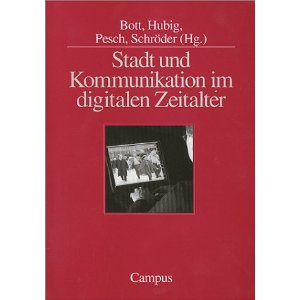 According to Luis Buñuel information was going to be among the 4 riders of the Apocalypse that would come to destroy our civilisation. This is something to think about when starting a blog. Am I giving a contribution to the end of the world or what am I writing for? To share my thoughts and make them clearer? To disseminate ideas and projects I like? I am contributing to build a political platform? Would I like to build a community of people with same interests and goals?
In the meanwhile it is worthwhile trying to clarify some concepts fundamental for such an undertaken, such as information and communication, particularly in respect to the city.
Internet has given birth to many ways of (producing and consuming) information that can be seen under different perspectives. It has increased the number of information sources, made them more accessible and more independent. On the other hand the overwhelming information is dramatically reducing the possibility to react to all the challenges it offers, raising the bar of indifference, wasting time for individual reflection and interpersonal communication. All this affects the city.
The relationship between communication and the city was the subject of an international symposium at the Town Planning Institute of the Stuttgart University in autumn 1998. The essays were collected in the book “Stadt and Kommunikation im Digitalen Zeitalter” edited by Bott, Hubig, Pesch and Schröder (© 2000, Campus Verlag, Frankfurt aM). The contributions to this conference are very technical and specific (Kulturwissenschaftlich speaking) so that the 18 essays printed in the 300 pages are rather hard to read and unlikely to be reported in a blog, but there are some very basic points that I like to recall.
Communication is an exchange of messages between two or more subjects, whereby the action of sending or receiving a message brings an actual modification in the conscience of them (Bott). To this extent communication has always needed the presence of two or more subjects in the same place. Traditional media such as books, newspapers, cinema, radio and television have created a broader offer of information or “one-way communication”, but they have not radically changed the way of communicating between people. They surely have stimulated a change in the mind of the “public”, but the latter was never in the position to respond and provoke the same effect in the opposite direction.
The philosopher Helmut Böhme asks to question: “Konstituirt Kommunikation Stadt?” The city is the place where many people live and work next to each other so that, among various other advantages (and disadvantages), they enjoy much more opportunities to communicate: meeting at the market place, in the church, along the street etc. In a time when communication seems not anymore to need being in the same place (wherever you are you can make me change my mind with a comment to this post) the question is: “Does Communication Constitute the City?” If the place does not make any difference anymore, is it all only about time? Will the city of the future be the place of “density of time” instead of “density of space”?
According to its original meaning communication is the establishment of a relationship that allows the flow of meanings between two or more subjects. In old rethoric it meant the way to address people in order to receive an answer that is proper to the question, in other words the pre-condition of a fruitful dialogue.
Communication is independent from content, it relates to identity, education and cultural background that, to a certain extent, have to be common to the sender and the receiver. First and foremost it is a social and cultural matter, not a technical one. Cities have historically made possible a great deal of communication because they have been able to integrate a variety of points of view that otherwise wouldn’t have had the possibility or the need to get in touch. The most important place where diversities have met and shared views is their respective “agora”, where the cities have worked out the set of rules to regulate living together. To this extent – this is Böhme’s conclusion – communication constitutes the city in reacting to manifold political visions, as a result of the struggle for rights, for power and for control of land use.
What is going to happen now that the technical platforms for communication are radically changing and it seems that physical density is not necessary anymore to agree the rules for living together? How is digital communication (or information exchange) going to affect our cities and build new ones?
According to Böhme telephone is the only traditional media that has changed the way we communicate in a substantial way. It is the first means of tele-communication, having separated the subjects of a conversation, but the effects of this tools seems not to have changed radically our civilisation and its main footprint: the city. Who would say that a phone call (or a conference call) is the same as a “face to face” conversation (or a round table discussion)? Nevertheless phone calls has affected the way we communicate more than any other media and it may not be by coincidence that new media are converging with telephones much faster that they do with books, newspapers, radio, cinema or television.
Telephone have built the most efficient telecommunication networks before the World Wide Web, they have been defined the prototype of the urban space produced by the new media: “Networks effectively have the opposite effect to concentration in cities in that they help to overcome distance constraints by minimising time constraints (…) [they] annihilate space with time” (E. Negrier, 1990) If the development of the city would follow the development of communication one could argue that instead of streets and buildings the new urban fabric would be made of bytes and cables, software and hardware. Common sense and research show that this is not the case.
Böhme and other researchers share the point of view that urban space is not going to be destroyed and replaced by an electronic new kind of city, but that the city in its single elements is going to be affected by the new media in a manifold and subtle way, away from radical visions into the complexity of post-modernity. This “amalgam” between the city and the new media is an interesting field of research. The new city “whereby the fixed and tangible aspect of familiar urban life interact continuously with the electronic and the intangible”; “thus, a car, rail, plane or busjourney, and the physical flows of water, commodities, manufactured goods and energy are supported by a parallel electronic net-world” (Schuler, 1992).
A Post Occupancy Survey, 50 Years After
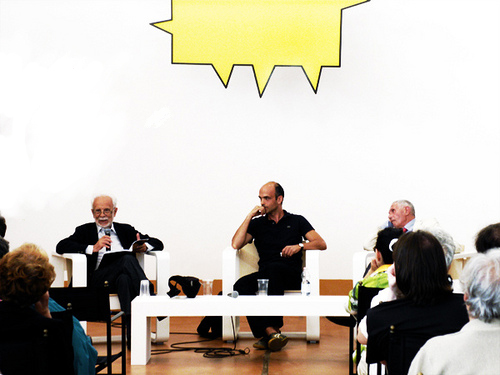
© Lorenzo Pentassuglia
Under a bright blue sky and a mild breeze blowing from the sea Trieste is hosting a 2 weeks public event on Architecture.
Unique in its approach, trying to communicate to a broad range of public the civil value of architecture and urban design: professionals, artists, cultural operators, citizens, public administrators and all kind of media are involved in the fully (and funny) packed programme you can browse in the official Blog
I was invited to moderate on Saturday 31st of July the afternoon conversation between Silvano Tintori and Luciano Semerani on a very interesting public housing project they worked on about 50 years ago: Borgo San Sergio.
You can read the report on the afternoon on this webpage and an interview that Silvano Tintori gave on that occasion here.
Here I like to post a few pictures I’ve taken during a walk with Silvano at Borgo San Sergio on Sunday morning, before our trip back to Milano.
I’m sorry for the bad quality of the pictures – I’m not really a photographer and the August sun at noon didn’t make it easier. What I think they can show is the sense of ownership the people have towards this neighborhood, their flats, their common parts and gardens.
Although maintenance is rather poor – the facade have probably never been painted since the time it was built – fortunately the plaster is strong and the washed cement effect gives a pleasant patina to the buildings, with a hint of design thanks to the window frames, the cantilever beams and other thoughtful architectural details.
Every square centimeter of the space between buildings is owned and marked by differentiated vegetation and destination: flowered bushes, sitting benches, tomato trees, temporary parking… For these reasons, and not just because it was designed by famous architects BBPR, I would say this is a nice place to live.
Urban Quality of Life according to Monocle Magazine
 The July 2010 issue of Monocle magazine was about Quality of Life in the 25 World’s Best Cities (http://www.monocle.com/35_promo/ ) and I have been curious to see how the journalists have approached such an ambitious task and the role they have given to architecture and urban issues.
Of course I am not going to judge or analyse in depth their work, one good thing about this survey is that it is not overloaded with data and their statements are not cast in stone.
I just want to highlight a couple of things that I found interesting. Read more…
 Well Designed and Built