LUMENHAUS – A Net-Zero-Energy House On The Road

A lot of low- or zero-energy houses have been built around the world in the last decades, but the story of LUMENHAUS is really a special one, for different reasons. This fully prebricated net-zero-energy house was the third one designed and built at the Virginia Tech to participate to the Solar Decathlon Europe Competition and the first to win it.

The design team were students working on the projects for three years lead by prof. Joseph Wheeler coordinating inputs by other Virgina Tech teachers and the expertise of ICT and building sector manufacturers.
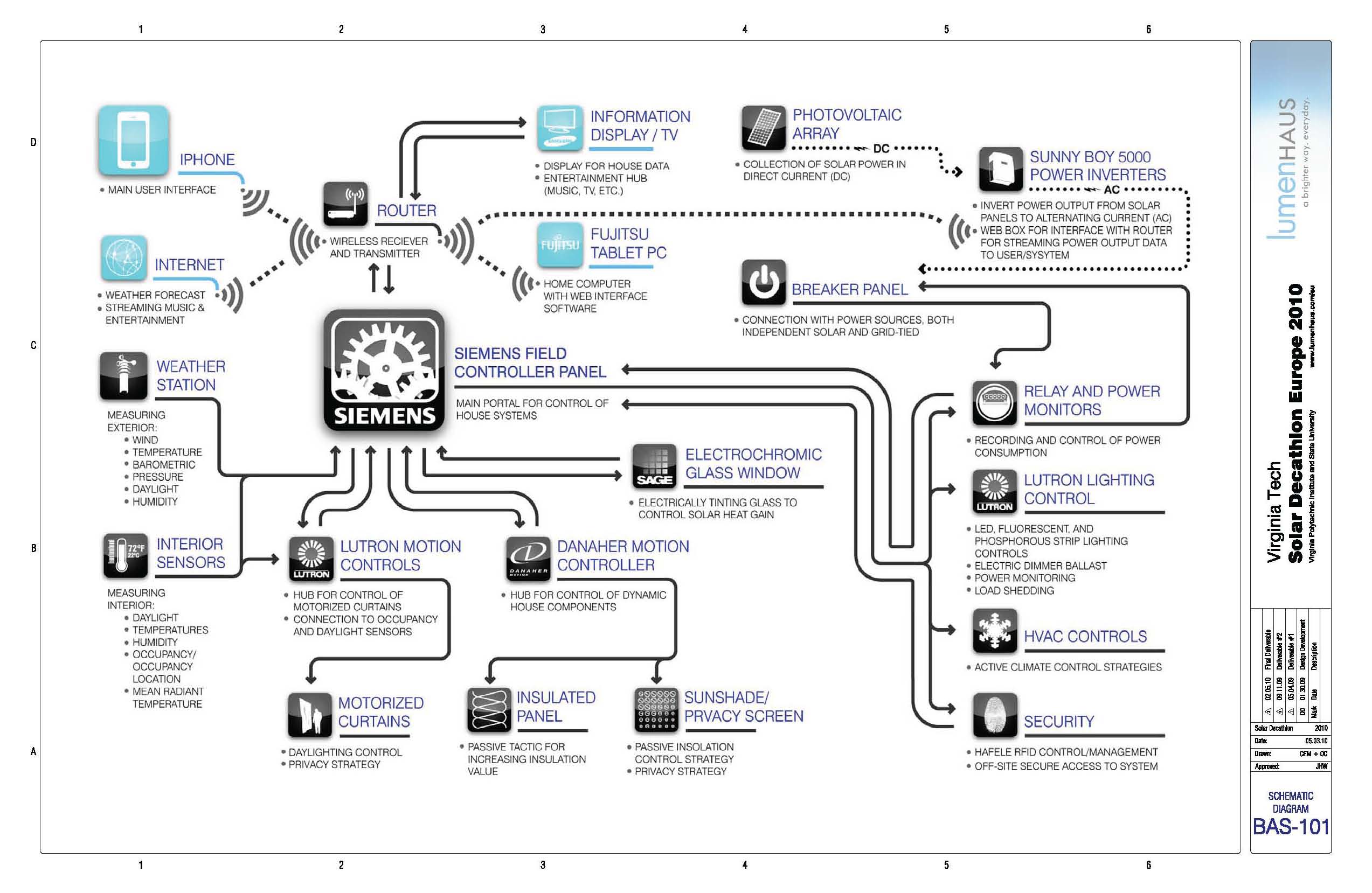
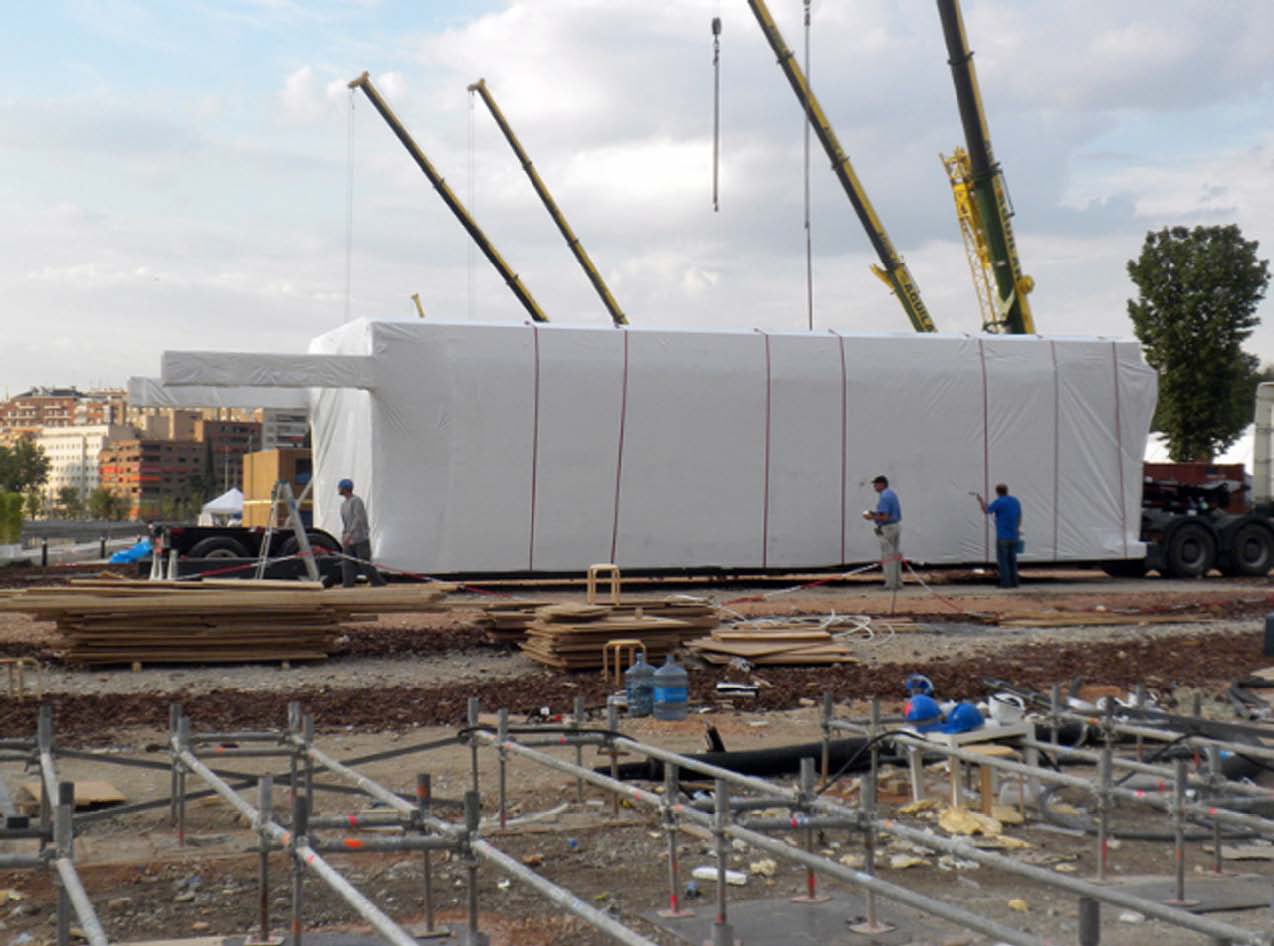
According to the rules of Solar Decathlon Europe, the house had to be designed and built by a team of students and comply with predefined energy and budgetary standards that made the competitors comparable. Finally the house had to be built on site by the team and be fully operational (and open to the public) during the “competition week”. That means putting a considerable effort in making it robust, transportable and easy to build, including the open air garden.
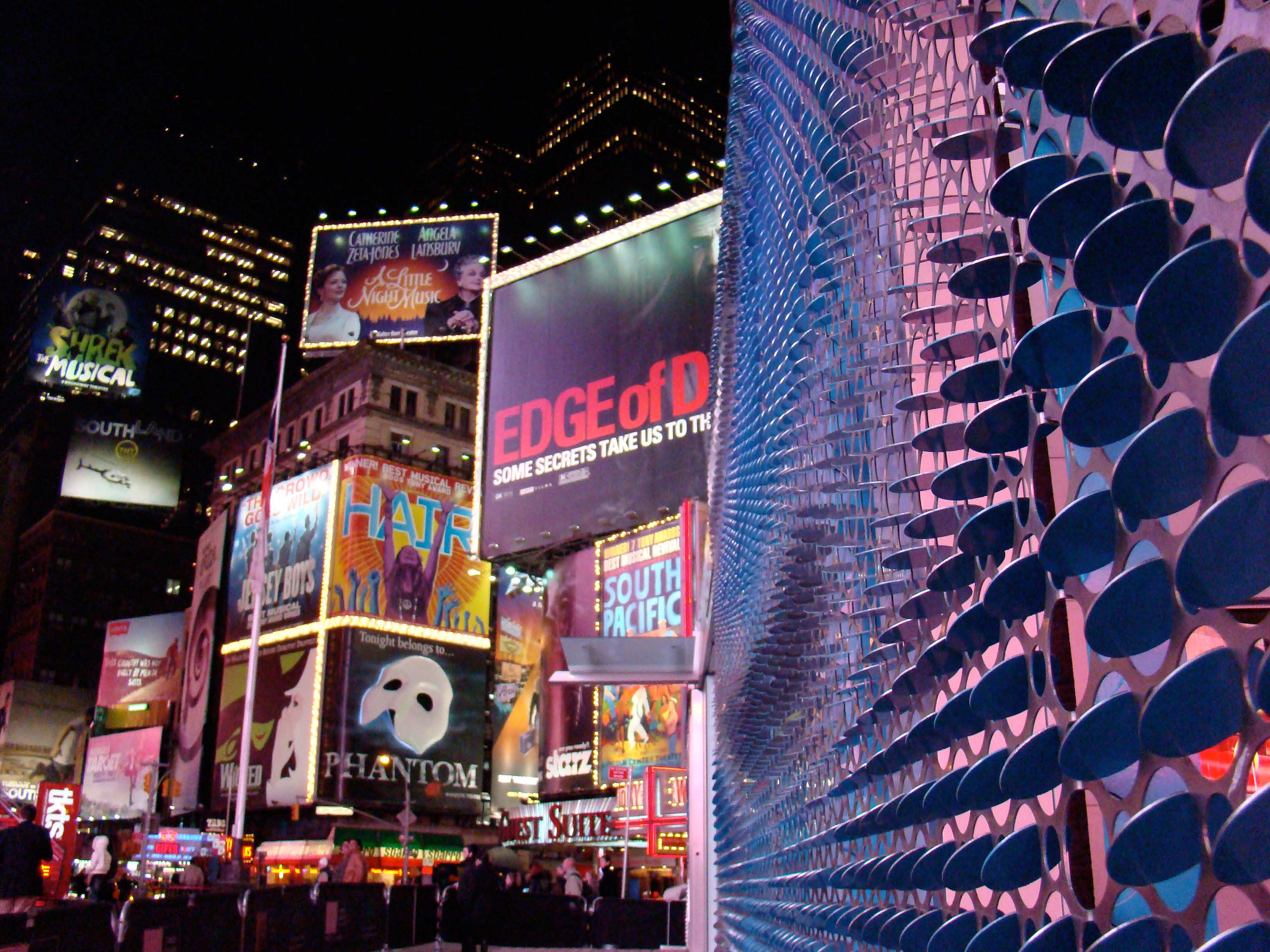
The awarding of Solar Decatholn 2010 took place in Madrid, so that Lumenhaus travelled from US Virginia to Spain and then back to the US in an amazing roadshow including Washington D.C. National Mall, New York Times Square, Chicago Millennium Park and at the Farnsworth House in Plano Ill.
One of the issues this Blog is about is the definition of quality indicators for design at all scales: from product to landscape design. The Solar Decathlon Europe competition is very interesting to this extent, being based on a comprehensive multi-criteria assessment procedure in which each competitor gets a combined score subdivided in ten fields:
1. Architecture
2. Engineering & Construction
3. Energy Efficiency
4. Electrical Energy Balance
5. Comfort Conditions
6. House Functioning
7. Communication and Social Awareness
8. Industrialization & Market Viability
9. Innovation
10. Sustainability
The scoring mechanism is further articulated in three types of evaluations:
1. Task Completion Scoring [Measured]
The teams will obtain points for successfully completing the requested tasks. Points will be awarded as a function of “closeness to completion”.2. Monitored performance Scoring [Measured]
During the competition week, the house will be continuously monitored and specific measurements will also be done. The scoring is based on the approach to the goal predetermined in the contests.3. Points awarded by jury
Expert jurors will award points according to the assessment evaluation criteria and guidelines developed by SDE.
As a combination of these evaluation process in 2010 LUMENHAUS became the highest score, resulting particularly excellent in architecture, engineering and construction. After the award in Madrid the LUMENHAUS has travelled back to the US for a roadshow advocating for a durable, comfortable and maybe even affordable version of high-tech net-zero energy houses.
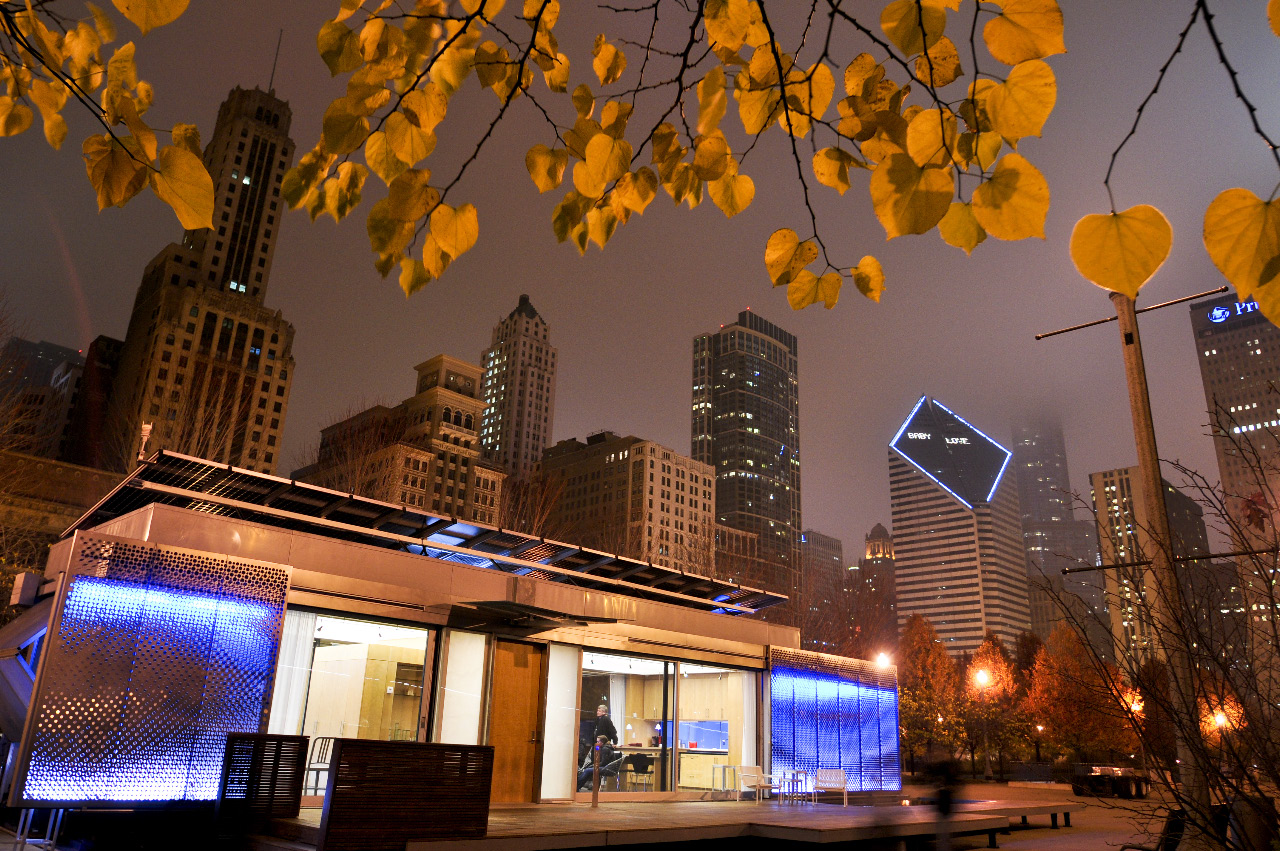
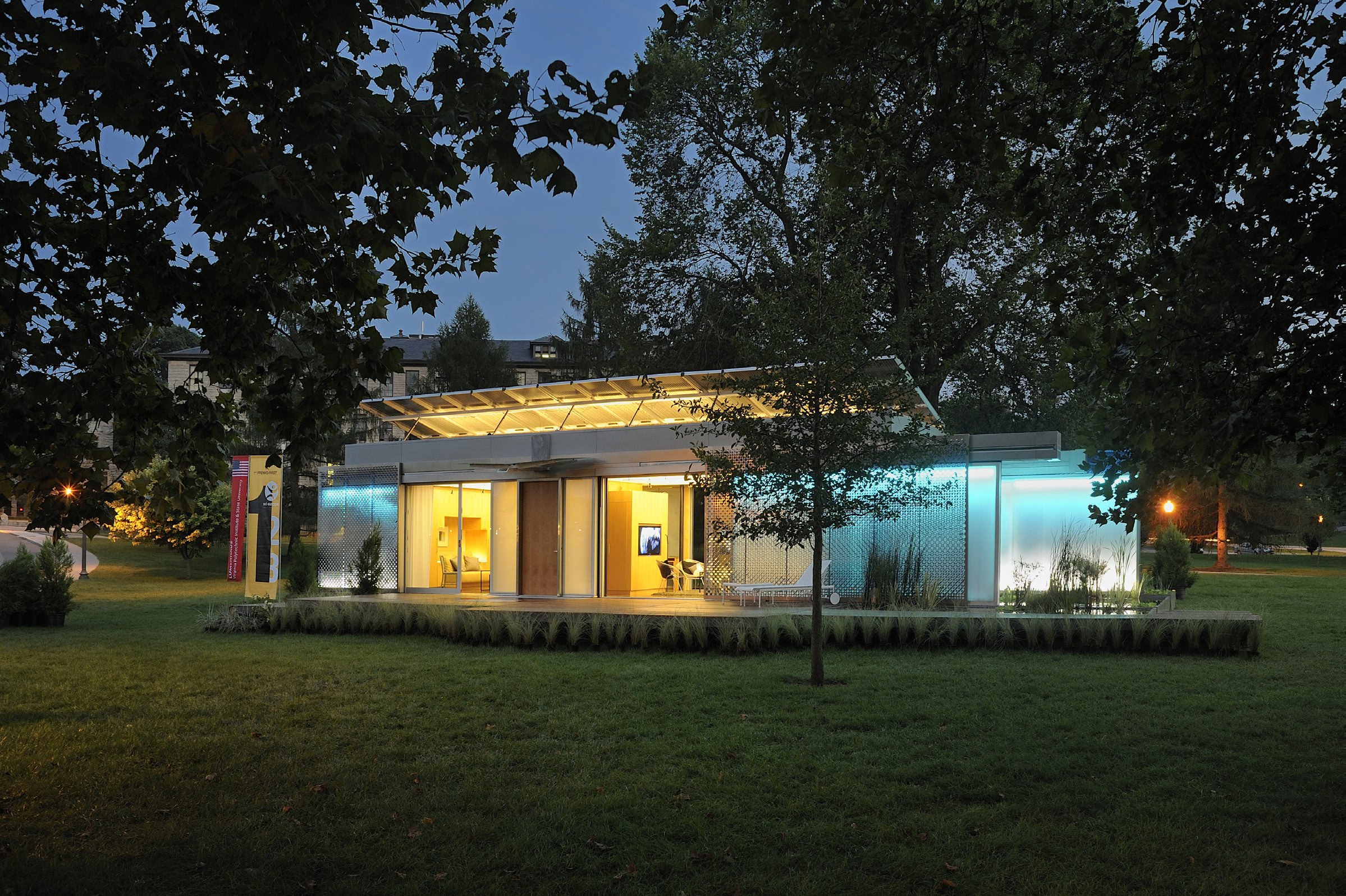
One more aknowledgement came to LUMENHAUS in 2012 with the AIA Institute Honour Award . The Jury commented that
The creative use of materials and the flexibility of its components quickly respond to changes in the environment through automated systems that optimize energy consumption.
The plan and section are orchestrated by light and materials to enhance the perception of a small footprint.
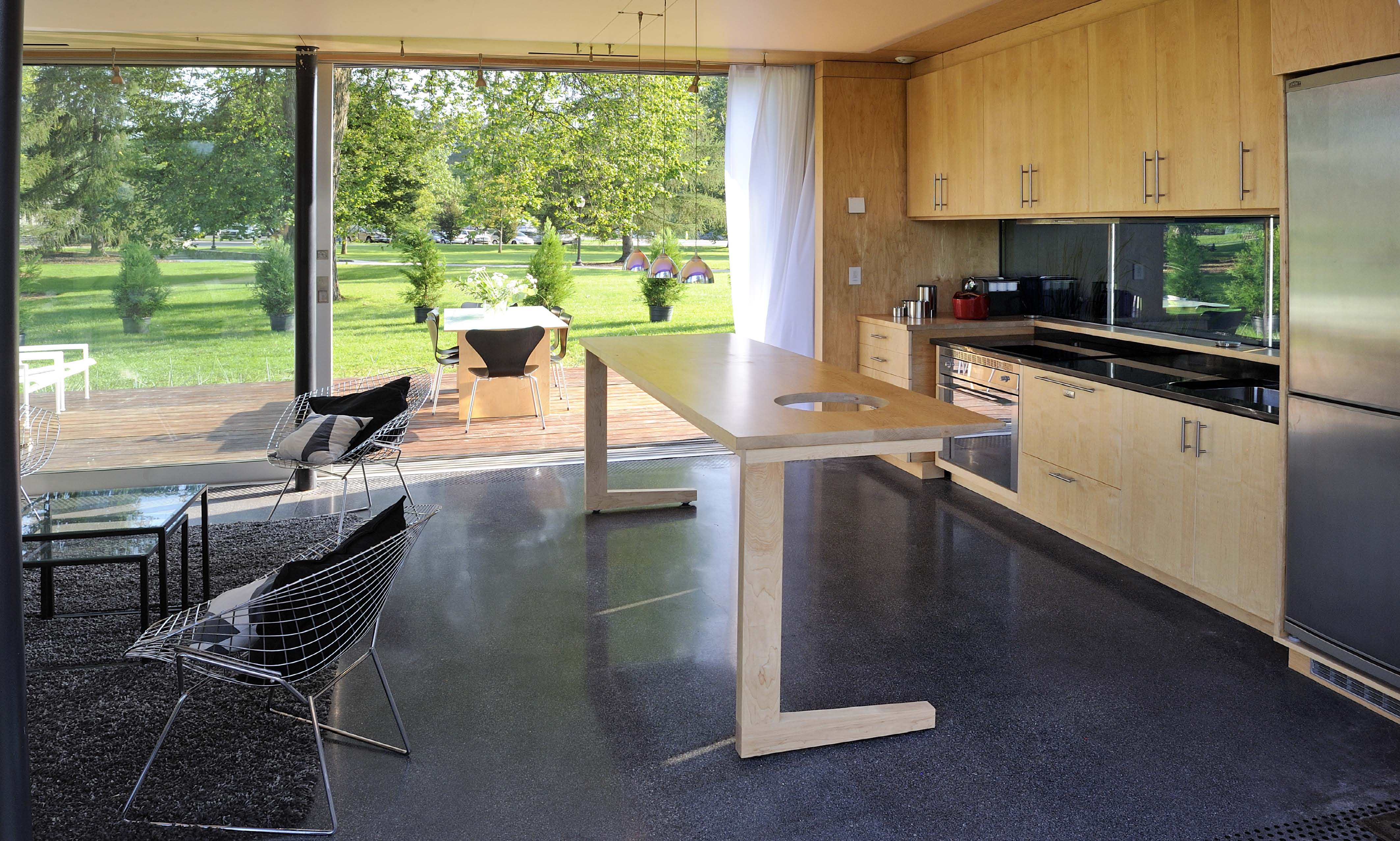
The interior is cleverly designed with comfortable if compact spaces, compatible materials, and a rationale and clear layout.
The project was introduced in several conferences in the US and in Europe, eventually also in Milan where I had the pleasure to introduce Joseph Wheeler at the Architects’ Chamber Foundation. Here is a video including a short interview to and a detailed summary of his presentation.
Bjarke Ingels 8-House in Copenhagen
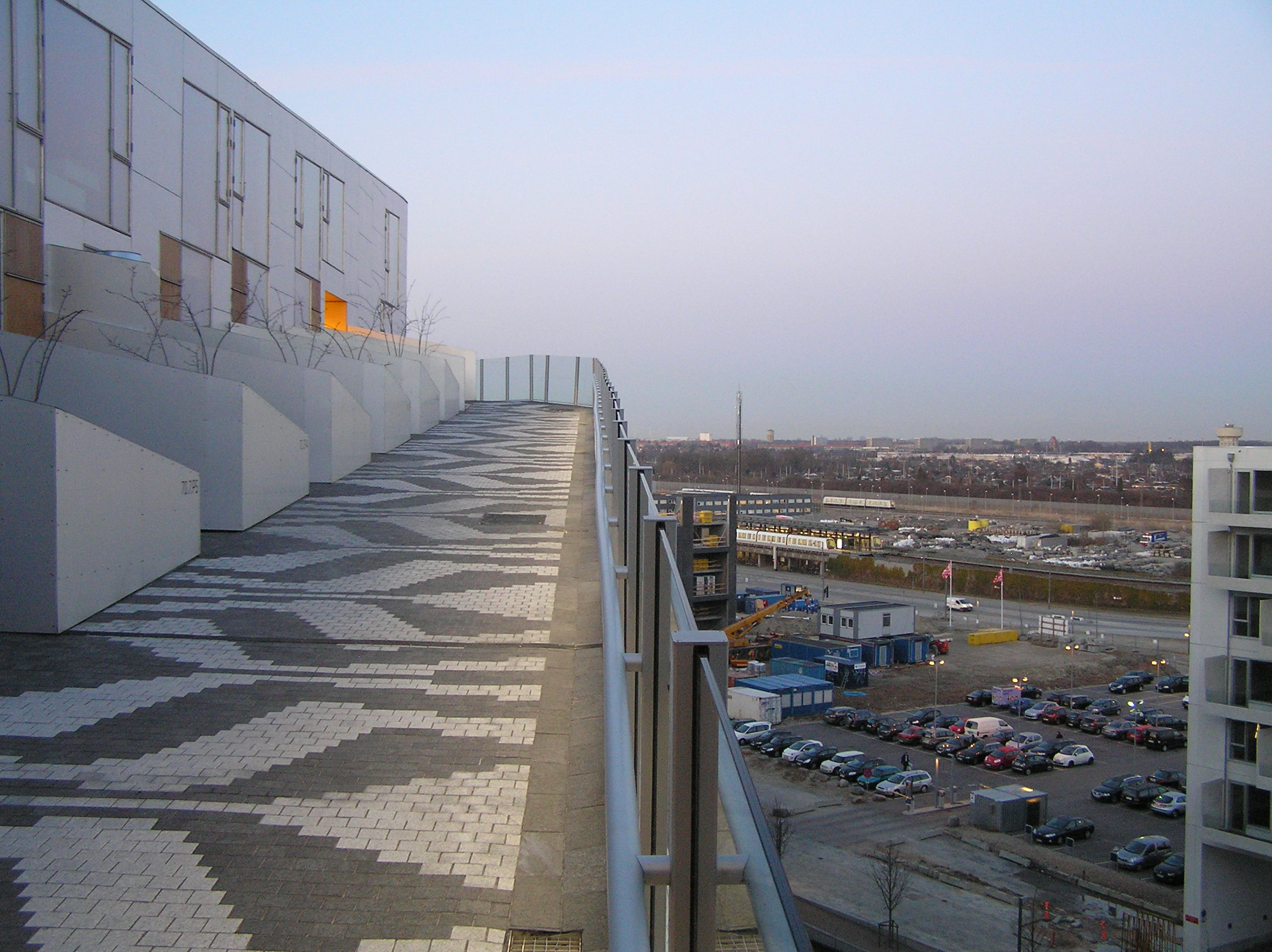
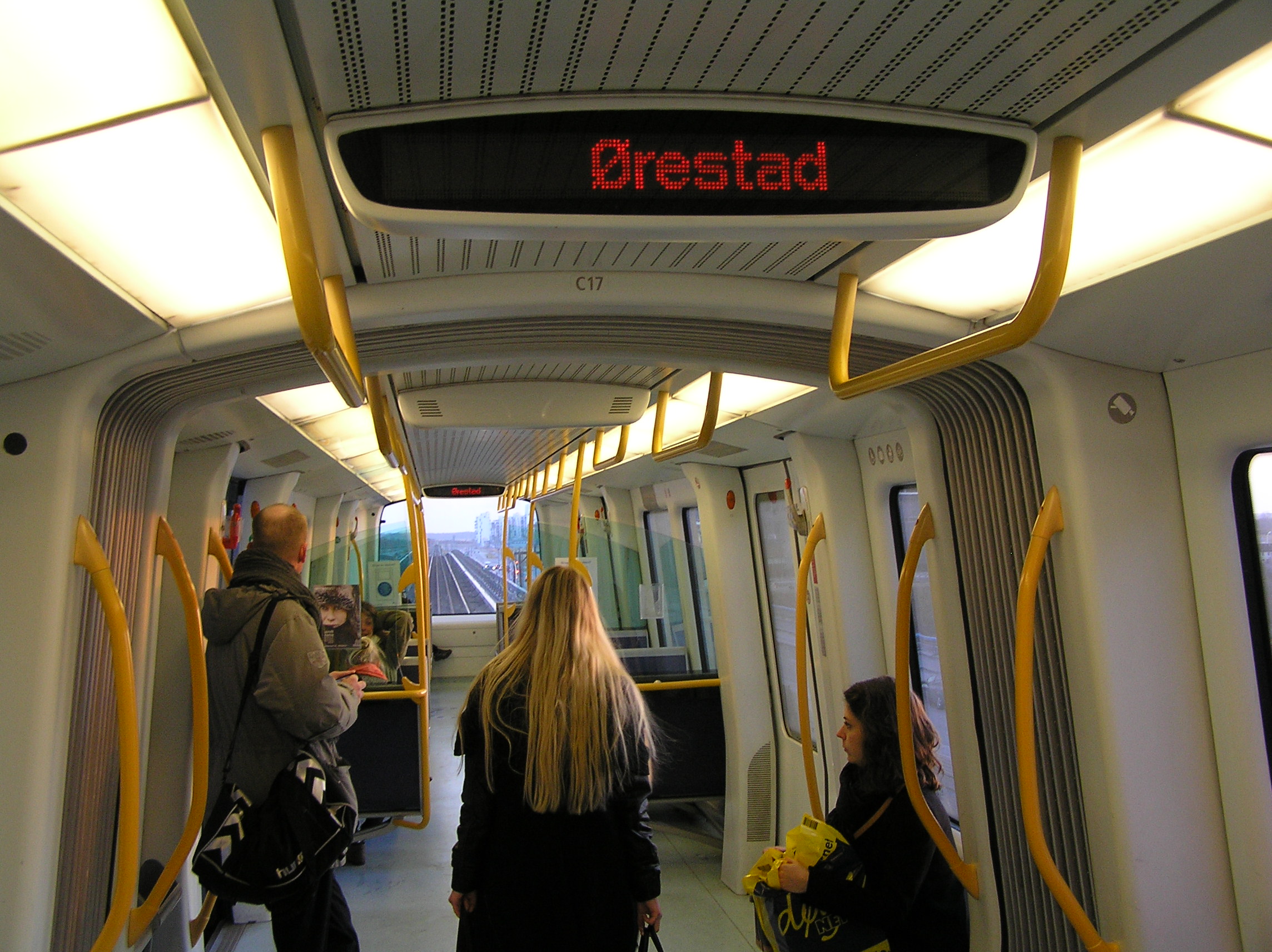 I went to Copenhagen last March for the first time in my life. I was there two days to attend the Meeting of Directors General in Charge of Urban Development on behalf of ACE, but I managed to have a free afternoon and get the lightrail out to the end of Ørestad to visit “the most photographed building of 2011”: Bjarke Ingels Group’s 8-House. I went there to walk this building in and out, from the bottom to the top as I saw in some internet magazine’s report. As you can see from the pictures below, that was a lot of fun.
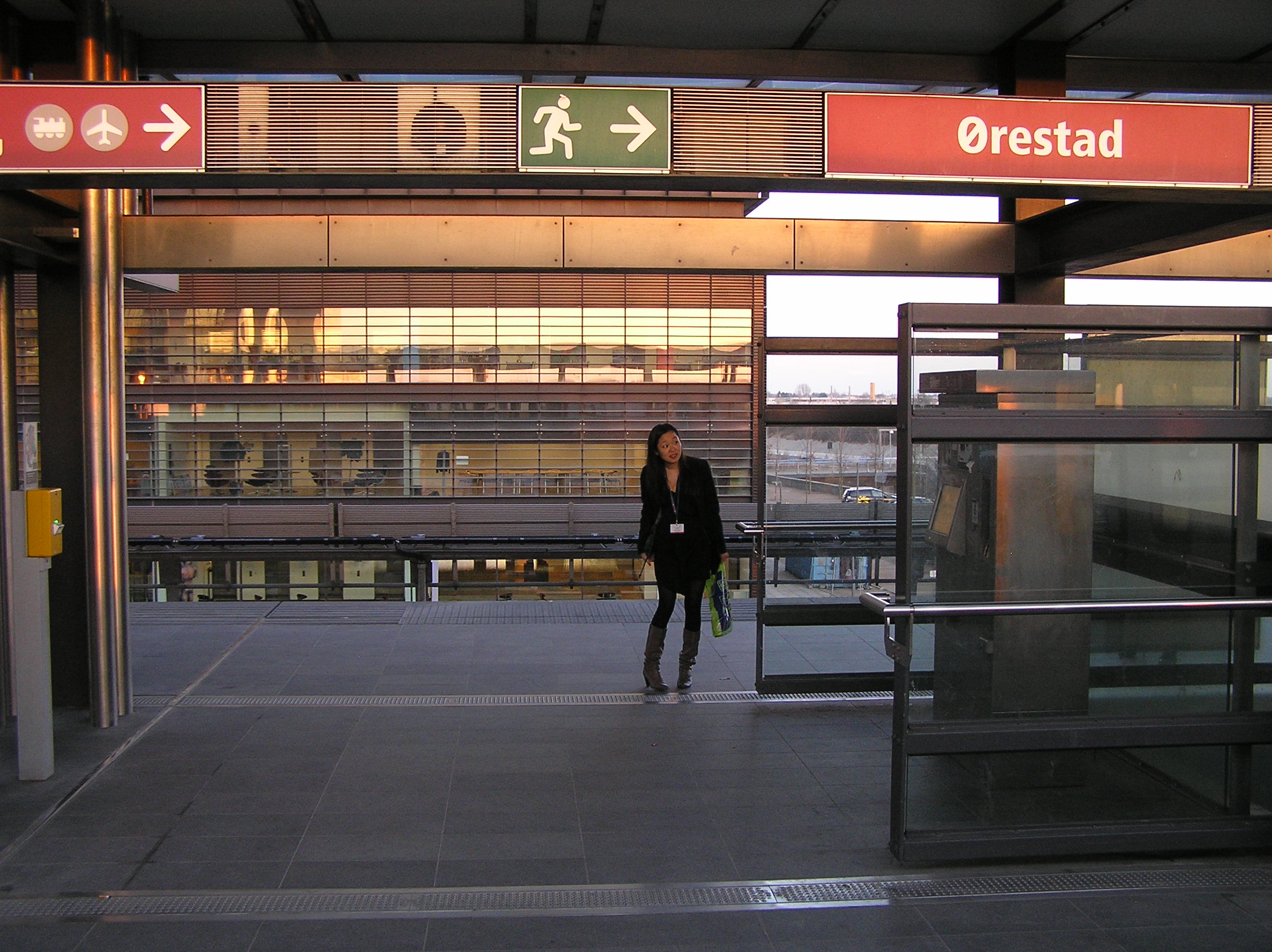
Don’t worry, trains are coming every few minutes.
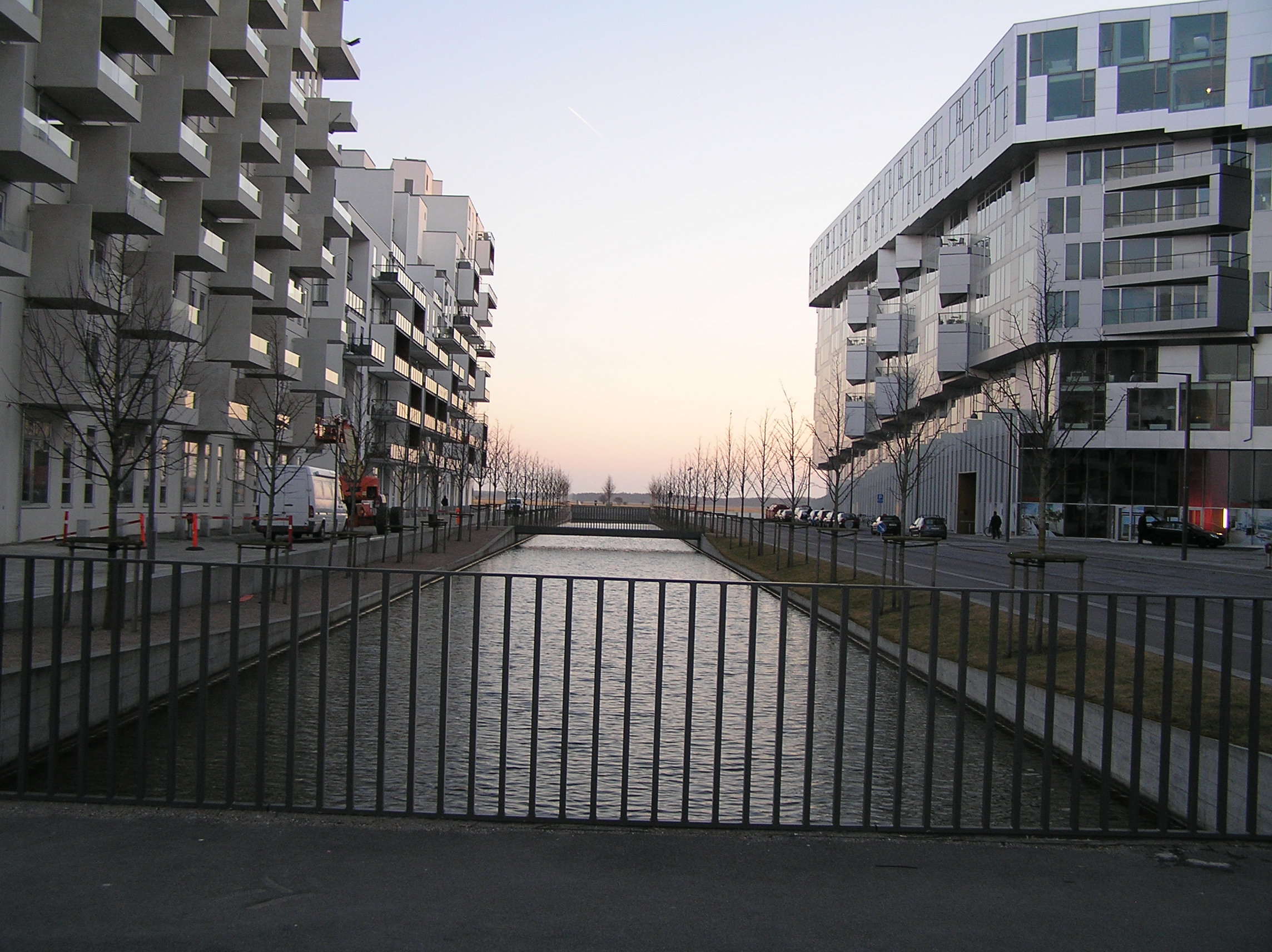
Water plays an important role in the new developments. Nowadays the promenades are still quite meager, but let’s wait and see in a couple of years.
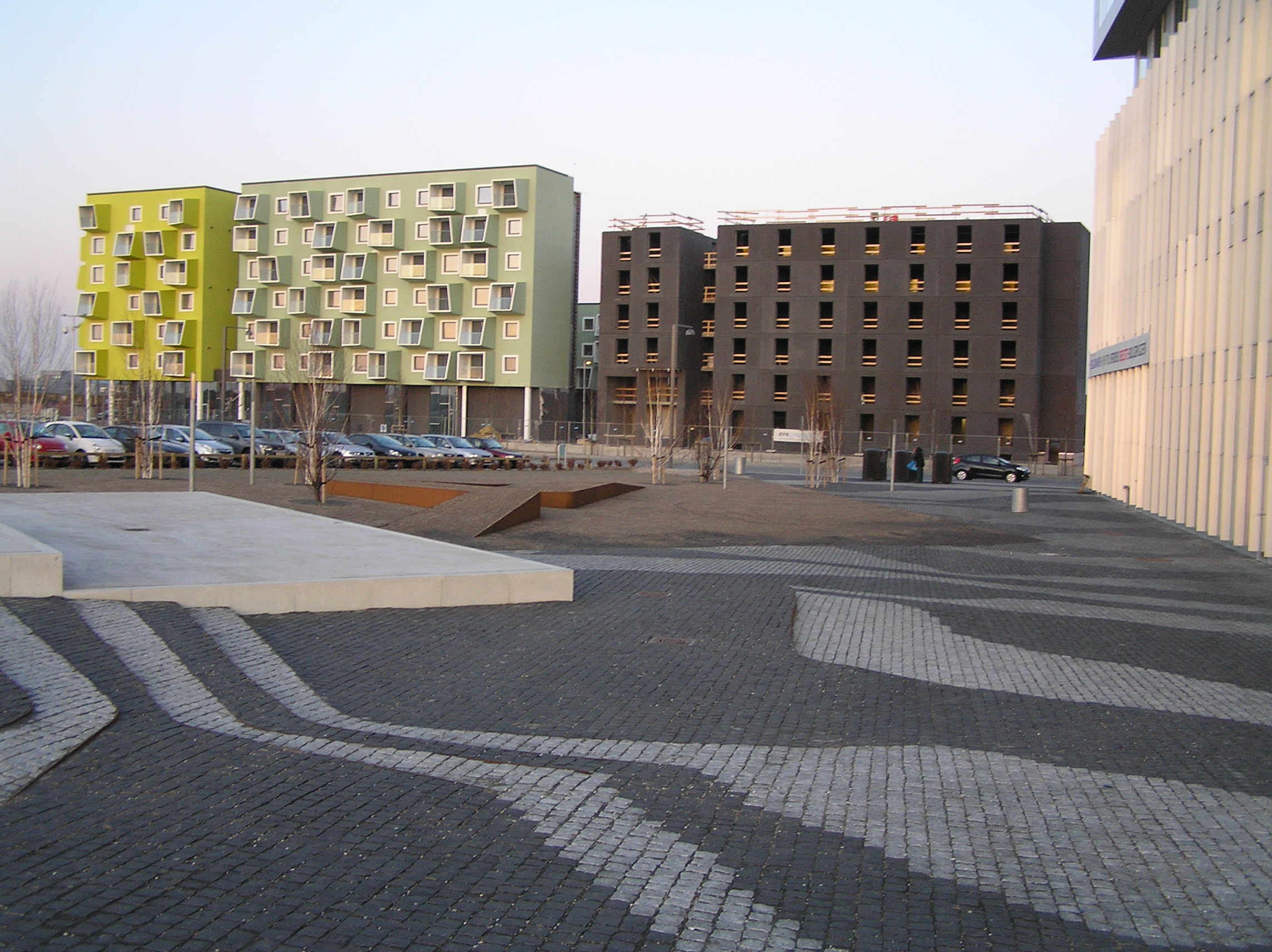
The 8-House is by far not the only piece of ‘daring architecture’ around. Here every building seems to struggle for the most peculiar language and expression. Certainly it is a bit too noisy for my taste, but also for this we have to wait and see untill things settle, residents overtake ownership and time makes some patina on those toy colours.
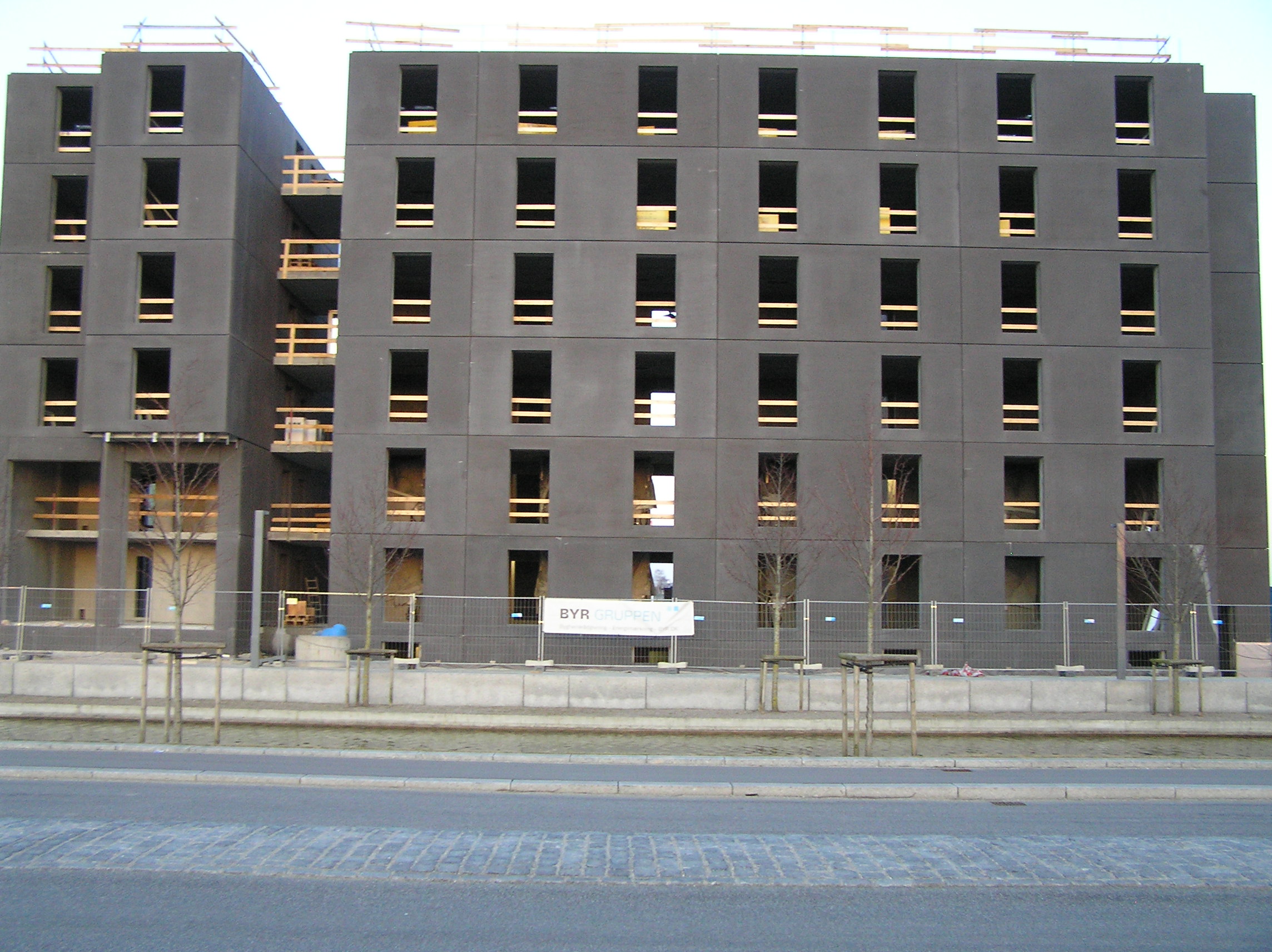
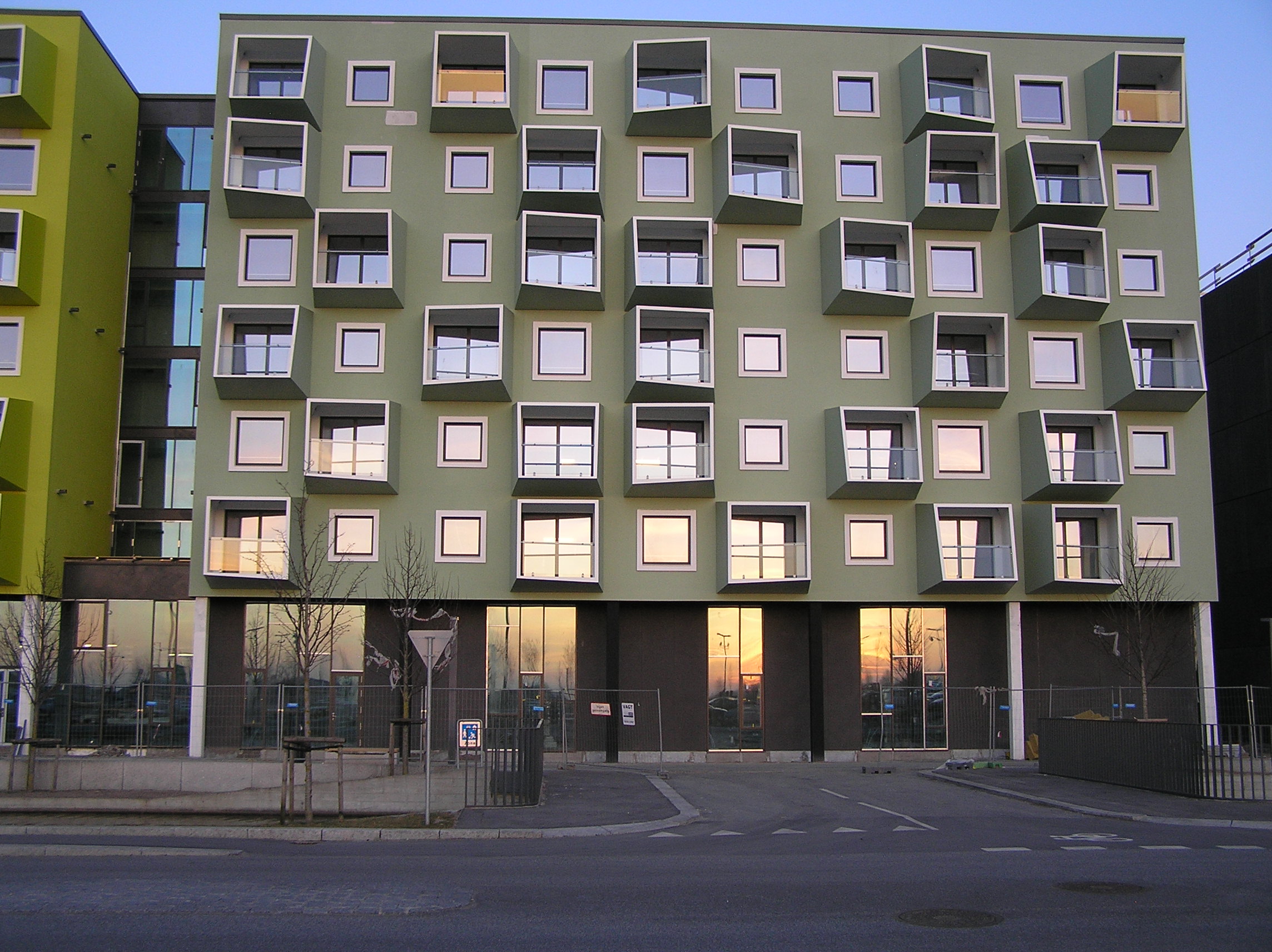
Same building before and after mounting the facade. Maybe in a couple of years if you are sick of it you can take it away and change it with a new one?
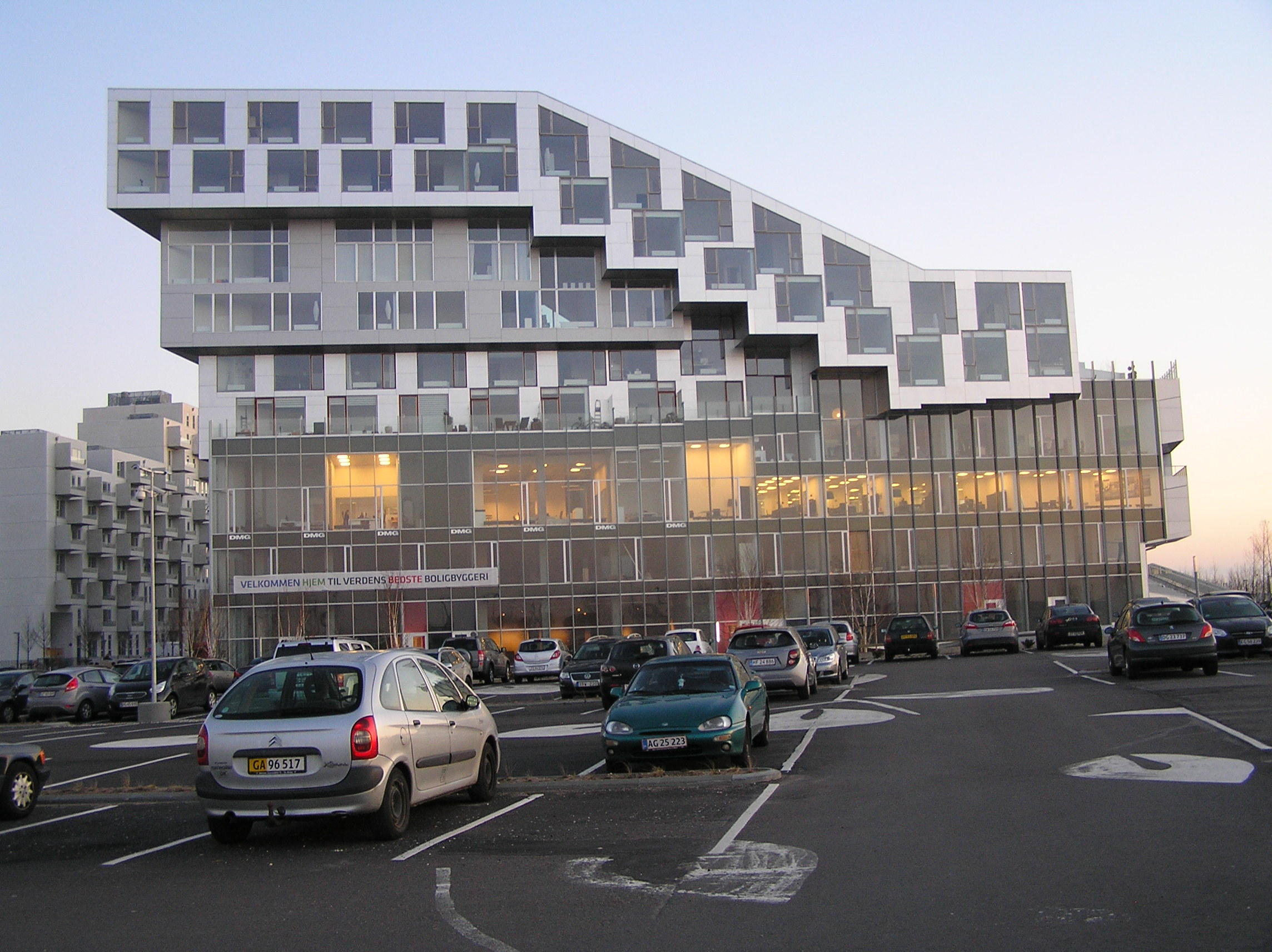
Here we go!
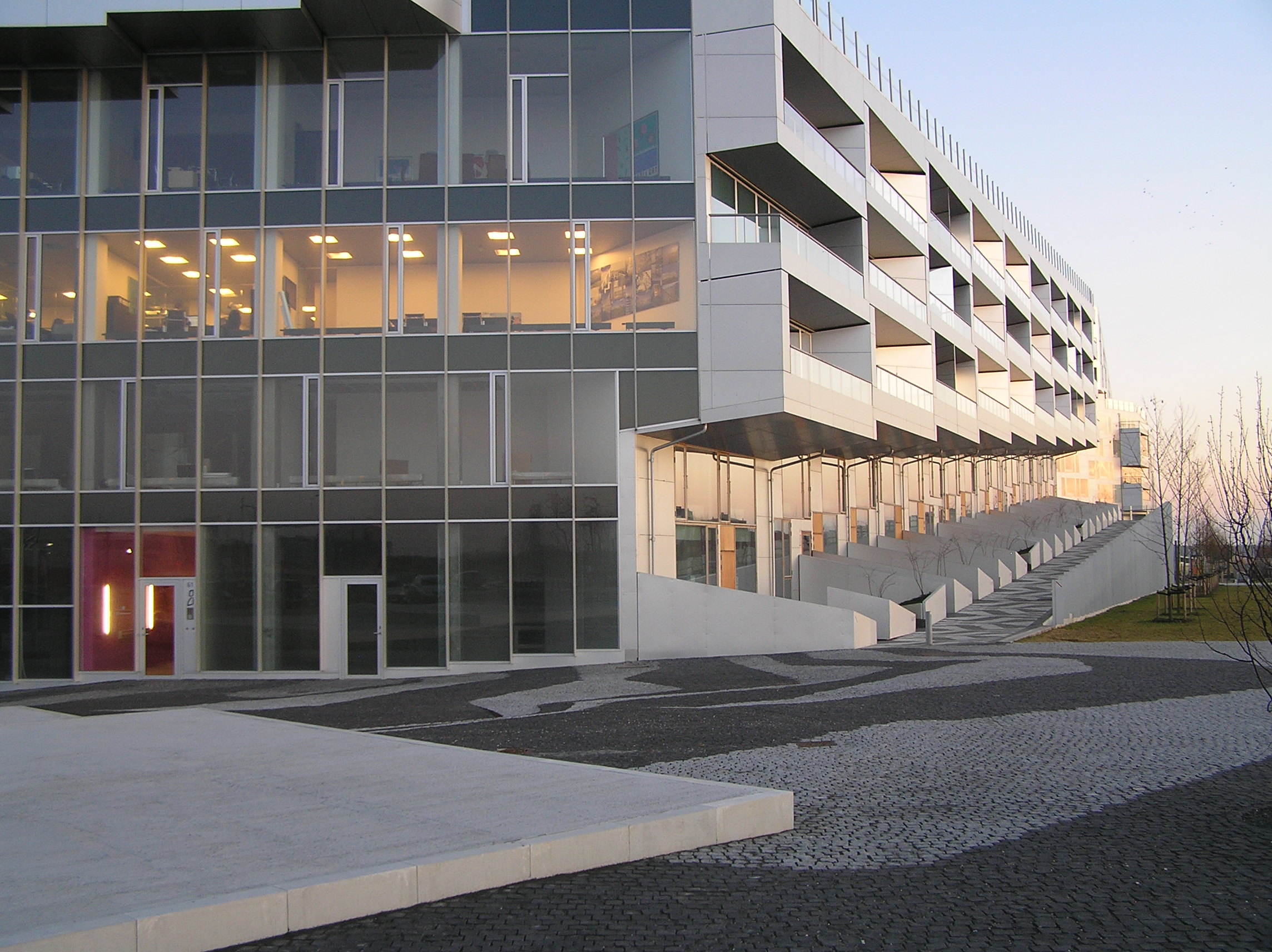
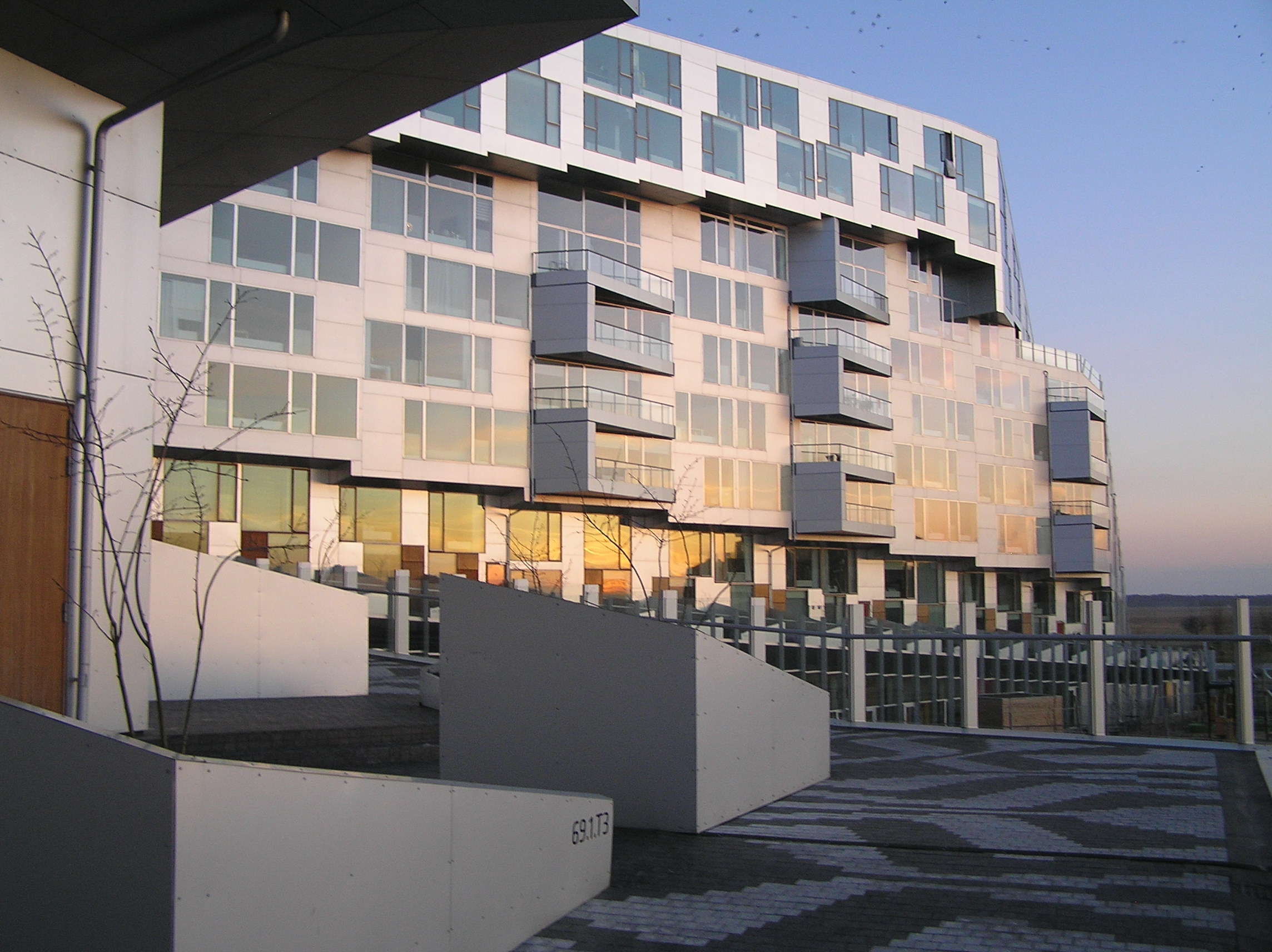
The ramp has the right slope so that you can comfortably walk up. For somebody like me that hates elevators, this way to approach a building makes a real difference.
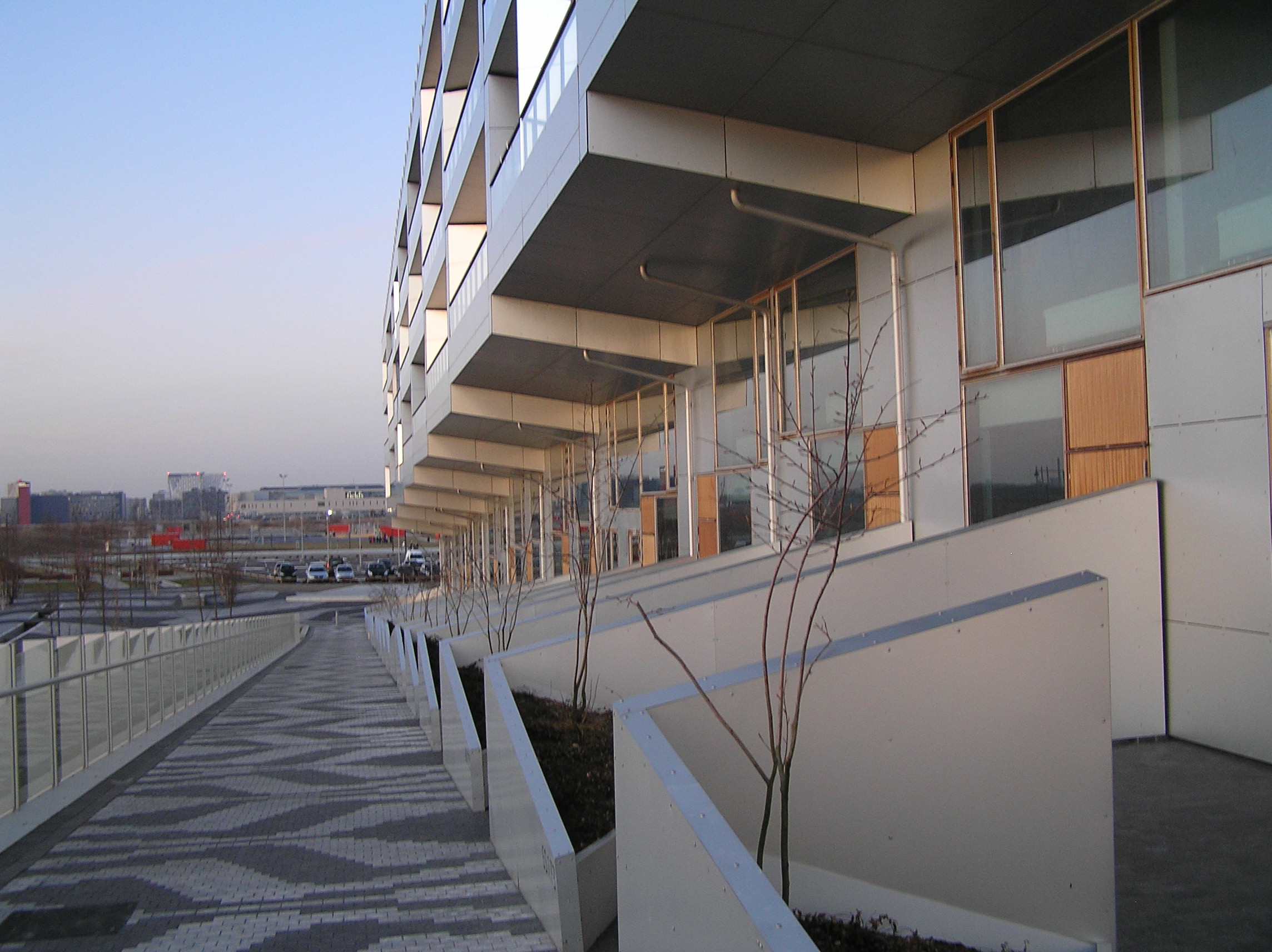
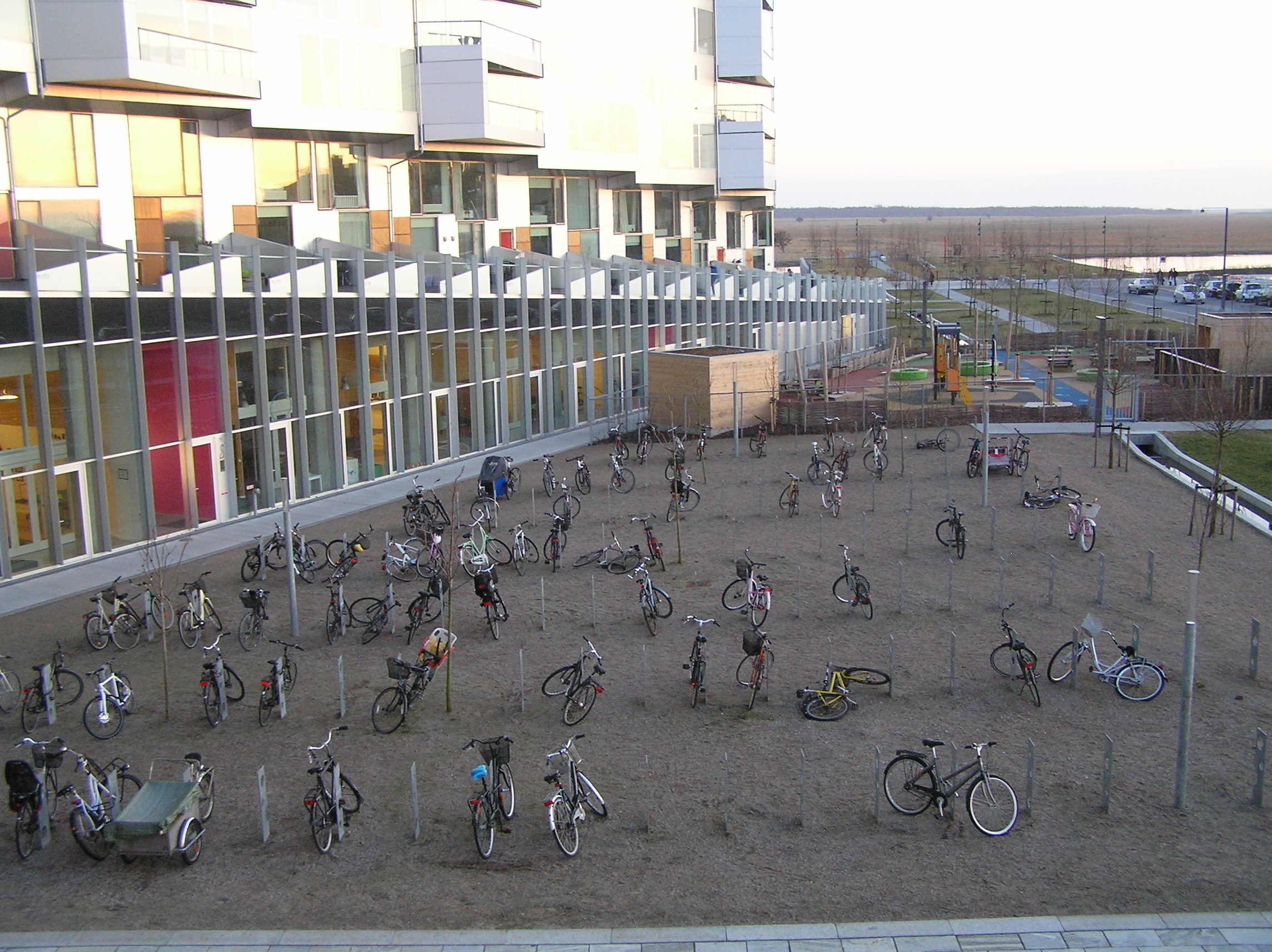
The free spaces inside and around the block are naturally home for many things: some green areas, bicycles, playgrounds, terrace of a cafè…
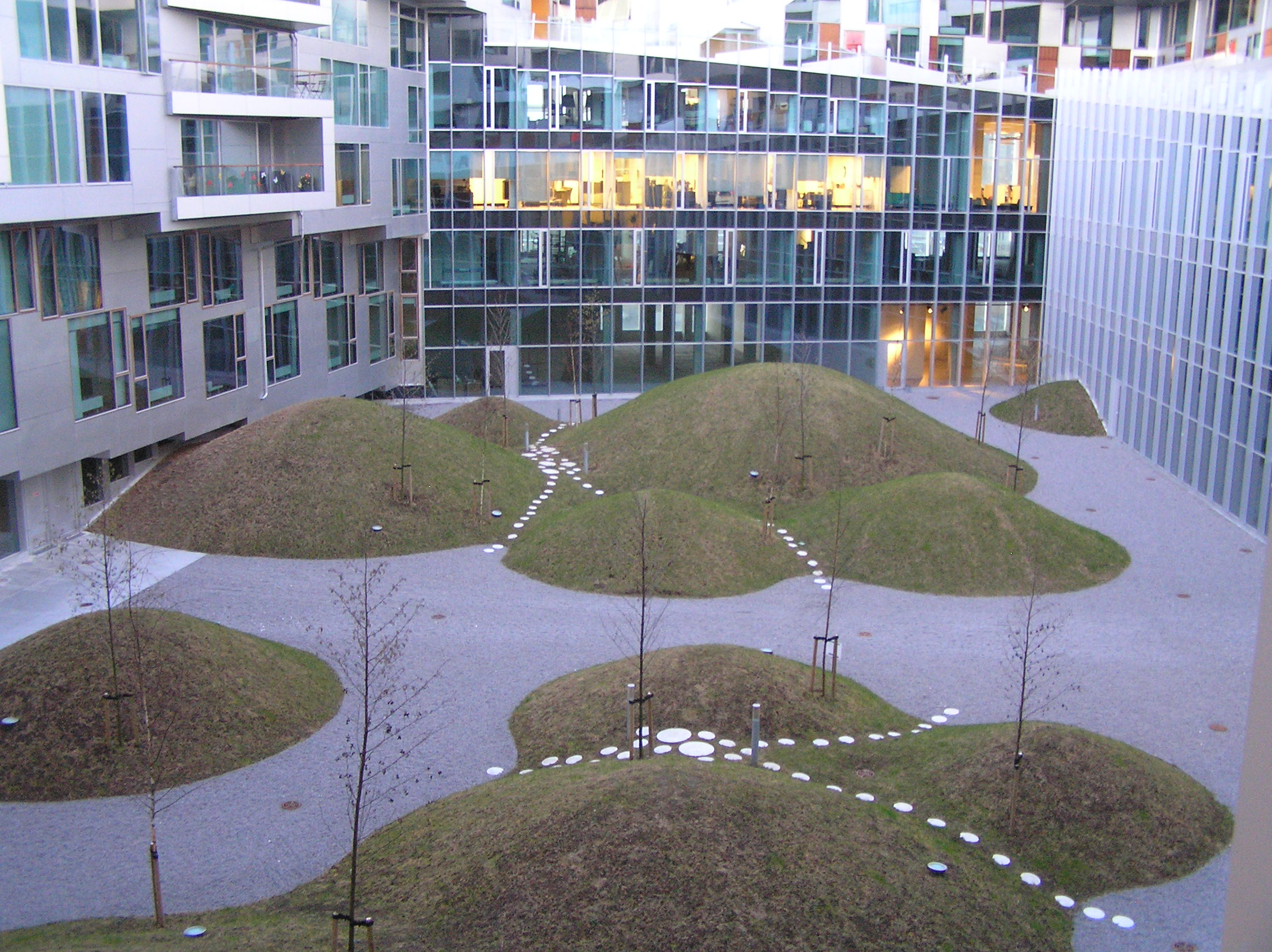
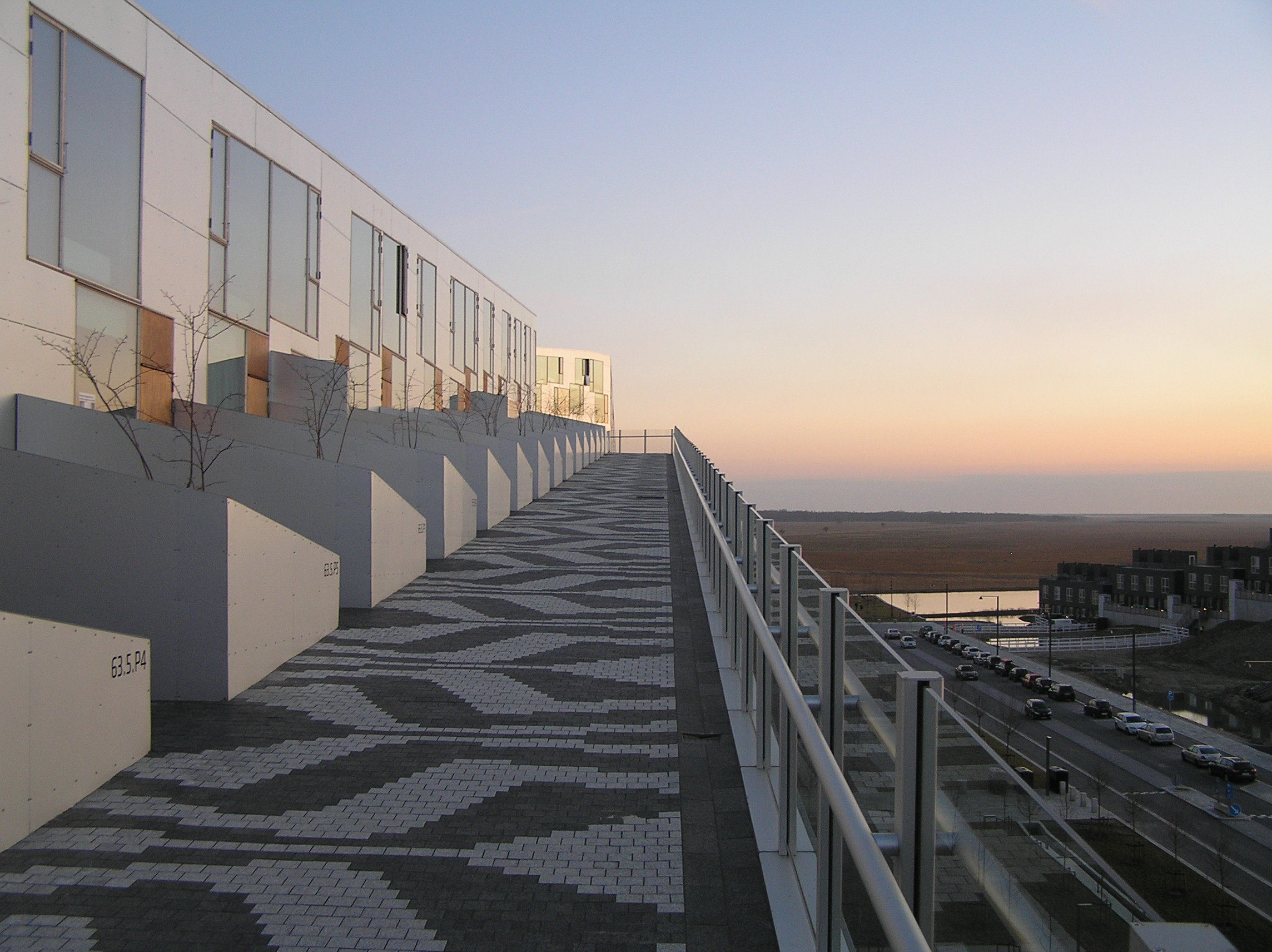
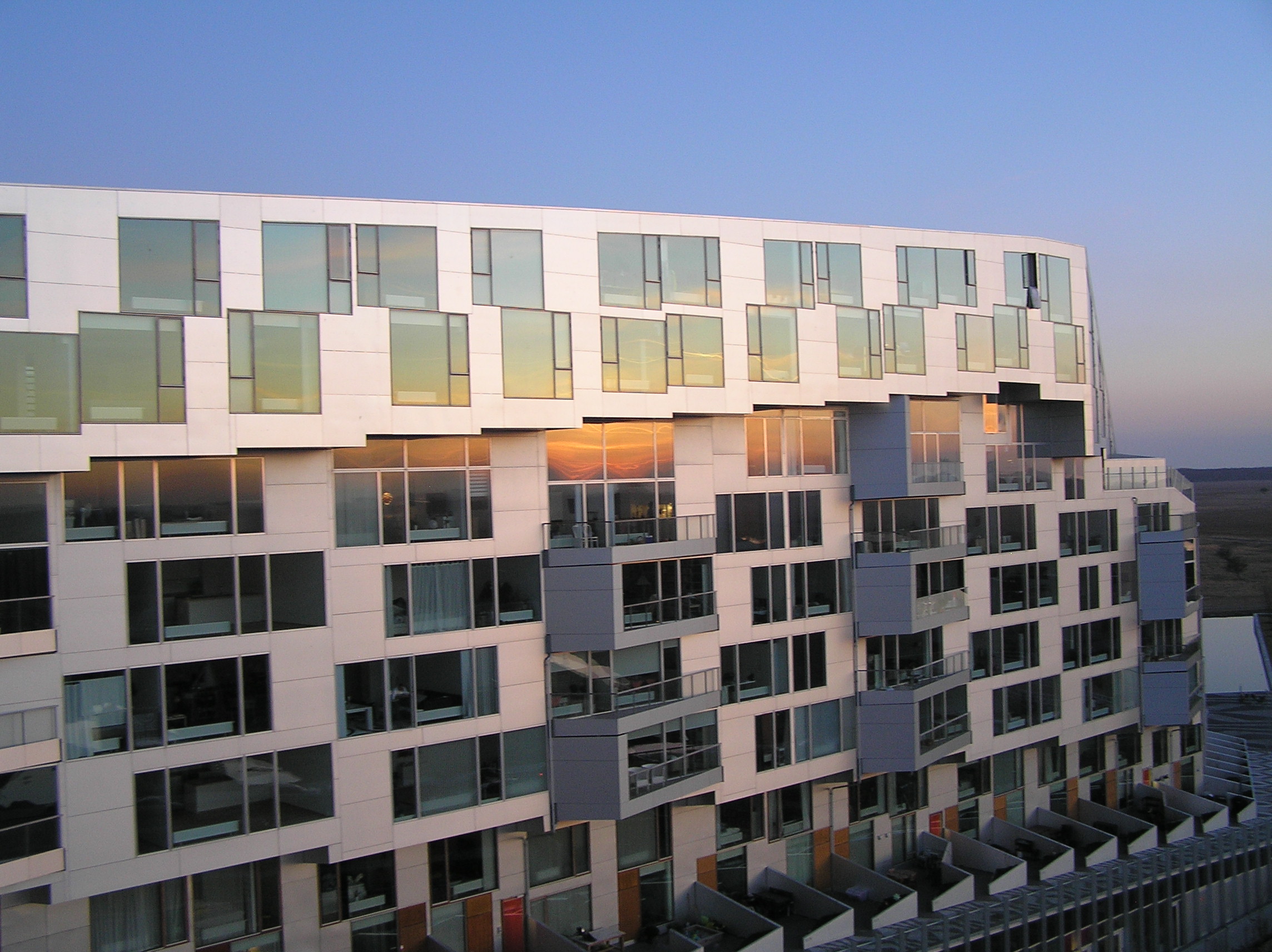
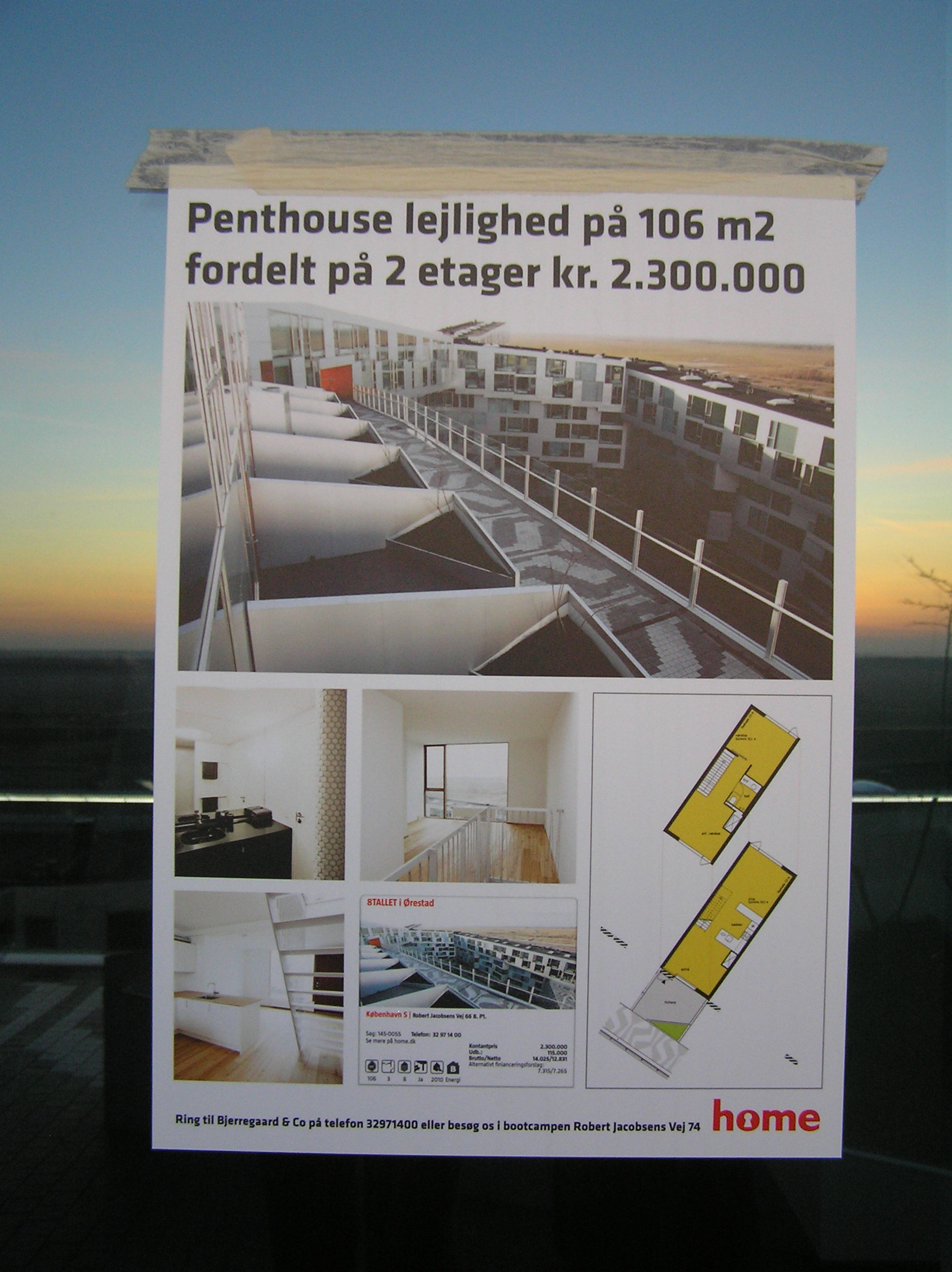
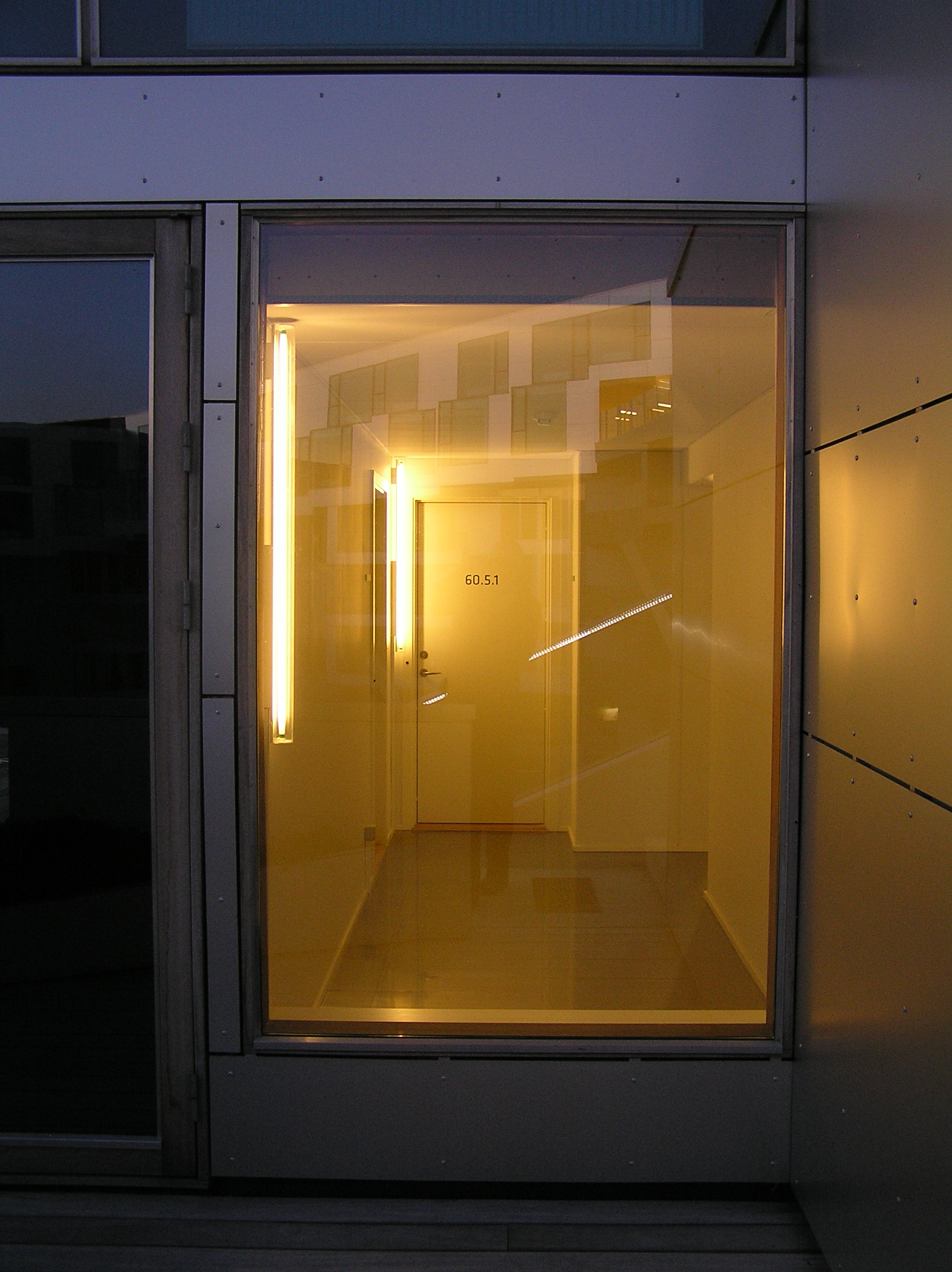
310.000 Euro for a 106sqm maisonette. Compared with the very high living standards (and high salaries) of Denmark, it seems to me a rather fair price. In most of the ‘frontyards’ I have seen strollers and toys for kids. According to the Danish housing policies these are flats for young families and in fact it seems a really good place to raise kids.
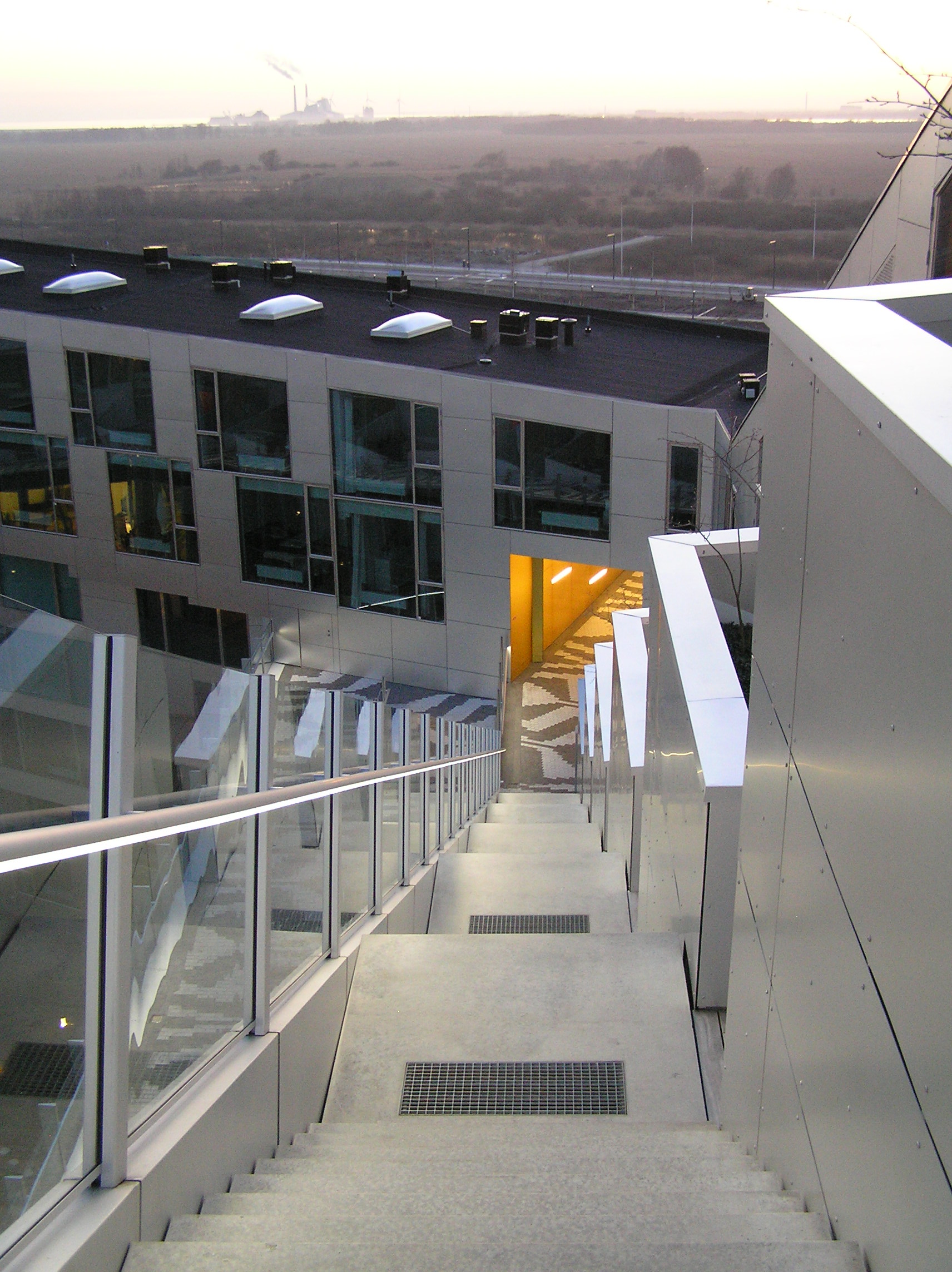
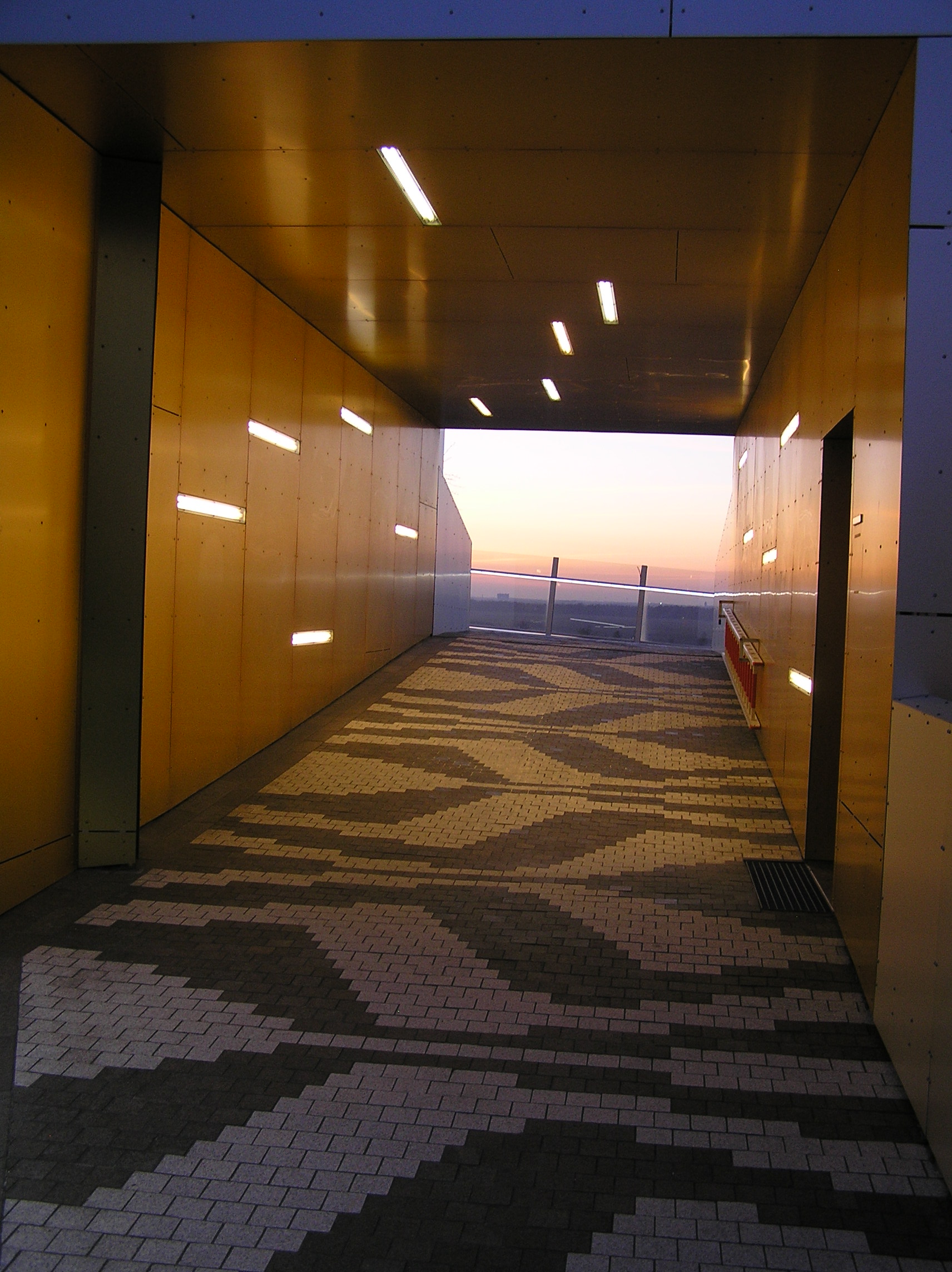
There is not only the ramp to climb the building. There are also stairs and underpasses in a selfexplaing path, where it is very easy to orientate and find your own way.
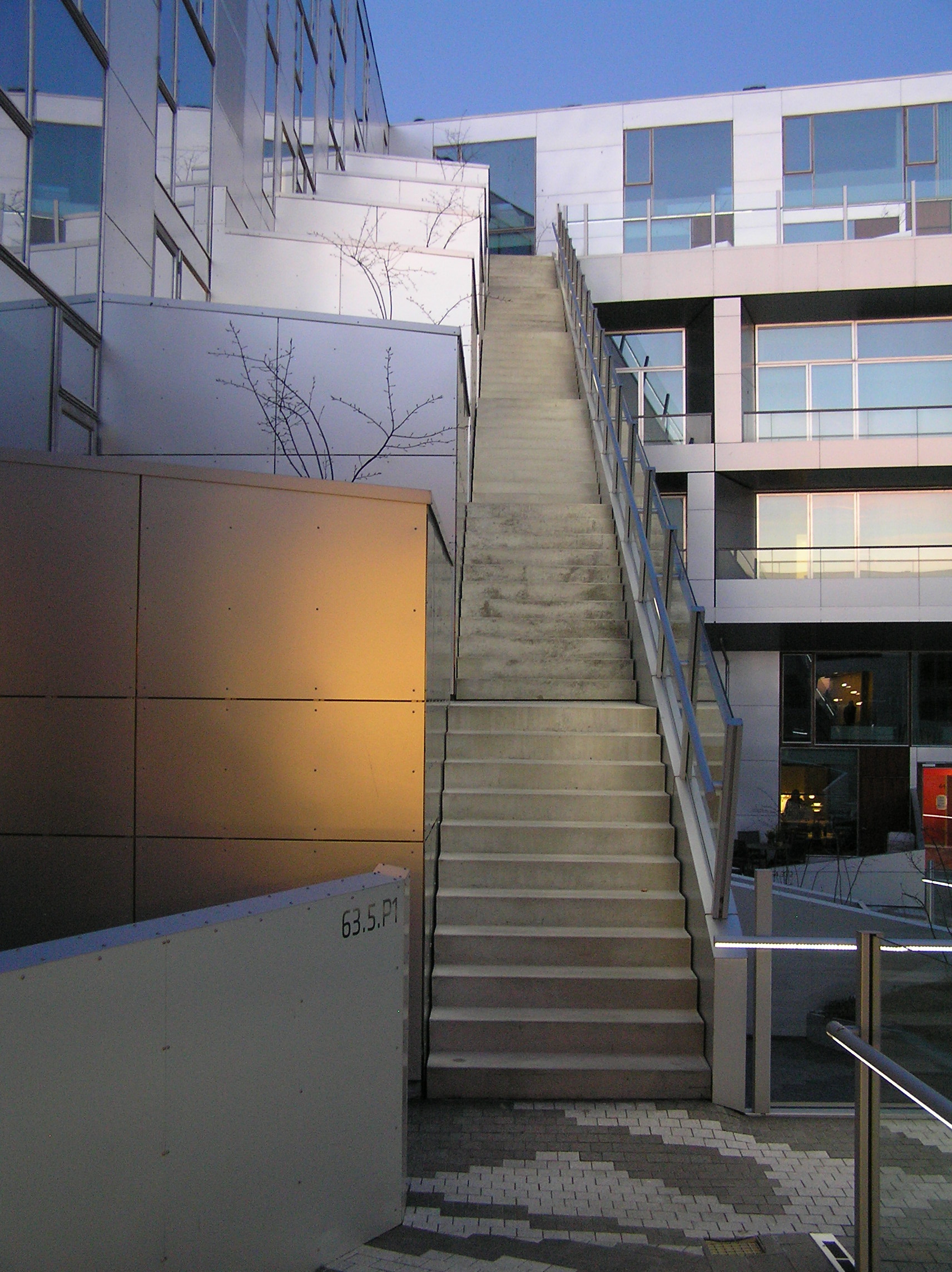
My impression was that half of the flats are not yet occupied, nevertheless you don’t feel you are in an empty block, especially thanks to the large office spaces that animate the building during the day. The few people I met in my walkaround were more than friendly.
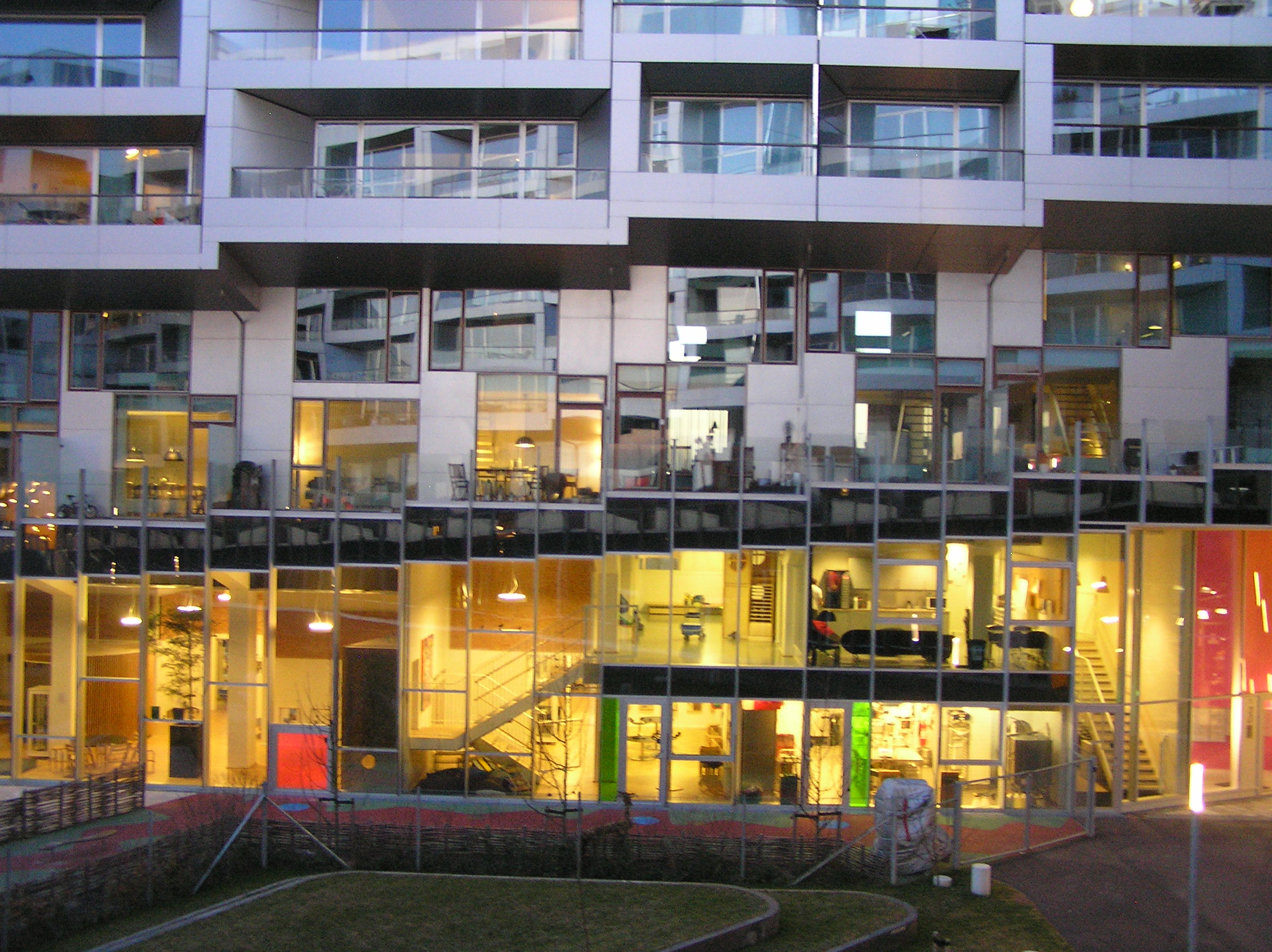
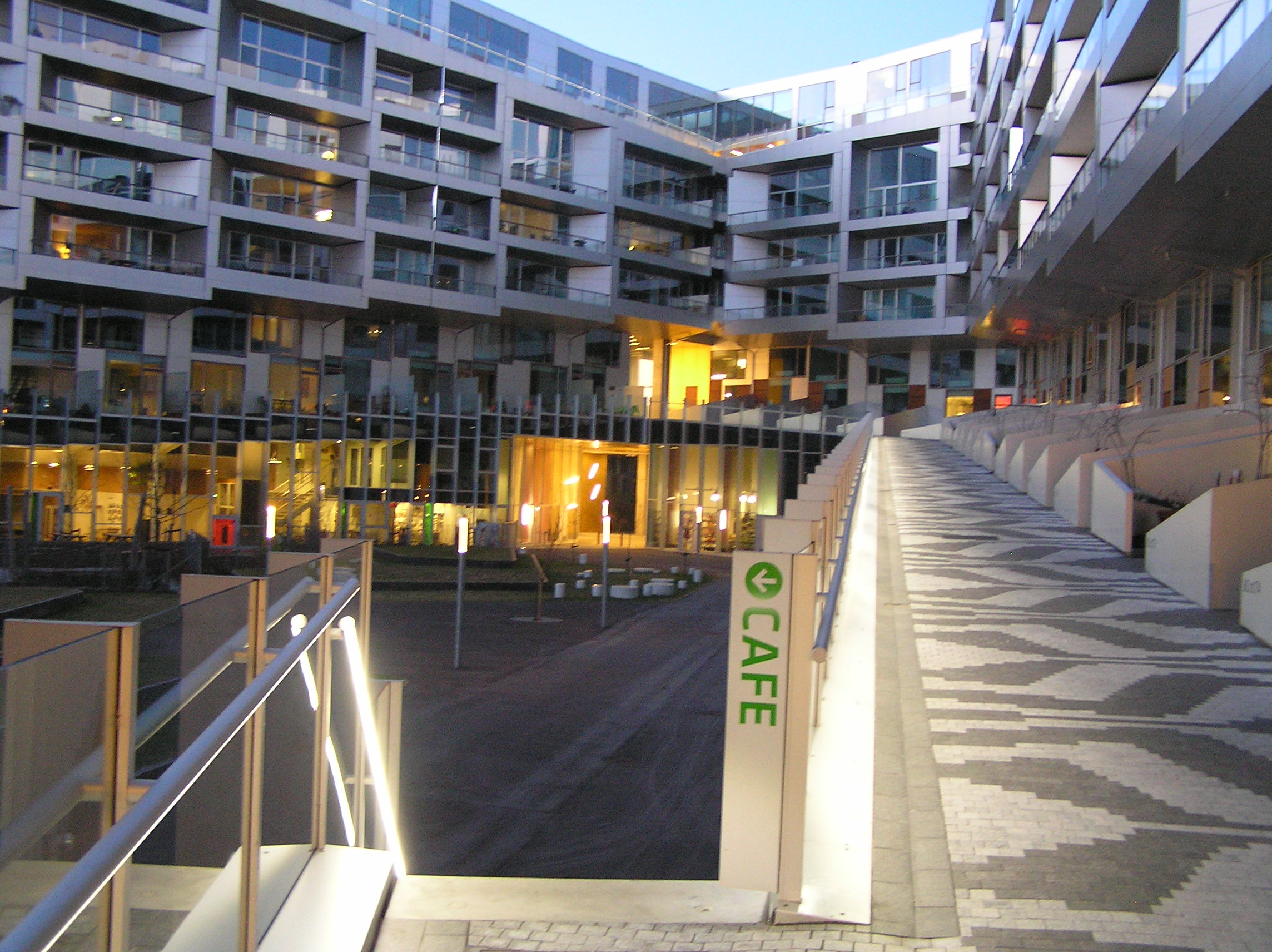
This is the end.
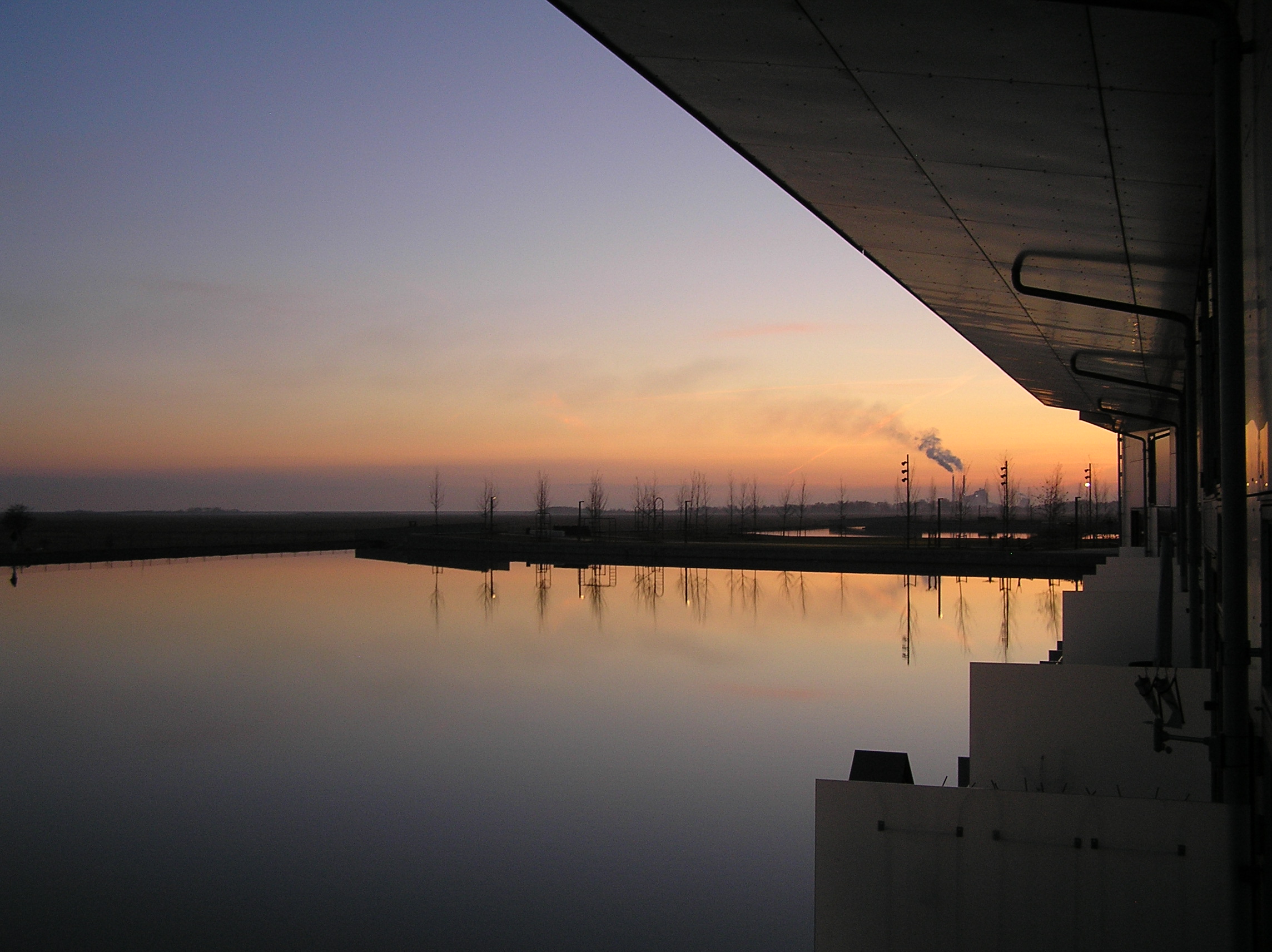
Temporary Urban Design
The sharp review by David Lepeska on the Atlantic Cities about the new book by Peter Bishop Temporary City makes me think about the Public Design Festival, an initiative driven by the Esterni collective in Milan and abroad, since 1995.
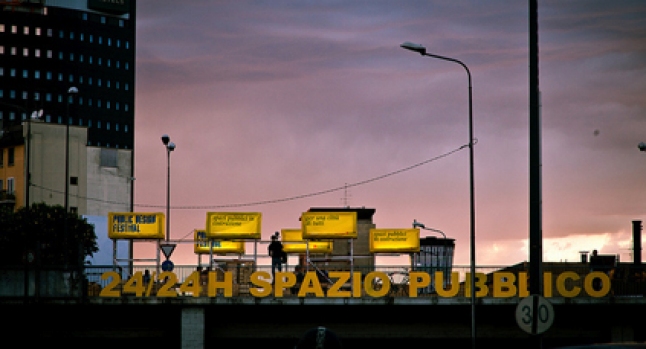
It also makes me think about the Report about Future of Design in the Built Environment published by the same author in November 2011 for the Commission for Architecture and Built Environment (CABE). The new book deals with the hot topic of increasing role of transient phenomena shaping urban space also in its permanent features. A good start to think about what is temporary and what is permanent in cities… definitely more than enough food for thoughts for today.
To Rome With Love
Brilliant video review of the new Woody Allen movie shot in Rome featuring, among others Roberto Benigni. Anton Giulio Onofri (Luiss TV) explains why this might well be the worst movie by the great American director, but nevertheless absolutely a must see. Just like in Richard Meier’s Church in Tor Tre Teste, the Italian movie (or building) industry seems to have a kind of reverse Mida touch, being able to transform gold nuggets in raw concrete.
Richard Meier’s Church @ Tor Tre Teste in Rome
Although they cannot really capture the essence of an architectural work, unprofessional pictures are generally by far more honest than what you normally see on magazines. Andrea Giannone was travelling around Rome for his own business as I asked him to send me some streetviews of Richard Meier’s Church in Tor Tre Teste.

I myself have never visited the place, but heard a lot about it a couple of years ago, as it was completed, and I also listened to a presentation of the projects by engineers involved. Very interesting indeed, but as I received the pictures I thought: “Well… what I am going to write about it?”

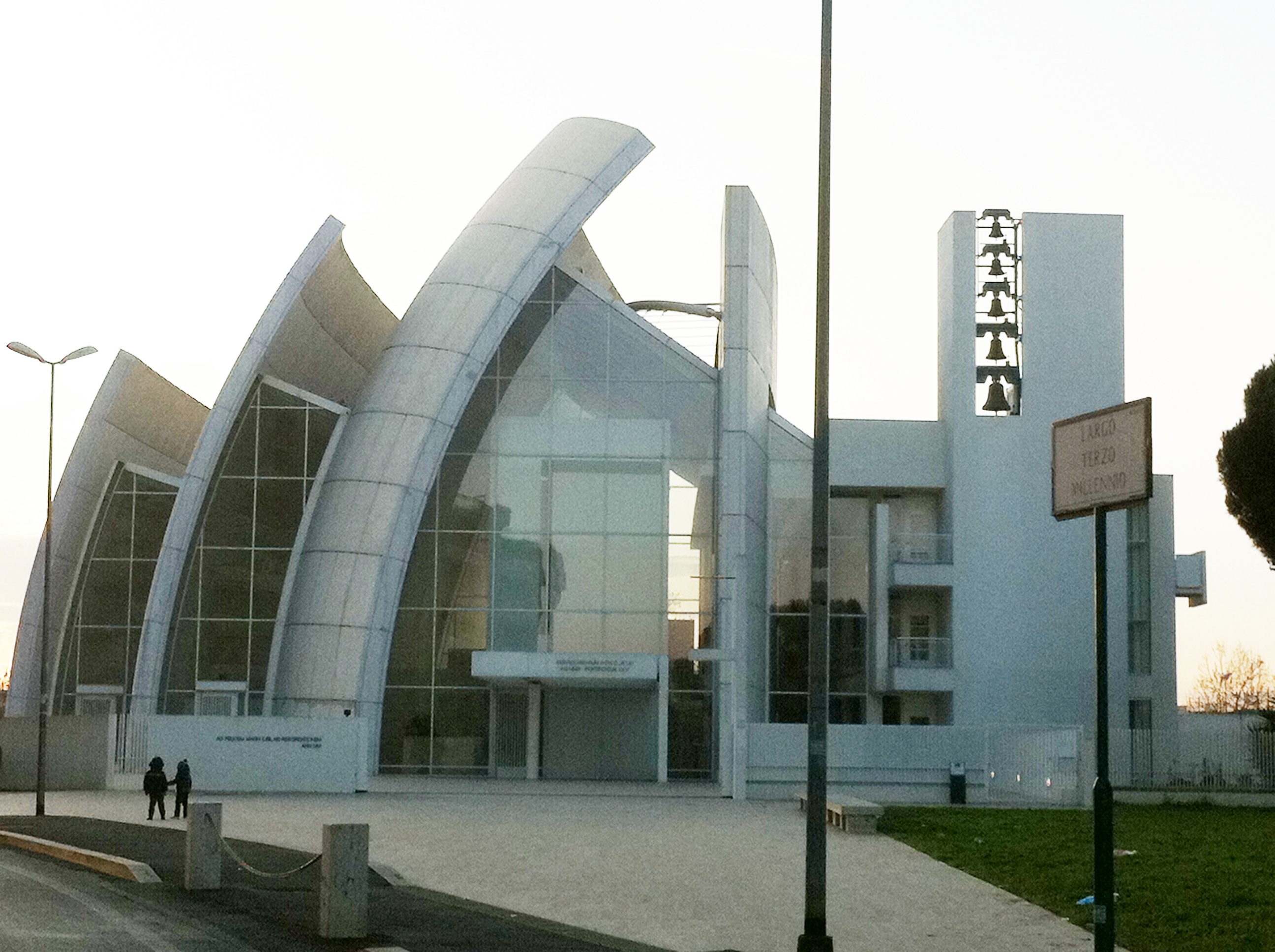


The intention of the “client” (CEI, governing body of the Italian Catholic Church) was good: (1) To place a new church in a new city development at the edge of town, investing in the periphery of Rome to create a new social and spiritual center. (2) To call for an architectural competition among famous architects and provide the winner with enough resources to satisfy his creative freedom and maybe spur a little Bilbao effect. (3) Involving a private company (Italcementi) to absorb some of the costs and support the technical challenge envisaged by the architect, bringing technical innovation to the periphery of the Città eterna.

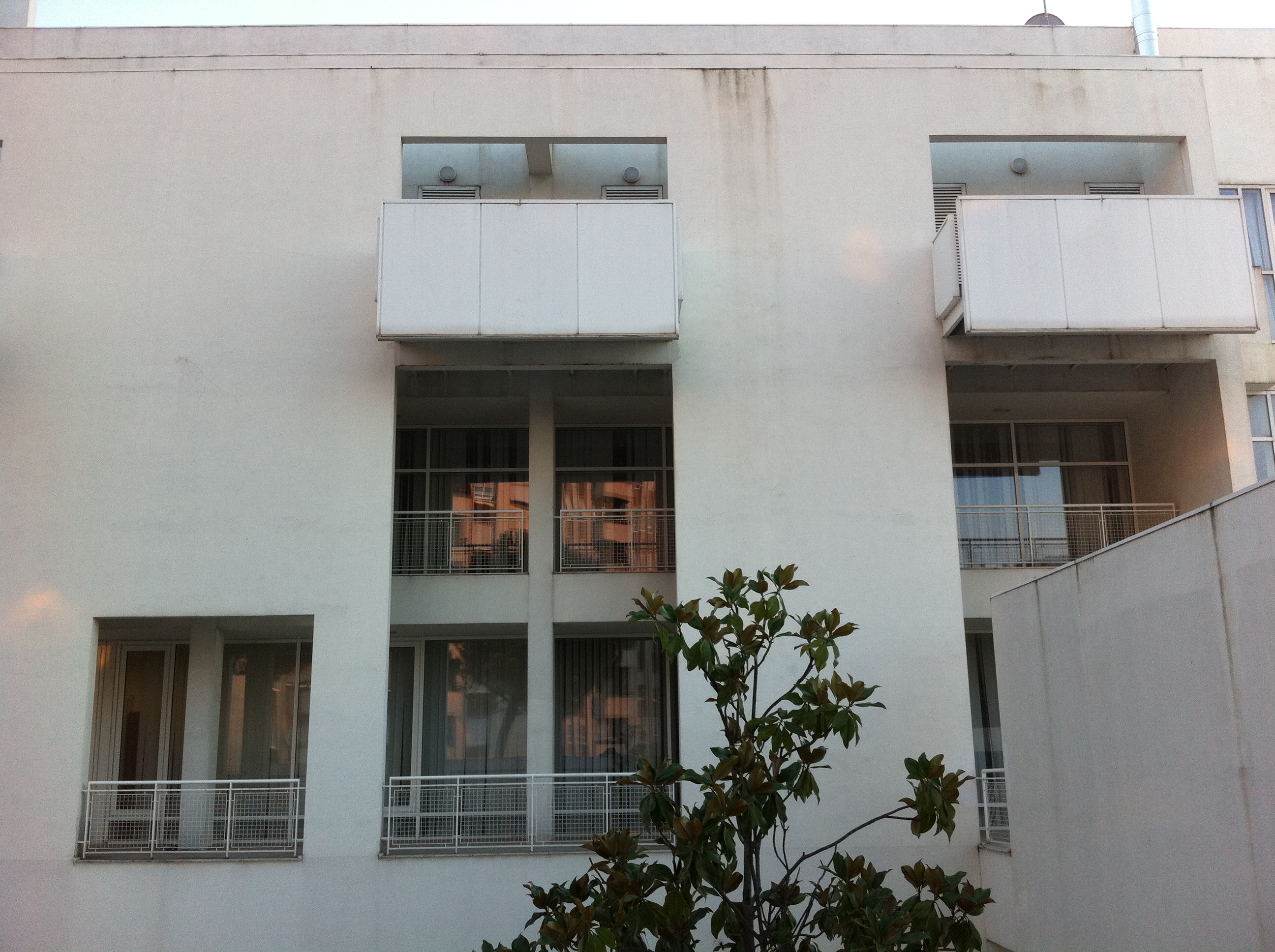

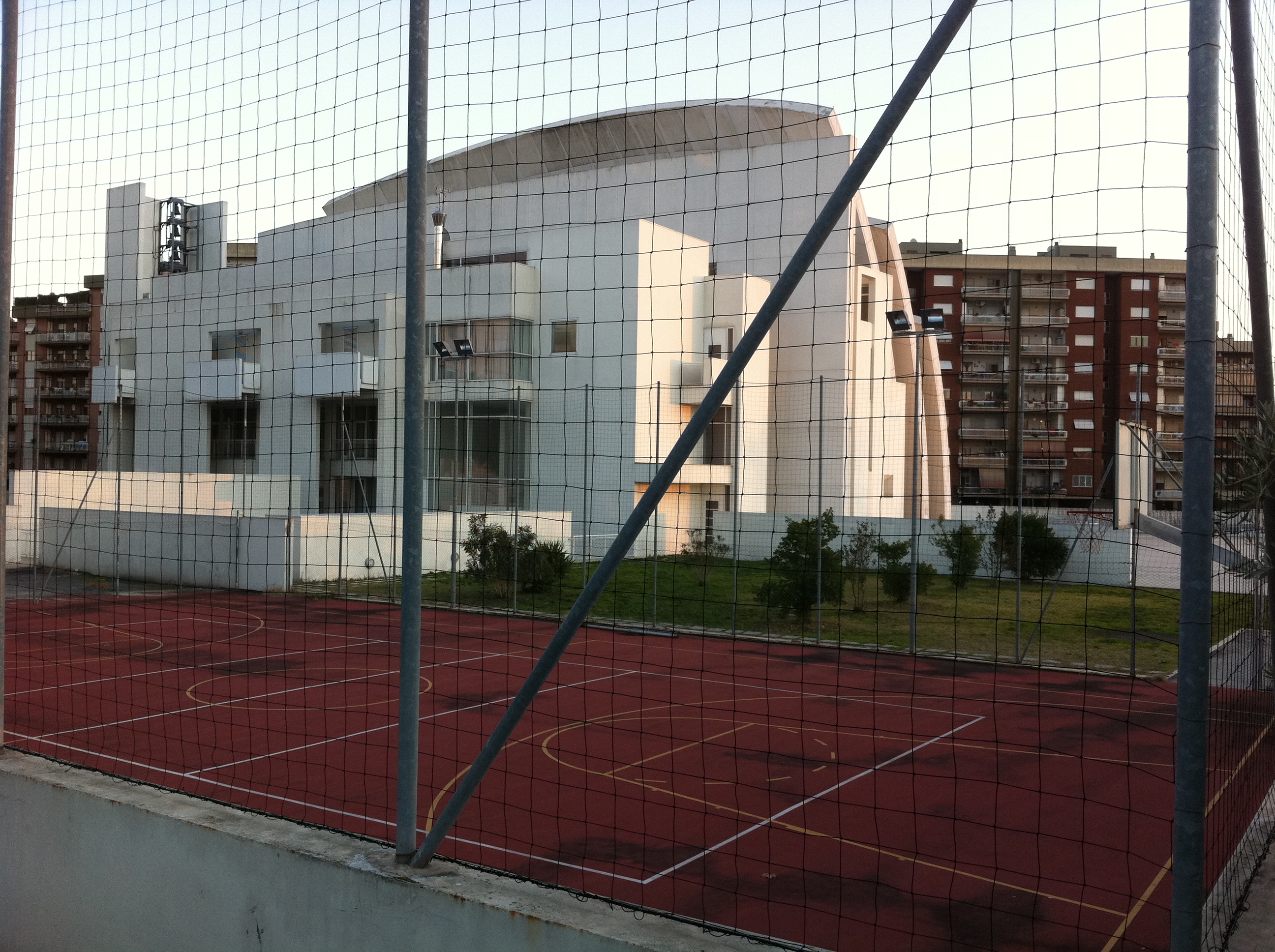

Plenty of good intention were behind this undertaken, but the result is rather sad. At least in terms of architectural expression and contribution to the urban fabric, if there is anything similar around the place, the result is a loose-loose situation. The imaginative church feels uncomfortable in the shabby periferal environment and the everyday life going around it seem not to have established any relationship with the free standing monument.
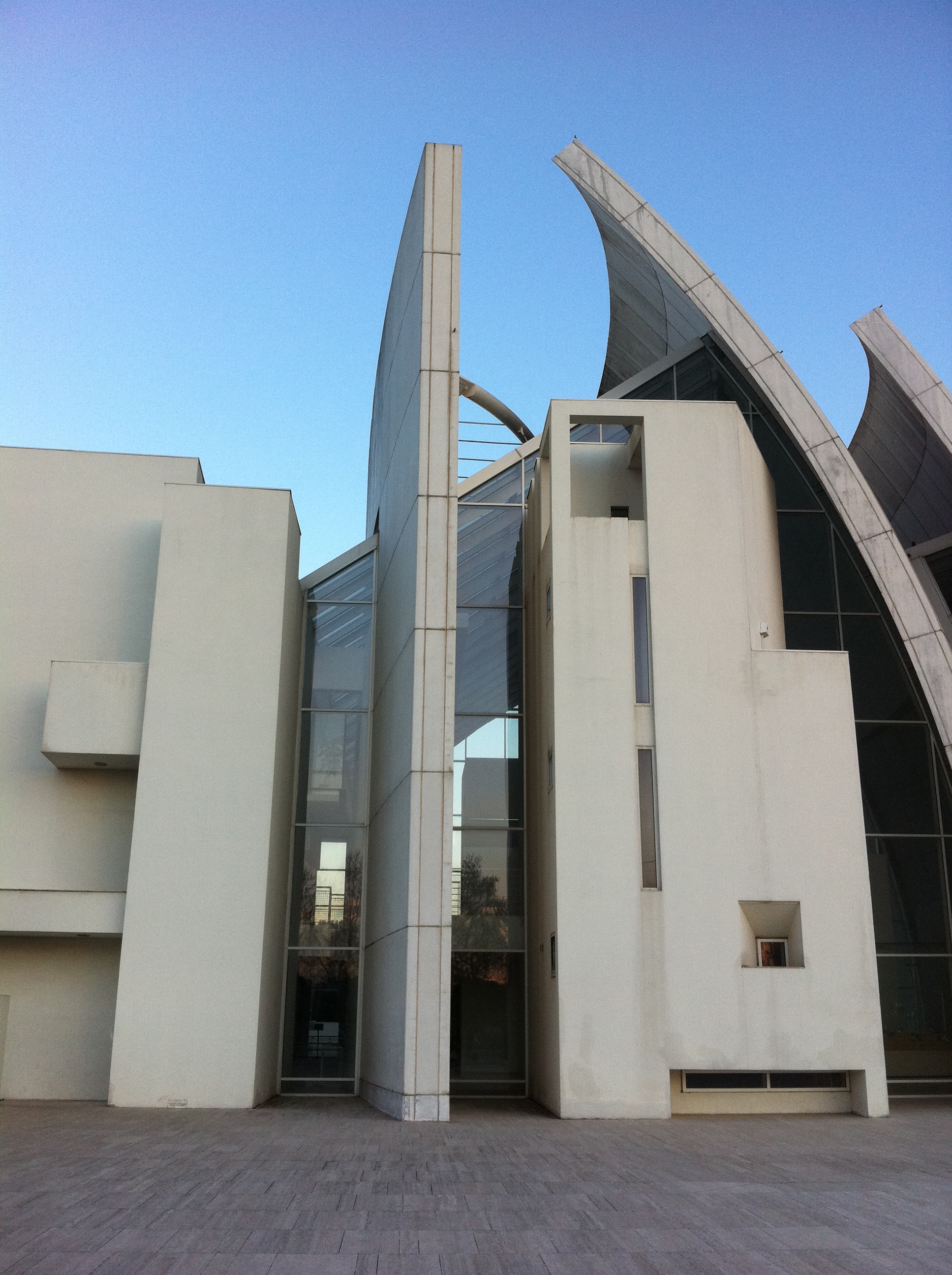

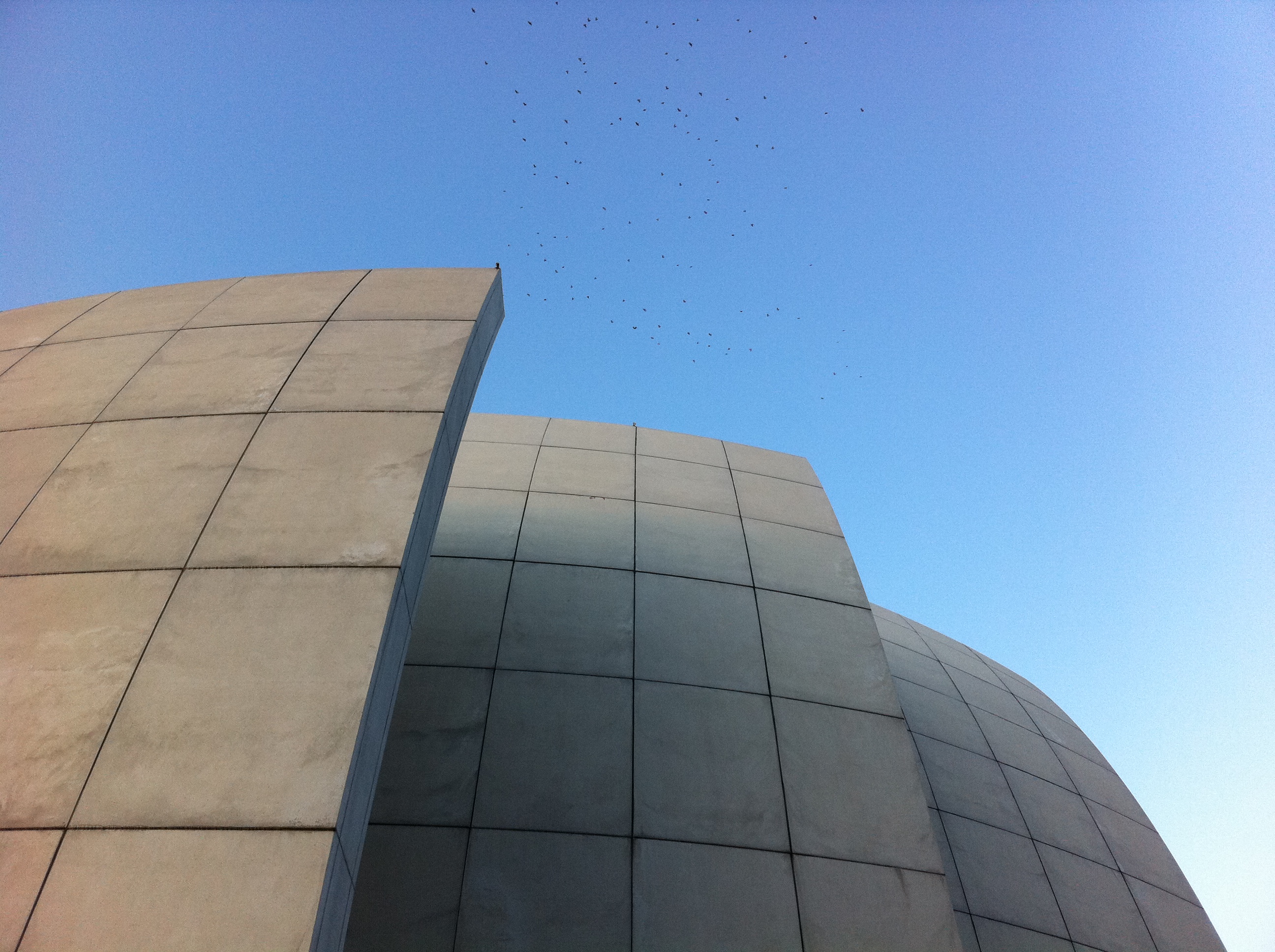
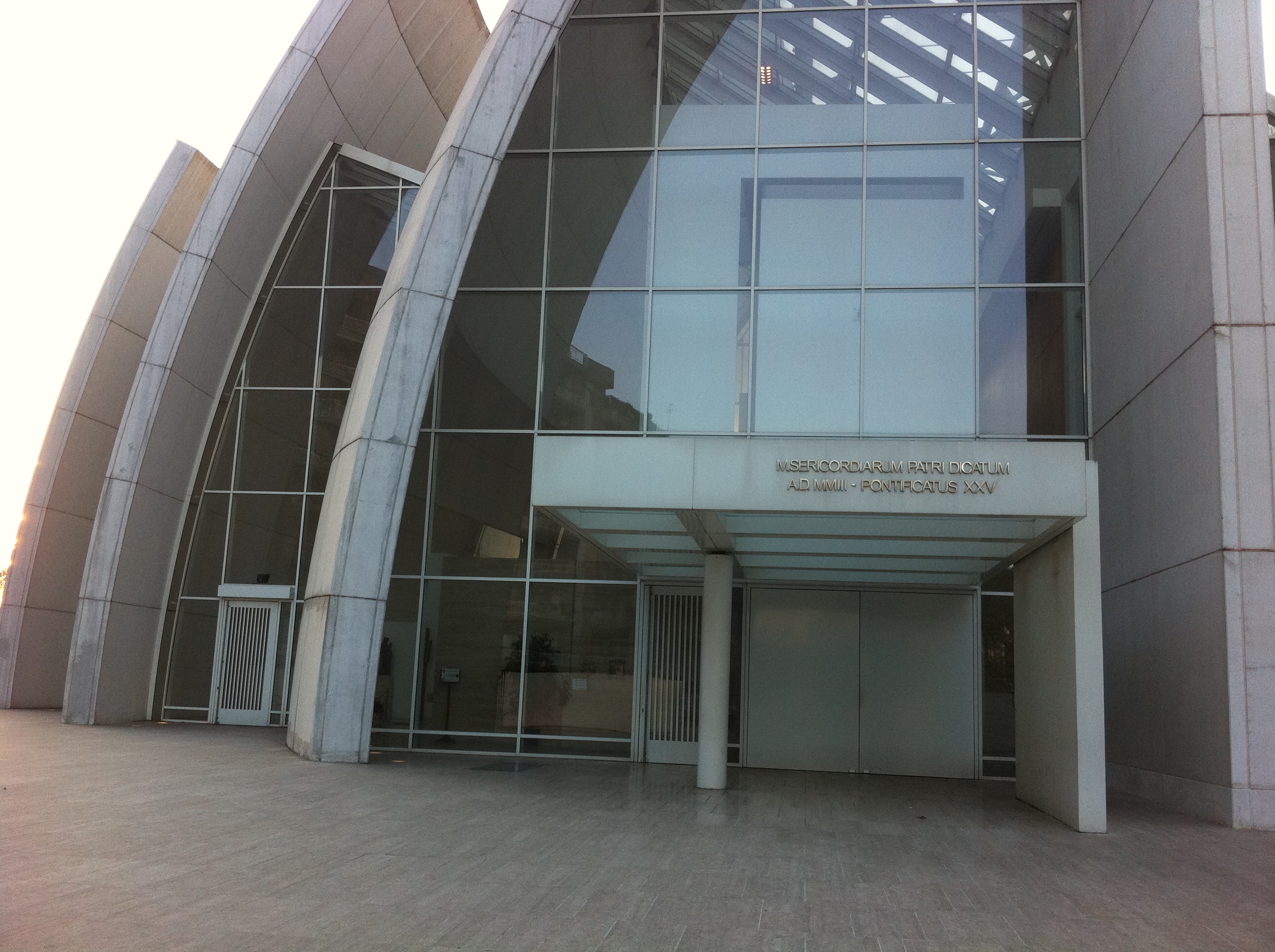


Good intentions, conspicuous budget and star-architects are no guarantee for good results. Yet I am going to visit the Church myself, sooner or later, hoping to change my opinion.
 Well Designed and Built