Discovering Bayonne

The compact city with its cultural diversity and environmental quality has been acknowledged as the most important asset for European urban culture in a long list of documents including the Urban Aquis (Rotterdam 2004), the Bristol Accord for Sustainable Communities (Bristol 2005) and the Leipzig Charter for European Sustainable Cities (Leipzig 2007).
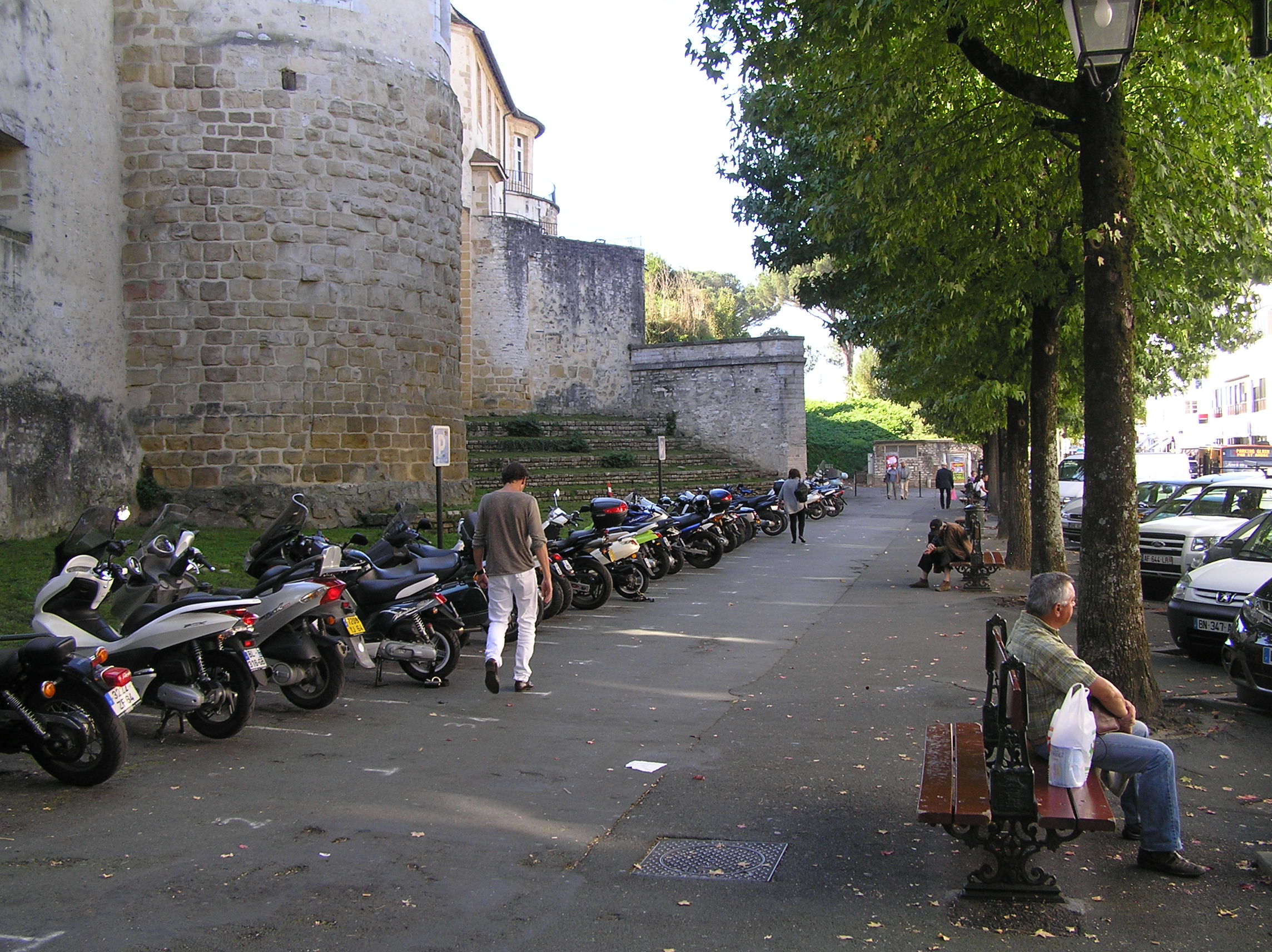
To this extent European Cities of Tomorrow must be considered the engines of regional development, main generators of jobs and growth, delivering innovation, economic competitiveness and social cohesion by all kind of urban and territorial development policies, in an environmental sensitive (and sensible) way. So far the theory and the political long term view, but as examples are usually more self explaining than theories, let me share with you some thoughts about the beautiful city of Bayonne and a few pictures I took in a walk on a Saturday morning in October 2011, after a fruitful Workshop of the URBACT LINKS Network.
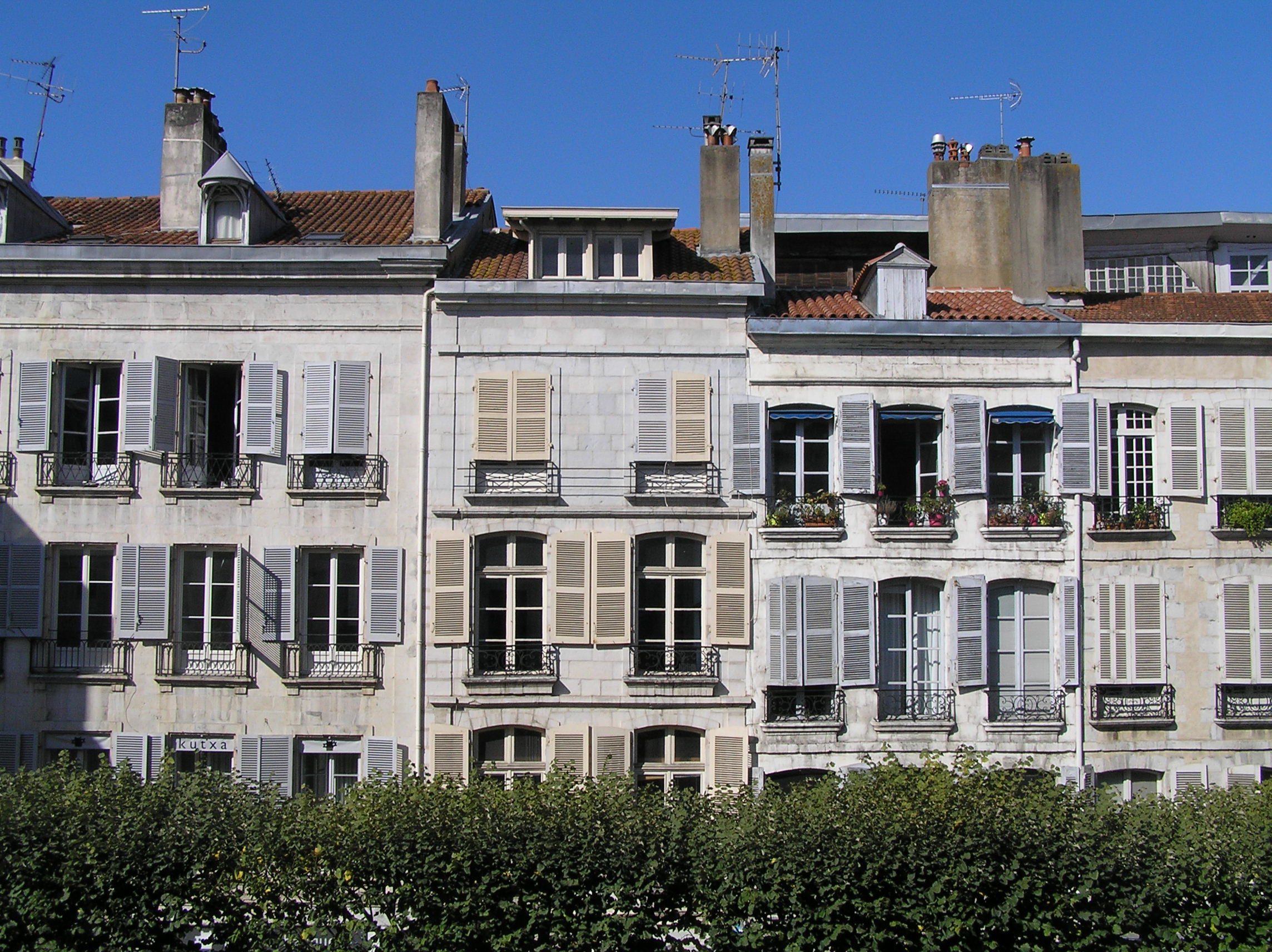
With 50 thousand inhabitants Bayonne is the cultural and economic capital of Aquitaine, in South-West of France and at the same time the capital of French Basque country. Located in a strategic point, at the confluence of river Nive and Adour, the city was founded on a Roman castrum, was the scene of many historic events and eventually in the XVII Century gave birth to the bayonet.
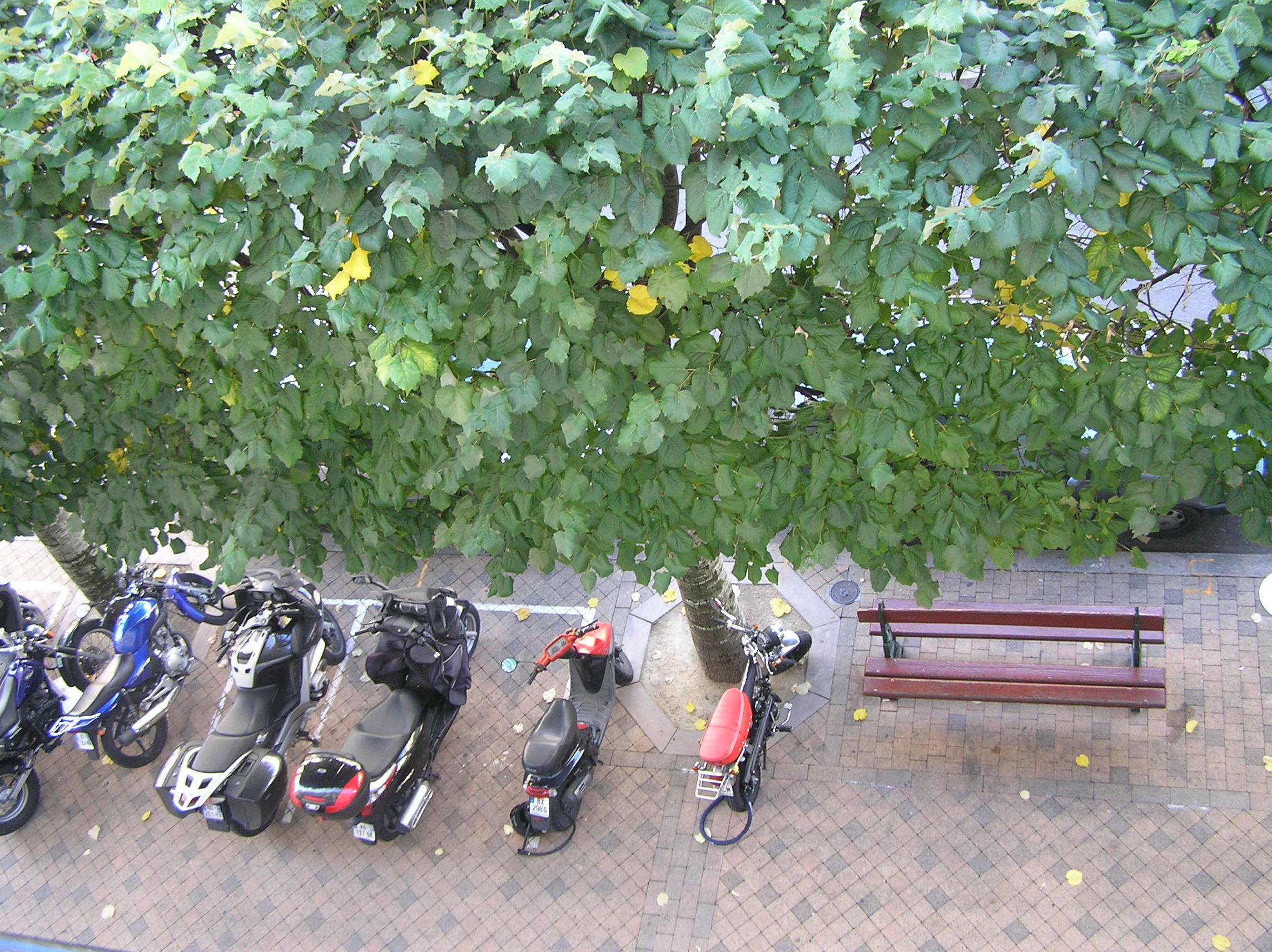
The integrity of the historic city center makes it an internationally well-known touristic attraction, somehow competing with the seaside resort of Biarritz, only a few kilometers away, but on a fully different terrain. The XVII Century citadel (by famous fortress architect Vauban 1633-1707) is the headquarter of a modern University and the whole city is a workshop for different approaches of sustainable development strategies, with the aim to maintain and enhance the vitality and livability of the historic city.
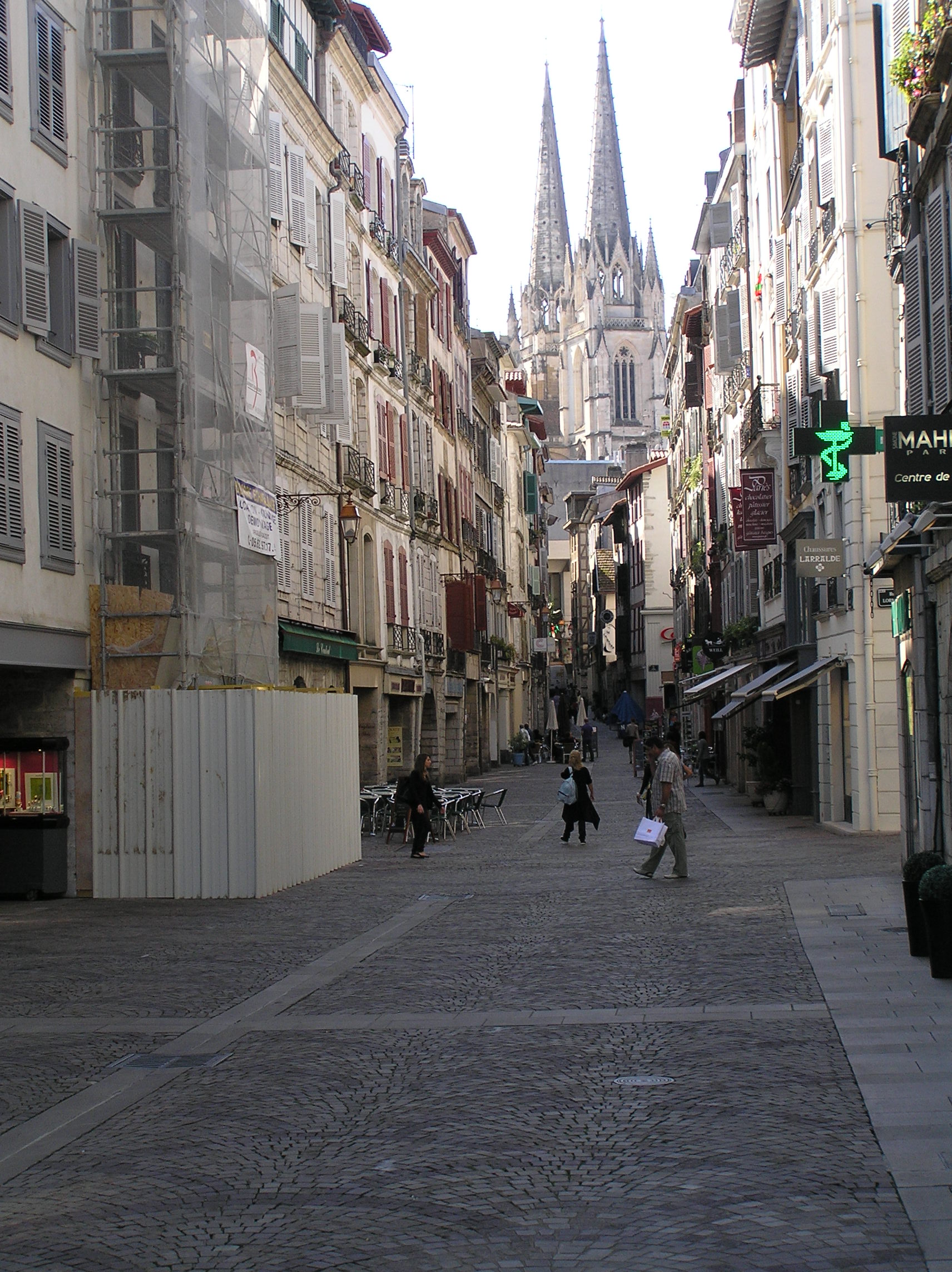
The Townhall (La Mairie de Bayonne) is a real public monument, a strong presence in the urban fabric, re-affirming the solid role of French public administration and democratic institutions.
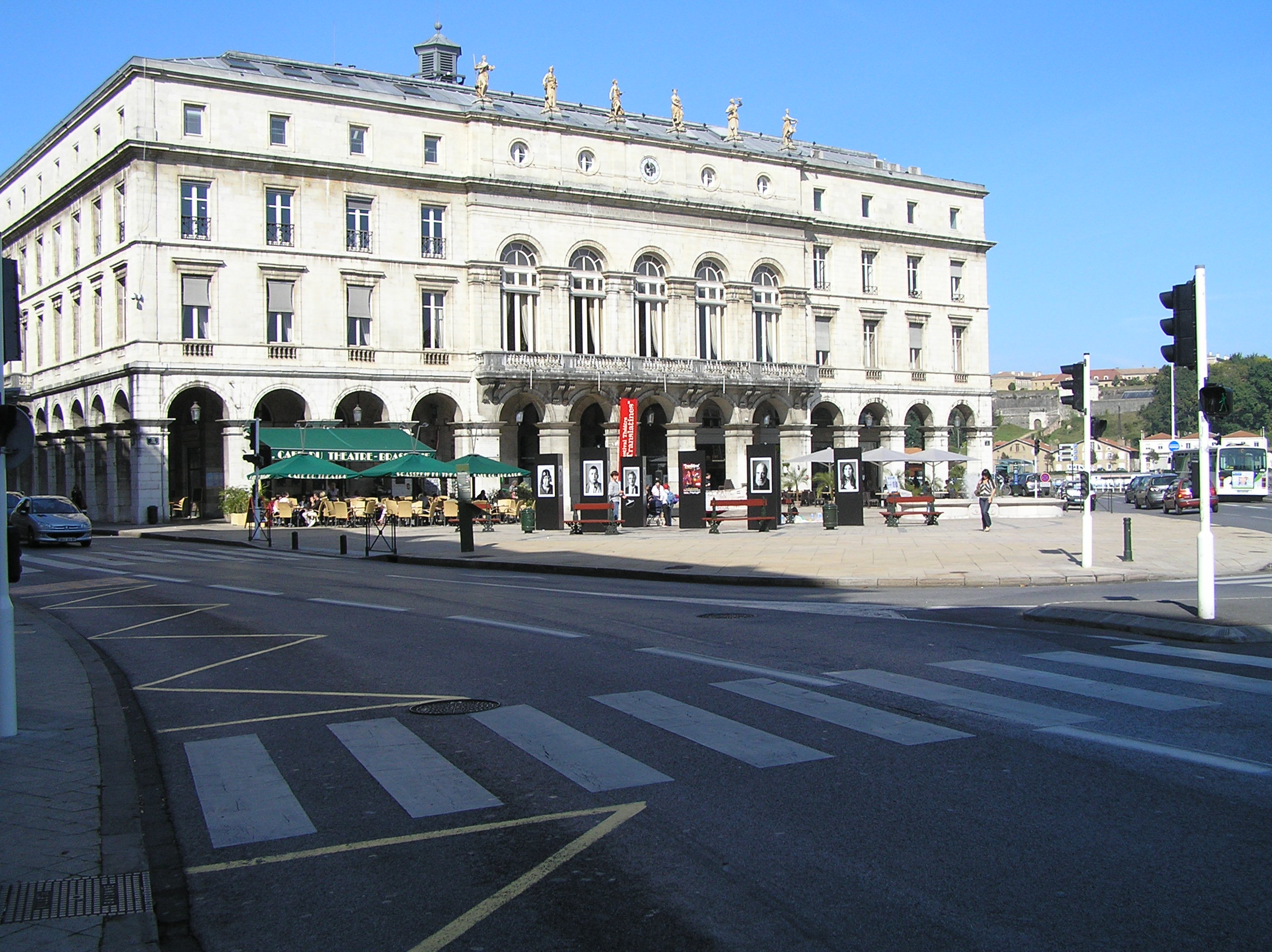
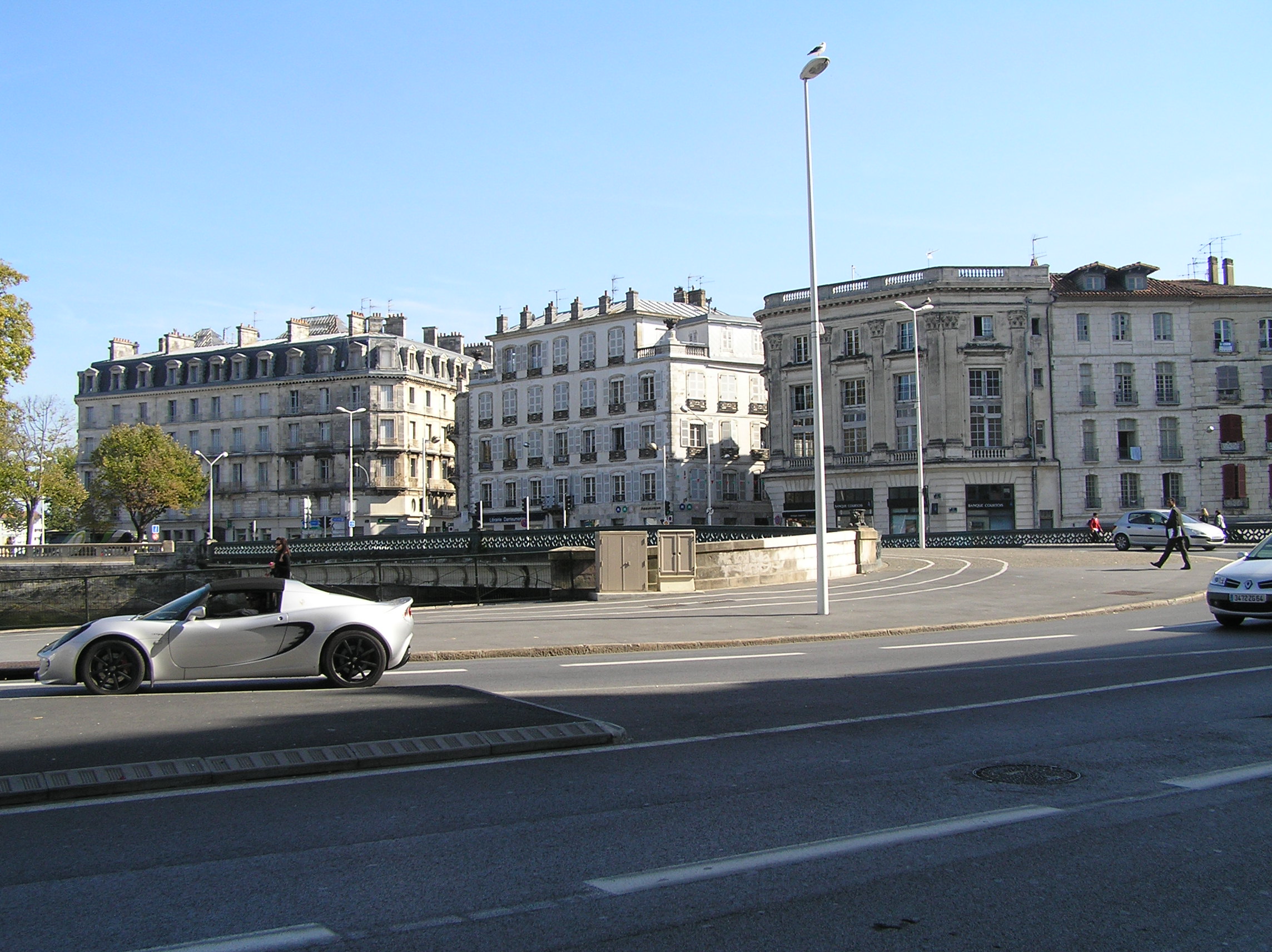
The buildings along the main streets and life in the cafes along the river banks are those of a big city. The building on the right of the picture below is the Basque Museum, an excellent example of refurbishment and re-use of an old building in which we had our workshop in an unconventional and lively atmosphere.

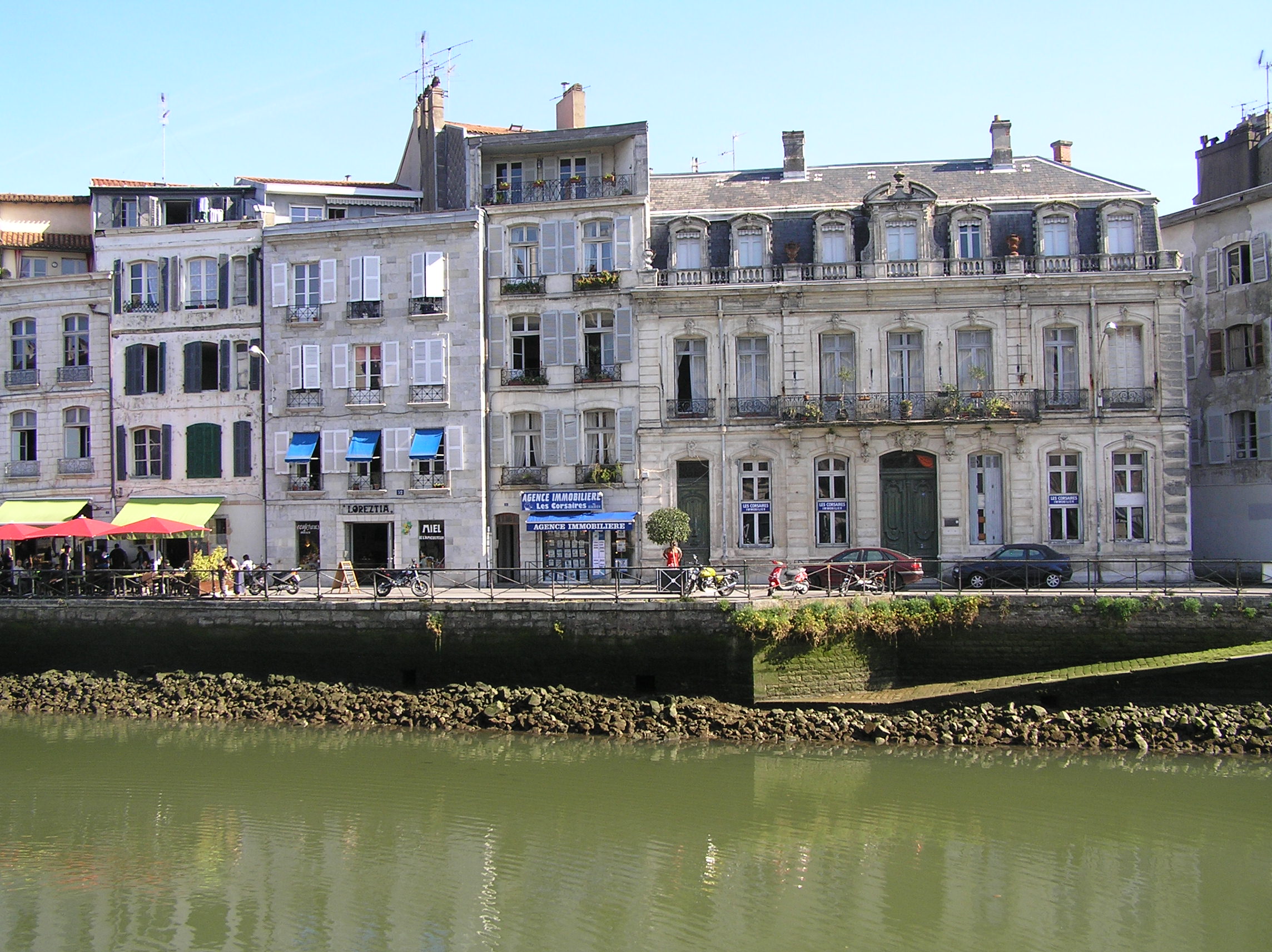

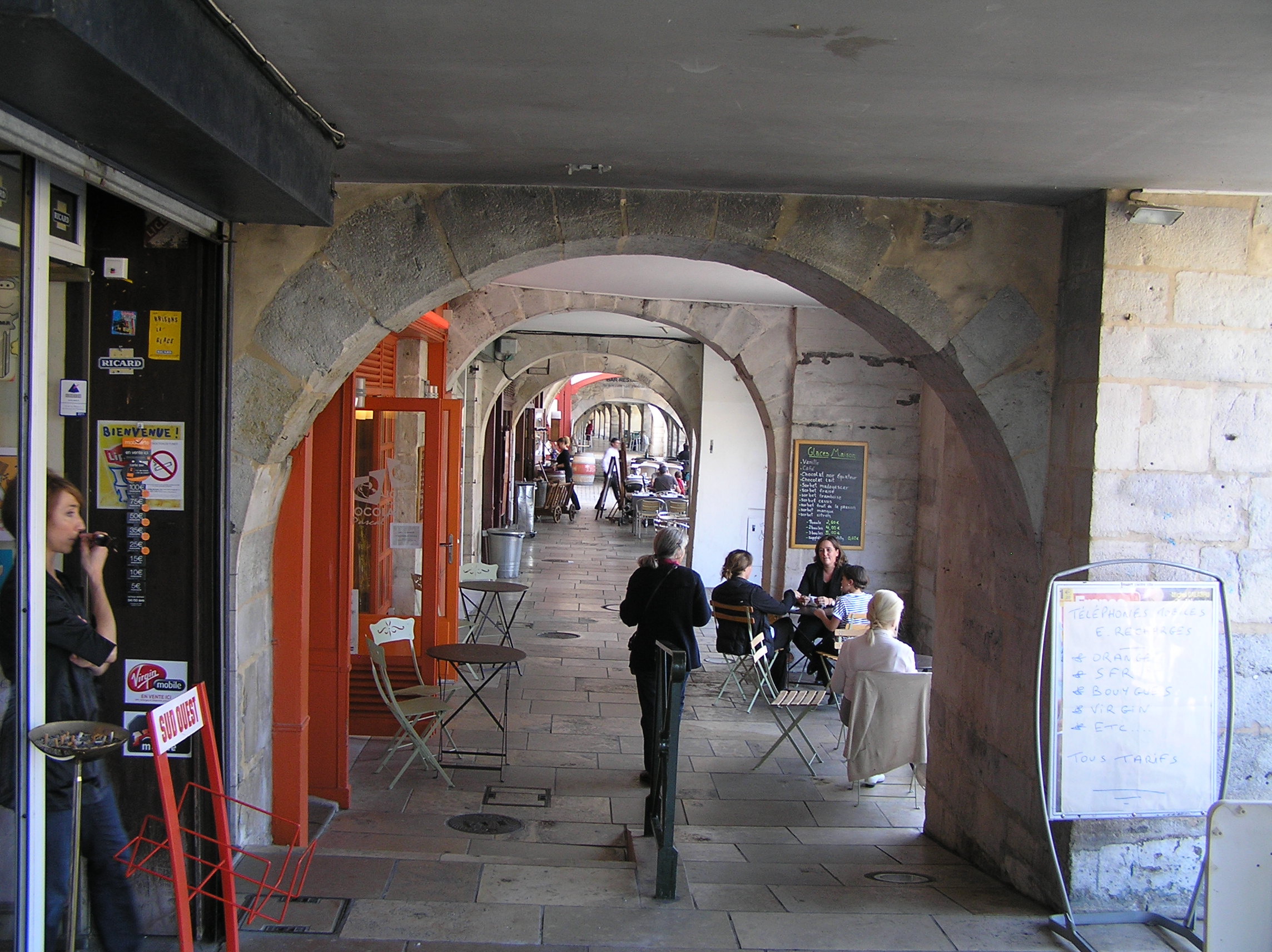
Also due to the atlantic rainy weather arcades are welcoming places. The city walls are still a strong landmark along which a variety of gardens, parks and also several car-parkings are located. Bayonne is not an open air museum.
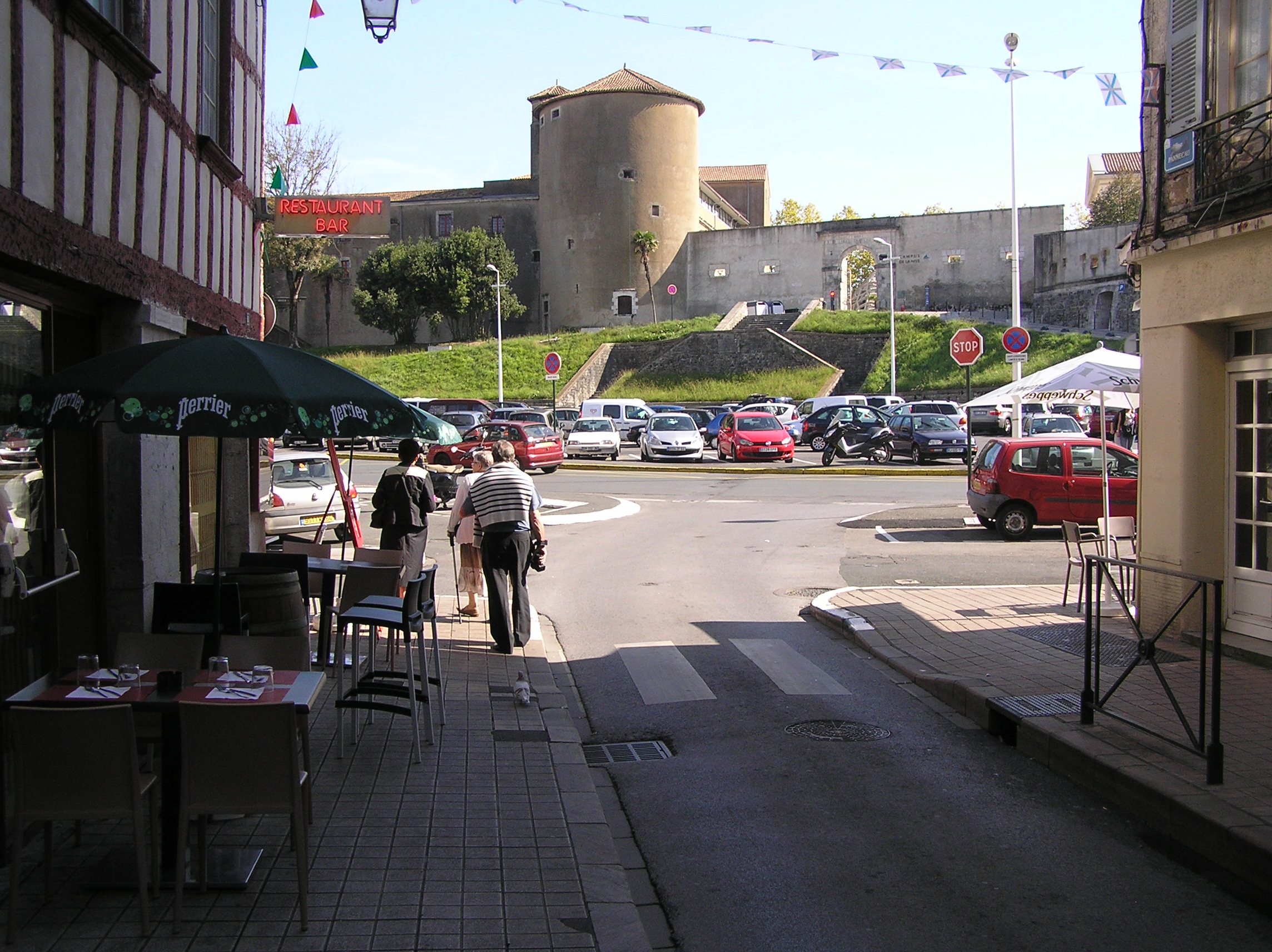
A tiny electric bus connects different car parkings at the edge of town driving through the city, free of charge.


Contemporary architecture has its place in the old castle, to accommodate the University.
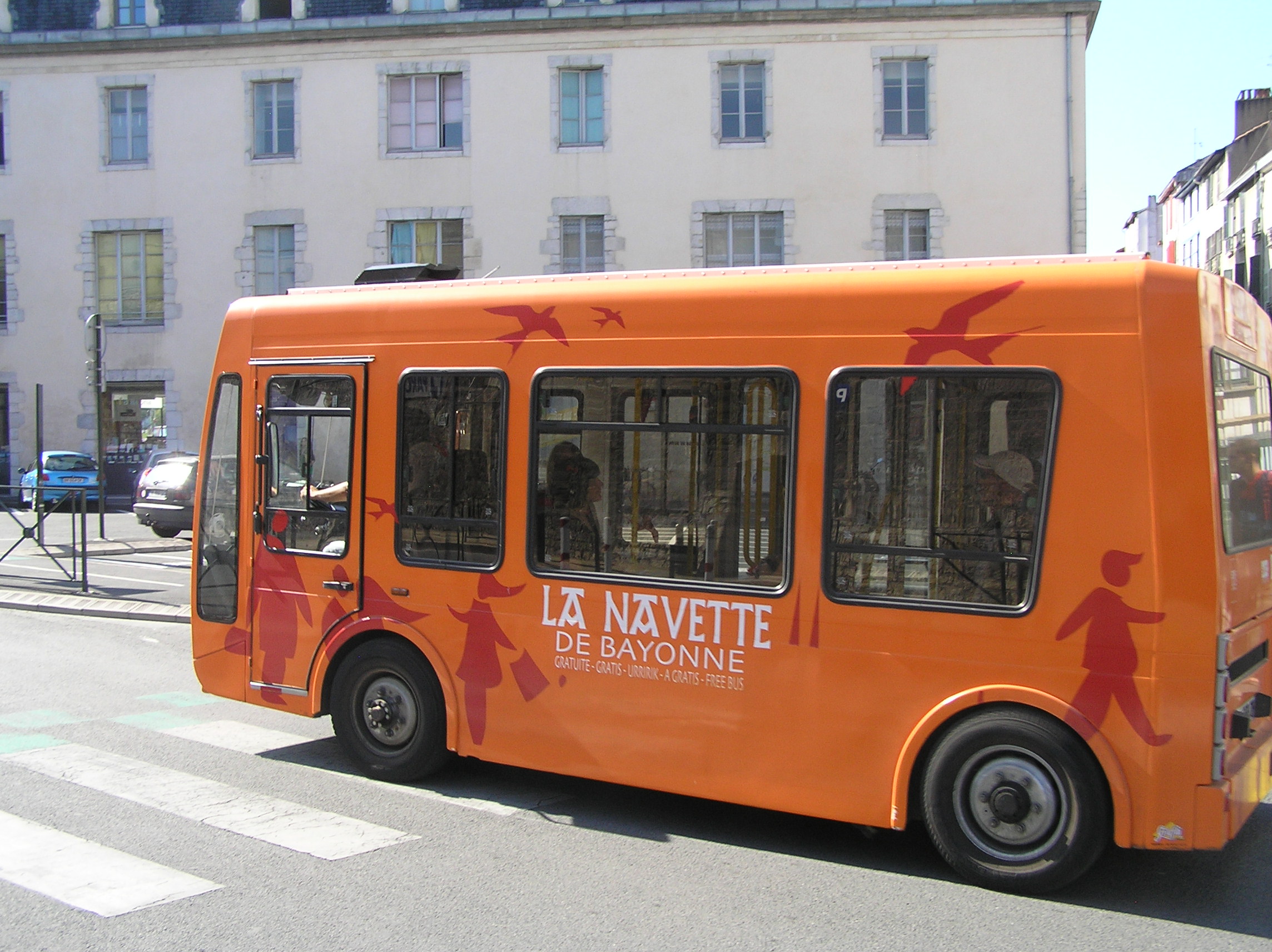
Beside the electric Navette bike lanes and even pedestrian lanes are marked in absence of pavements.


The new University Campus building is a very convincing contemporary interpretation of the local architectural language made of stone wall facades and well detailed window frames.
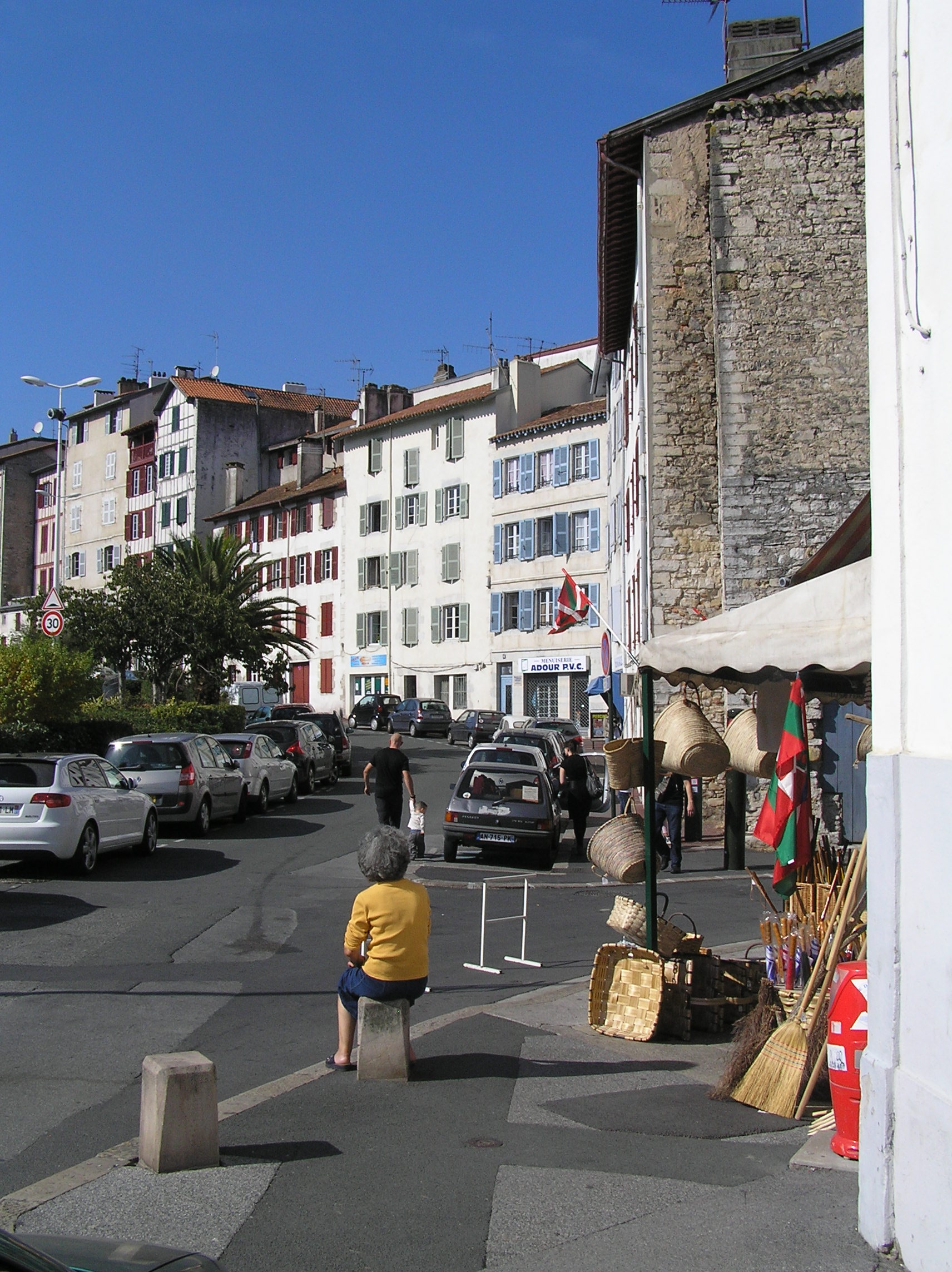
Handicraft is still alive and steadily struggling for its economic base. By the nice weather there are many ways to enjoy the public spaces, well designed and carefully maintained.

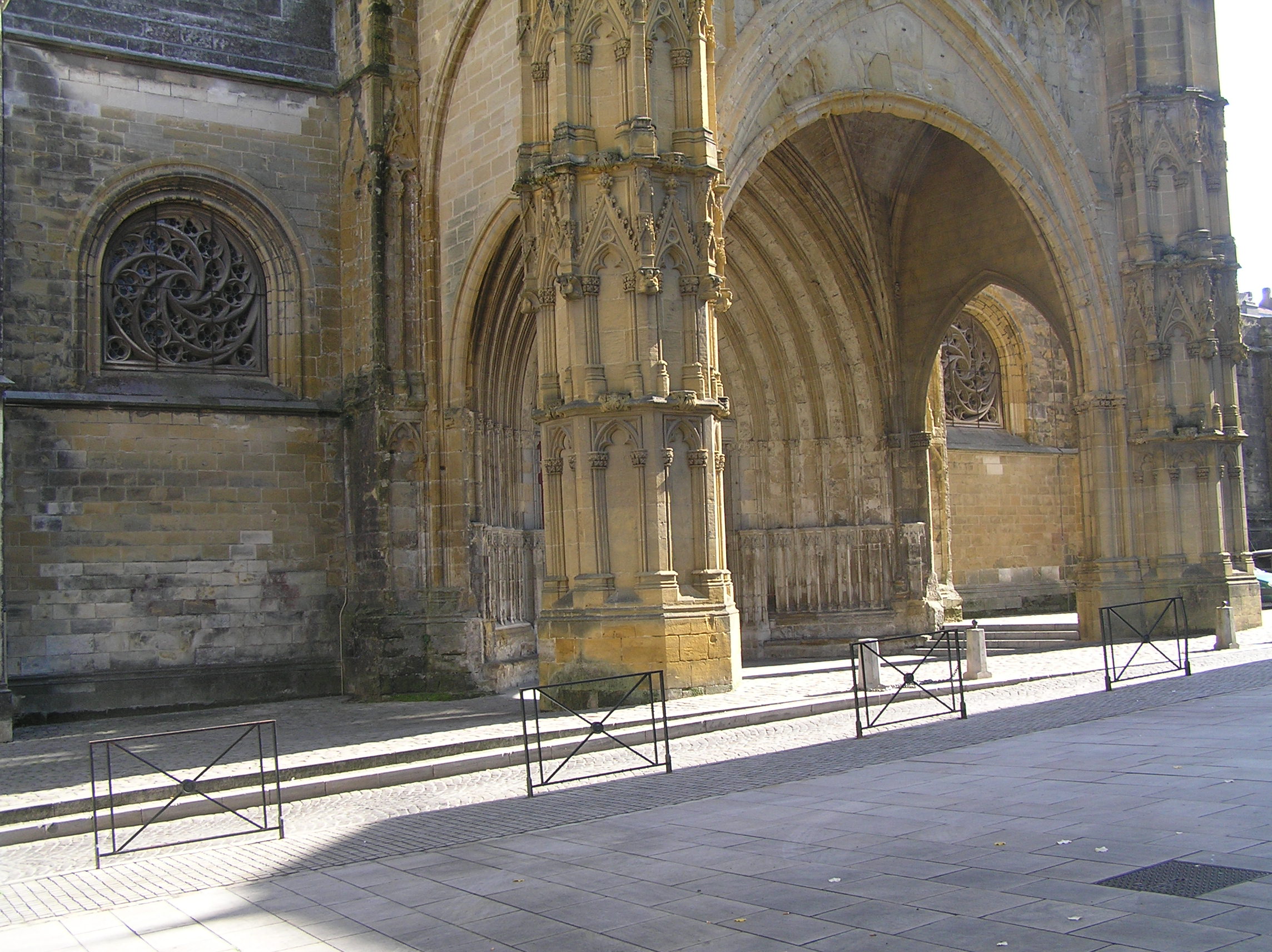
The Architectural heritage, often surrounded by historic gardens, is impressive in scale and decoration, but it does not dominate the urban scene in an oppressive way. It is friendly linked to the urban realm, keeping a lively exchange between the different levels of urban life.
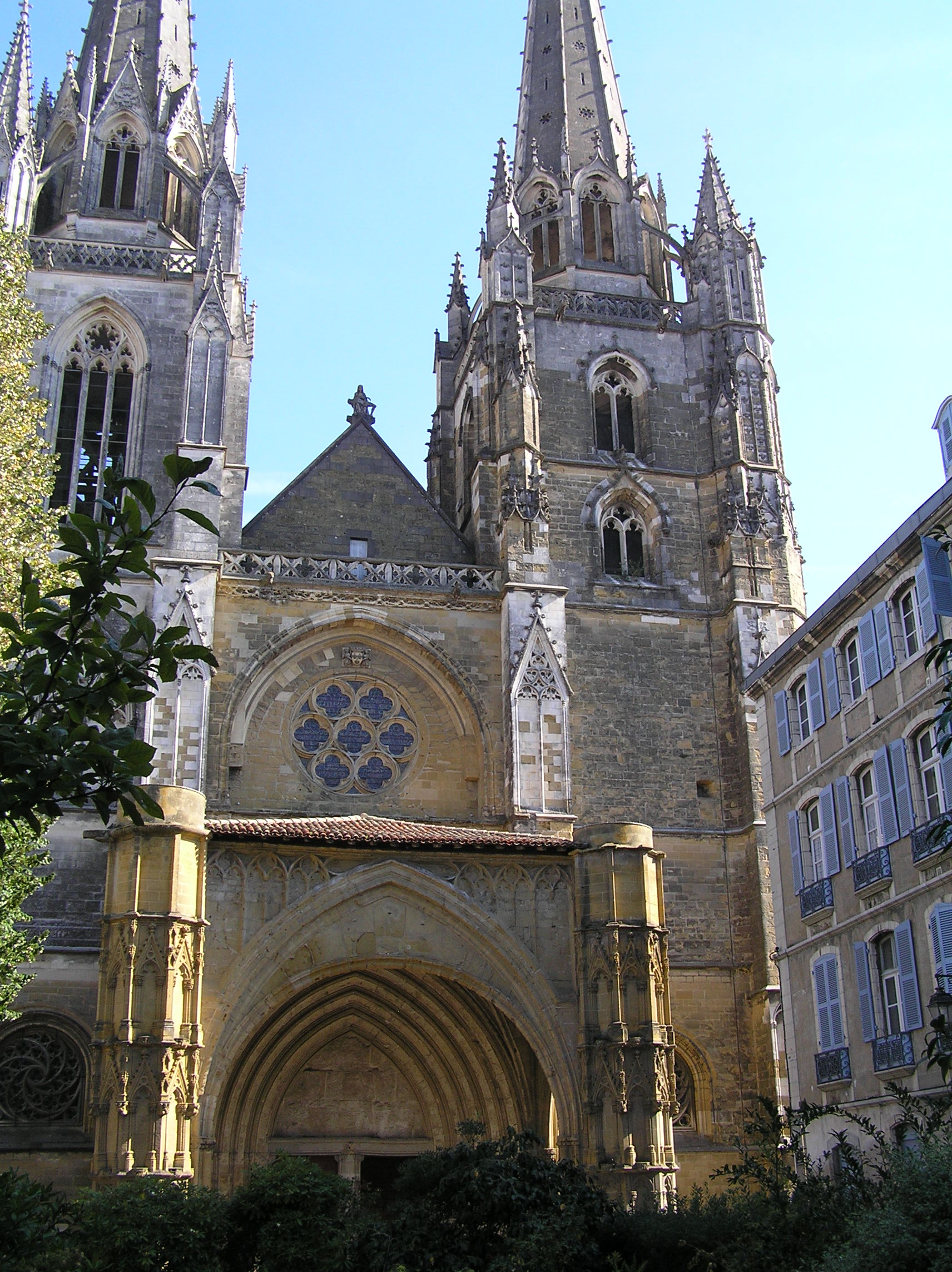

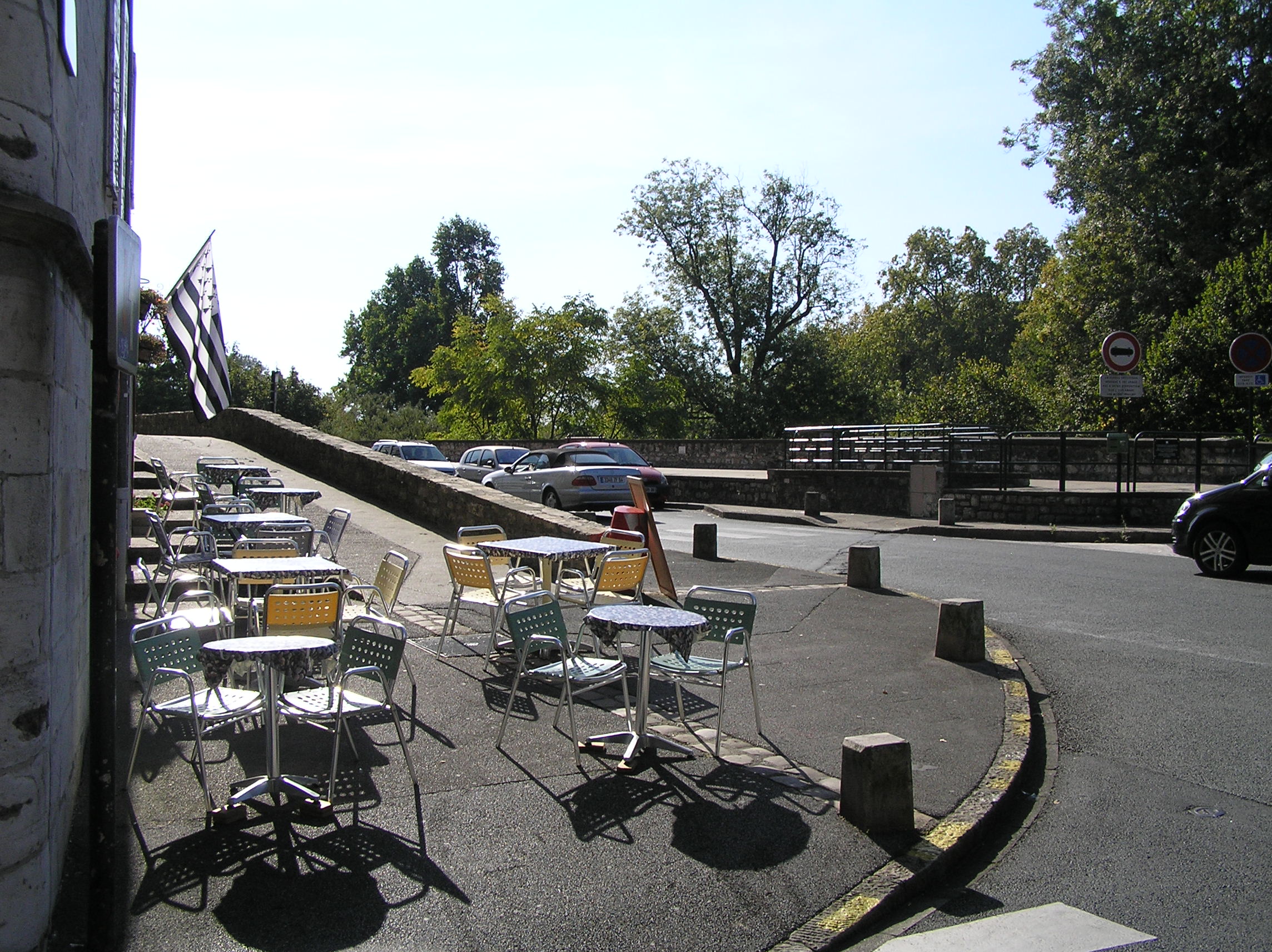
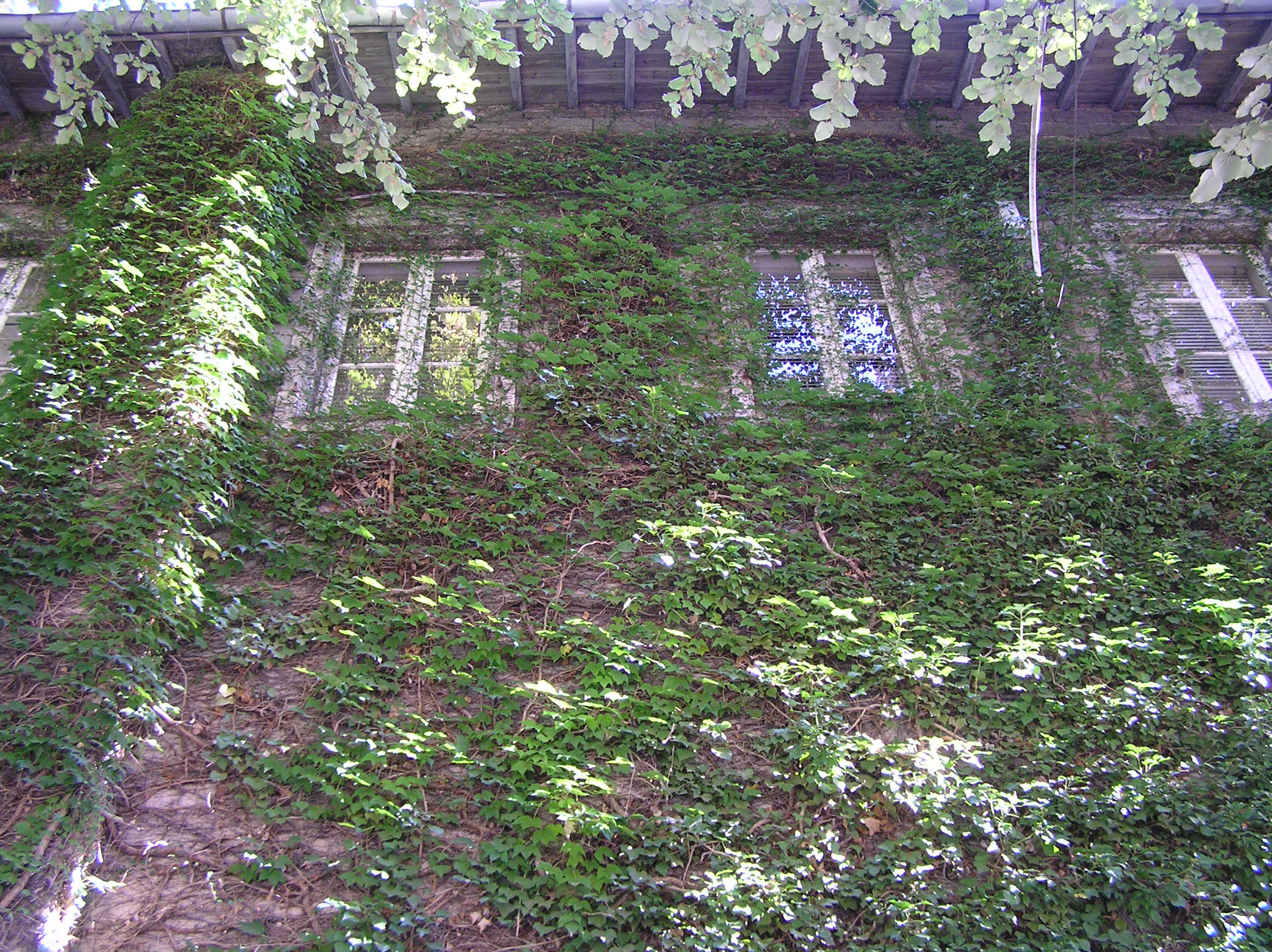


At the edge of town you see modern buildingds rising over the usual skyline in a collage of different shapes and materials.
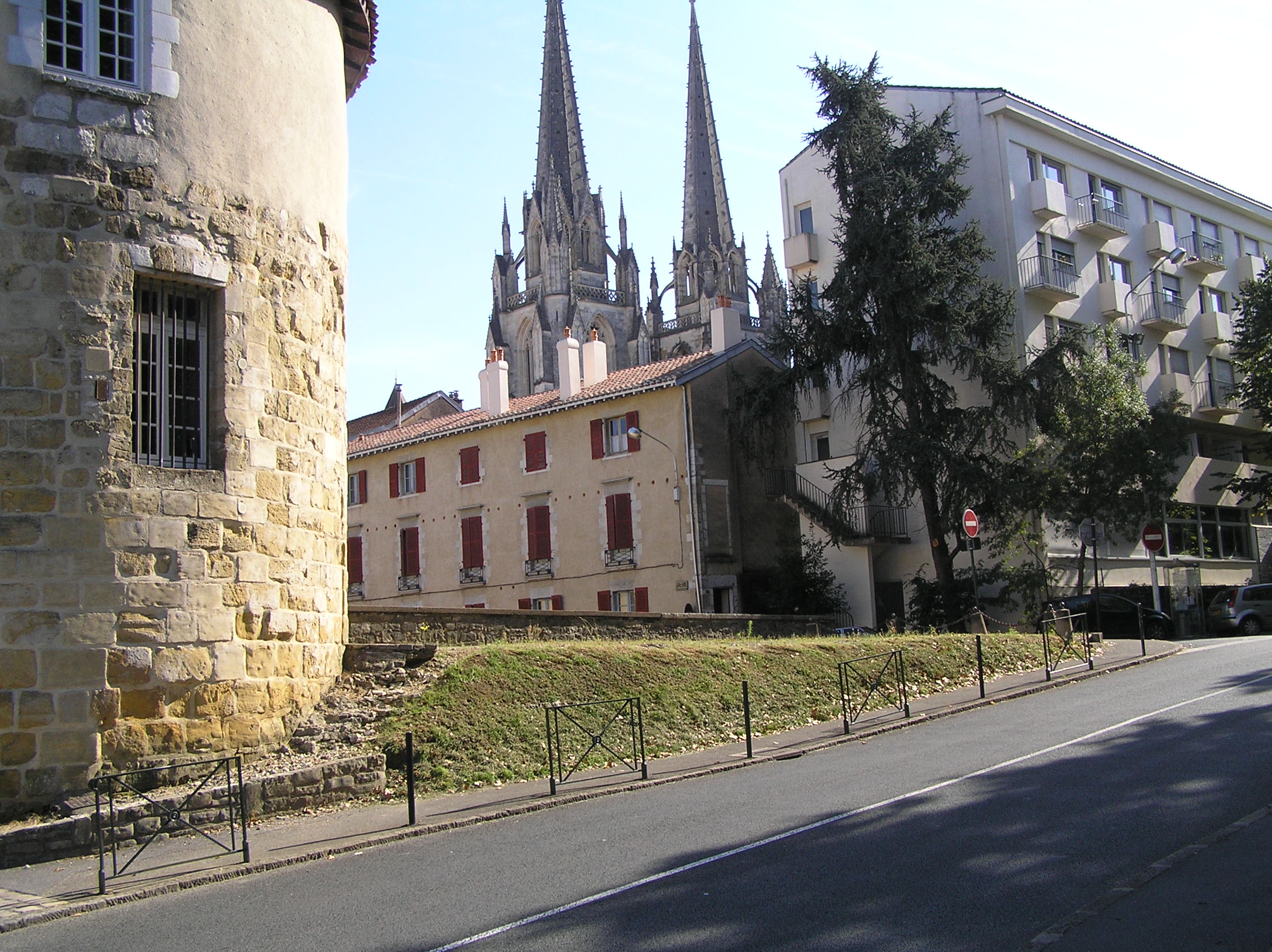

The row of motorbikes on the left provides a colourful edge, a visual counterpart to the row of trees and benches on the right, useful to avoid the danger of picturesque.
OECD Better Life Index
OECD is engaged since years to go “beyond GDP” to measure global development trends. A couple of days ago they launched and updated version of the Better Life Index, a well designed infotool that combines and compares statistical data and well being perceptions in the 36 OECD member countries.
Your Better Life Index is designed to let you visualise and compare some of the key factors – like education, housing, environment, and so on – that contribute to well-being in OECD countries. It’s an interactive tool that allows you to see how countries perform according to the importance you give to each of 11 topics that make for a better life.
The fields considered are 11: community, education, environment, civic engagement, health, housing, income, jobs, life satisfaction, safety, work-life balance. Although the Index strives at overcoming the equation between richness = quality of life, wealth and jobs still appear to dominate the ranking with Australia, Norway, USA, Switzerland and Sweden at the top, Mexico and Turkey at the bottom.
An interesting feature of this tool is interactivity that allows you to reshape the ranking according to your own priorities. Certainly it is not easy to choose what is more important between Health and Safety, or between Jobs and Education, but at least it underlines that any kind of ranking is largely based on subjective assumptions.
For the record Italy is at 22th place, suffering for economic stagnation, high unemployment, women discrimination and bad expectations for the future.
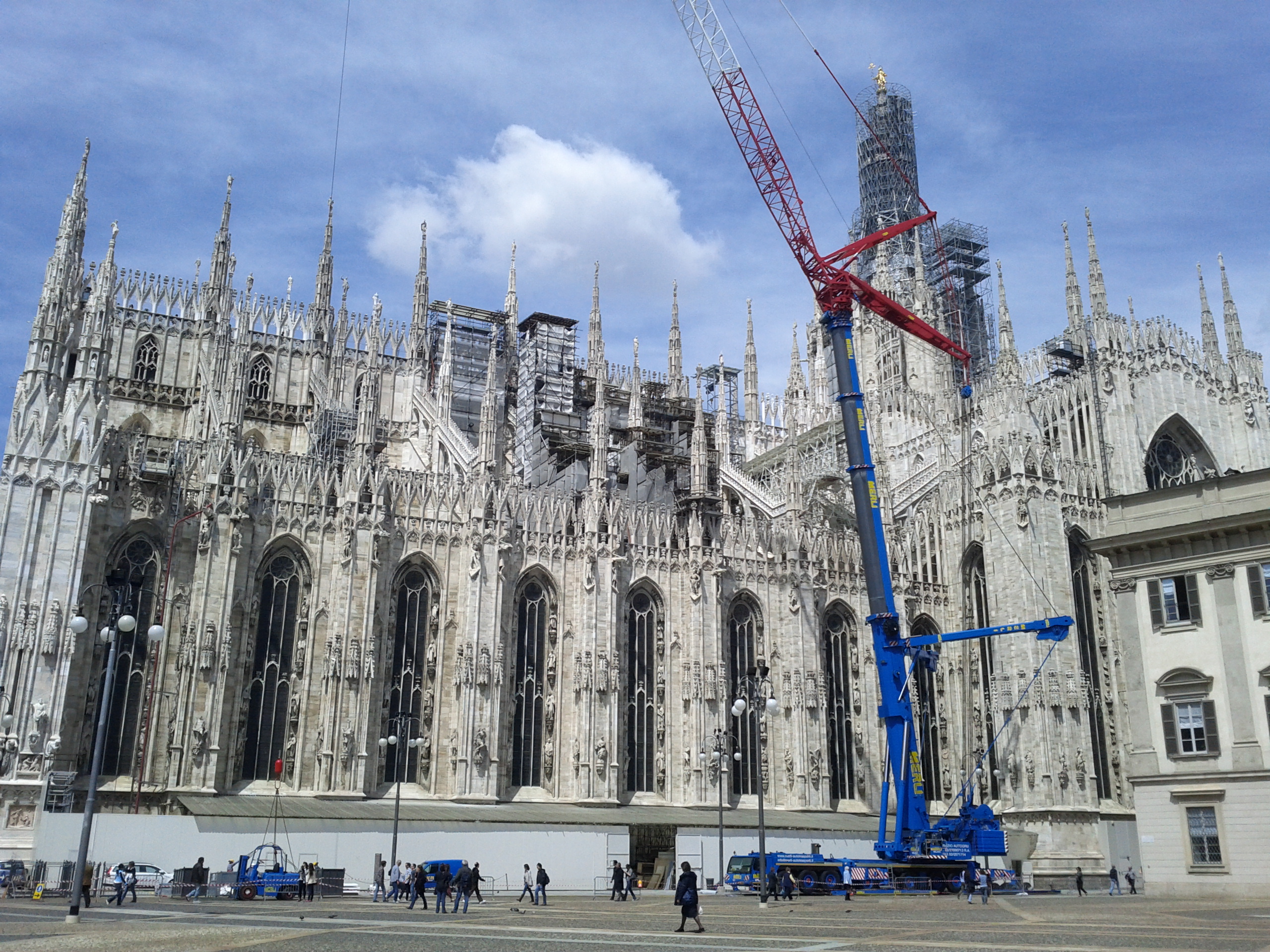
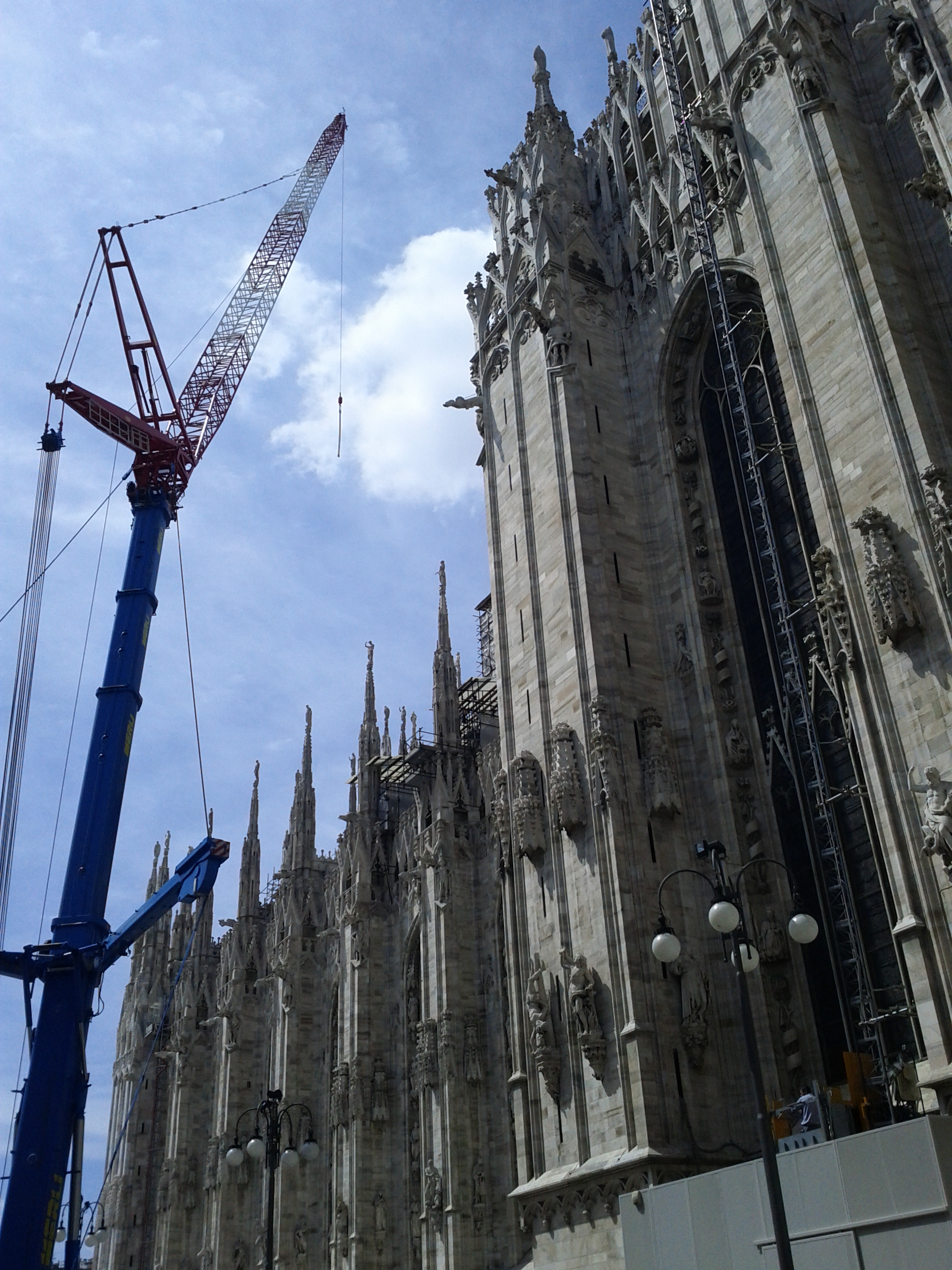
Blue Crane in front of Marble Cathedral
Much of the interest in living in a large city is about what is going on in public realm, rather than about what is actually there. In a few days His Holiness Benedict XVI will come and stay in Milan for a couple of days. The Cathedral, with its “Candoglia” marble and golden “Madunina” has to be in best shape!


Treasure of San Lorenzo Cathedral in Genoa
 Travelling to Genoa you should not miss the opportunity to visit the Museum of the Treasure of San Lorenzo, an hypogeal construction just under the San Lorenzo Cathedral. The Museum was built 1956 based on the Milanese architect Franco Albini’s design and boasts a host of exhibits which bear witness to the art history and religious devotion of centuries past. From the ticket-office and book-shop situated in the sacristy of San Lorenzo Cathedral a short flight of stairs leads to the entrance to the four rooms of the Museum.
The museum is designed around the exhibits. The brick-work, in grey local limestone, the circular shape of the smaller exhibition rooms and the tonal hues in the underground areas recall the architectural history of the past such as the Mycenaean and Etruscan tombs and the sacred crypts in Romanesque cathedrals. The reinforced concrete ceilings do, however, reveal its modernity. These ribbed ceilings, incorporated with glass bricks, are decorated in a series of ray formations producing a very suggestive effect which features this masterpiece of Italian post war architecture.
Following a couple of pictures I took during my visit and the exhibit’s description provided by the museum’s attendant.

This silver statue is the reliquary of St. Lawrence, San Lorenzo, to whom the cathedral is dedicated. The statue, dating back to 1828, illustrates the saint holding a palm and trellis – an instrument of torture-symbolizing his martyrdom. The statue was deliberately chosen as an introduction to the collection since it constitutes a symbolic link between the cathedral and the treasure. Indeed many of the works of art on display are used, even today, during mass and on special religious occasions.
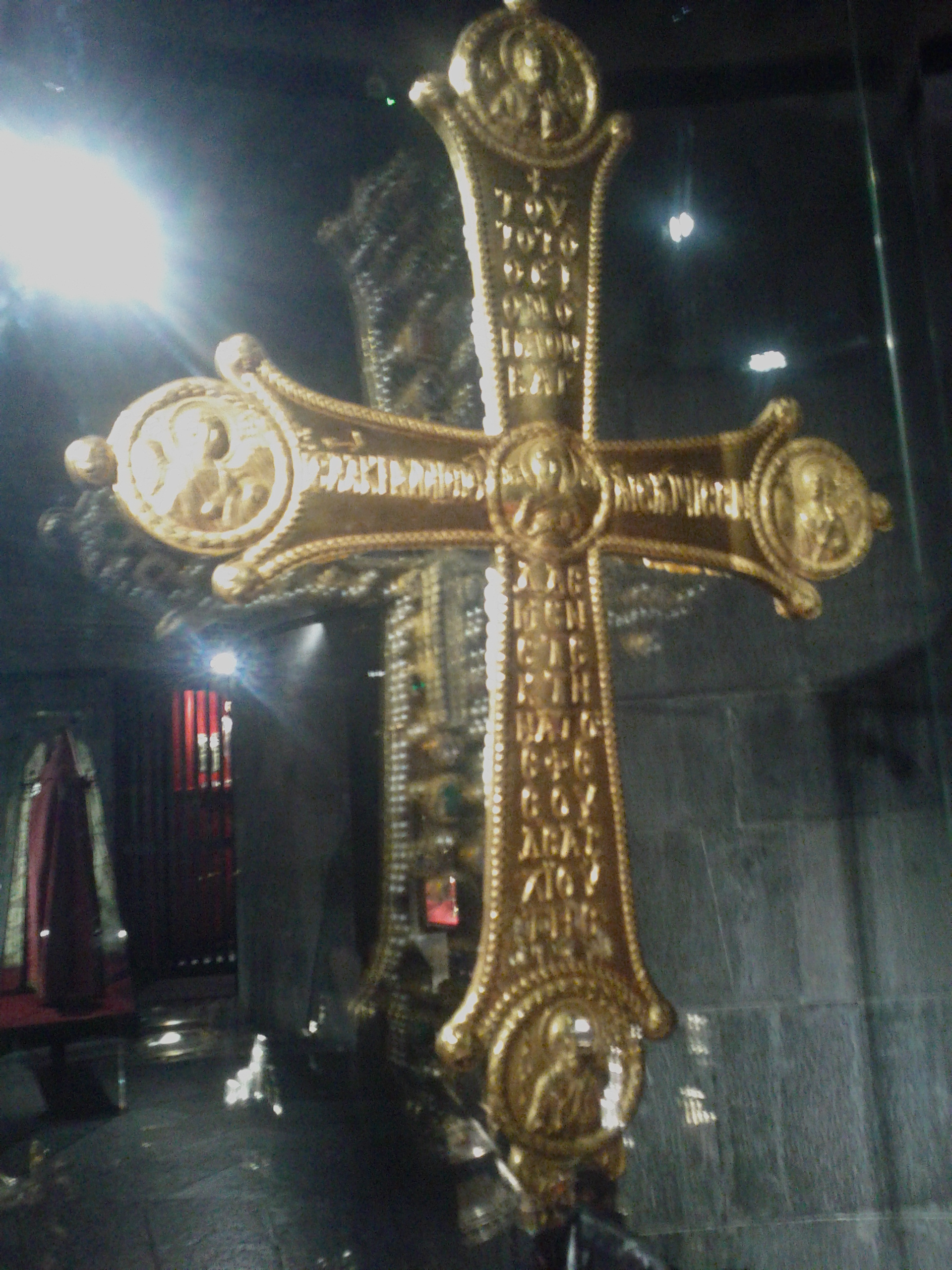
The crucifix, the so-called “Croce degli Zaccaria” was in the possession of the Zaccaria family until the 15th century. This was one of the most important merchant families trading in the eastern Mediterranean sea when the Dominion of Genoa had reached its political and commercial peak. This splendid example of the expertise of Byzantine goldsmiths dates back to the 13th century. The gold, precious gems and natural pearls are in perfect harmony with its function: that of a holy reliquary containing fragments of the True Cross of Our Lord Jesus Christ. The crucifix was later to be used by the archbishops in Genoa in the benediction ceremonies of newly elected Doges.

The Cassa Processionale, a ceremonial casket which is used to hold the ashes of St. John the Baptist during processions, immediately strikes the visitor’s eye. The work, in silver and silver-gilt, dates from between 1438 and 1445 and is attributed to various artists: the ligurian Teramo Danieli, began the work which was completed by Simone Caldera, another ligurian artist who served his apprenticeship in Tuscany and was master of an international workshop which included goldsmiths from the Lombardy region and Burgundy. In this “miniature cathedral”, similar in many ways in the spires of the Duomo in Milan, there are numerous scenes from the life of St. John, ranging from the annunciation to his father Zaccary to his death brought about by the whims of Salome.

The large Statue of the Immaculate Conception dates back to around 1747 and are the work the Genoese sculptor Francesco Maria Schiaffino. This was originally a gift on the part of the people of Genoa to Doge Gio. Francesco II Brignole-Sale, but he preferred to donate in to the Duomo di San Lorenzo as a symbol of the devotion of the Genoese, a witness to the close links binding the city and the cathedral, the very emblem of Genoa. This silver leaf statue represents the Madonna according to the Revelation of St. John with a star tipped crown and the moon beneath her feet.
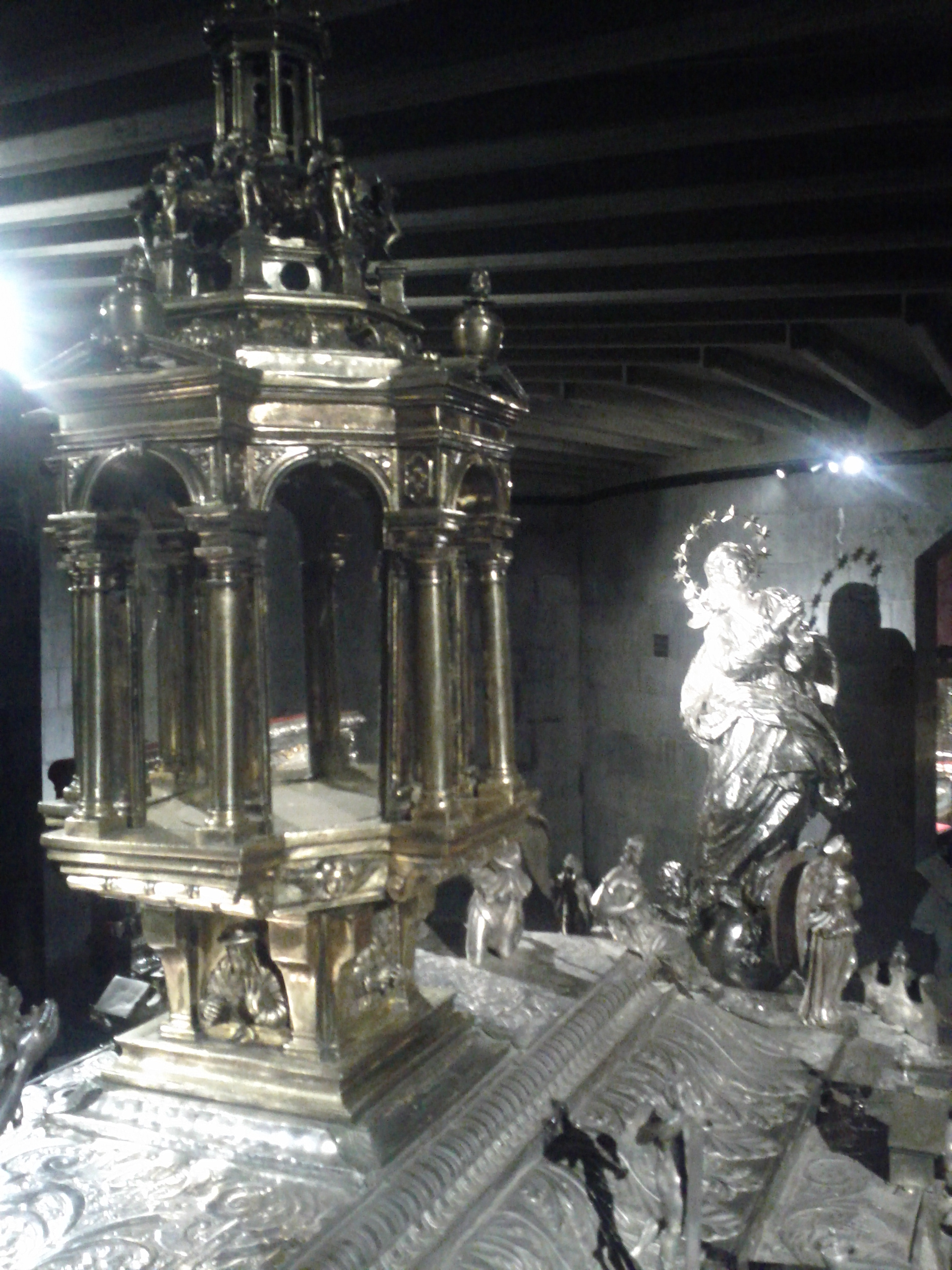
The Cassa Processionale del Corpus Domini, the ark used during the Corpus Domini procession, was commissioned by the Padri del Comune in the mid 16th century. The original idea belonged to the Milanese artist Francesco de Rocchi, but the work was completed by the joint effort of numerous artists. A group of Flemish goldsmiths who were living and working in Genoa as guards in the service of the Doge were given the task of decorating the lower part with scenes from the Passion of Christ. The upper part is decorated with little statues of the prophets and sibyls who foresaw the coming of the Messiah while the angels represent symbols of the Passion of the Lord. The funds necessary for this work were donated by Genoese abroad. This offering gave them the opportunity to participate in the life of their cathedral. The casket is wooden in structure and finished in silver leaf. It weighs approximately seventy kilograms and is still carried during the Corpus Domini procession bearing the Holy Eucharist in its monstrance.
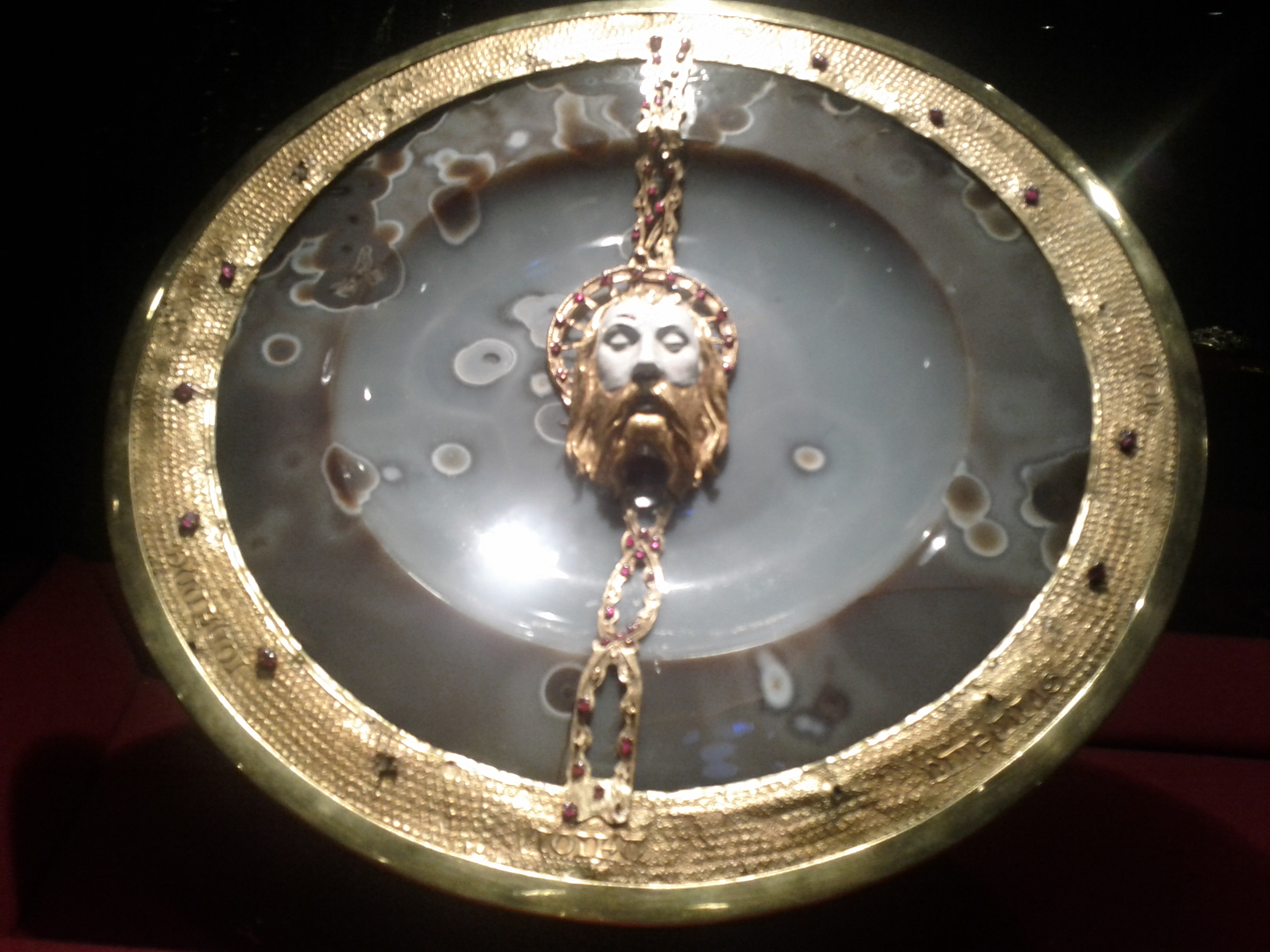
The Piatto di San Giovanni, the platter of St. John, dates back to the Augustan age. Tradition has it that the severed head of the Baptist was served to Herod on this platter. This rare and high1y refined artefact made of chalcedony – a transparent precious stone – was certainly suitable for a king. The gilt edging and the enamelled head in the middle of the platter were added in France between the 14th and 15th centuries by master craftsmen who were probably in the service of the royal court.
Armani Hotel Roof Extension
Roof extensions are a hot architectural topic for various reasons.
Shifting the focus from new building to renovation and re-use of existing buildings ( eventually trying to make them more efficient from the energetic point of view) means also find ways to make renovation profitable.
Reducing cities environmental footprint by keeping them compact, promoting sustainable public transport, avoiding urban sprawl and soil sealing means having to deal with higher urban density and mixed uses.
Increasing interest towards historic buildings as the most reliable real estate asset, being iconic and sustainable buildings at the same time stimulates a lively architectural discourse their manifold ways of transformation.
Giorgio Armani bought this classic modern building in Milan in the 90es to accomodate some of his flagship stores, restaurants, bars, boutiques, a flower shop, offices, showroom spaces etc.
The opening took place some ten years ago and soon the building became a must on the international shopping tours and glamourous nights.
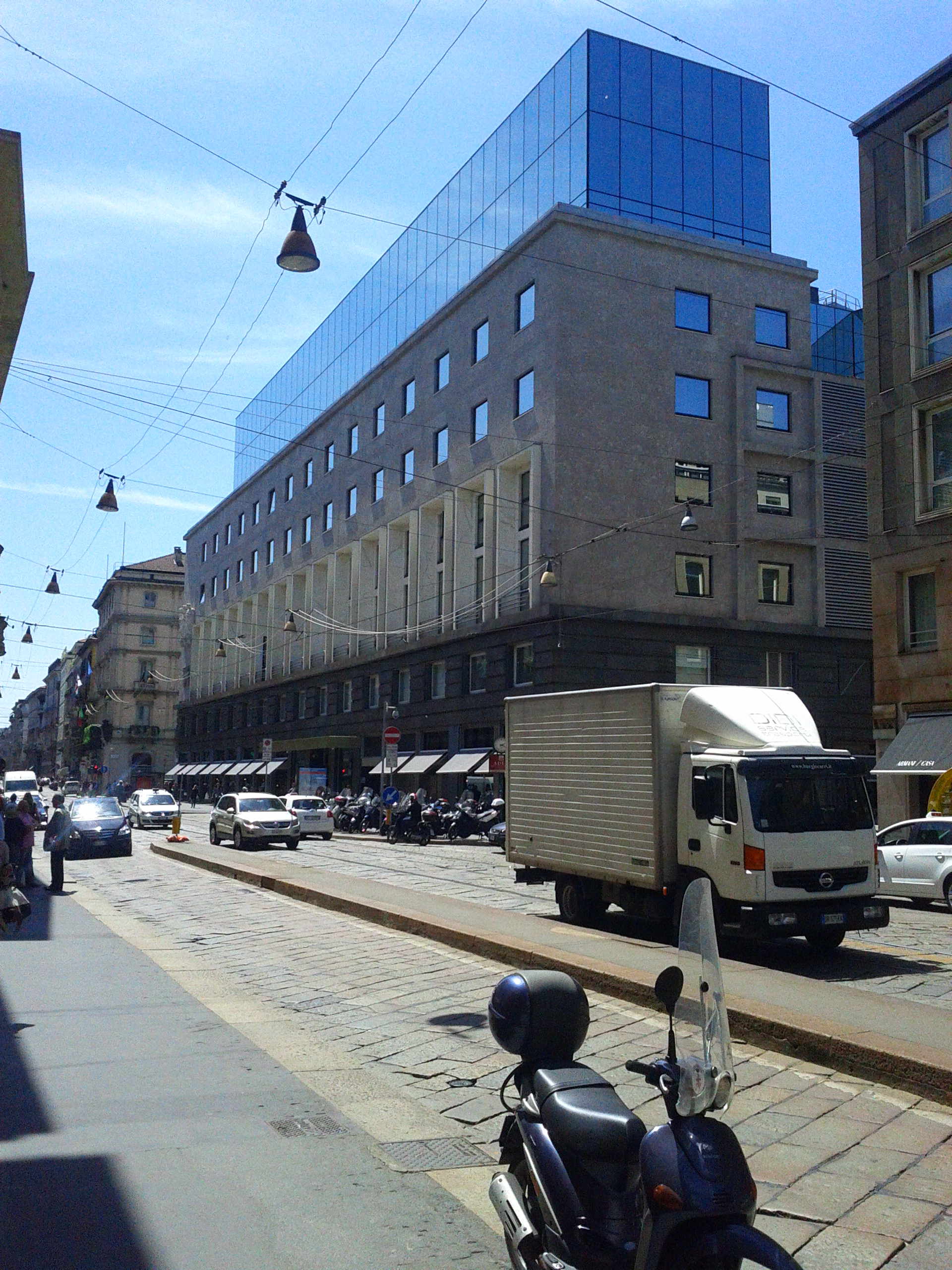
Later on the building was subject to another extensive renovation including roof extension, to accomodate the first 5 star luxury Armani Hotel in Milan and that’s how it looks like today, seen from via Manzoni.
 Well Designed and Built