Building energy efficiency in European cities
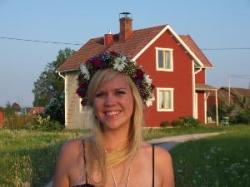
I am just preparing to participate on behalf of the URBACT Program to the roundtable “Energy-efficient buildings – The EU’s number 1 priority” at the Energy Cities Annual conference in Växjö (Sweden). As a part of the preparation you always look for the weather forecast and google some images of the place you are going to travel to. So did I and here you can see a nice result of the search, which in fact is a testimonial of the local Linnaeus University (Linnaeus, the great botanist who studied the methodology to name all species, was born in Växjö).
My contribution to the roundtable will be focused on what cities can do to speed up the transition towards an energy efficient built environment and how they can best interact with the other levels of governance. As a starting point I will use the article “Retrofitting our way out of recession” published by Paul Ciniglio and myself last September on the URBACT Tribune 2012. Furthermore I will introduce the findings of the final paper written by Owen Lewis, Sadhbh Ní Hógáin and myself on the same topic. The article, which incorporates the outcomes of the workshop held at the URBACT Conference in Copenhagen last December, has already been edited, but is not yet available in the final version.
Hereafter the background information I received from Peter Schilken (Energy Cities) a kind of progress report of the European policy framework.
The roundtable session “Energy-efficient buildings – The EU’s number 1 priority” is organised in the framework of the Energy Efficiency Watch 2 (EEW2) project. The main objective of the initiative – when started in 2010 – was to facilitate the implementation of the Energy End-use Efficiency and Energy Services Directive [2006/32/EC] across the EU. Meanwhile the project provides lessons learnt for the implementation of the new Energy Efficiency Directive. The project is supported by the Intelligent Energy-Europe programme and is coordinated by EUFORES.
EUROPEAN FRAMEWORK:
– Member States are legally committed to the EU energy and climate (3×20%) objectives.
– Through the Covenant of Mayors, local authorities have voluntarily committed to go beyond those objectives. By doing so, municipalities help their national governments meet their targets. In return, municipalities expect favourable national legislative, fiscal and incentive frameworks to do the job.
– Today, these national frameworks are very different and there is no common strategy on how to reach the 3×20 objectives. Whilst some Member States have set up helpful frameworks, others do not encourage local action.
– Member States have updated their National Energy Efficiency Action Plans (NEEAPs) to the European Commission in 2011. These NEEAPs have been screened by EEW2 scientific partners with the objective to highlight strengths and weaknesses of national energy efficiency policies, to identify policy gaps and to give policy recommendations (that will also be mentioned in the keynote speech of the welcome cocktail on Wednesday evening).
– The European Commission published on 9 March 2011 its new Energy Efficiency Plan. Whilst the Parliament voted for binding energy efficiency objectives, the Member States were against!
– The Energy Efficiency Directive 2012 (EED) was brought into force on 4 December 2012.
In its report on the Energy Roadmap 2050 (adopted in Plenary session on 14 March 2013), the European Parliament acknowledges that the building sector must be “a central element” of the EU’s long-term energy policy, and calls for a reduction in the energy consumption of the existing building stock “by 80% by 2050 compared to 2010 levels”.
Related articles
- EU to Start Debate on Energy, Climate Rules Amid Crisis – Bloomberg (bloomberg.com)
- Europe’s 20/20 Energy Vision and Beyond (theenergycollective.com)
Jeff Wall Actuality
I was surprised and happy to hear about the Jeff Wall exhibition in Milan, the first one in Italy. Curated by former curator of the Art Biennale of Venice Francesco Bonami and strongly supported by Culture Deputy Mayor of Milan Stefano Boeri, the exhibition is an extraordinary event on the not really exciting Italian art landscape, but this is not interesting. Let’s concentrate on the pictures and on the exhibition as such.
Dictionary says actuality is about reality in time, is about true existence, conditions, circumstances and state if fact. A suitable title for any exhibition of Jeff Wall pictures, but what is the actual meaning of actuality in Milan’s PAC now? What was it supposed to be?

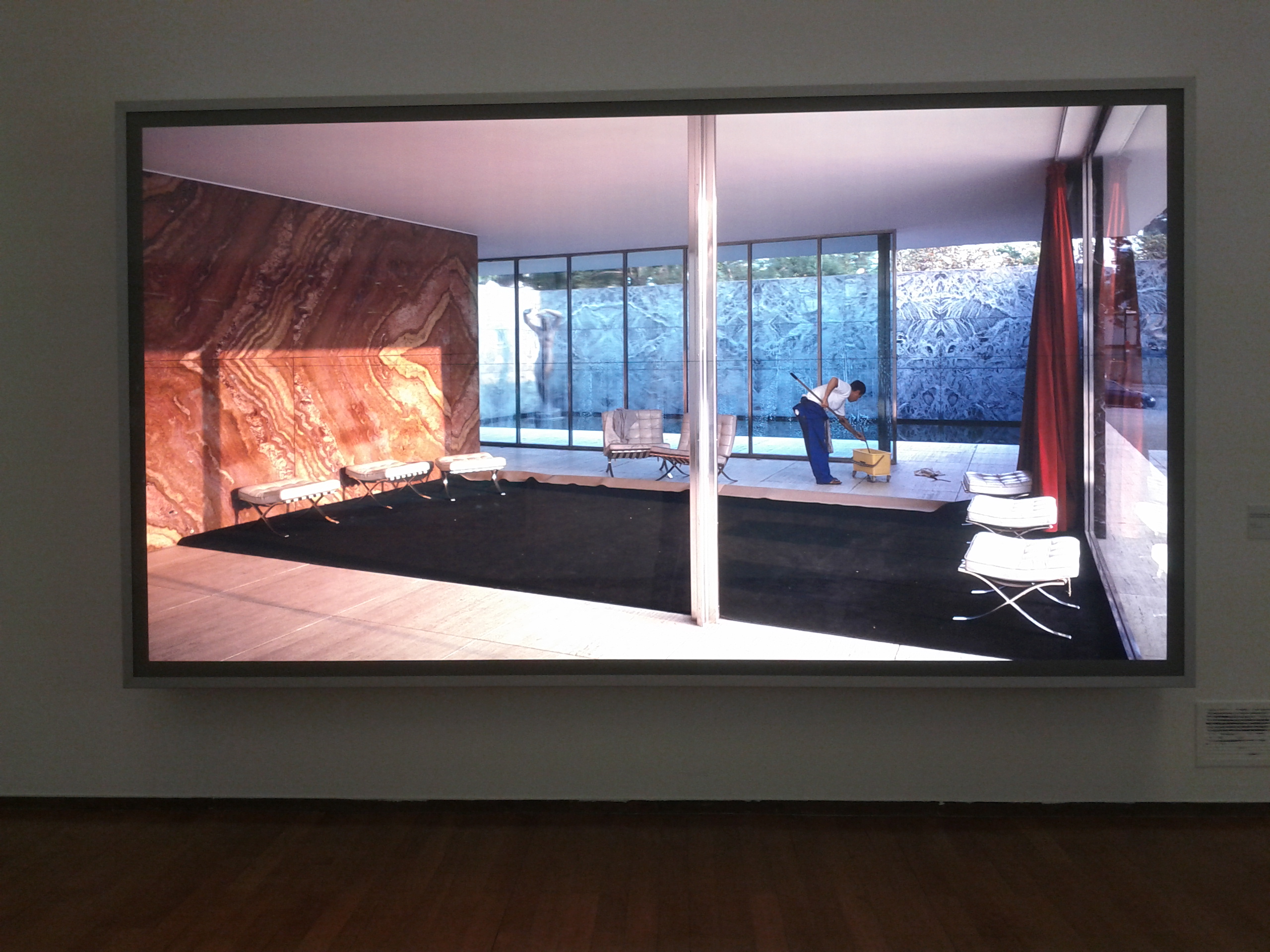
Jeff Wall, Morning Cleaning, Mies van der Rohe Foundation, Barcelona, 1999, lightbox, 187 x 351 cm, Courtesy of the artist
My feeling about the exhibition is twofold. On one side exhibits are first class: a good mix of classic “lightboxes”, some small series of compositions and even some outsider site specific works, with Italian background. Good choice.
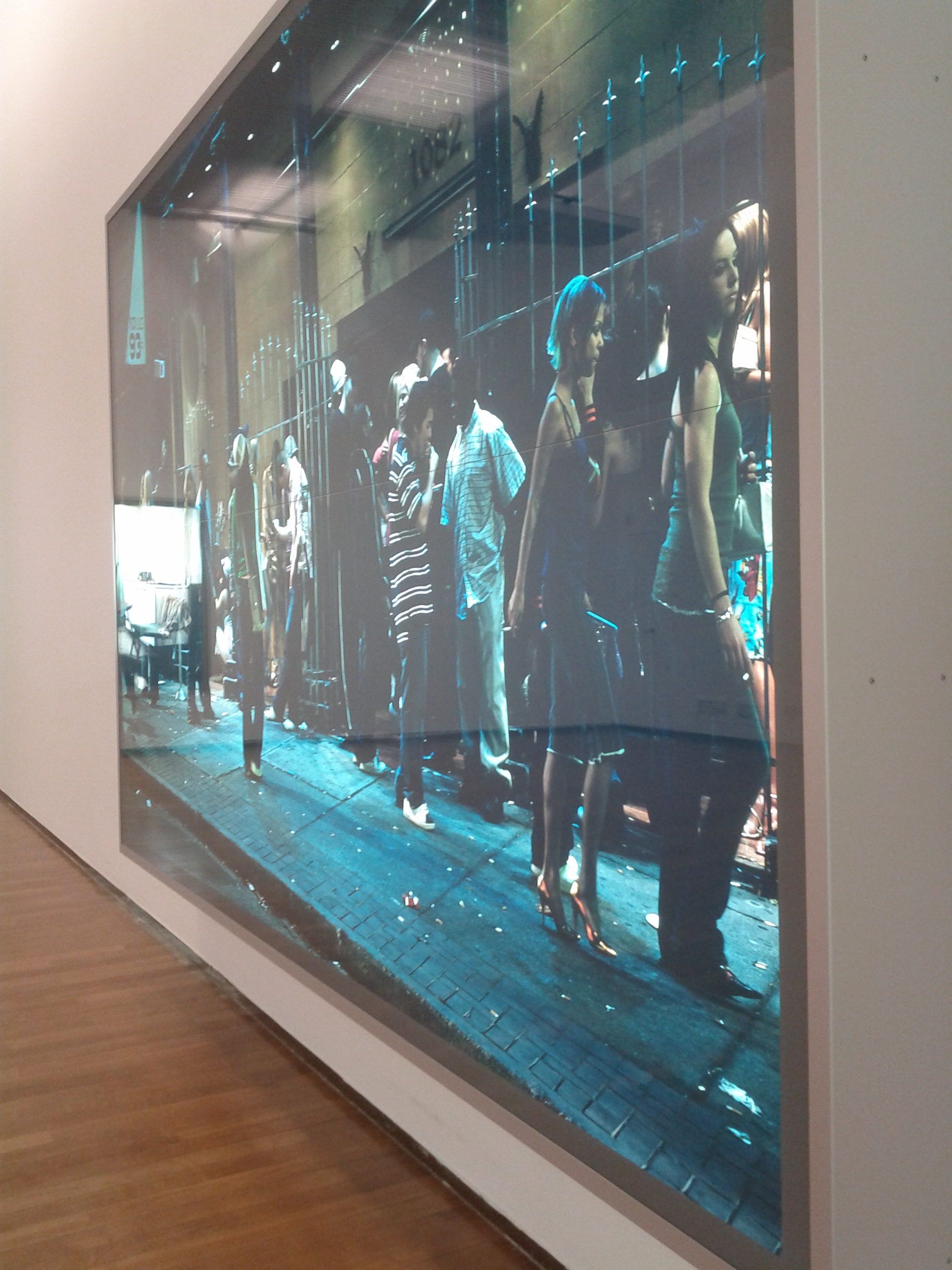
Staying in front of Morning cleaning, Mimic, In front of a nightclub, Insomnia is always a great privilege.
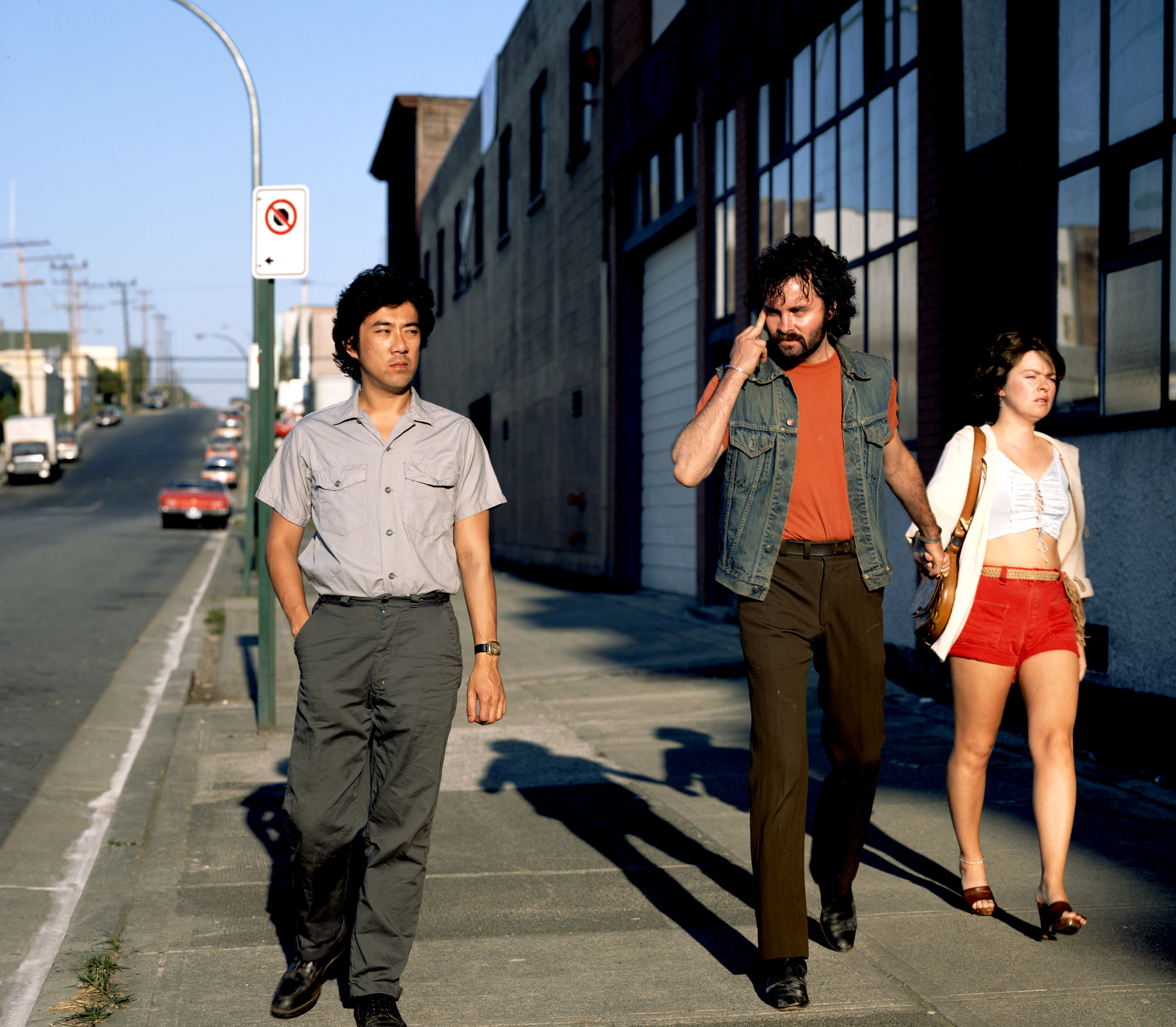
Jeff Wall, Mimic, 1982, lightbox, 198 x 228.5 cm, Courtesy of the artist
Discovering some other masterpieces for the first time, like Young man wet in rain is exciting.
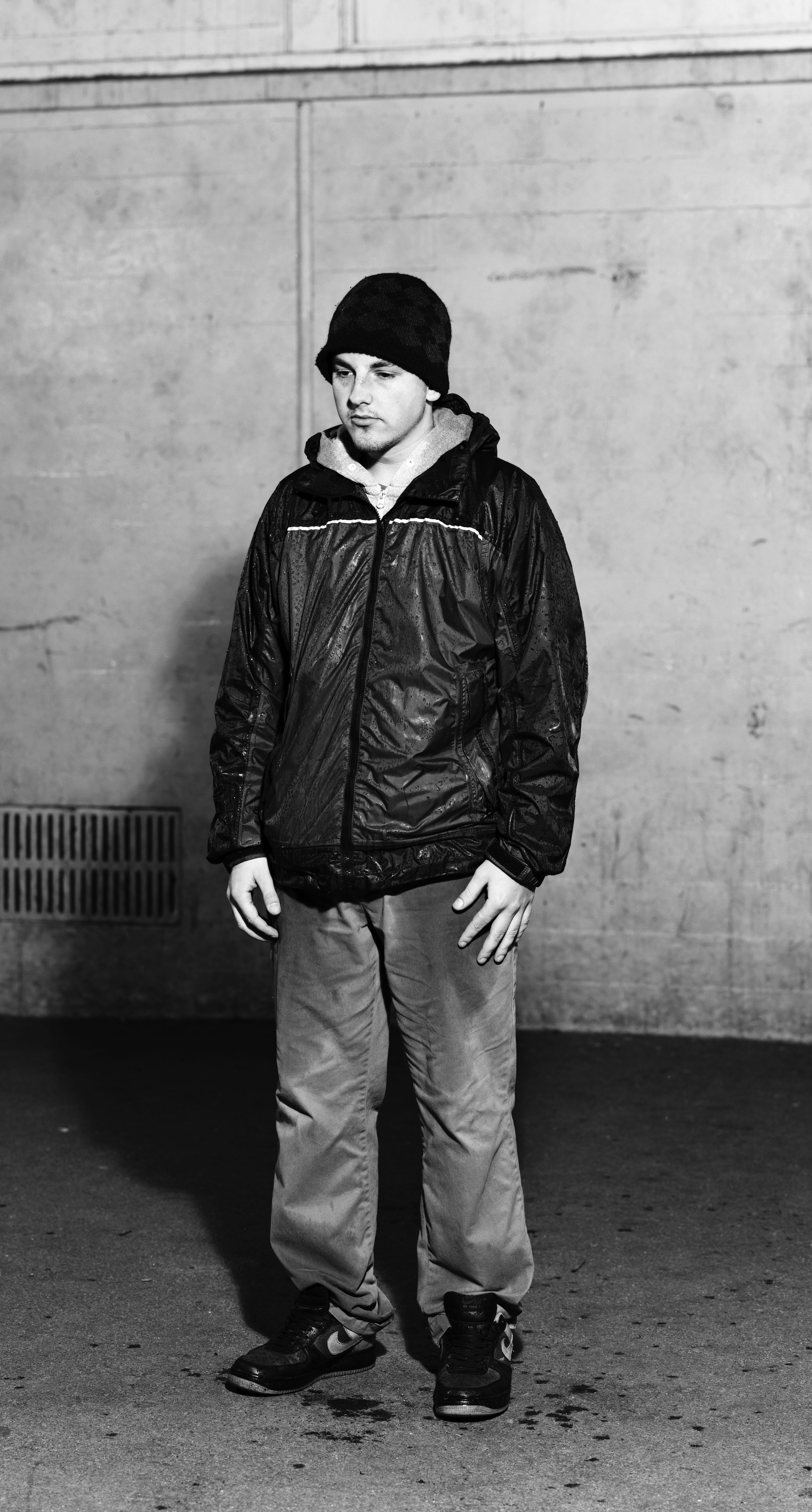
Jeff Wall, Young man wet with rain, 2011, silver gelatin print, 147 x 263 cm, Courtesy of the artist
The small series and detail pictures are a mindful change of rhythm.
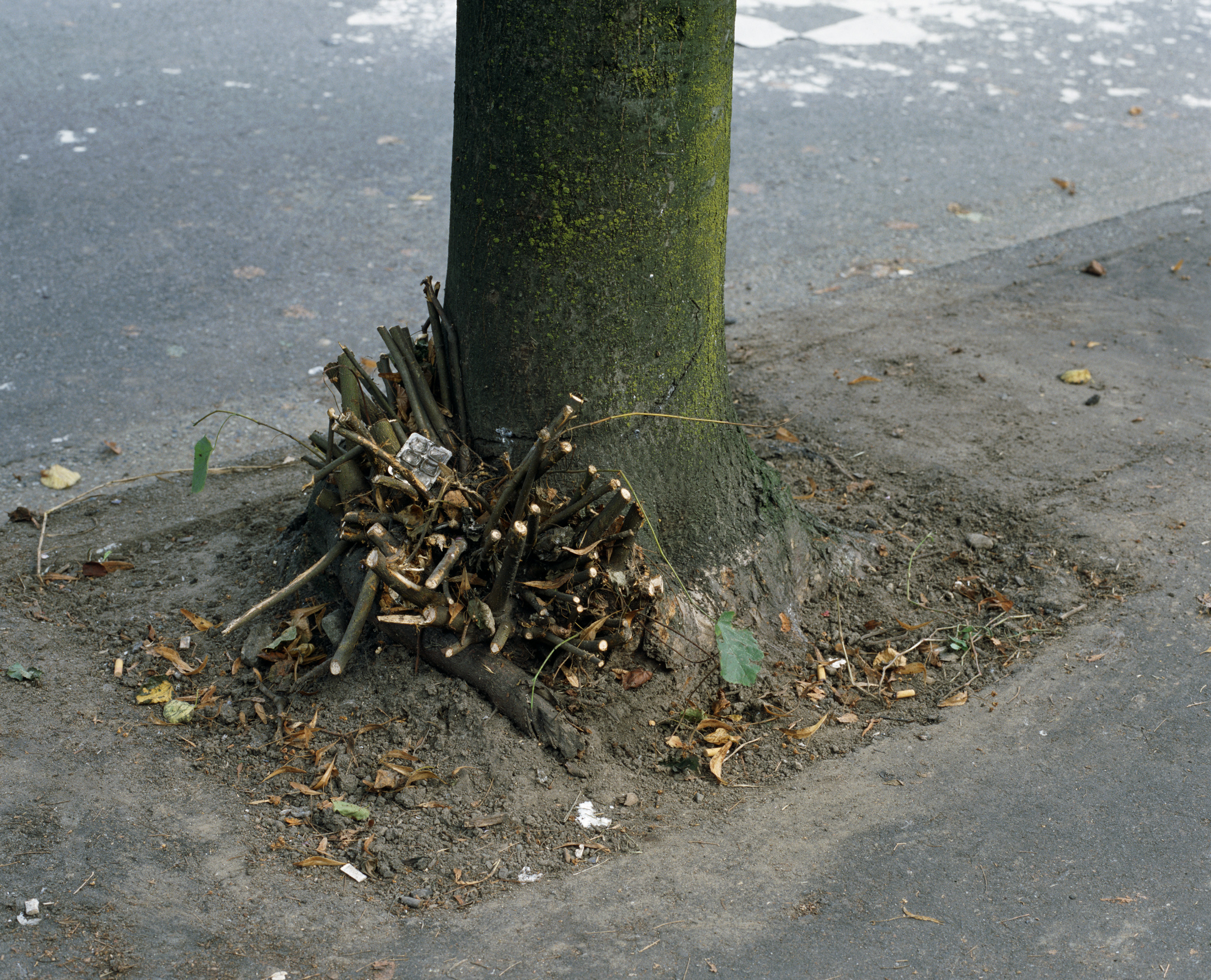
Jeff Wall, Clipped Branches, E. Cordova st., Vancouver, 1999, lightbox, 71.8 x 89 cm, Courtesy of the artist
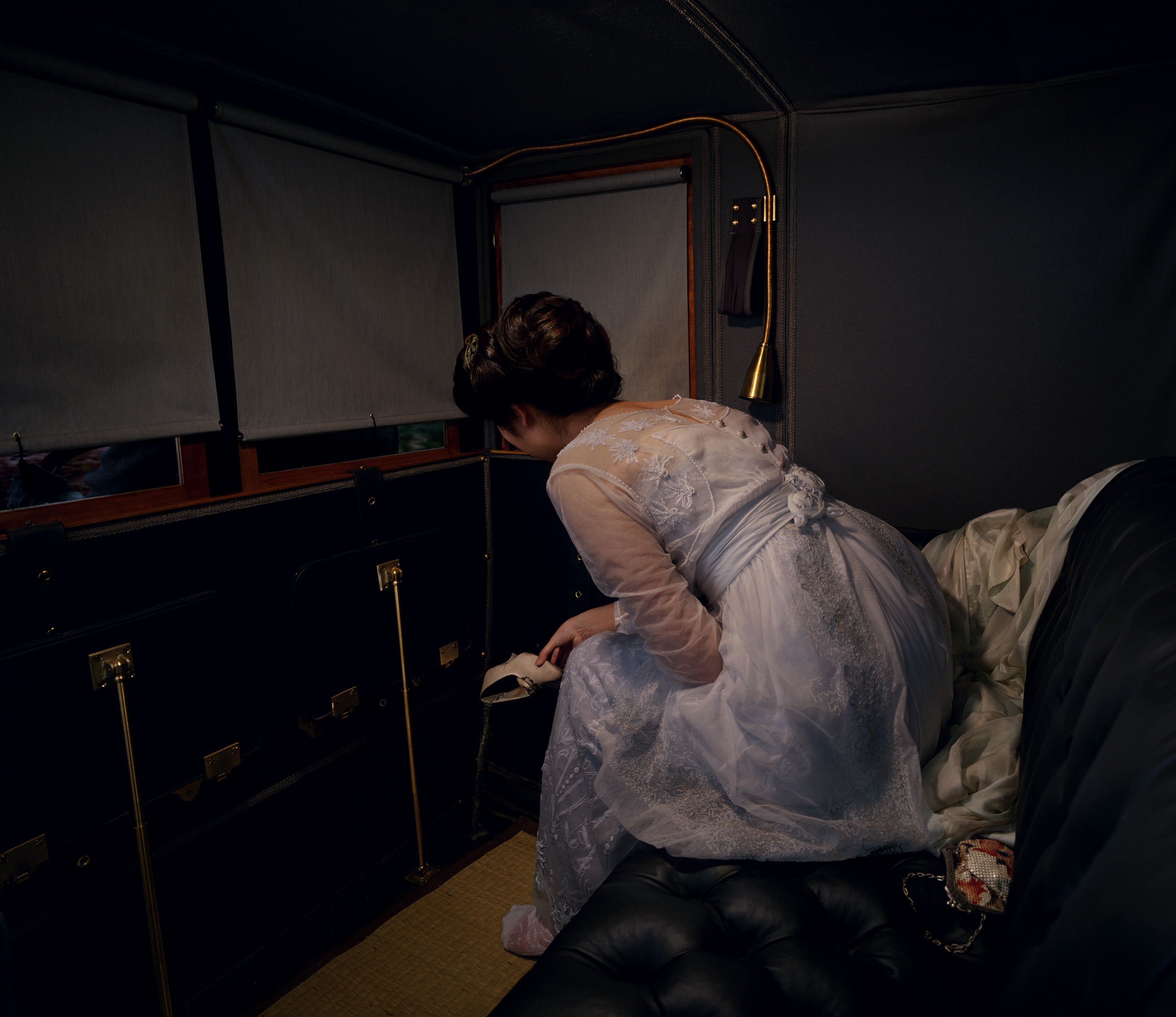
Jeff Wall, After ‘Spring Snow’, by Yukio Mishima, chapter 34, 2000-2005, colour photography, 57.5 x 74 cm, Courtesy of the artist
The few pictures of women in nineteenth-century clothing extend the range of the intended actuality into the upper class. These women are carefully immersed in their world, like in a fishbowl. Or are we in a fishbowl looking at them outside and unable to listen what they say?

Jeff Wall, A woman consulting a catalogue, 2005, lightbox 148 x 116.6 cm, Courtesy of the artist
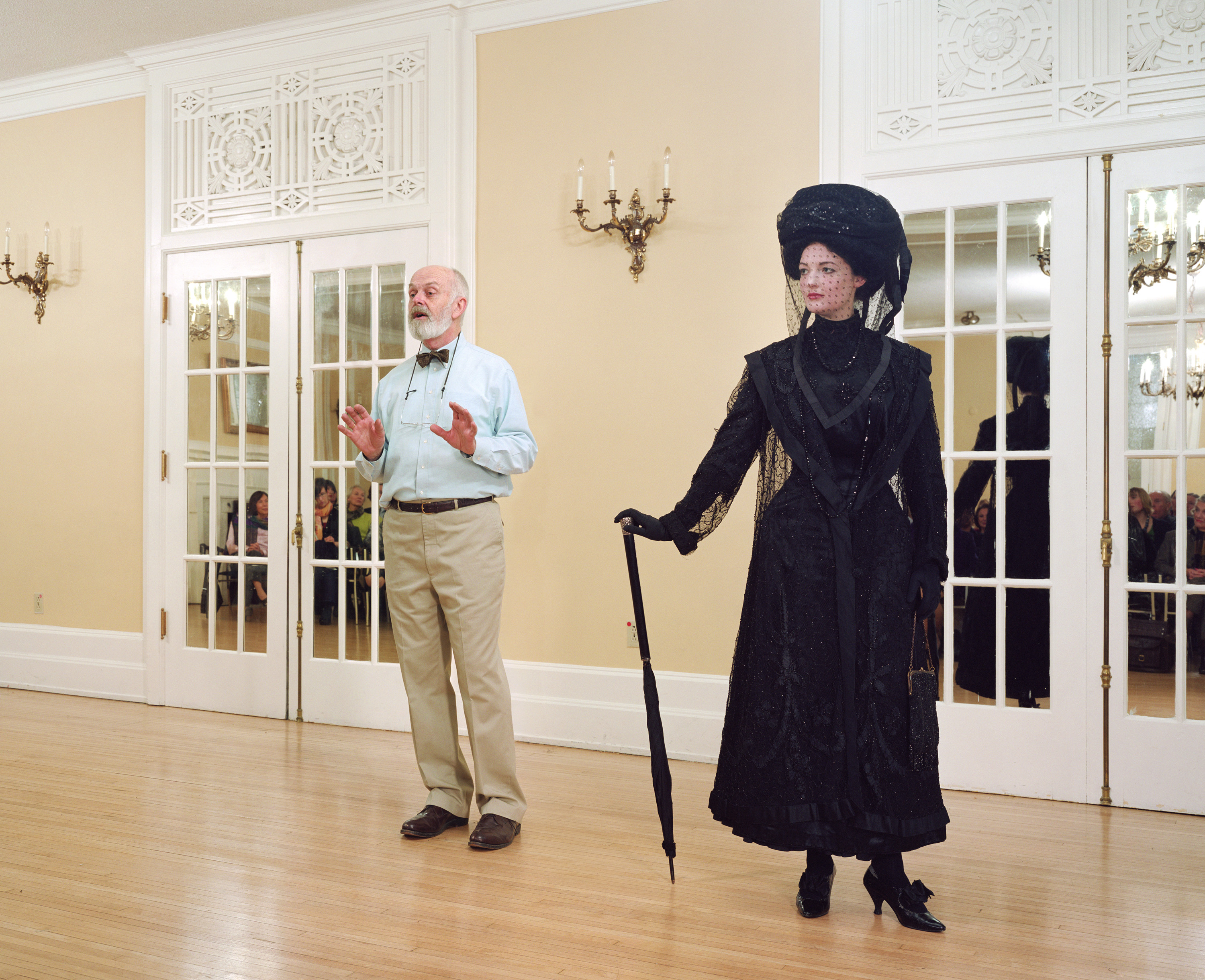
Jeff Wall, Vancouver, 7 Dec. 2009. Ivan Sayers, costume historian, lectures at the University Women’s Club. Virginia Newton-Moss wears a British ensemble c. 1910, from Sayers’ collection, 2009, colour photography, 224.3 x 182.5 cm, Courtesy of the artist
These is the kind of thoughts I have as visitor. Reading the inspired texts by Bonami and Boeri I get more information and motivation.
On the other side around the pictures the exhibition at PAC provides a wasteland, a screaming silence, a pneumatic vacuum which can be subject to different interpretations as well.
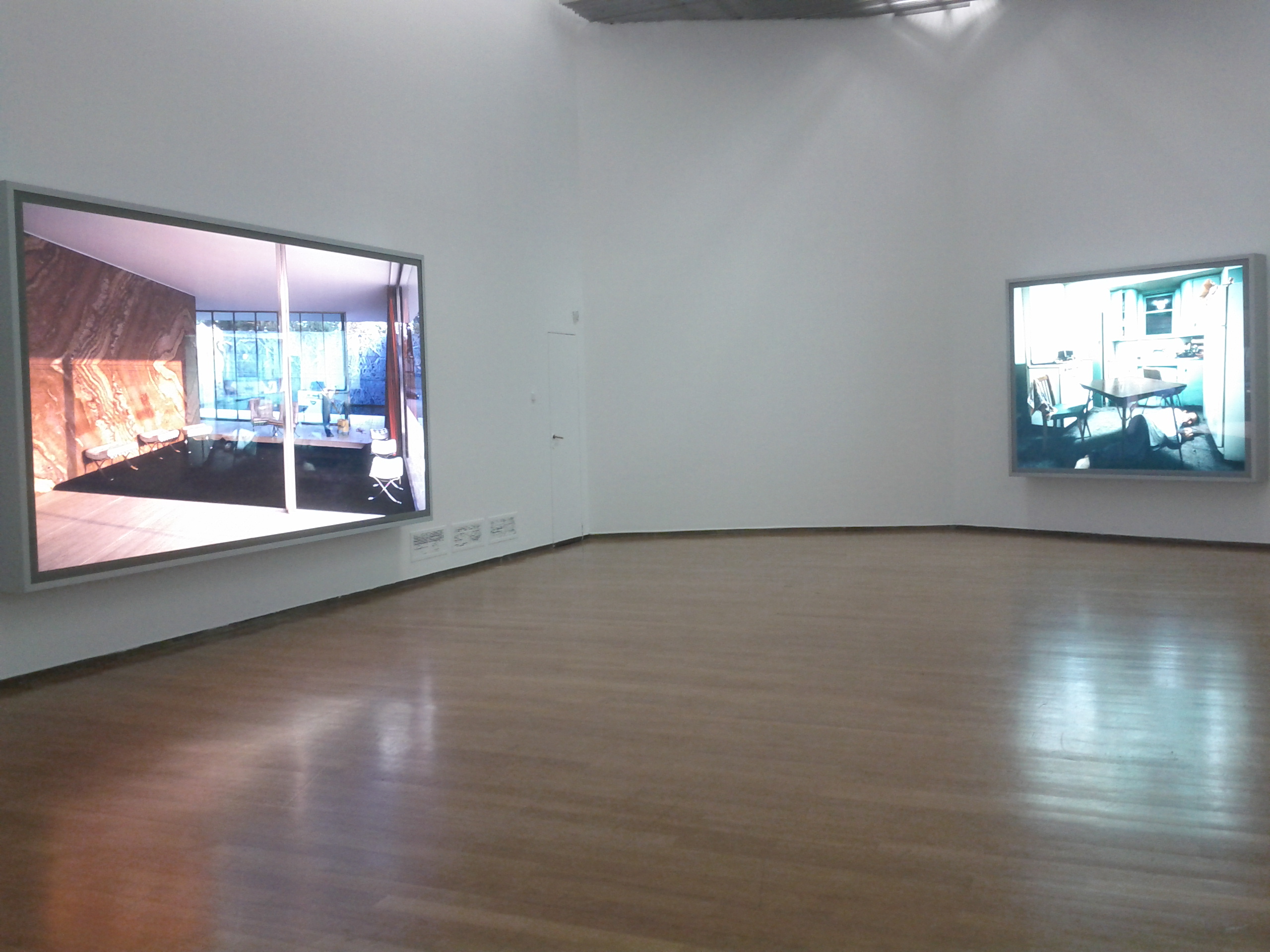
Is it the due distance to enjoy the large format lightboxes and let them be in dialogue with each other and the visitor?
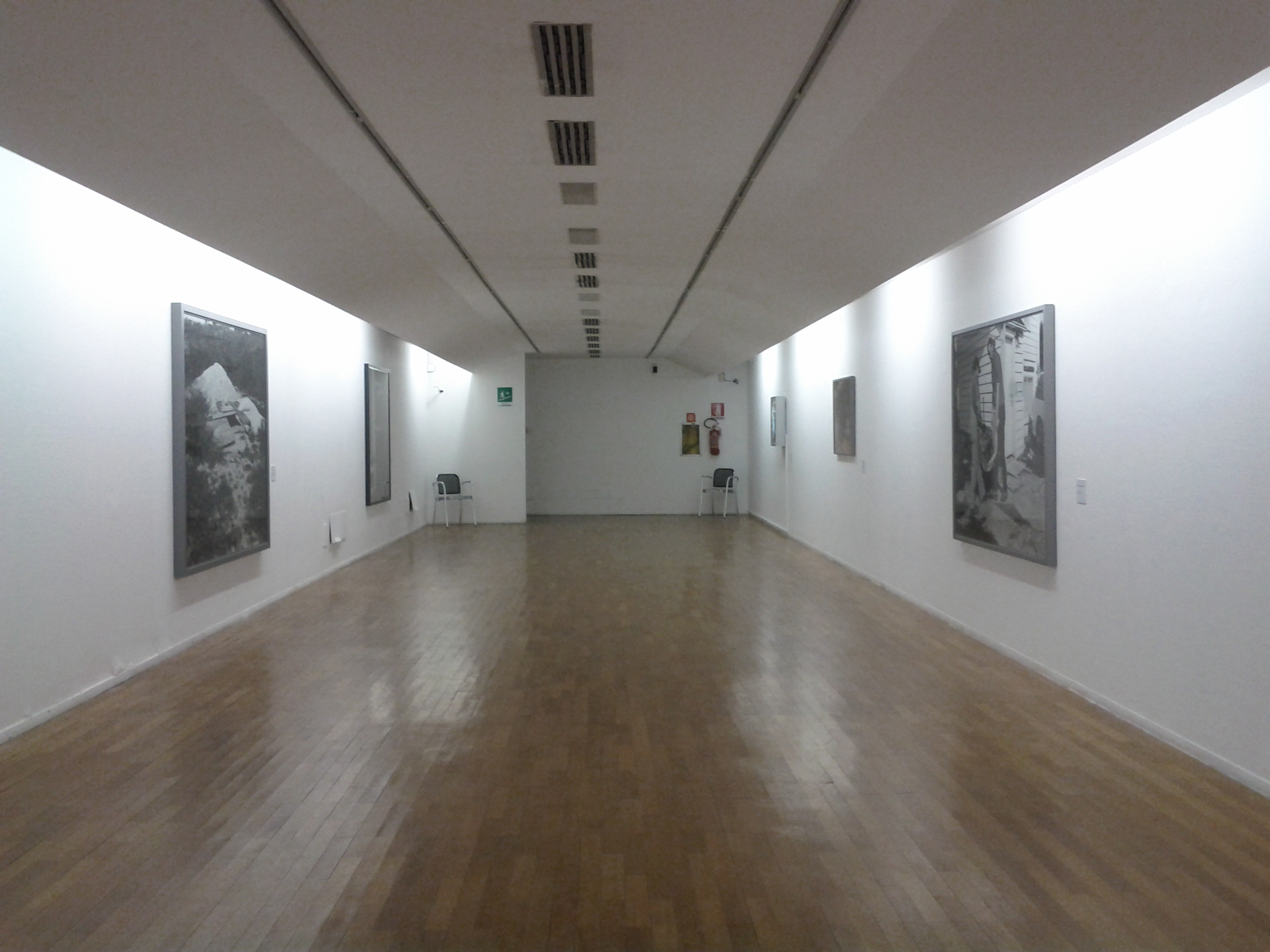
It is that at lunch break during the furniture fair, when all the design showrooms and municipal museums are open for free, nobody wants to go to see Jeff Wall’s pictures?

Am I the only idiot being inside a gallery and not enjoying the first sun of a long awaited spring? As I showed in another visit the park in front of PAC is one of its nicest features.
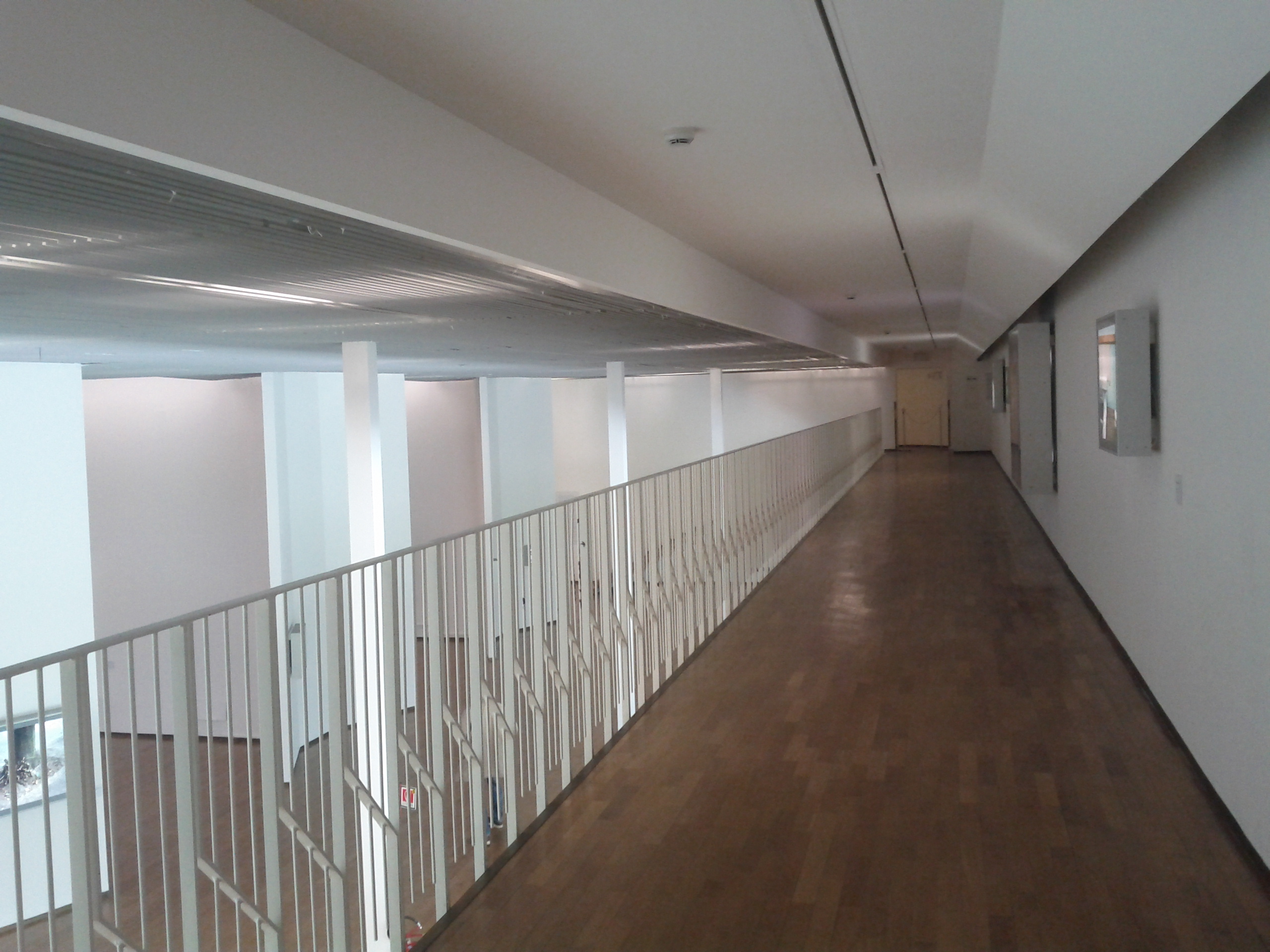
Actually I don’t miss any more visitors, but I just miss any kind of exhibition design, any dialogue between the beautiful pictures and the beautiful architecture which contains them.
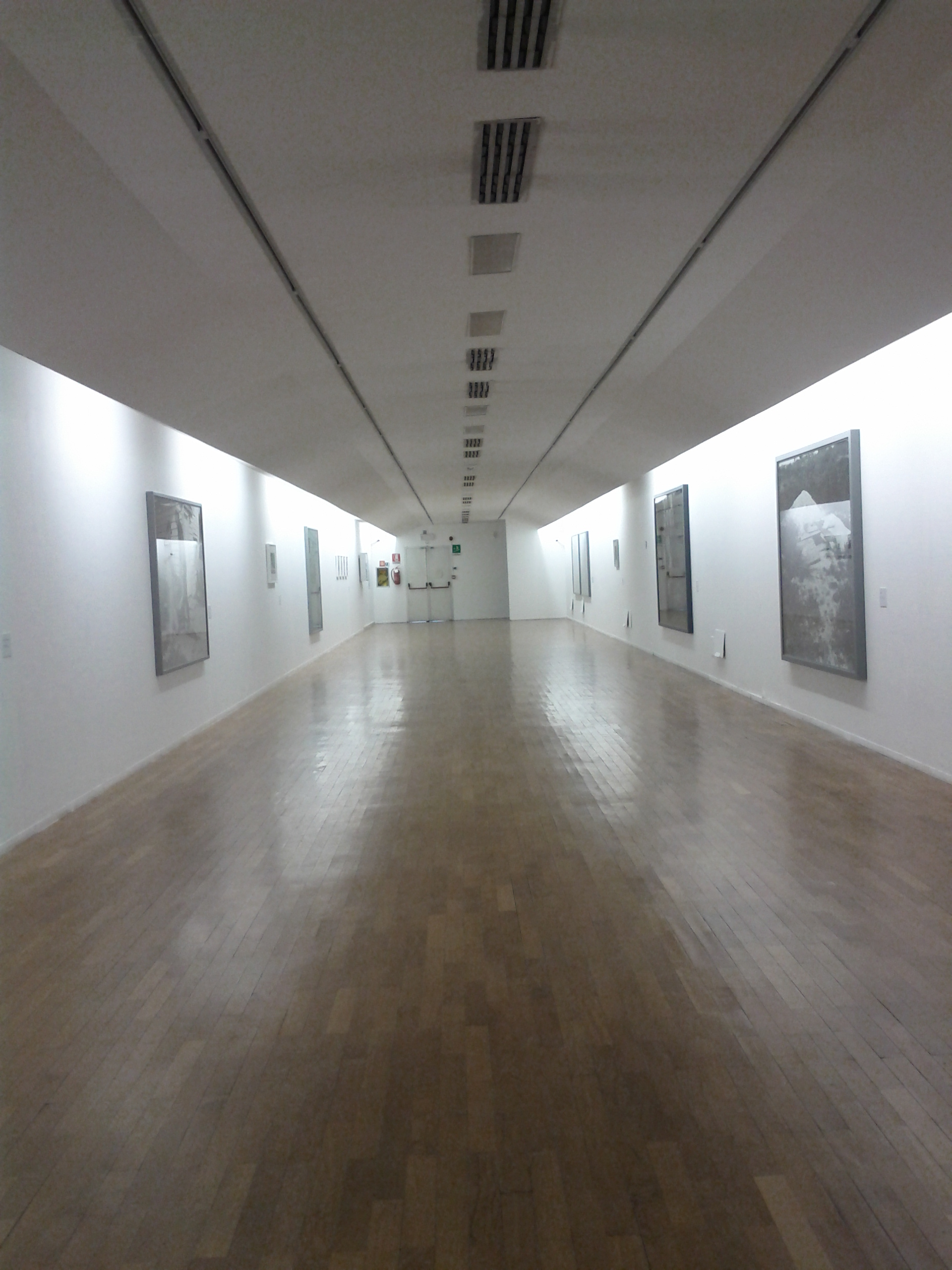
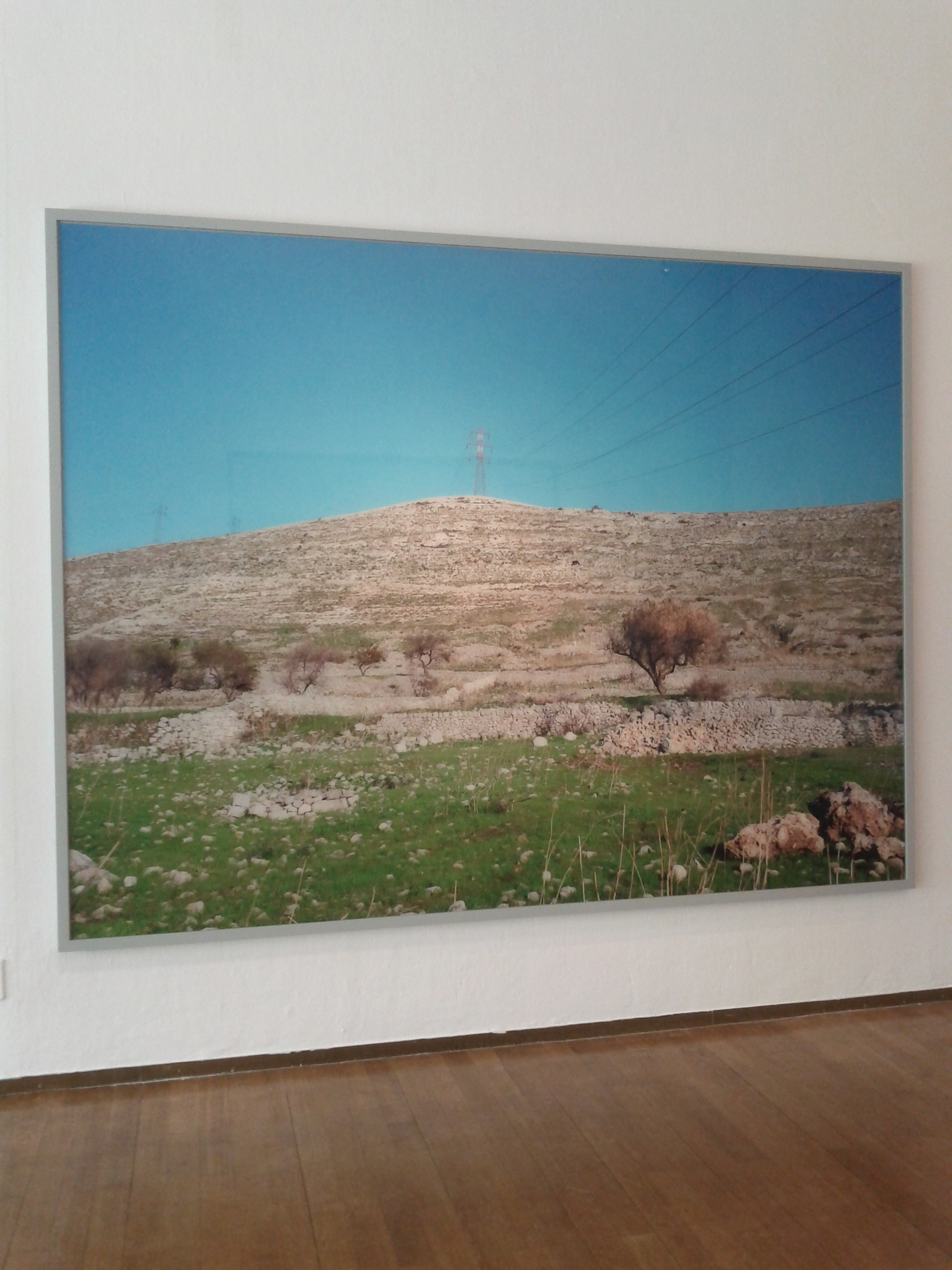
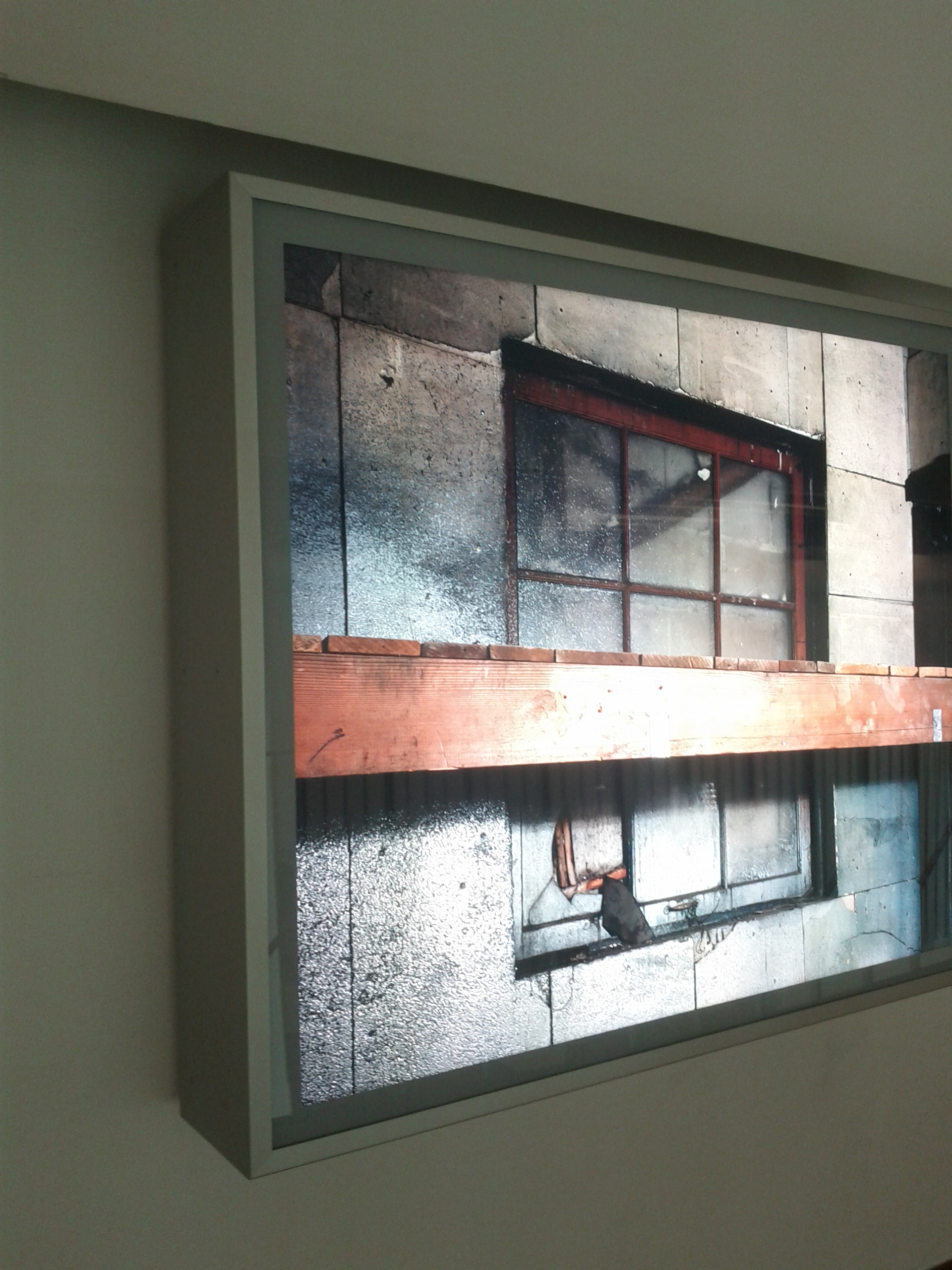
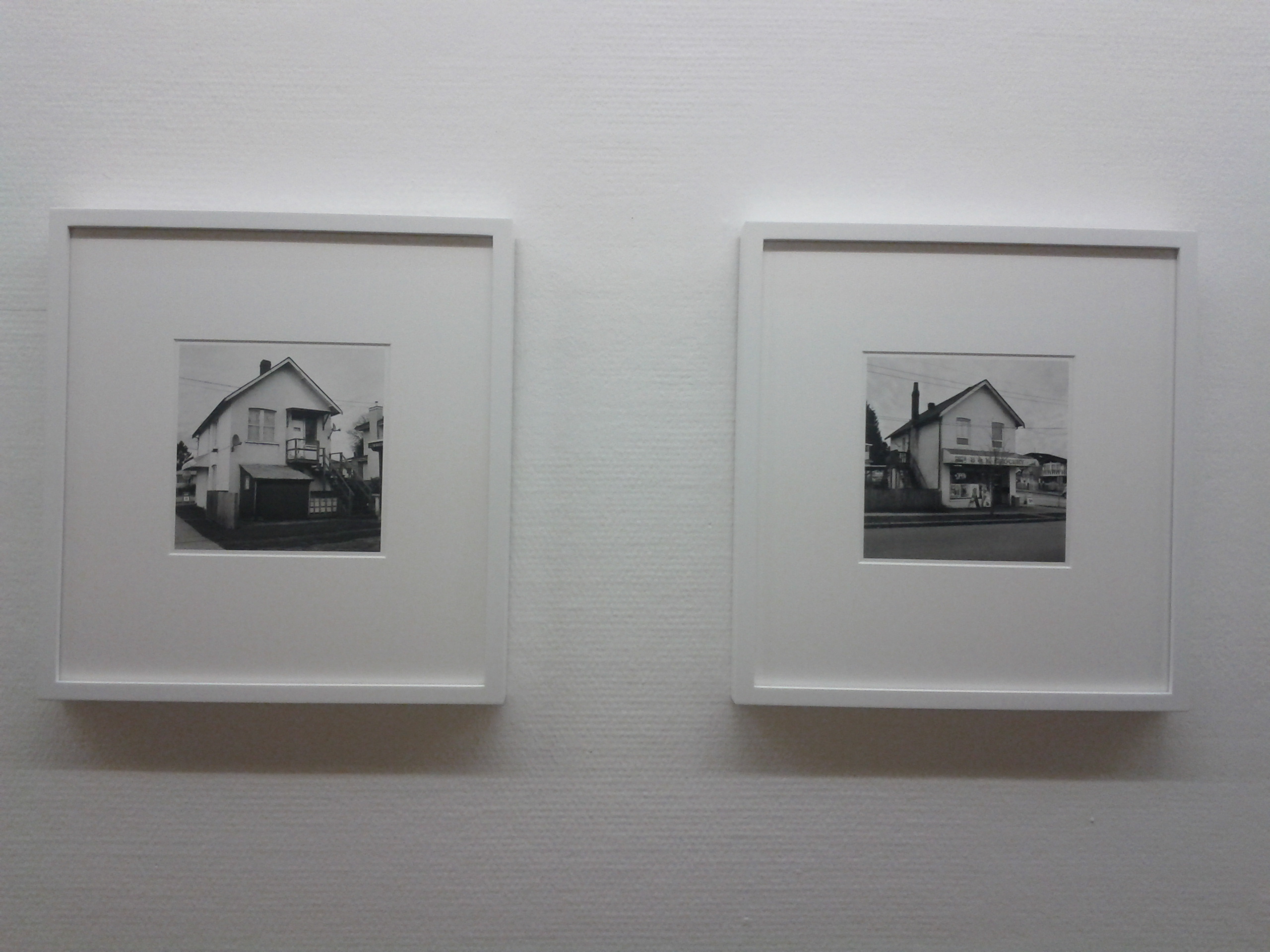
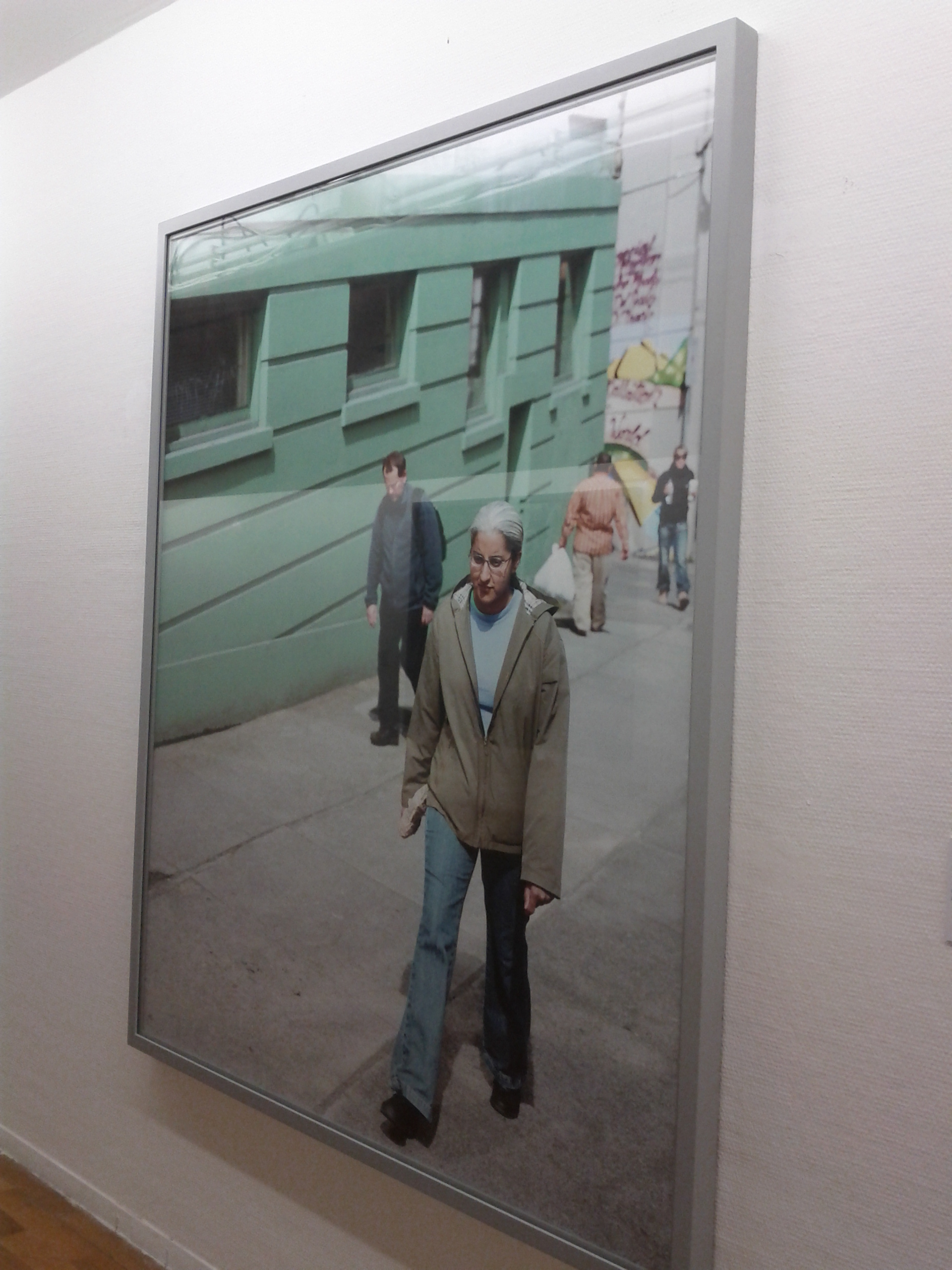
Going to the exhibition I was wondering why Jeff Wall cancelled his announced participation to the opening on the 19th of March. Now I wonder if he might have been disappointed about the way pictures were just hanging on the wall. Like this.


Apertura
dal 19 marzo al 9 giugno 2013
Orari
lunedì: 14.30 – 19.30
martedì, mercoledì, venerdì, sabato e domenica 09.30 – 19.30
giovedì 09.30 – 22.30
* ultimo ingresso un’ora prima della chiusura
Orari Festività
31 marzo e 1 aprile (Pasqua e Pasquetta) 09.30 – 19.30
25 aprile 09.30 – 22.30
1 maggio 09.30 – 19.30
2 giugno 09.30 – 22.30
More info on the official exhibition website www.jeffwallmilano.it
Toyo Ito Awarded Pritzker Prize 2013

The most prestigious recognition an architect can achieve this year has been awarded to Toyo Ito, the japanese master whose buildings are a reference for the global professional community since four decades. His buildings are diverse, generous and naturally sensitive. They are also iconic, but always in a different and peculiar way. His approach to architecture may appear elitaire when looking at the flagship buildings, but his residential projects for several private clients witness great ability to set everyday life in original and comfortable scenarios. Furthermore most of Toyo Ito’s projects are public buildings providing extraordinary stimulating places for people to meet.
The Pritzker Prize was initiated in 1979 by Jay and Cindy Pritzker who “believed that a meaningful prize would encourage and stimulate not only a greater public awareness of buildings, but also would inspire greater creativity within the architectural profession”. It is sponsored by the Hyatt Foundation (yes, the luxury hotel chain) and this year the Jury was composed by Lord Palumbo (Chairman), Alejandro Aravena, Stephen Breyer, Yung Ho Chang, Glenn Murcutt, Juhani Pallasmaa and Martha Thorne (Executive Director).
Below a quote from the Jury’s citation and pictures of some significant works.
Toyo Ito is a creator of timeless buildings, who at the same time boldly charts new paths. His architecture projects an air of optimism, lightness and joy, and is infused with both a sense of uniqueness and universality. For these reasons and for his synthesis of structure, space and form that creates inviting places, for his sensitivity to landscape, for infusing his designs with a spiritual dimension and for the poetics that transcend all his works, Toyo Ito is awarded the 2013 Pritzker Architecture Prize.

Dome in Odate 1997
A large geometrically defined volume in extremely fragmented environment can easily become a Ufo, but this is not the case, thanks to the careful relationship of the shell with the ground and its delicate folding.

Dome in Odate
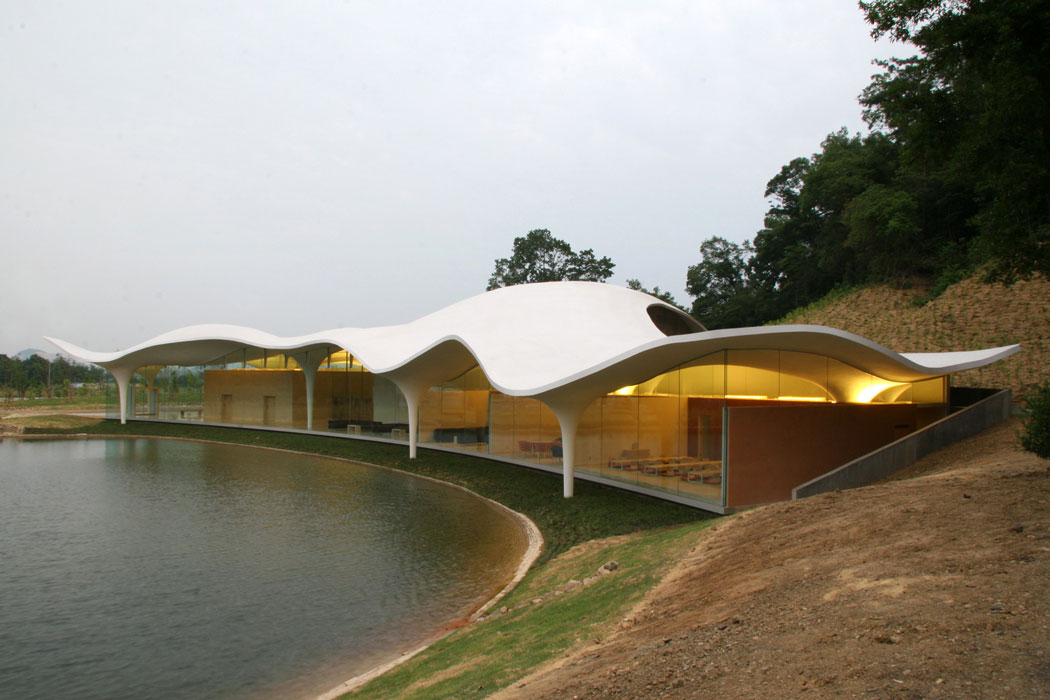
Crematorium in Gifu 2006
Not an easy architecture for a dramatic task, but the result is a overwhelming peacefulness.

Crematorium in Gifu
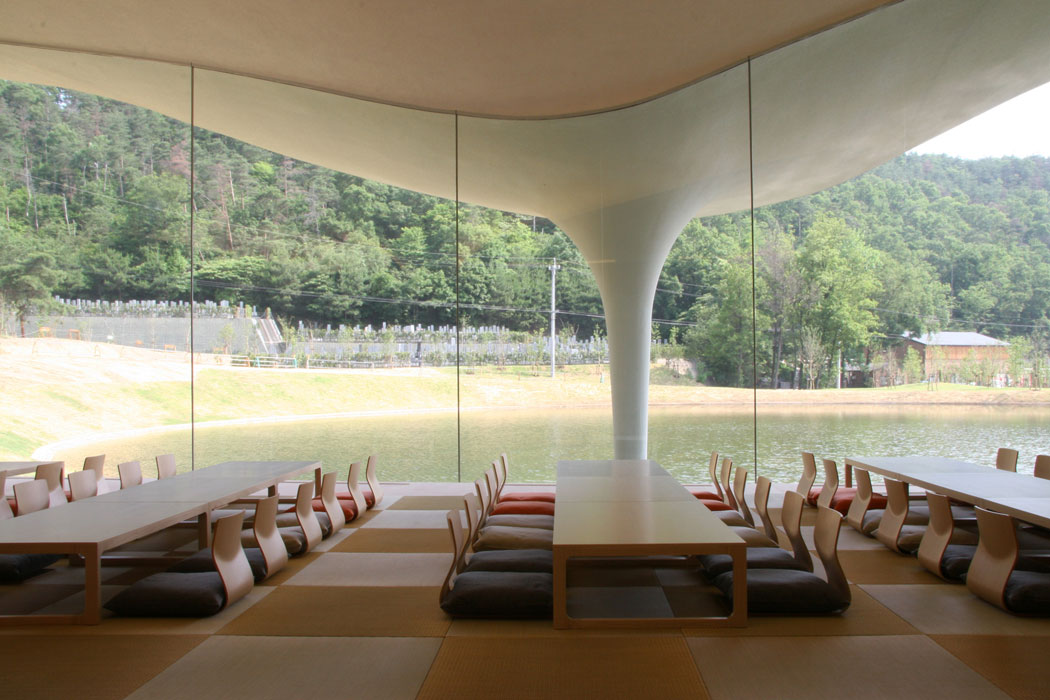
Crematorium in Gifu

Solar Powered Stadium in Taiwan 2009
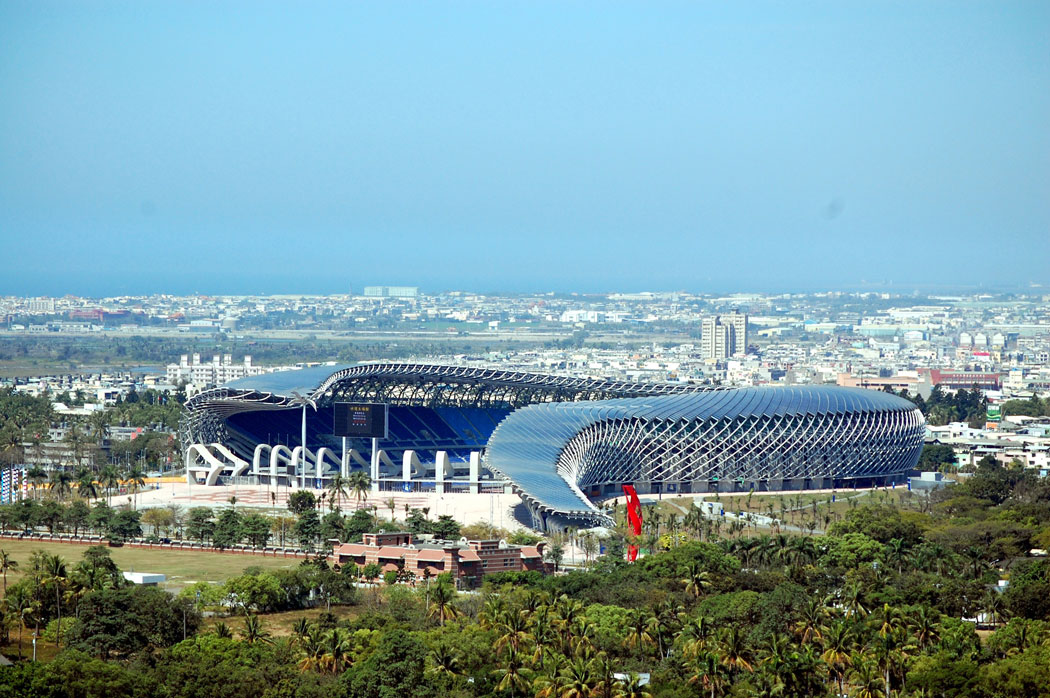
Solar Powered Stadium in Taiwan
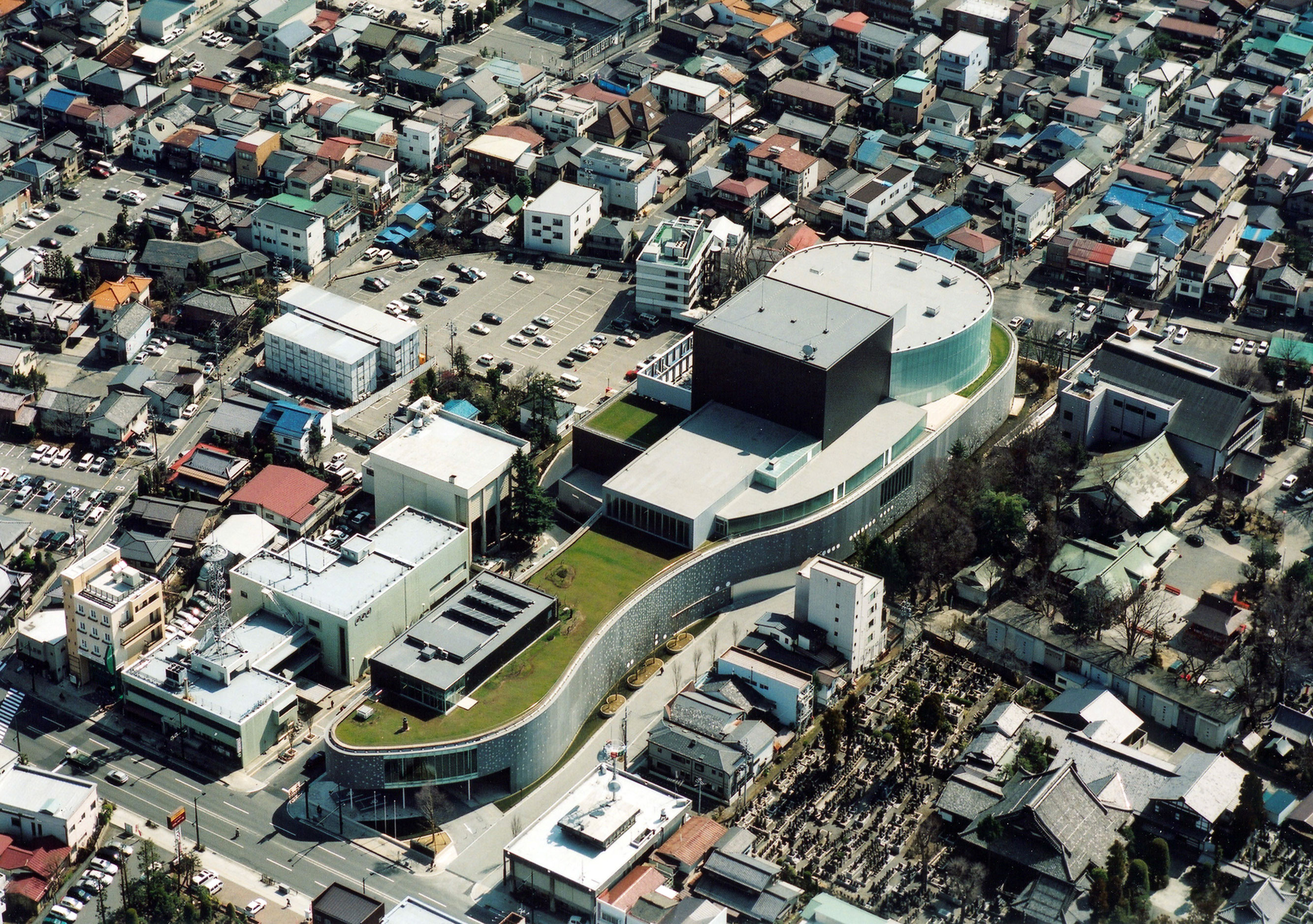
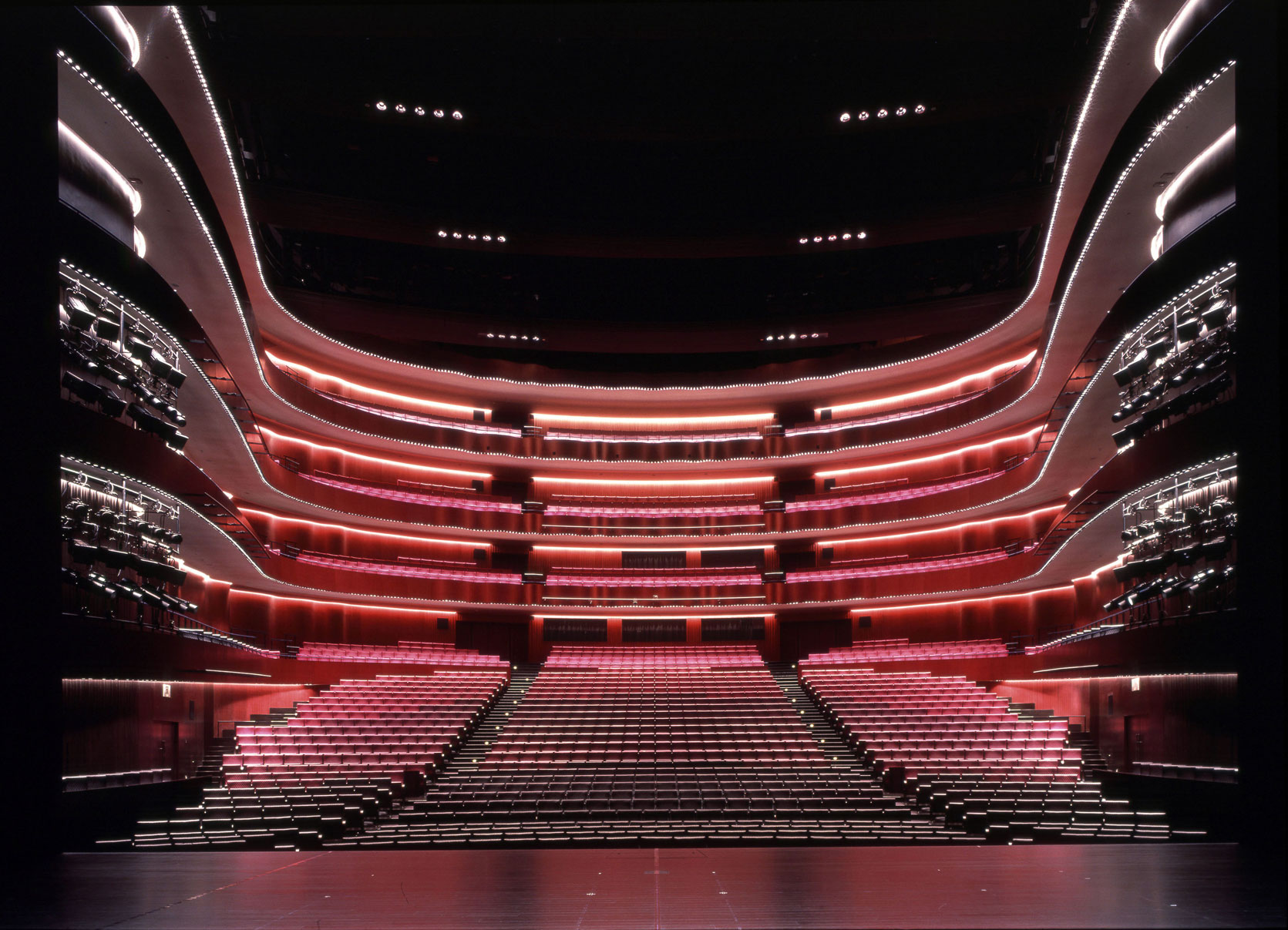
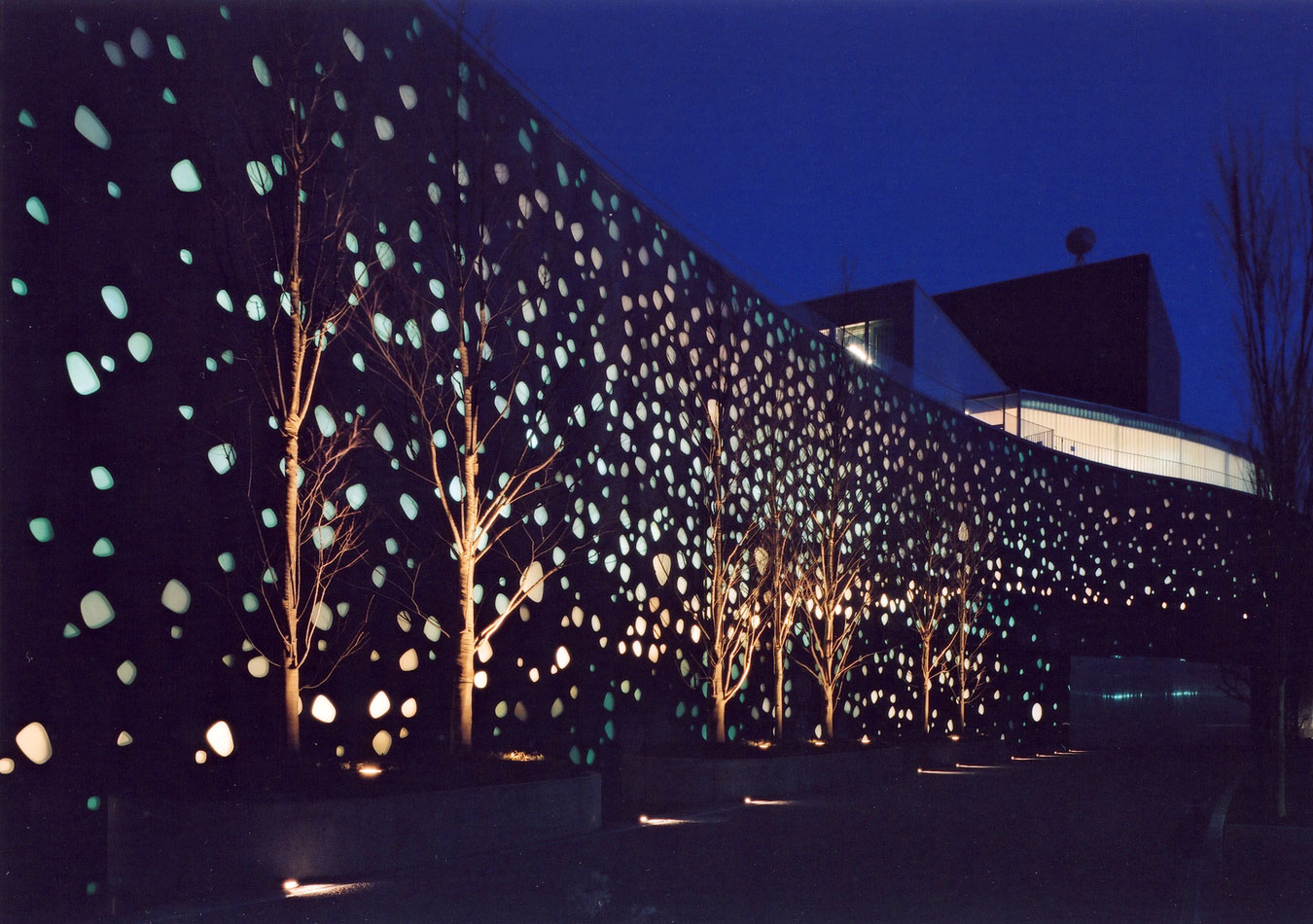
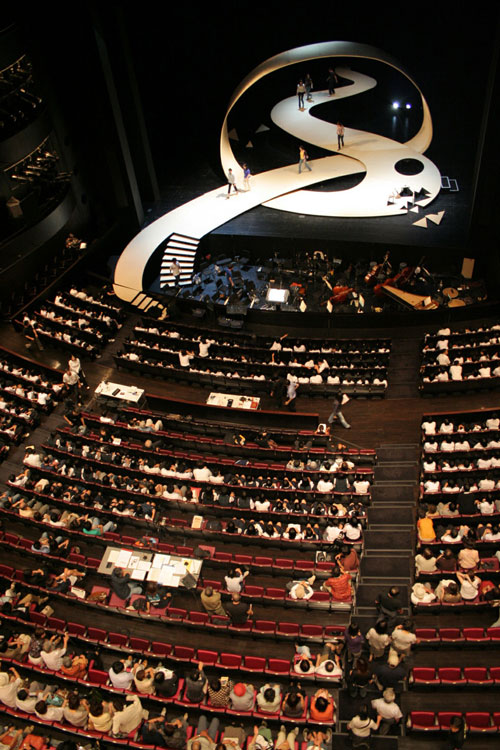
Matsumoto Arts Centre 2004
Striving for harmony and continuity in a fragmented and chaotic urban environment. The building is a composition of volumes kept together by the sinuous facade of the base. Inside the search for continuity goes on like in a Moebius strip.

Matsumoto Arts Centre
Matsumoto Arts Centre
Matsumoto Arts Centre
Matsumoto Arts Centre
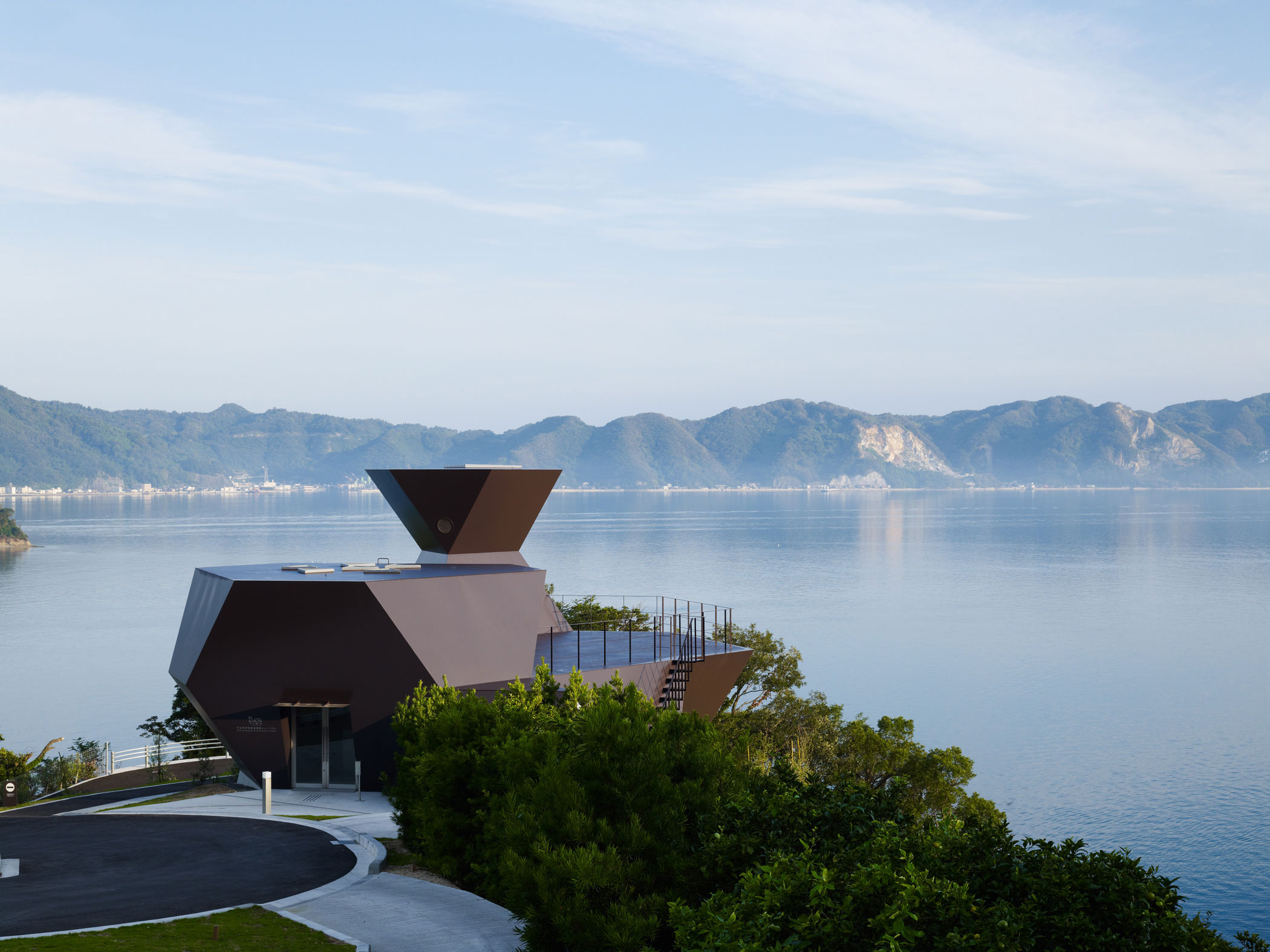
Museum of Architecture in Ehime 2011
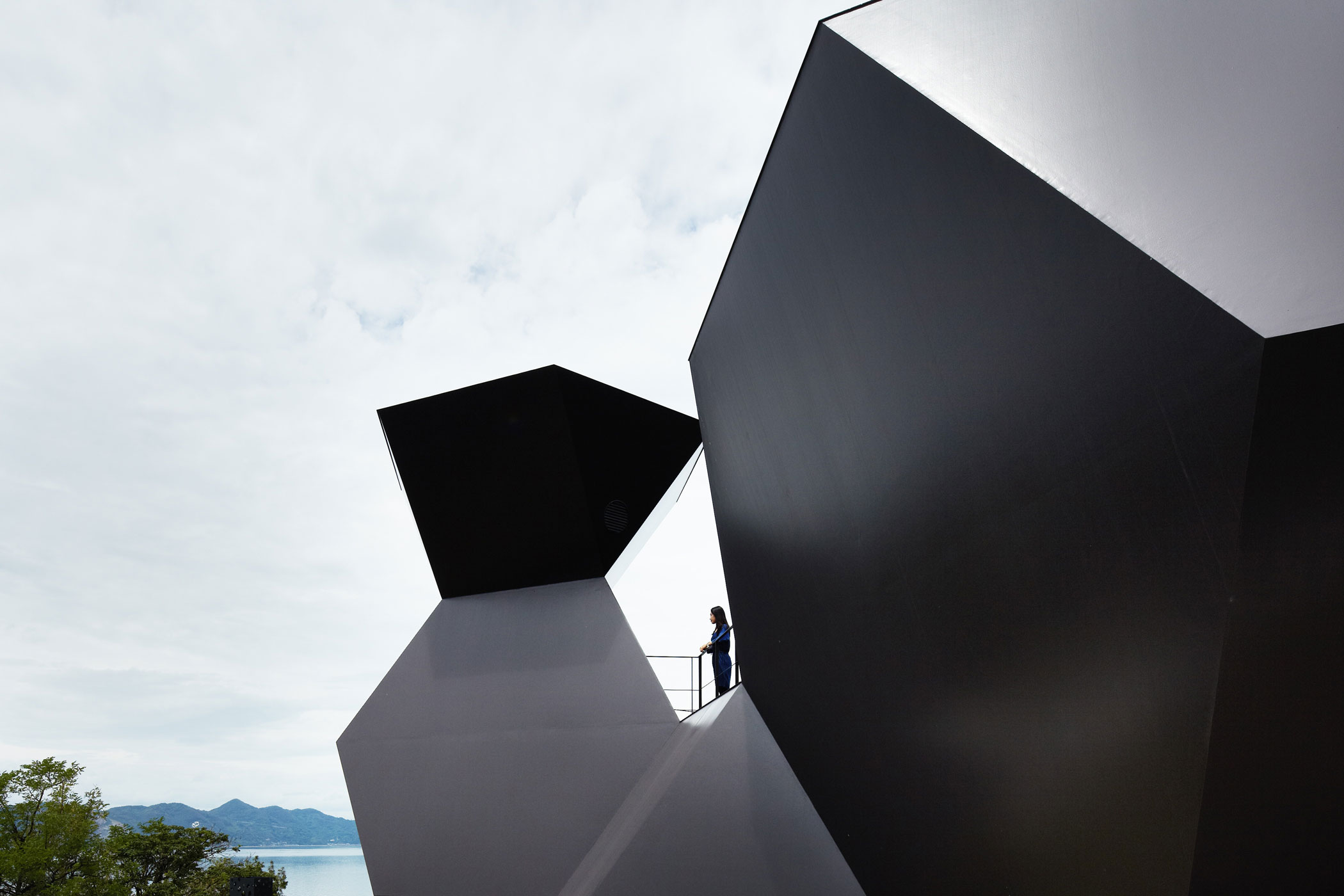
Museum of Architecture in Ehime

Museum of Architecture in Ehime

Sendai Mediatheque 2001
Capturing the essence of a dematerialising world with a spectacular, but also familiar and user friendly design.
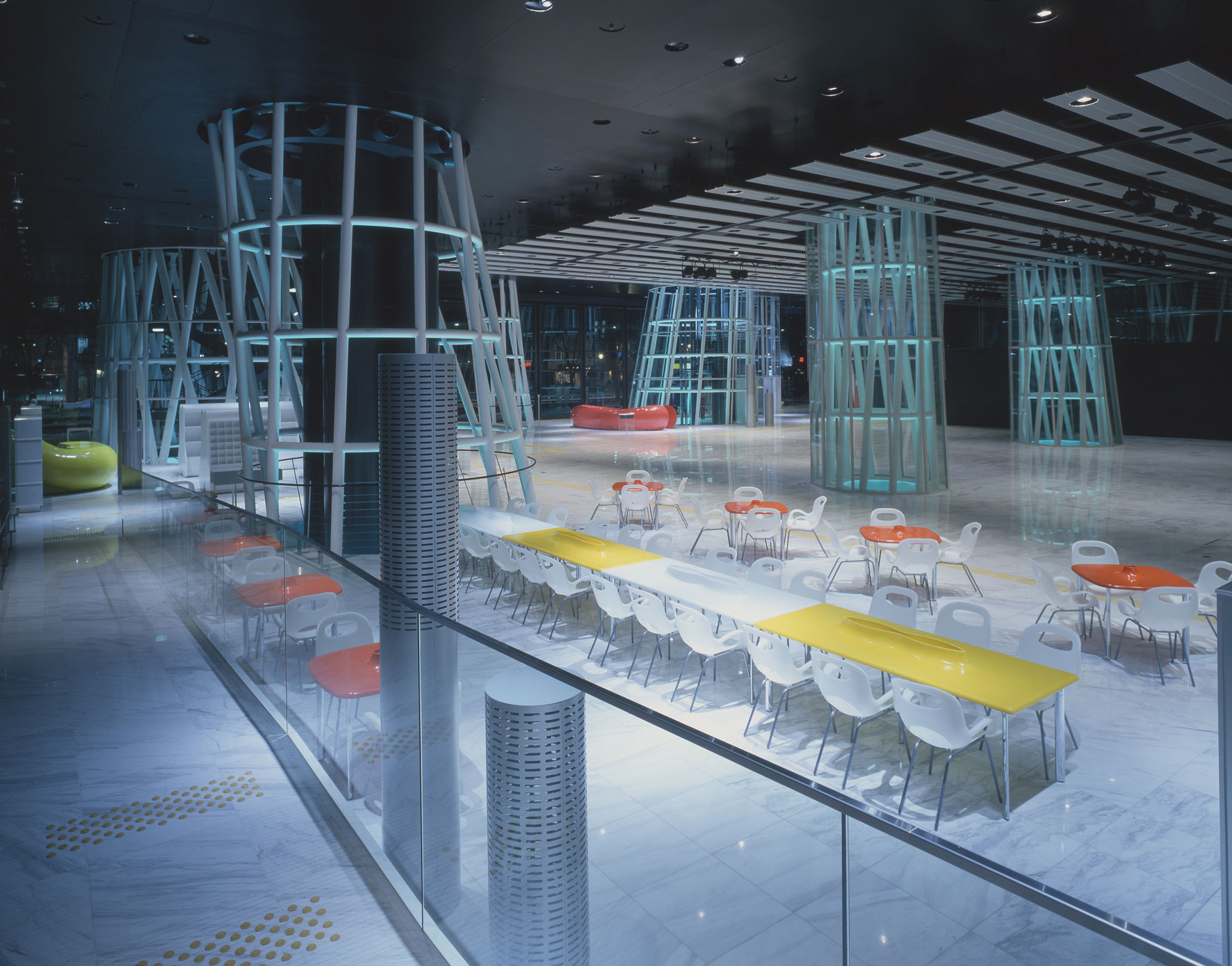
Sendai Mediatheque
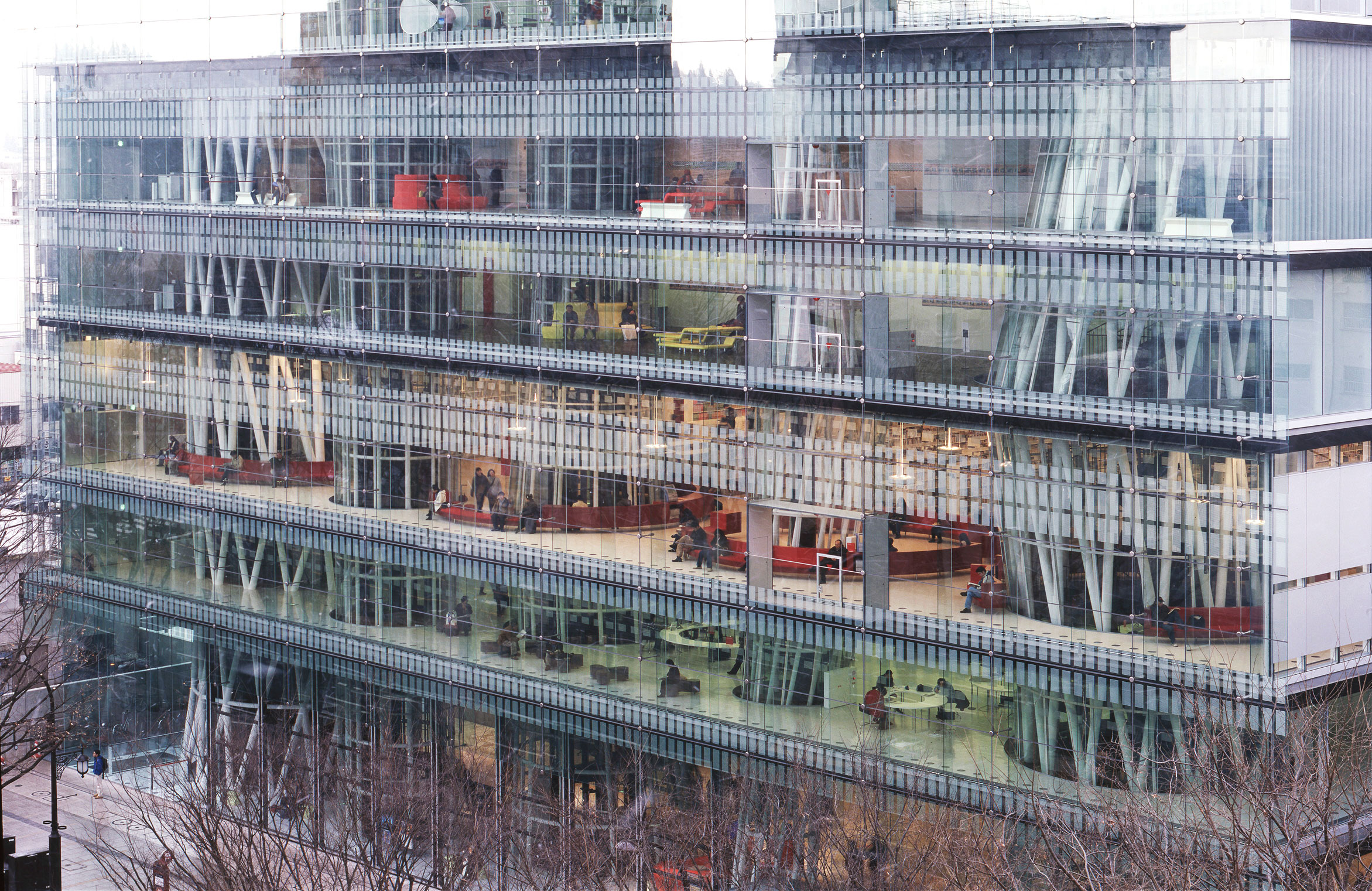
Sendai Mediatheque
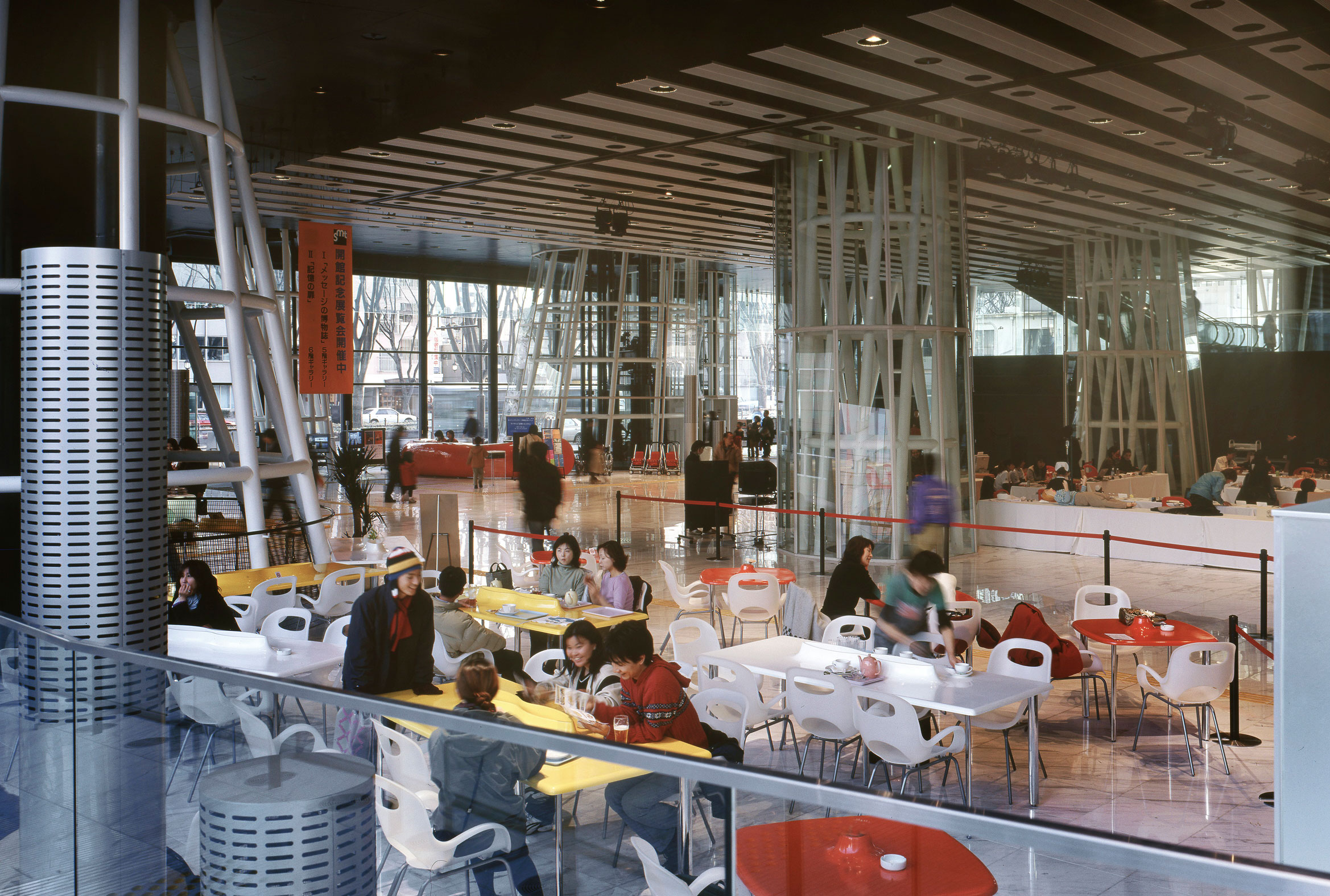
Sendai Mediatheque
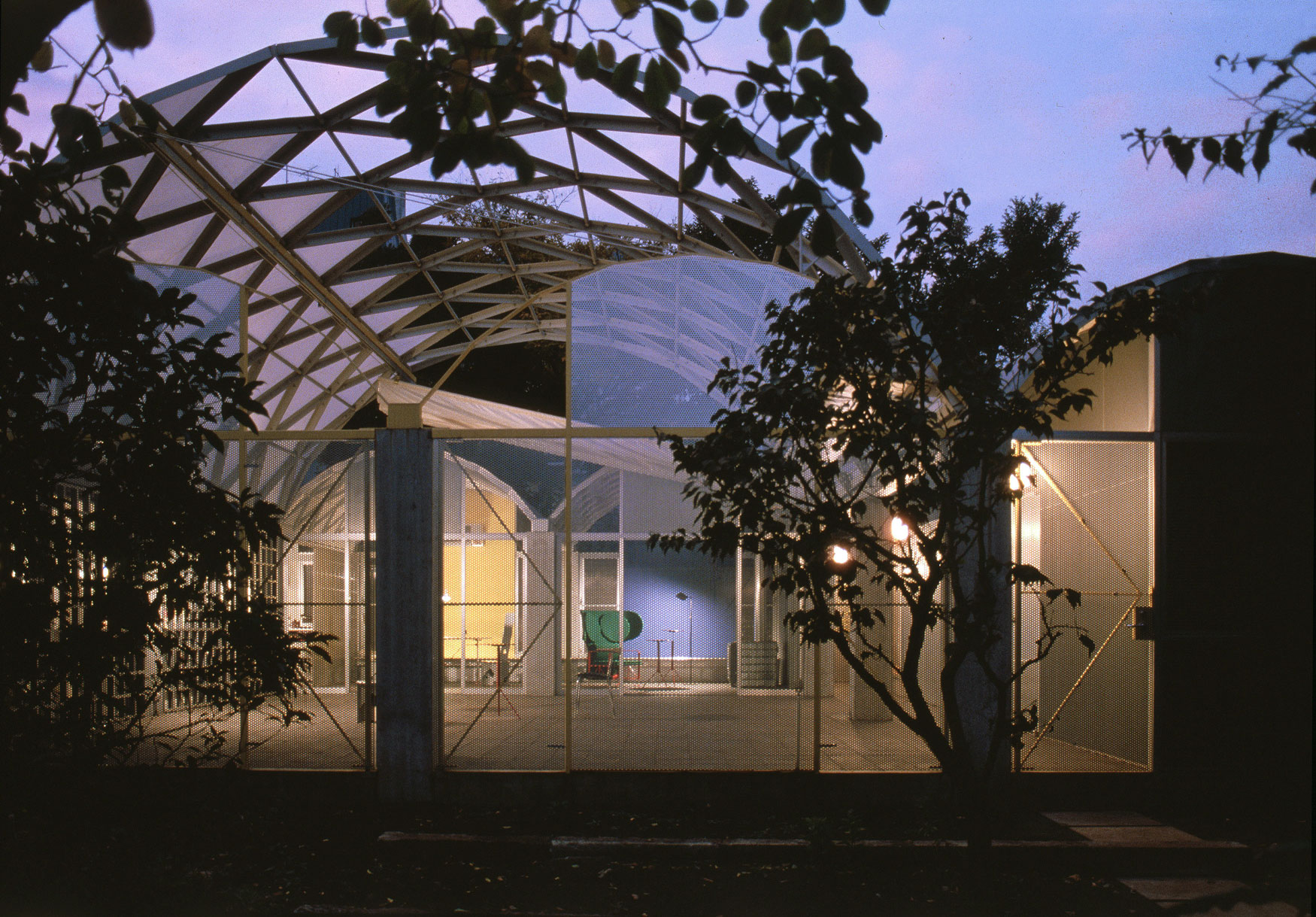
Silver Hut House 1984

Silver Hut House
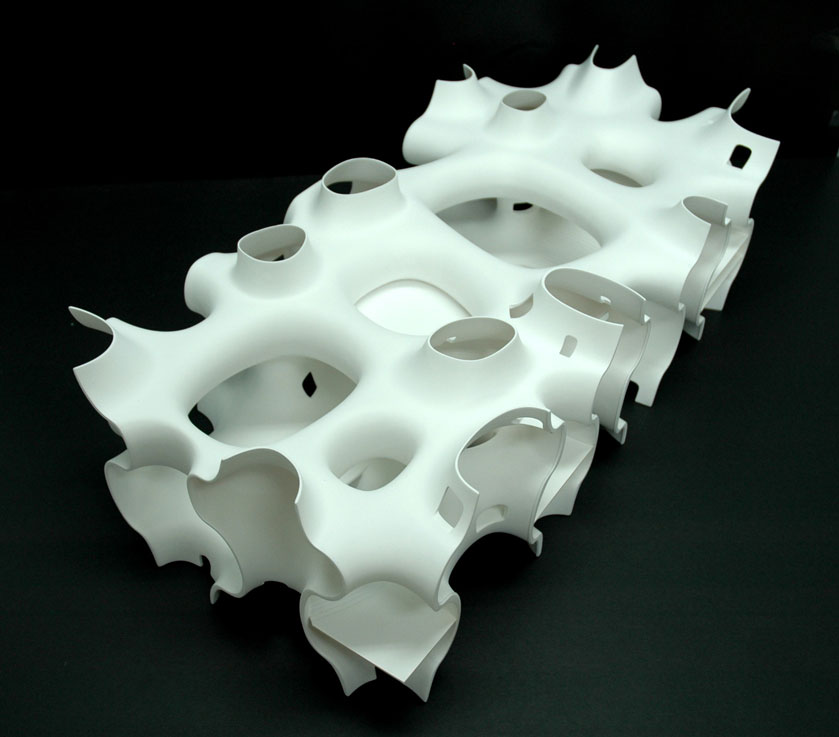
Taichung Metropolitan Opera House – Under Construction
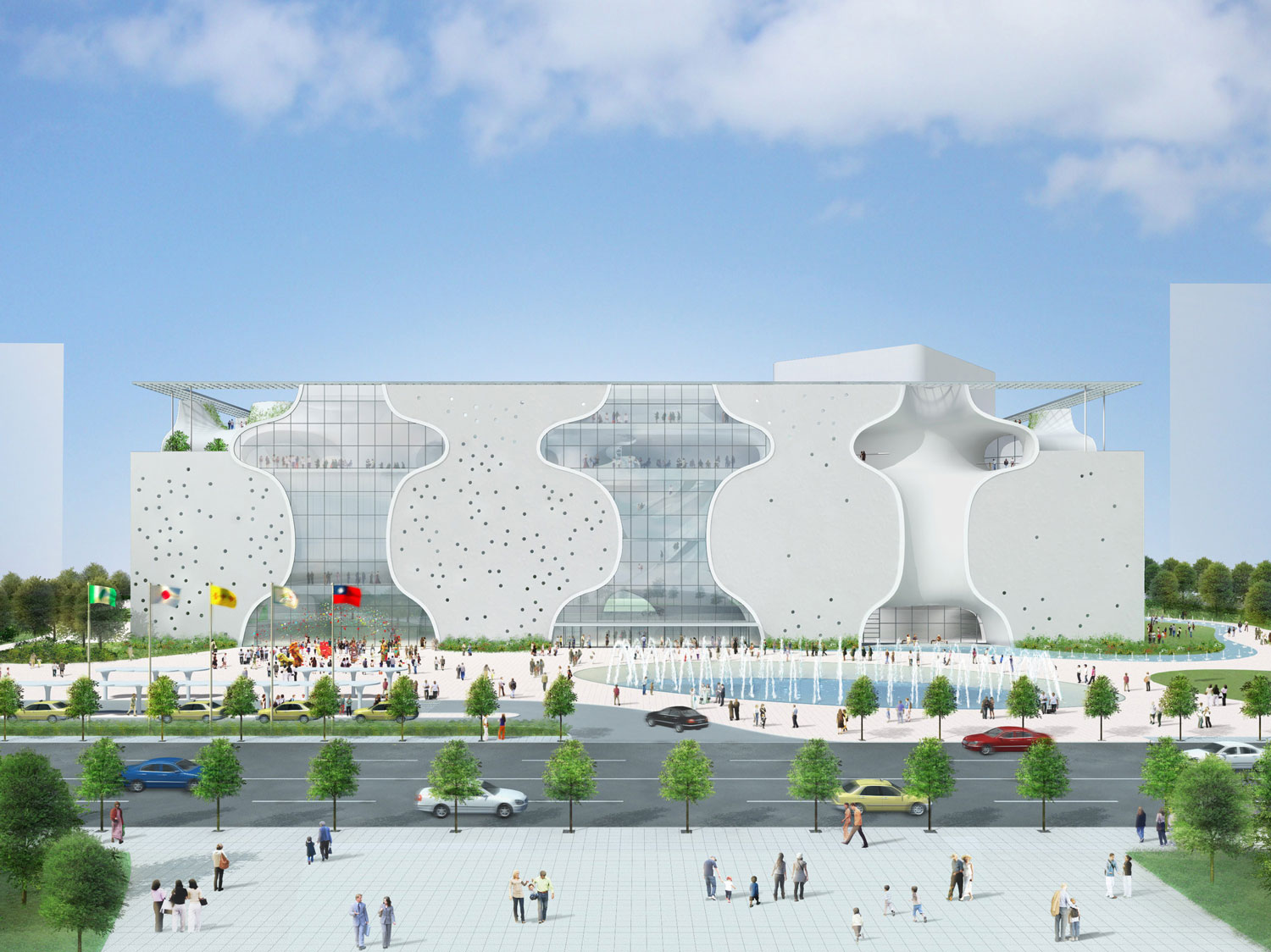
Taichung Metropolitan Opera House
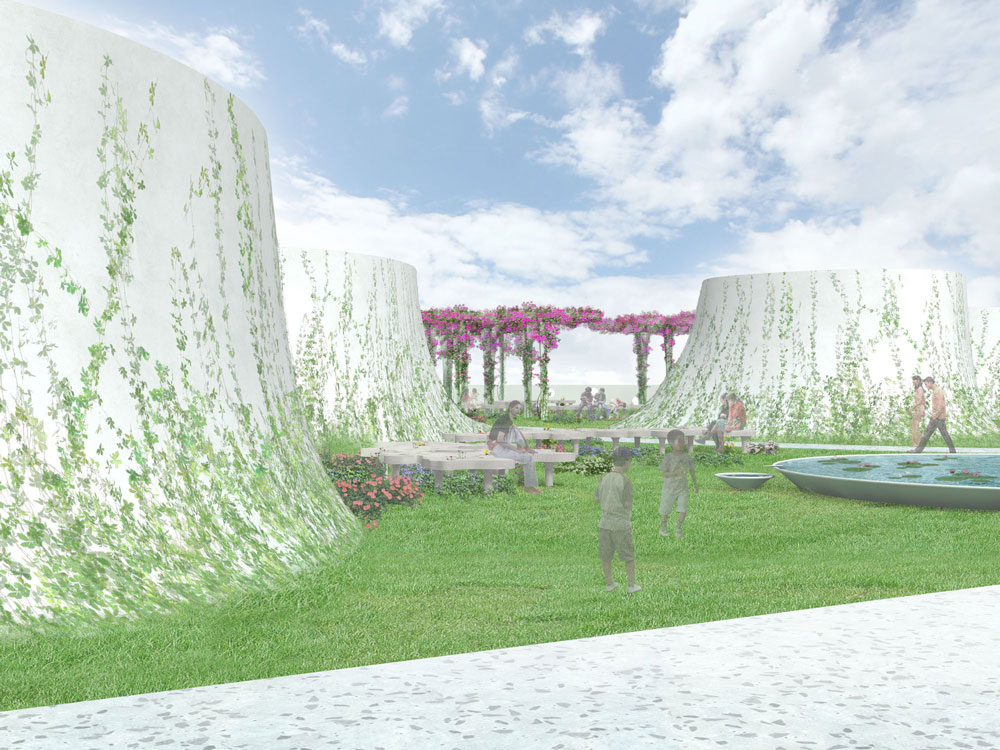
Taichung Metropolitan Opera House
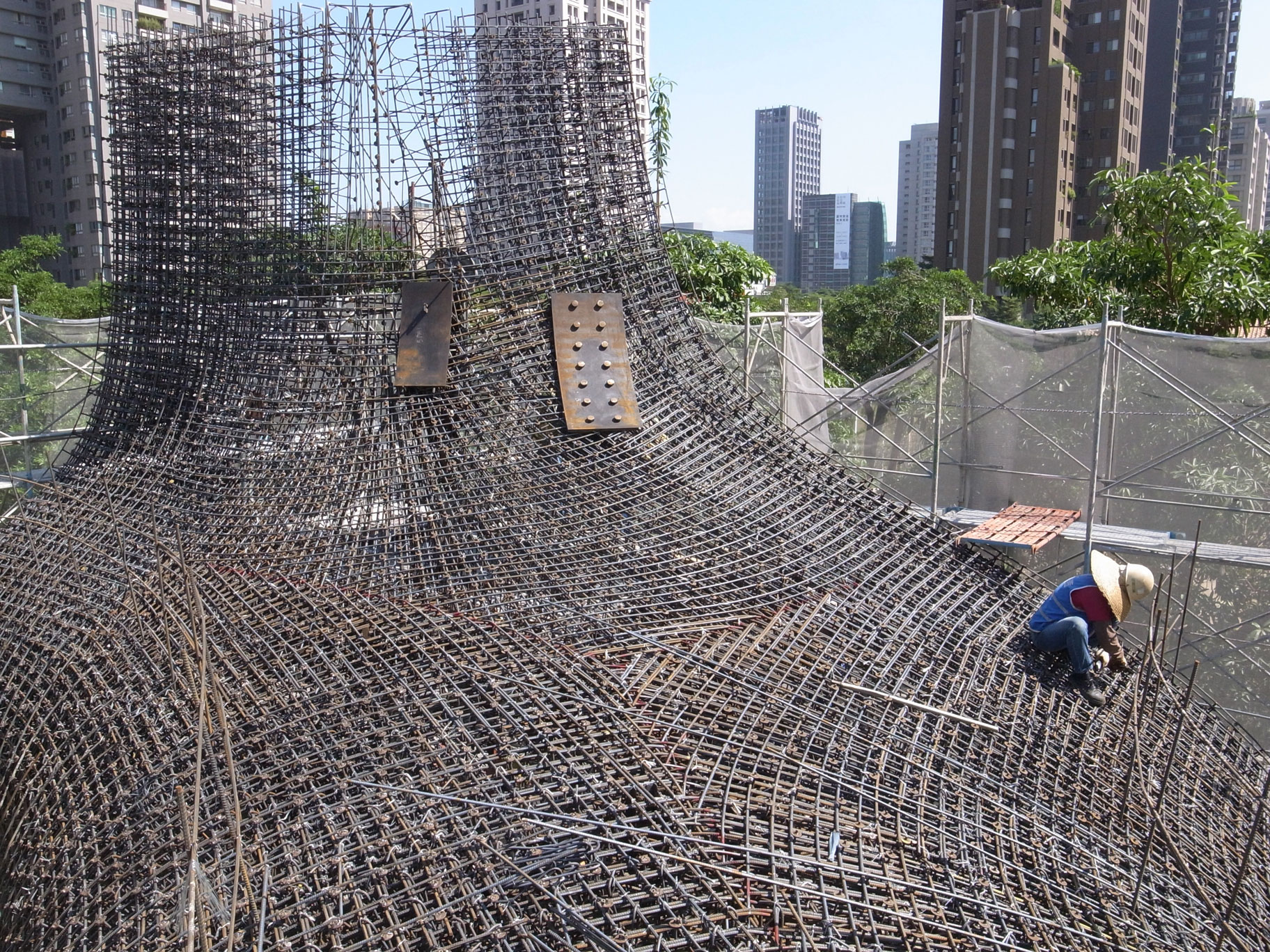
Taichung Metropolitan Opera House
Pushing things a step further into another, bigger dimension. That’s another challenge the architect has not avoided. The result will be soon to be seen. In the meanwhile the building site is impressive enough.
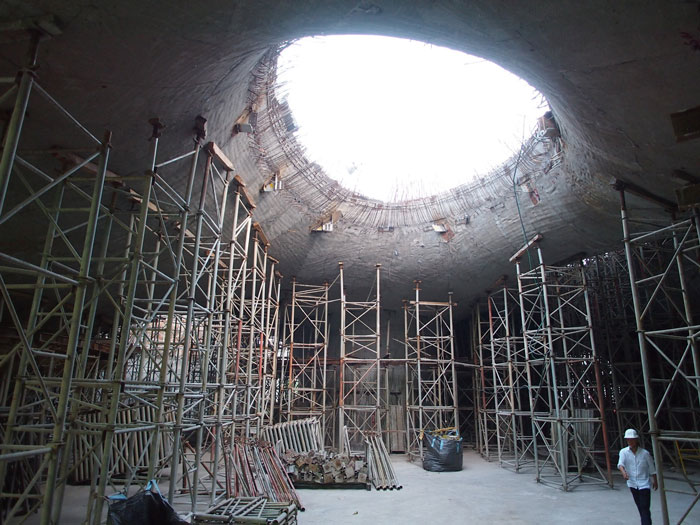
Taichung Metropolitan Opera House

Tama Public Library 2007
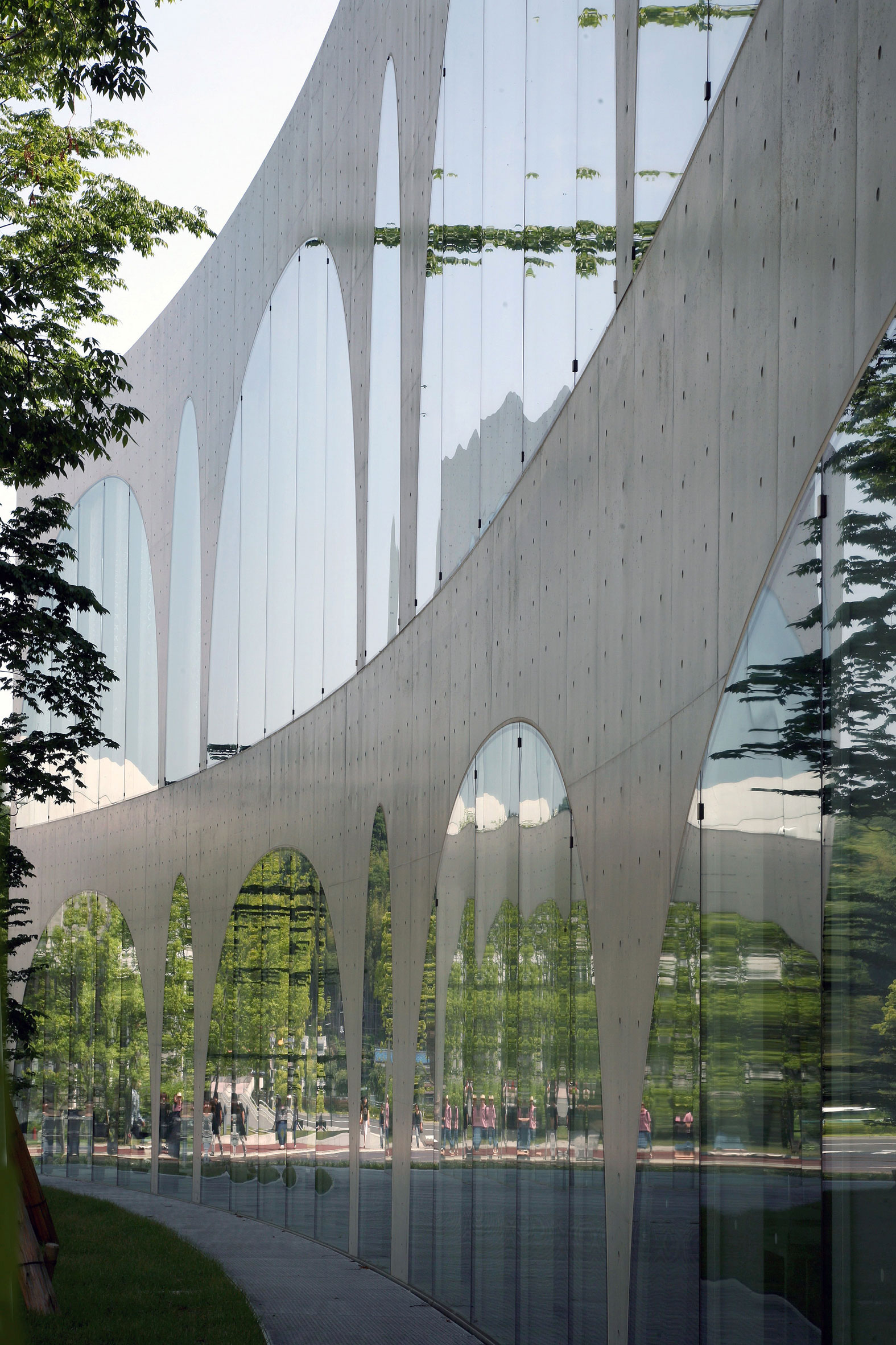
Tama Public Library

Tama Public Library
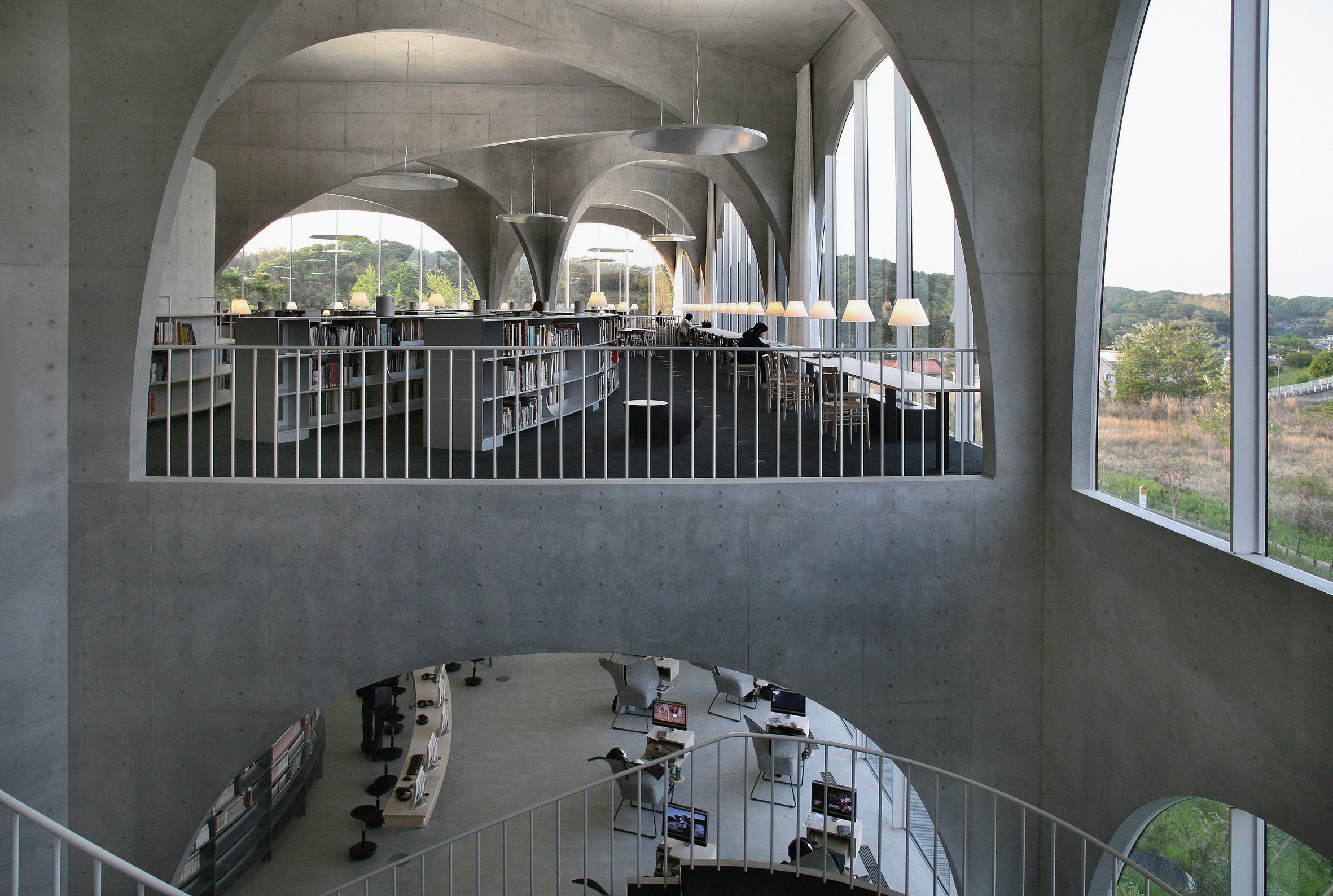
Tama Public Library
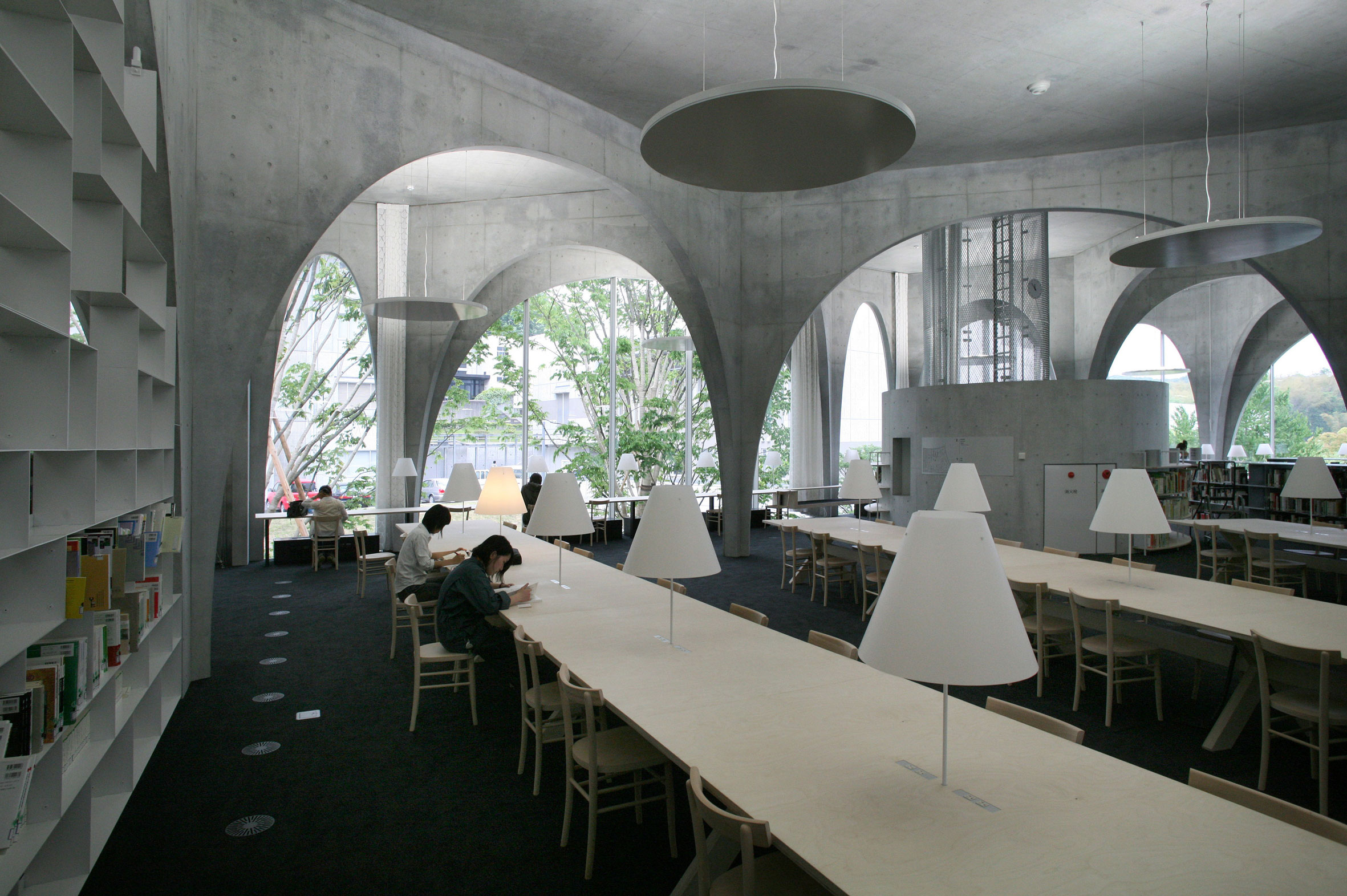
Tama Public Library
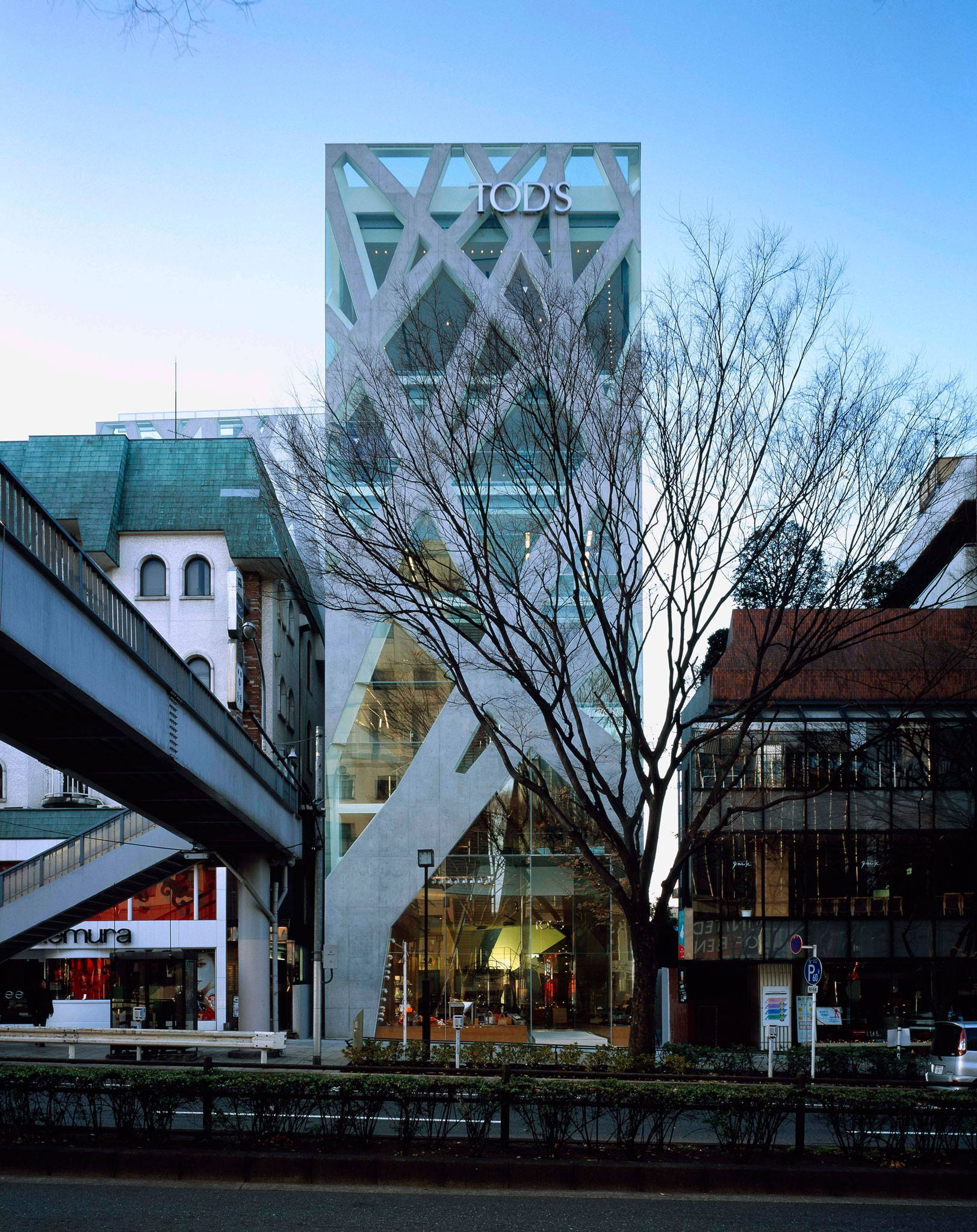
Tods Omotesando Building in Tokyo 2004
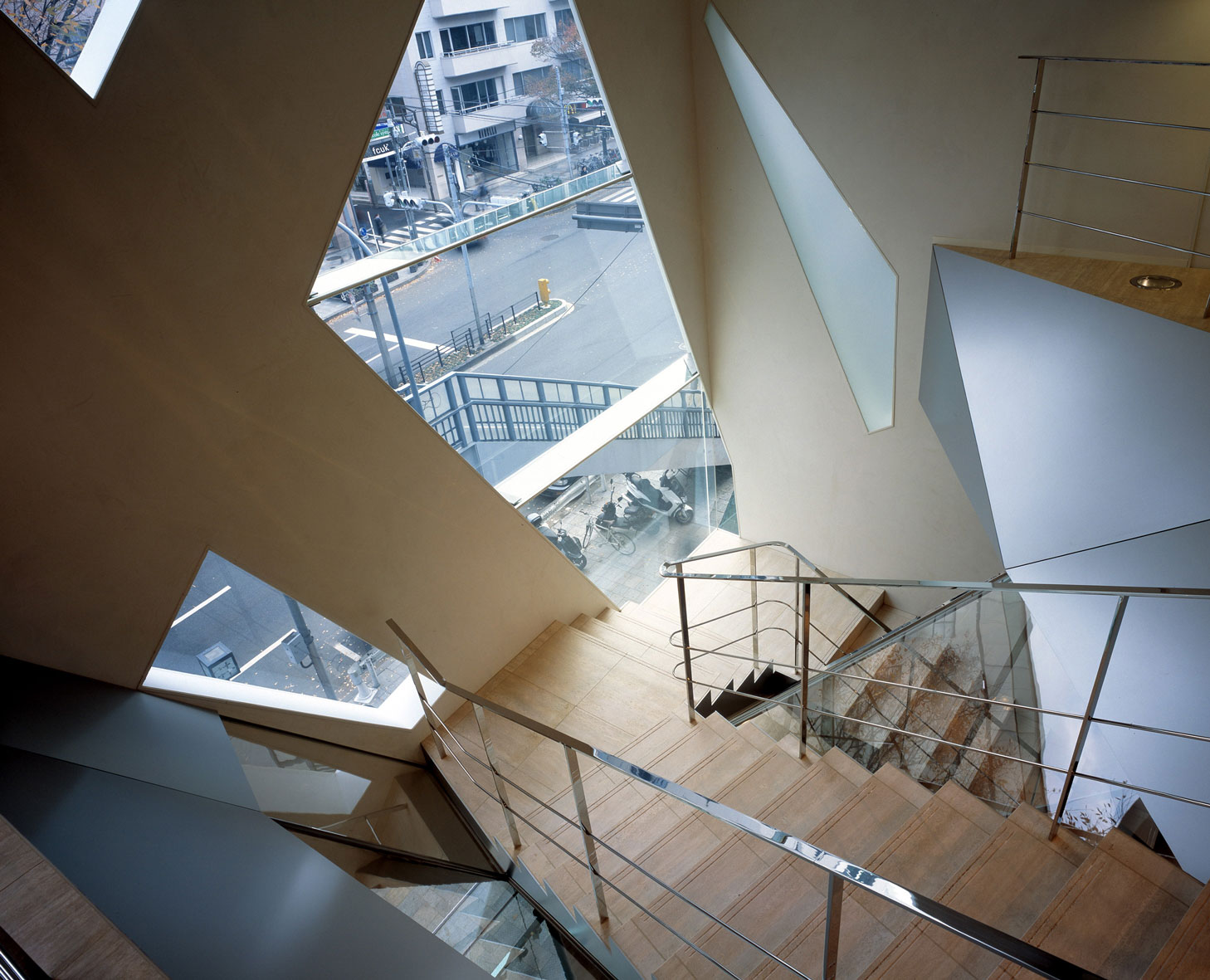
Tods Omotesando Building in Tokyo
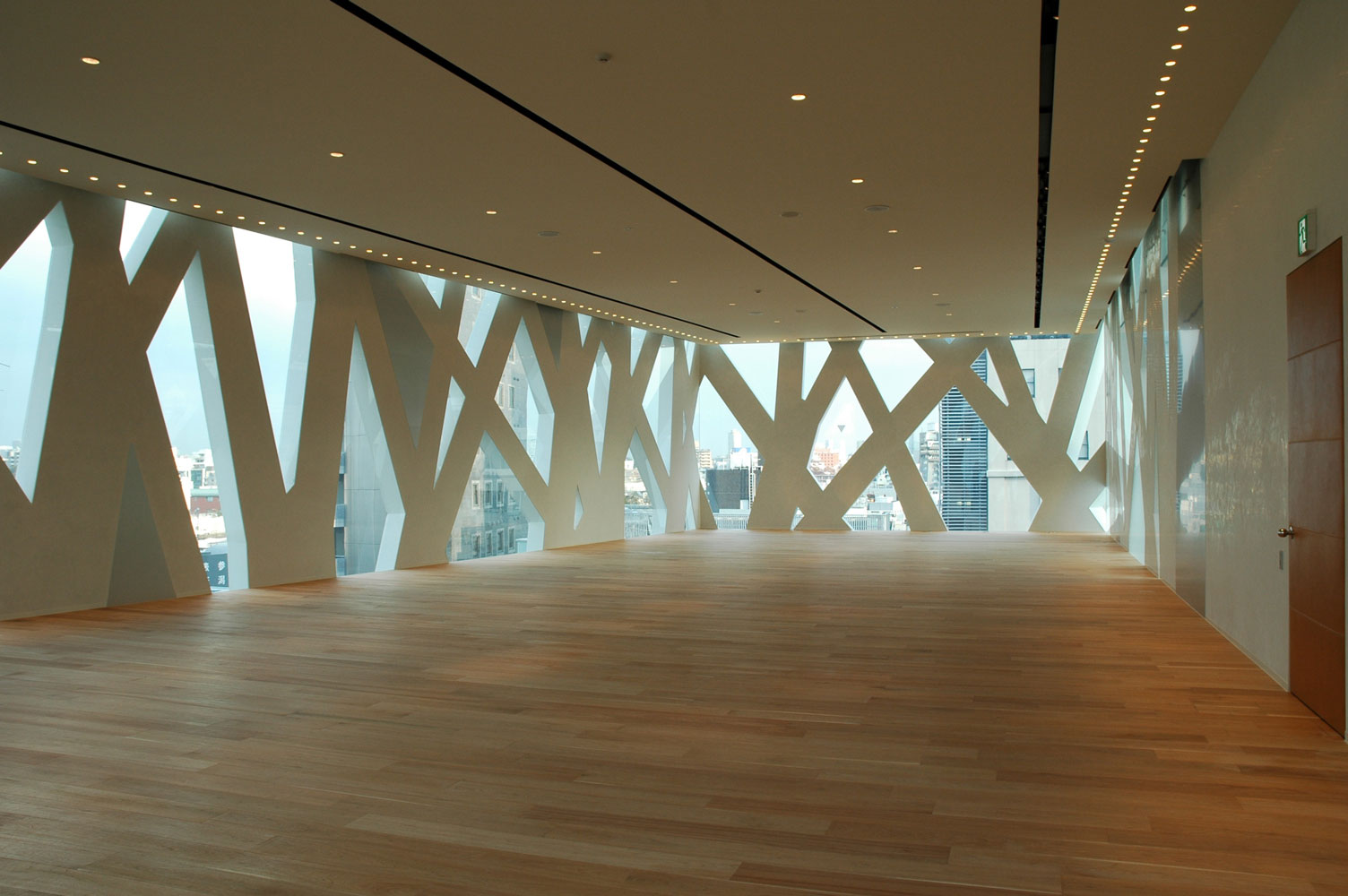
Tods Omotesando Building in Tokyo
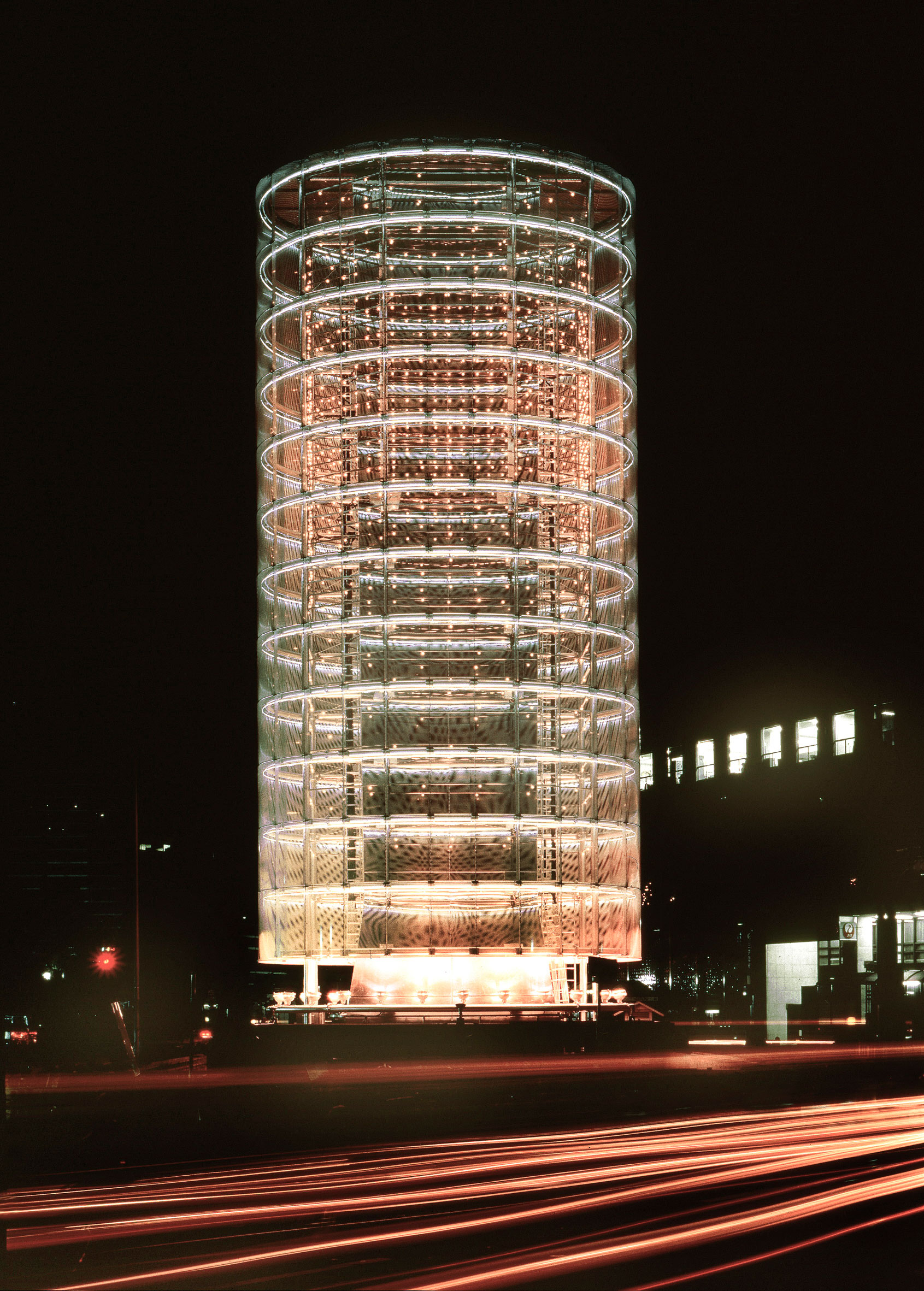
Tower of Winds of Yokohama 1986

White U House 1976
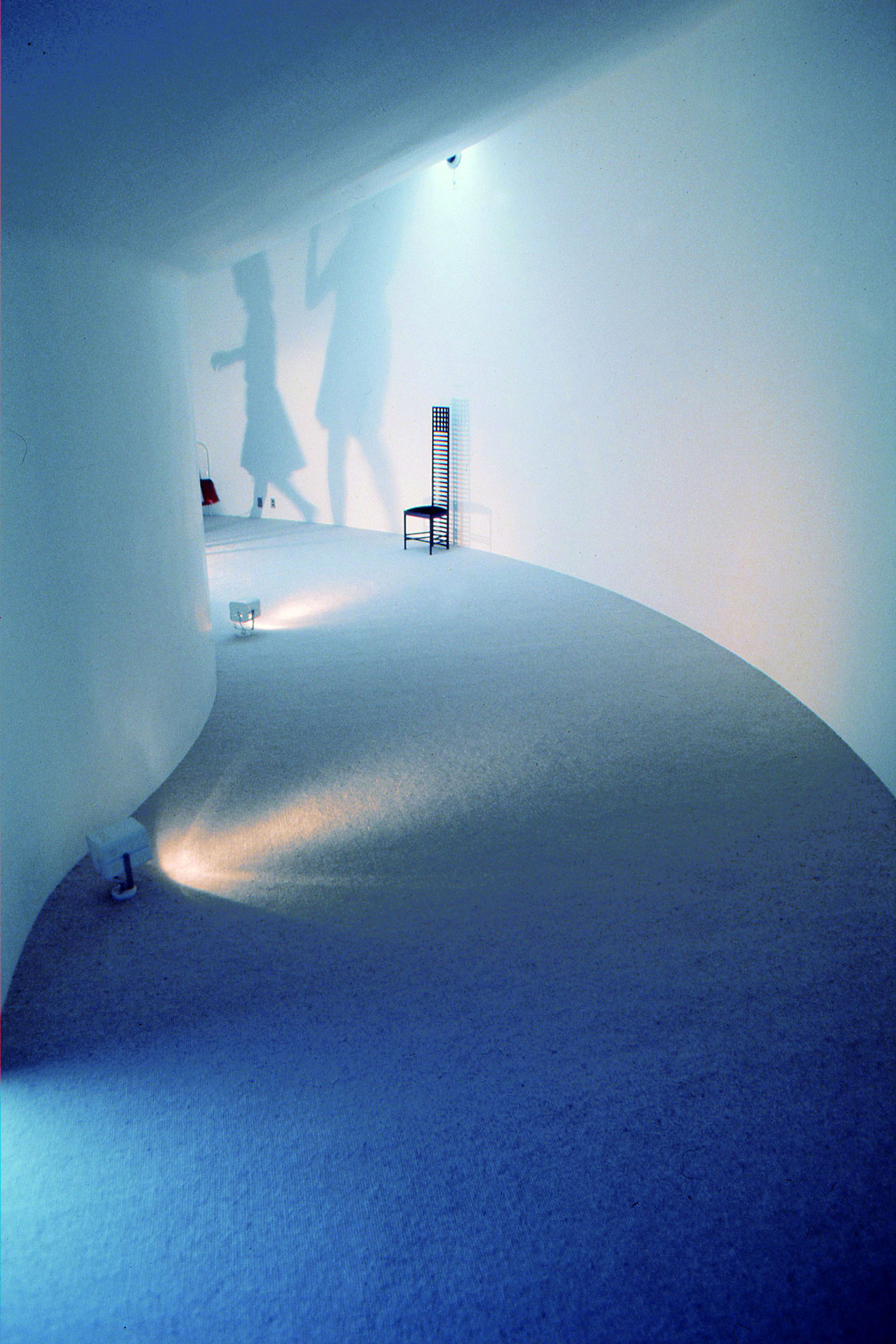
White U House

White U House

White U House
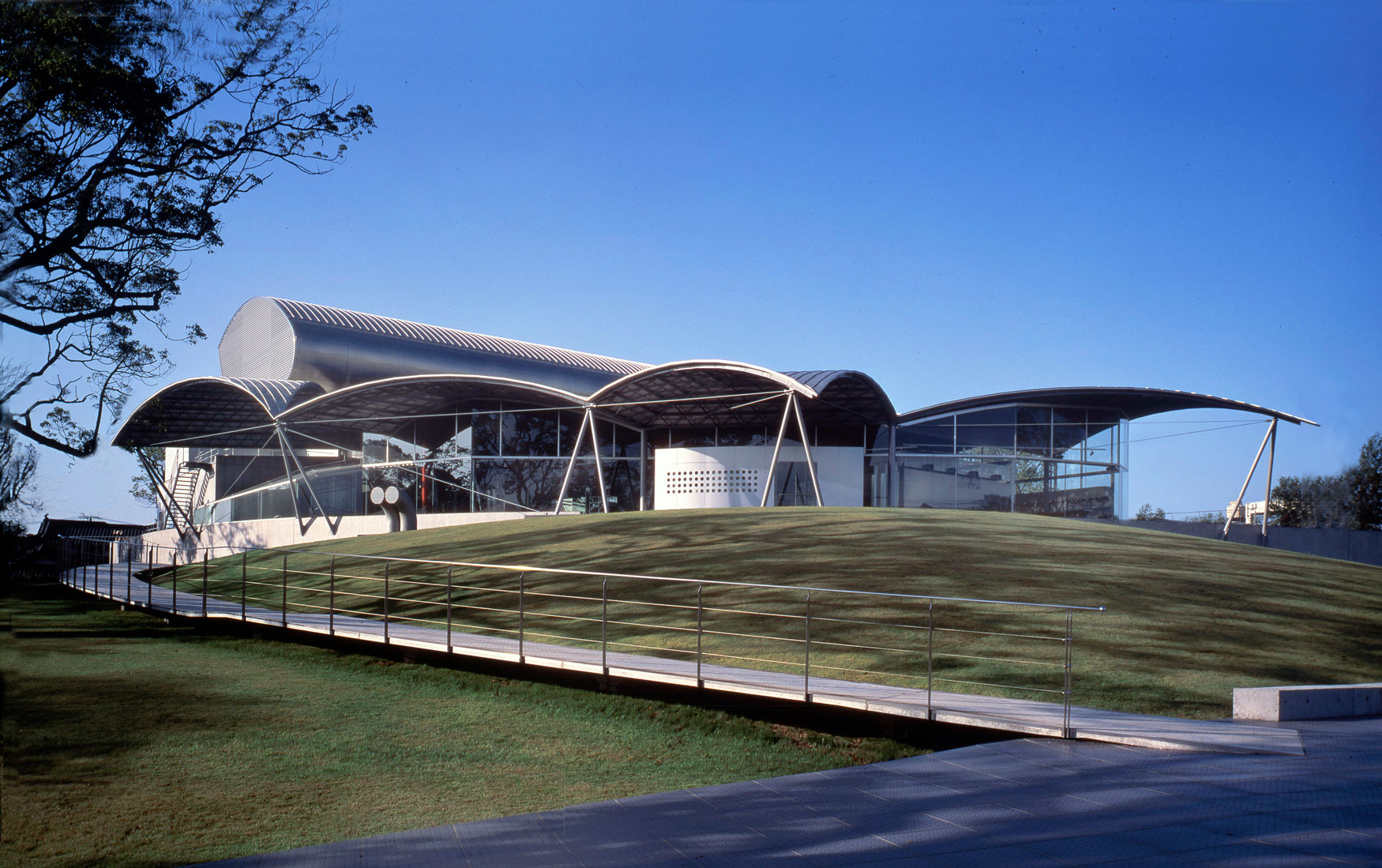
Yatsushiro Museum 1991
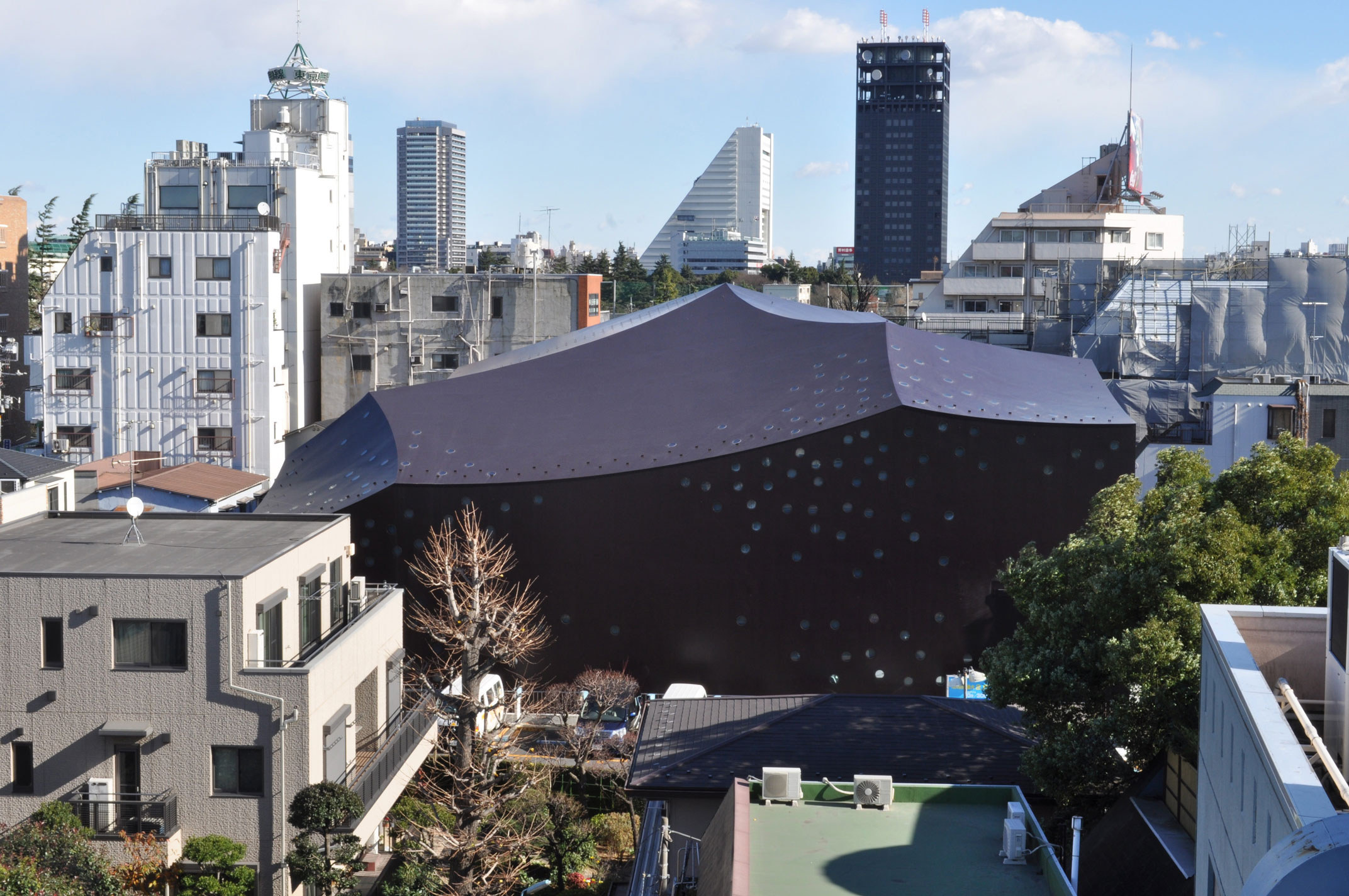
Za-Koenji Theatre
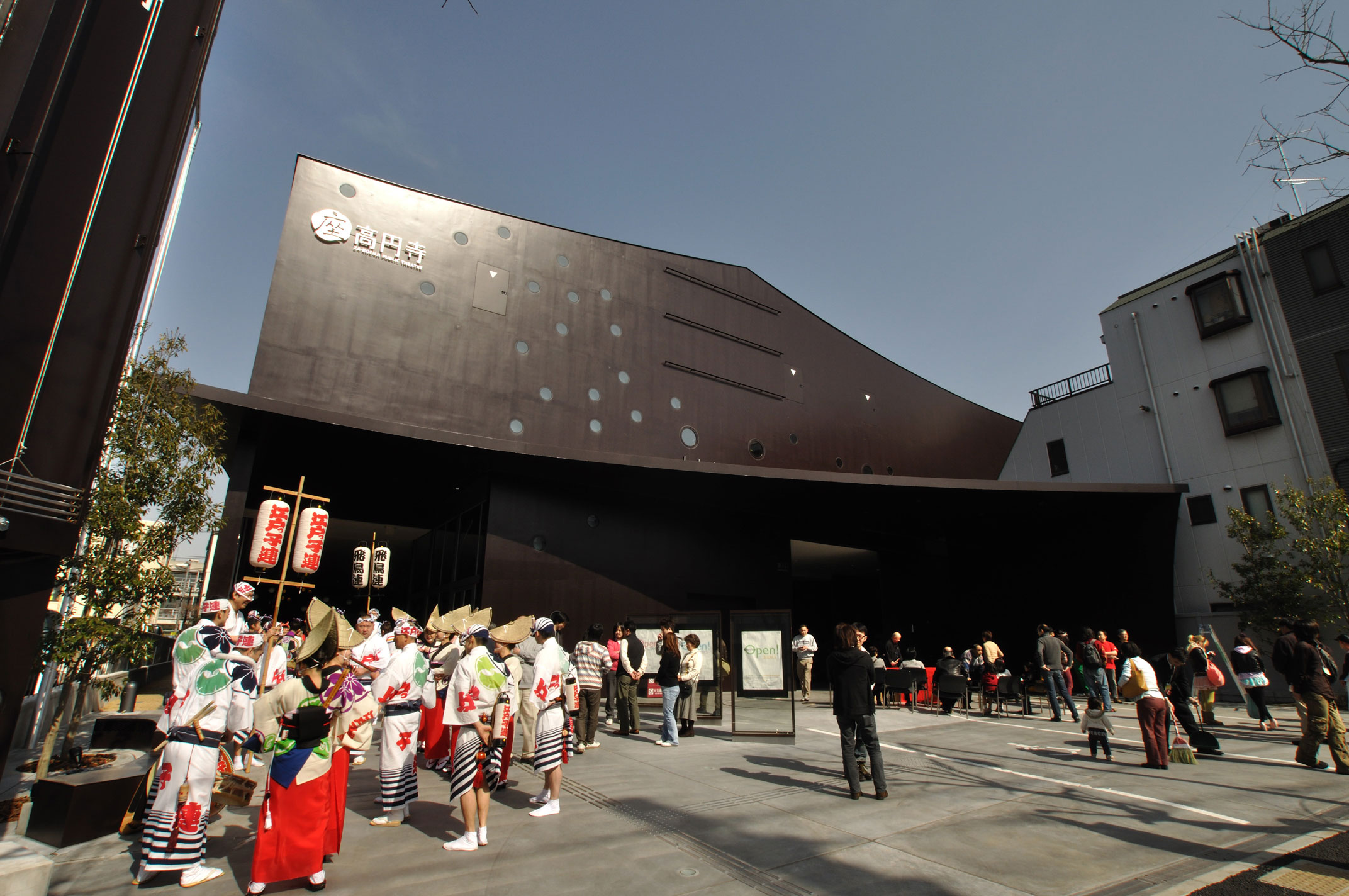
Za-Koenji Theatre 2008
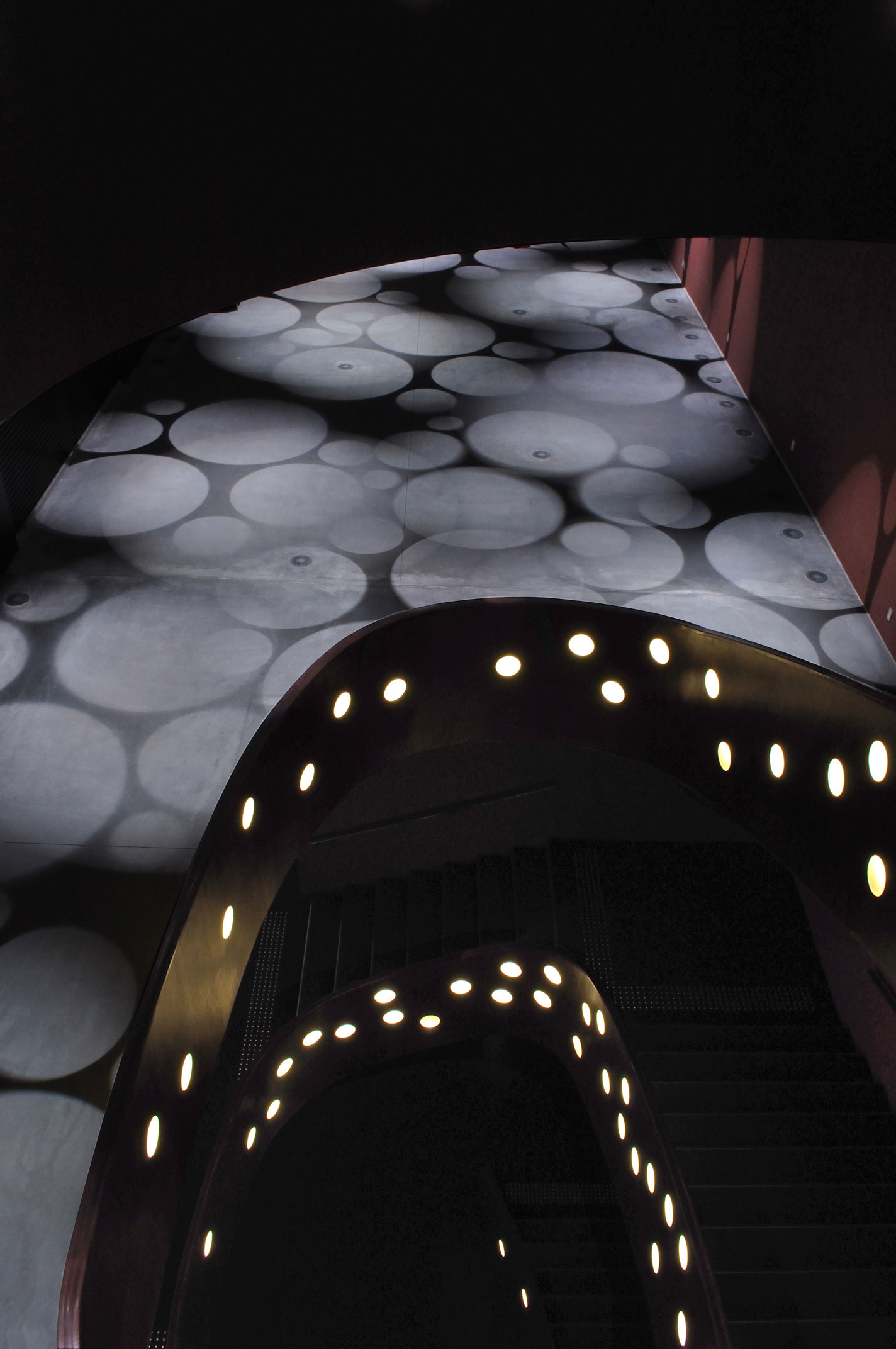
Za-Koenji Theatre
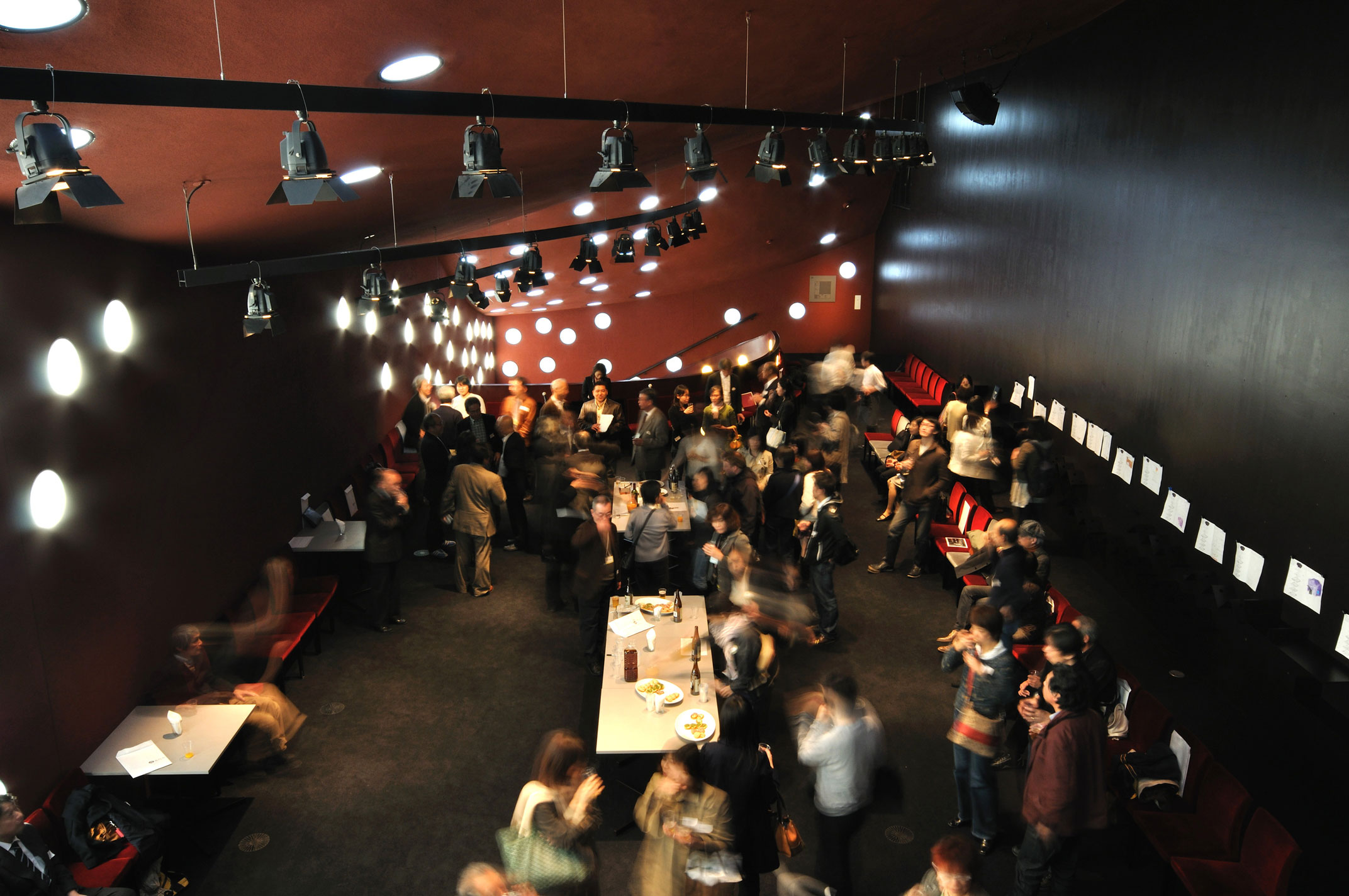
Za-Koenji Theatre
Related articles
- Toyo Ito Awarded 2013 Pritzker Prize! (inhabitat.com)
- Japanese architect Toyo Ito wins Pritzker Prize (japantimes.co.jp)
- Toyo Ito wins Pritzker Prize 2013 (dezeen.com)
- → Via latimes.com: Toyo Ito’s Pritzker (latimes.com)
- Toyo Ito awarded 2013 Pritzker prize (guardian.co.uk)
What’s Wrong With The New Market Hall in Gent?

Great weather during my recent visit to Gent. Being careful not to slip on frozen snow, the day was ideal for a walk around the city centre and its heavily discussed new building: the Market Hall (or if you prefer the “sheep shed”) by Robbrecht en Daem, just between Saint Nicholas’ Church and the World Heritage building Belfry (Belfort Van Gent).
I arrived by train and walked into the city centre, quite curious to see how this new building would fit into the historic context, but my attention and thoughts were also open to other buildings, places and impressions, having a look to the peculiar eclectic train station, new highrise being built on its side and the huge amount of bikes parked all around the station, including under the trees of the square in front of it.

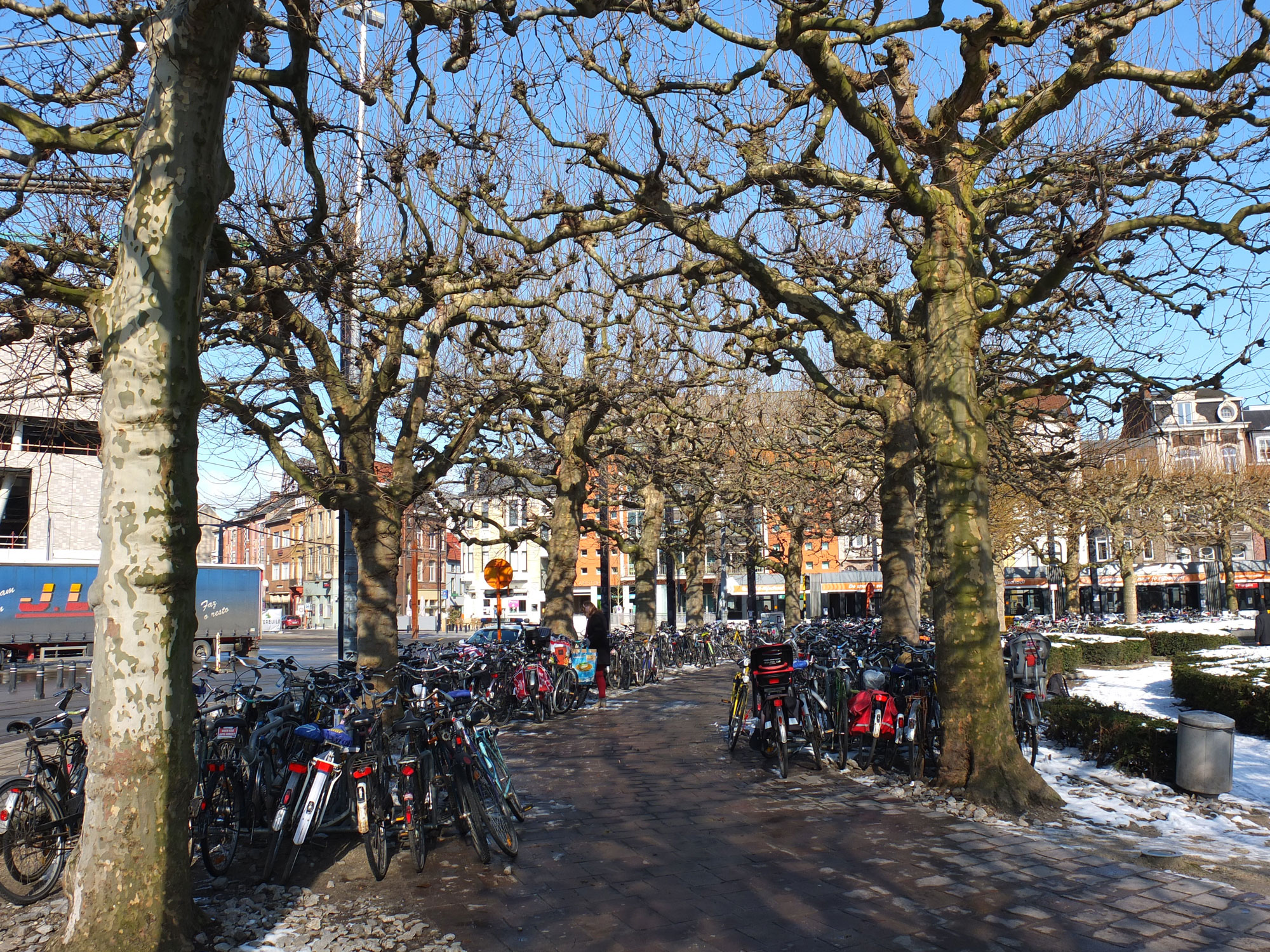


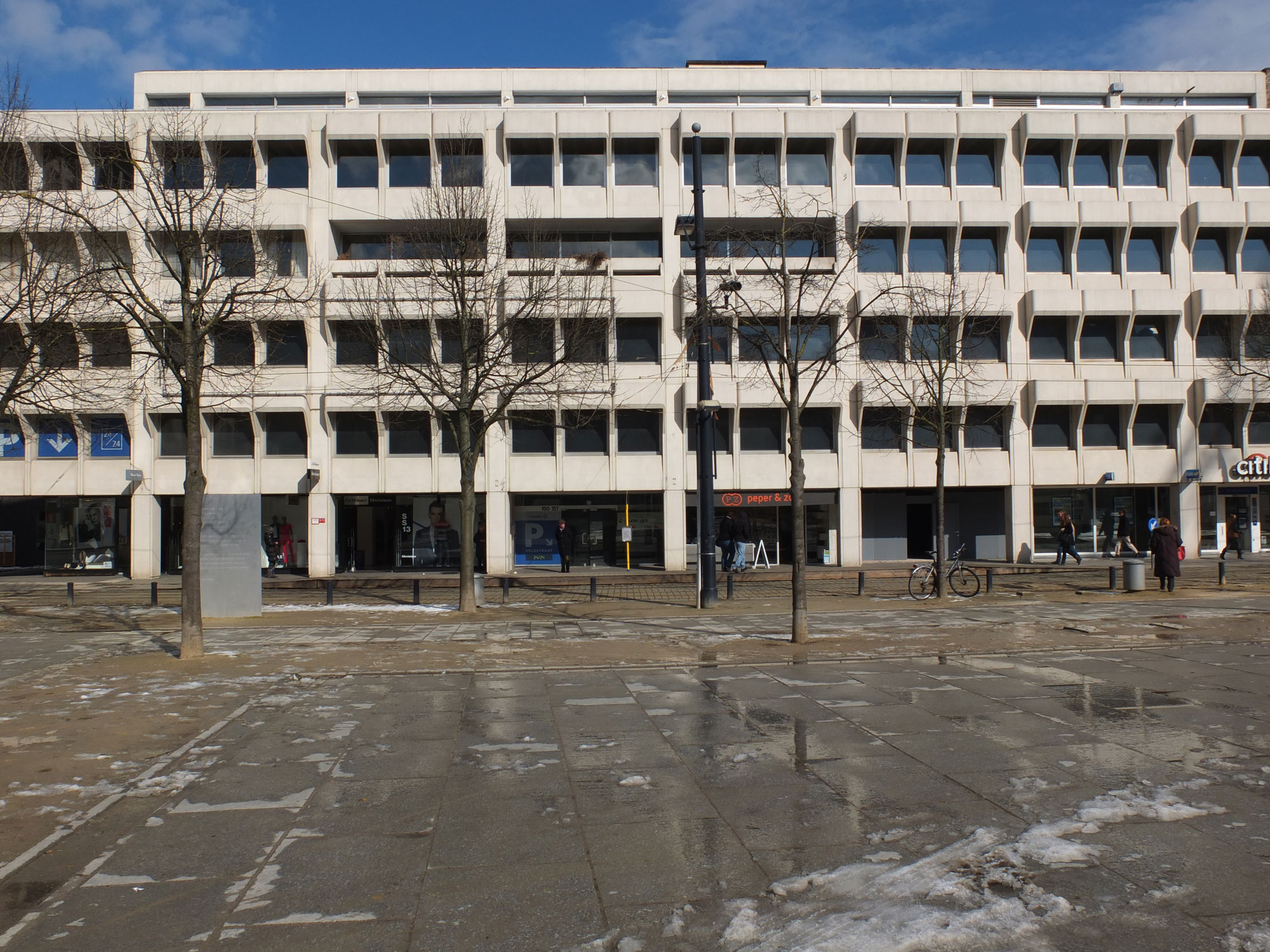
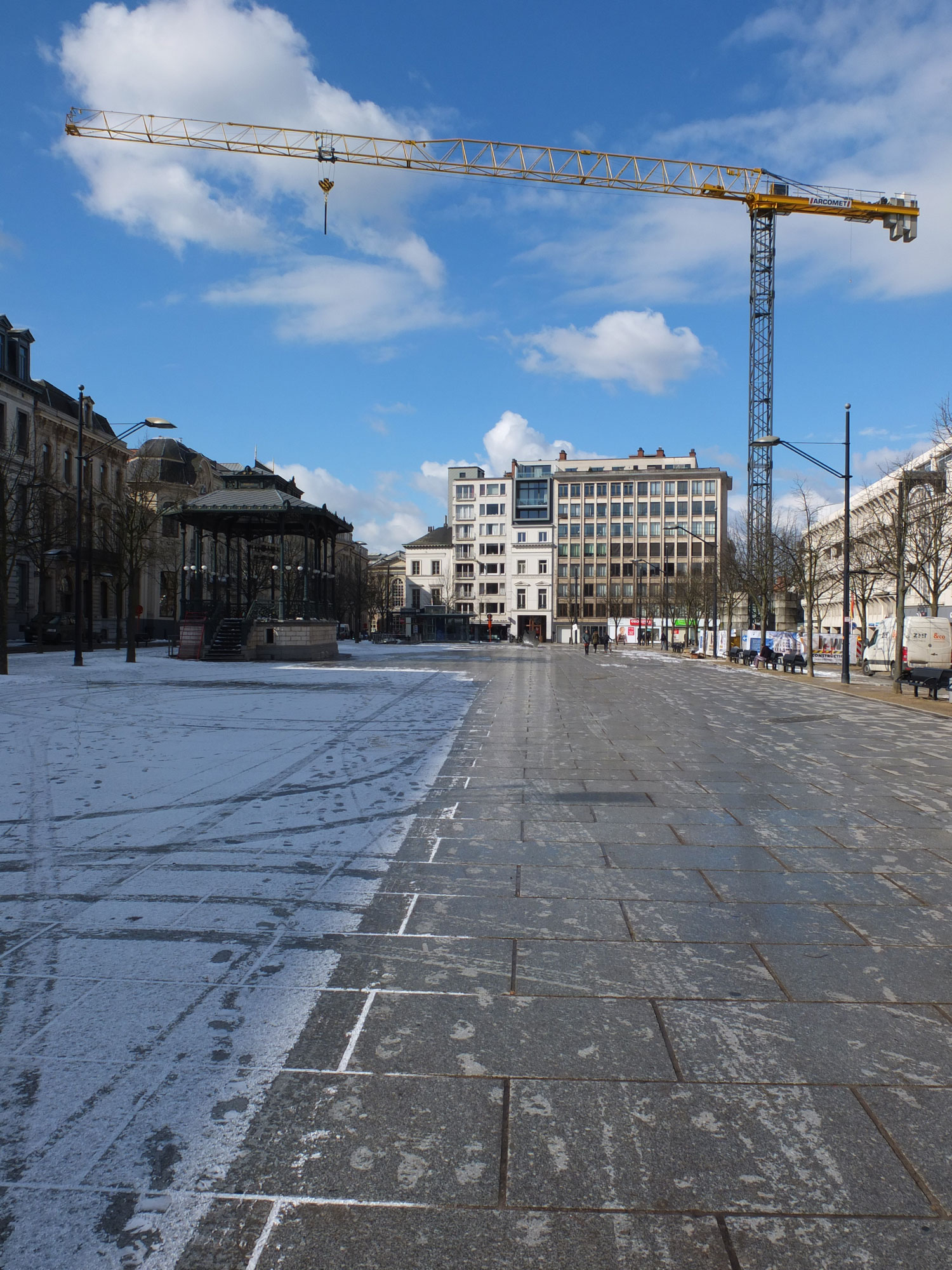
Arrived in this long rectangular square (Kouter) I had a look at the city map, discovering that the historic centre has been “divided” in two for the visitors convenience: one part is where the most historic buildings are; the second where the most museums are. This is part of the new orientation system which includes also useful and frequent sightseeing signposts along the streets.
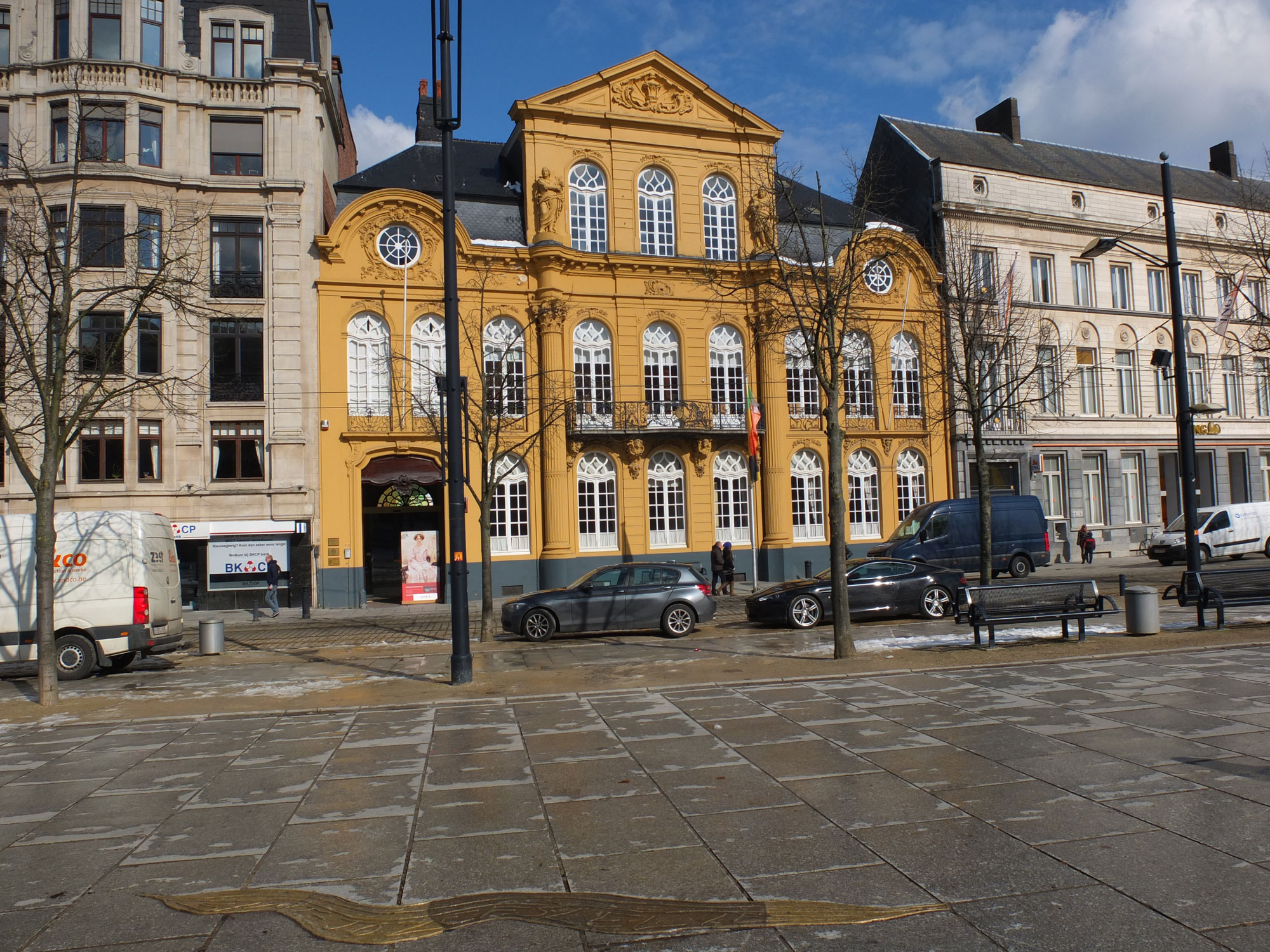
Looking at the yellow building I was wondering what an average heritage preservation officer would nowadays think about this colour and its relationship with the surrounding buildings. Somehow we tend to think about the past as a homogeneous pattern, meanwhile it is true that also back then, like today, some people/cultures liked to emerge and differentiate, meanwhile others preferred to disguise differences behind a standard front.


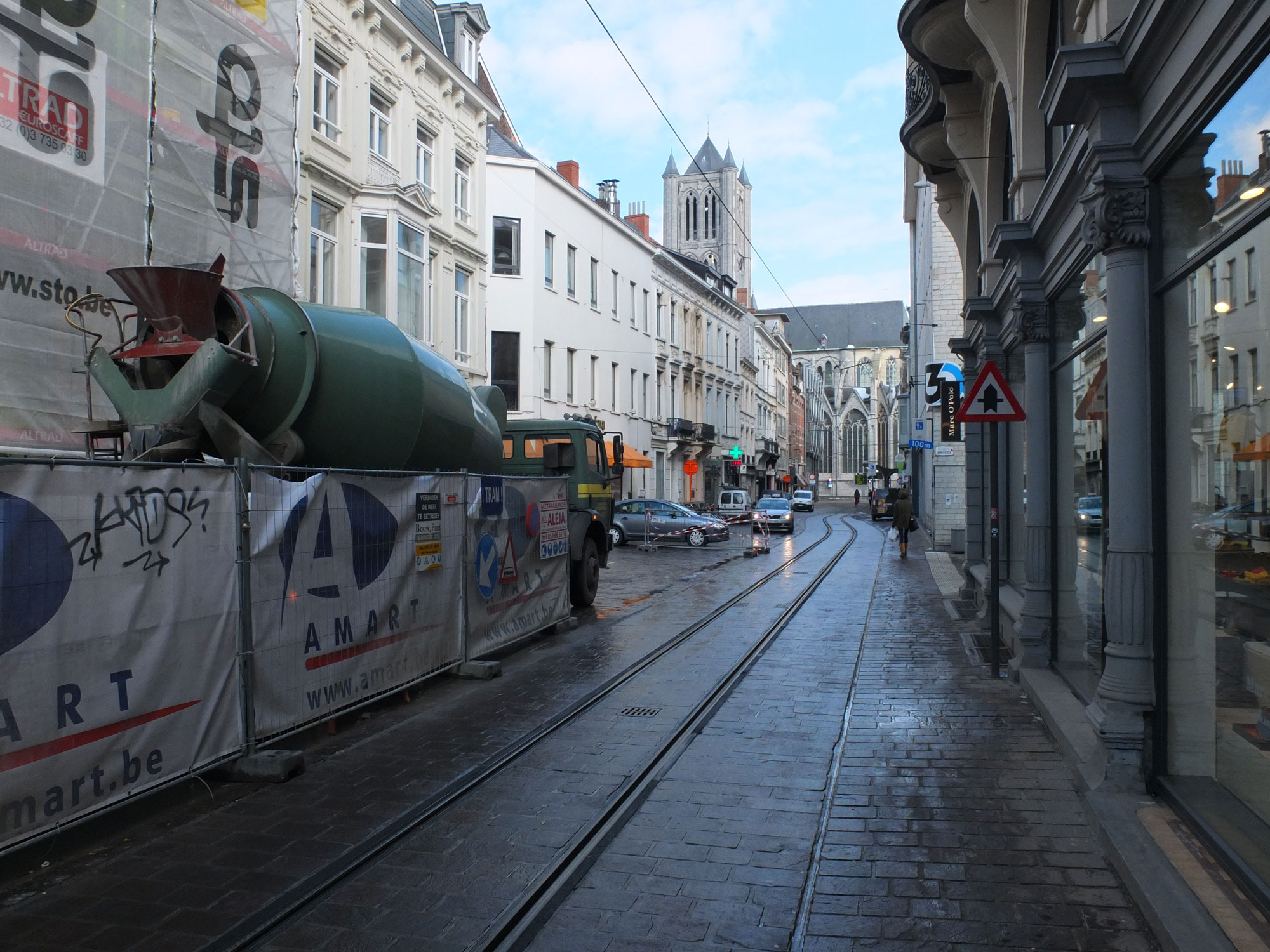

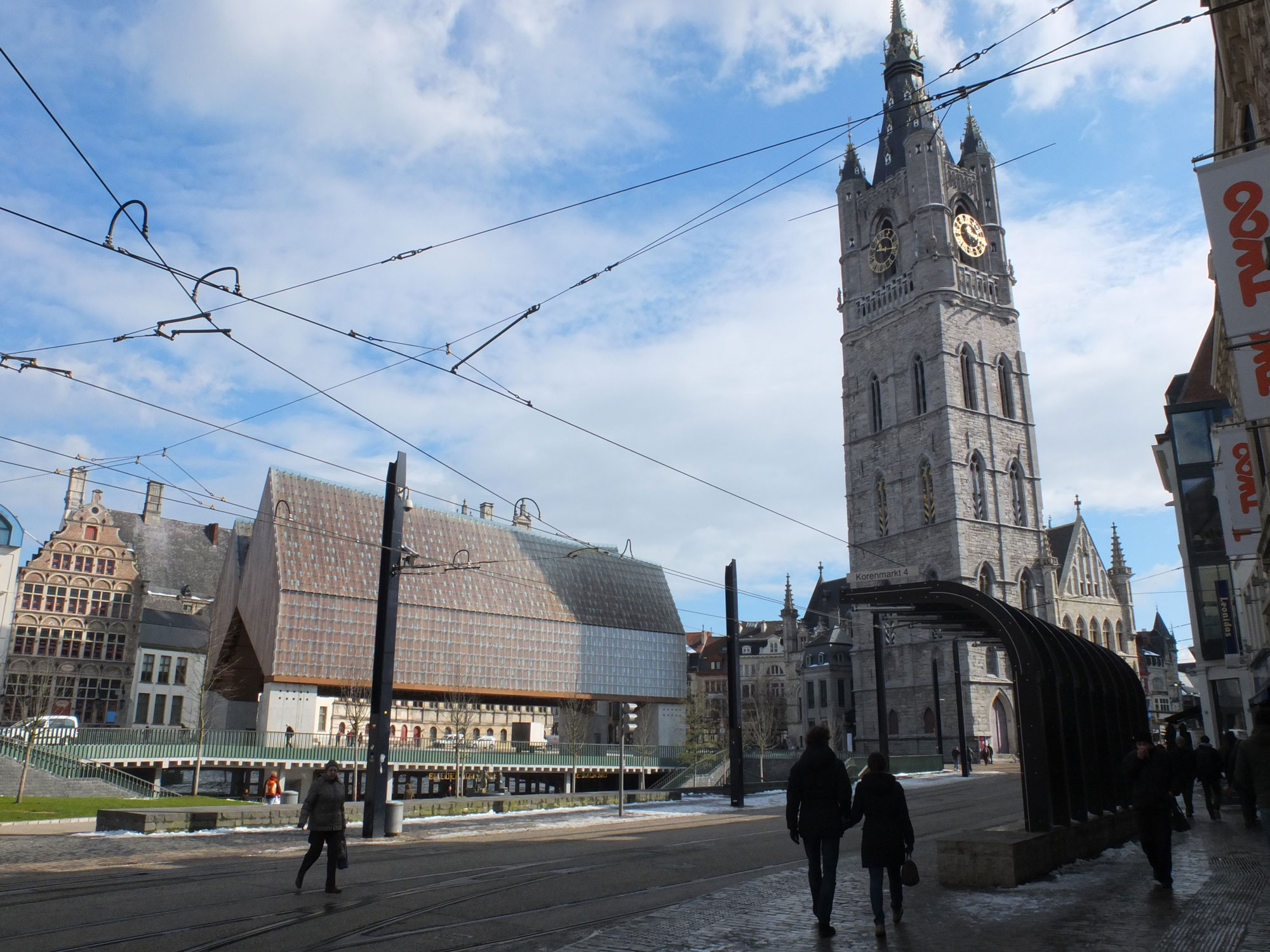
Here we go! Finally I reach the indicted and nominated building. My first reaction is: is that all? What’s wrong with it?

Even at a shorter distance, there is nothing offending any sense of proportion or heritage prescriptions in this building. Materials, colours and architectural shape are nothing but an interpretation of the historic context. You may find it a good or a bad one, but screaming at the scandal is not really the case.
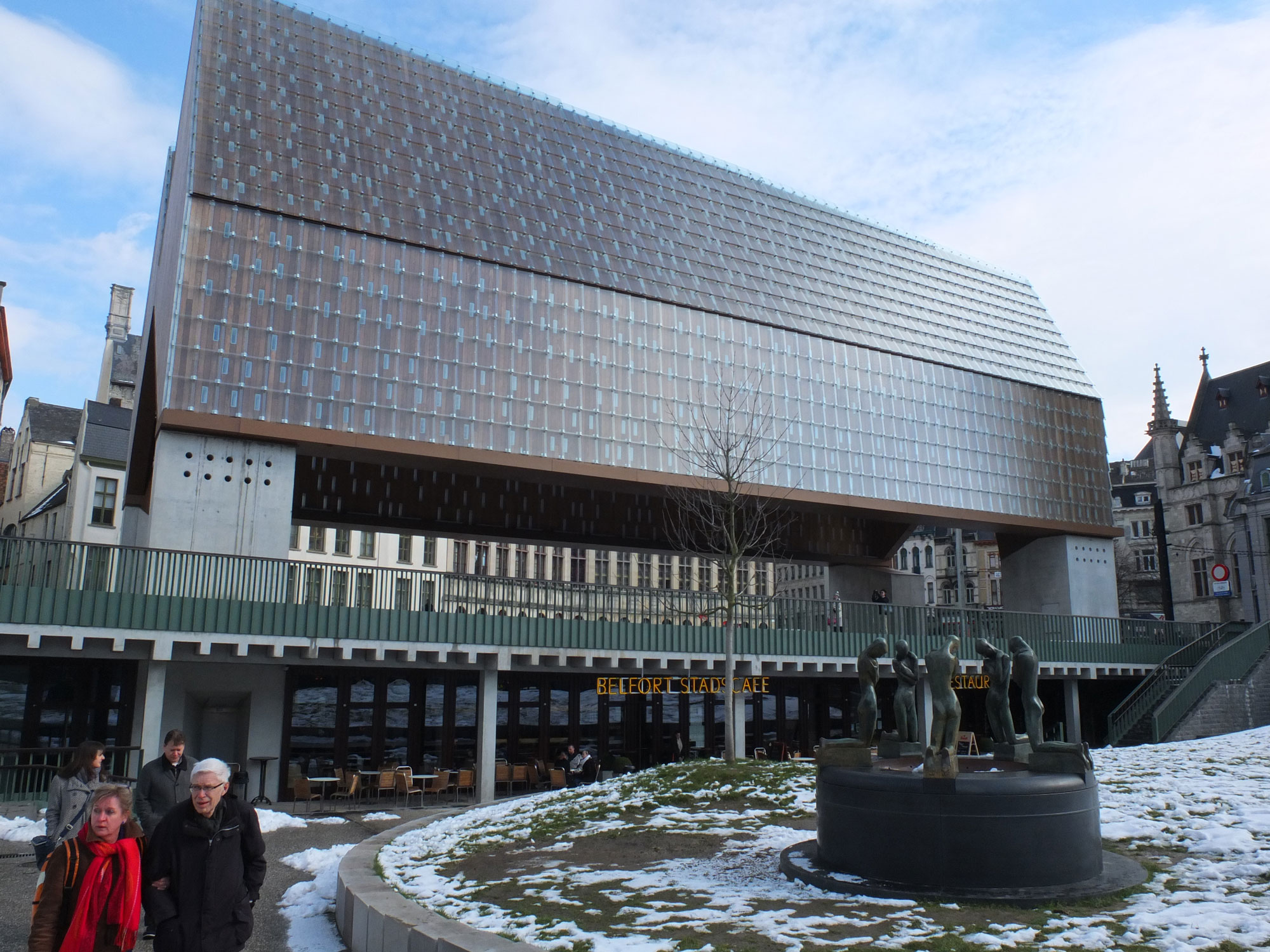
The relationship between the two levels of the buildings and the green space in front of them somehow recall the original idea of building there a car parking. Even though the idea of the parking was cancelled, the lower level recalls the entrance to something underground, whereas today there is just a tiny café.

That is a weak point: having two levels in such a square must have some serious reason or at least a functional role. There might be one in this case, but this is not evident to me. By the way the green railing could have been lighter and nicer than that.
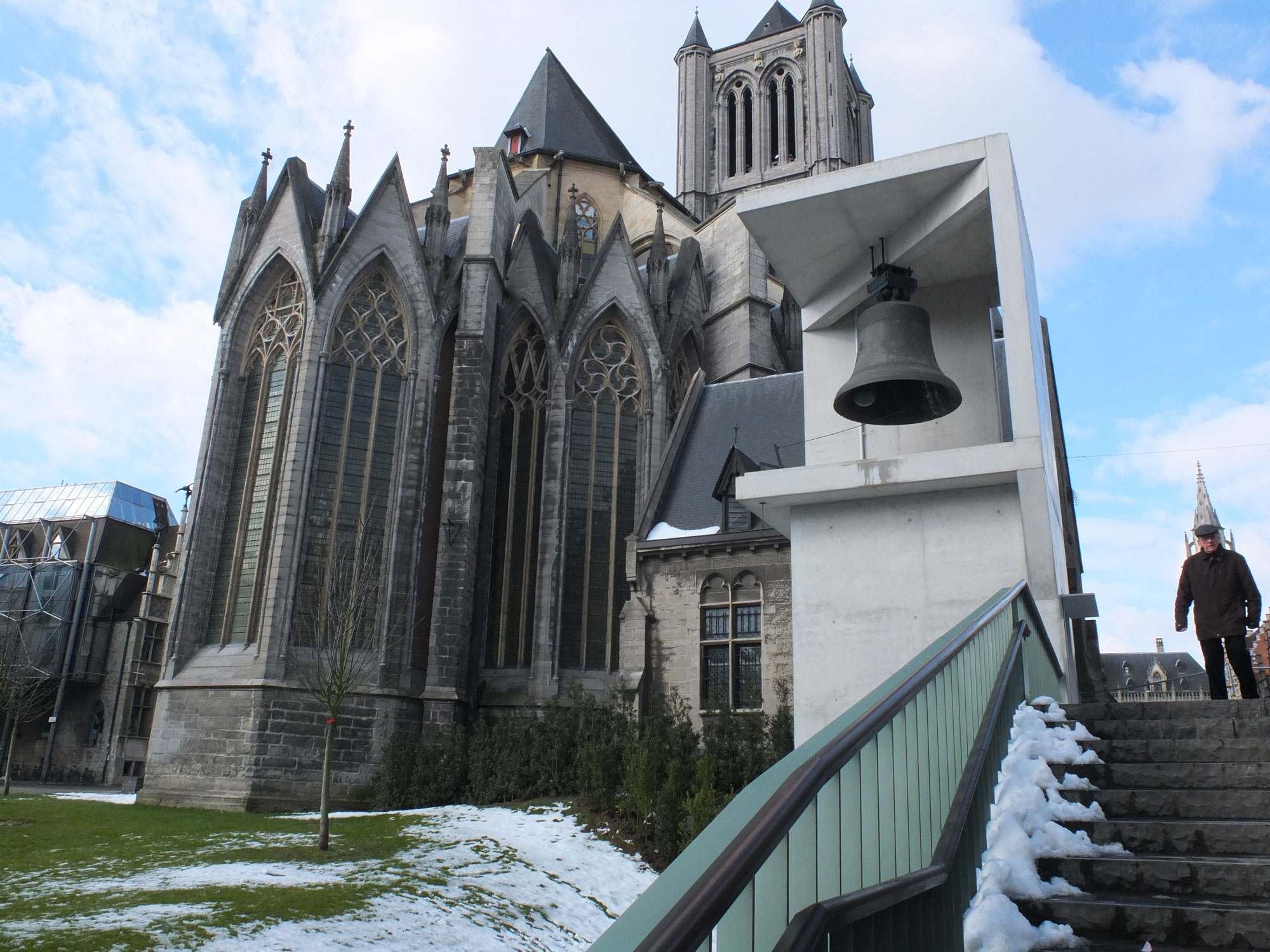
This bell could also be housed somewhere else: in the middle of the square, under the roof or in the basement. This is far too near to the Church and the concrete structure to support it rather pointless. This must be the result of some compromise and the Market Hall itself would benefit from its removal.
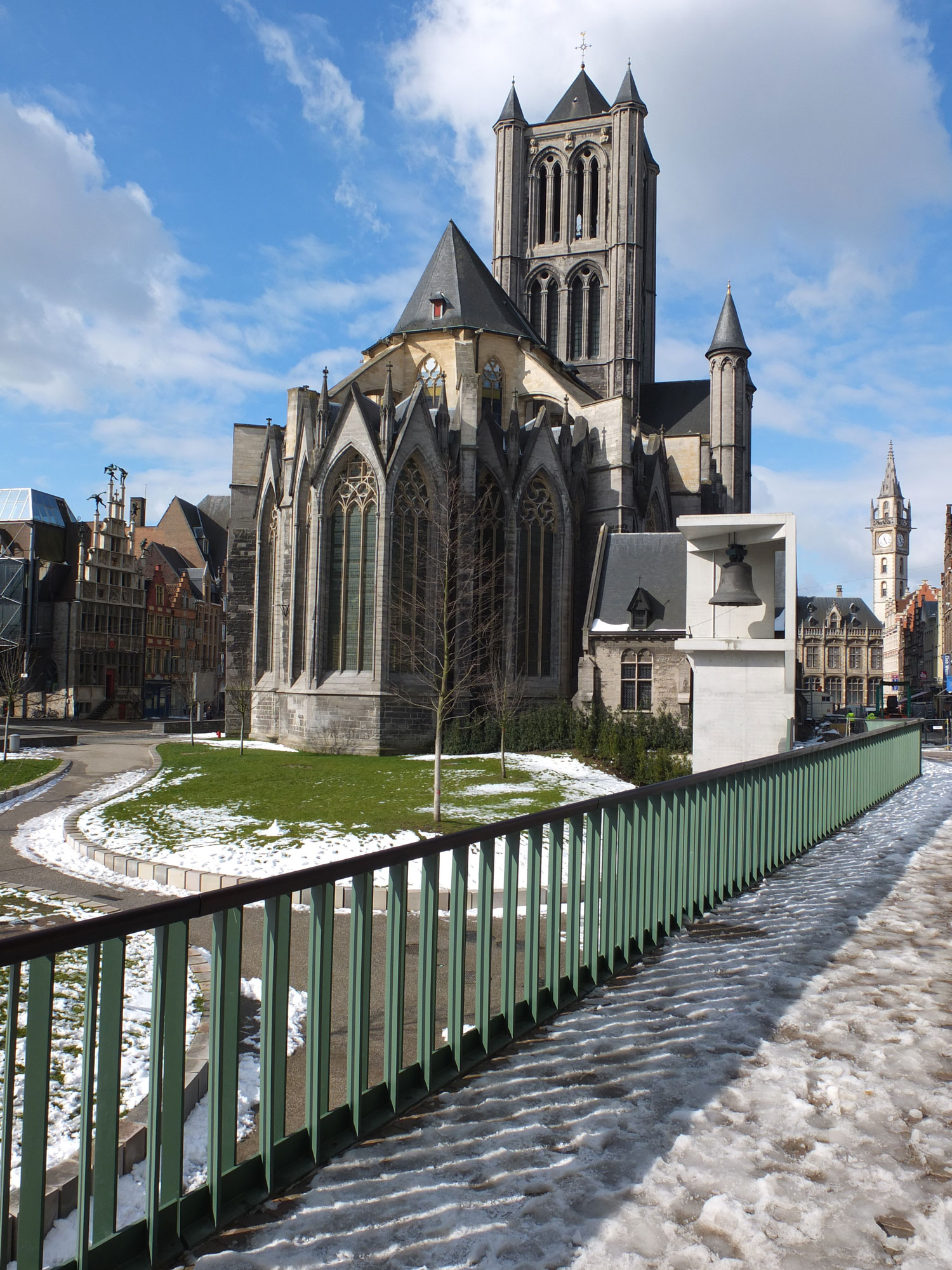

The space under the roof is great and I can imagine a lot of different ways to use it. But then again, regarding materials and details, the inner skin in tropical wood with the scattered little openings and the two couples of rails on each side, altogether they disturb the perception of space. On the contrary the glass tiles on the outside provide a very nice double skin effect, reflecting the sky above.

In any case the Market Hall is not the only peculiar building around. Below the Town Hall which was partly built between 1519 and 1539 in “flamboyant” late gothic style and later completed in a redundant Renaissance style. I don’t remember to have ever seen any black painted columns with golden capitals before.
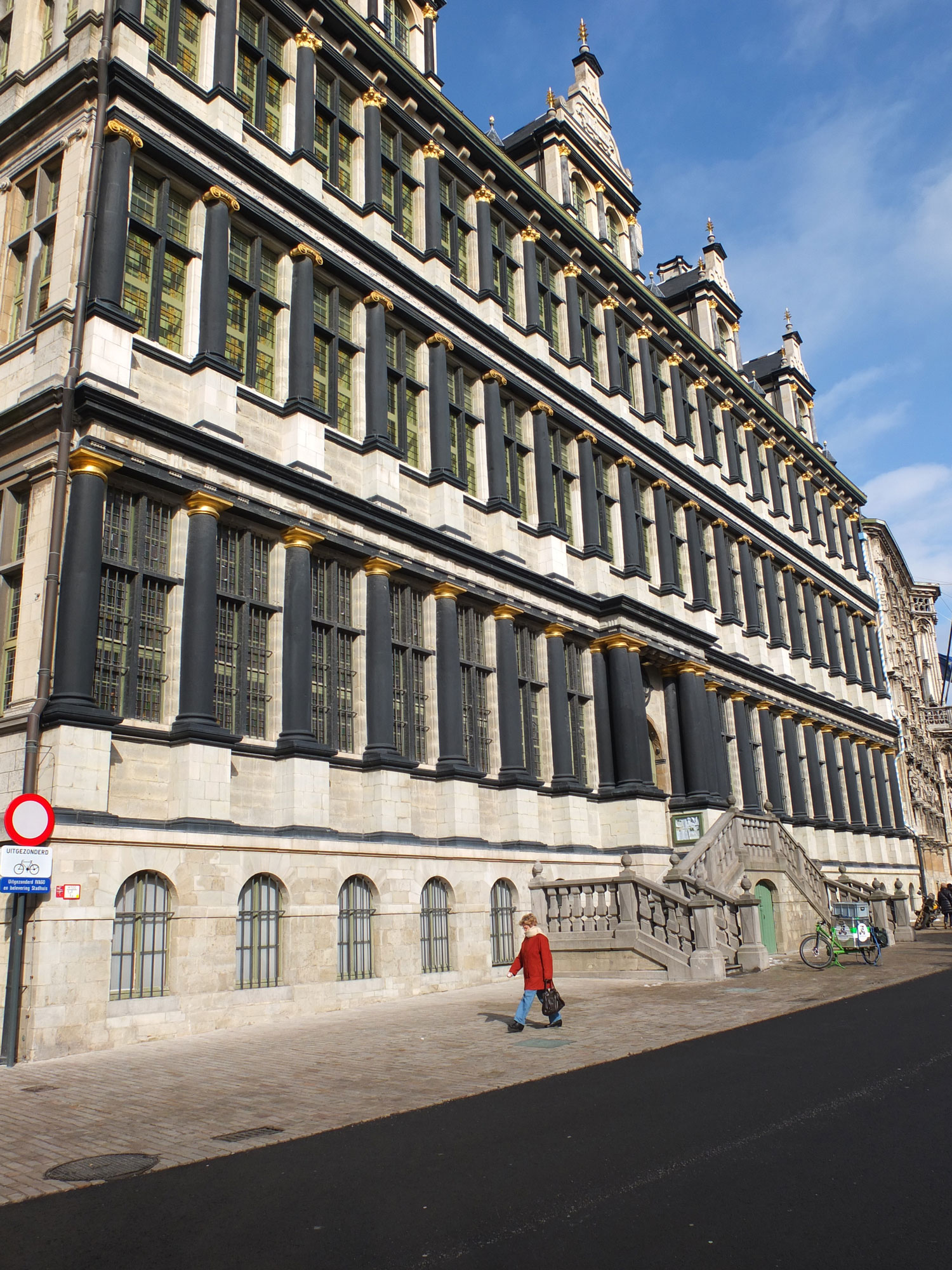
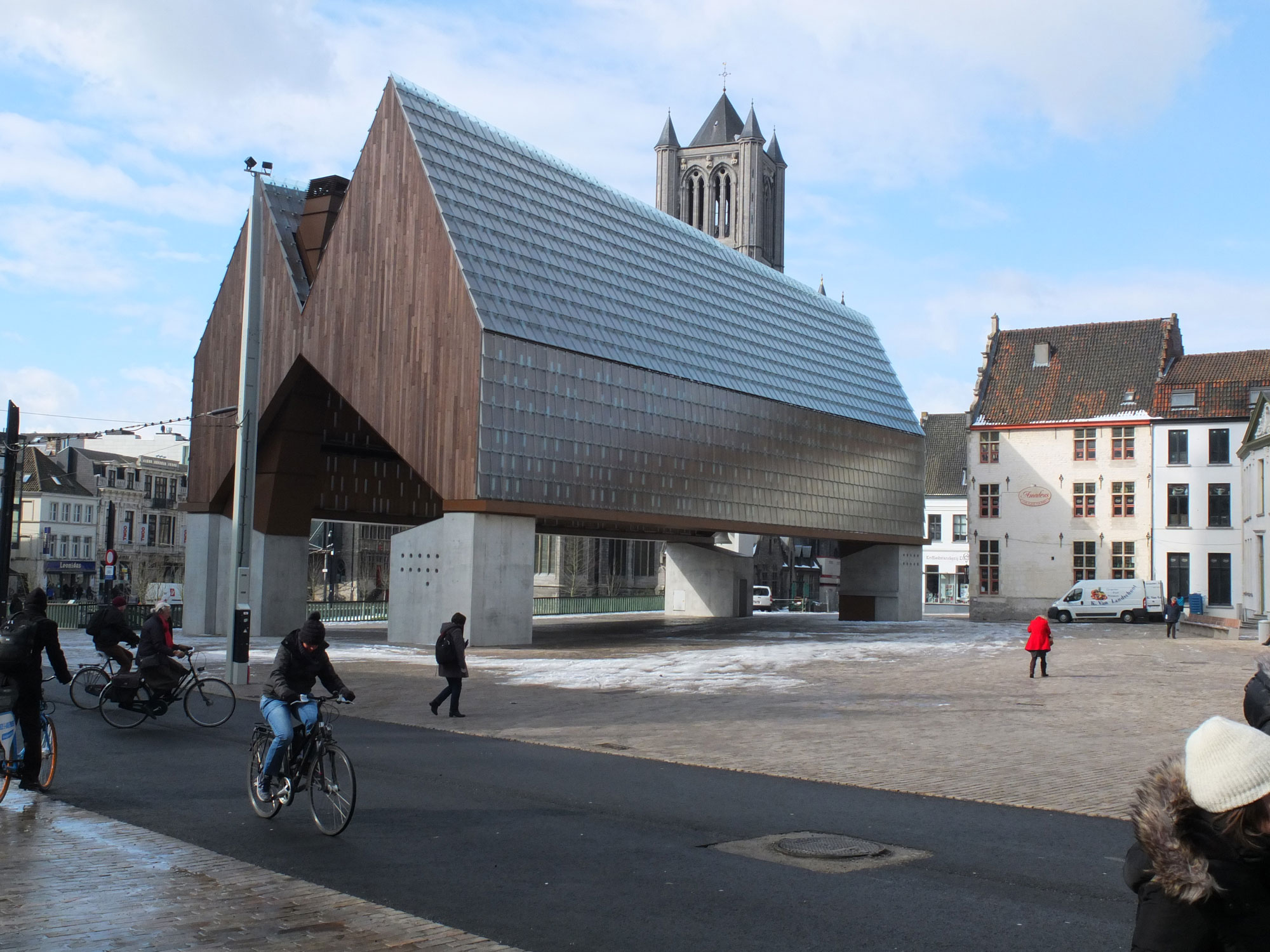
Here you see that the Market Hall does cover the view towards the Saint Nicholas Church, but that is no problem, since the church has many other open fronts and cathedrals were never meant to stay on greenfield. On the contrary the new architectural language makes the historic surrounding more lively and interesting, mitigating the museums feeling you have when walking through the perfectly preserved city centres in northern Europe. 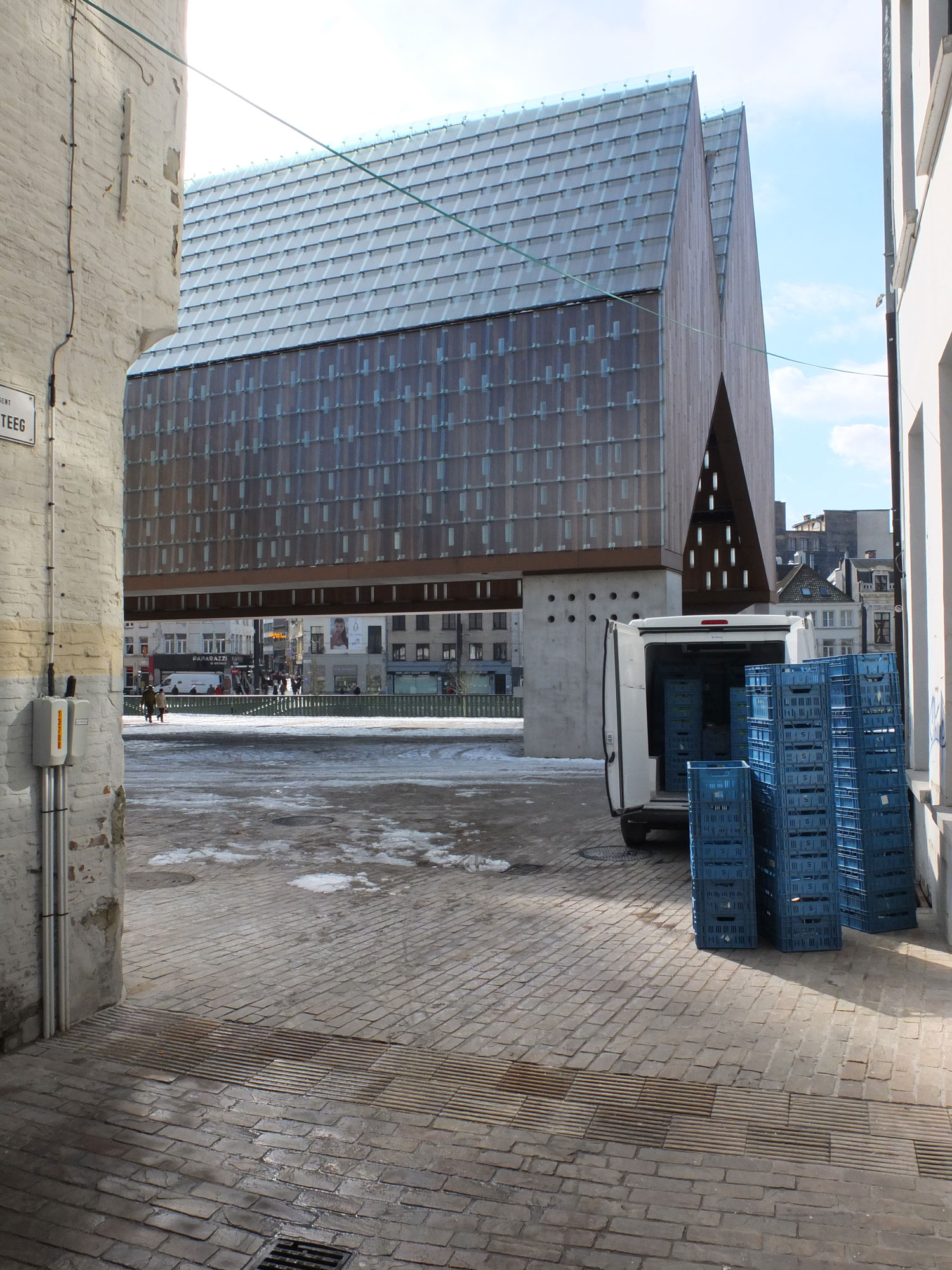

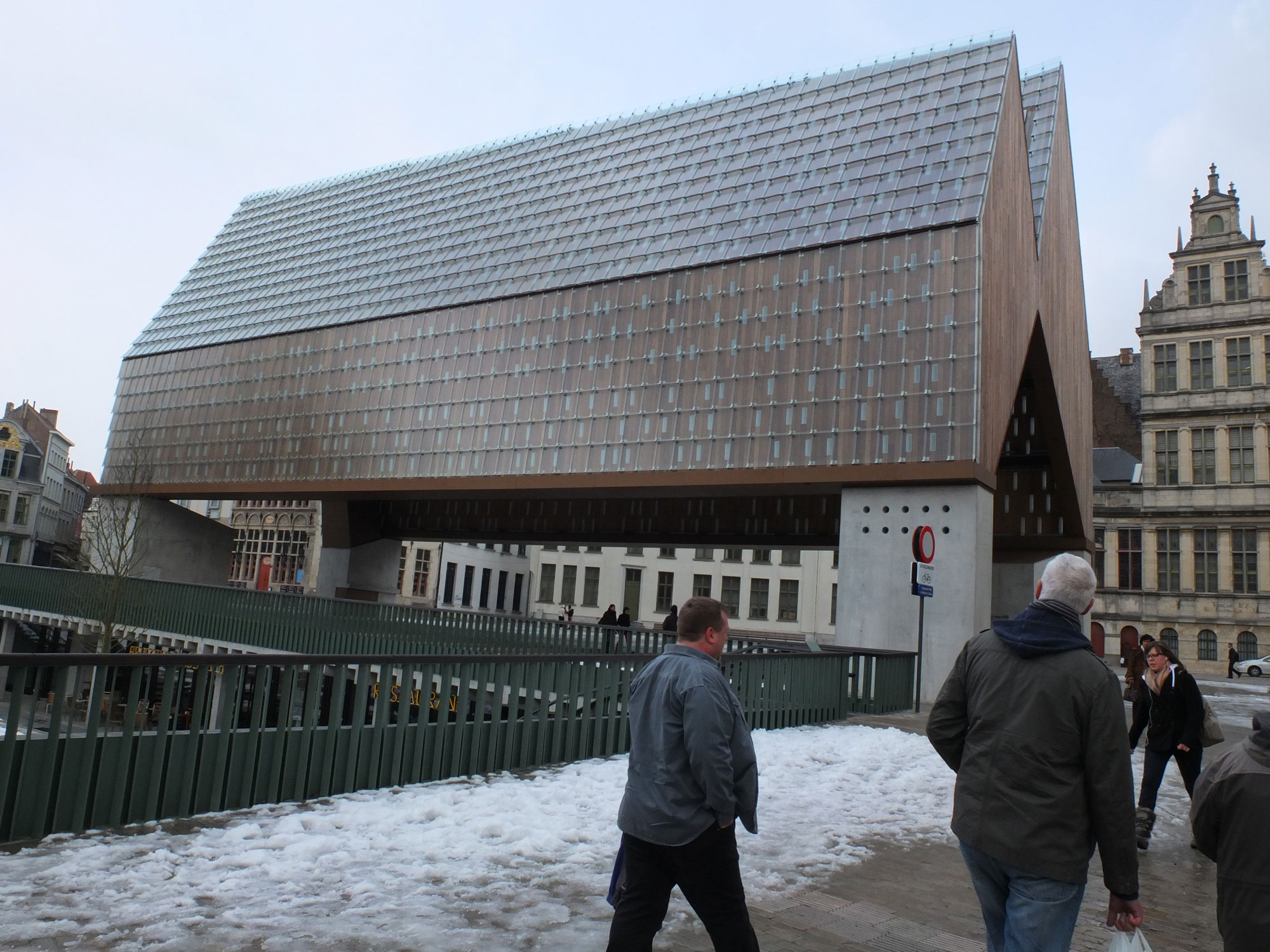


As a matter of fact Gent is home of treasures of inestimable value of Flemish culture. The Saint Bavo Cathedral is a gothic church with renaissance and barock decoration, hosting the famous Altarpiece The Adoration of the Mystic Lamb by Hubert and Jan van Eyck, an amazing polyptych panel painting of the early XV Century which is alone worth the trip.

This is the central panel giving the name to the 12 panel composition, which are painted on both sides. Some of them are currently in restoration, one was stolen and replaced by a copy.

 Goodbye Gent!

Mirror Canopy Designed by Foster and Partners at Marseille Vieux Port
Mid February, the official start was given for a year of circuses, new galleries and venues, exhibitions, street entertainment, fireworks, open air concerts and lots more.
Close to the well-known “Vieux port” of Marseille, the ferry harbour neighbourhood between “Fort Saint Jean” and “la Joliette” is undergoing a facelift with some new high tech architecture and several examples of re-use of industrial buildings. At the time of my visit, the scene along the waterside was still dominated by construction sites with tower cranes and white contractor vans. Most of the new museums are not yet open but the walk is a taste of what’s to come.

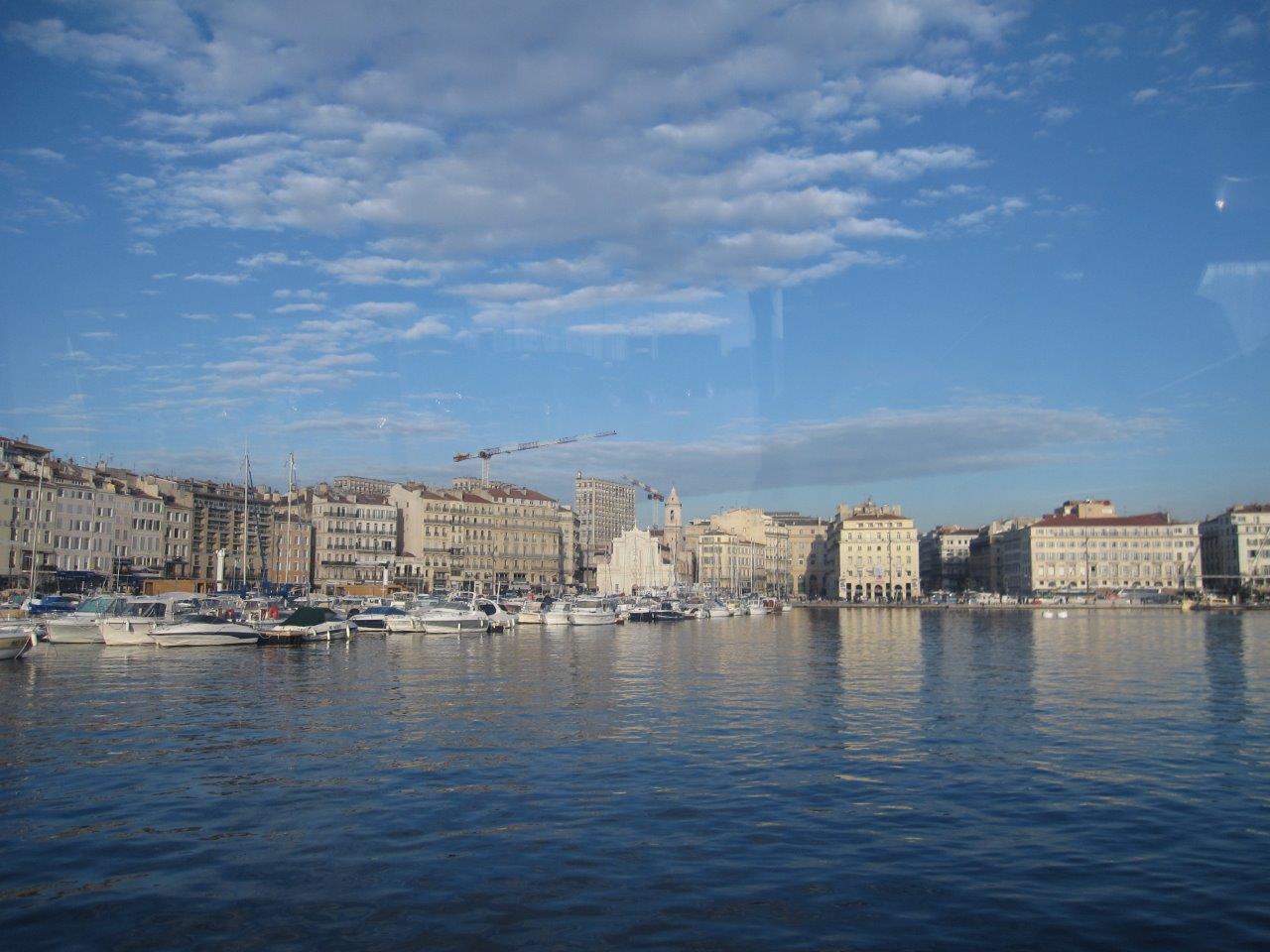
The Vieux Port of Marseille has always been a mythical place and is now partly pedestrianized, with a large open area looking onto the port.
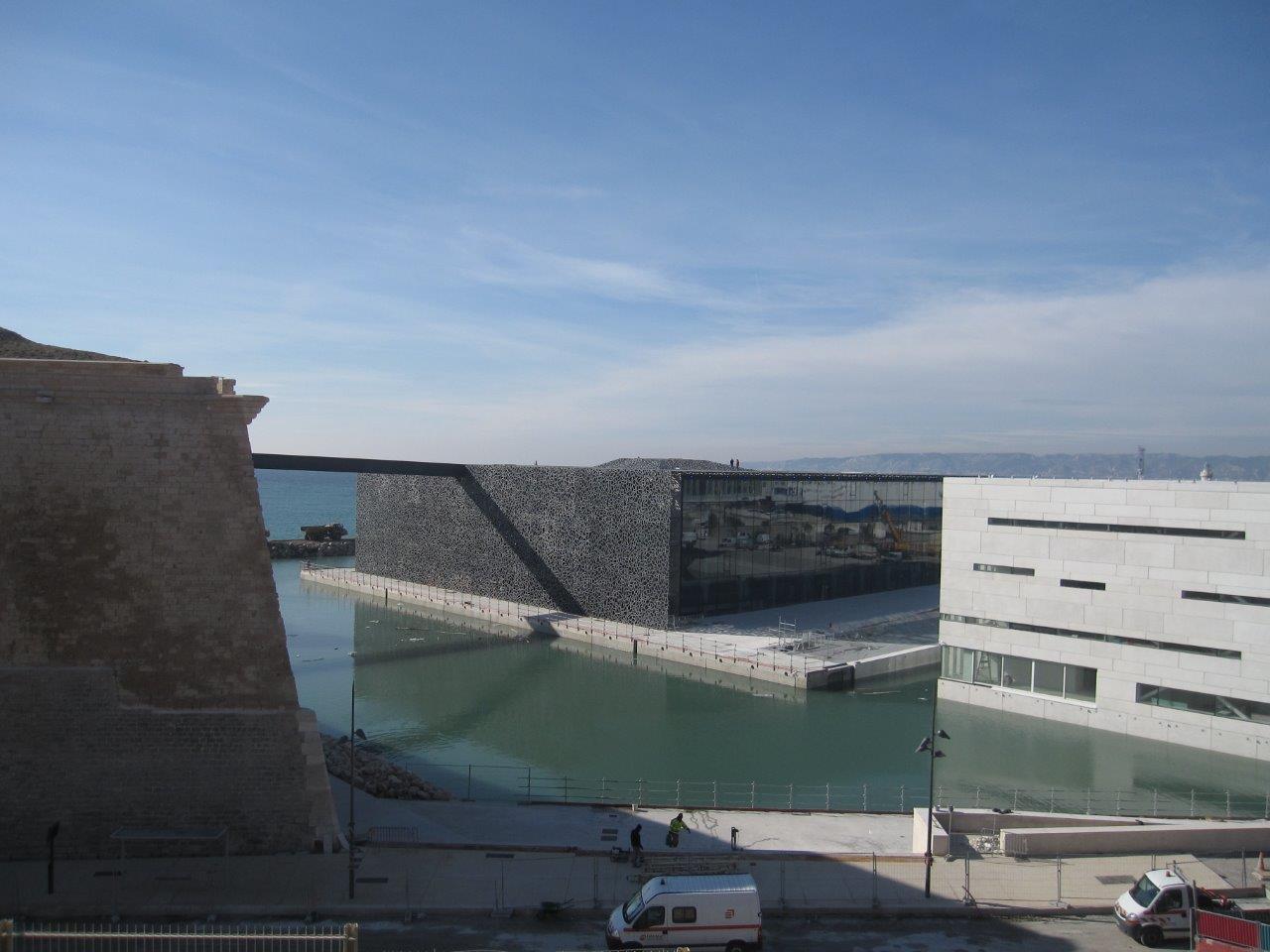

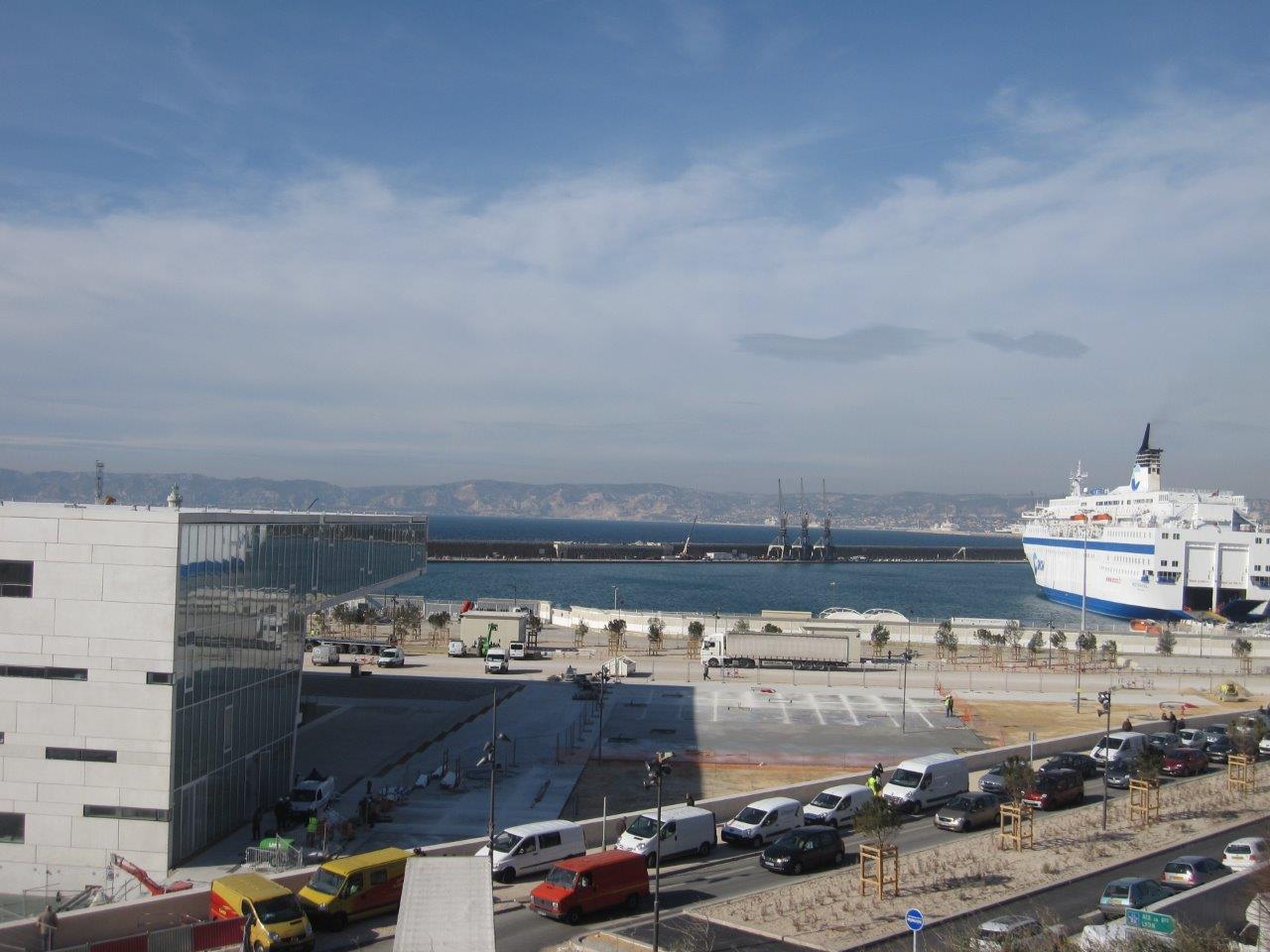
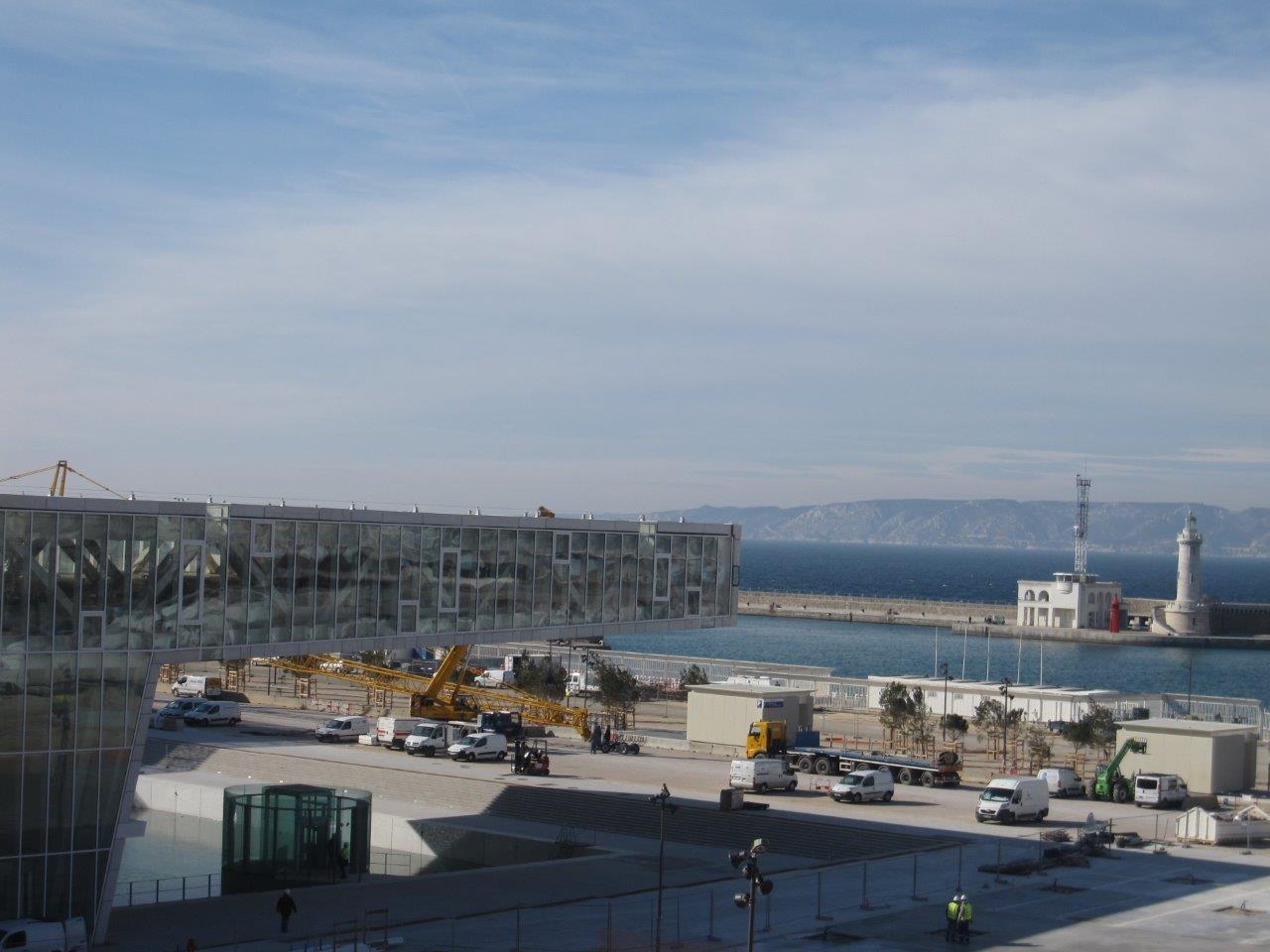
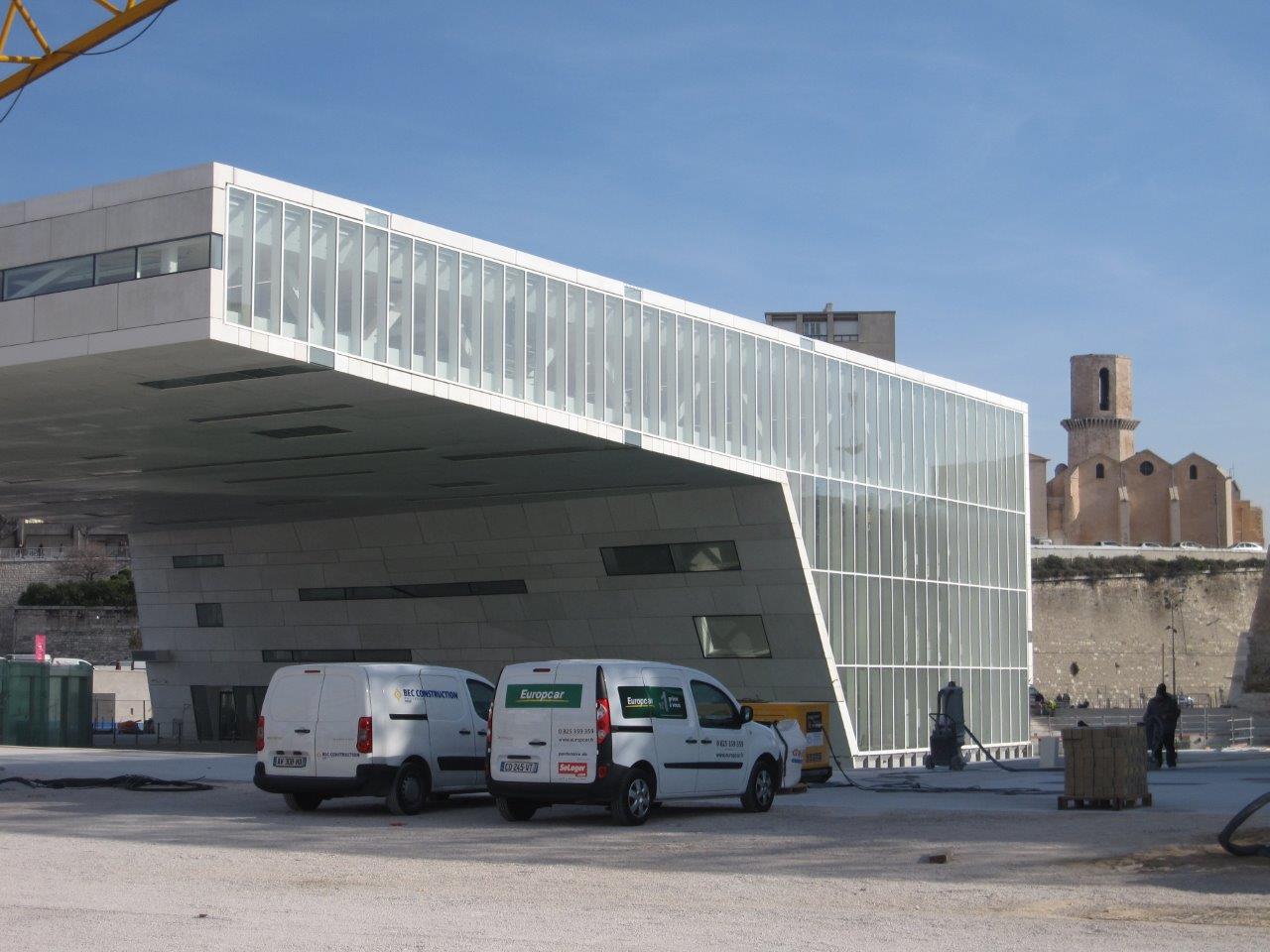
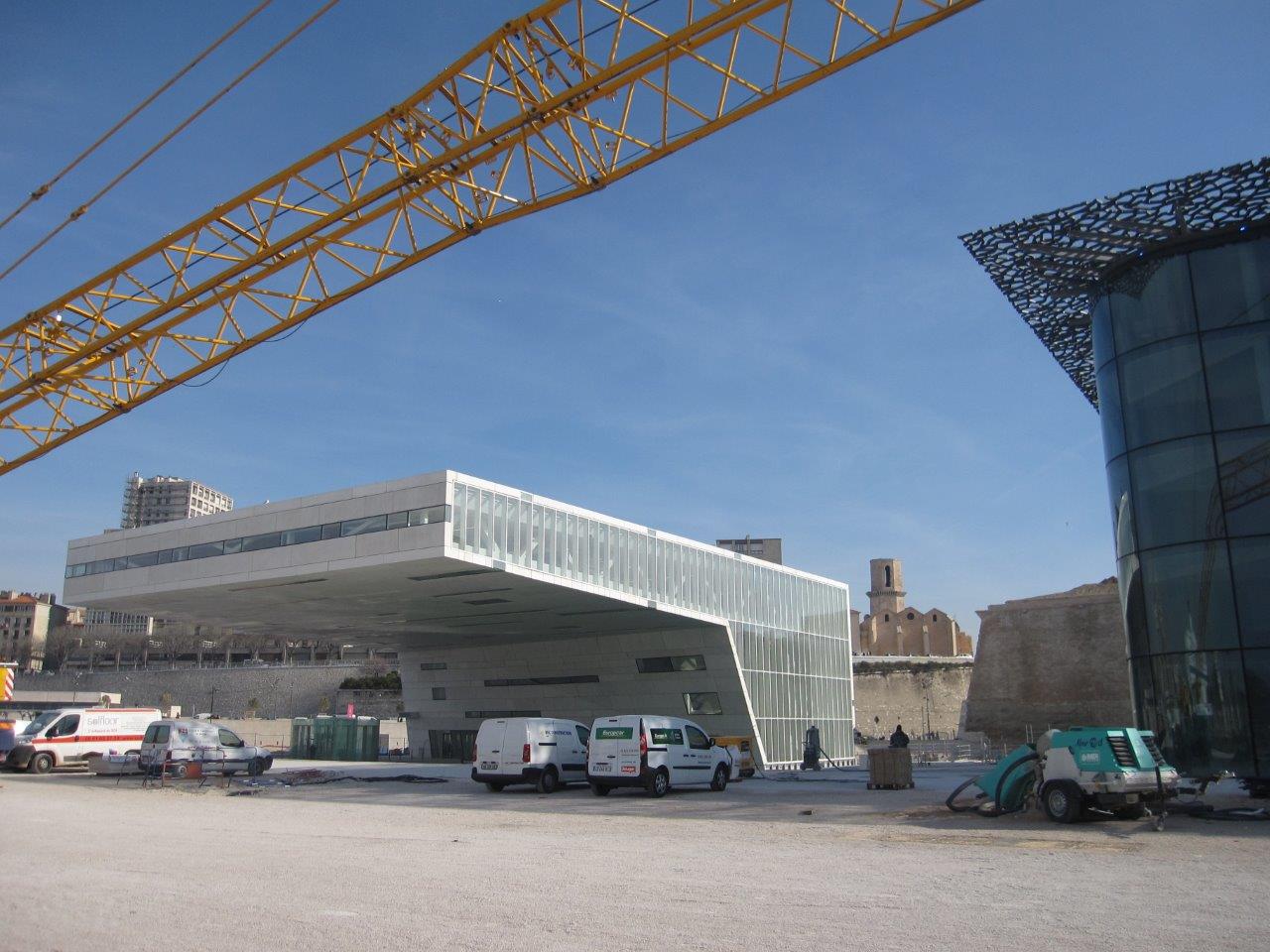
Villa Méditerranée. Arch. Stefano Boeri. Opening April 2013
Villa Méditerranée, designed by the architect Stefano Boeri, is known in the area as J4. It is situated along the sea front between the Fort Saint Jean and the cathedral La Major. It has two main public areas, one under the sea and one in the air. It will house the permanent exhibition Parcours des Méditerranées (Mediterranean trails), where visitors will be able to “see and live” the experience of the Mediterranean.

Mucem. Arch. Rudy Ricciotti. Opening June 2013
A new national museum of European and Mediterranean civilizations is currently being built around the Fort Saint Jean on the Vieux Port. This huge project designed by architect Rudy Ricciotti will house a national collection dedicated to the Mediterranean culture(s).
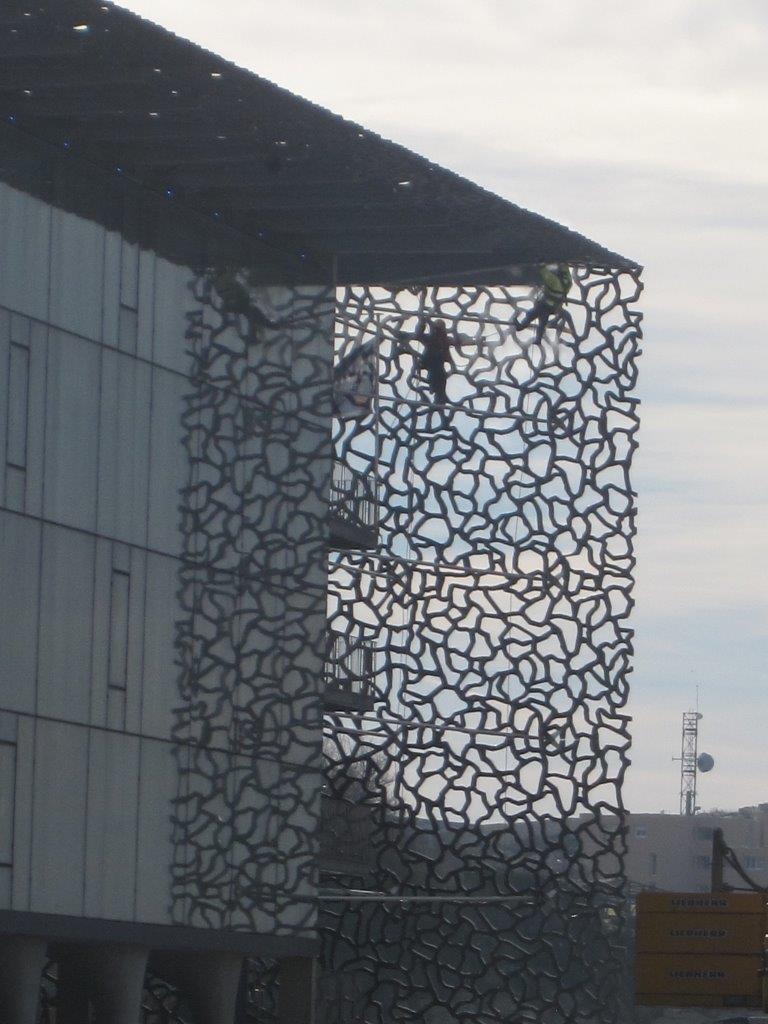
The finishing touch by acrobatic workmen.


Amazing to see how the implantation of the new museums triggers the revival of historic buildings.

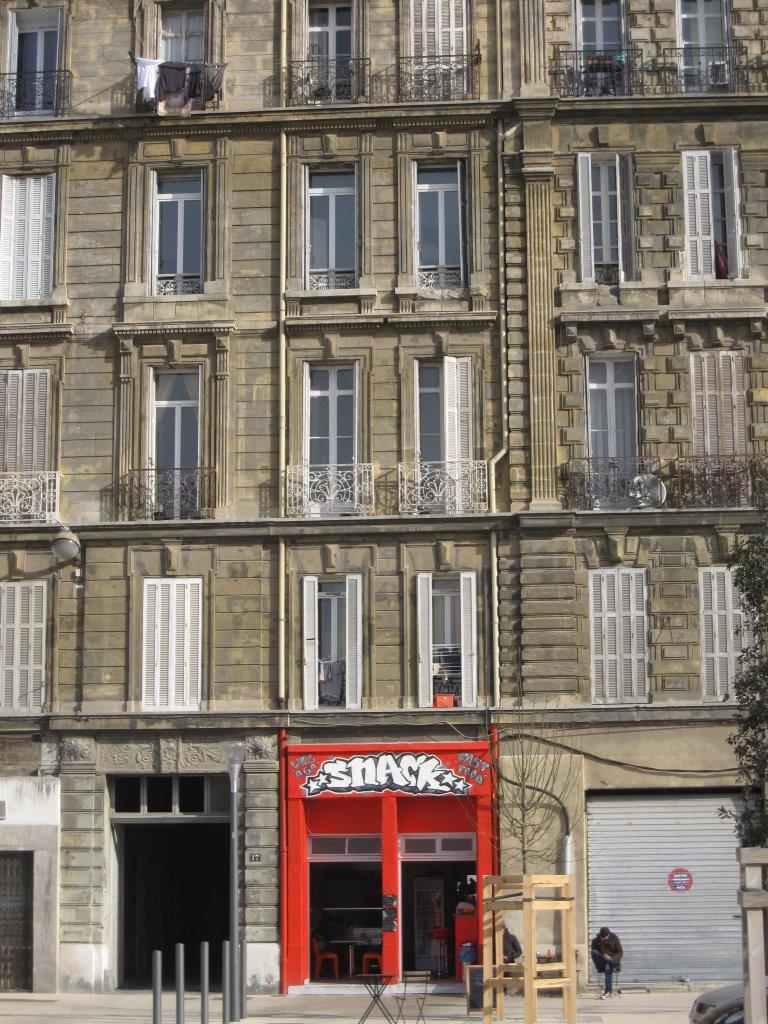
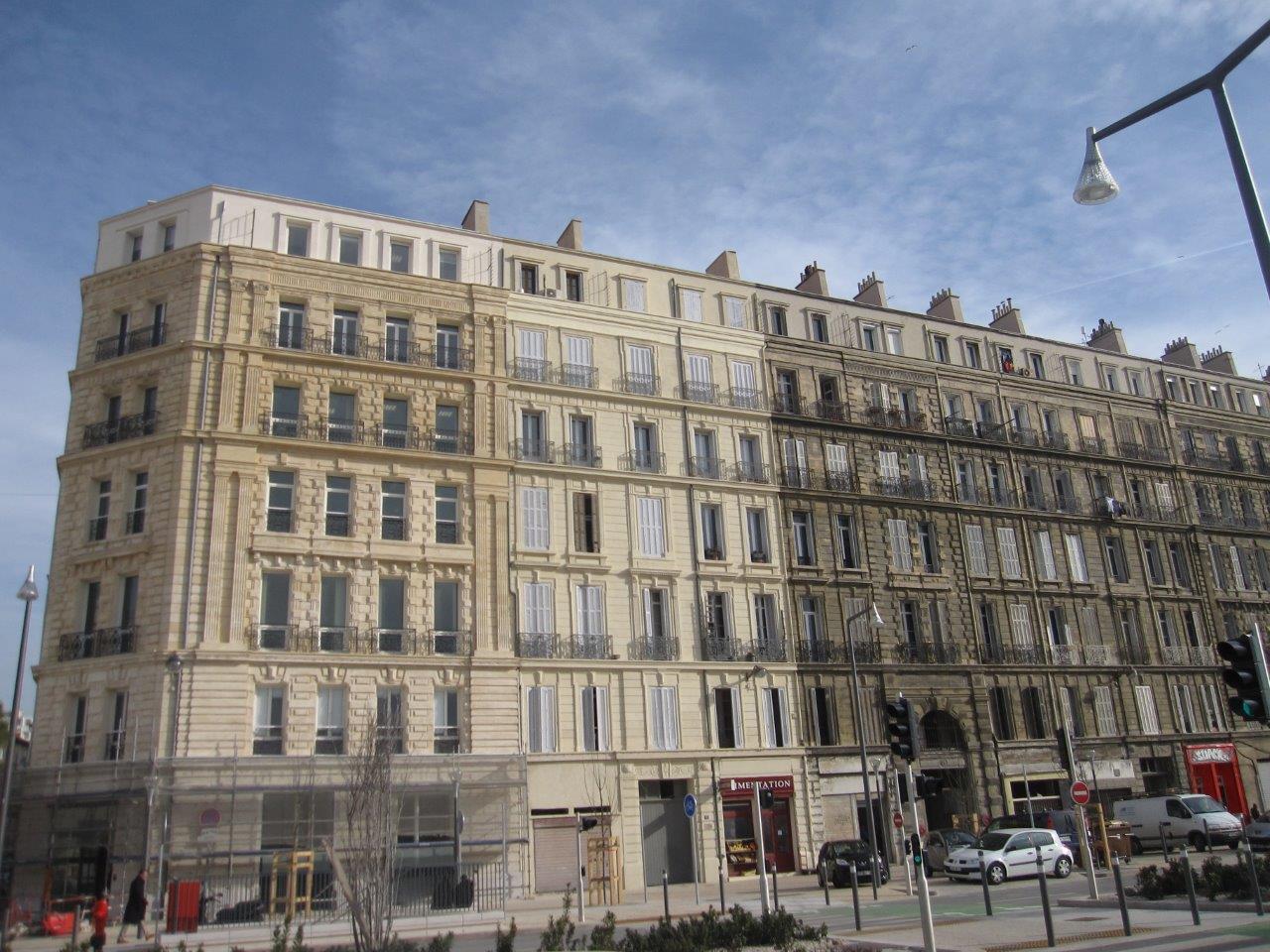

A huge hangar situated in the old port area of Marseille. On the quay the ferries still operate. In the building top floor there is a huge space housing three galleries, a performance space and a bar/restaurant. It has fantastic views over the port. A lot of the major events in 2013 will take place here.
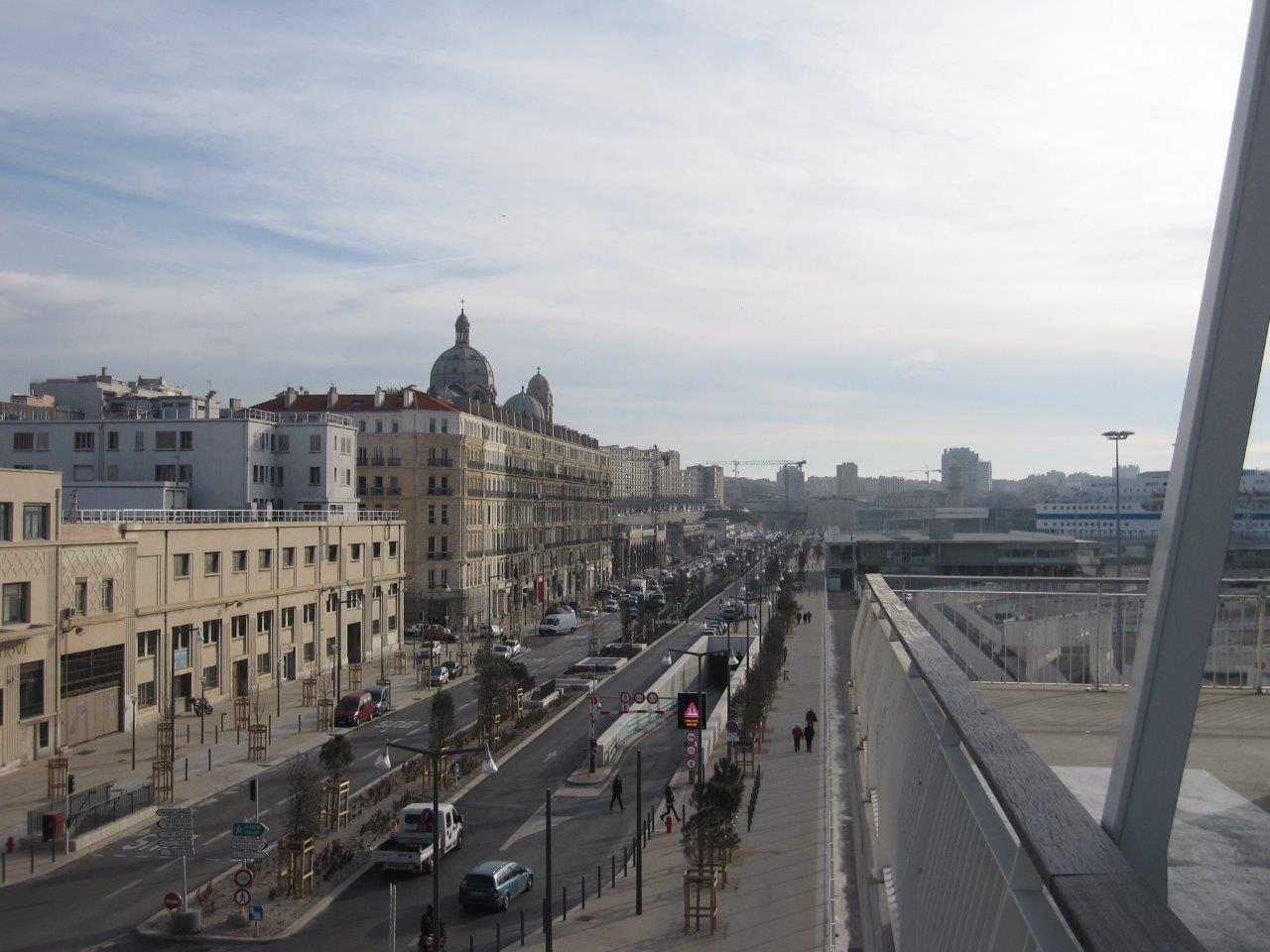
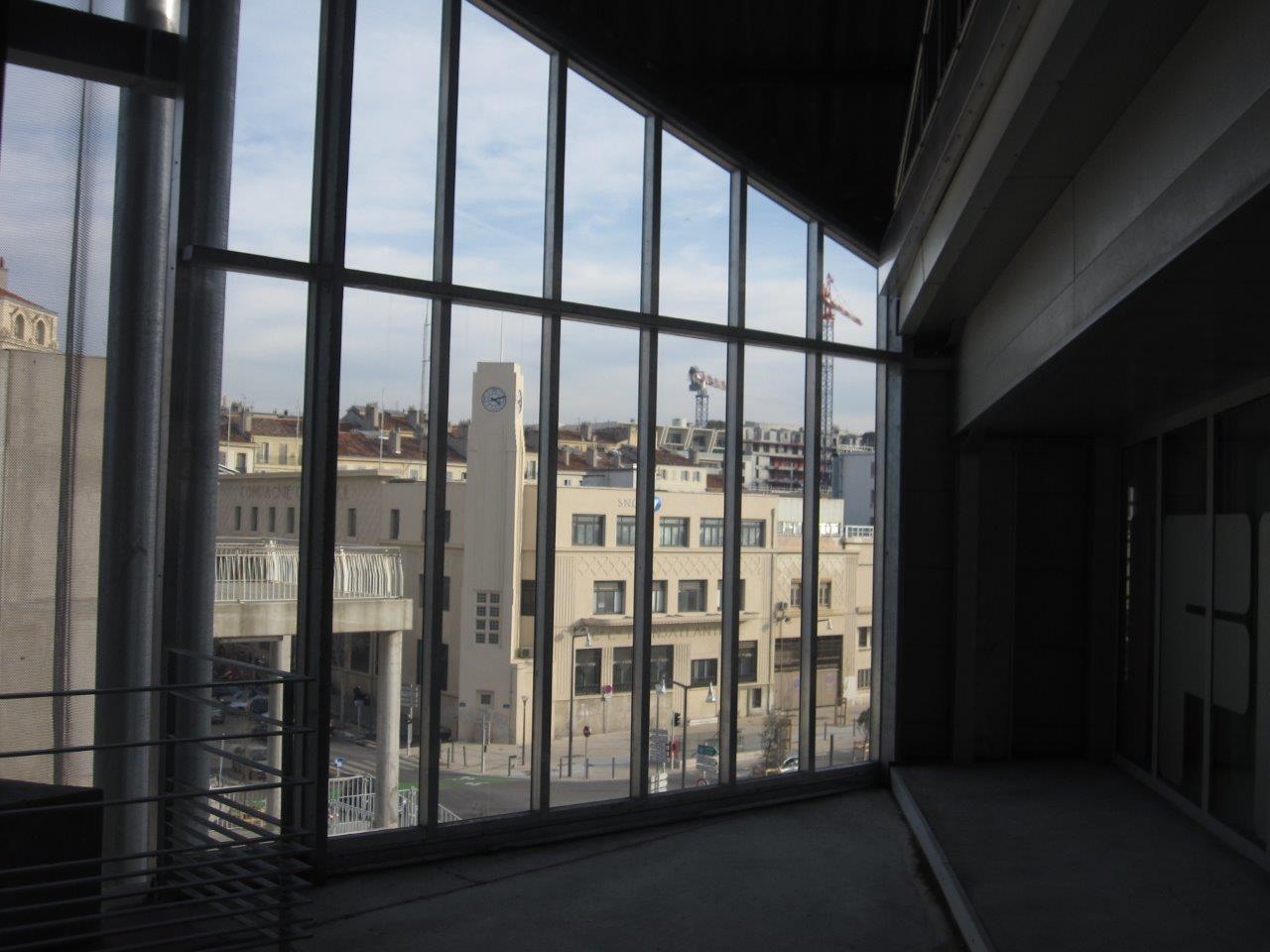


Le Silo opened 2011
Le Silo is a new concert arena on the docks. As the name suggests, it is a converted silo. Much of the original building has been retained so it’s very impressive.
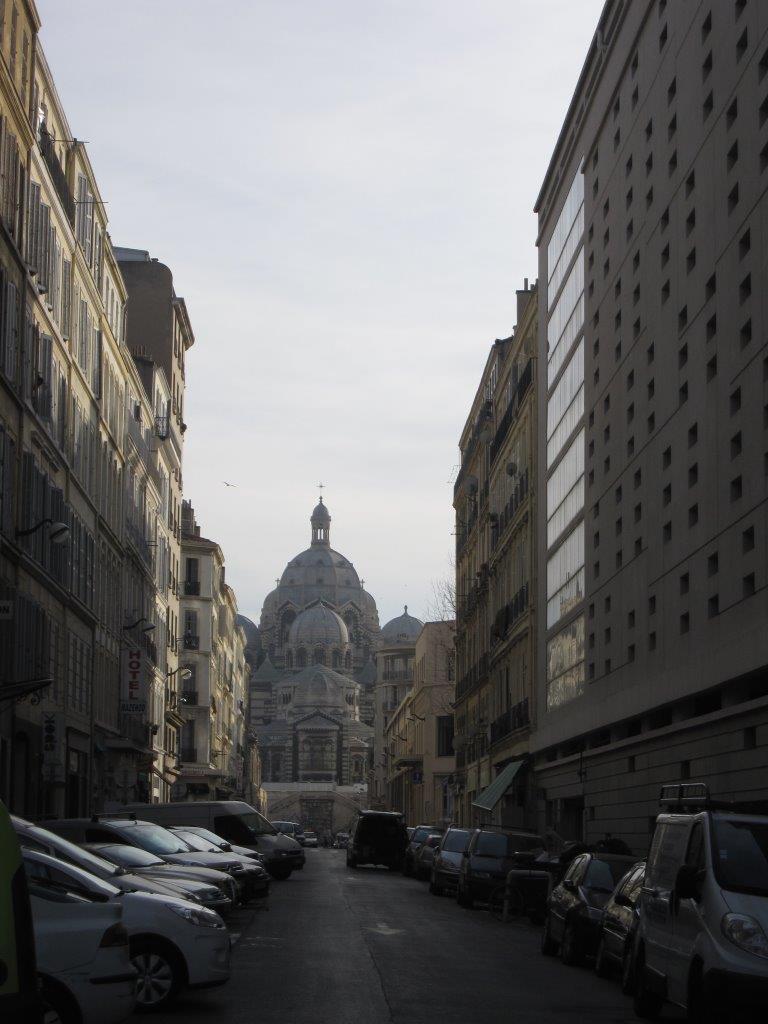


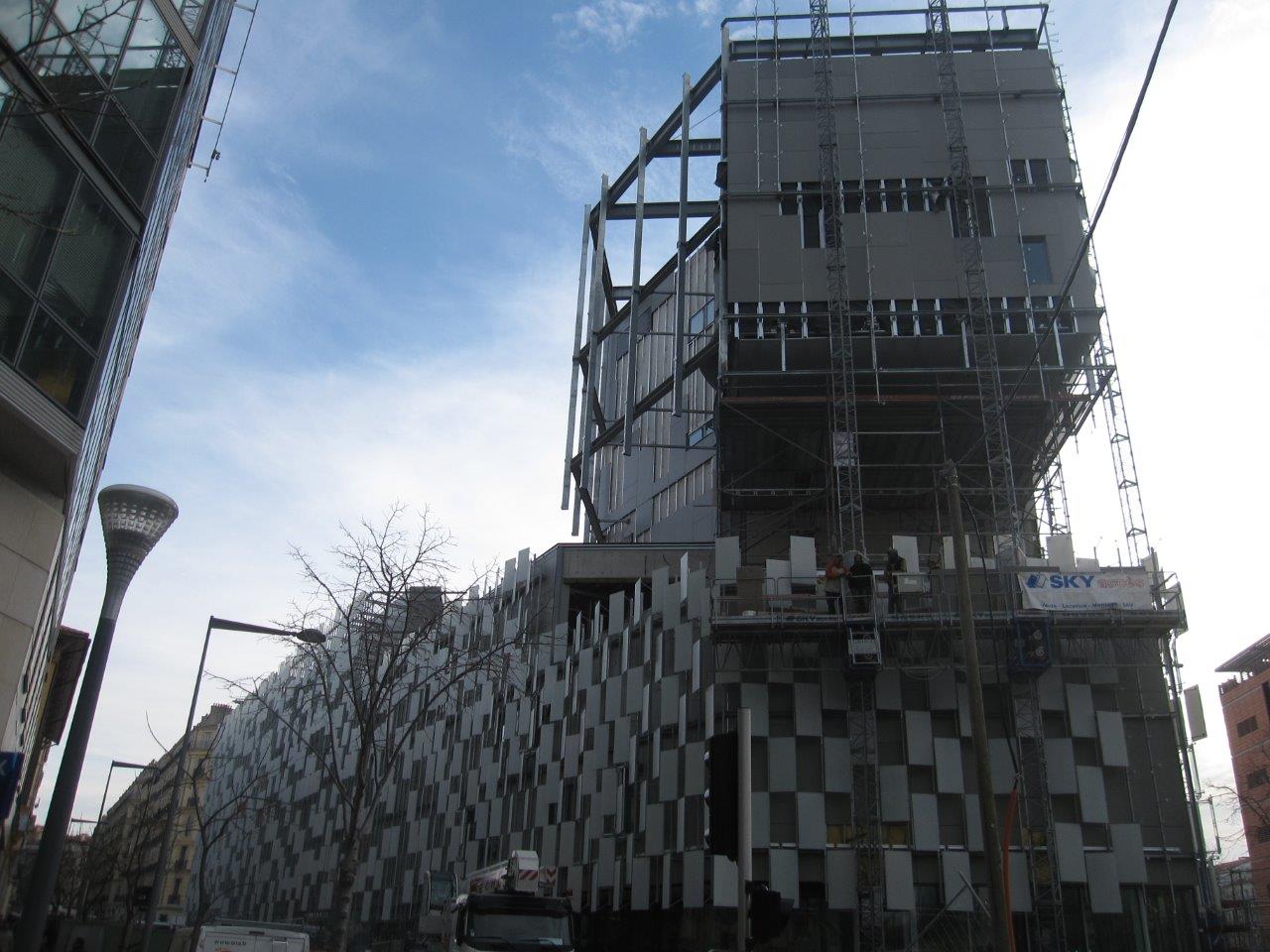
FRAC. Arch. Kengo Kuma. Opening March 2013
FRAC (Fonds Régional de l’Art Contemporain) will be a home for contemporary art collections and an exhibition space. It is located 10 Boulevard Dunkirk in the area known as Euromediterranée, the scene of a lot of redevelopment. The building is designed by Kengo Kuma.


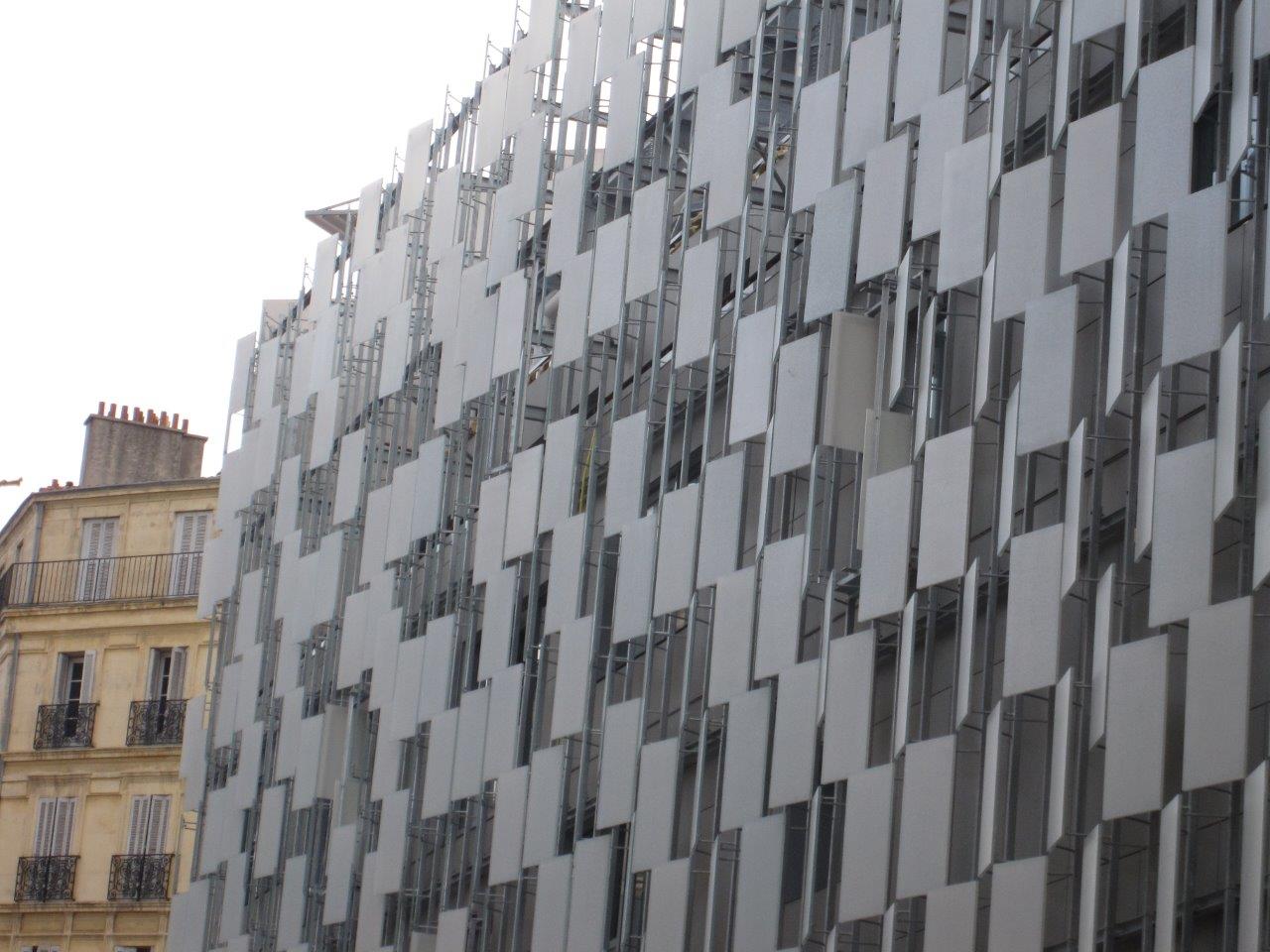
Detail of the insulation behind the panels…


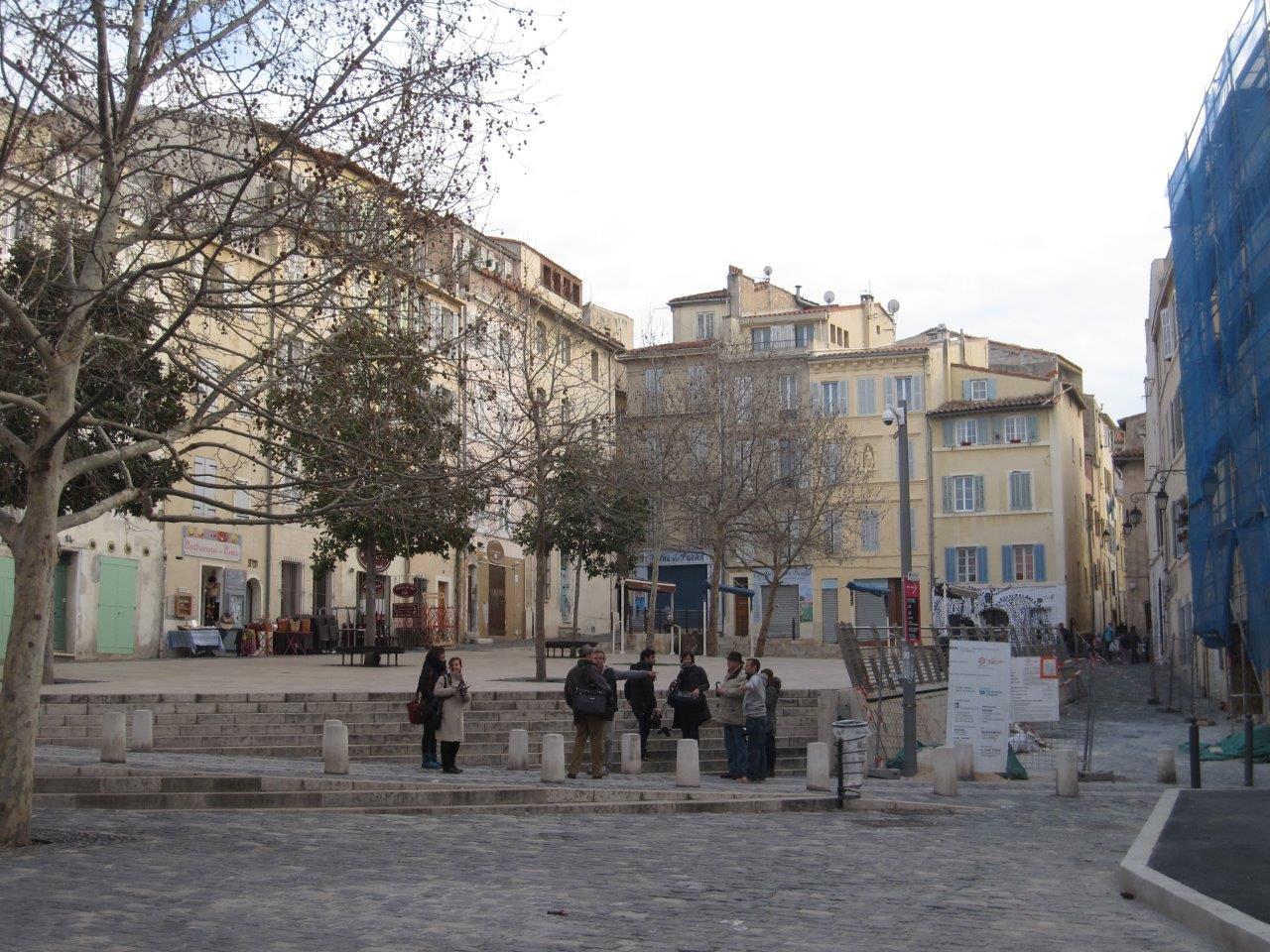

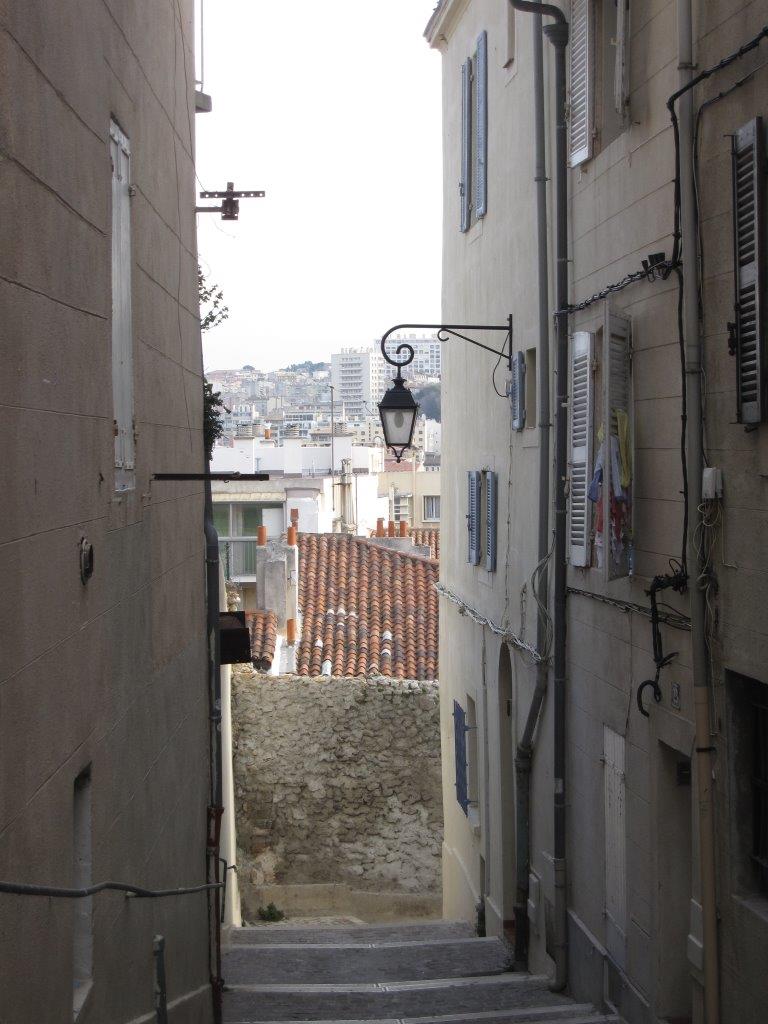
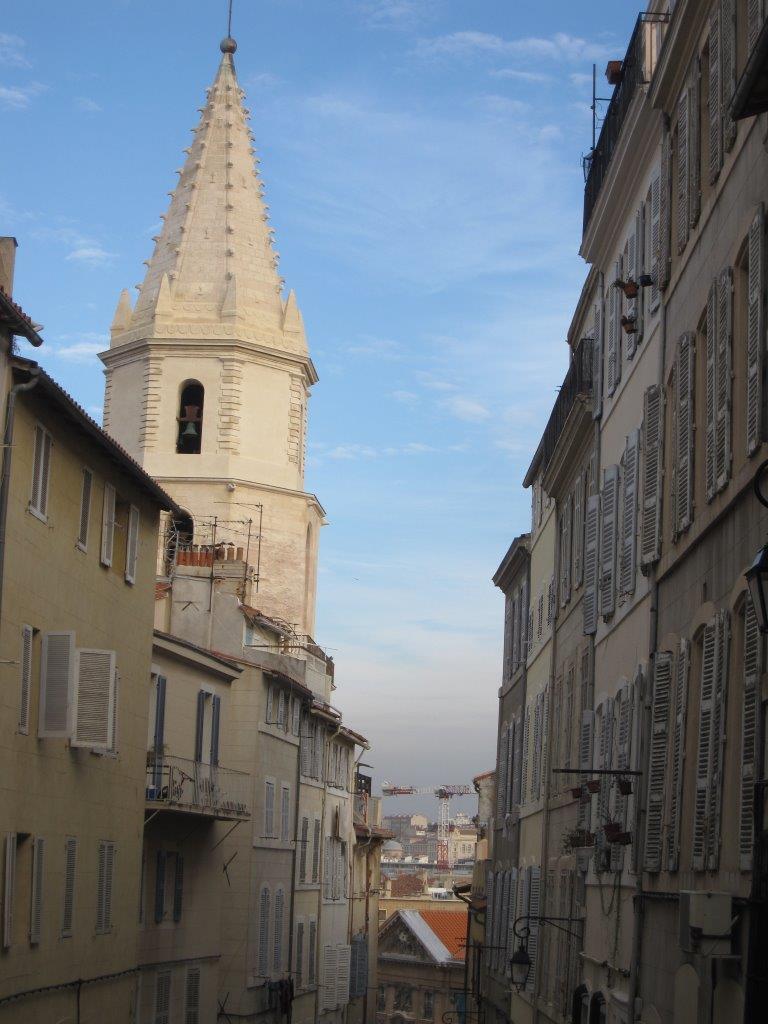

To get an idea about the city of Marseille you can go to Pavilion M, a building of wood and glass in the Place Bargemon, next to the Hotel de Ville. The Pavilion has
exhibitions about the city, its people and what goes on here. On the upper floor houses a tourist office providing information about capital of culture events.

Related articles
- Vieux Port pavilion by Foster + Partners (dezeen.com)
 Well Designed and Built