Dear Garbatella
Yesterday I felt like Nanni Moretti in chapter one of “Caro Diario” (Dear Diary). The city – Milan in my case, not Rome – was almost empty and no movies worth seeing. I tried with exhibitions – Alfred Hitchcock, Andy Warhol, Berengo Gardin, South African apartheid… – nothing really attractive. I decided to go for a drink in one of my favourite bars, ‘mom cafè’, but it was closed. I took a shared bike ( I have no Vespa) and went to another of my favourite bars , ‘la belle aurore’ that was closed as well. In the meanwhile I started enjoying biking around, looking up at the facades along the streets in different neighborhoods, enjoying the blue sky and the pleasant evening breeze, quite unusual for August in town. I did not take any pictures this time, but I Like to illustrate this short post with a piece of the film.
“There is one thing I like the most”, writes Moretti on his diary at the beginning of the movie meaning to drive around the various neighborhoods of Rome and discover what is behind the facades. Here is the full “In Vespa” episode with English subtitles. Below a one minute excerpt of the Garbatella, Moretti’s favourite neighborhood in Rome.
That is something I like very much too, especially when I am visiting a new place. Last June I walked around the Garbatella for a couple of hours and took some pictures I will comment in the next post.
Take a Walk on the High Line

The High Line in NYC is probably the most interesting and talked about urban regeneration project in recent years. I think it really deserves a special attention and as I visited New York last year it was on top of my list. I took some pictures (apologise for the bad quality) and will use them to explain my views.
Initiators of the project are Robert Hammond and Joshua David, who founded the Friends of the High Line. They are currently invited to several urban seminars and conferences by public bodies eager to learn from their experience. This project is a flagship urban regeneration project especially for the participative and bottom-up approach. In fact the initiators do not belong to the institutionally responsible actors of town planning. They are not developers, professionals, public officers or politicians. At least not in the strict sense of these terms. They belong to what is called civil society. They were able to take the initiative and involve public authorities, planners and the private sector in making this dream a reality. A beautiful, sensible and very concrete reality. So that now every town around the world would like to have his own High Line. Hopefully that will not generate another “Bilbao effect”.

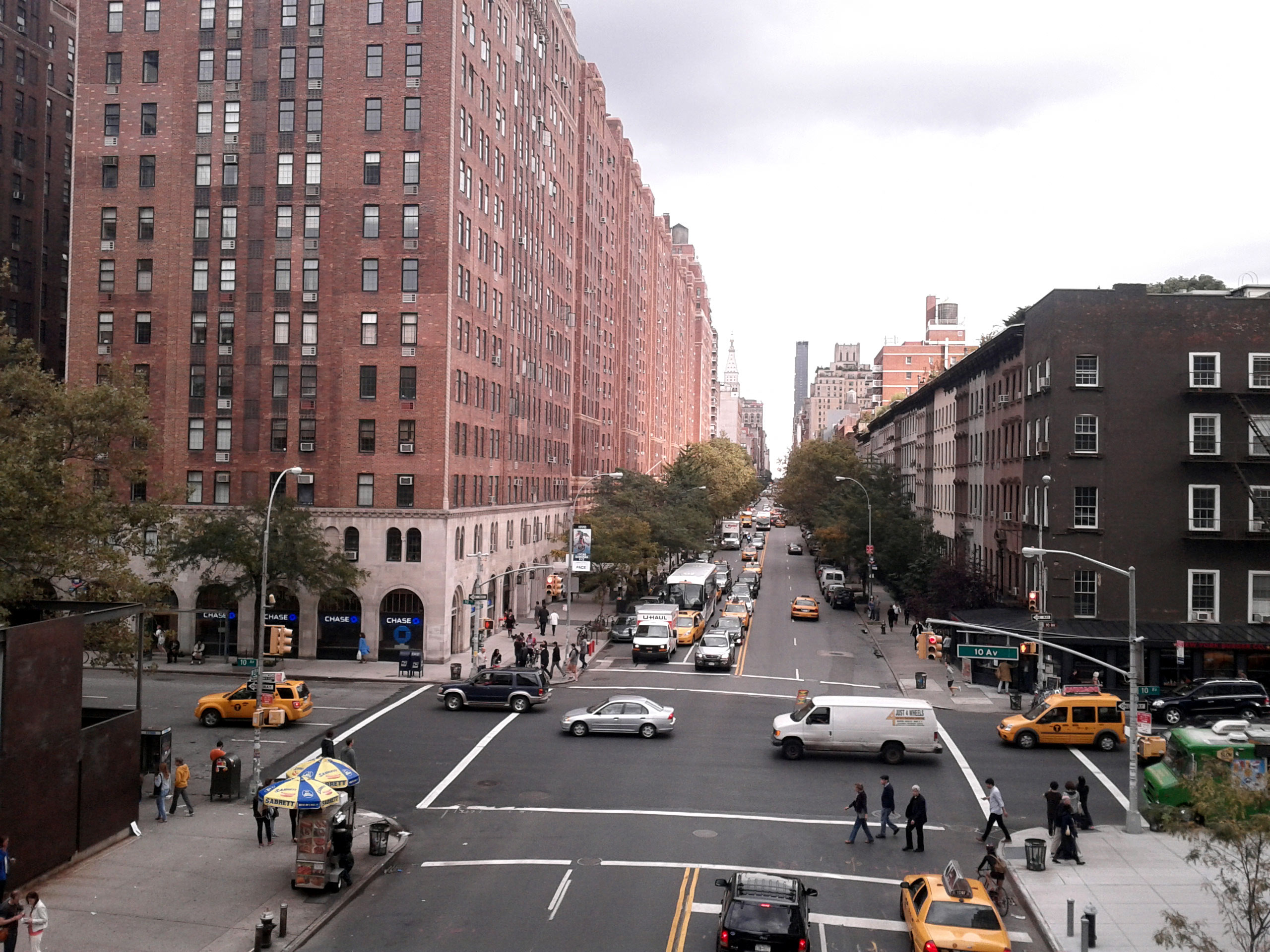
The neighbourhood of the High Line (between the 30th and 14 Street along the 10th Avenue) is everything but spectacular, in comparison to other parts of NYC. This is the first reason that makes the project so interesting. This is not just another park, that was needed and it is changing the character of the whole neighbourhood around it!

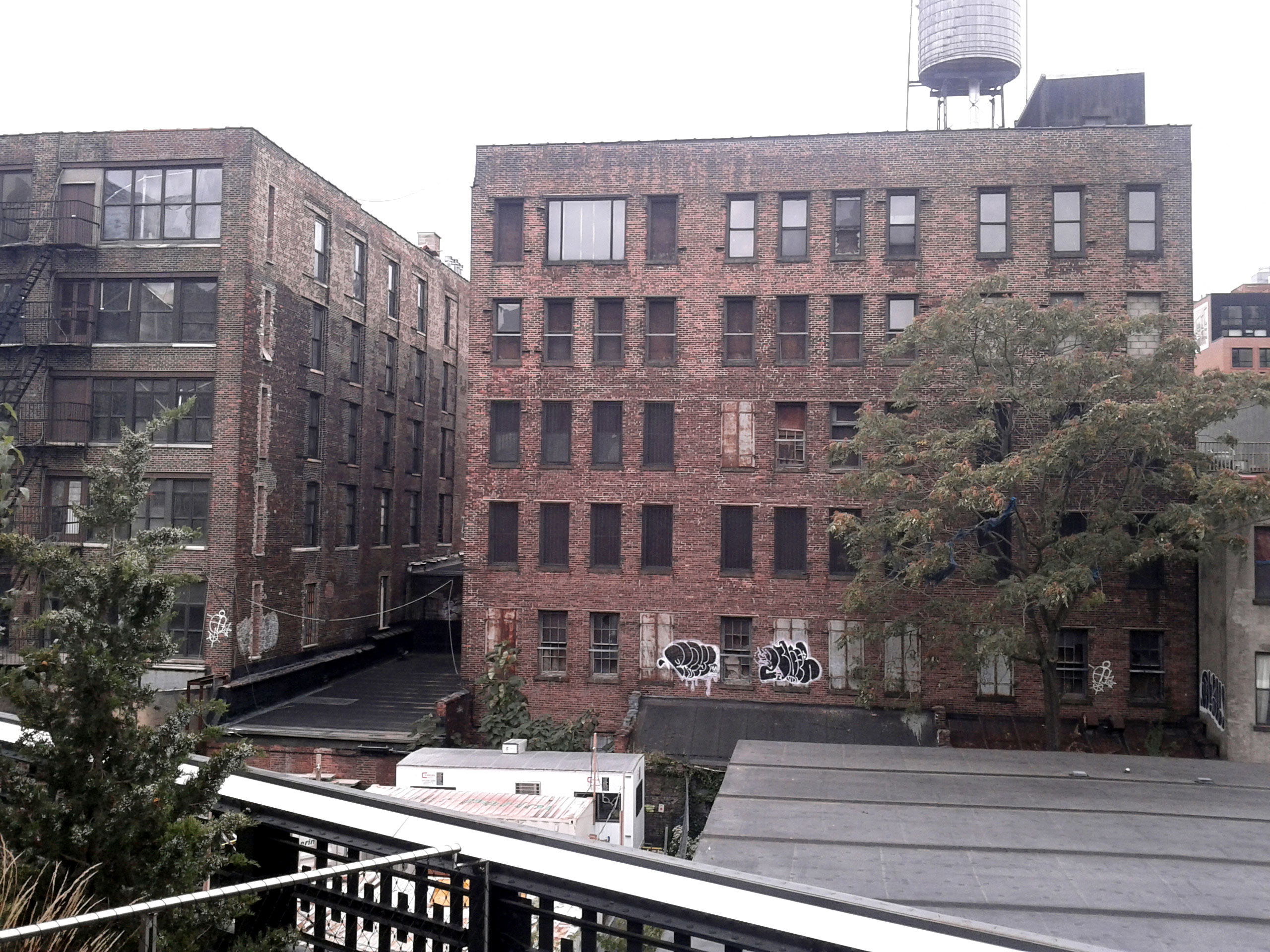
Last year in September, as we were there, works were still ongoing, I guess they still are today and I wish they will last for a long time. That makes the laboratory feeling of the High Line even stronger. You can see this public space in the making, you can see the different layers, the old bones and muscles of the aged infrastructure turning into a great public space.
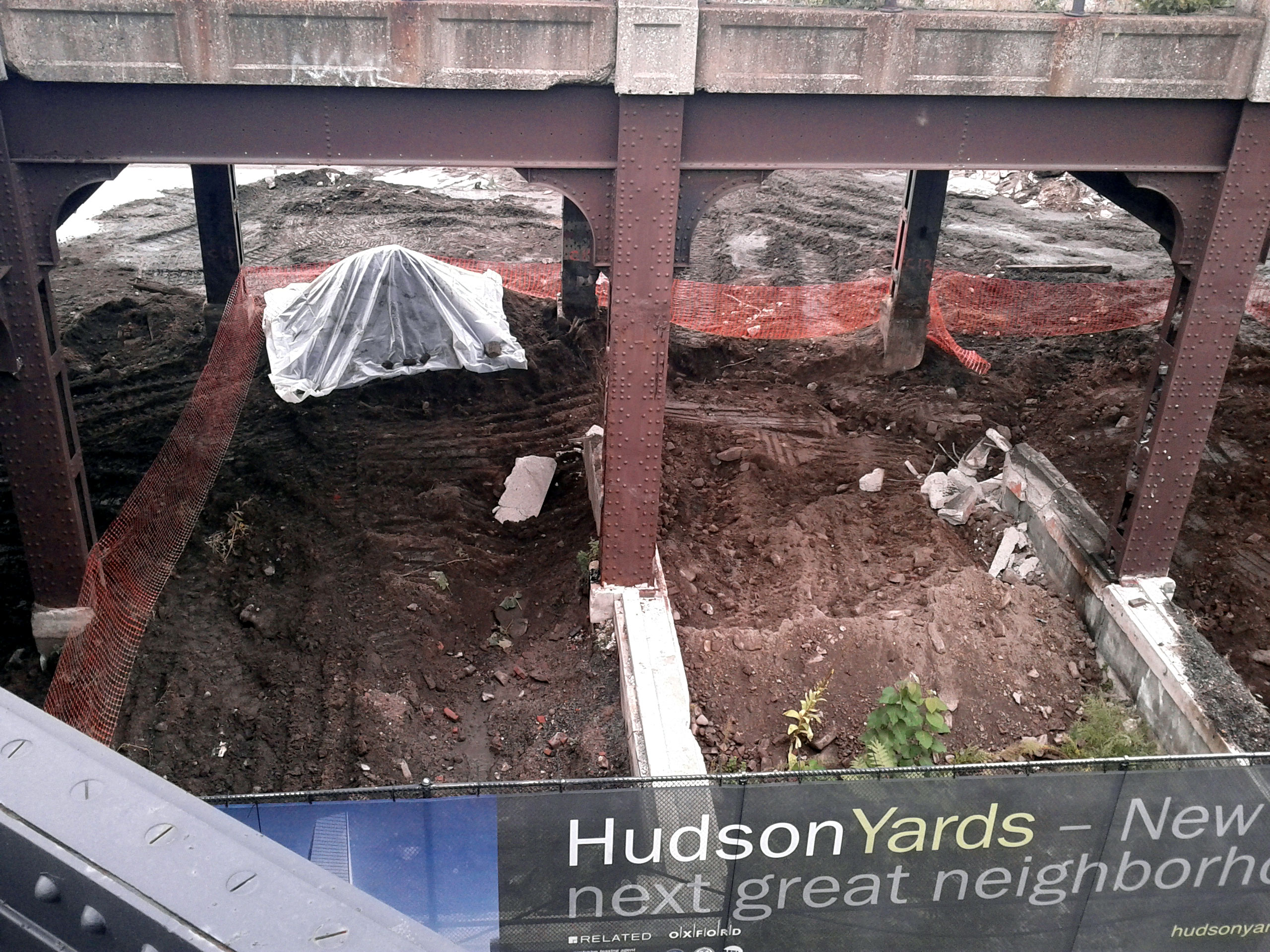
Change is made by design and by people using the space. Although the weather was not particularly fine, the walkway was crowded. And although it was crowded there were no congestion problems. On the contrary, along the path you can easily find small quiet spaces aside from the stream of visitors.

Don’t know whether this is a famous artist or not, but the picture below suits to the High Line. It tells about the willpower and assertiveness that was necessary to achieve this result.

Another strong point of the project is the integration of plants and flowers in a beautiful mix. Far away from a picturesque old fashion manner it reflects the idea of nature not just as a means of leisure and delight for mankind, but as a real stakeholder. Possibly able to regain the urban ground if mankind fails to keep control.


Architectural landscape is made of broken elements, remains of failed attempts to establish a logic in the urban fabric. Together with the ubiquitous NYC Grid the High Line is the strongest landmark in the neighbourhood. Today finally conscious to be more than a derelict freight railway.


The landscape changes quickly along the 1,6 Km park, maintaining the NYC collage character, but also leaving space for a faraway sight which is not so common in Manhattan.
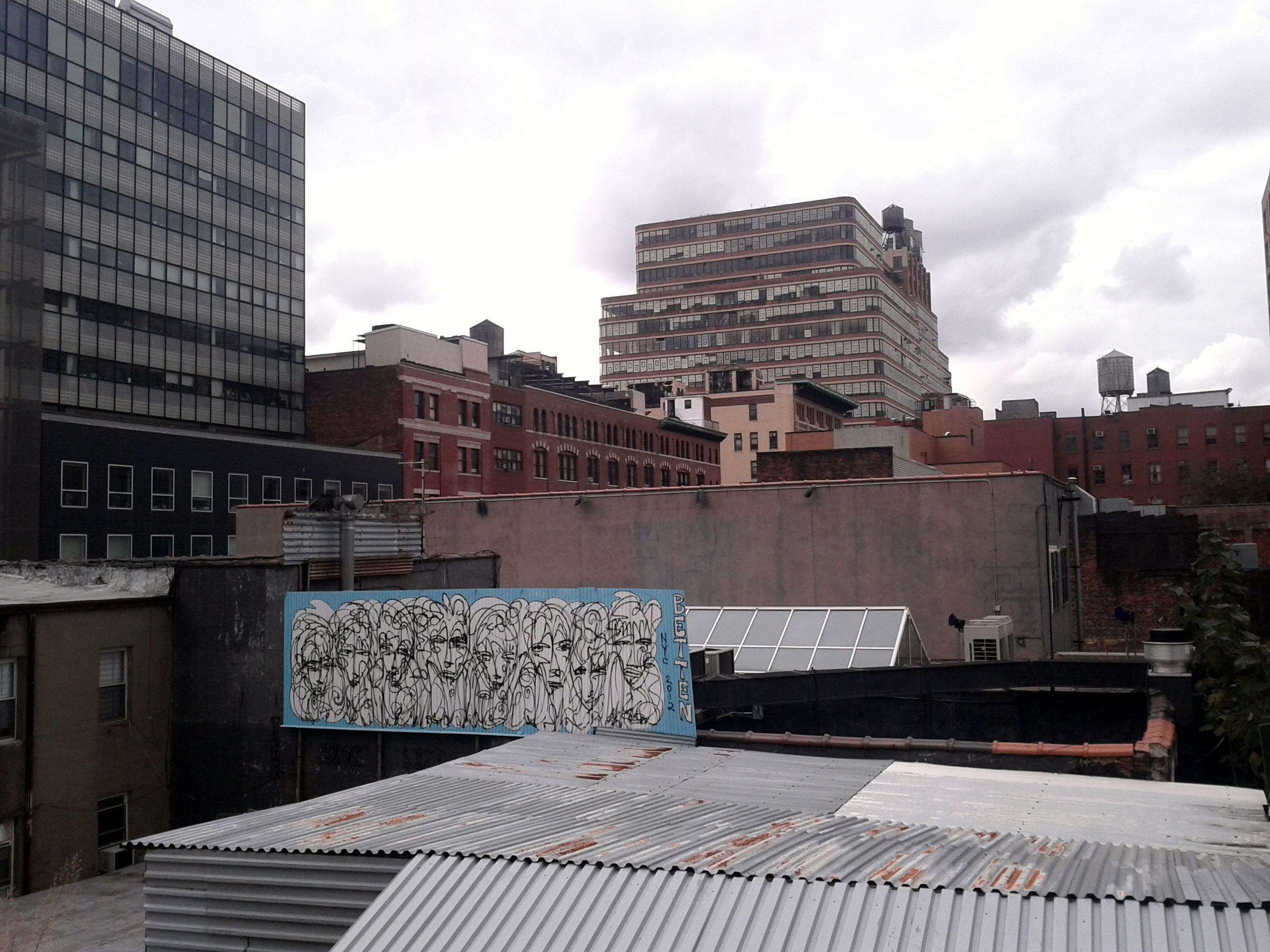

Like every successful public space the High Line is an excellent shop-window for people to show and promote their own activities, attracting young entrepreneurs, especially from the creative sectors.

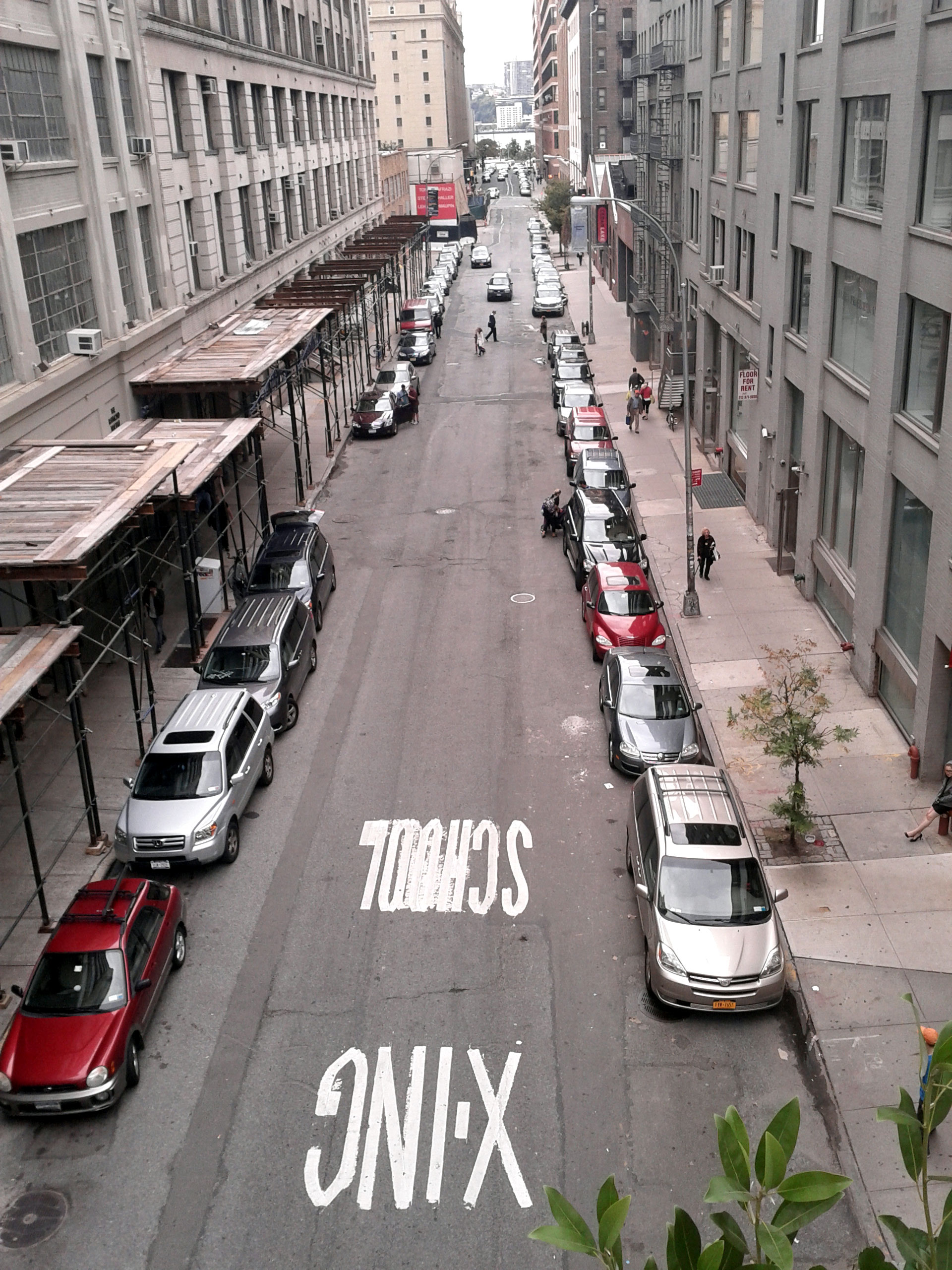
Another great thing about the High Line is the re-establishment of a fair relationship between people and cars. NYC is doing well in promoting public transport and cycling since years anyway, but this is another full strike.
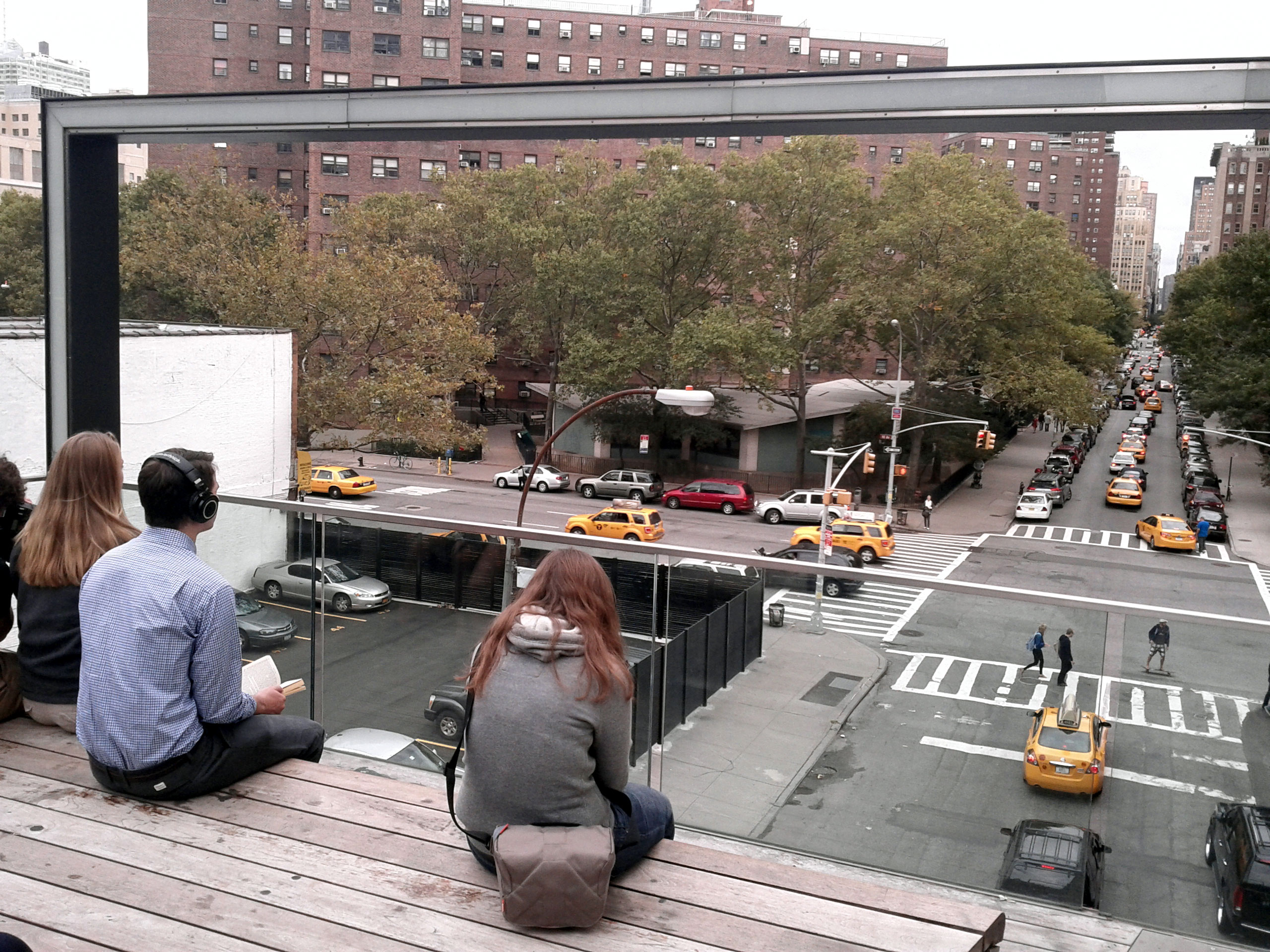
Walking on top of cars, listening to music or reading a book, not having to look at traffic lights, left or right. That is pleasant and brings visitors back to an immediate relaxed and natural relationship with the built environment.

NYC is the home of differences, so that what elsewhere would be incoherent, here it is at the right place: tropical vegetation between a concrete facade and stainless steel handrails,

a kitsch car design shop next to a minimal terrace bar adjoining an abandoned building with walled-up windows.

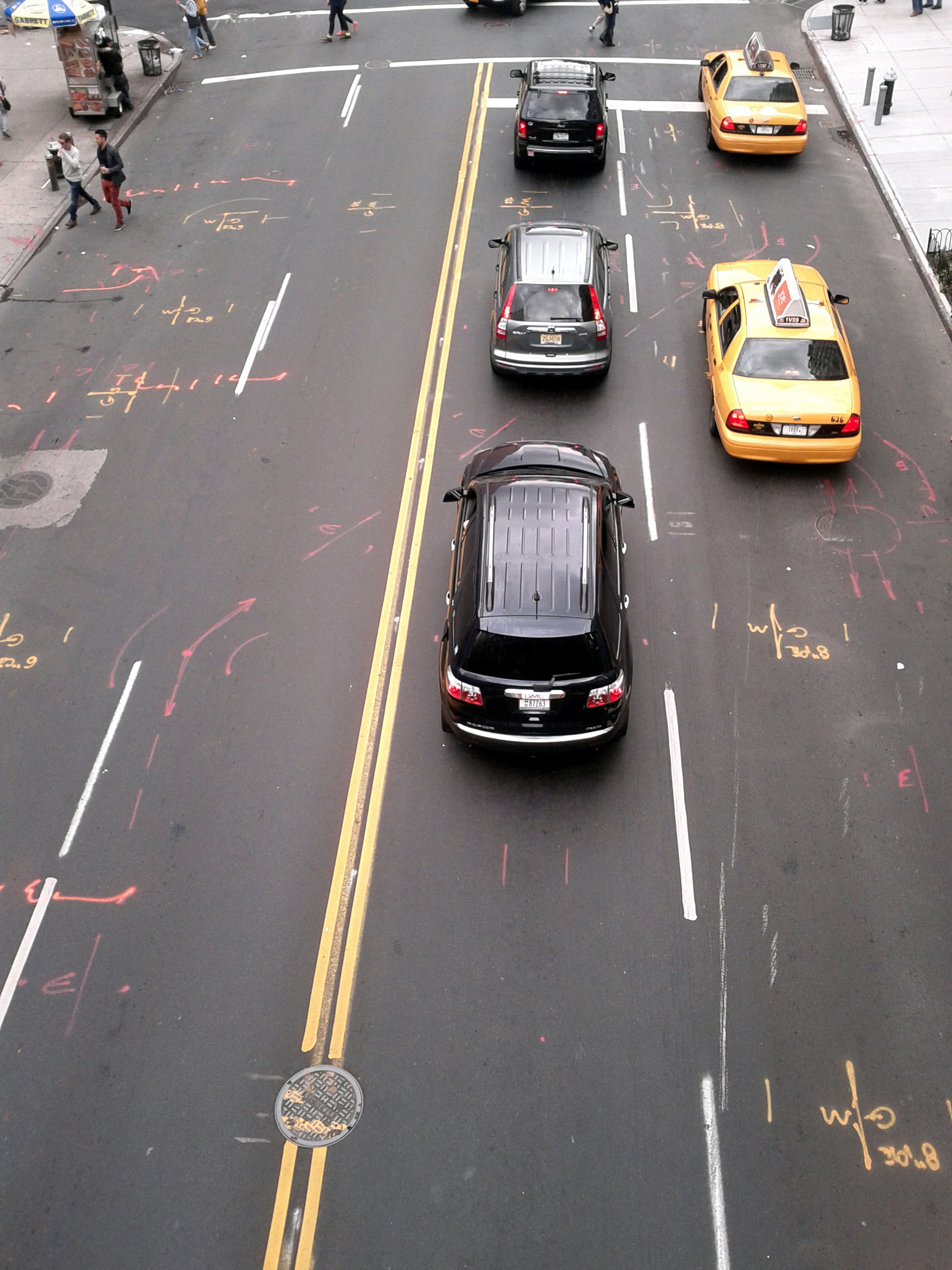
Somebody used the street as a canvas to draw alternative mobility patterns. Or are they the signs of some underground infrastructural channels?
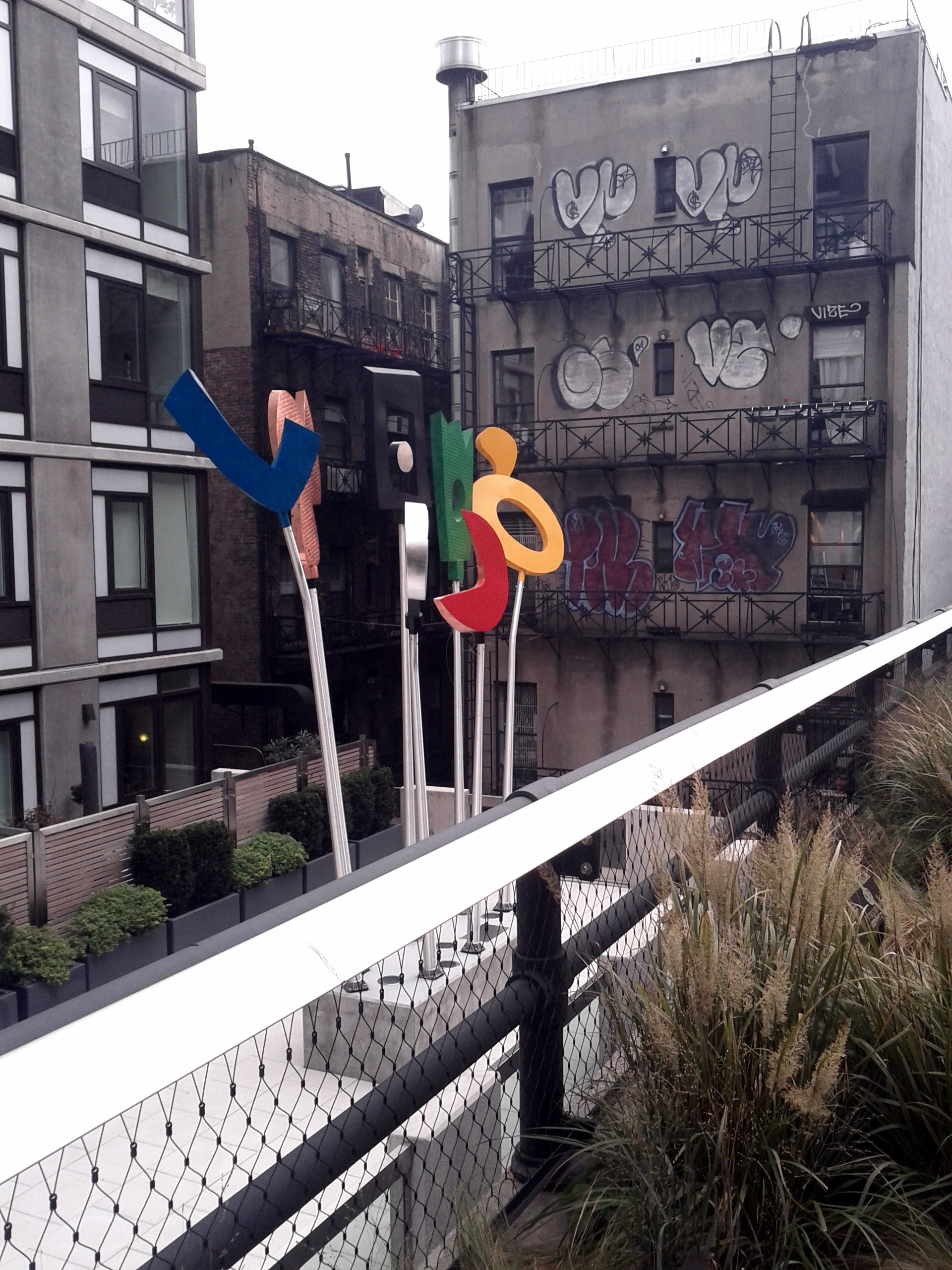
Also some unnecessary work of arts belong to the urban landscape. And people, people and again people, everywhere, enjoying public space.

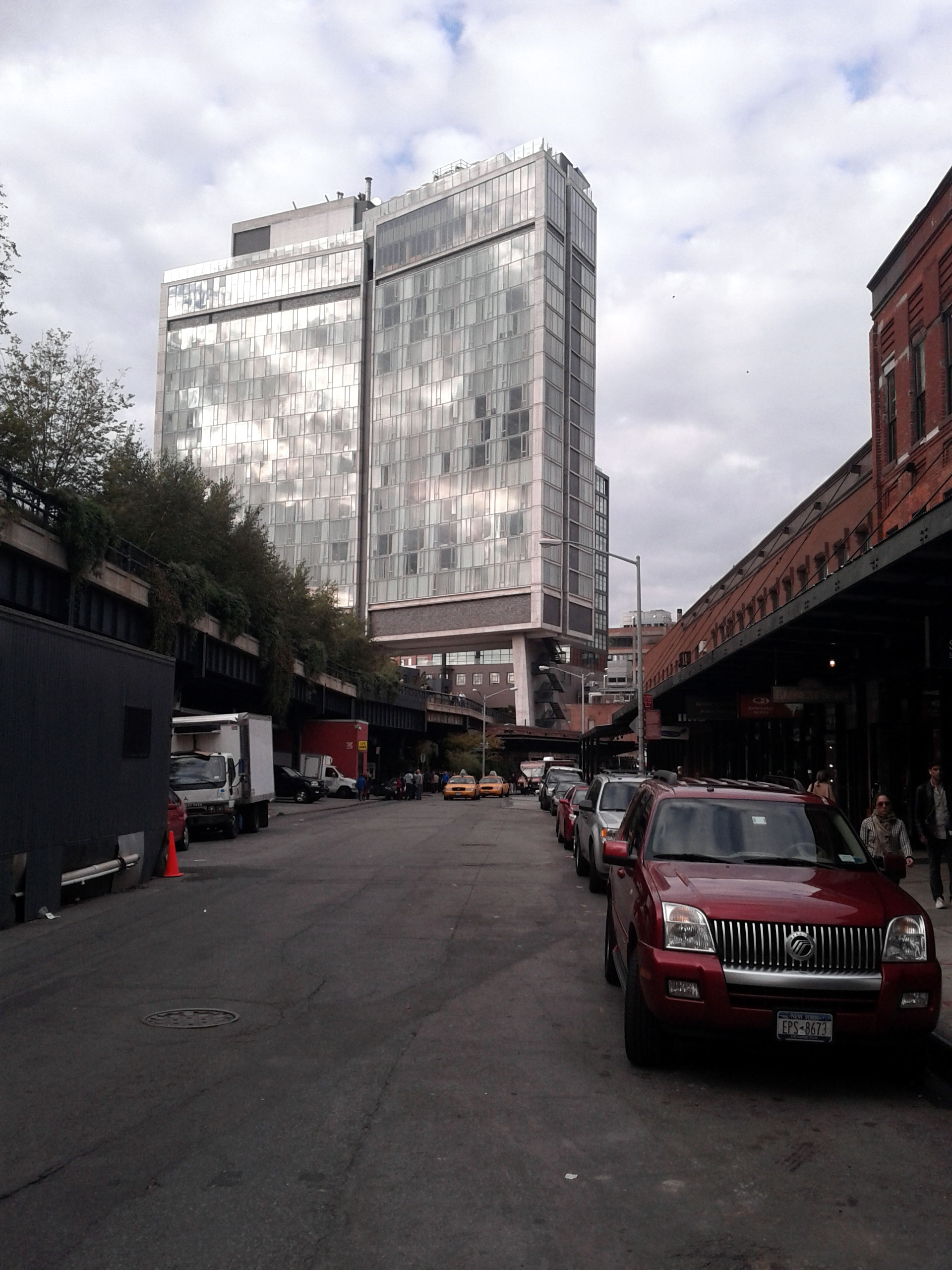
Back on the ground, life goes on as usual, but if you look up to the High Line, you think that this place will certainly get better.

Here is Robert Hammond telling the true story of the High Line at the Harvard Graduate School of Design
Here a review from Time Magazine
Related articles
- NYC X Dannivee (dannivee.wordpress.com)
- The High Line of New York City (creatricemondial.com)
- Placemaking: New York’s New High Line Park (sustainablecitiescollective.com)
- Traveling Around NYC by bus (local.answers.com)
- The High Line (heyitsameg.wordpress.com)
- The Highline: the happiest mile in NYC (travelover40.wordpress.com)
- Night Falls on the High Line (core77.com)
- The Low Road: Queens Clamors for Its Own High Line (observer.com)
Related articles
- Night Falls on the High Line (core77.com)
- The Low Road: Queens Clamors for Its Own High Line (observer.com)
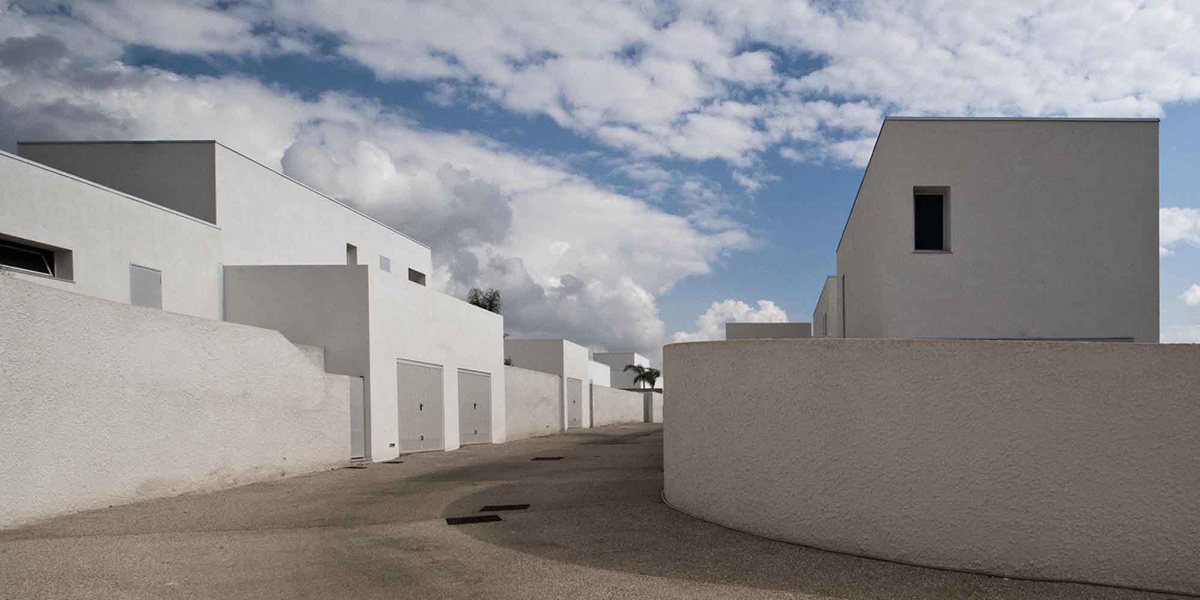
A2M-Social-Housing – Nunzio Gabriele Sciveres – selected project
On the 4th of July the jury of the Ugo Rivolta European Social Housing Award 2013 gathered together to select the shortlist of projects invited to the second phase. Chaired by the winner of the last edition Sascha Zander /Zanderroth Architekten, the Jury was composed by Stefano Guidarini, Giordana Ferri, Alessandro Maggioni, Bart Lootsma and by the substitute members Orsina Simona Pierini and Camillo Magni.

Low cost Housing in Settimo Milanese – Nicola Braghieri – not selected
The session of the jury was introduced by a short conference introducing the 4th edition and awarding the last winner Sascha Zander/Zanderoth Architecket/Berlin. During the conference the President of Milan Architects’ Chamber Daniela Volpi, Council member Paolo Mazzoleni, Journalist Paola Pierotti and Jury member Giordana Ferri reflected on the main topics addressed by social housing providers and designers today and on the role of the Ugo Rivolta award. You can read (in italian) the full report of the conference by Francesco Agostini here.
Out of 44 submissions 20 were selected and asked to prepare a presentation board for the second session of the jury that will take place in autumn. Here is the list of the selected projects with links to the online project submission.
1 – SPAIN- ZON-E – SOCIAL HOUSING FOR MINE-WORKERS, DEGAÑA
3 – ITALY- STUDIO STUDIO ARCHITETTI URBANISTI – LOW-COST HOUSING FOR YOUNG PEOPLE, PRATO
6 – AUSTRIA- NMPB-ARCHITEKTEN ZT GMBH – HOUSING COMPLEX WILHELM KASERNE, WIEN
7 – SPAIN- ALBEROLA MARTORELL ARQUITECTOS – 222 SOCIAL HOUSING, MADRID
8 – ITALY- STUDIO NOMOS – VERSO CASA, BERGAMO
12 – SPAIN- BARCELÒ BALANZÓ ARQUITECTES – BUILDING OF 48 PUBLIC APARTMENTS AND PARKING IN TORRELLES
14 – FRANCE -FRES ARCHITECTES – 23 DWELLINGS IN BÉTHUNE
15 – ITALY- CDM ARCHITETTI ASSOCIATI – RESIDENTIAL BLOCK (CASACLIMA) IN “CASANOVA” EA2, BOLZANO
17 – ITALY- C+S ARCHITECTS – ULH. URBAN LAKE HOUSING, PORDENONE
19 – NEDERLANDS- ATELIER KEMPE THILL – HIPHOUSE IN ZWOLLE
21 – NEDERLANDS- ANA ARCHITECTS – Masira, Amsterdam
23 – SPAIN- RIPOLLTIZON – Social housing in Sa Pobla, Mallorca
26 – ITALY- NUNZIO GABRIELE SCIVERES con MG GRASSO CANNIZZO – A2M Social housing, Marina di Ragusa
30 – SPAIN- FLEXOARQUITECTURA – 58 social housing Les Corts, Barcelona
35 – SPAIN- TAC, TALLER DE ARQUITECTOS COLABORADORES – 36 Industrialized social housing, Torelló
36 – ITALY- G.CASTIGLIONI, R.BAGGIO, G.FRIGO – Casa per lavoratori immigrati “Come Ca’ tua”, San Martino Buon Albergo
39 – ITALY- ABDA ARCHITETTI BOTTICINI DE APPOLONIA ASSOCIATI – Edificio residenziale R3, Assago
42 – IRLAND- FKL ARCHITECTS – Social housing, Ballymun
43 – SPAIN- MGM MORALES DE GILES ARQUITECTOS – 140 social housing in Monte Hacho
44 – SPAIN- AYBAR MATEOS ARQUITECTOS – Social Housing, Alcala De Henares
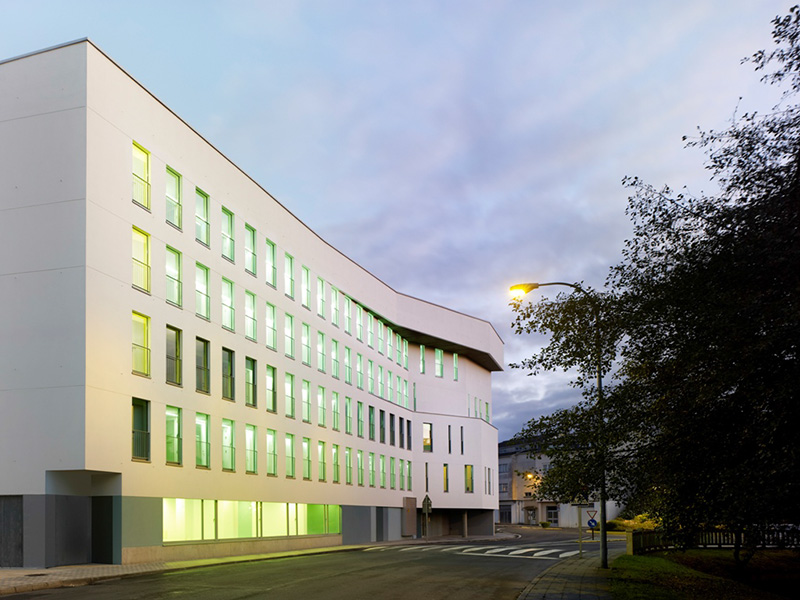
Alojamientos para jóvenes y mayores y Centro de Día, La Coruña (E) – Abalo Alonso – not selected
It is worth noting that, besides the architectural quality, selection has taken into account construction costs and assignment criteria, to ensure that a real social purpose is fulfilled by the projects. In a time were the definition of social housing is unclear and necessarily diverse from country to country, the Ugo Rivolta European Award aims at recognising the efforts of public administrations, foundations, cooperatives or even private subjects that together with architects are engaged in filling the gap between residential market and social services with affordable and high quality housing.

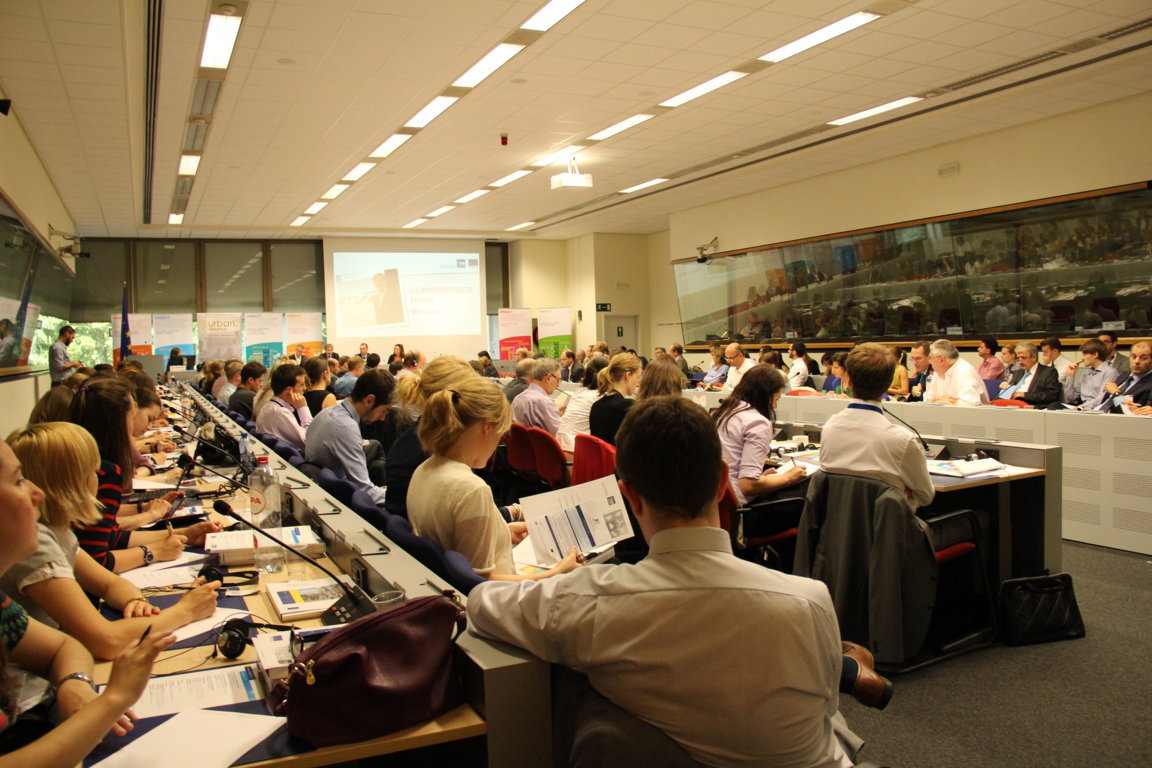
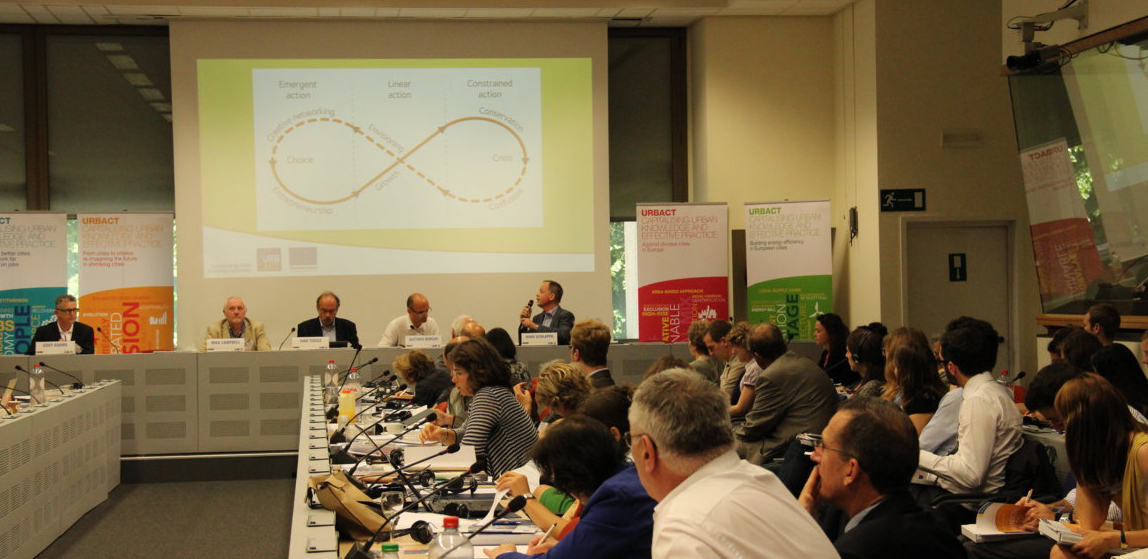
Over 150 people attended the launching event of a series of six new URBACT thematic reports “Cities of Tomorrow: Action Today” on 18 June in the European Commission conference centre. The participants have been introduced with the main findings of each report and URBACT capitalisation process in general and have debated the key urban challenges facing European cities. For those who could not make it, here is a selection of what we heard in Brussels.
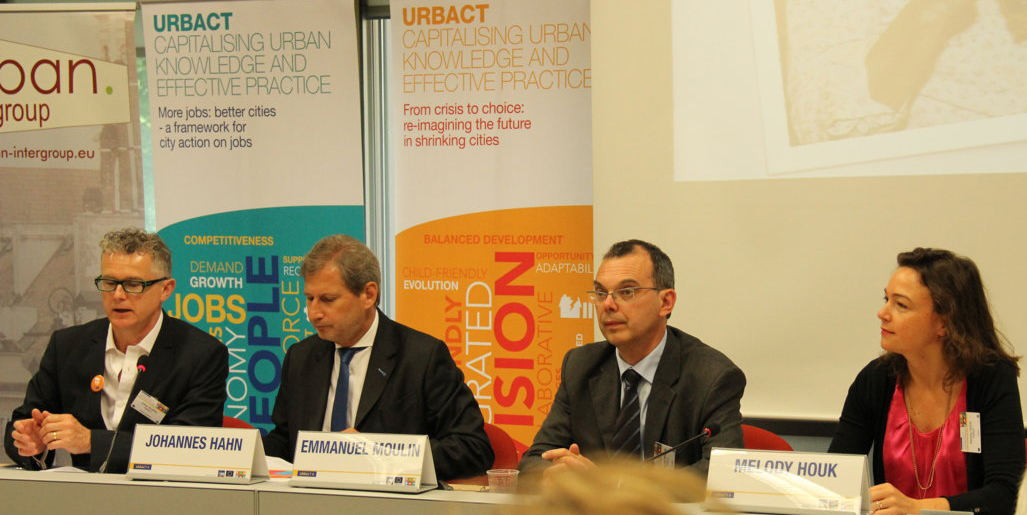
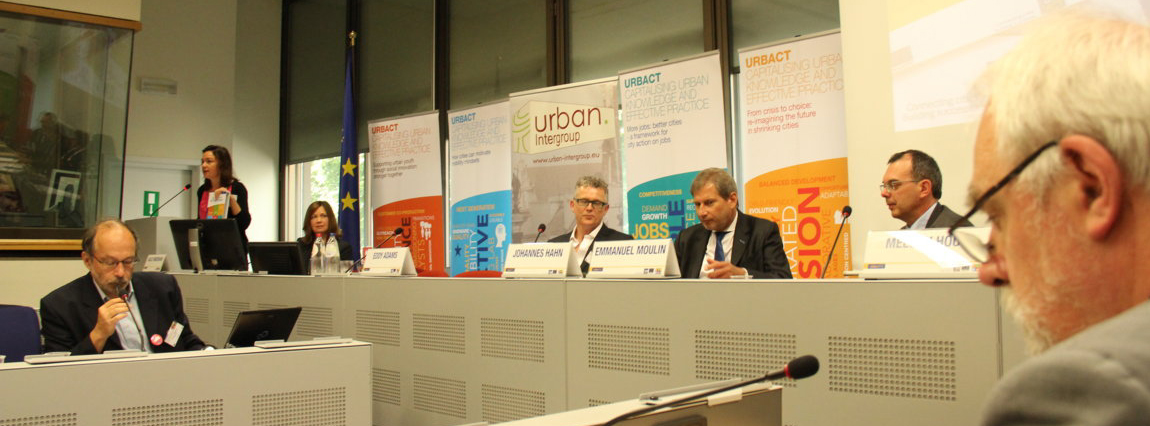
“Be very sure we will make good use of it!”, Johannes Hahn
The European Commissioner for Regional Policy, Johannes Hahn opened the URBACT launching event. He explained “Vision is fine, but it is nothing if we cannot make it a reality. URBACT is helping us to take the Cities of Tomorrow process one step further, and showing how to implement the recommendations on the ground. I am therefore very pleased to be with you here at the launch of the six URBACT thematic reports. “There are no easy solutions to any of these challenges, but URBACT – through its extensive network of urban experts and city partners throughout all of Europe – is an ideal mechanism to test innovative approaches that others can take up.”Commissioner concluded “that is why Cities of tomorrow need action today. And this is what URBACT is all about! I congratulate you on the high quality work you have produced. Be very sure we will make good use of it.”
A Unique Launching Event Gathering Political Representative and Urban Experts
The URBACT launching event followed the European Parliament’s URBAN Intergroup’s presentation of the study on good practice in integrated urban development “Urban Development in the EU: 50 Projects Supported by the ERDF in 2007-2013”. Organised with the support of Directorate-General for Regional and Urban Policy of the European Commission, the launching event of the URBACT thematic reports “Cities of Tomorrow: Action Today” was a unique event gathering political representatives including Member of European Parliament and European Commissioner representatives, decision-makers, urban experts and practitioners, as well as other related stakeholders from EU institutions, partner programmes and organisations, civil society organisations and academia.
Presentation of the URBACT Thematic Reports and Dialogue with Workstream Coordinators
In October 2011, the European Commission published a far-reaching and quite visionary report called Cities of Tomorrow – Challenges, visions, ways forward. The Cities of Tomorrow report leaves open most of the questions about what cities can do to put their potential into practice. This is the task taken up by six “workstreams” launched by URBACT at the beginning of 2012. The end result of this collective reflection was the production of six thematic reports. Prefaced by the European Commissioner for Regional Policy, Johannes Hahn, these URBACT thematic reports provide evidence of sustainable urban development strategies pulling together the environmental, social and economic pillars of the Europe2020, while also adopting an integrated and participative approach. The reports cover six interlinked challenges outlined in Cities of Tomorrow, all of which are high on the EU agenda.In Brussels, each report was introduced by its author, the URBACT workstream coordinator.Mike CAMPBELL, explained that “cities are part of the problem but also part of the solution” when introducing the report “More jobs: better cities – a framework for city action“. “Cities need to address three broad sets of issues – jobs and the economy, people and the labour market, and the connections between them. Adopt an integrated approach and make sure that your join up all the various pieces and get strong coordination”, he advised.Eddy ADAM, the author of the report “Supporting urban youth through social innovation: stronger together” explained “we want to demystify the new term social innovation and provide concrete examples of cities who are addressing these issues”. He added “By mobilising all stakeholders we can improve service design and delivery and achieve better results together”. “Spatial segregation is the project of social segregation on space. European cities are increasingly segregated. Segregation is not a problem in itself but obviously there are problematic segregated areas” explained Ivan TOSICS introducing the report “Against divided cities in Europe“. “The most important for the cities is first to understand the problem and then improve the public policies”, he advised.Sally KNEESHAW, the author of the report “How cities can motivate mobility mindsets” explained that they wanted “to change the way we think about mobility” and that “mobility is not only about infrastructures”.”It is really important that mobility is considered part of energy efficiency measures”, advocated Sally.”Cities can lead in the reduction of CO2 emissions and the fight against climate change. Integrated urban strategies provide the means to tackle the various challenges faced by cities. These strategies must link together the social, environmental and economic policy dimensions” Antonio BORGHI explained when introducing the report “Building energy efficiency in European cities“.Finally, Hans SCHLAPPA the author of the report “From crisis to choice: re-imagining the future in shrinking cities” explained that “shrinking cities are unique places to adopt new and innovative approaches” and how they “need to develop a new vision different from the vision of the past”.
Panel Discussion between URBACT Experts and Political Representatives
A “Question Time” session took also place during the launching event with questions from the floor directed at an Expert Panel.Cristina GUTIERREZ-CORTINES, Member of the European Parliament as well as Jan OLBRYCHT, Member of the European Parliament, President of the URBAN Intergroup took actively part in this panel. Władysław PISKORZ, Head of Unit, Competence Centre Inclusive Growth, Urban and Territorial Development, Directorate-General for Regional and Urban Policy, European Commission as well as Emmanuel MOULIN, Head of the URBACT Secretariat, Sally KNEESHAW and Antonio BORGHI, URBACT Workstream Coordinators were also part of the panel. The lunching event ended with a networking lunch, where participants had the chance to meet authors of publications and discuss the relevant urban issues. Read more:

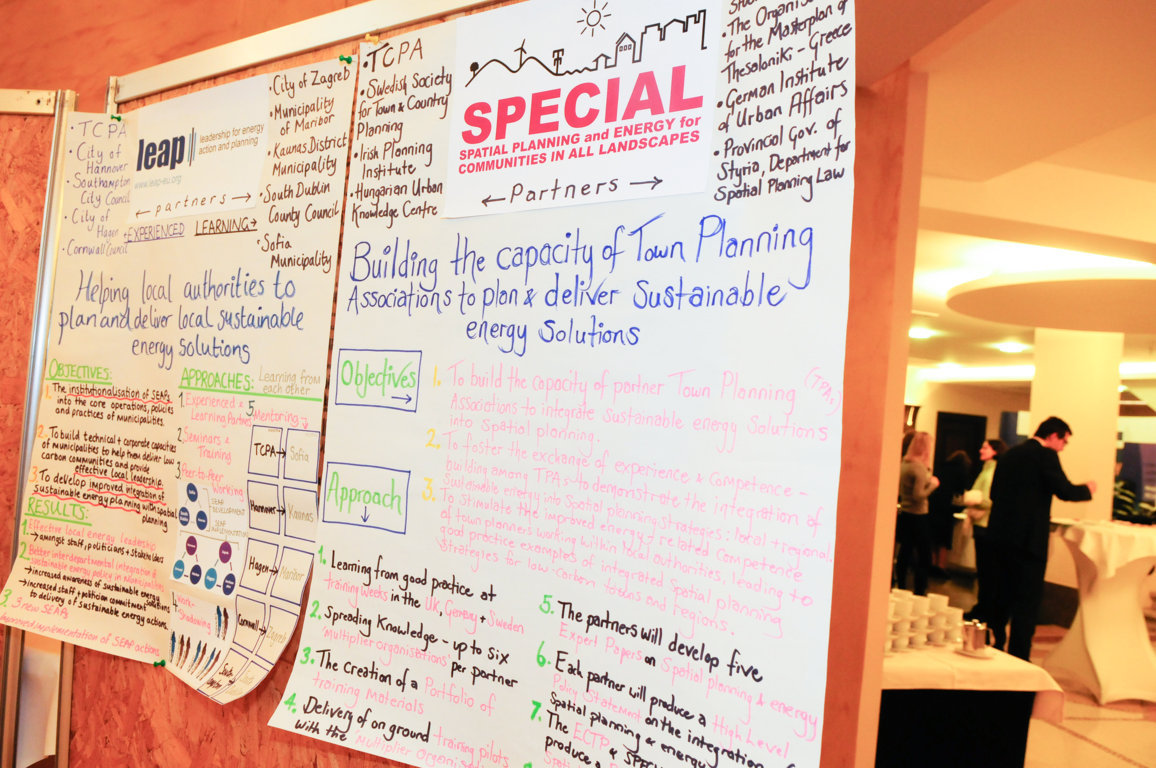
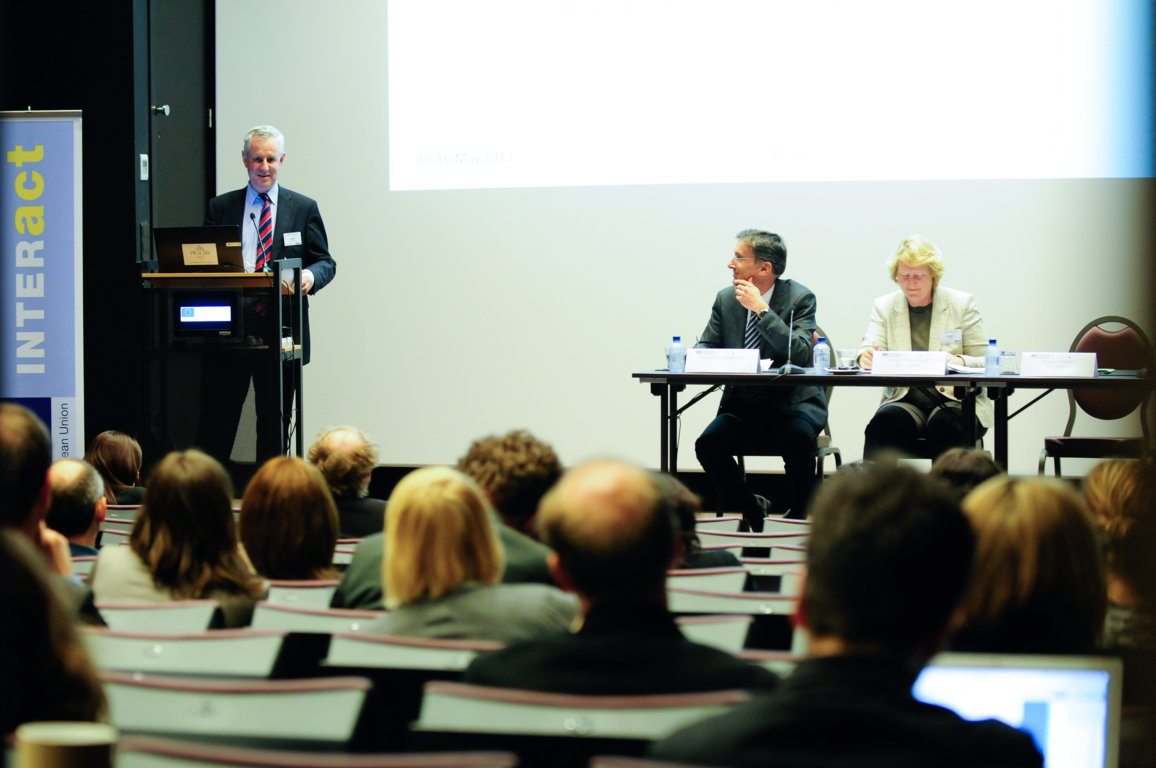 “Accelerating change at local level for effective delivery of sustainable energy solutions” – this was the theme of a two-day seminar organised jointly by the Intelligent Energy Europe Programme (IEE) and the INTERACT programme. Aim of the event was to bring together practitioners in the field of local and regional energy planning from the IEE programme and from 12 European Territorial Cooperation programmes for them to explore synergies and ways how to use and build on each others project results, but also to give them an opportunity to promote their work outside their funding programme.

In his welcome speech, the Head of Unit responsible for the Intelligent Energy Europe IEE Programme, Vincent Berruto, expressed the wish to build bridges between the “Competitiveness and innovation” driven DG Energy and the “Territorial cohesion” oriented DG Regio. As a matter of fact, if it is true that energy (supply, distribution and consumption) is high on the European agenda, there is still a lot to be done to coordinate among the various initiatives of the European Union that work towards the EU 2020 targets in the field of energy efficiency and the use of renewable energy sources. As an important step in this direction, the workshop brought together representatives and leaders of several IEE projects as well as European territorial cooperation projects: from MED, Central Europe, Alpine Region, Baltic Sea Region, Interreg Øresund-Kattegat-Skagerak OKS, Germany-Netherlands, etc. I was invited to introduce the most recent activities of the URBACT II programme in this field, the results of the CASH and LINKS networks as well as the thematic paper produced by the workstream “Building energy efficiency in European cities” of URBACT’s capitalisation process.
The event was opened by two policy key note speeches.

Marie Donnelly, Director for Renewables, Research and Innovation, Energy Efficiency at DG Energy pointed out that Europe’s high dependence on energy imports (75% of the energy we consume in the EU is imported) are threatening Europe’s economy and security of supply. Energy is costly and the EU is a price taker, not a price setter. This means that our industry and consumers are left vulnerable to the fluctuations of the market, which makes moving towards a low carbon economy more and more urgent. Donnelly also underlined how the achievement of the EU 2020 targets depends largely on action at local level, while the EU has the role to guide and support these actions. Having identified that 40% of energy consumption is for heating and cooling, 40% for transport and only the rest for industry and appliances, it is clear that heating and cooling represents the most cost efficient energy saving potential. Saving in heating and cooling means saving money, safeguarding the environment and creating jobs. Energy Performance Contracting is the way to help the public sector invest into energy efficiency without the need of big upfront payments. That is why DG Energy is promoting an EPC Campaign in all EU countries.
Colin Wolfe, Head of Unit for European Transnational and Interregional Co-operation at DG Regional and Urban Policy. He noted that in the current programme period over 400 ETC projects are working in the field of energy and around 900 million Euros of national and ERDF-funding can be linked to these ETC-energy projects, reflecting the importance of the topic also in Territorial Co-operation. Both introductory speeches gave an idea of the relevant engagement of the Commission to support actions to increase energy efficiency and promote the use renewable sources for energy production.
Martin Eibl (EACI) illustrated the key data of the Intelligent Energy Europe in the programming period 2007-13. 730m € of funding has been paid out in this period to over 700 projects on energy efficiency, renewables and sustainable transport, focusing on promotion and dissemination of available solutions. These projects work on creating favourable markets conditions, shaping policy developments and implementation, preparing the ground for investment, building capacity and skills, informing stakeholders and fostering political commitment. IEE has also supported a number of energy related initiatives in the framework of CEN, the Covenant of Mayors, the Managenergy portal, the EU sustainable energy week, project development support tools within ELENA (in cooperation with CEB, KfW and EIB), the Mobilising local energy Investment (MLEI) initiative and more than 400 energy agencies throughout Europe.

The first session was also used as an occasion to present an analysis of the contribution of ETC to European Energy Targets prepared by INTERACT and illustrated with catching graphics by Katerina Kring and Nathalie Wergles. The introductory speeches were followed by 3 interactive workshops that illustrated a huge variety of projects, different approaches and concrete results, for which there is here definitely not space enough.
Presentations and pictures of the event are available on the Managenergy website. Outputs of the workshops will be published in a publication which will certainly become a reference for all the European professionals and public administrations engaged in energy efficiency and renewables. As the representative of the Erasmus University said we are not just throwing manuals over the fence.

 This article has been published first on the URBACT Blog
 Well Designed and Built