Sunday Walk in Helsinki
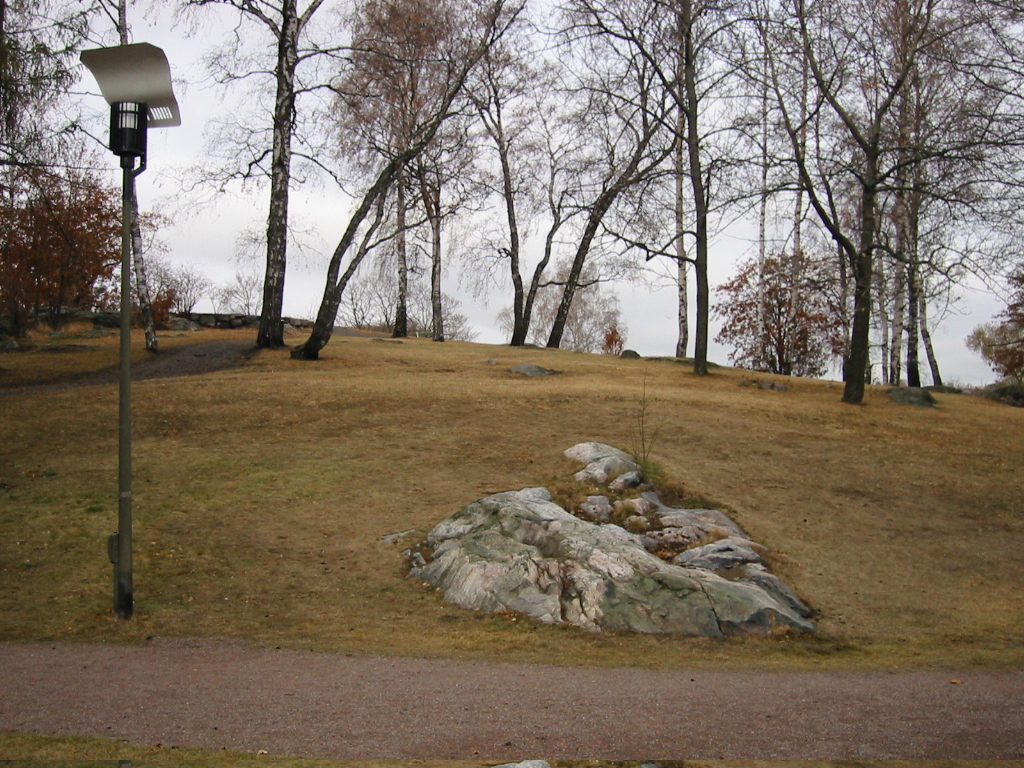
I took these pictures in Helsinki in October 2002, visiting the city on a Sunday afternoon. I remember the thin air and cold light, the quiet and pleasent atmosphere walking around the Finlandia Hall by Alvar Aalto, Kiasma Museum by Steven Halll (according to the last issue of Monocle the only contemporary building by a foreign architect in the whole country), the Central Station by Eliel Saarinen (father of Eero), people coming and going in front of Stockmann, a beautiful yellow brick University building and some brightly painted residential courtyards. I did not have the impression of being in the city with the worldwide highest quality of life, but it is almost ten years ago. It’s about time I visit Helsinki again and see what is happening.
And the Winner is… Helsinki!

The 5th edition of the Monocle survey of quality of life in the cities deserves some surprise, a lot of meaningful data and some more hints to think about the benefit of such an exercise, that is my main concerns. Is it worth trying to find relevant, available and reliable indicators to define the quality of life in an urban environment? Is quality of life or urban quality measurable in terms of statistical data? Does it make sense to try to measure and rationalize values that cannot per se be captured by numbers? Well, I think it does and reading the annual Monocle Quality of Life Survey is an example of sensible attempt to define the tangible and intangible assets of cities.
As usual the survey is included in the summer double issue of the magazine ( 45, July/August 2011, 250 pp.) together with lots of related articles, conversations, cartoons, tips, photographs etc. I have particularly enjoyed the articles about Breaking the rules of town planning, the relationship between money and urban quality seen through the eyes of economic statistics. Far less interesting is the attempt to design a perfect urban block and the list of things to do in order to improve your quality of life, but after all it is a nice reading for the deckchair. A kind of infotainment which is not resilient to any kind of advertisement (big firms, small design studios, , city marketing, fashion and high-tech brands) although keeping a pleasant degree of independence and coherence.
Following Zürich (2009) and Munich (2010) this year Helsinki, the daughter of the Baltic Sea, has become the crown of the World’s best city to live and work, featuring the most innovative and sustainable urban development policies. Another North European city, sharing the podium with Zürich (2) and Copenhagen (3) this is no big surprise, but certainly a peculiar choice. Finland is a land of understatement and its capital city is not famous for its spectacular skyline, worldwide events or daring architecture. No big headlines in the news: Helsinki is not touched by the dramatic flow of migrants that concerns most European cities, nor by the economic crisis and unemployment is not a big issue. Isolation, national identity versus globalisation and risk of marginality may be the preoccupation of such a small population in a rather unfriendly climate. Therefore it is enlightening to read about the smart urban solutions that attracted the attention of Monocle’s staff.
For example it is useful to know that OECD has rated the Finnish education system among the best in the world in the last Pisa surveys and that it is free of charge up to the university. The same excellence level is found in the health and public transport systems and it is almost needless to say that Helsinki is among the less polluted urban areas in Europe. This country aims at making its lakes’ water drinkable in the next years, but it does not mean that concrete has ben banned from the country. On the contrary, the former docks of the harbour are subject of a gigantic development project, after their relocation of the harbour facilities, making place to a brand new city neighbourhood. Finland is gaining ground, among others, in design, architecture and food culture. This is tackling competitiveness and attractiveness through higher quality of life. Finn’s know how to set priorities.
Monocle’s editorial staff is well aware that its ranking may appear a bit too cool and aseptic, business oriented and with less attention to globalisation issues, demographic change, migrations, participation processes and social cohesion. On the other side they declare what are the priorities for ranking: environmental sensitiveness, crime rate, public transport, investment in public infrastructure, sunny days, international connectivity, bureaucratic burden for enterprises and a good deal of subjectivity which is absolutely legitimate. The survey is not a piece of scientific research or institutional statistic, but it has an own coherence and the great advantage of being pleasant, worldwide distributed and open for discussion.
Many countries won’t have their cities ranked in the top 25 and you may ask yourself why New York or London are not considered and whether Rome is really less livable than Portland or Fukuoka, but this is part of the game. Anyway for those who are not ranked there are generous forms compensation, like for instance the special article dedicated to Florence, Montpellier and San Francisco or being among the 5 most lovable cities that will never make it in the top 25 (this year Rome, Seoul, Buenos Aires, Casablanca, Kagoshima).
You can watch the video preview of Monocle’s Quality of life survey here. For the video preview of the issue 45 of the magazine click here. For my post about 2010 Monocle’s Quality of life survey click here.
Hans Rosling – Learning by Numbers

Swedish professor Hans Rosling and its website www.gapminder.org have rapidly become one of the most authorative sources of statistics about any kind of global trends. The first issue of Google UK magazine Think Quarterly, the Data Issue, interviewed Hans Rosling as “data superstar”, “the world most famous statistician”. Introducing Rosling the interviewer also mentioned that in 2007 Google Inc. acquired from the gapminder Foundation its software tool Trendalyzer which makes possible to transform data into dynamic and interactive graphics. Google labs has started a project on public visualisation of data which is not yet comprehensive as we would expect, but it gives an idea of the potential of data.
The Google Public Data Explorer makes large datasets easy to explore, visualize and communicate. As the charts and maps animate over time, the changes in the world become easier to understand. You don’t have to be a data expert to navigate between different views, make your own comparisons, and share your findings. Students, journalists, policy makers and everyone else can play with the tool to create visualizations of public data, link to them, or embed them in their own webpages. Embedded charts and links can update automatically so you’re always sharing the latest available data.
Professor Rosling is also a gifted speakers and his conferences are very popular in internet. I have particularly enjoyed his recent interpretation of the role of the washmashine in modern society.
Jeff Wall on the Crooked Path

I had few occasion to see works of Jeff Wall, but I always found his lightboxes both intriguing and familiar. The first feeling reflects the unexpected depth of these pictures, which become almost 3-dimensional. The second is about the ordinary subject of the pictures, but what is actually ordinary? On the basis of these uncertain and to some extend opposite feelings I decided to visit the exhibition at the Bozar in Brussels, despite the little time and nice weather outside.The exhibition starts slowly with a few large format lightboxes in large spaces: the kind of exhibits the Canadian artist is well-known for. Proceeding along the visit works of art by other artists starts to interact and interfere with the pictures, giving them even more depth and complexity that the visual one. The audio guide is very useful to understand how Jeff Wall and curator Joël Benzakin have worked together to provide the visitor with a comprehensive experience of the artist’s vision. The list of artists and artworks included in the exhibition as references to the works fo Jeff Wall is impressive (including a.o. Marcel Duchamp, Diane Arbus, Eugène Atget, Walker Evans, Frank Stella, Dan Flavin, Dan Graham, Carl Andre, Thomas Struth, David Claerbout and Andreas Gurski) and bring the conceptual references into art history and real life of their actors.
Jeff Wall’s photography has the suspense of movies, the depth of paintings, the ability to capture reality of photography, the ambition of open your mind of conceptual art. It is an open door to whatever you like to feel and discover. Furthermore – as an architect – I appreciate the well balanced composition of shapes, light and movement, the careful choice of materials and treatment of surfaces, the sharp view at people’s everyday practises in space. Unveiling the extraordinary and unsaid of carrying a trolley on an overpass, bringing a tray covered by a towel, falling from a tree, walking on a crooked path, standing in front of a nightclub is the extraordinary skill of Jeff Wall’s world of art.
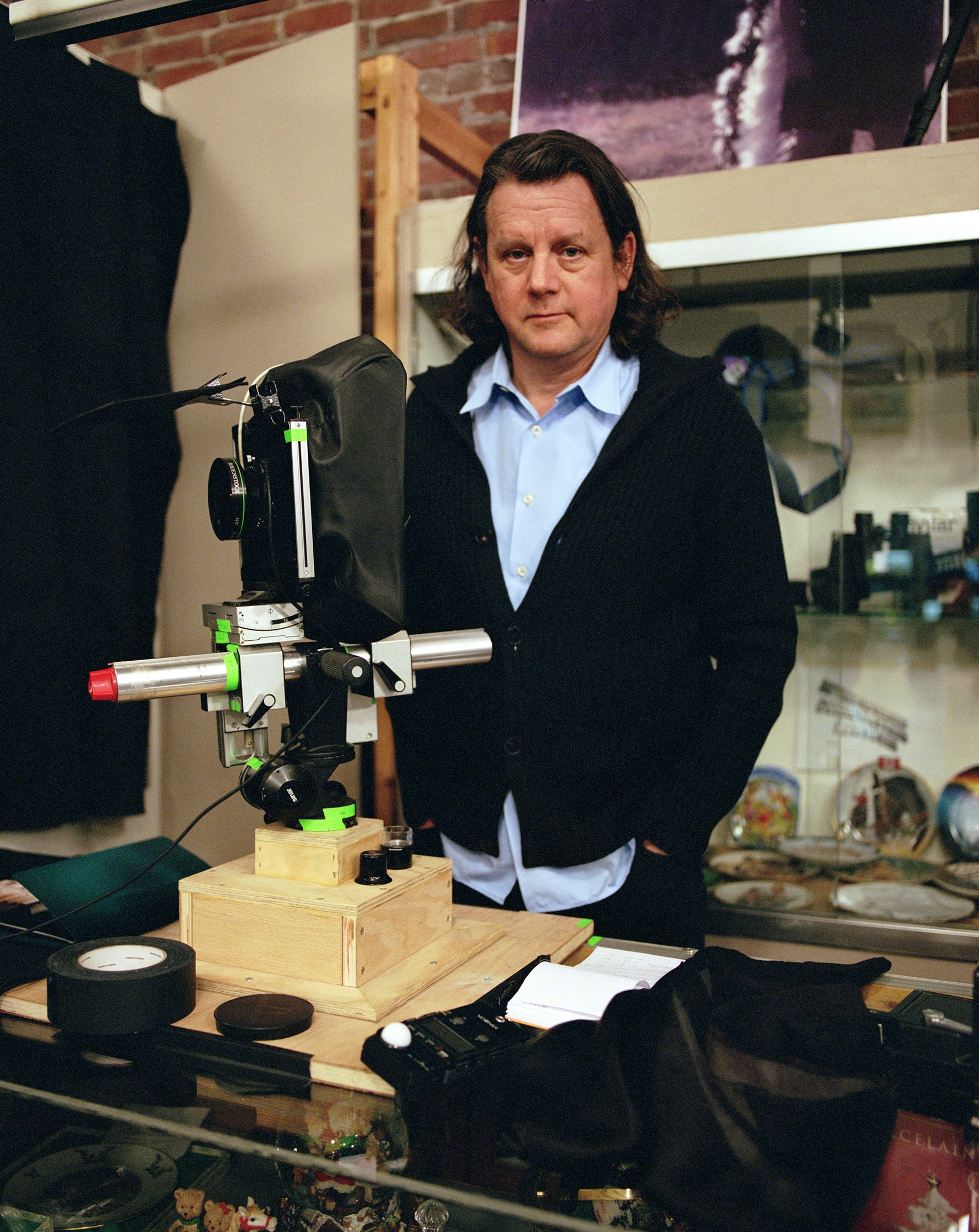
Jeff Wall © Kirsten de Graaf
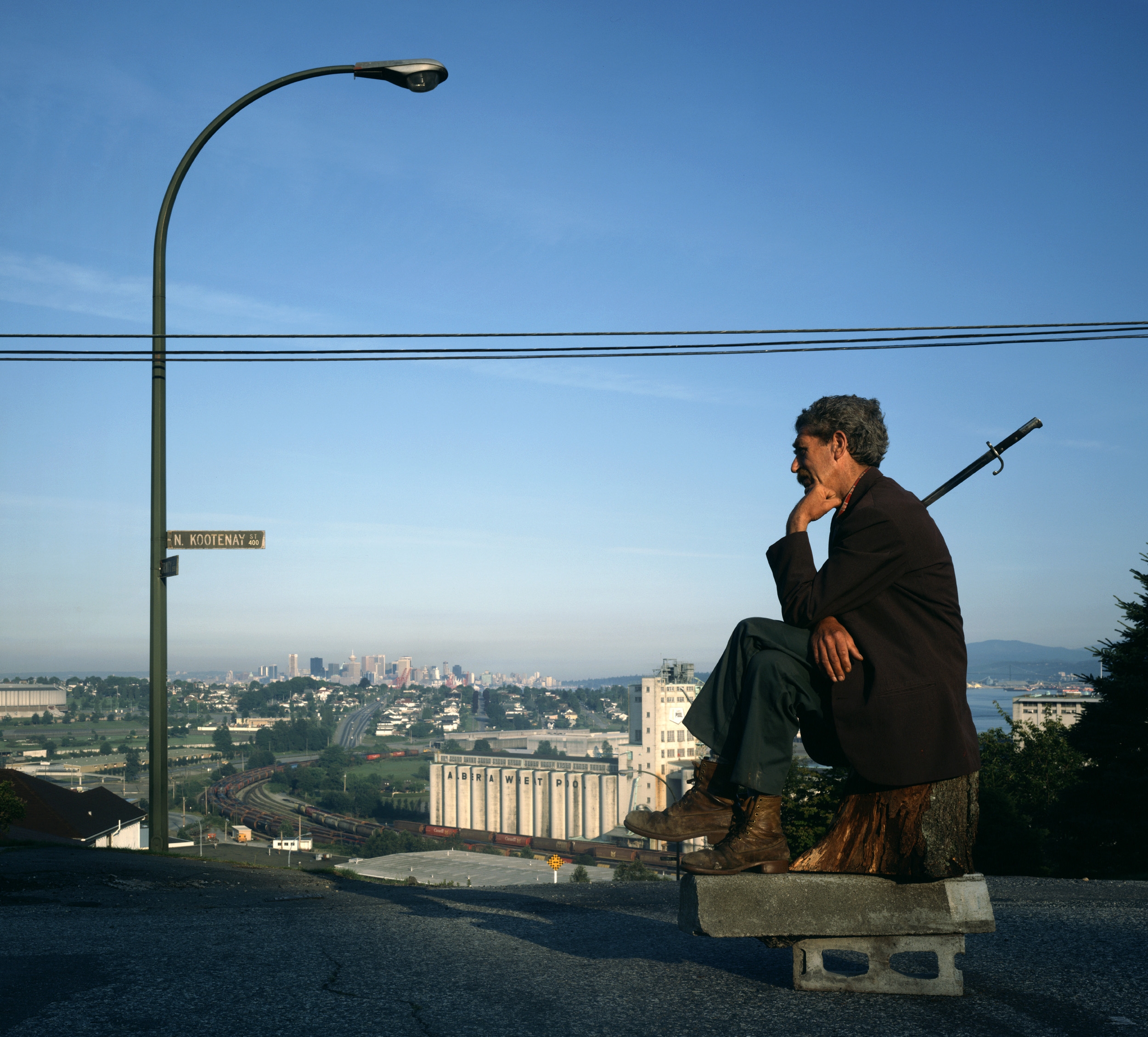
The thinker - © Jeff Wall - courtesy of the artist
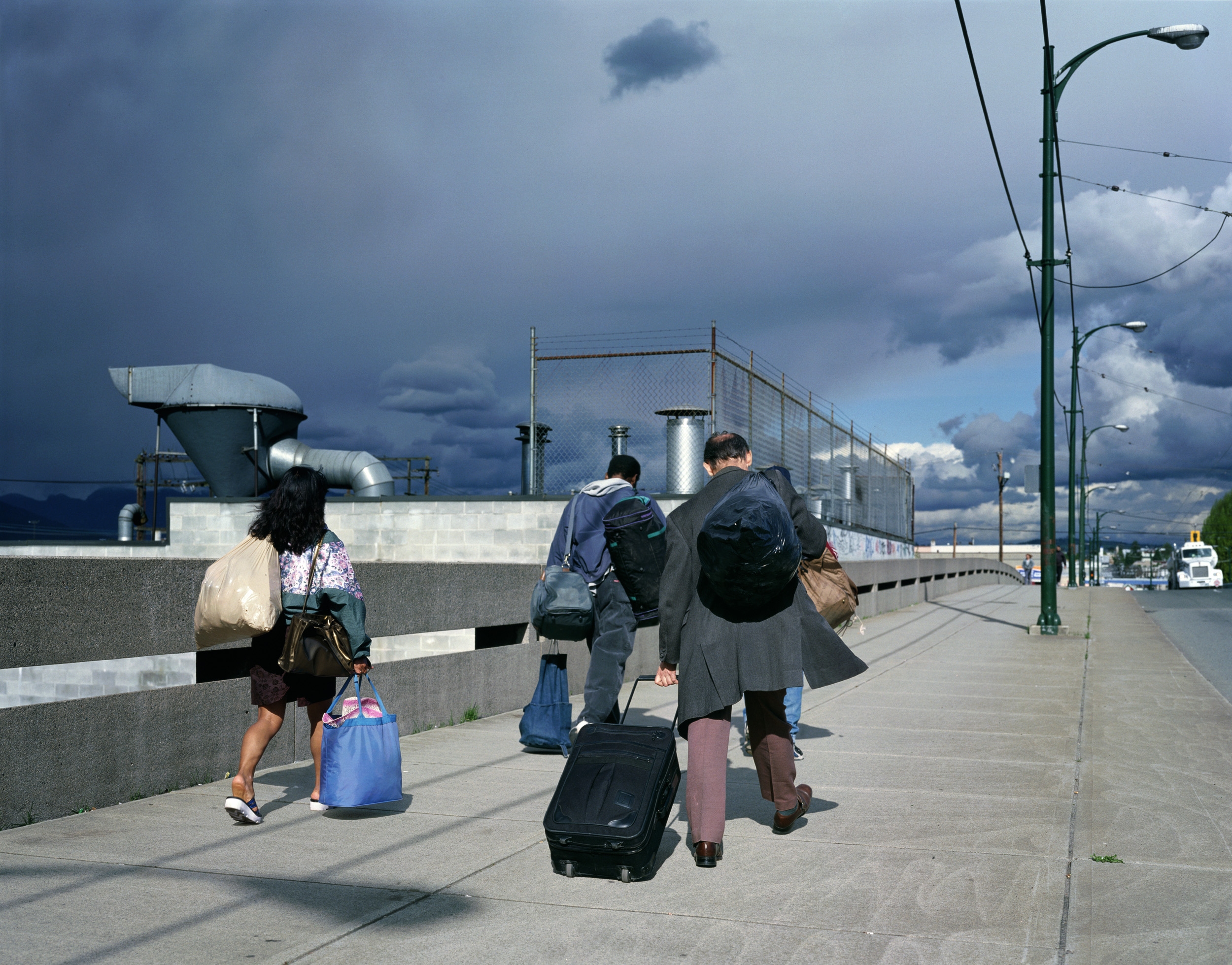
Overpass, 2001 - © Jeff Wall- courtesy of the artist

Boy Falling from Tree, 2010 - © Jeff Wall - Courtesy of the artist

In front of a nightclub, 2006 - © Jeff Wall - courtesy of the artist

Insomnia,1994 © Jeff Wall, Courtesy of the artist
Jeff Wall
The Crooked Path
Curator: Joël Benzakin
Scientific advisor and publication editor in chief: Hans Maria De Wolf
Friday 27.05 > Sunday 11.09.2011
Bozar Centre for Fine Arts
Rue Ravensteinstraat 23 1000 Brussels
Visiting Greece /3 Thessaloniki’s Heptapyrgion

This amazing Byzantine and Ottoman fortress is located on the north-eastern edge of the ancient acropolis of Thessaloniki with a striking view over the city and its harbour. According to the meaning in both Greek and Ottoman language as “Fortress of the Seven Towers” it has been used for military purposes untill the late XIX Century and then as a prison untill 1989. Meanwhile no trace remains from the military buildings – except for the fortified shell – the conversion into prison is still evident with the watchtower in the middle of the courtyard subdivided into five separate enclosures by fences and walkways.
Restoration works began in the ’70es and continue today to accommodate an archeological museum, keeping the unique features of this building following a thoughtful and inclusive concept. Visitors are invited to walk on the guard’s paths and watch over the prison yards where the archeological findings are neatly stored. The masonry includes a large number of so-called spolia, decorative elements, stones and inscription from different buildings, ages and culture : a compendium of urban history.
Glazing through metal grates, reading about the history of the place inside the watchtower suspended on the former prison courtyard and looking at the workers restoring some parts of the museum complex are some of the experiences that we had in the Heptapyrgion thanks to Kleopatra Theologidou who kindly showed us this relatively unknown archeological and architectural jewel.
 Well Designed and Built