Interview with Grafton Architects

Almost every day I take the tram in Porta Lodovica and watch over the extension of the Bocconi school of economics designed by Grafton Architects. The building (completed 2009 and result of an international design competition) won several architectural awards in the last years thanks to his rigorous, expressive and uncompromising architectural language. Yet it works well and is beloved by its users. It is a seldom building reconciliating critics, users, professionals and builders, naturally advocating the civil role of architecture with its presence. In my opinion the best public building built in the city since decades.
Here you can download and read the recent conversation I had with architects Yvonne Farrel and Shelley McNamara, published on Costruire in laterizio 144. The issue dedicated to Dubliners brick architecture featuring projects by O’Donnell+Tuomey Architects, DTA Architects, Donnelly Turpin Architects, Niall McLaughlin Architects, A2 Architects and others. Our conversations starts by the Bocconi, extends to their working method and architectural approach and anticipates some of their next realisations.
One of these days I will have a walk around and inside the Bocconi extension, take some pictures and add them to this post.
Job Roos is a rare example of Dutch architect dedicated to the retrofitting of existing buildings. His expertise has become highly requested now that it has become clear the urgency of adapting our cities for sustainable development and that the most sustainable way to do it is to upgrade existing buildings. The paradigm shift from demolition&new building to retrofitting of existing buildings in the Netherlands has been symbolically marked by a traumatic event: the fire that destroyed the Architecture Faculty of the TU Delft on 13th May 2008. That shocking experience and the quick and smart re-birth of the Bouwkunde Faculty from its ashes was the subject of Job Roos’s presentation in a workshop of the URBACT LINKS Network in Veria (Greece). After the workshop I had the chance to ask Job a couple of questions about the relationship between contemporary architecture and heritage conservation in his country.
- The Netherlands is a man-made land where almost nothing is natural. Dutch people are well knows for their capacity to face problems and find innovative and pragmatic solutions. Sometimes they do it without caring too much about legacy of the past or the so-called genius loci. Is this attitude changing in recent years?
One can sense the changing attitude. What certainly does help is the world-crisis since 2008. More and more we are forced to use the existing building-stock, about 70 % of the design-task for next generations is in the re-use of the existing. For instance there is a lot of office space empty in the Netherlands (about 7 million square meters), and another example in 2020 about 1200 churches will be without use. Not such an easy task to transform these buildings into more economical use, but there is a strong wish to do so. Government supports this approach, but the market is still not on the real move. As far as the legacy of the past is concerned, it is positive that we have to deal more and more with the existing. Economically driven yes, innovation and pragmatic will come up as is the Dutch attitude for ages already in this by man controlled delta. But there also is the chance for professional designers and developers to train ourselves and the public in the unique possibilities our frozen culture offers us. And we do need to work hard on this.
- Is the restoration of built heritage a sustainable cost for municipalities with scarce resources and a real estate sector in difficulty?
I would rather answer the question out of the perspective of the developer. My experience that the projects which are still on the move are those with a thorough link with history. In fact one could add to the previous question, that the public is still willing to invest more for their houses in something with a profound link to history. I can see this happen in my own projects that are still on the move such as the re-use of an old rope-factory (added with the presence of nice landscape), the re-use of military complexes and also on locations of industrial heritage. The real problems for redevelopment one can see in the vast stock of office-space where culture is not the strongest feature. Here we need a total new approach for redevelopment which really goes beyond the individual objects. It concerns sustainable investment in city patterns with the focus on added value. Success is dependent on multidisciplinarity and unorthodox approach.
- What are the cornerstones of a coherent, creative, sustainable and future proof management of historical city centers?
I would say a wide perspective on future possibilities. Therefore a good sensibility of what was, what is and what could be. As a matter of fact a lot of knowledge and skills concerning the past to manage the past into the future. To be successful in process one needs a good balance and communication between (local) government and their civil servants and advisers. This means being very professional and having the right expertise and attitude and a real and good managed involvement of the public. The understanding of value and how to handle it (cultural, social, emotional, economical value etc.) in a good balance may be the main cornerstone for the development into the future of our past. Therefore we need social and contextual intelligence amongst our the important stakeholders.
Prof. Roos suggested to conclude and illustrate this short interview with some pictures of a much debated project in Rotterdam: the renovation of the Post building proposed by UN-Studio. The project is about the radical transformation of the old Post Office in the center of Rotterdam into a shopping center, while keeping its main architectural features. His opinion about it is that “if one can look (and is willing to search) behind the design task and its possible meaning for the city, it could work.”
 View of the exterior in 1927
 View of the main hall in 1927
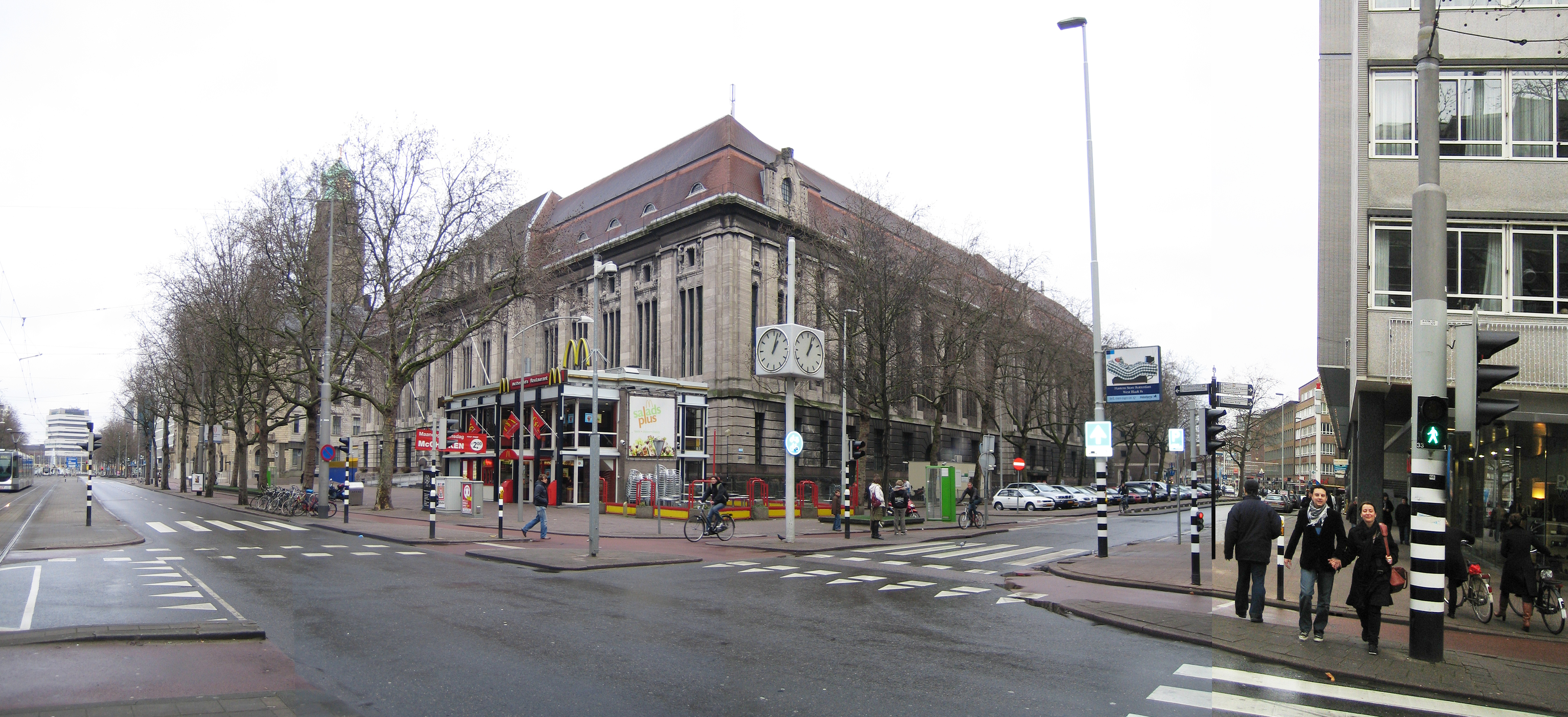 View of the existing building (2007)
 Refurbishment Project – Groundlevel of the Main Hall
 Refurbishment Project – Interior Main Hall from the Mezzanine Floor
 Sideview of the existing building
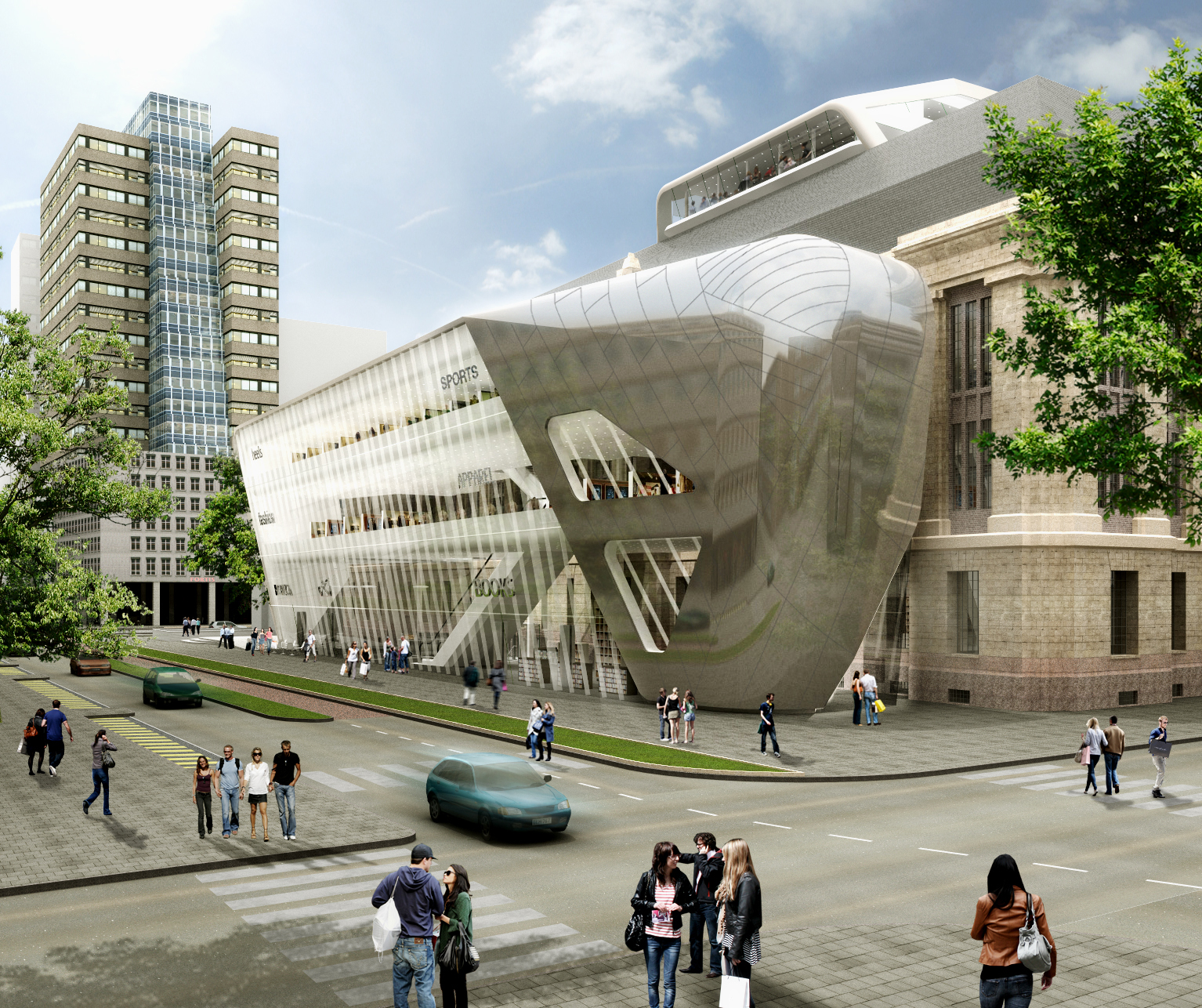 Refurbishment Project – Perspective View from the Main Street
Ioanna Papayianni (University of Thessaloniki) about Heritage Repair and Maintenance in Greece

Professor Ioanna Papayianni, chemist and civil engineer, is an expert at an international level in the rehabilitation of cultural heritage, carrying out scientific research on building techniques and materials of monuments from all periods at the University of Thessaloniki. At the URBACT LINKS Network Workshop in Veria she presented research findings related to the rehabilitation of the city’s historical center and the workprogram she has started as a contribution to the Network. Her presentation is one of the most significant contributions to the workshop and reading the introduction is useful to understand its rigorous approach:
Veria is one of the most important Historic centers in the South Eastern Europe. Apart from Byzantine churches, the old buildings (private or public houses) have been constructed from the pre-industrial revolution period up to the early decades of the 20th century. They constitute a great part of its cultural heritage which testify the historic and socio-economic background of the area.
The historic buildings of Veria could be categorized (according to their style) into those of vernacular architecture, which have been developed in the recent past in South East Europe and in those of neo classicism or eclectic architecture.
Most of historic buildings have been abandoned and destroyed by overloading and earthquake vibrations, as well as by the ageing effects due to moisture and other deterioration factors of the environmental conditions. Some of them have been repaired and retrofitted with concrete, very often without any respect to their characteristics of traditional structures.
The importance of the proper repair and maintenance, as well as their revival and incorporation into the modern city, for the benefit of historic buildings, society and local economy has been well defined in the frame of URBACT LINKS project.
Therefore, developing a strategy for the repair, maintenance and upgrading of historic buildings, which will be based on the well established principles of restoration is of first priority, for their incorporation into the contemporary plan of the city. Furthermore, an estimation of their energy efficiency is required to make them habitable again. As known, the old buildings are inherently green, because they were designed to be climatically appropriate. However, climate has changed, especially in urban regions and energy efficiency of an old building is questionable.

After the workshop I had the opportunity to ask some questions to prof. Papayianni.
- Greece has undergone major changes in the last decade. With the turn of the century, joining the Euro and hosting the Olympic games the country has been projected into the future from its world apart. Is the modernization causing damages for the urban and built heritage or has it been an opportunity?
During the last decade, most of large infrastructure projects were carried out in Athens. The impact of all relevant activities for modernization of the city was rather positive, since old buildings were restored and archaeological sites were conserved.
- What are the main threads for Greek historical cities? Can Europe play a positive role in their safeguard and restoration?
The main threads are lack of funds and strategy for protection and upgrading of the historical centers, apart from natural disasters, such as earthquakes, floods and fires. Because of inadequate and inconsistent stewardship of cultural assets they are exploited inappropriately, resulting in many problems, against the preservation of the identity of the historical centers and buildings.
- What are the cornerstones of a coherent, creative, sustainable and future proof management of historical city centers?
A strategic policy to be established by local authorities, who will be compelled to implement it. It will concern:
(a) Record of old building asset and categorize them.
(b) The conservation and stabilization of them.
(c) Creation of motives to keep them active.
(d) Take into account the harmonization of historical centers to any expanding of the city and avoiding the development of large cities.
(e) Make citizens active in protecting heritage.
(f) Continuous efforts for upgrading historical centers.


Prada Fall/Winter Man Collection – Fashion Show Design by OMA

Architecture, Fashion, Cinema and New Media are the ingredients of the new Prada Gesamtkunstwerk, introduced and streamed on OMA‘s and Prada‘s websites, commented by Samuel Medina on Architizer.
Related articles
- Rem Koolhaas – designing the design process (notura.com)
- Deconstructing Rem Koolhaas – (welldesignedandbuilt.com)
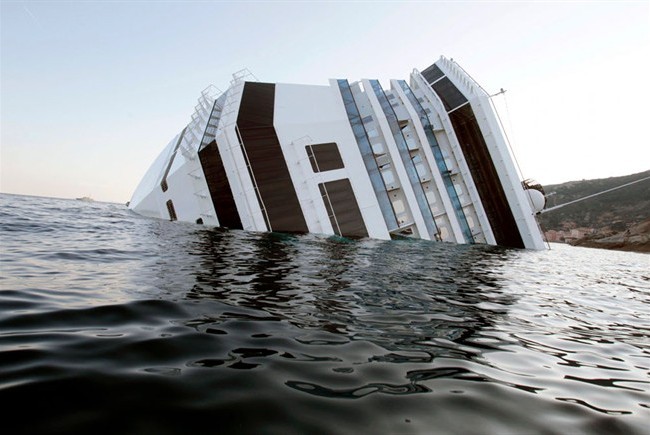
Costa Concordia @ Isola del Giglio | Jan. 14, 2012


 Well Designed and Built