European Central Bank HQ in Frankfurt
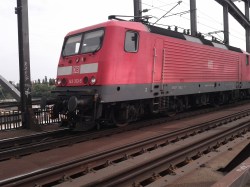
Not so long ago, when talking about economy was pretty much the same as talking about industrial production, Germany was usually called the “locomotive of Europe”. Today, although the German economy is still leading in the old continent, this say seems definitely outdated. Is the locomotive transforming into receiver?
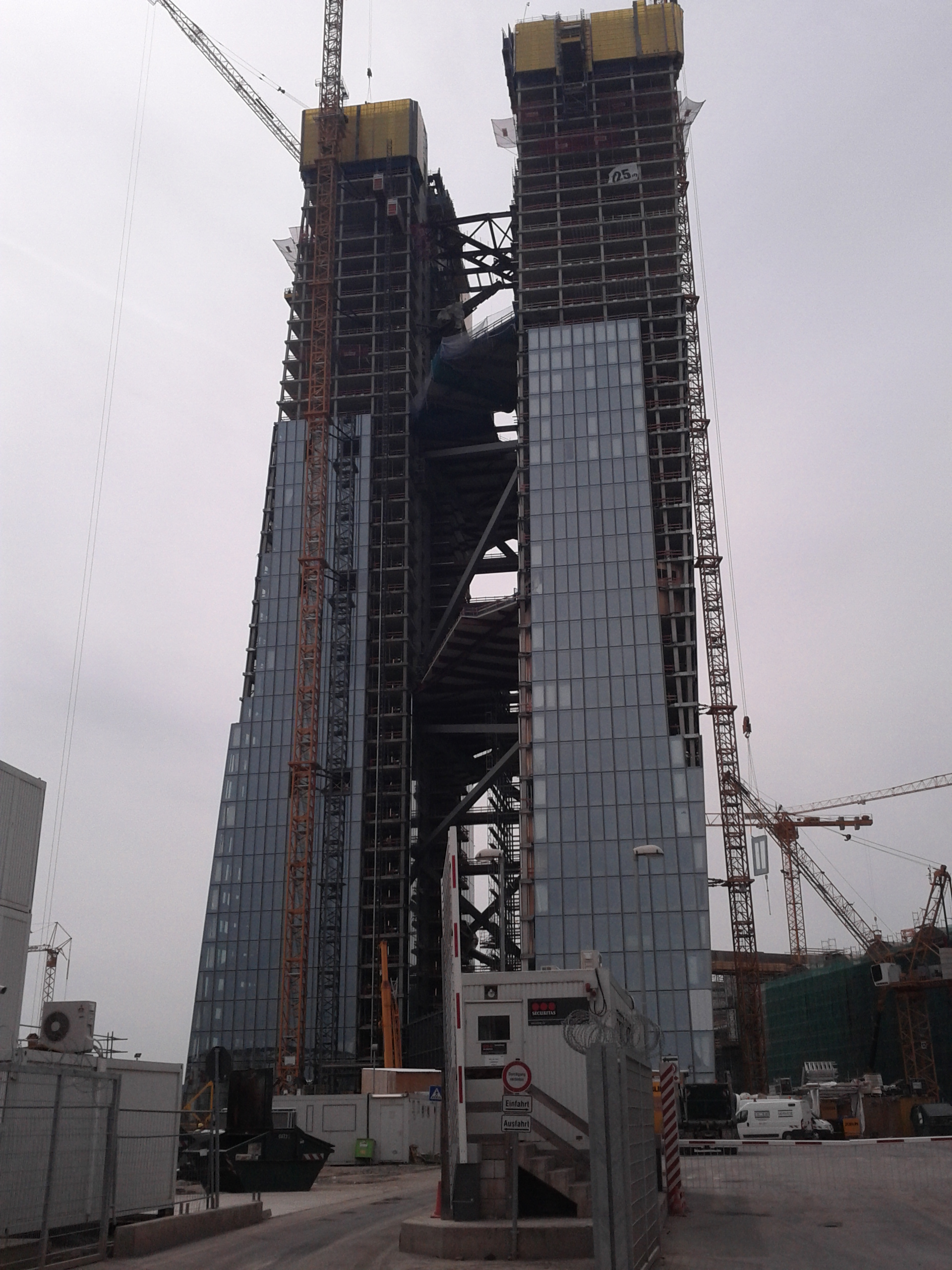
Being in Frankfurt at the end of June I had the chance to visit its most spectacular buildings site, the new HQ of the European Central Bank. In a time when a single word coming from a board member of this institute can make a European State bankrupt, understandably there is no much talk about its almost finished 185.000sqm office building. Certainly in 2003, when the international design competition was won by Coop Himmelblau, nobody could predict the sequence of earthquakes that would have shaken the global financial world, cancelling some of their biggest players. Maybe nowadays the choice would go to a more sober and less optimistic solution, or even to the re-use of existing office spaces. Anyway 2014 the building will be ready to be occupied and the ECB will move from the tiny Eurotower into the new huge complex. For sure it will become an icon among European institutions and everyone will see it everyday on the media. But what is most interesting for me is the effect that it will produce on this part of Frankfurt.
As a matter of fact this was, and is still today, a part of the city left aside, the Ostend. Characterised by the Grossmarkthalle, the largest food market in the region, and by the Main river harbour Osthafen, this was naturally a worker’s neighborhood, without major urban qualities or focus points. Since the arbour and the food market were dismissed the situation became even worst and also the local train station, the Ostbahnhof, was closed. Needless to say this was not by any chance a preferred location by any economic activities or urban developments.
Things began to change in the early 90es, when the area of the old slaughterhouse on the other side of the river was redeveloped into a high quality residential areas. The decision to locate such a prominent institution like the ECB on the 120.000sqm formerly occupied by the Grossmarkthalle with its imposing bricks halls, went in the same direction and it will be utmost interesting to see what the long term urban developments effects will be. Today not any kind of ongoing fertilisation nor gentrification is noticeable yet.
Thanks to my friend Christoph for taking me there for a nice walk.
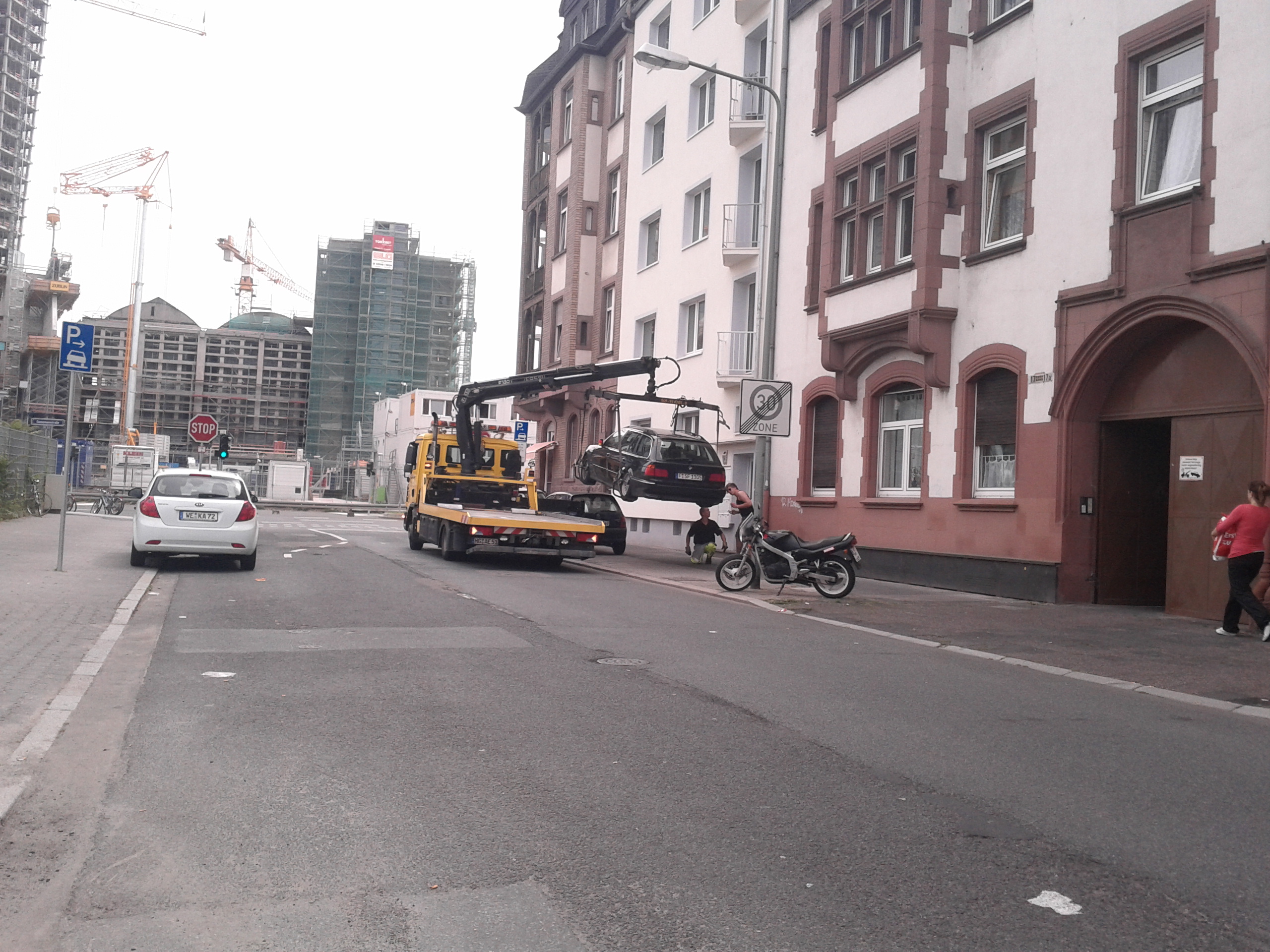
I still wonder whether the car had a problem or it was just in no parking zone.
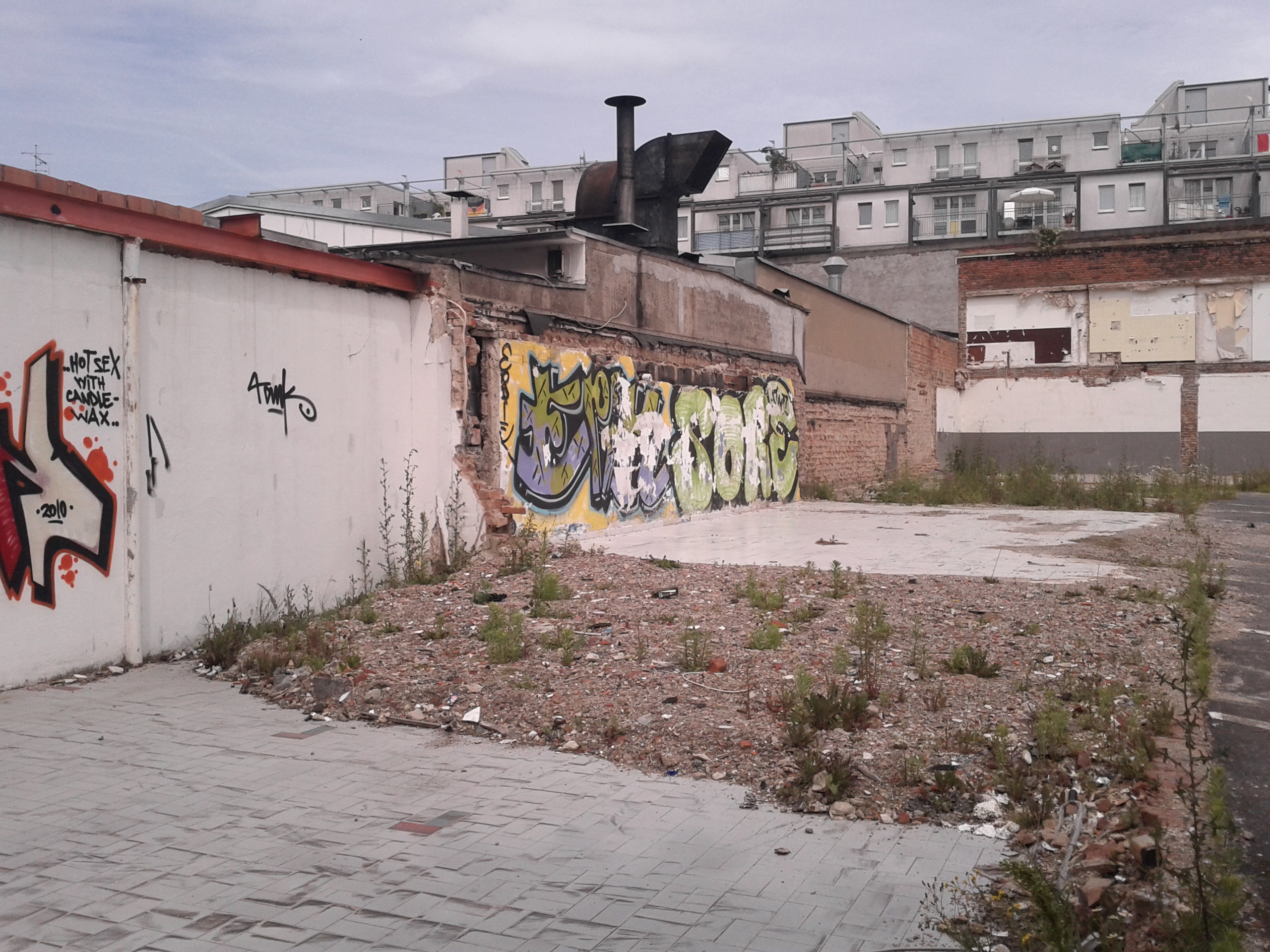
There are some new residential developments, yet there is still a lot to be done to comply with German standards.

Normally architects like buildings at this stage, more than when they are finished. When behind the shell you can see bones, muscles and veins of the building, geometries are clearer, there is a flair of handcrafts and industry and you can complete the building with your imagination how you prefer. I must say that in this case I was not excited at all by this unfinished building. The size is impressive, but not enough to make any other architectural aspects irrelevant. The two twisting skyscrapers are heavy dancers, the skin is not bright enough, the relationship with the existing low rise building not evident yet. In the mind of the architects that was different, I hope it will in the final result.


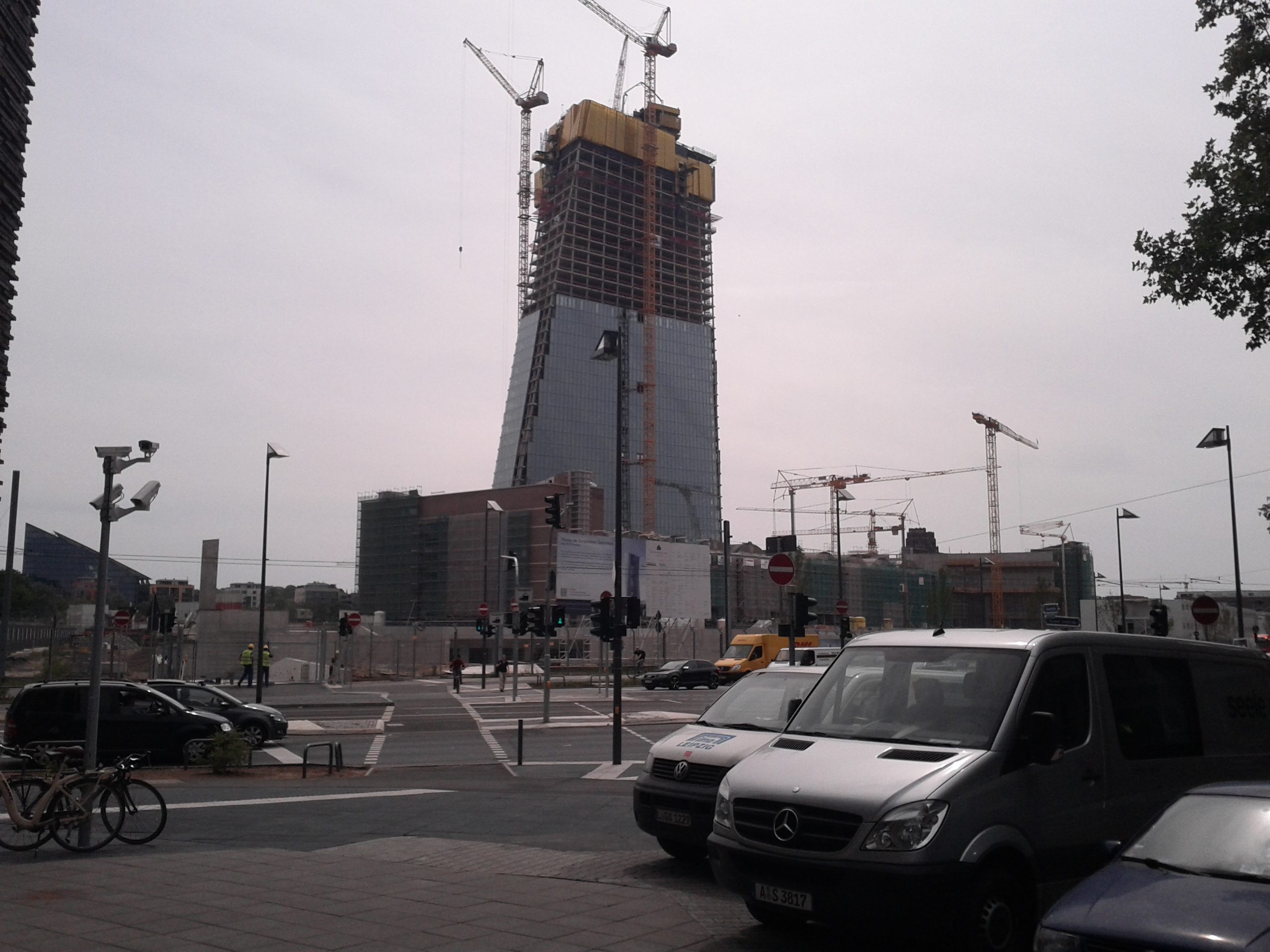

Some parts of the Grossmarkthalle have been naturally demolished, but others should become among the most remarkable features of the new building complex. On the background the skyline of Frankfurt’s city. I think it is a wise decision to have the seat of such a delicate institution away from the city, where it is now, away from the other private banks. Hopefully it will reflect and strengthen the independent position of the ECB.
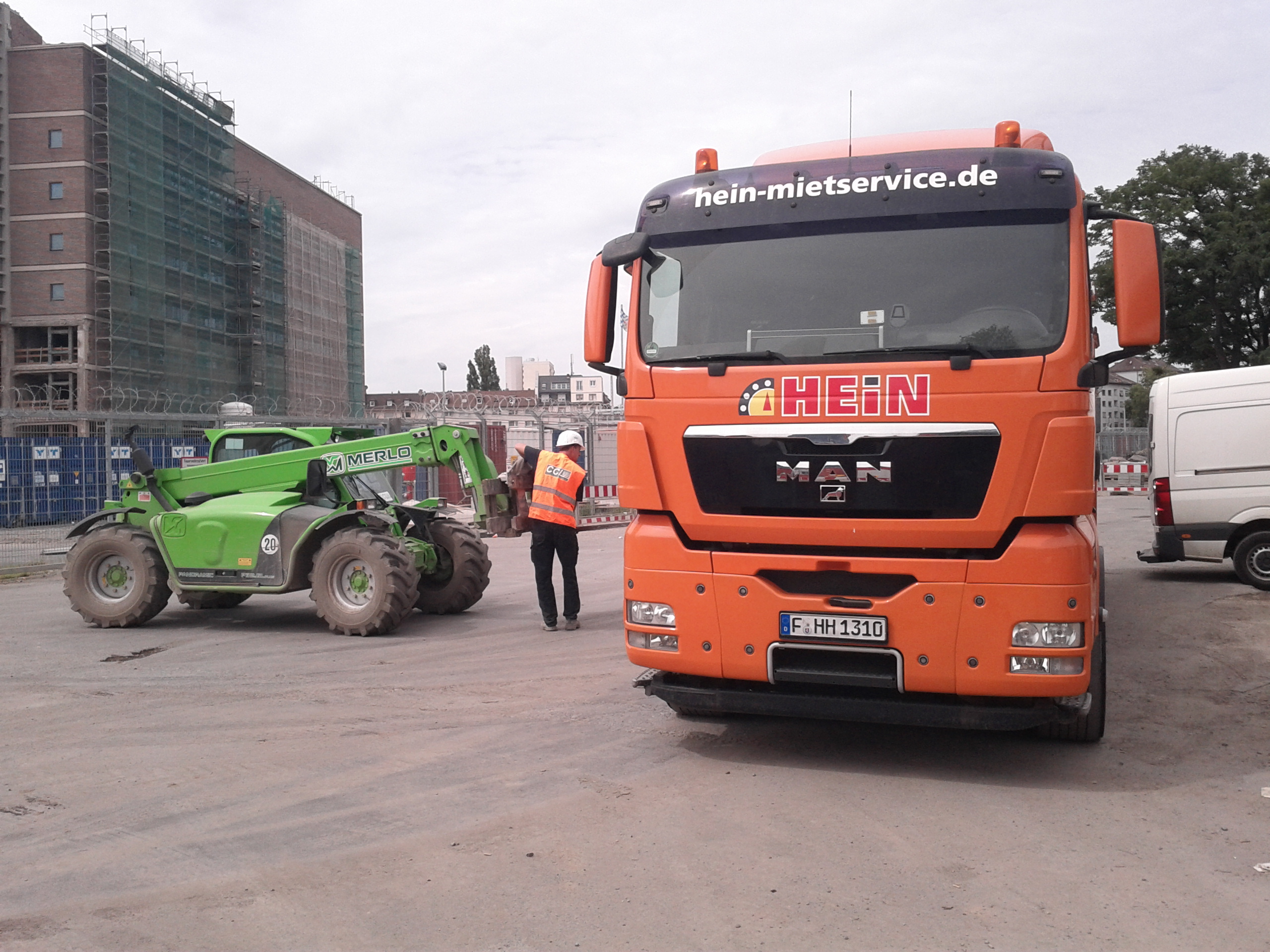
I really like trucks and mobile platforms like this, even if they are not as big as this one.

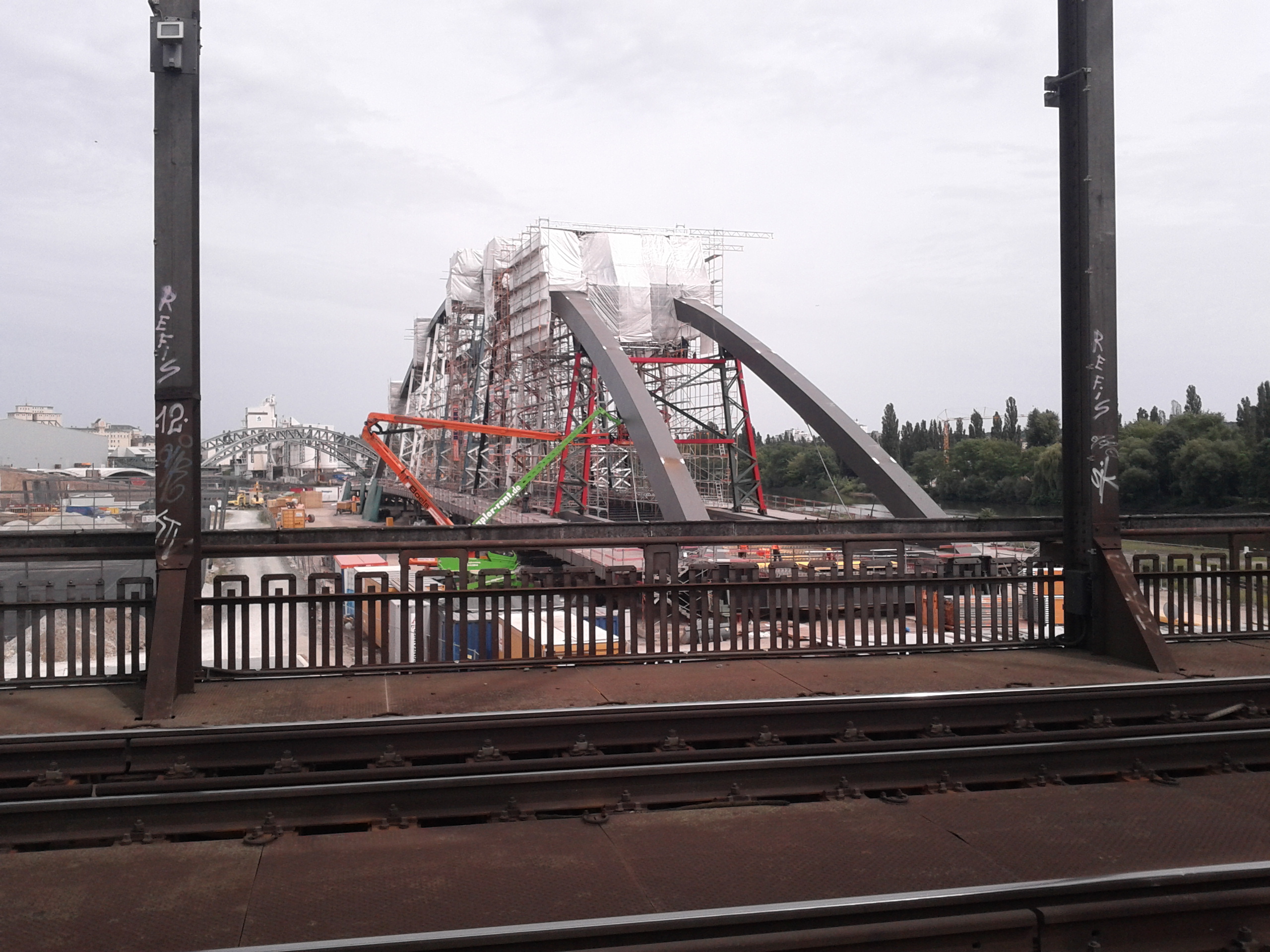
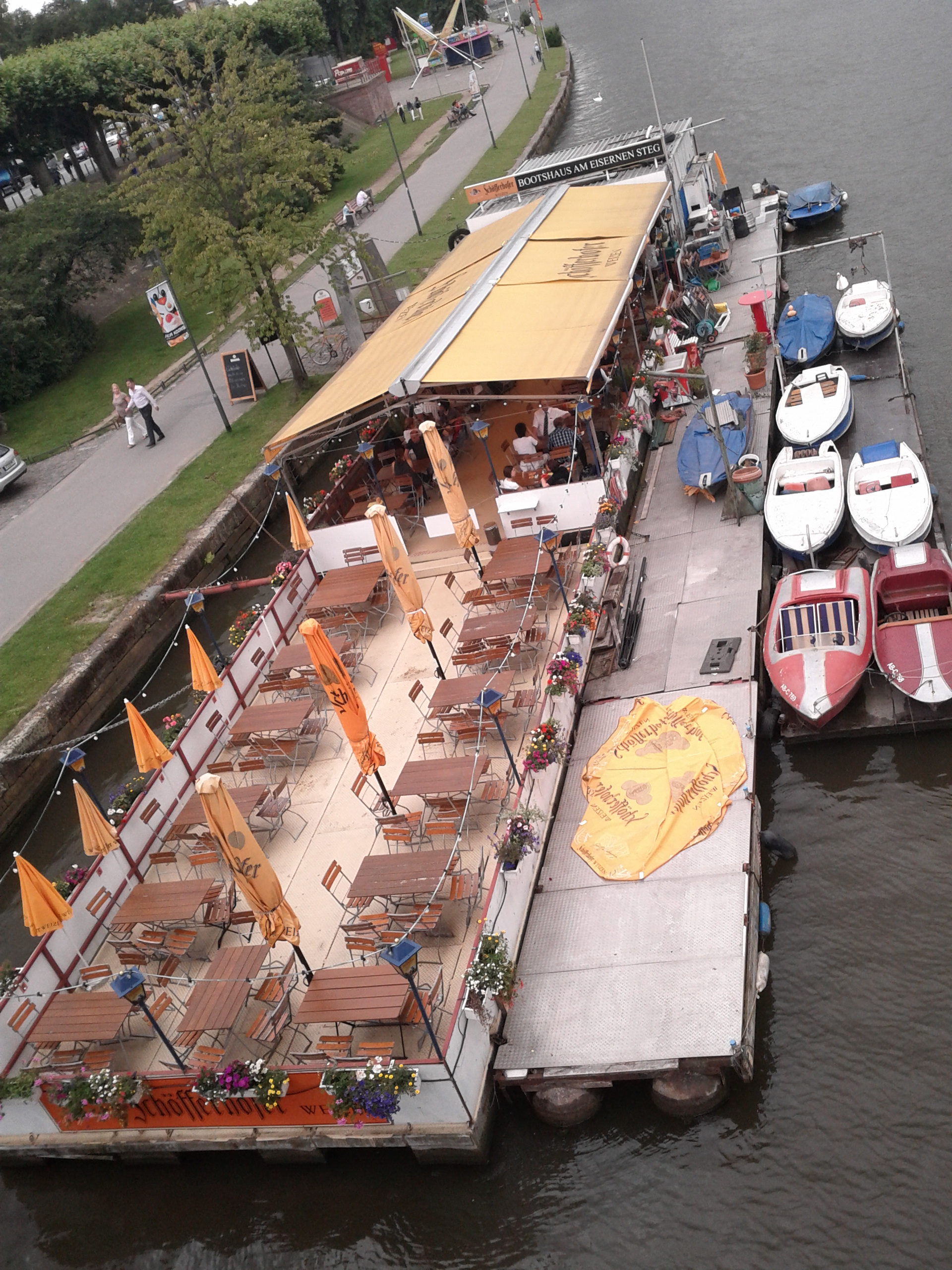
The best view on the building site and around is from the iron railway and pedestrian bridge. Here is when the say about the locomotive came back to my mind. Next to this bridge a new one will be laid soon.

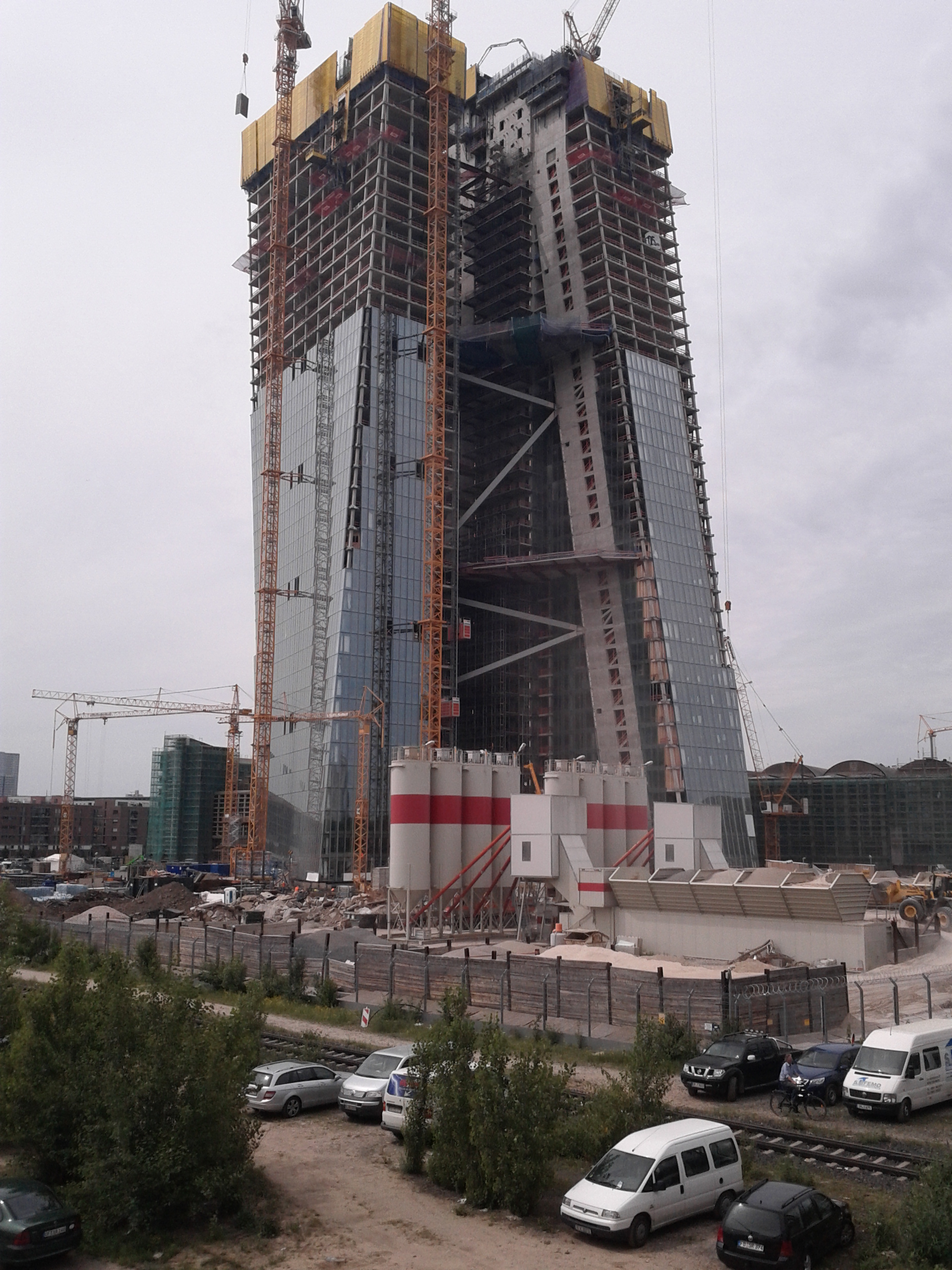
A nice view over the river bank on the former slaughterhouse area, with its urban villas.
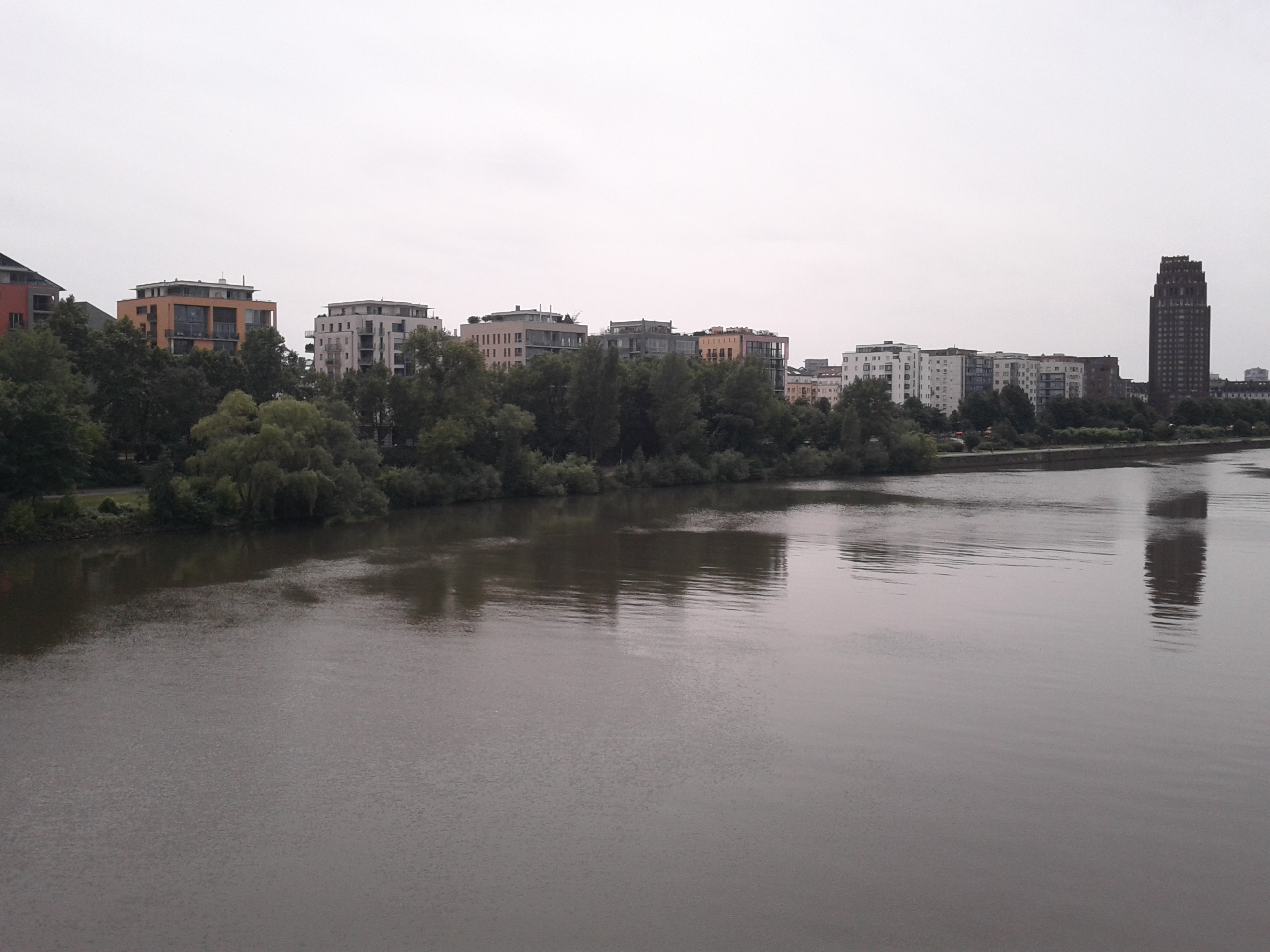
Walking in Frankfurt From Bornheim to Sachsenhausen
I lived nearby Frankfurt for quite a while, several years ago, so my visit at the end of June 2012 was more a come back than a new discovery. The opportunity to upload and comment the pictures on this blog (although my ugly pictures and very personal comments aren’t relevant for anybody but me) and the changes happened to me rather than to Frankfurt over the years have made it a fully new experience.
As a first impression the city has not changed that much. Some more skyscrapers are there, some facades have been renewed and some buildings replaced even in very prominent places, but the smell of curry-wurst is always the same, light grey sky, dark water of the Main river and people rather unfriendly as usual. It is no coincidence that the city has been under conservative administration (Petra Roth CDU) for some 18 years (1995-2012) and people say that the new SPD Mayor will not bring major changes.
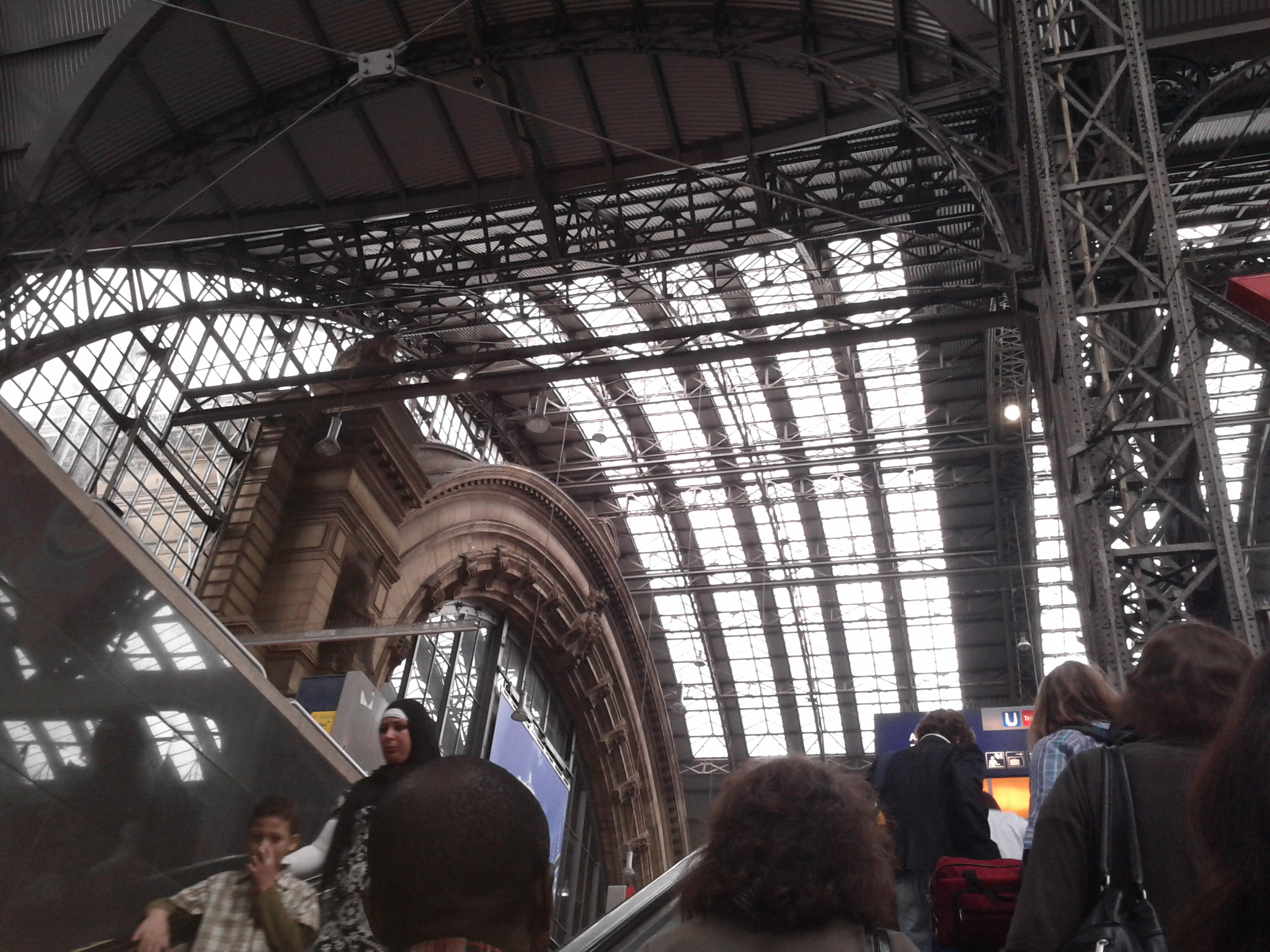
From the airport a quick train brings me to the lower level of the Hauptbahnhof, a new layer of infrastructure which has not modified the existing one. Emerging into the great hall I am glad how travelling in Germany is quick and easy as usual, even if the place and the weather are not always the most welcoming.
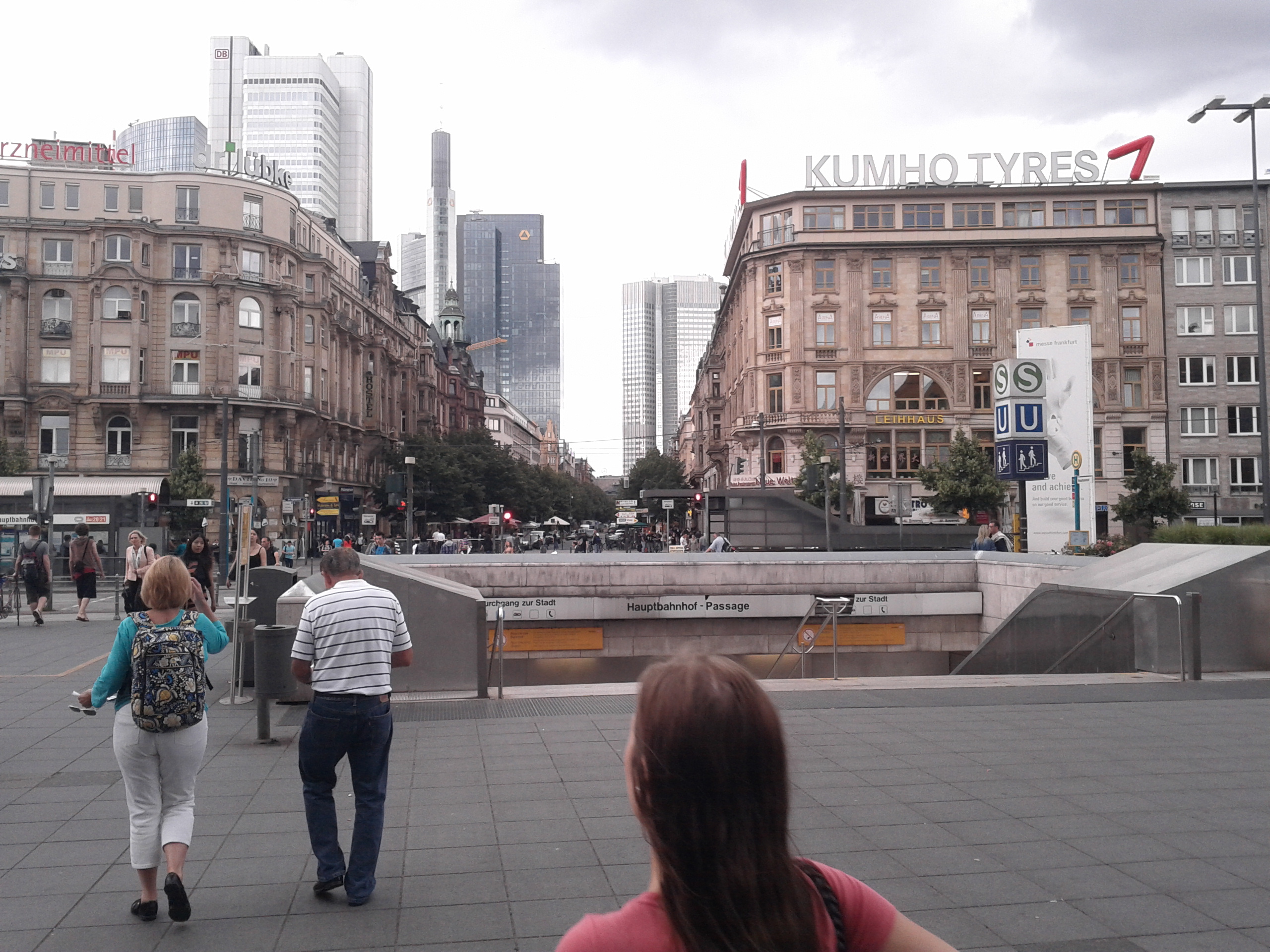
Looking from the square in front of central station to the city and the main pedestrian area, the so-called Zeil. The area in between used to be some kind of red light district, if I remember well. I wonder if today it is still so, but unfortunately I have no time to investigate.

In Bornheim, typical housing estates built in the 60es and recently renovated for energy saving. Walls have grown thicker and thicker and windows have become double or triple glazing to comply the energy regulations. I will deal with it in more depth in the next months.

These traditional Fachwerkhäuser do not really look very original, but nevertheless witnesses of the agricultural village at the edge of town that Bornheim used to be. The legacy is still there, well preserved in the private homes, in public buildings as well as in the mind and heart of people.
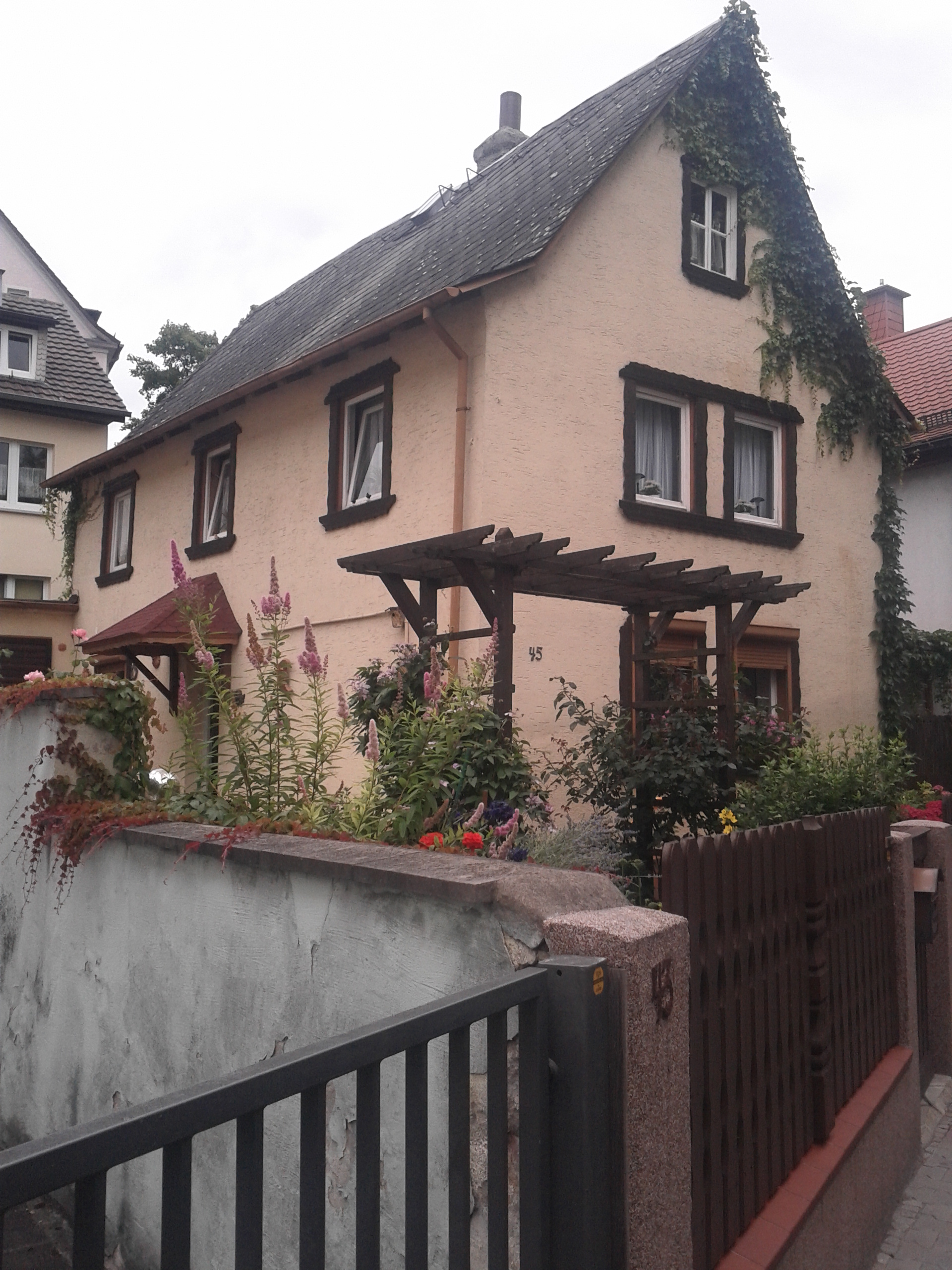
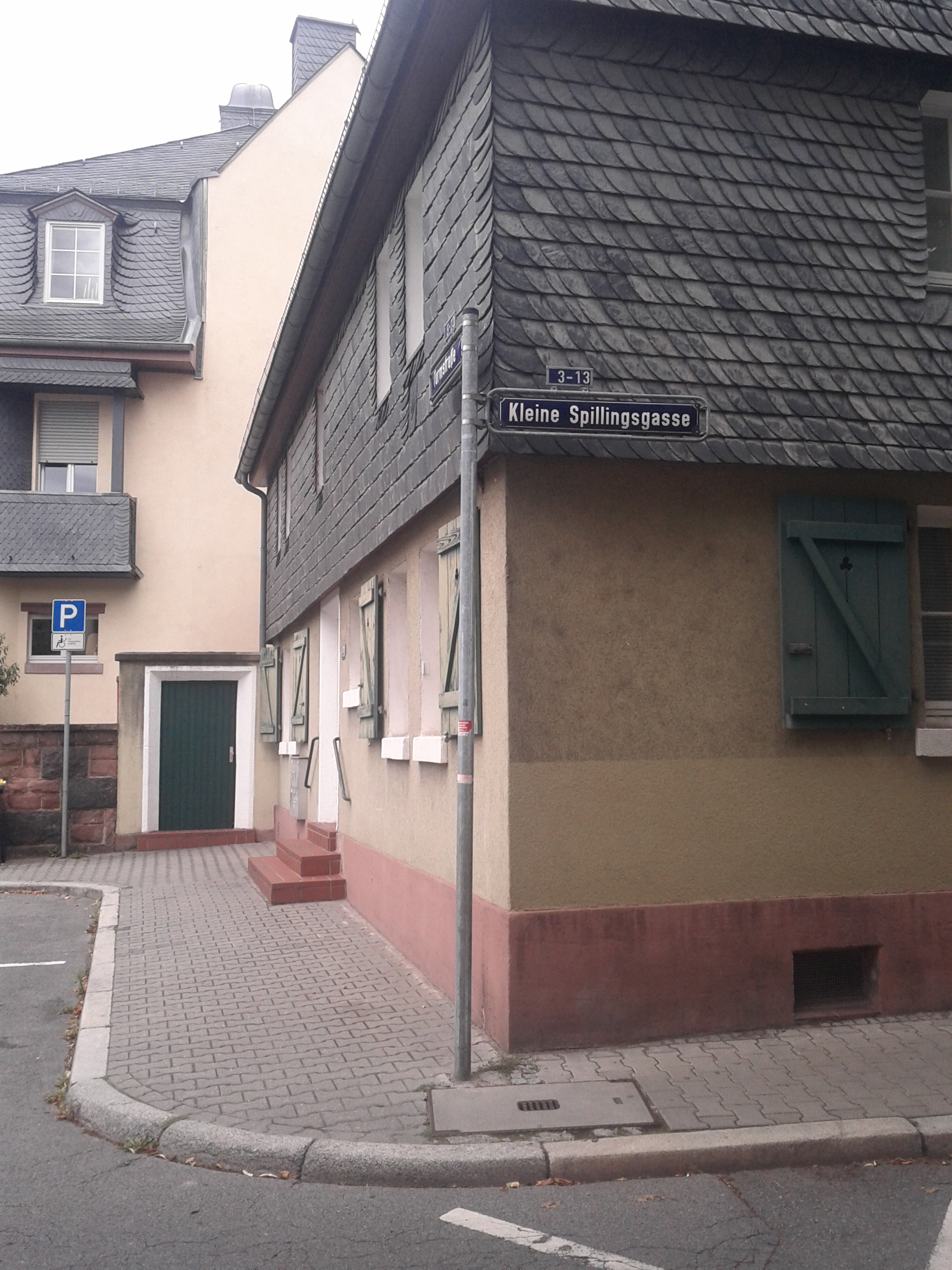
Various kind of wall cladding, for insulation and decoration. The composition is not really nice, but at least clearly understandable.
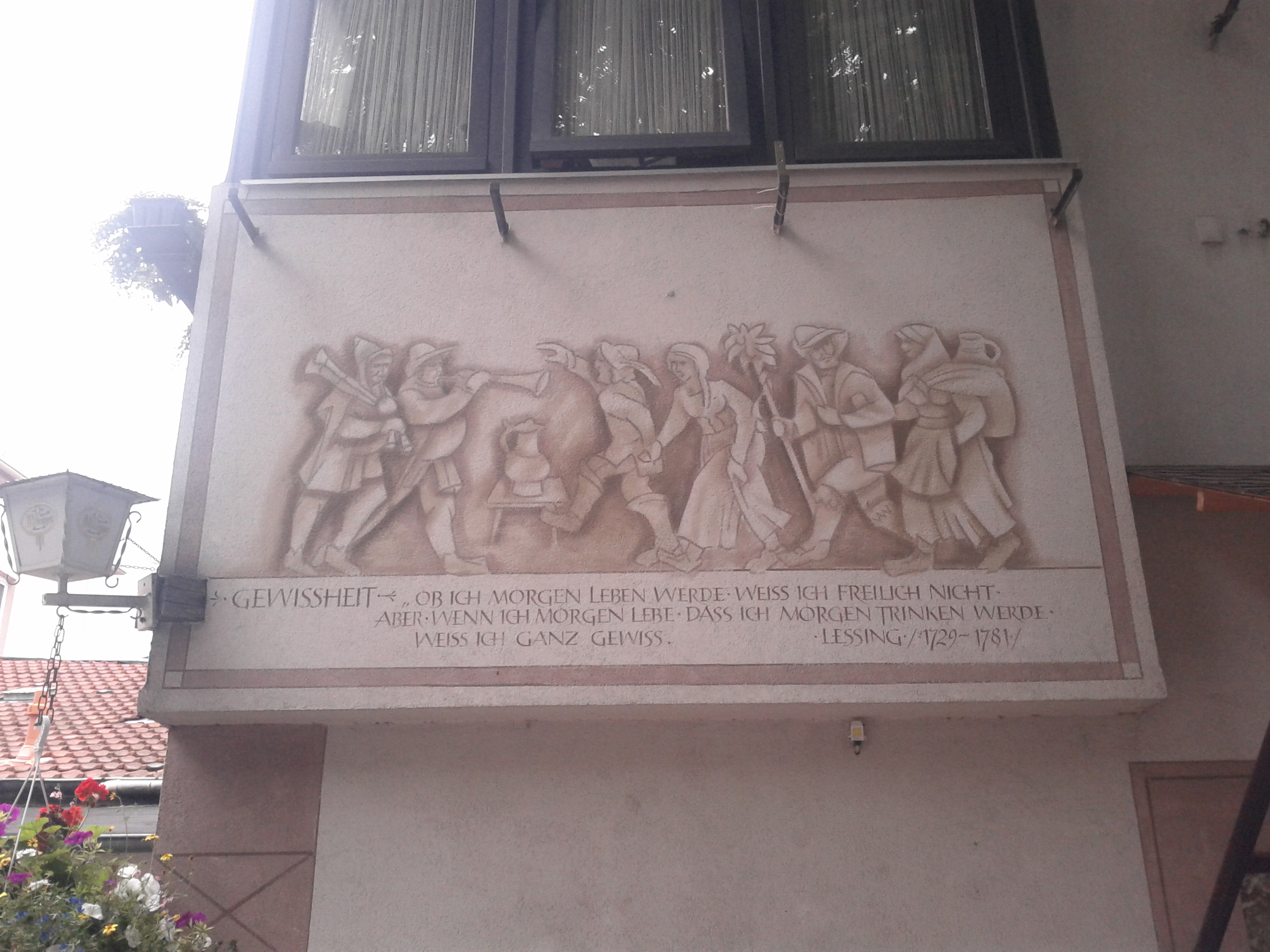
The inscription is about Certainty, pretending to be wise and funny at the same time, inviting people to spend time and money in the local biergarten. I dare to translate: “I am not certain whether tomorrow I will be alive or not, but in case I will, I am certain that I will drink!” Lessing (1729-1781) wrote it.

Trees are very serious in this city: they are there not for fashionable environmental issues, but an integral part of public realm.
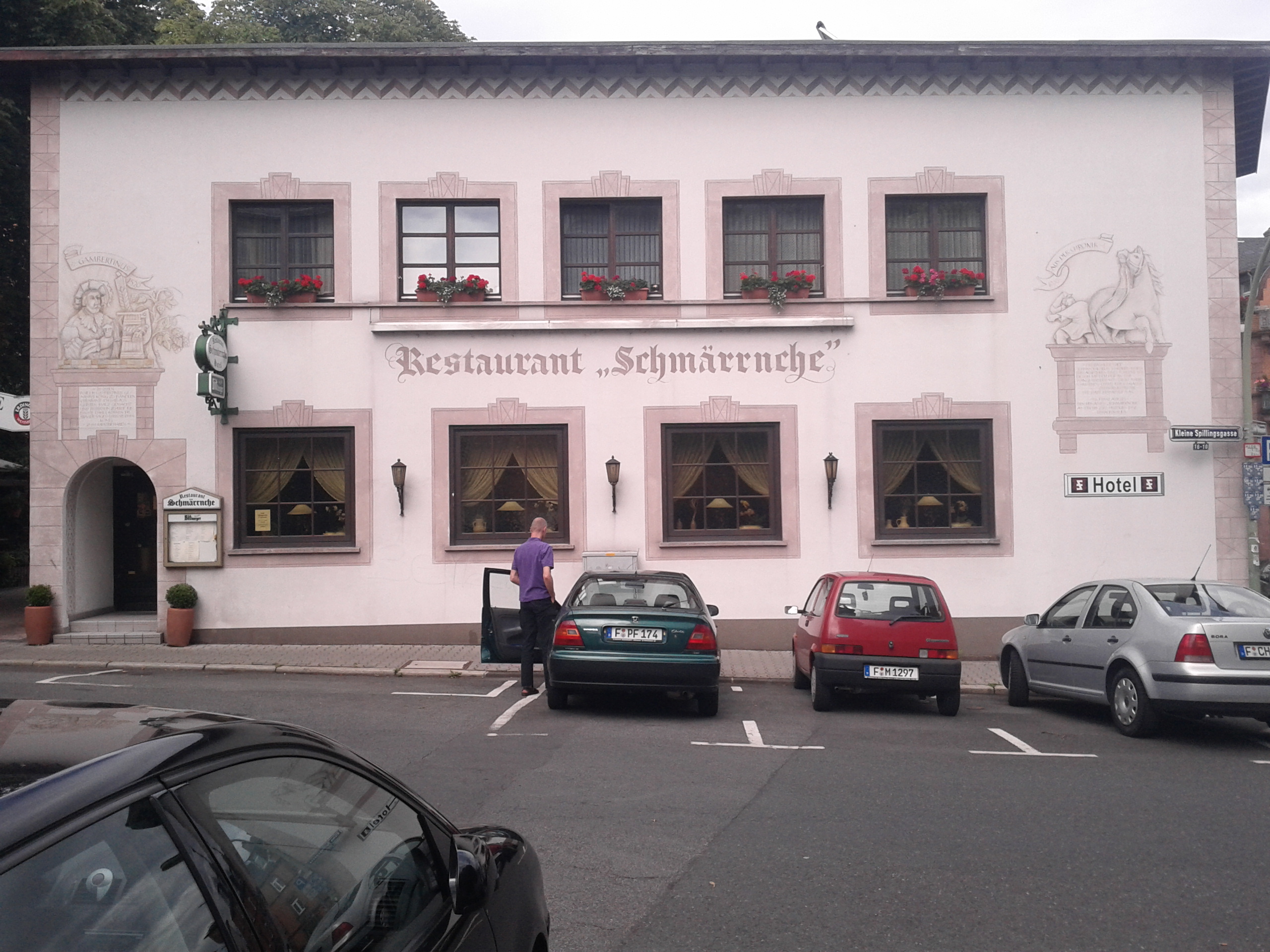
This is how German hotels look like, and you have to like it so much as I do, otherwise you won’t accept so much unfriendliness and go to the next Best Western.
 Walking around I see how people here are conservative in the best sense of the word. They are sensitive to the environment because they are sensitive to resources, materials and handcrafts. They are used to care for what is important to them (e.g. home and cars, more than shoes and hairstyles) so they do and they stick to the same things for decades. I remember when I was in Darmstadt that some of my fellow students used to buy beautiful old cars for little money, also in other countries (Fiat, Alfa Romeo, Volvo, Morgan etc), restore them, enjoy them for a while and eventually sell them for much more money.
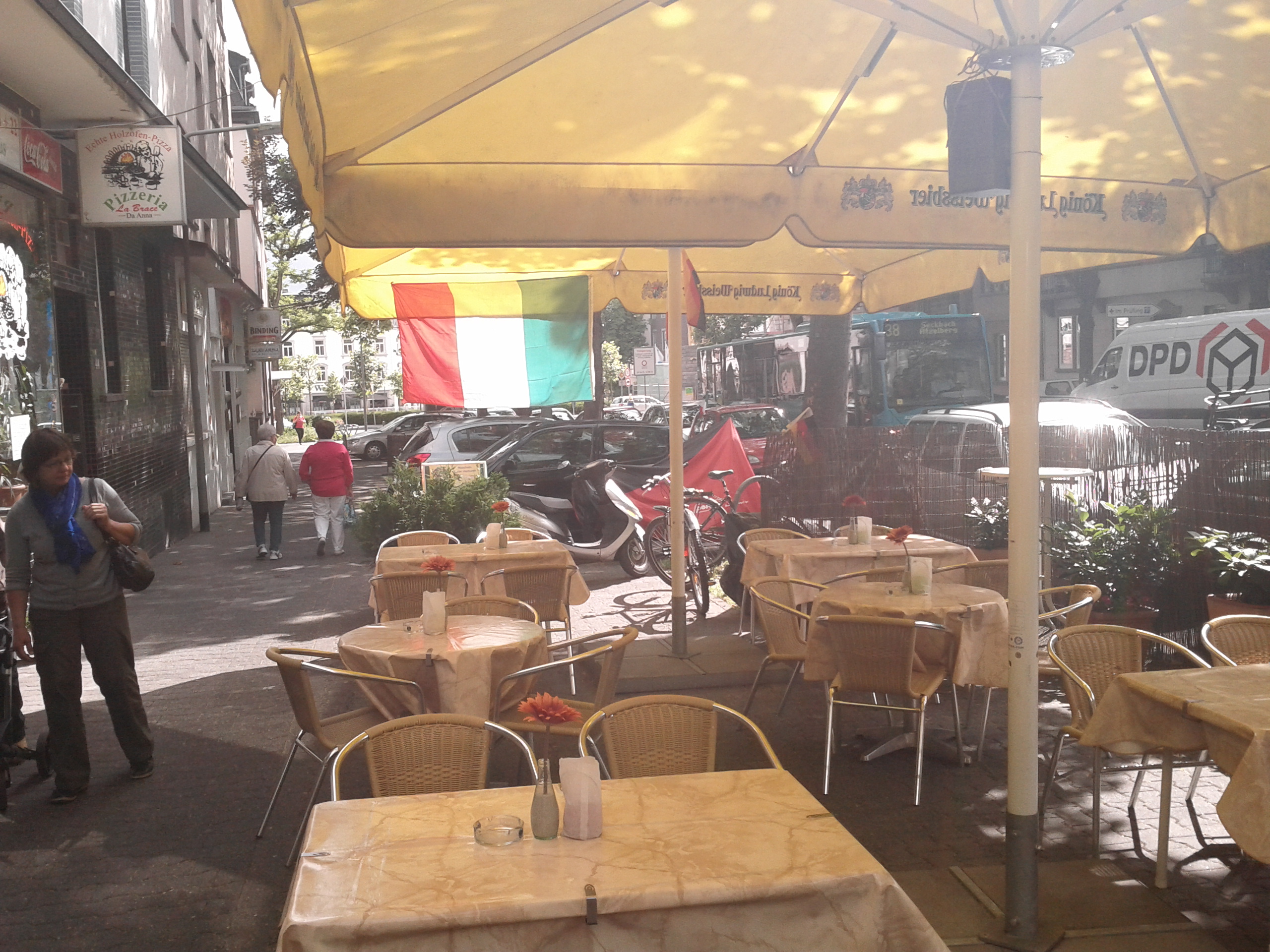
The day I spent in Frankfurt was not a normal day, but that of another historical soccer game between Germany and Italy, semifinal of the European championship. It is renown how Germany, and Frankfurt in particular, feature a great number of substantial foreign communities, so no matter who wins, there are always a lot of people celebrating in the streets. It is also renown how Germany VS Italy is a classical game in the history of Soccer, one of those that counts, no matter what’s at stake. In those days expectations for the game were even further reaching, up to the empyrean circles of political economy and global finance, but at the end, as usual, Italy won the game.

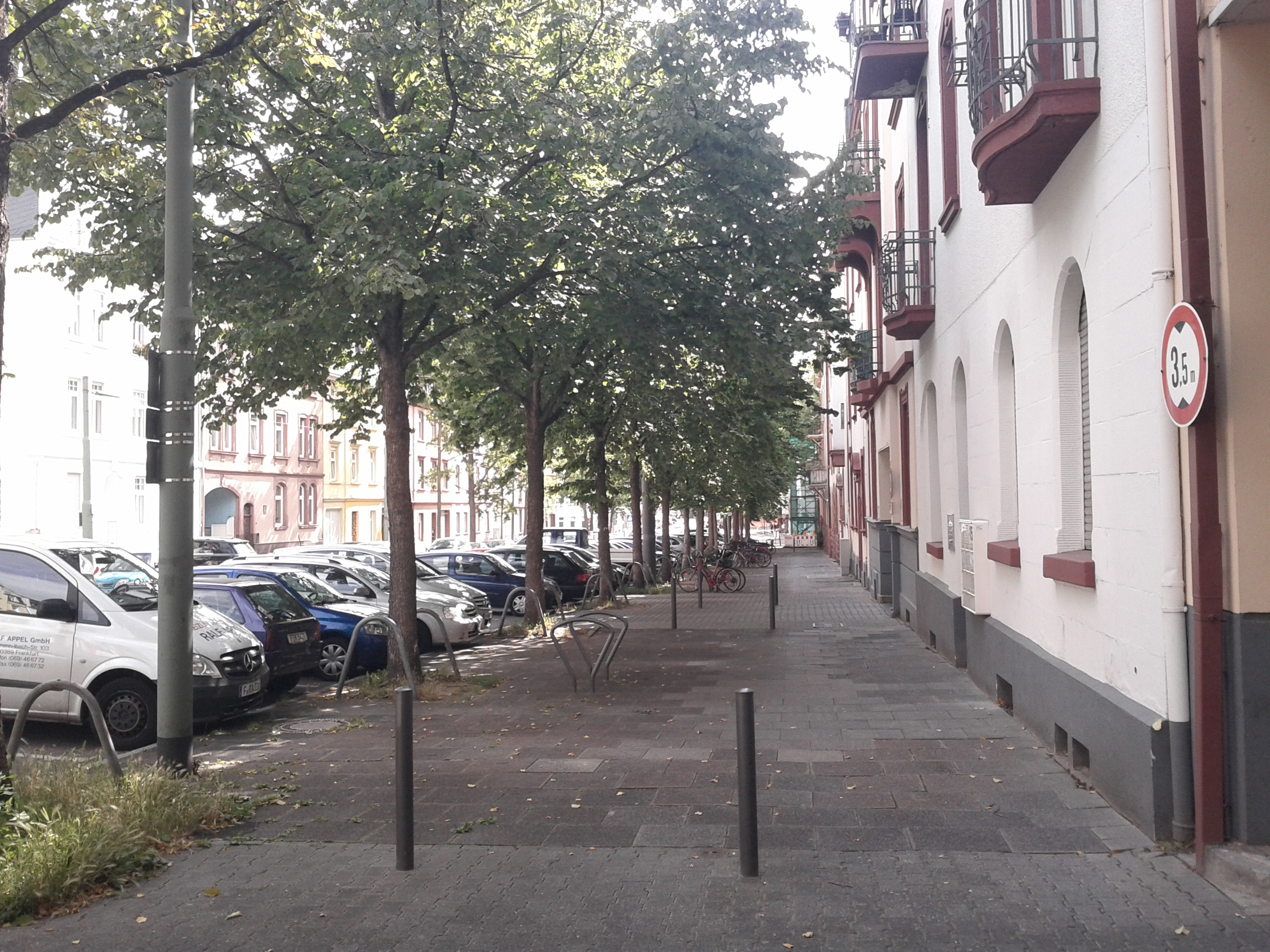
In dense cities space is the real luxury. Pavements like the one above may not be aesthetically remarkable, but they gorgeous to me. They usual in Gründerzeit (more or less the industrialisation period in German speaking countries, around 1850) neighbourhoods and yet well preserved.
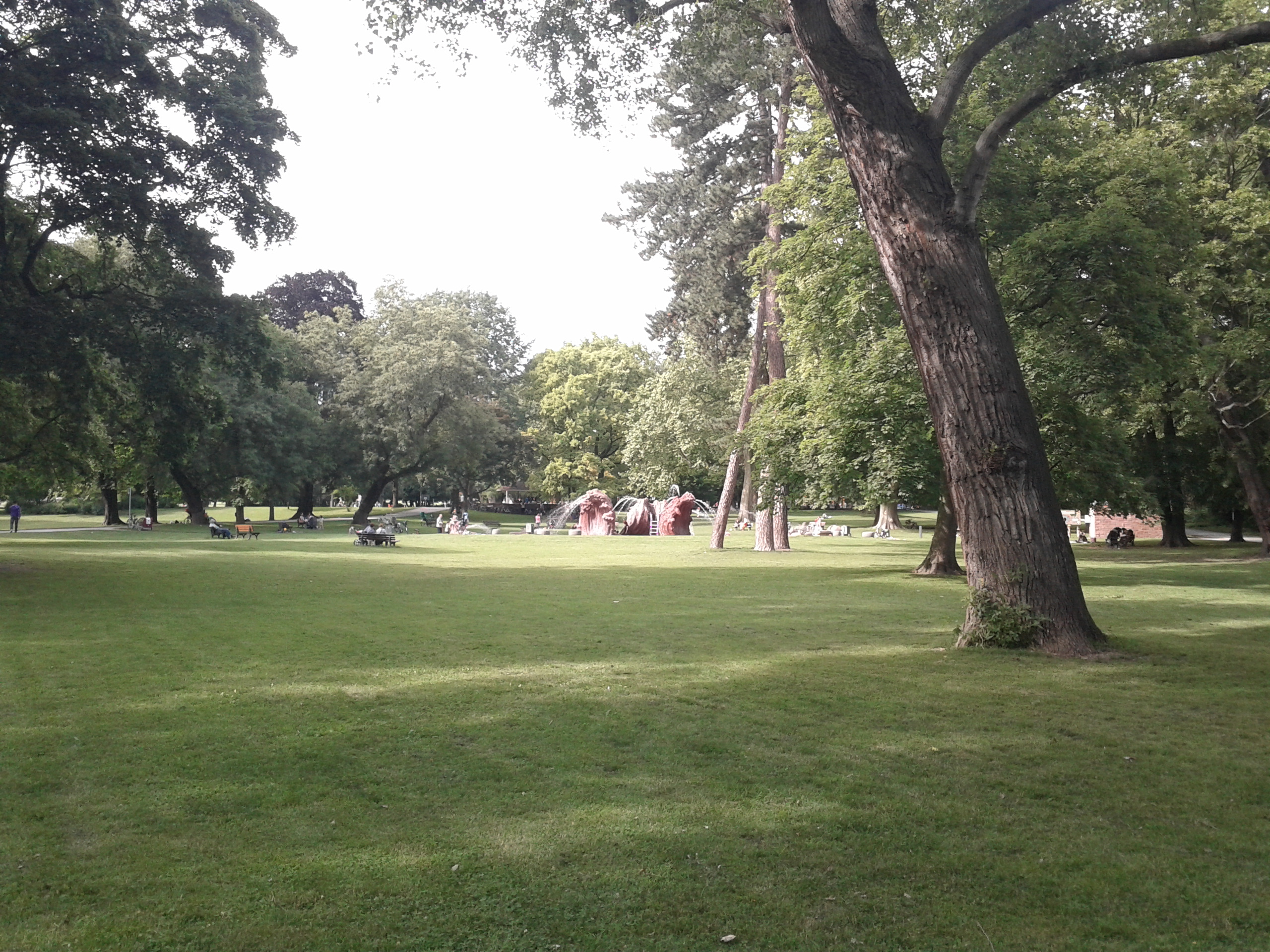
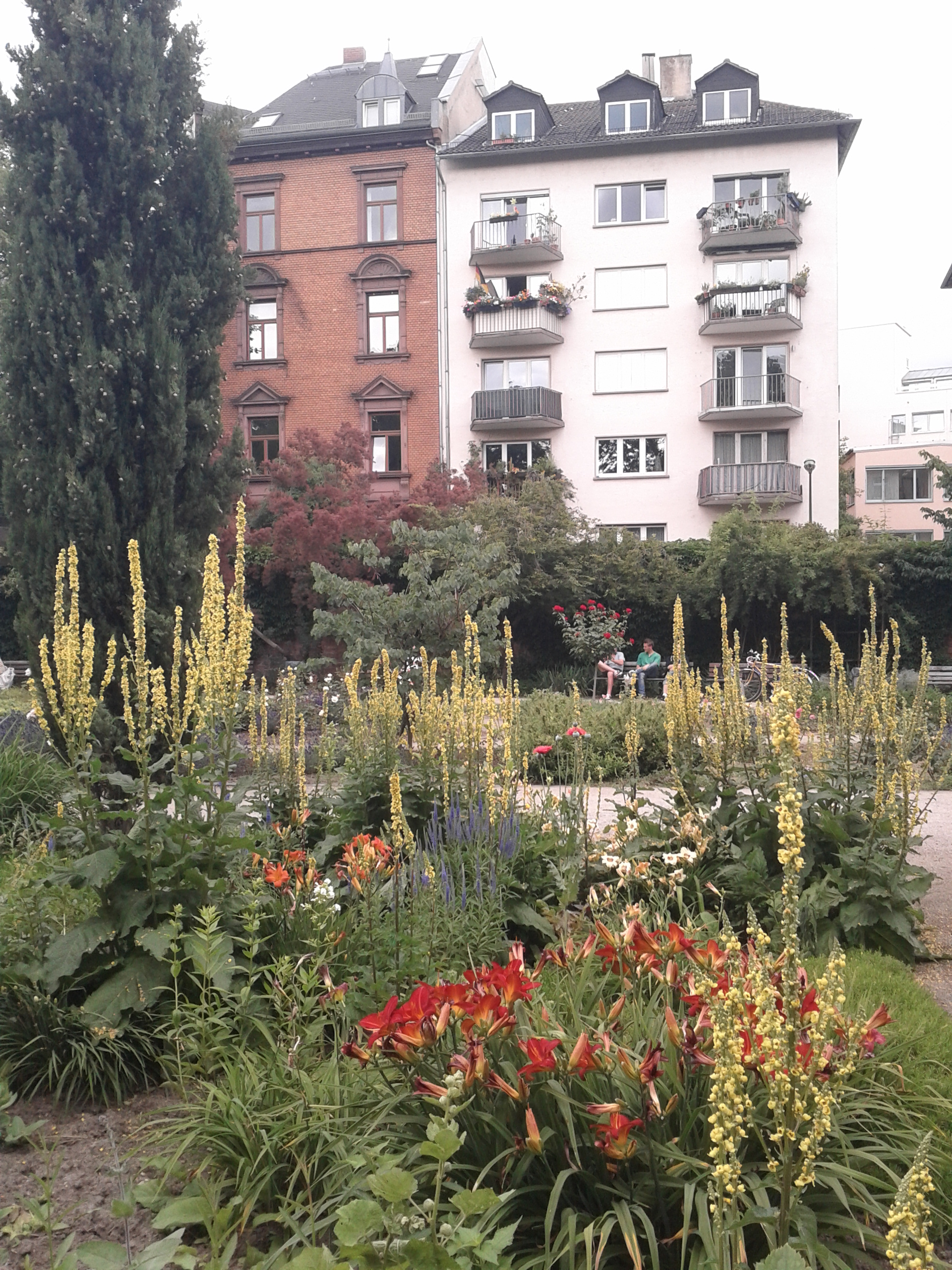
A short glance into the Günthersburgpark, one of the many green leisure areas in the northern edge (Nordend) of the city. 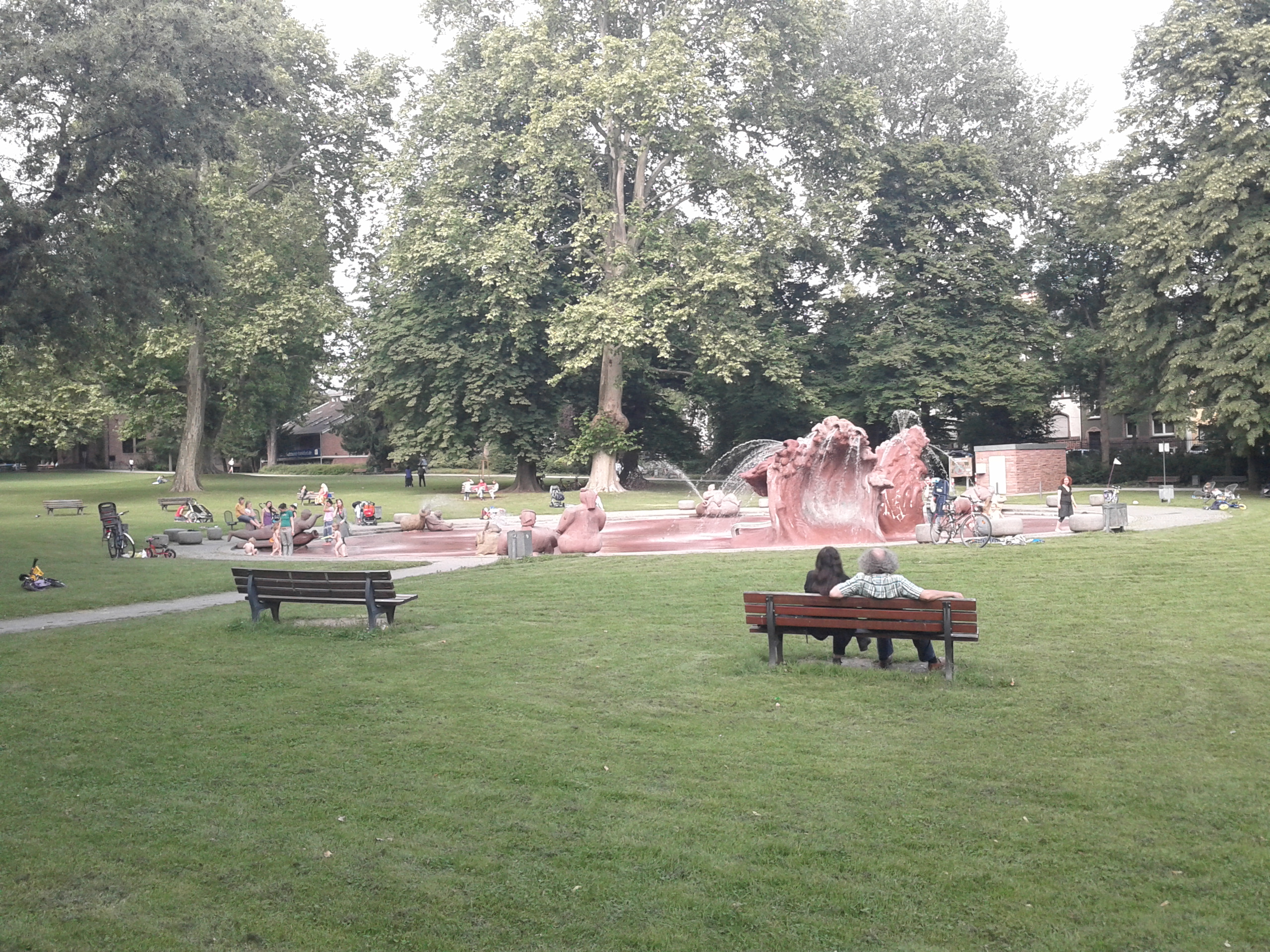
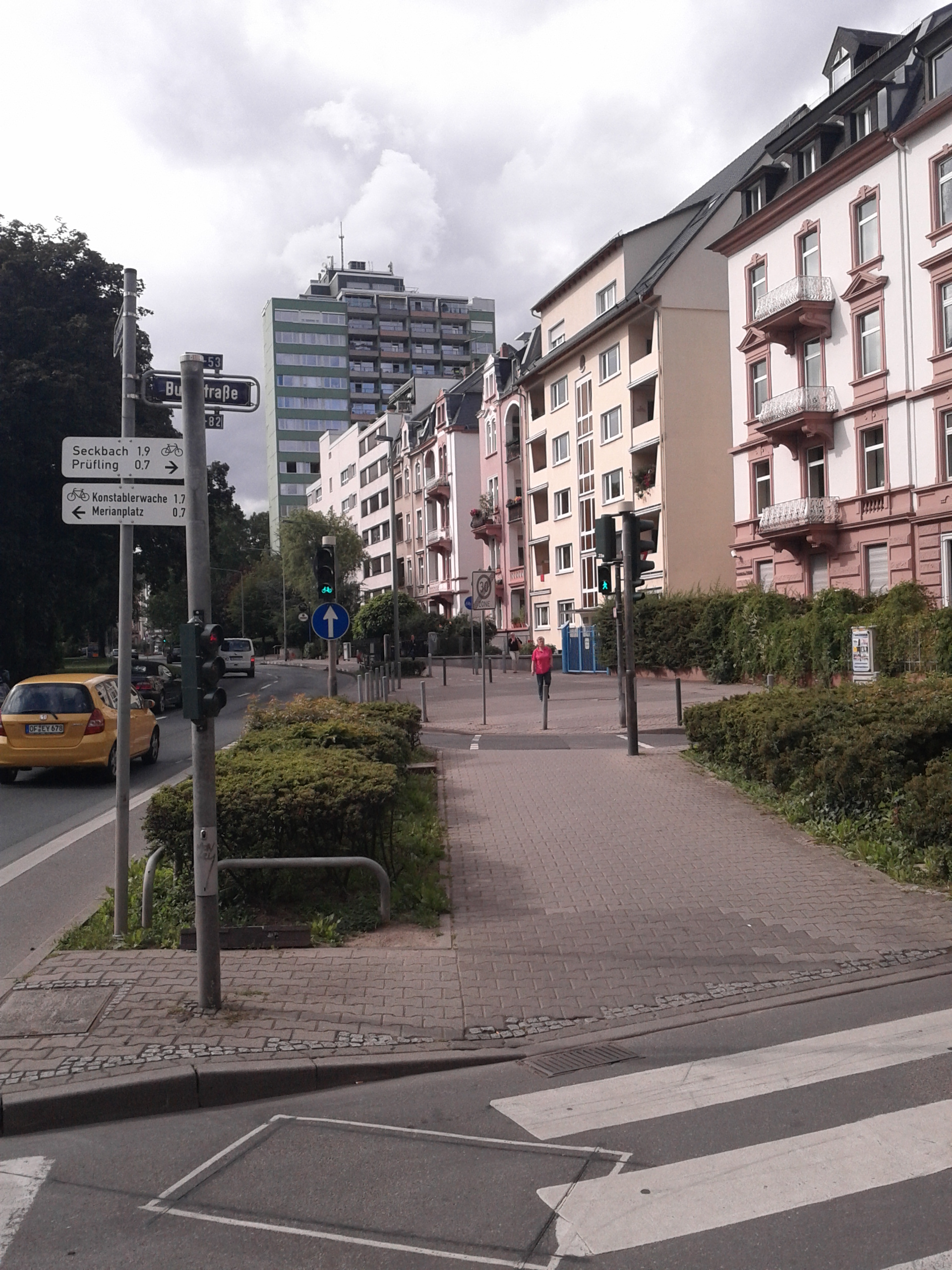
There is plenty of urban contradictions, town planning mistakes from the time as car was dominating urban space. Thanks to the damages following WWII in the 60es and 70es it was easy to destroy the historic fabric pretending to create a brand new one, where cars had no obstacles and pedestrian did not belong to the picture. Recovering from that choices takes time, it is a process that in German cities has begun already several years ago and is doing well. A process that begins in the mind of people, reflecting first in their everyday choices and only later in political visions and urban plans. As all truly bottom-up approaches, it takes longer, but is much more sustainable.
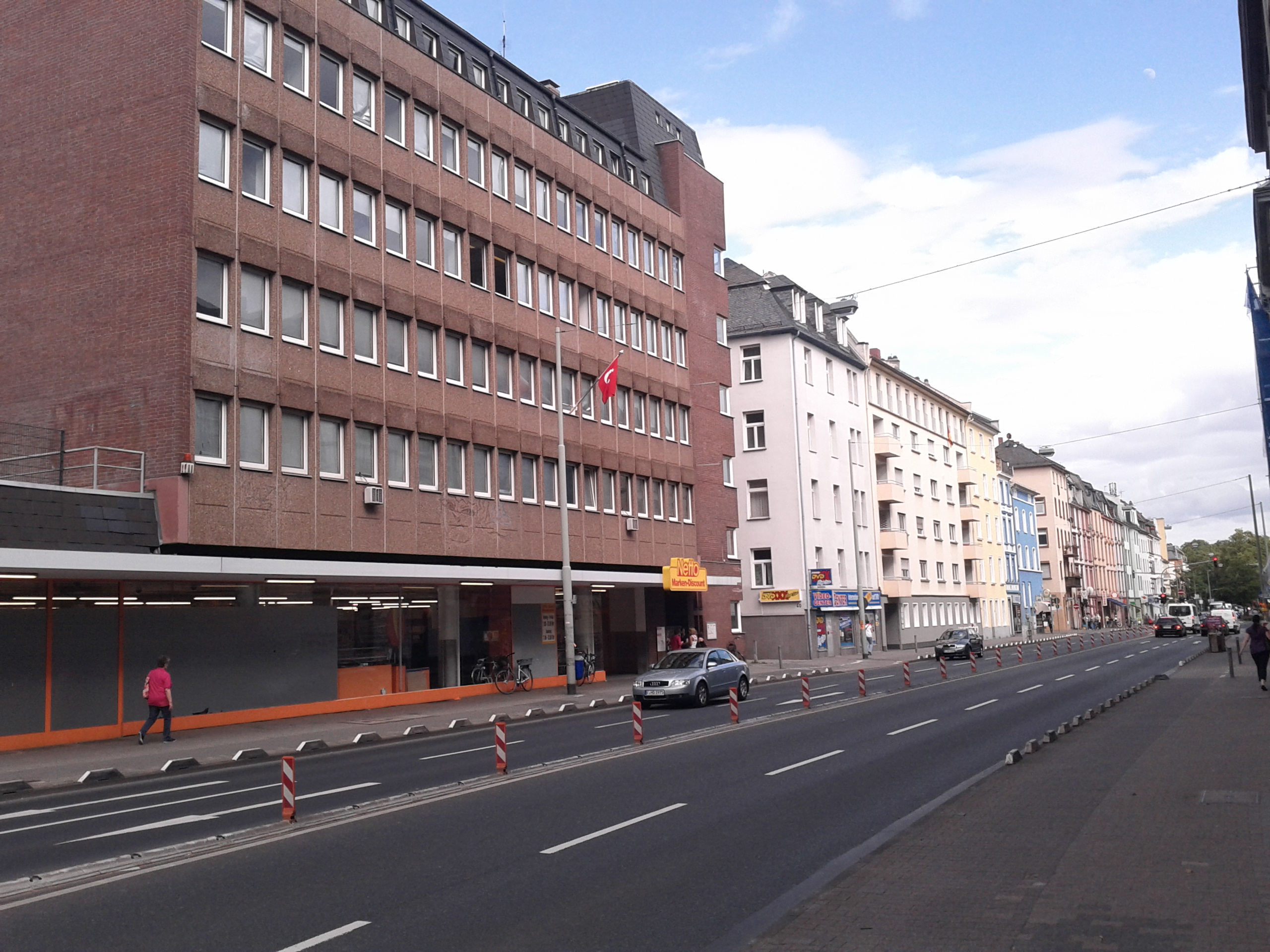
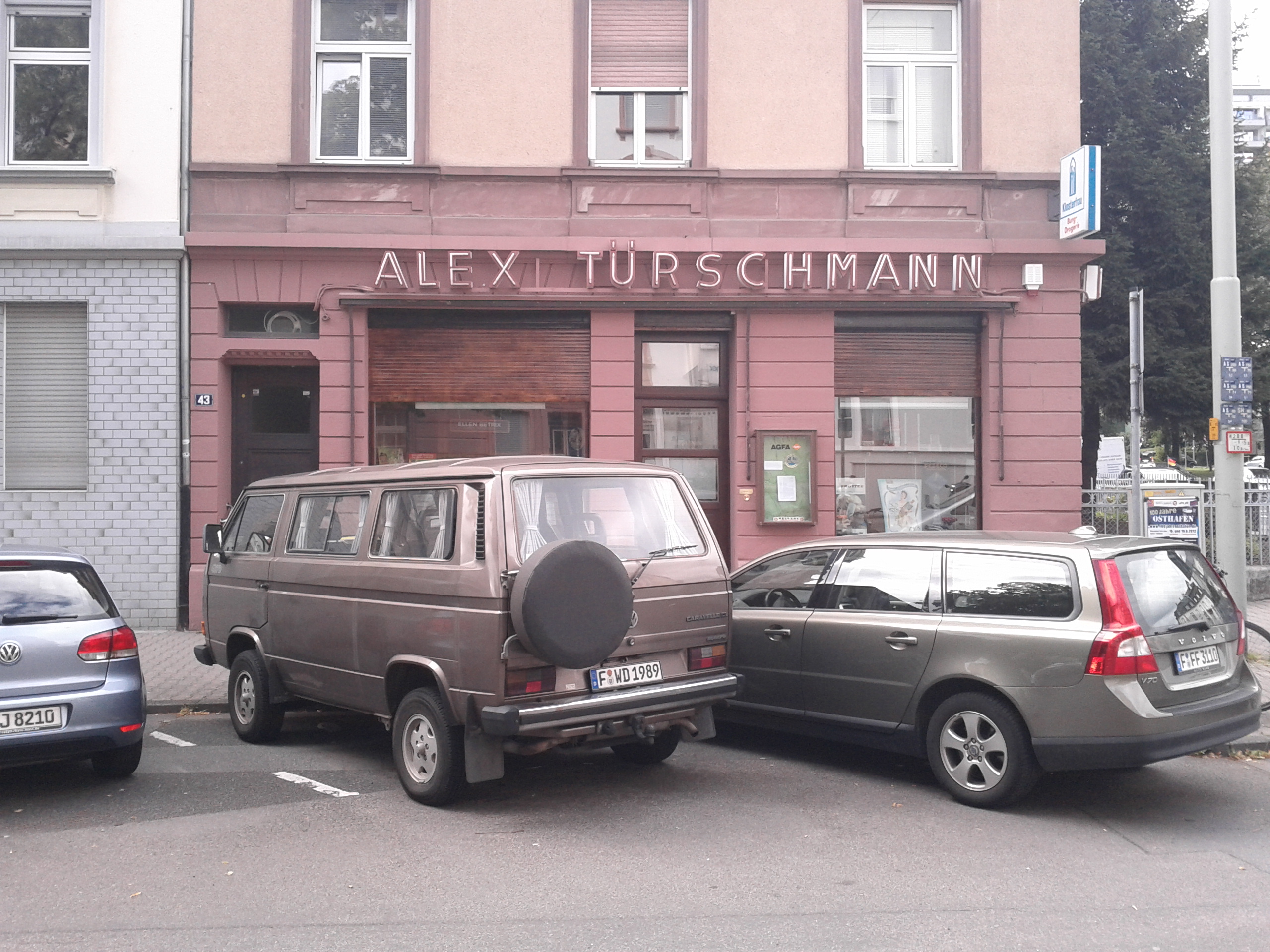
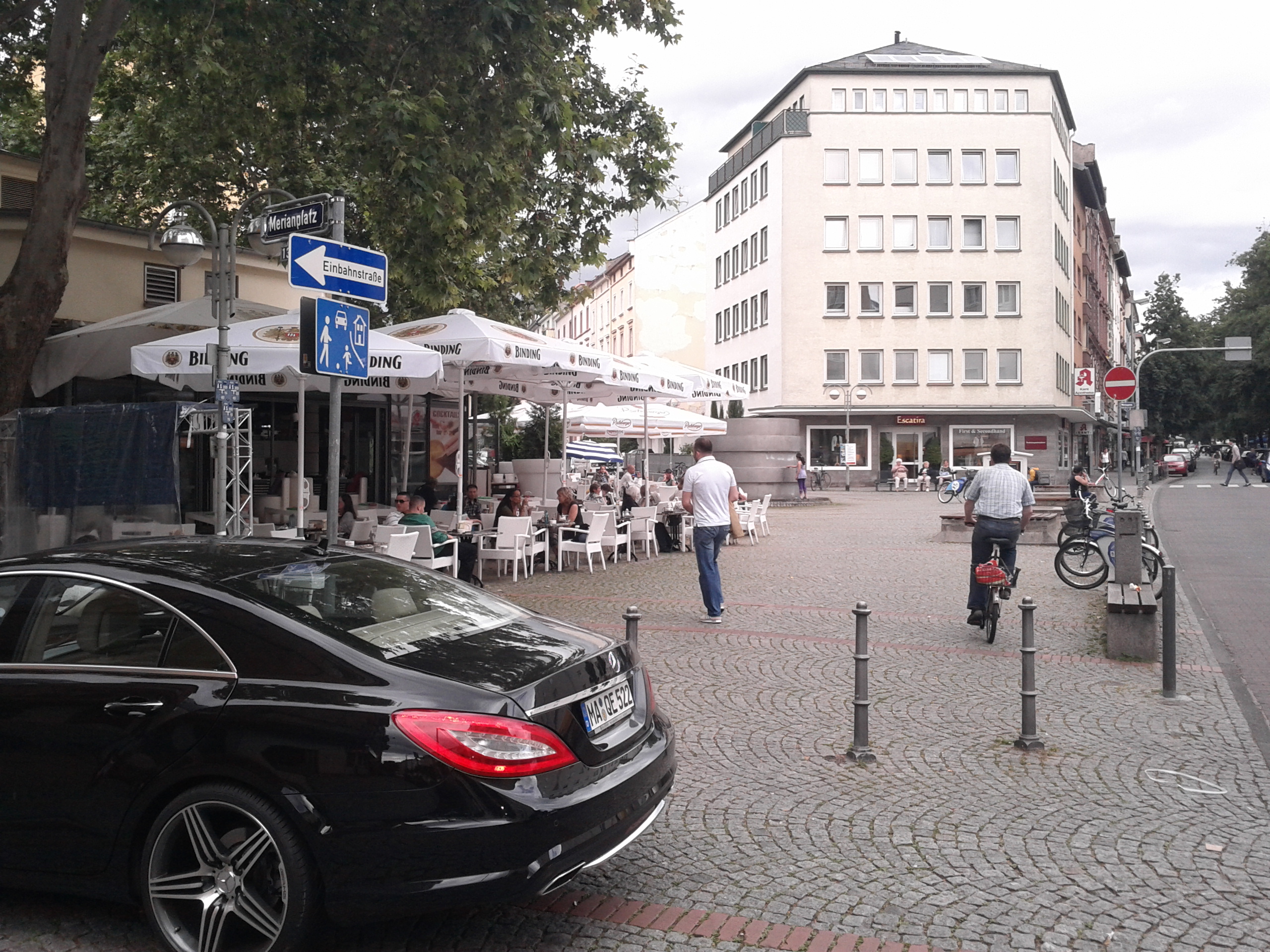
Even in retail you can be conservative and attractive at the same time, at least in my view. Below a picture of Merianplatz, not really a beautiful place, but full of a variety of bars, cars, shops, playgrounds and above all… people!

First big surprise on my walk: the Chinese Garden am Bethmannpark! Far from tourists and city consumers routes, a peaceful garden full of authentic and solid kitsch. According to the tourist infos it has been built very recently, in 1989.


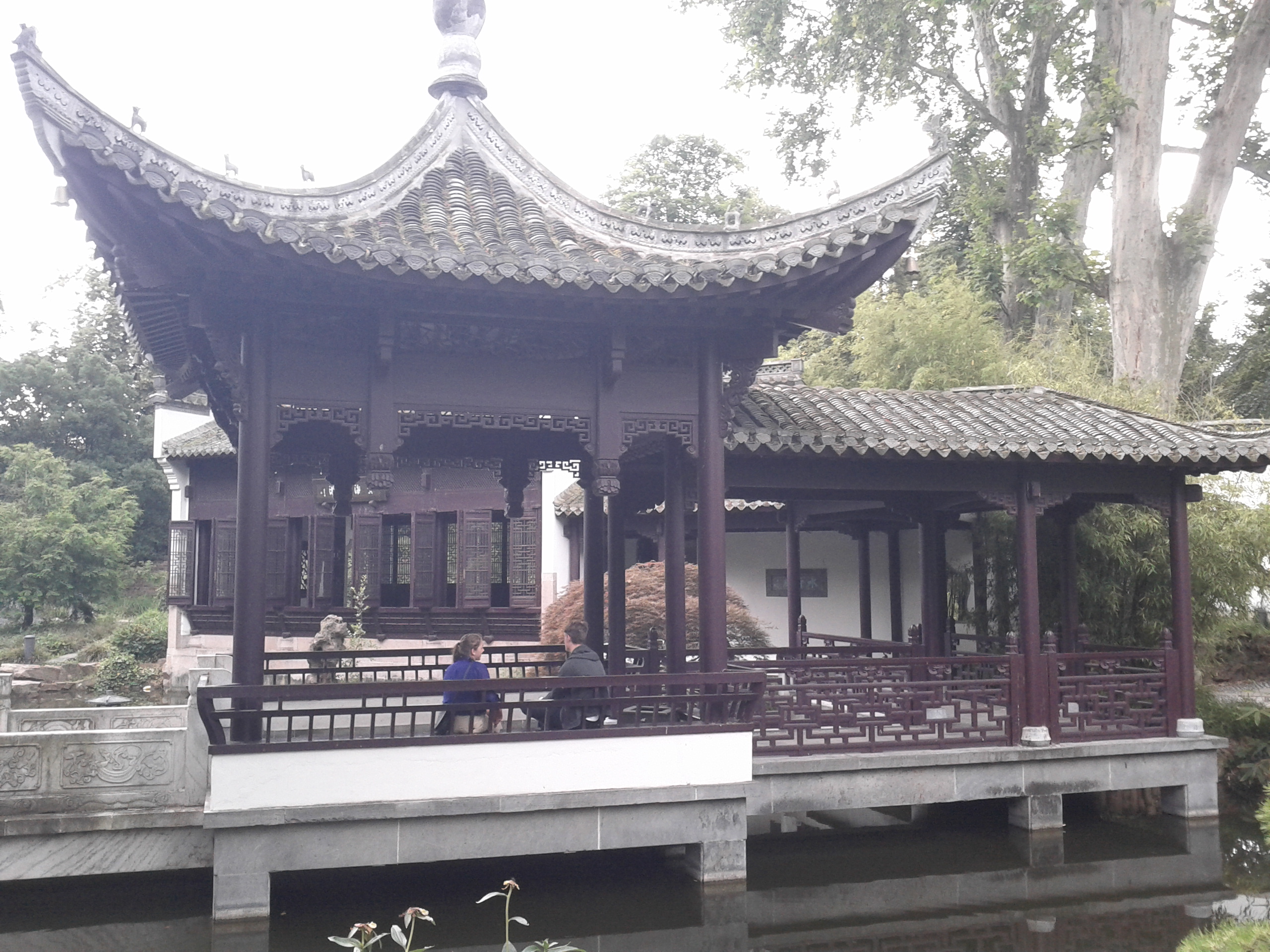

The garden is right in the middle of the dense urban fabric and when you exit its imaginative doors you are confronted with the everyday’s Frankfurt straightaway. From the idyllic chinese dream island you are immediately thrown out into the american style car city. 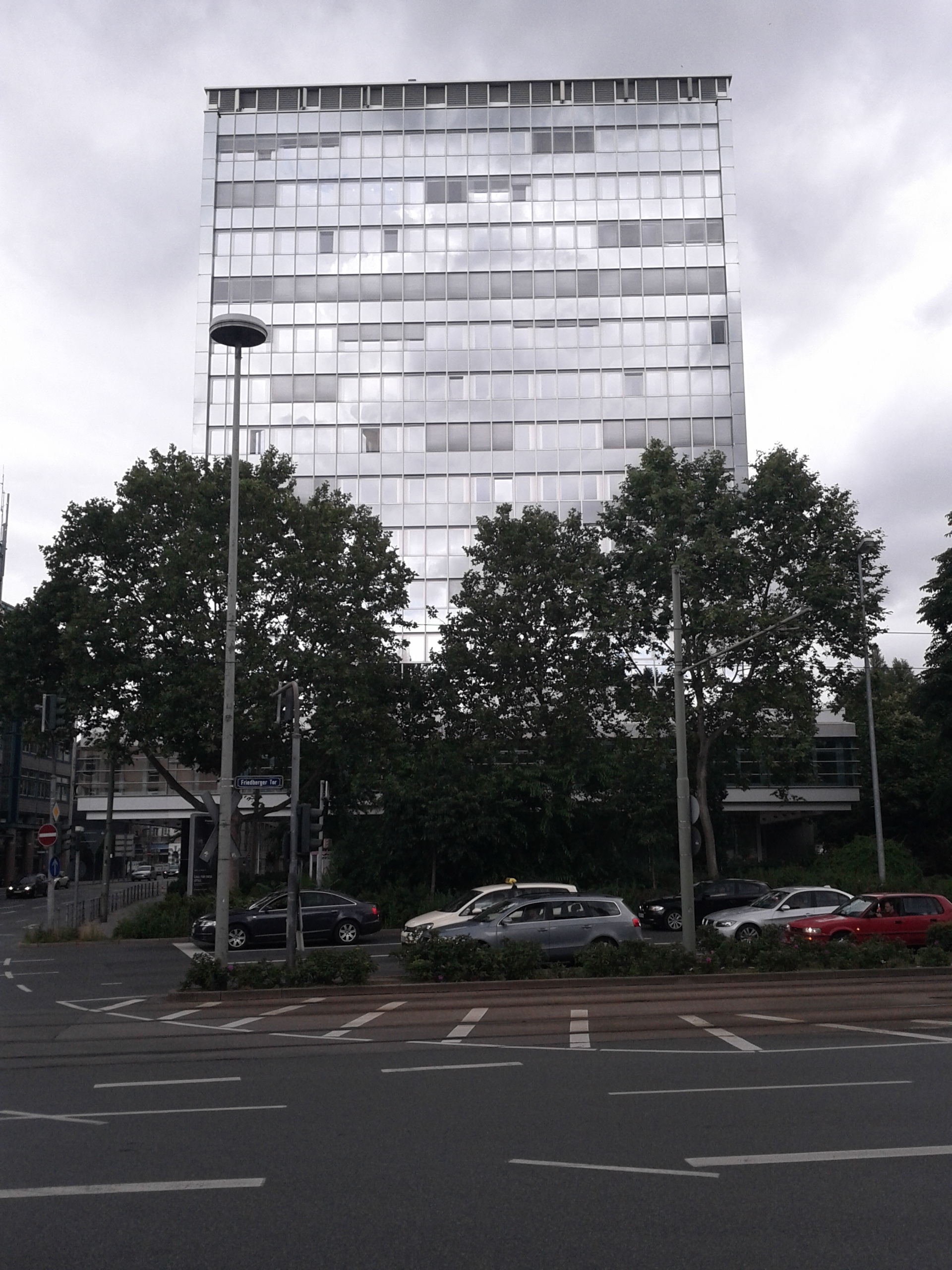

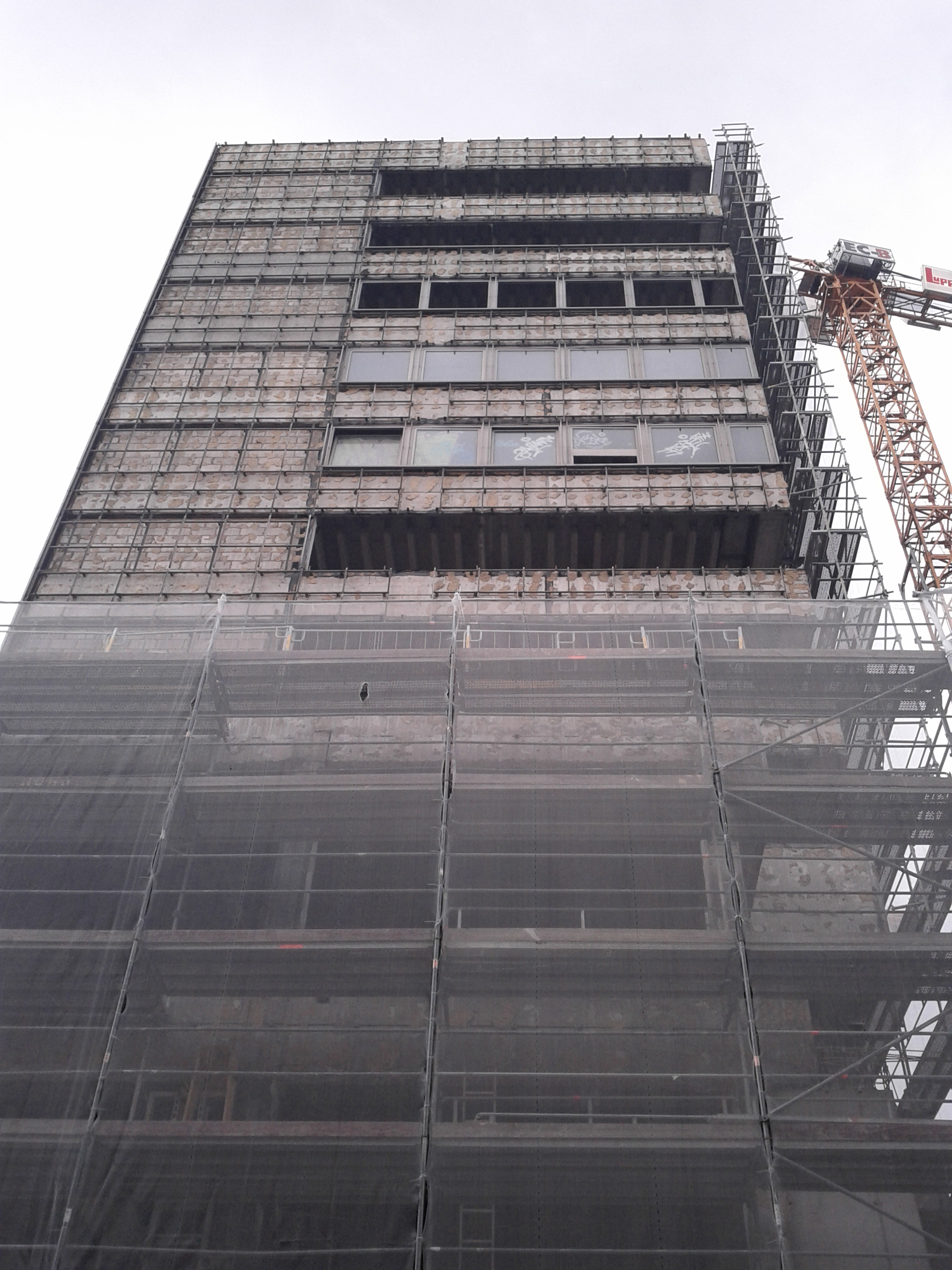
Also modern office buildings like this have to get a new facade to comply with tight thermal regulations. I am arriving into the commercial pedestrian zone, the Zeil, so energy retrofitting might also become a chance for some cosmetics.

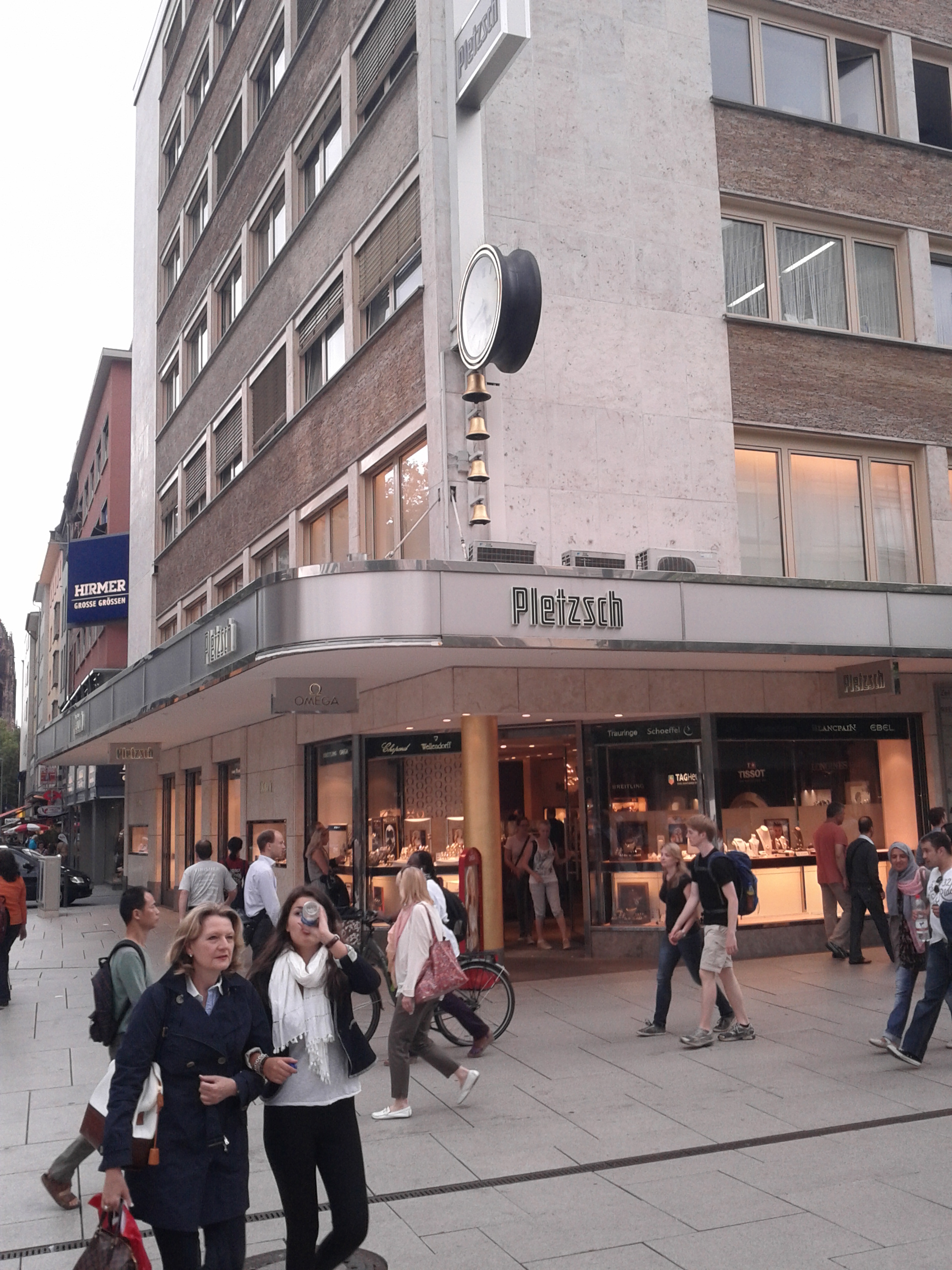
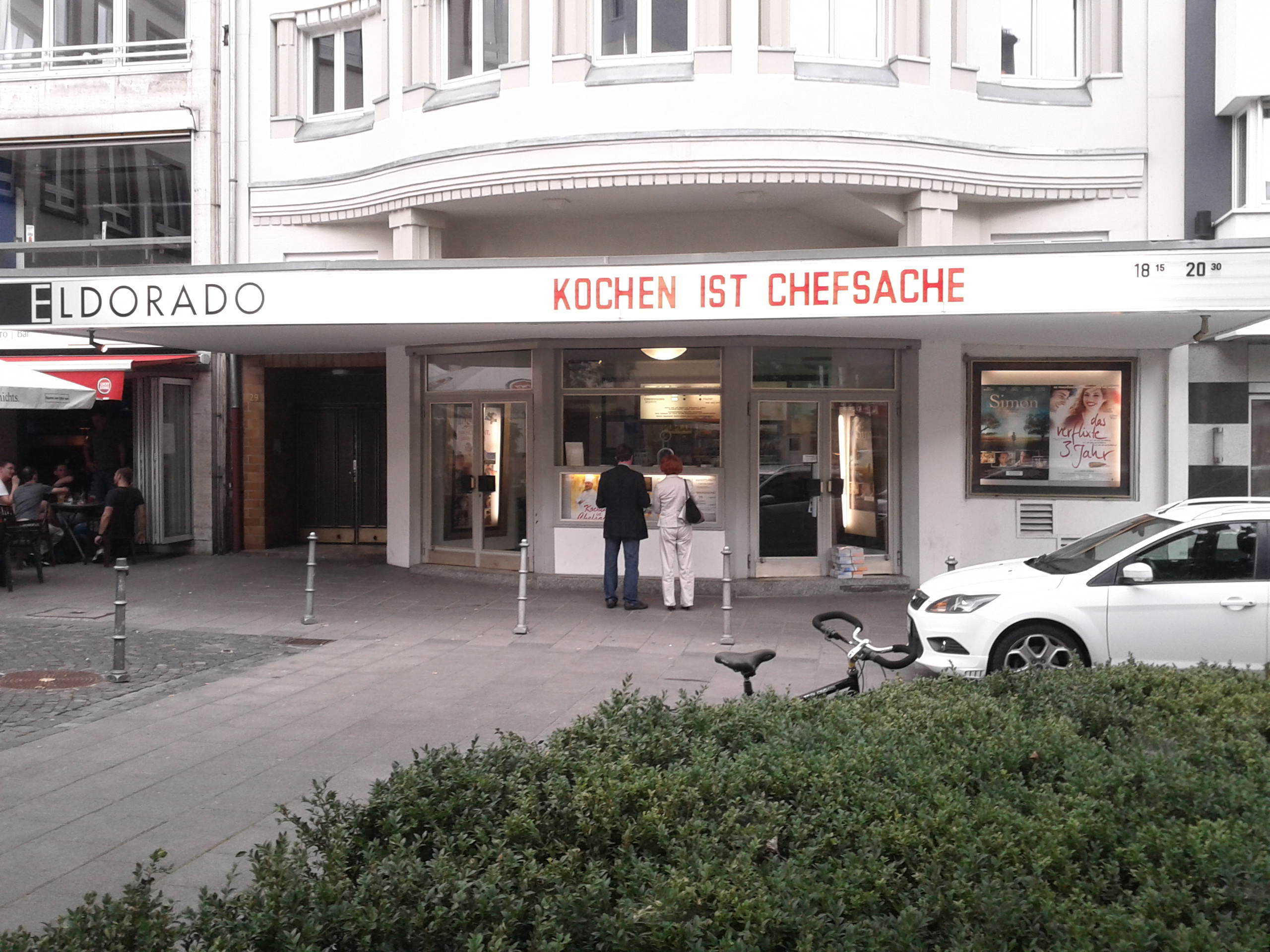
I like these vintage signages, they show a positive relationship with recent past, the hard decades of reconstruction after WWII and the stormy 70es.

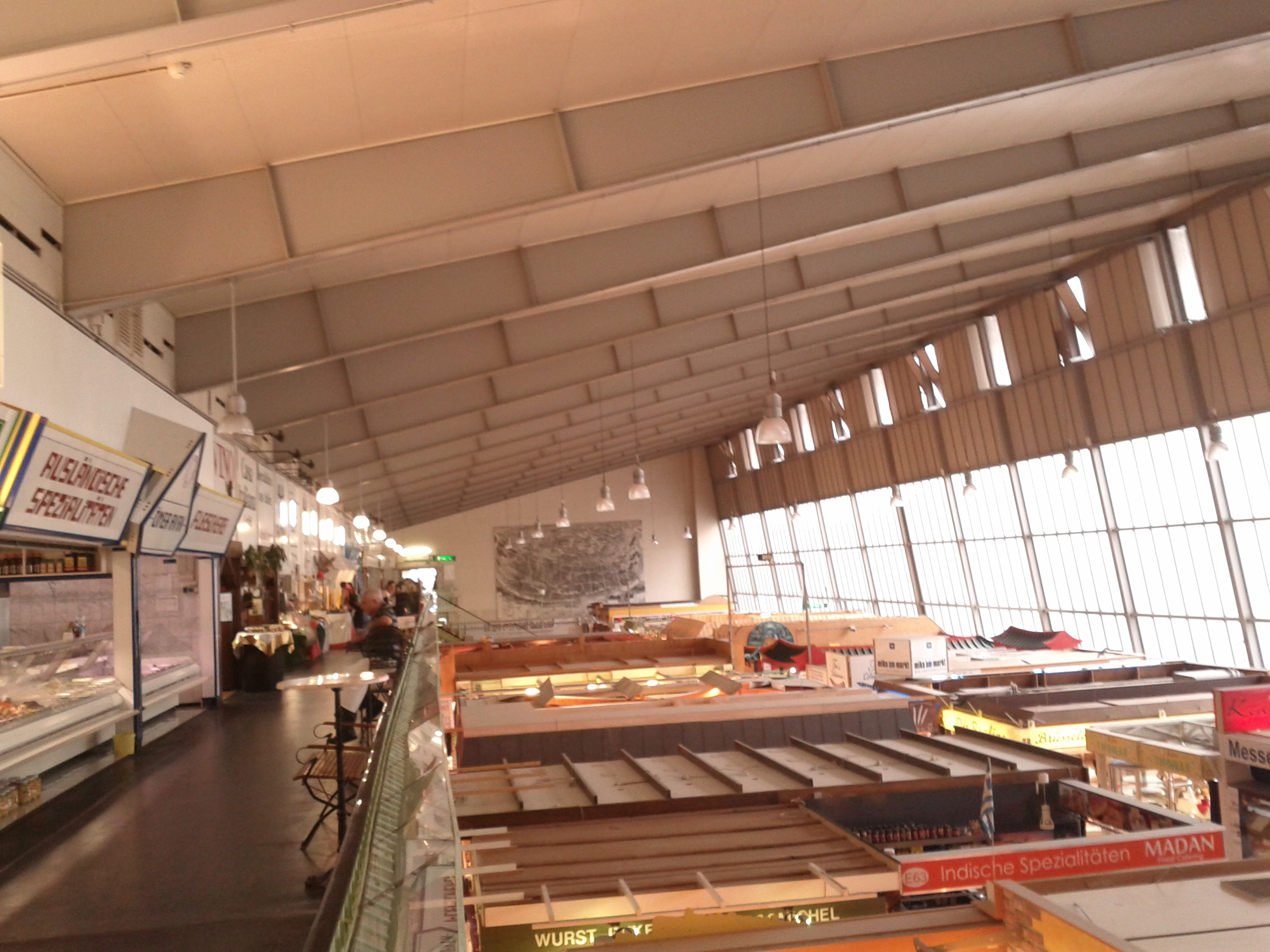
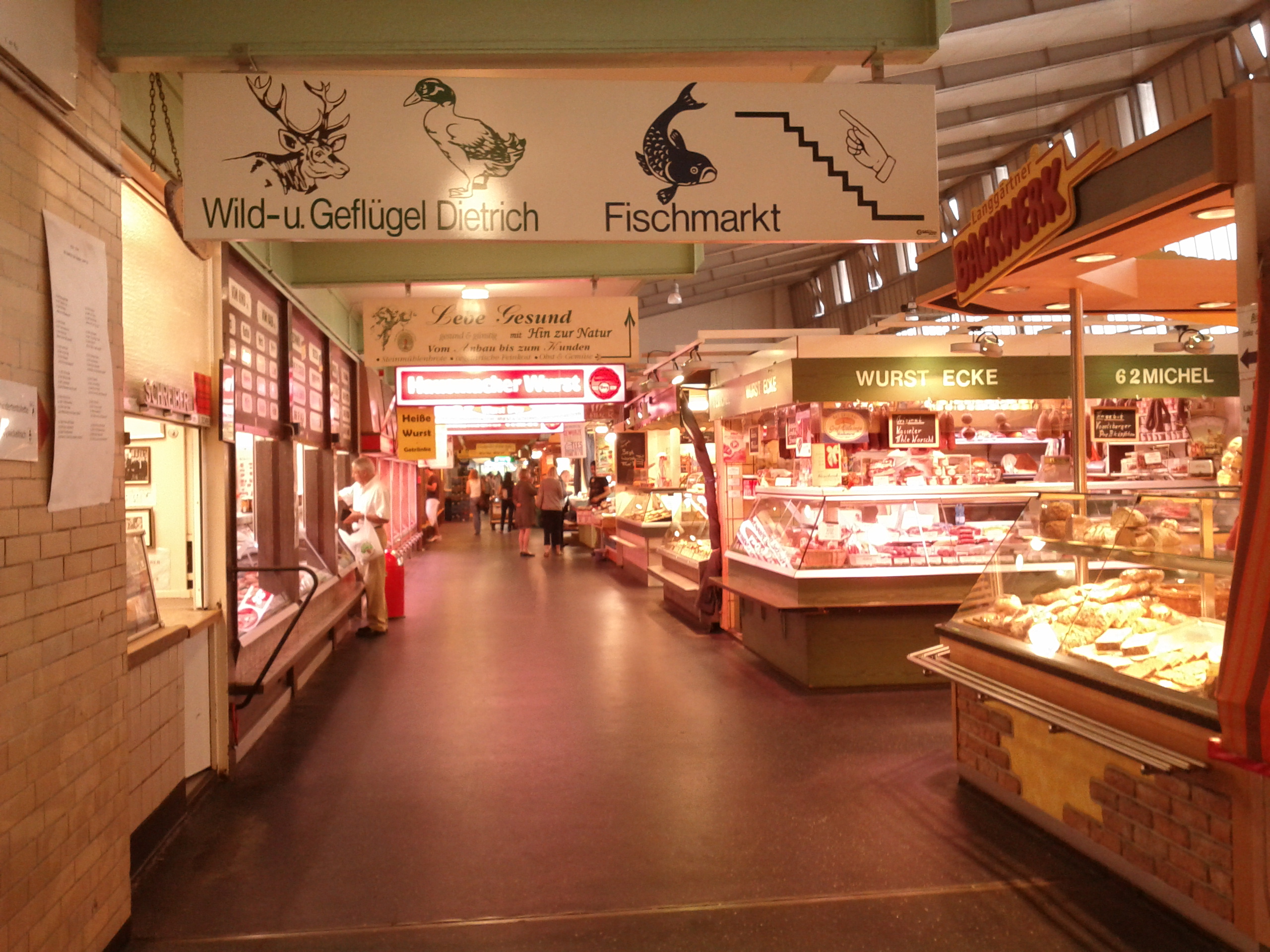
The Kleinmarkthalle (little covered market) is by far not as picturesque and exotic as the one in Barcelona, but again, this is Frankfurt: rough and pragmatic, with just a cosy aftertaste, for real amateurs. 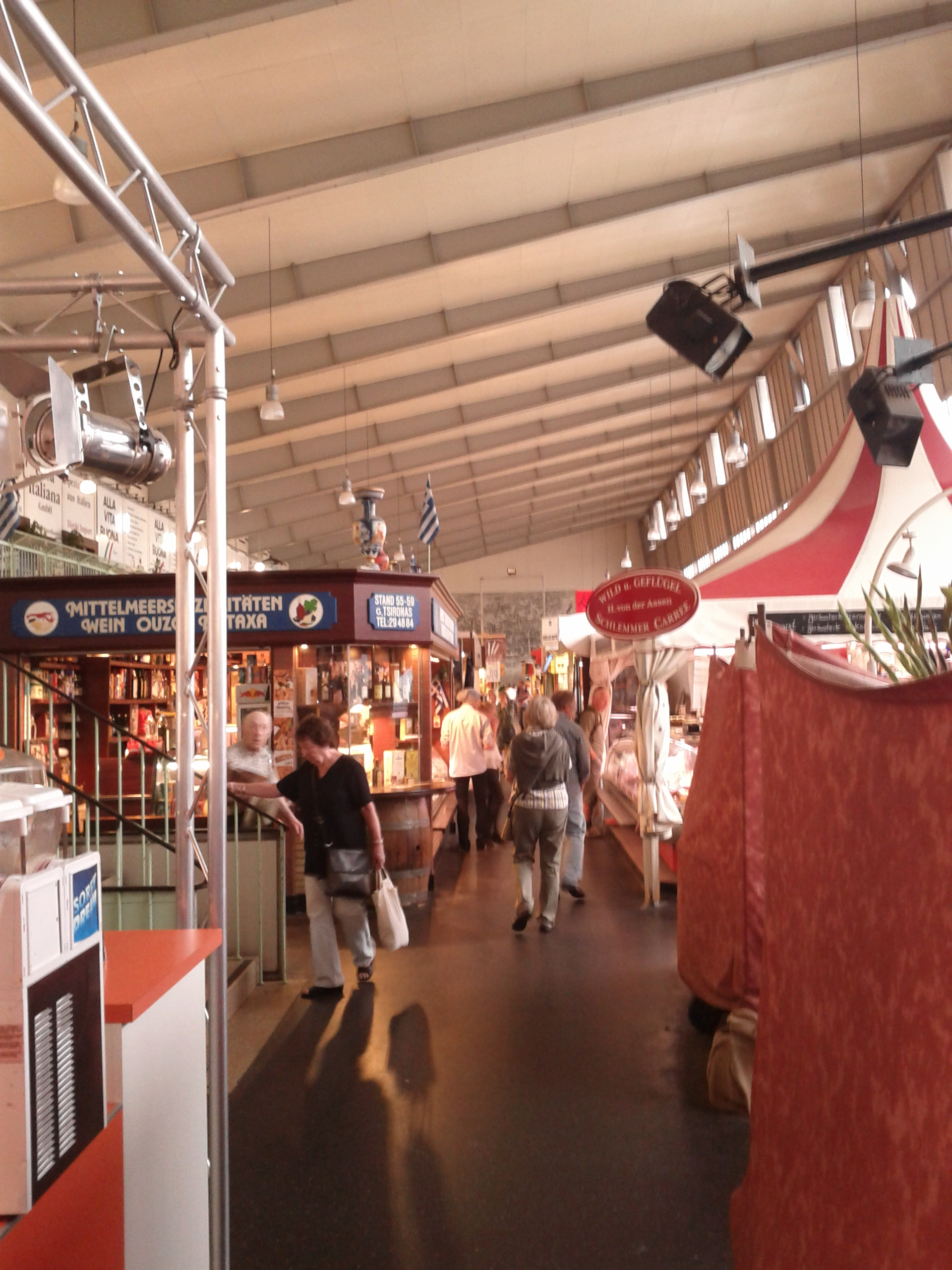
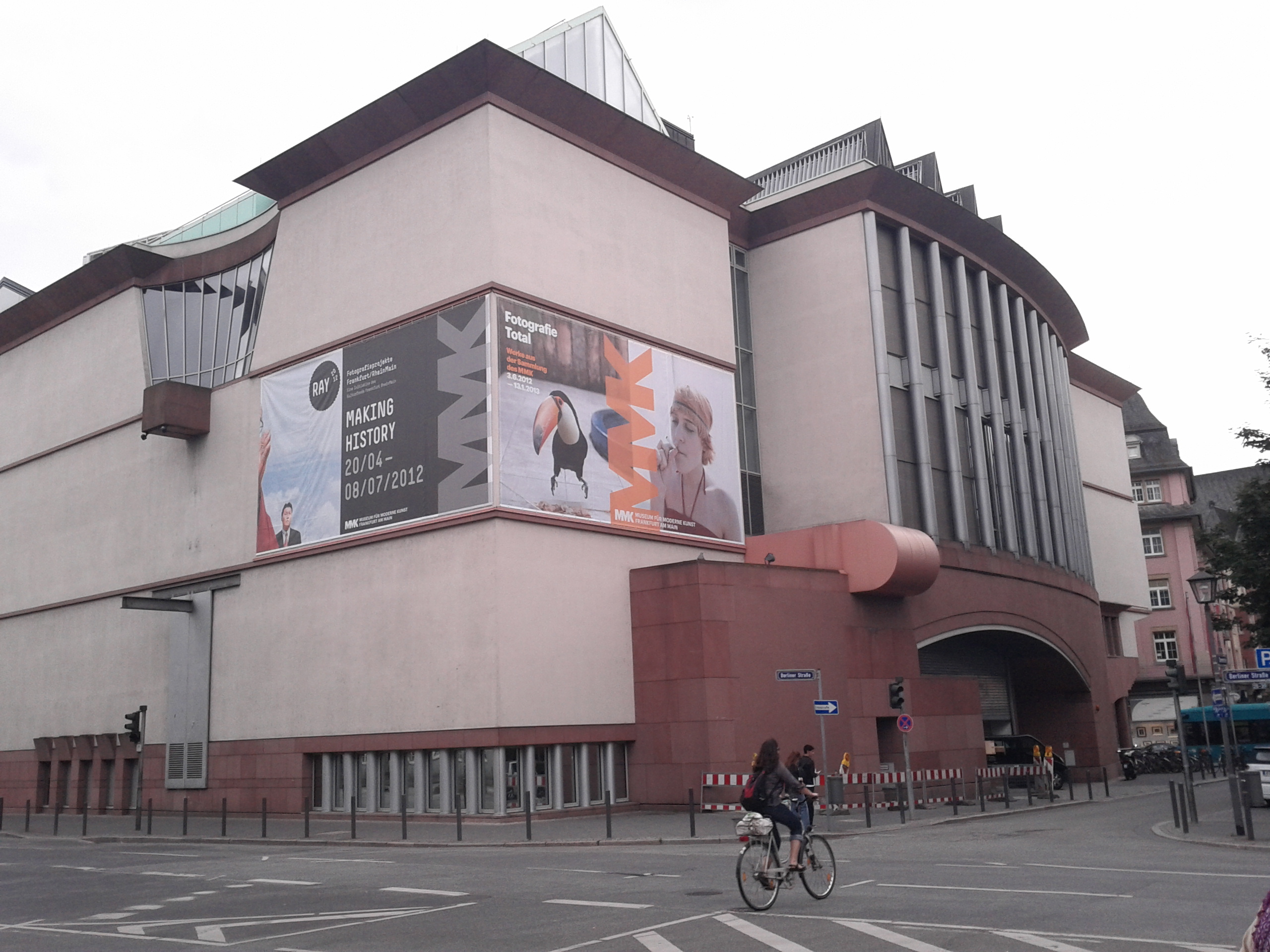
Modern art museum MMK opened in 1991 as a late postmodern architectural work designed by Hans Hollein. It closed the postmodern season in the city and is also called ‘the piece of cake’ due to its triangular shape. The outdated exterior design and the lack of outdoor space make it less lively than other museums in the city, but the surprising interiors and exhibition program, as far as I know, would make a visit worthwhile, if I only had time.
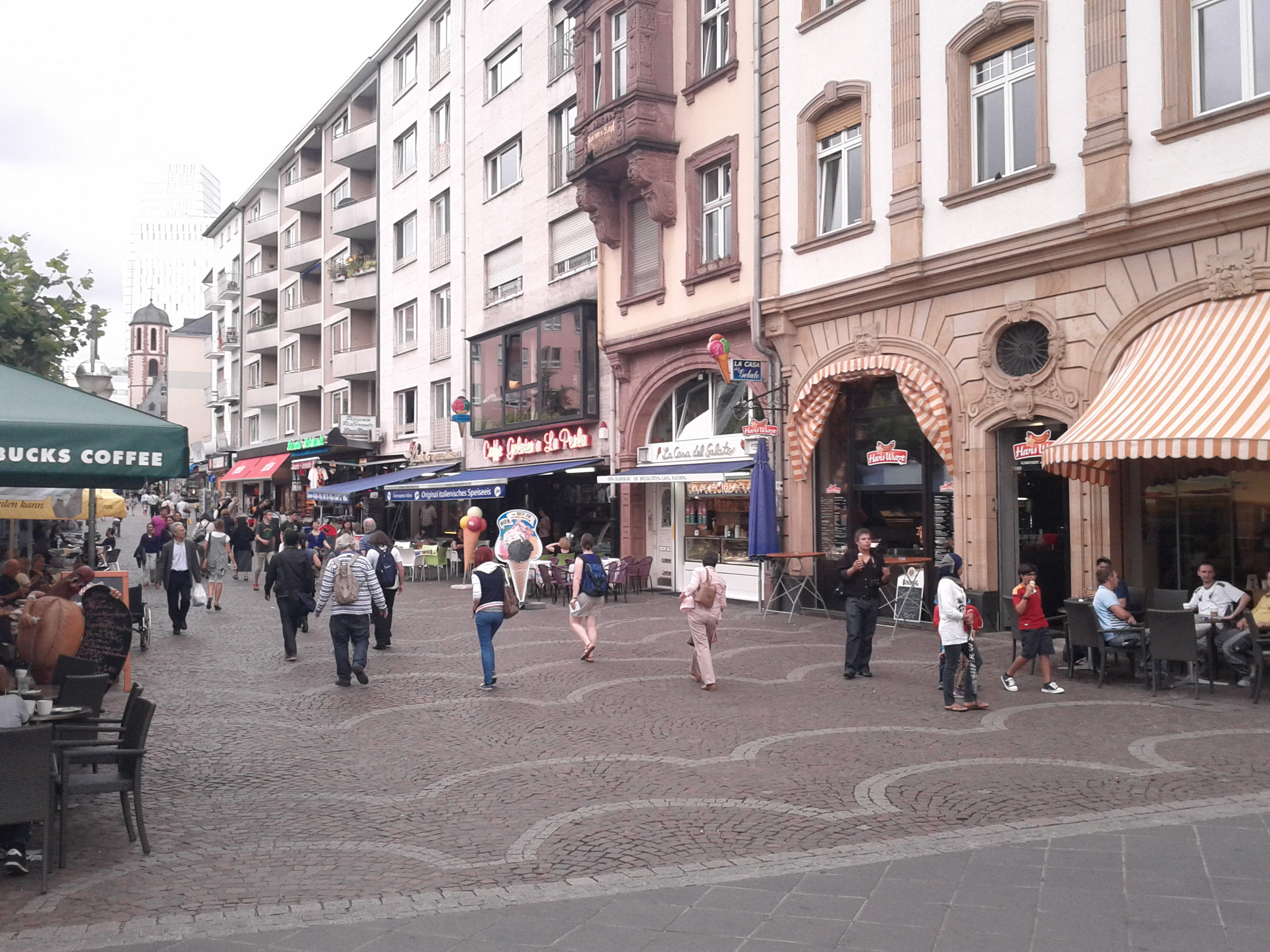
.

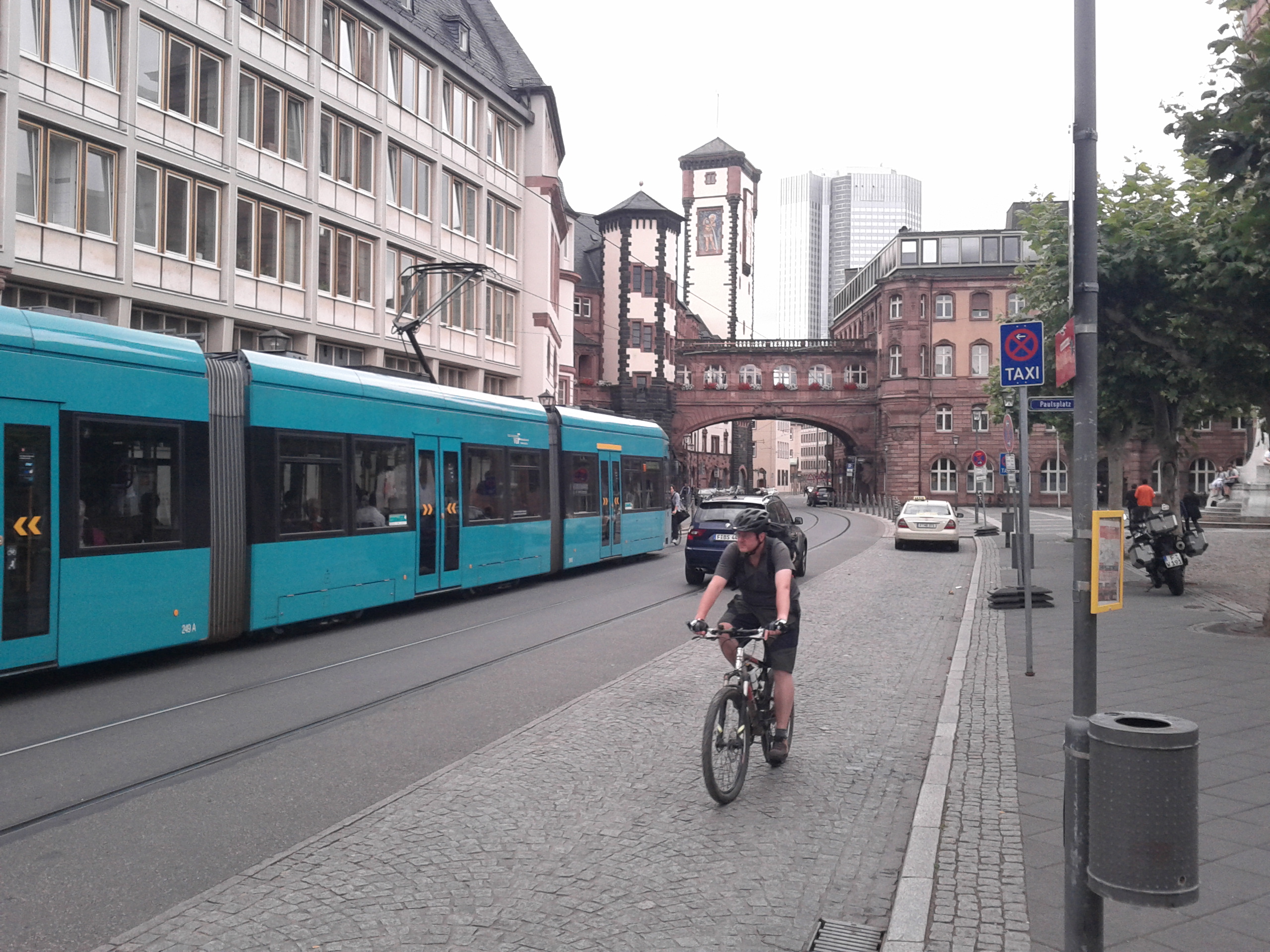
Fully rebuilt (fake) traditional houses are the scenography of the square in which the Municipality has its main seat: the so-called ‘Römer‘. Right a few steps towards the river an old museum building is giving place to a new one, just under construction. I don’t remember exactly what this new museum will be about, but it confirms the fact that Frankfurter definitely love museums. They are regularly building or refurbishing museums since the 80es and they still don’t like to stop. Of course investing in Museum Miles can be very rewarding for touristic cities (Wien is a great example of it and economic return has been precisely measured). Yet, what moves Frankfurt to build always new museums puzzles me. 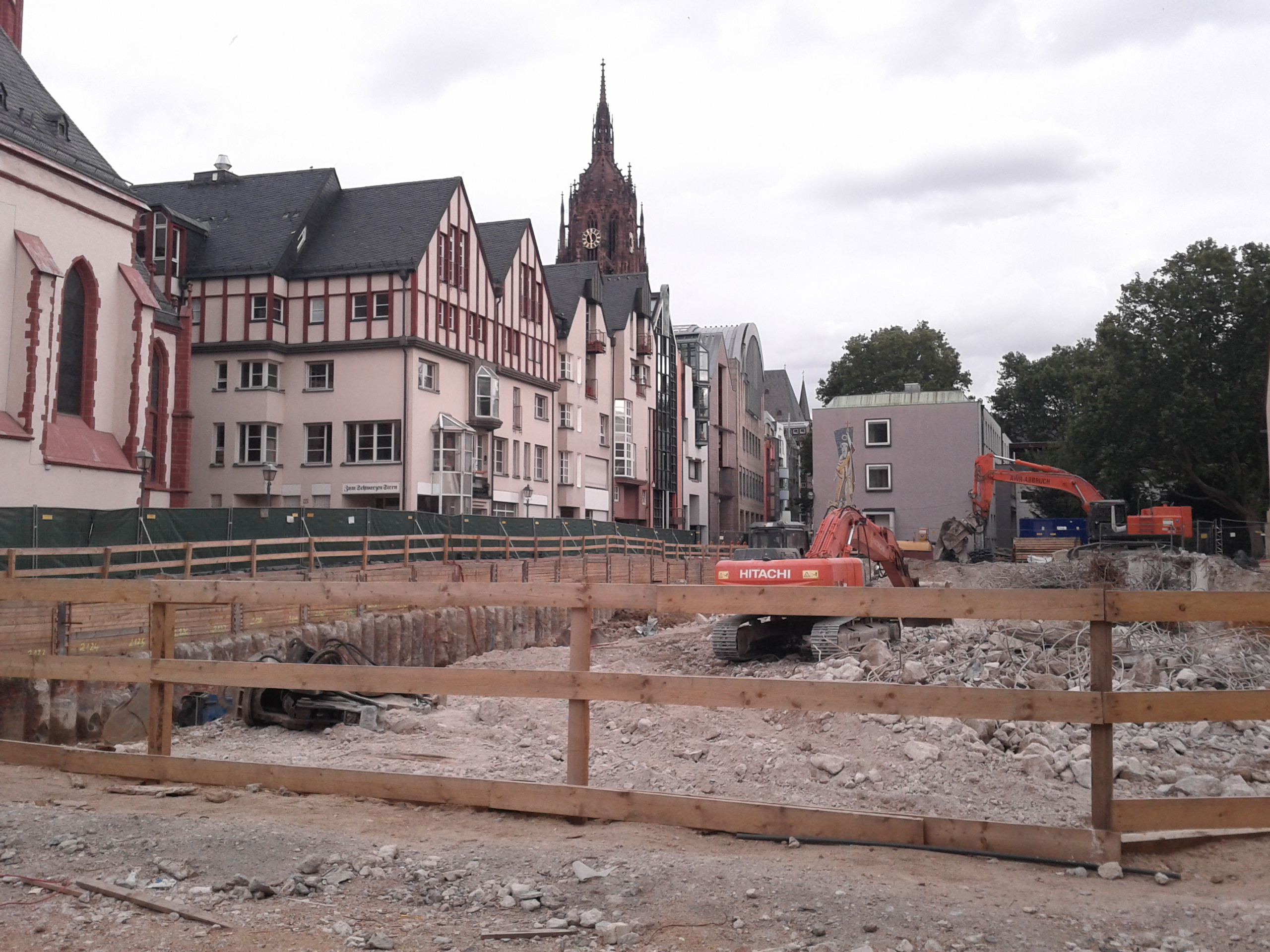
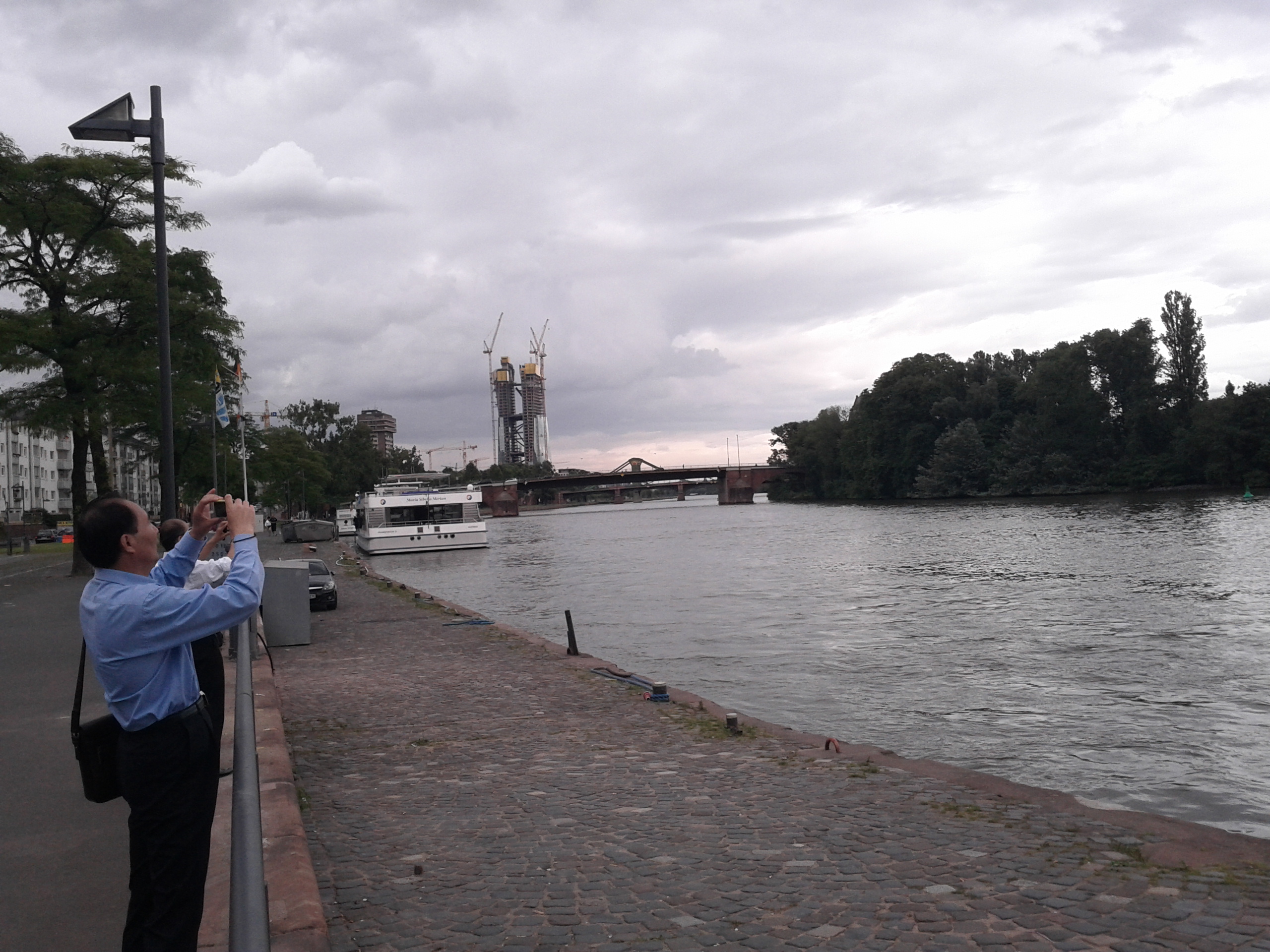
This is another famous building site in Frankfurt: the new HQ of the European Central Bank, designed by Coop Himmelblau who won the international competition a couple of years ago. I will come back on this in the next post. 
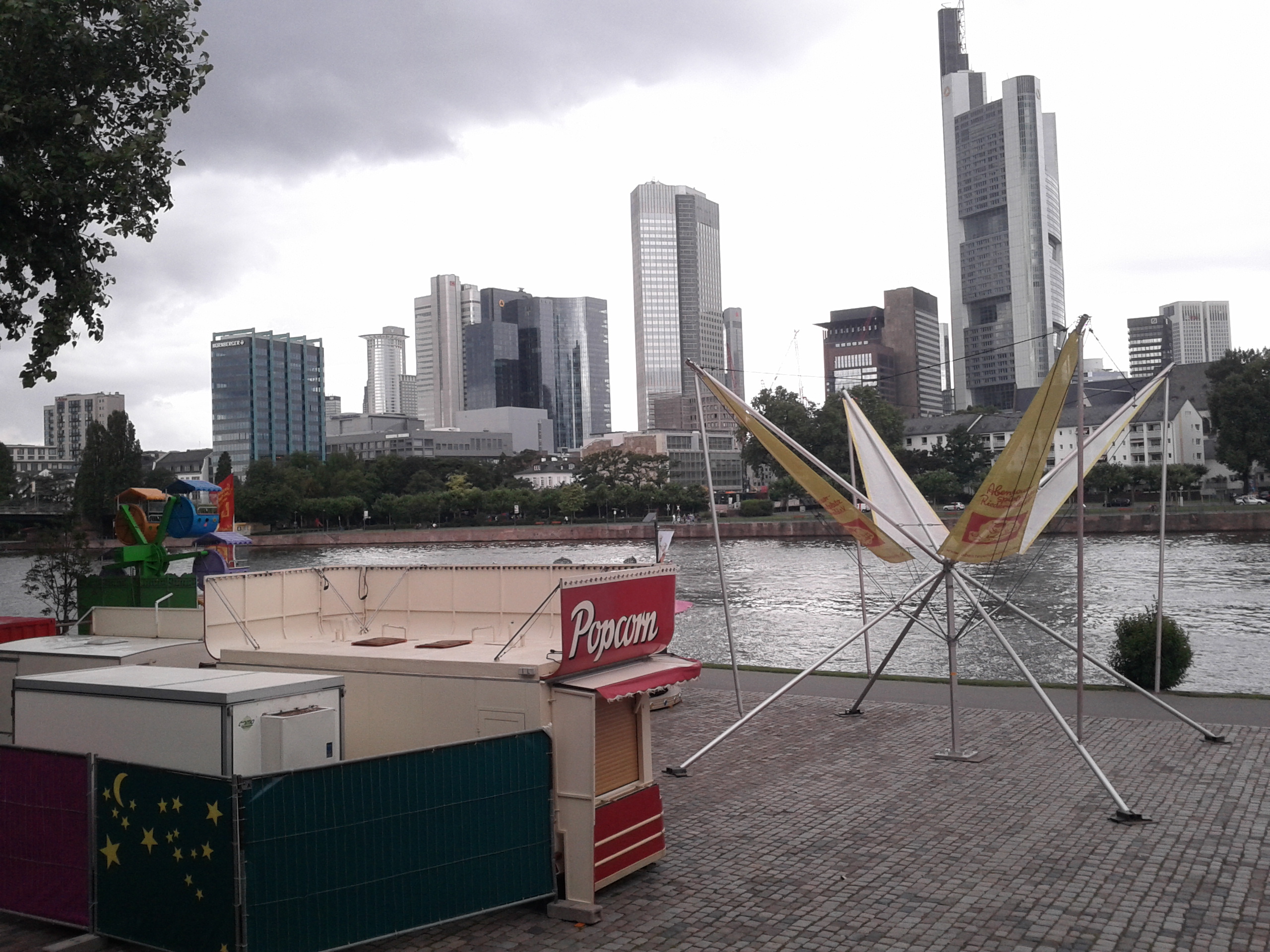
I enjoy a nice 360° view of the city getting across the river on the Eisernen Steg, the pedestrian iron bridge built at the end of the 20th Century to connect the two quarters of Römerberg and Sachsenhausen. Apart from the highrise skyline and Museumsufer, a great work has been done on both river sides to make it accessible and livable for all. I wonder if next time there will be some bateaux mouches as well, like in Berlin. Actually I prefer to see the huge transport barges, amazing fast and numerous.
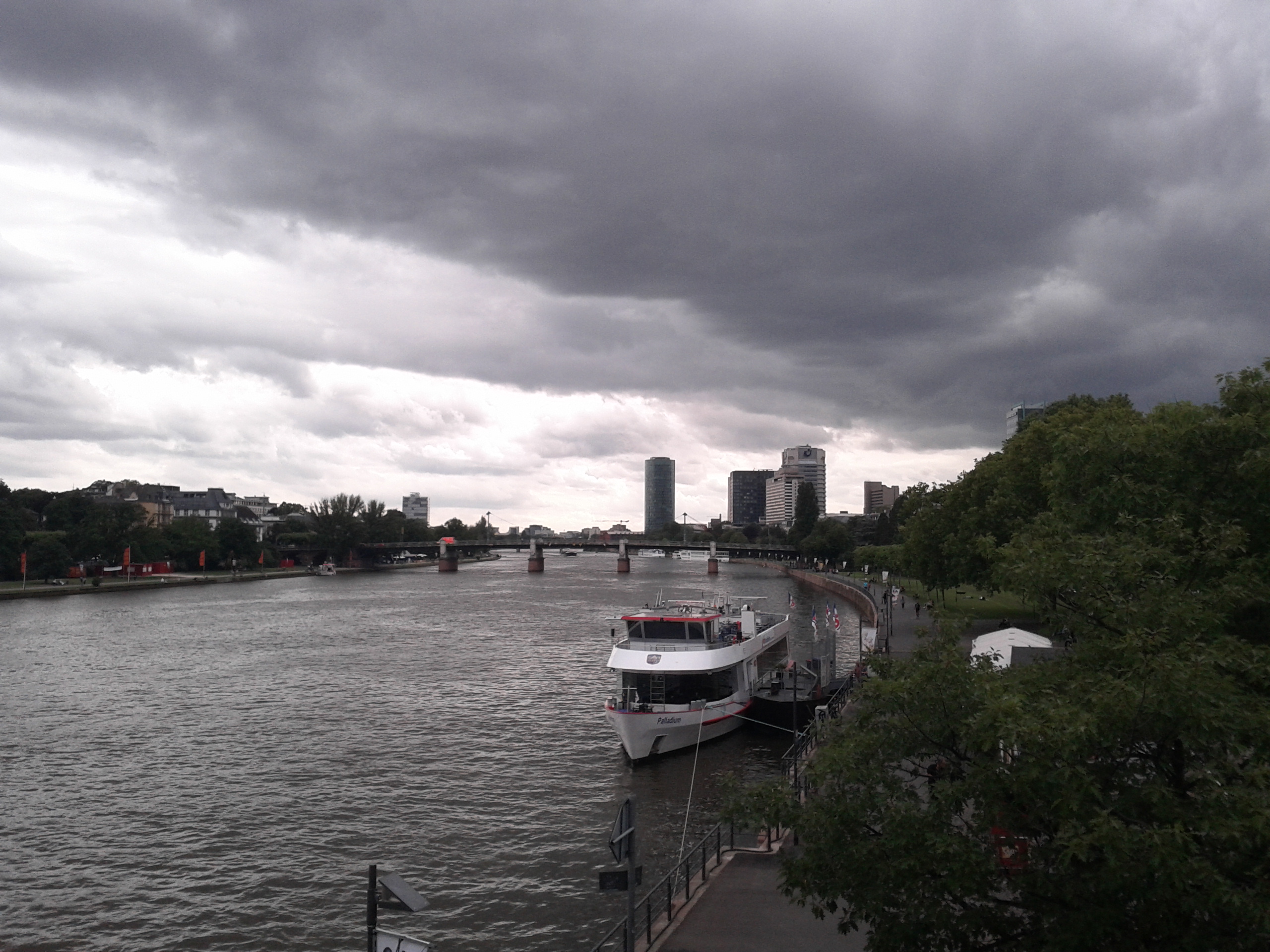


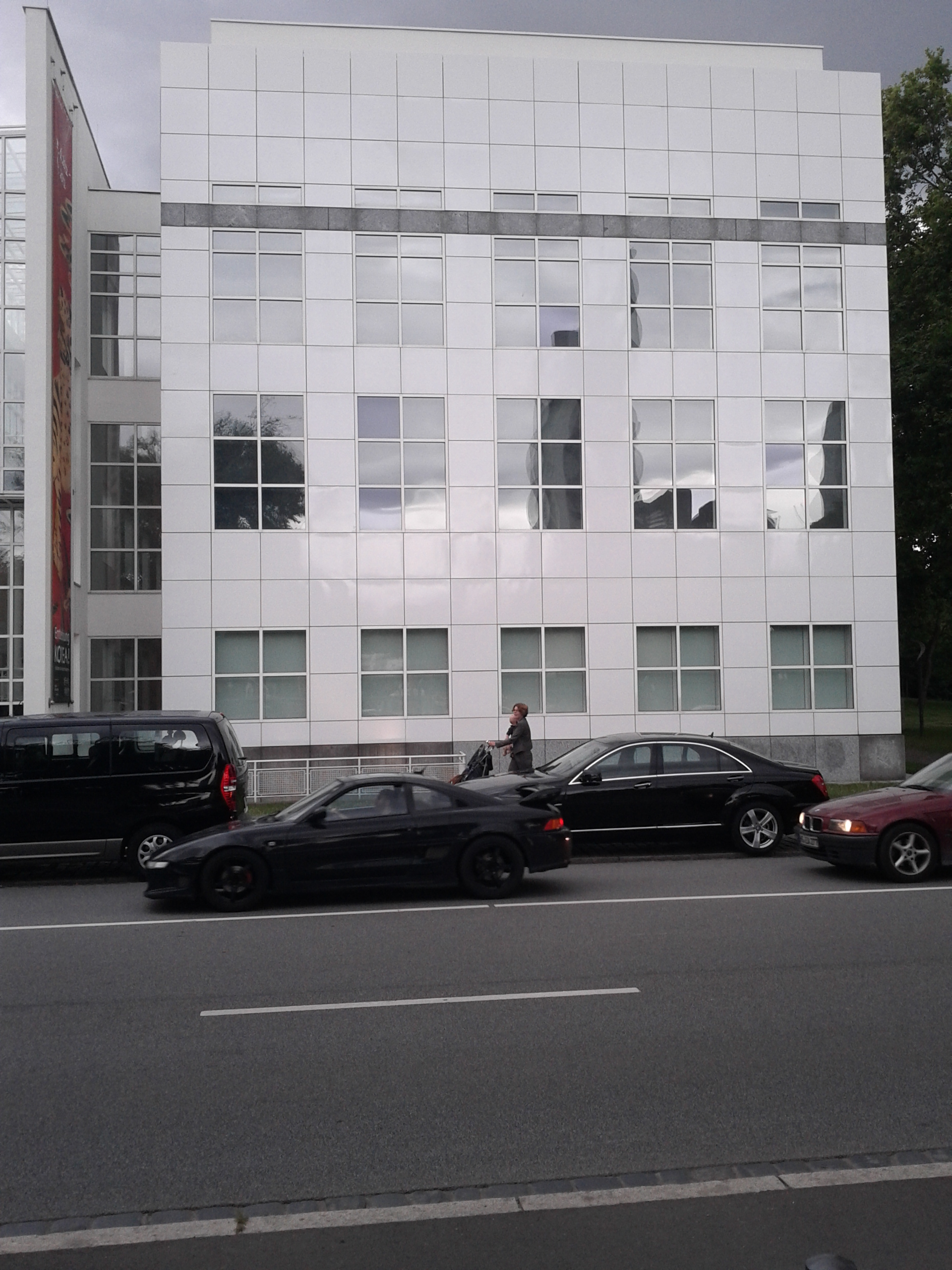
Richard Meyer’s Museum for Decorative Arts (Kunsthandwerk) opened some 25 years ago and has been already fully refurbished. Not bad for an empty white box. 
A pleasent feature of Frankfurt’s skyline is the variety of the highrise buildings in shape, size, colours, materials and use. They share an unspectacular image which makes them more easily acceptable.
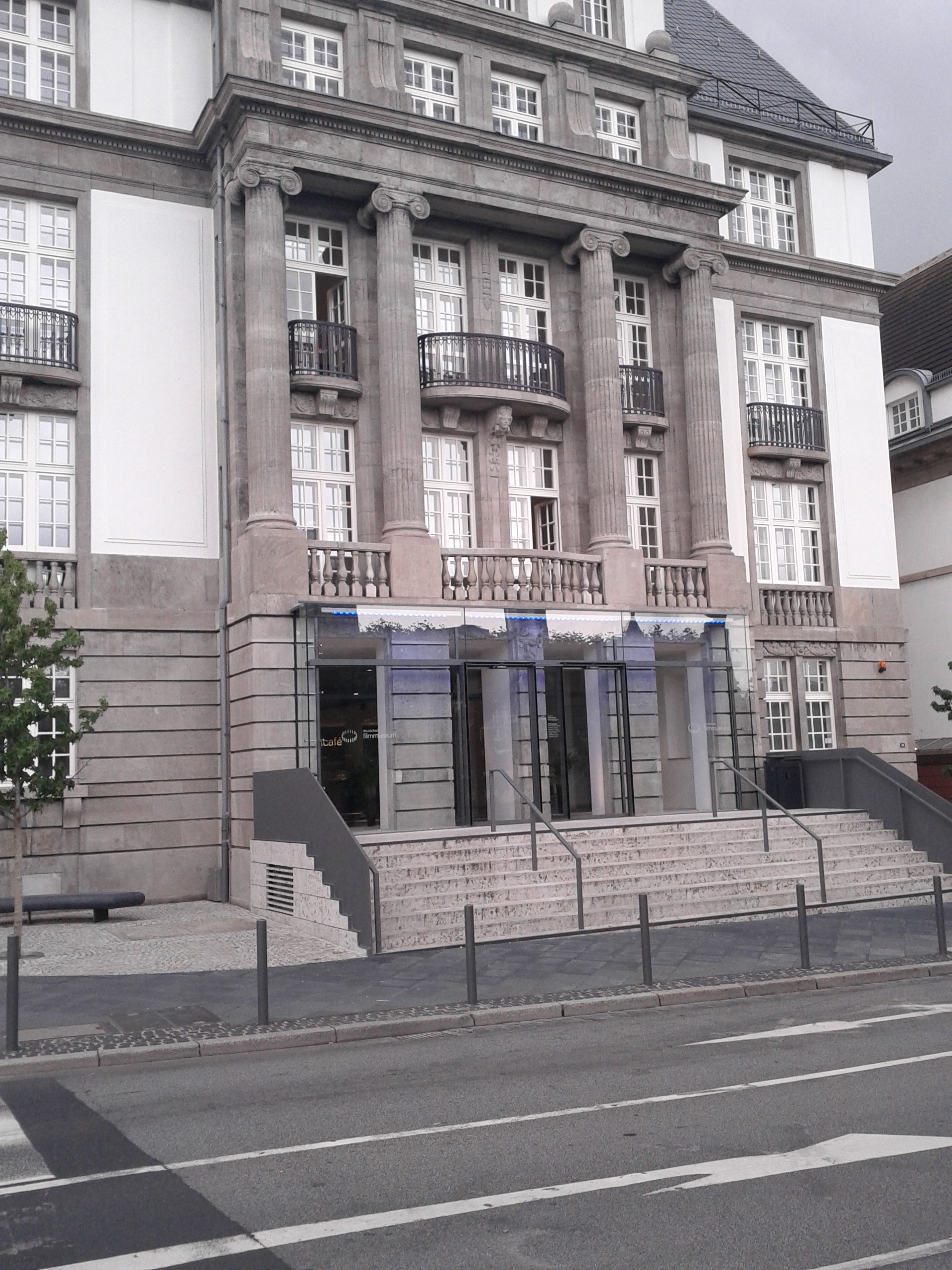
The German Film Museum (above) right next to the German Architecture Museum (below) were among the initiators of the famous frankfurter Museumsufer (Museum’s riverbank).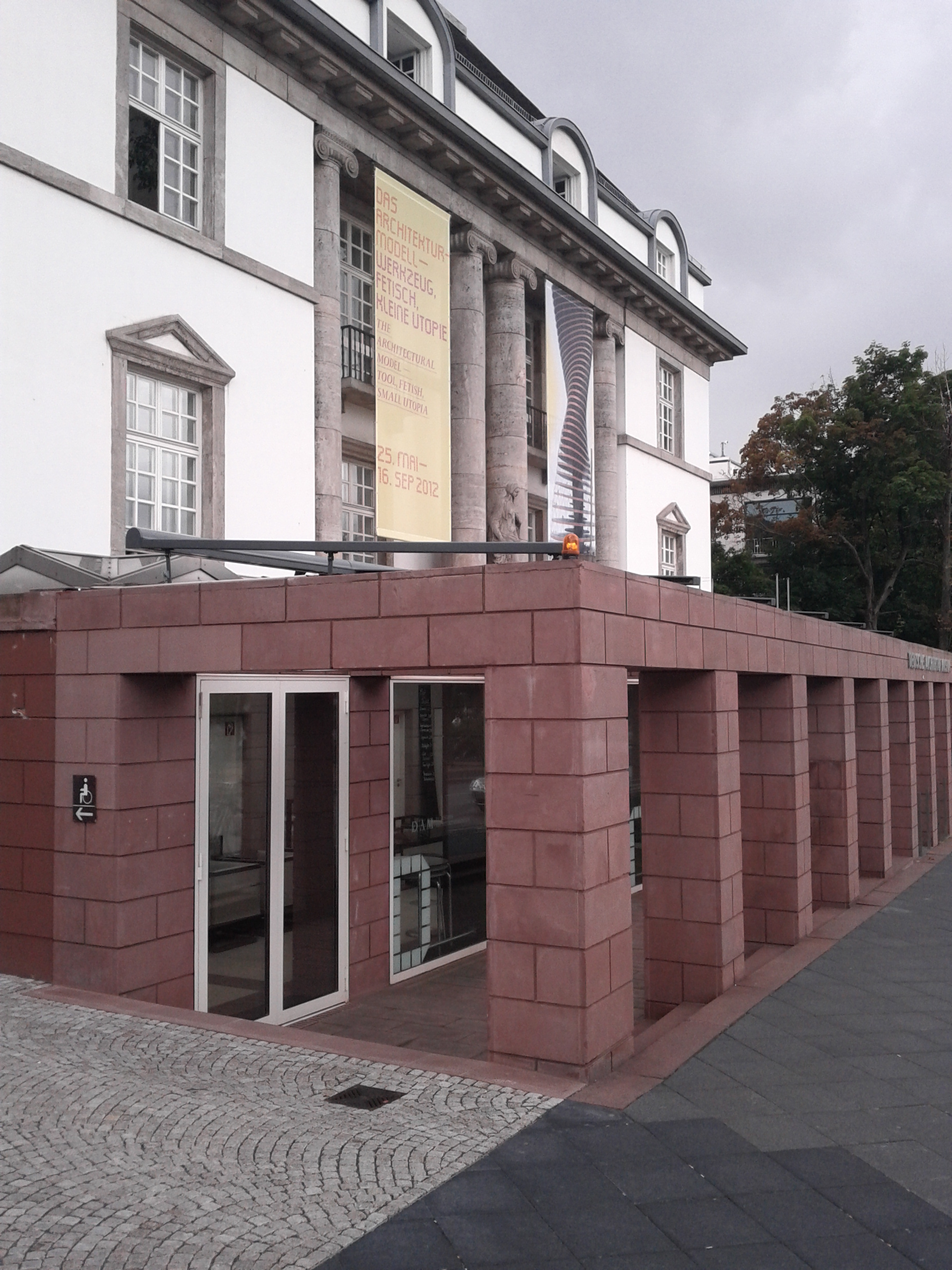
It was almost raining as I arrived to the German Museum of Architecture DAM, shortly before the conference of Maurizio Carones in the famous auditorium designed by Oswald Mathias Ungers. The conference introduced the guided tours of Milan’s modern architecture curated by Carones on behalf of the Architect’s Chamber of Milan. I had the easy task to translate it and moderate the discussion, together with Emanuela Parma.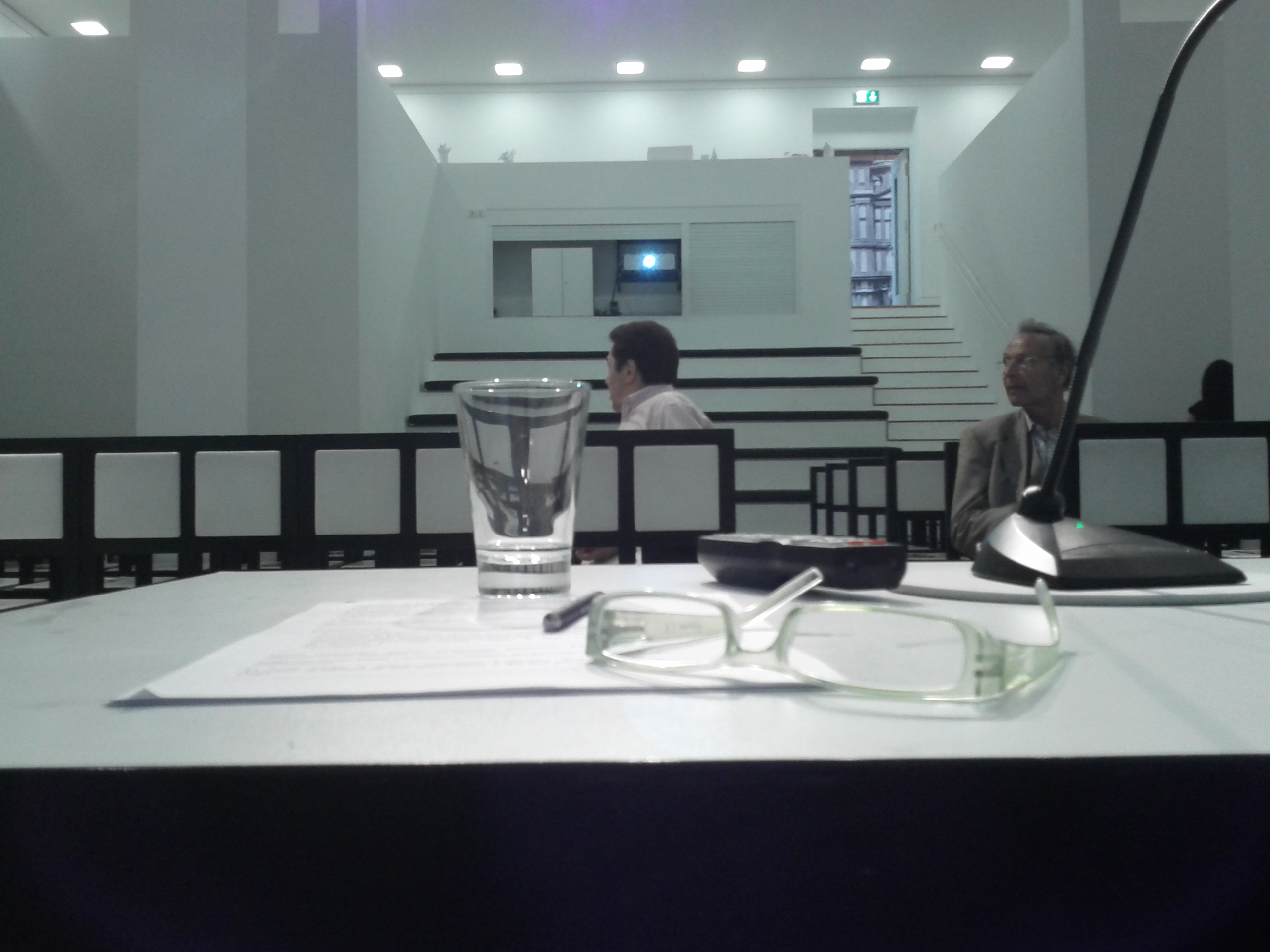
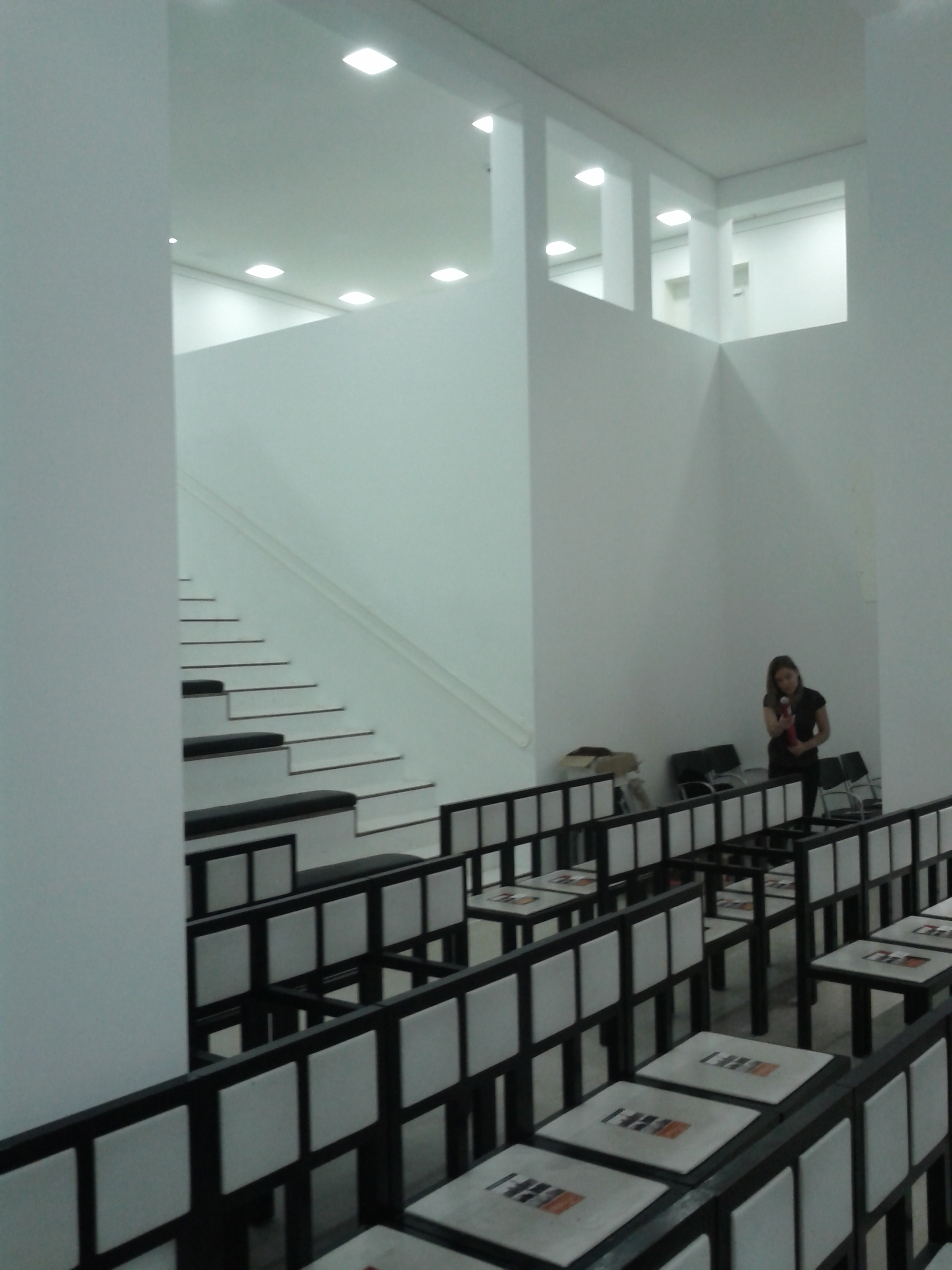

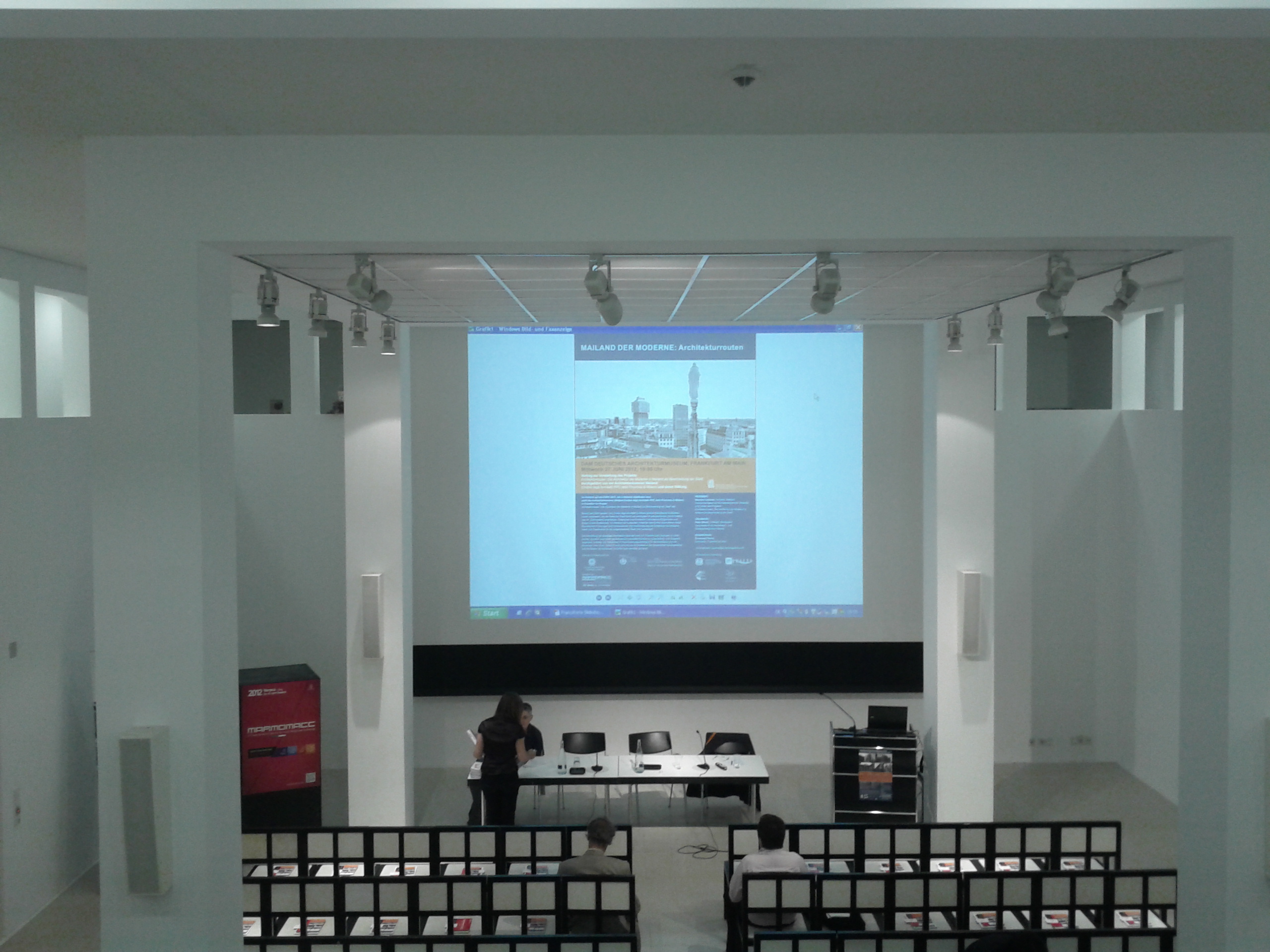
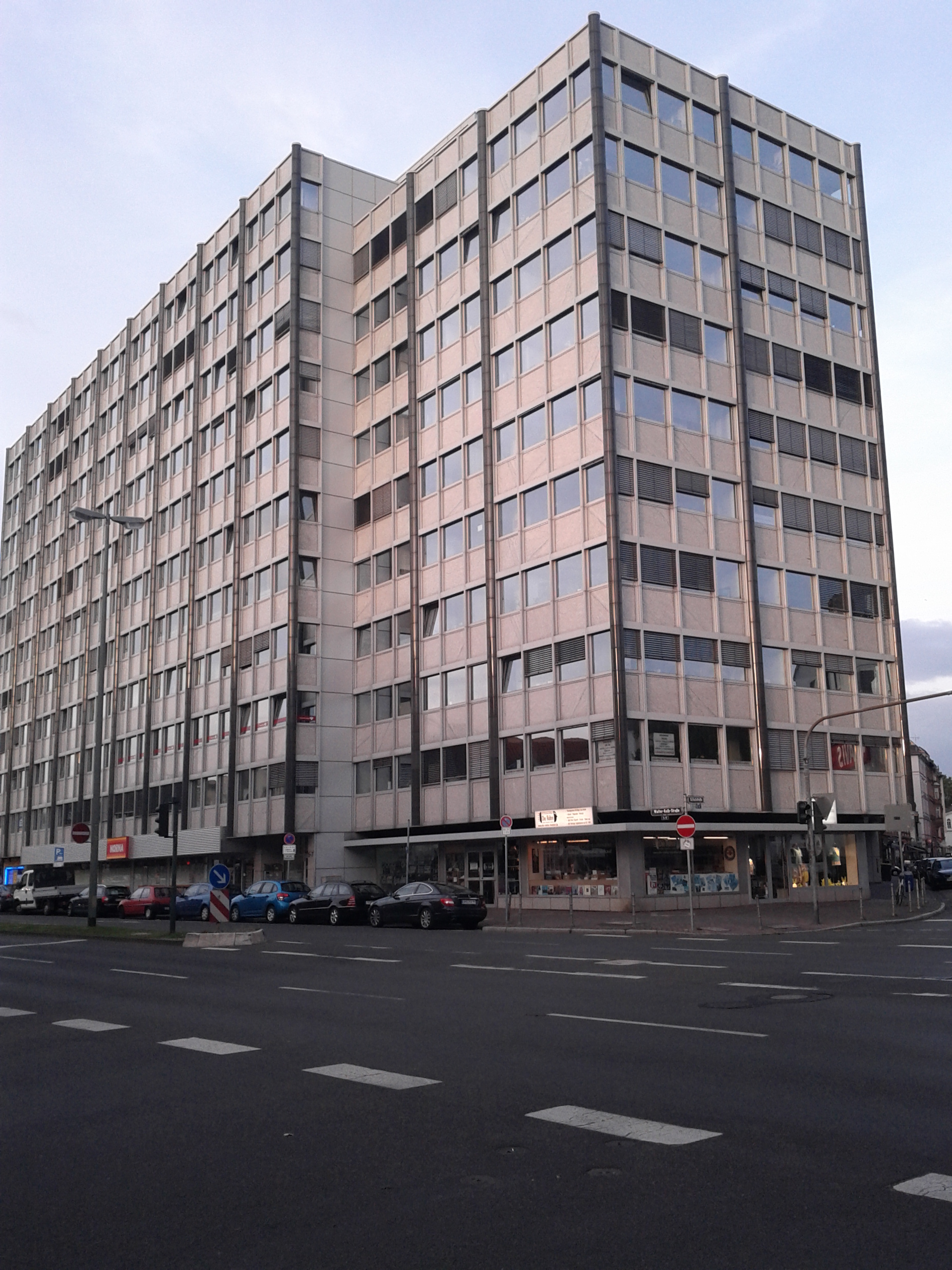

At the end of the conference, heading to Sachsenhausen for a couple of glasses of Apfelwein, Leberwurst und Bratkartoffeln. What else can you wish for?

Morning Walk in Rome EUR Guided by Deyan Sudjic
Last winter I was in Rome for a URBACT info day at the Ministry of Infrastructure and took this the opportunity to walk through EUR. As a matter of fact I was several times before in the eternal city, but never felt like going to see these monumental and ideologically connoted part of the city, probably also due to a genuine and conscious prejudice.
Apart from the crazy building site in front of my hotel, I enjoyed very much a short walk in this neighborhood and I also took some pictures, but I lost most of them. Below you can see the remaining ones.
Ahead of the visit I read the pages of The Edifice Complex, the great essay by Deyan Sudjic on how the rich and powerful shape the world, in which he describes his own visit to EUR with the background of his profound and lively knowledge in history, art and architecture. I had the chance to meet Deyan Sudjic a couple of times some years ago in Venice, as he was Director of an unforgettable Architecture Biennale and in Milan as he was Editor in chief of Domus, just at the time he was writing this book. I am sure he will forgive me if I quote a rather large part of his text (pp.91-95).
Mussolini’s new extension to Rome, known as the Esposizione Universale di Roma, or EUR, as E 42 was renamed, was built for an expo planned for 1942 to mark the twentieth anniversary of his seizure of power. The original intention was to construct a series of buildings that would be used during the fair as exhibition and event spaces, before being turned over as the nucleus of a large scale expansion of the city southward toward Ostia and the see. The war intervened and the expo was abandoned, but enough of the site was developed to leave a powerful taste of what an authoritarian city that used a modern vocabulary would look like.
The plan was a compromise between Italian architectural modernizers and traditionalists, with the balance of power shifting toward the traditionalists as time went on. It became the focus of conflict between sharply different visions of what the new Rome should be, provoking what was to be the final and fatal break between the regime and Giuseppe Pagano. The loyal Fascist who had been involved with the early stages of the planning of EUR denounced Piacentini, who took charge with a brief to create a more formal, classical character for the plan. The break did not affect Pagano’s devotion to the Fascist cause, untill he went to fight in Mussolini’s army in Albania.
Despite Pagano’s doubts, EUR is considerably more sophisticated as a piece of urbanism than Speer’s Berlin would have been. The ever competitive Hitler declared the plan “a meaningless copy without any import”. Piacentini had indeed seen Speer’s drawings for Berlin before he set about regularizing those aspects of EUR judged to bee too freely expressive or, as Fascists put it, “Hebrew”. However, EUR is planned on a grid rather than a single monument axis. A number of landmark structures establish the area in the landscape, the most prominent of which is the Palace of Italian Civilization, the so-called Square Colosseum. The structure is visible all the way from the Villa Borghese in the center of the city. With its six layers of Roman arches stacked one above the other, it sits on top of the hill on the southern edge of EUR. There are 150 steps, untroubled by any sign of handrail, leading to the entrance. It looks like a travertine mountain and feels as daunting to climb as if you were ascending a stepped pyramid in Mexico.
At the summit, these days you will discover that the Palace of Italian Civilization is closed for repairs. Carved in stone across the top of the cube, back and front, is the legend ” A people of poets and artists, of heroes and saints, of thinkers, scientists, navigators and migrants.” An inner stone cube with floor-to-ceiling arched windows is wrapped in an outer stone skin, pierced by matching arched openings. The forms could not be simpler. This is as much a stage set as it is architecture, and yet the tension between solid and void gives it a real presence.
The Square Colosseum forms the end of one of the grid of avenues running north-south; at the other is Adalberto Libera’s Congress Hall, less obviously classical in its inspiration, with its flattened dome rising over a white stone box. […]
The gridded plan of EUR avoid the monomaniacal quality of Speer’s Berlin. It has a suburban dispersed quality, more like Milton Keynes or Orange County. Libera’s building and the Square Colosseum conduct a civilized dialogue with each other. The two most prominent buildings of EUR avoid the central axis, which is marked by an obelisk looted from Egypt. They are designed as part of a composition with a third major element that appears on the skyline, the domed church on the southern edge of the complex.
Most of the center of EUR is made of monumental blocks of offices, incorporating colonnades at ground level, designed to accommodate shops and cafés, and arranged around landscaped squares. In most places that have as little pedestrian traffic as EUR, it’s a gesture that would have resulted in nothing more than abandoned storefronts, revealing the unbridgeable gap between architectural aspirations and commercial realities. But Italy’s embrace of street life has breathed some life into the area. Even so, in many parts of EUR, the ground floors are all but abandoned, with activity concentrated on the piano nobile above, almost as if this were Venice. Piacentini’s plan subjugated individual buildings to the demands of the overall urban composition. The block next to Libera’s Congress Hall has four sides, each with a different character. On one side it forms part of a square; on the next the block becomes an arcade, while the third side is a sweeping crescent. It’s an arrangements that leaves all of them vulnerable to the problems of conflicting geometries at the points where different elements meet.
There is a stench of stale urine as you shelter from the rain in the sweeping colonnades, cut out of the base of the building blocks. The squalor is poignantly framed by the most exquisite materials that Mussolini’s architects could find: turned granite columns, carefully laid cobblestones, pale pink plastered vaults, lit by generously proportioned glass-globe lamps. White marbles frame the doors and the windows. Evidence of tramps sleeping out, sheltering from the weather, haunts some corners. Loudspeakers dangle from cables in the vaults, as if in memory of a long ago harangue from the Duce.
[…] The banality of the later additions from the 1960s that radiate outward from the edges of EUR has the curious effect of making the original buildings look simultaneously both ancient and much more modern than they really are, af if reinforcing Mussolini’s original intentions. […]
On a quiet Saturday morning, EUR has an ordinariness that seems to deny its sinister origins. It was meant to glorify fascism; as it turned out, however, the area has become a dignified if neglected suburb with an unusually urbane character. EUR has effortlessly outlasted the comic-opera regime that gave birth to it and shrugged off its ideological purpose. To live and work here poses no obvious threat to the health of present-day Italian democracy.
These words provide a very detailed description of the area. I would only like to add that, some more years after Deyan Sudjic visit, last January the Square Colosseum was still close for renovation. And for those who appreciate Dejan’s works like I do there is a beautiful editorial on London’s Olympic transformation in the current issue of Domusweb
For the few ‘Italian only’ readers in 2011 the Edifice Complex has been published by Laterza.
Le Voyage a Nantes
Untill the 19th of August the city of Nantes will be the scene of a courageous art festival entitled Le Voyage a Nantes that will have to compete with the traditional dOCUMENTA (13).

The “arbre à basquet” by Agence a/LTA above is one of the site specific installation, the trailer below and the official webpage (in French, English, German and Spanish language) are part of a gorgeous communication platform that promise an unforgettable experience of the north-west French city on the Loire river. By the way Nantes happened to be awarded the EU Green Capital City 2013 title, which suggests a well established and integrated long term urban development perspective.
It is a real pity that it doesn’t fit to my Summer programmes. If you happen to get there please let me know!
URBACT Capitalisation Process 2012 Workstream 6 ‘Building Energy Efficiency’ First Hearing and Core Group Meeting scheduled on July 23-24 in Paris. Call for Evidence is Still Open!


The building sector accounts for 40% of the total energy use and for 36% of Europe’s CO2 emissions. It generates 9% of the total EU 27 GDP and 8% of the total employment. Since the EU aims at reductions in domestic greenhouse gas (GHG) emissions of 80% by 2050 (compared to 1990 level), the building stock – in particular the housing sector – plays a major role in achieving the 20-20-20 strategic targets. Without consequently exploiting the huge savings potential attributed to the building stock, the EU will miss its GHG reduction targets, but there are many other advantages in reducing the environmental footprint of buildings that should be carefully considered.
CO2 REDUCTION & CLIMATE ADAPTATION
Already in its 2008 World Energy Outlook the International Energy Agency, IEA, focused on the climate adaptation and energy saving potential of European cities. “Cities are key players in the fight against…
View original post 1,336 more words
 Well Designed and Built