Common Ground
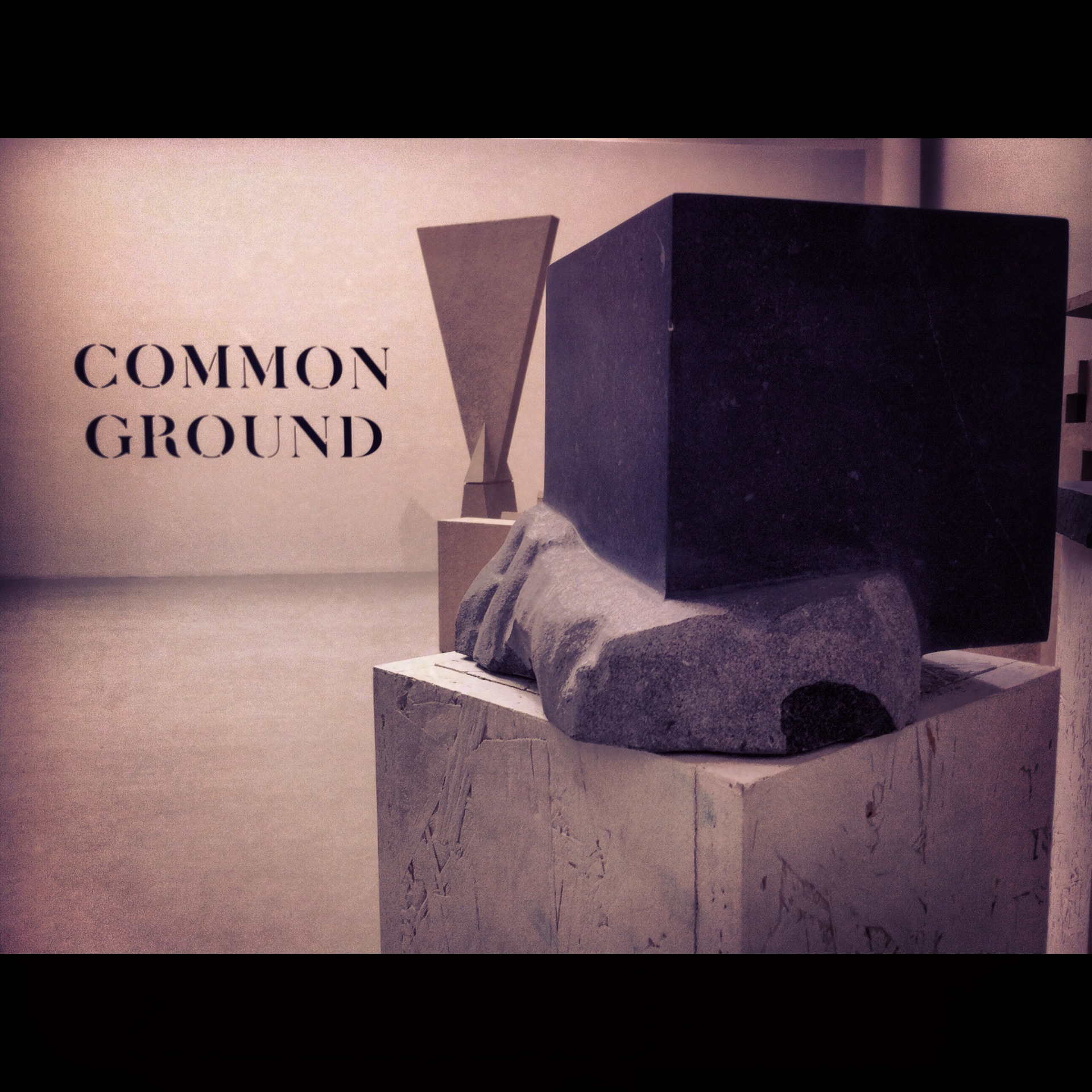
Biennale di Architettura 2012 © Andrea Giannone
I haven’t been at the opening of the Biennale di architettura last week, I simply could not make it, but I look forward visiting it before November 25th. Well noted, having seen a couple of them before I have no great expectations about such an event. I just like to be there because it’s in a beautiful place, you happen to meet old friend and colleagues and – if you are lucky and willing to do so – you might even discover good projects and architects you don’t know.
Being David Chipperfield curator and the exhibition’s purpose to investigate some kind of “Common Ground” between architects and/or between architecture and the rest of the world, my expectation this time are slightly above the average zero level, however I would really not expect a Biennale to change things that matter.
It may even be true that “the architects are playing on a sinking gondola like erstwhile the orchestra on the Titanic playing their last song, while outside in the real world our leaky trade is sinking into powerlessness and irrelevance. This is because politicians and project managers, investors and bureaucrats have been deciding on our built environment for a long time now. Not the architects.” (Wolf D. Prix) So what? Has the Biennale something to do with it?
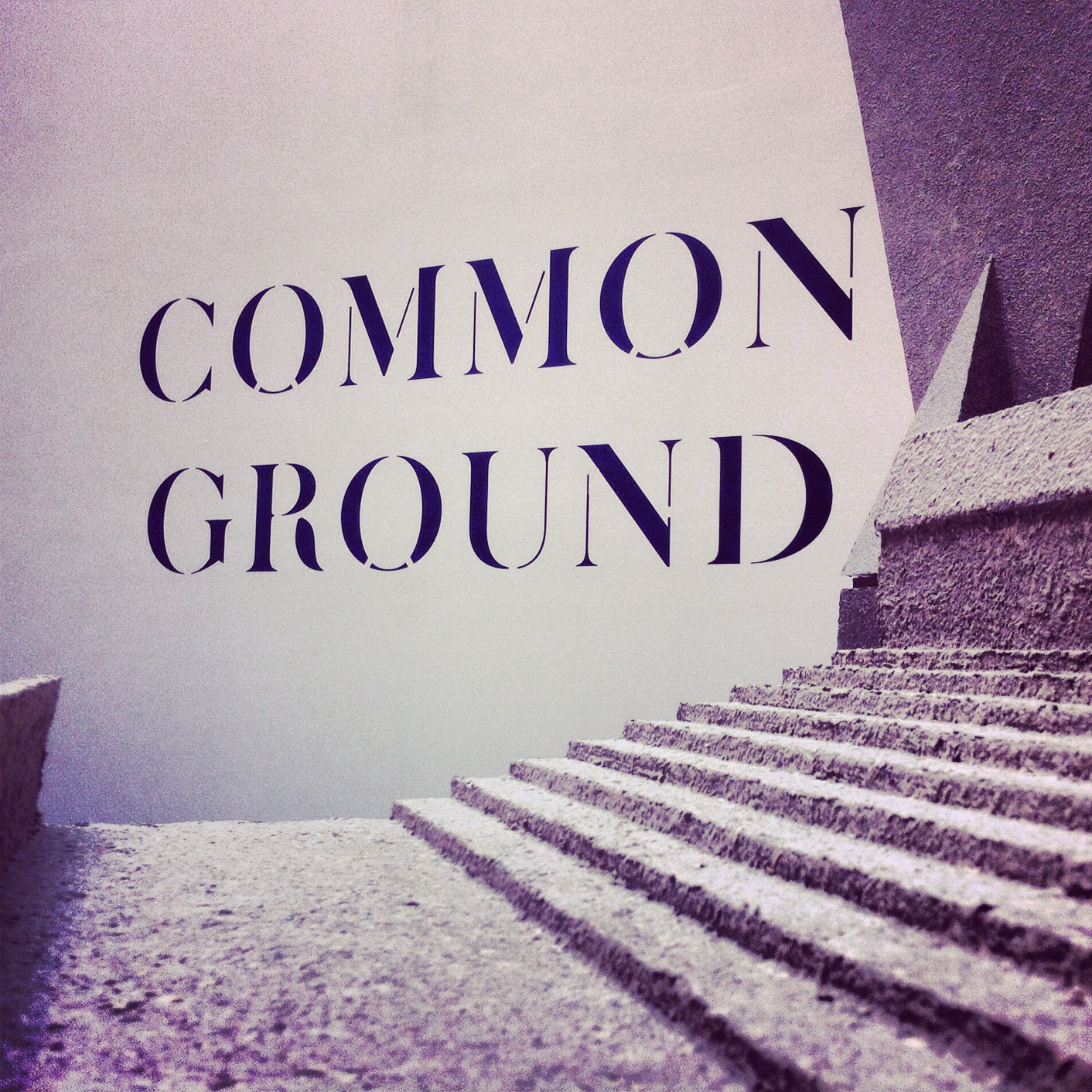
Biennale di Architettura 2012 © Andrea Giannone
For the same reasons I would avoid proclamations such as urging “the profession to turn away from iconic one-off projects like opera houses, theatres and museums, and address “the 99.99% of the rest of the world which architects are not dealing with” before they’re relegated to being “urban decorators” (David Chipperfield in conversation with Marcus Fairs for Dezeen). Who cares about these nice words, especially today as large portions of our old continent are rapidly sinking? Not to talk about the emerging world powers, were entire cultural assets are being erased forever (as Wang Shu is reporting from China). What can an architecture exhibition do for it?
Even if it may be the most important one in the world, the Biennale di Architettura is nothing but a large exhibition. I don’t see the point of harsh and radical criticism, by engaged critics (“the worst Biennale ever” Luigi Prestinenza Puglisi), serious institutions (“far from reality and self-referential” Leopoldo Freyrie, President of the Italian Architects’ Council CNAPPC) and famous architects ( “a compromise that cannot get any worse” Wolf D. Prix Coop Himmelblau).
More balanced is, as usual, Fulvio Irace, but he is also curator of an exhibition in the Italian Pavillion. His review suggests a peculiar way to enjoy the Biennale – beginning from Alvaro Siza’s Pavillion at the Giardini delle Vergini – focusing on some conceptual differences between this one and the former ones. Only at the end of his article he notes that “despite the wish to be burial of the archistar, the 13° Biennale has closed his eyes in front of some frankly embarrassing tombstones” (Sole24ore 2nd September 2012, editor’s translation).
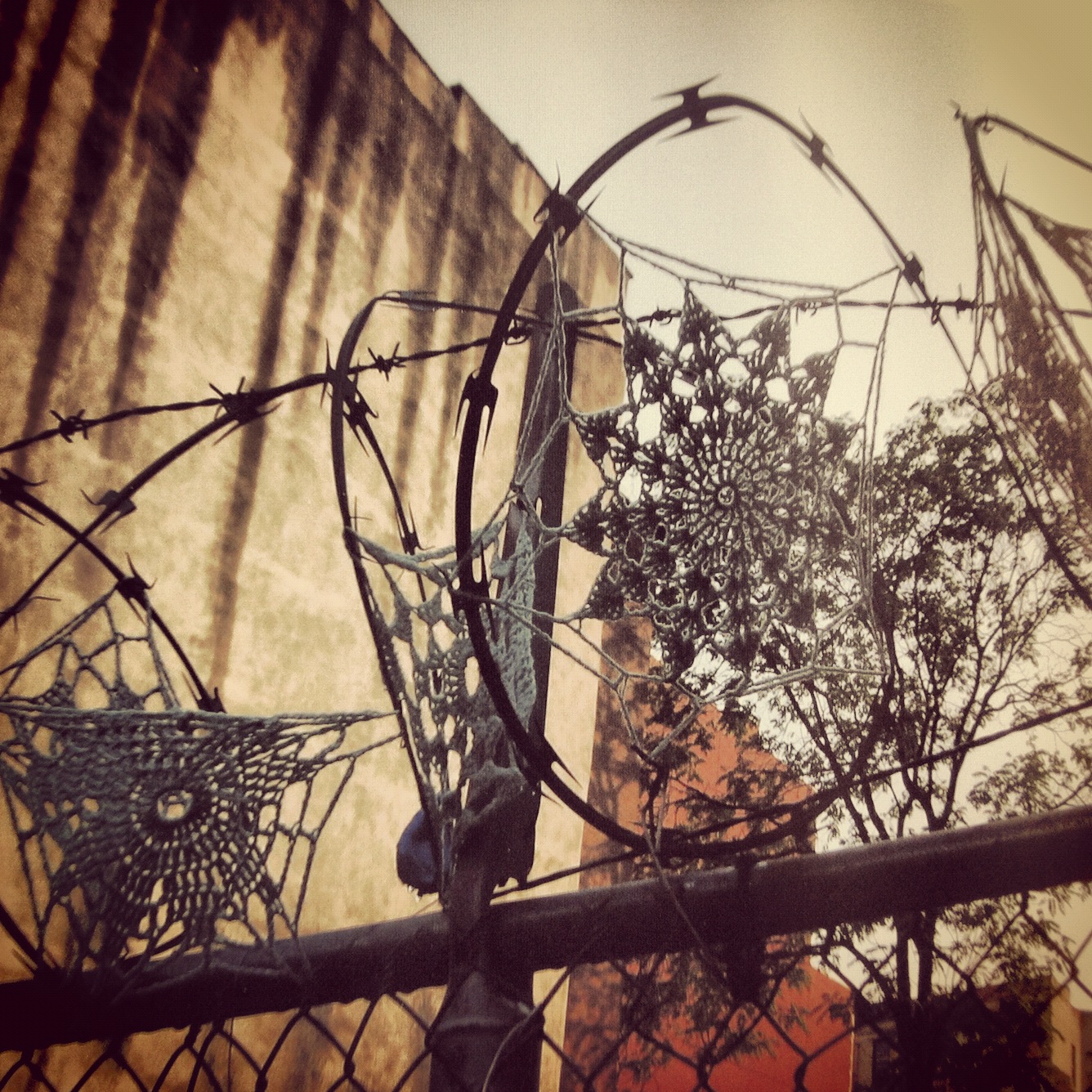
Biennale di Architettura 2012 © Andrea Giannone
Related articles
- Memo to Venice Architecture Biennale: architecture before architect, per favore (guardian.co.uk)
- Biennale Architettura 2012, Part 1 (World-architects emagazine)
- Biennale Architettura 2012, Part 2 (World-architects emagazine)
- Projects Without Architects Steal the Show – The New York Times
Elad Lassry’s Cityscapes @ PAC

Elad Lassry, Cityscape, 2009, offset print on metal,Courtesy private gallery
PAC stays for Contemporary Art Pavillion (Padiglione di Arte Contemporanea) of the Villa Reale. It is one of the most significant works by Ignazio Gardella and, as most architectural and art masterpieces in Milan, it is well hidden in the urban fabric, carved between the Villa Reale and its romantic garden.
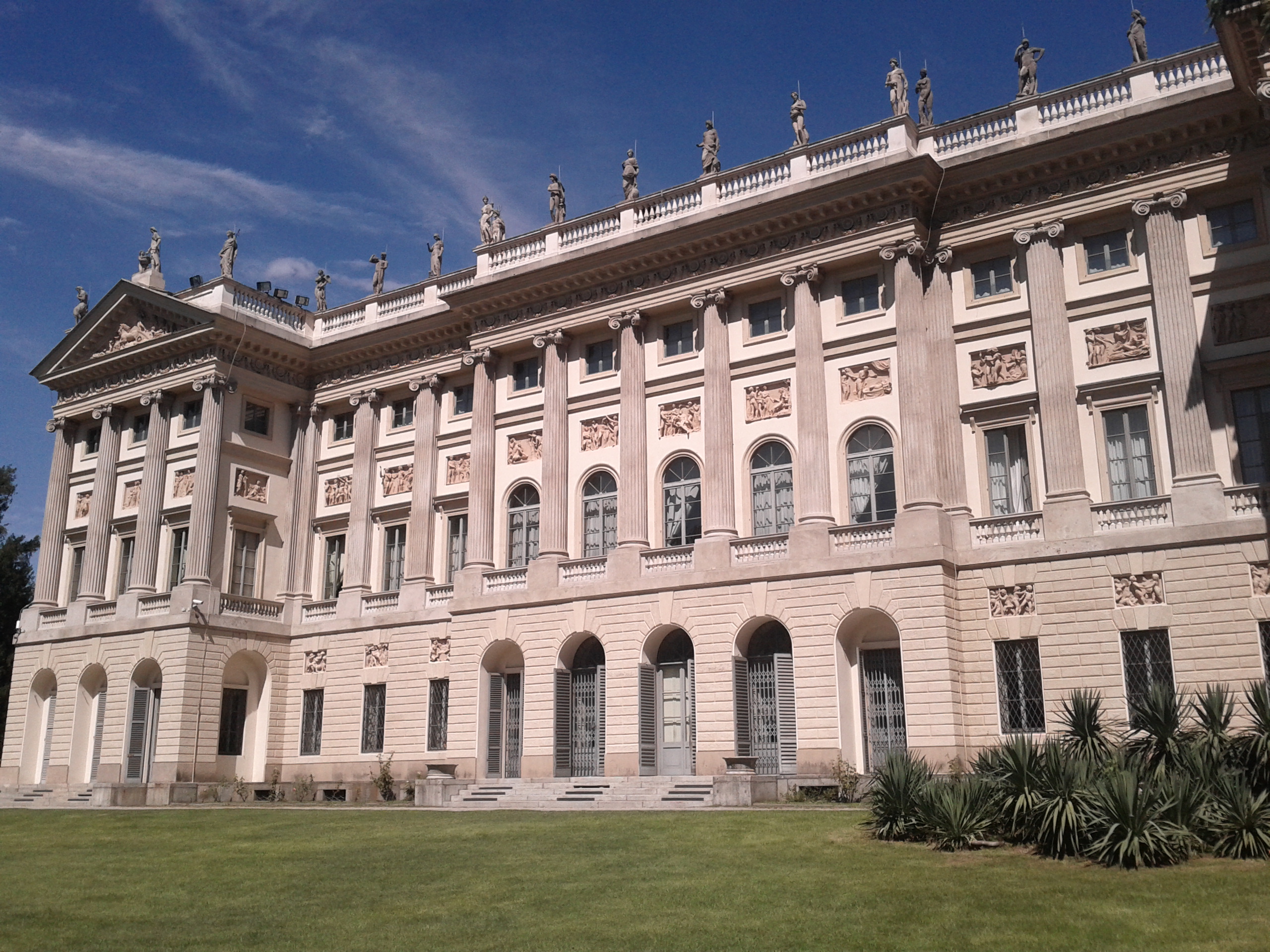


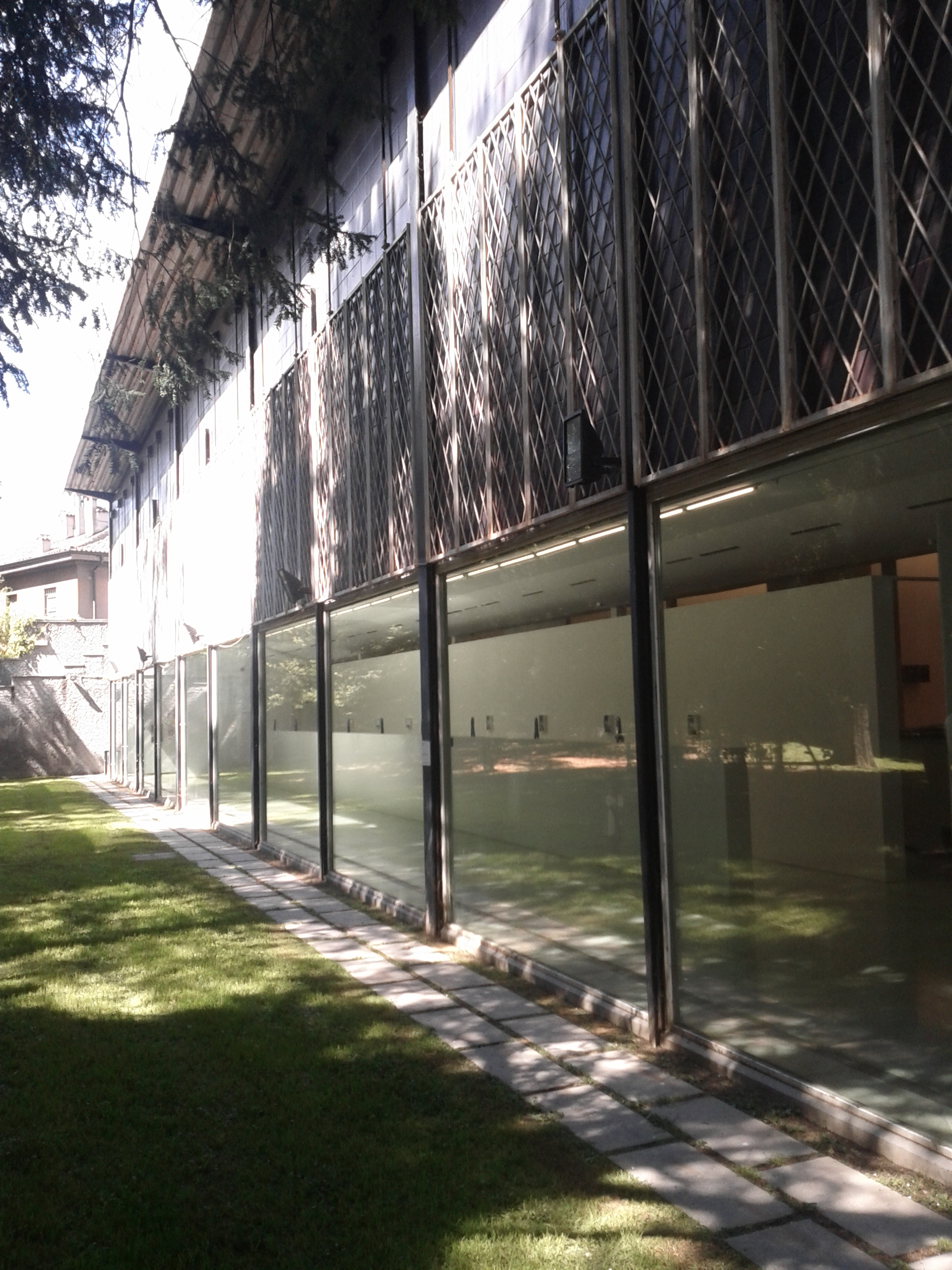
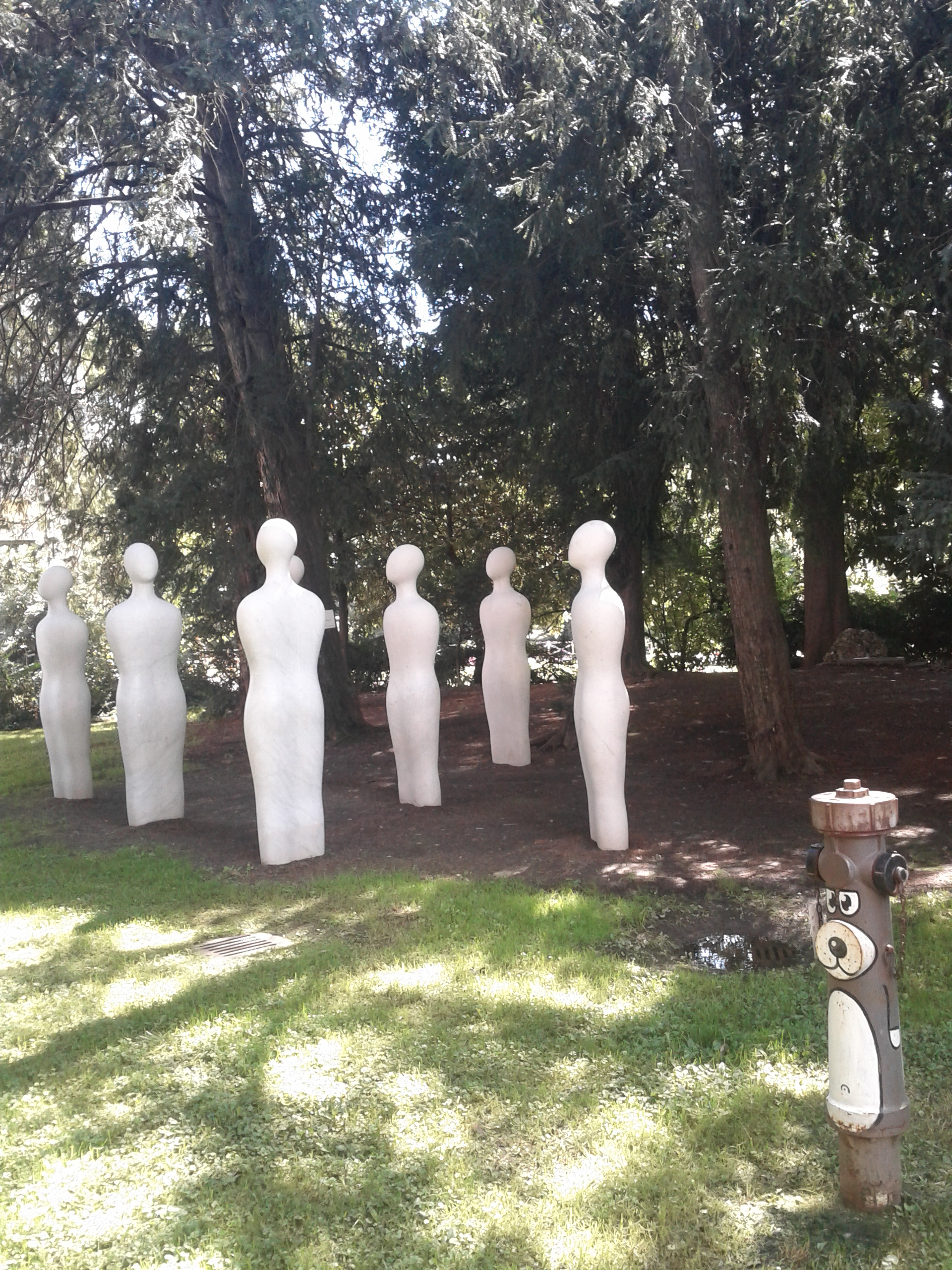
The regular glazed facade of PAC with its sliding iron grids and iridescent clinker ceramics is visible only from the garden, well guarded by the Seven Wise Men by Fausto Melotti and a newcomer dog (smiling).

Elad Lassry’s works select, mix and returns materials of photography, video, movies, sculpture. I am interested about his exhibition by the intriguing still life meat, milk bottle and eggs reproduced on the posters around the city.

Elad Lassry, Short Ribs, Eggs, 2012, C-print, Courtesy Massimo De Carlo
All works in the exhibition are small format photographs framed and re-processed with mix techniques. Many of them have a feature colour (red, green, blue etc) and work as a three-dimensional exhibit.

Elad Lassry, Woman (Green Bow), 2012, C-print, Courtesy Massimo de Carlo
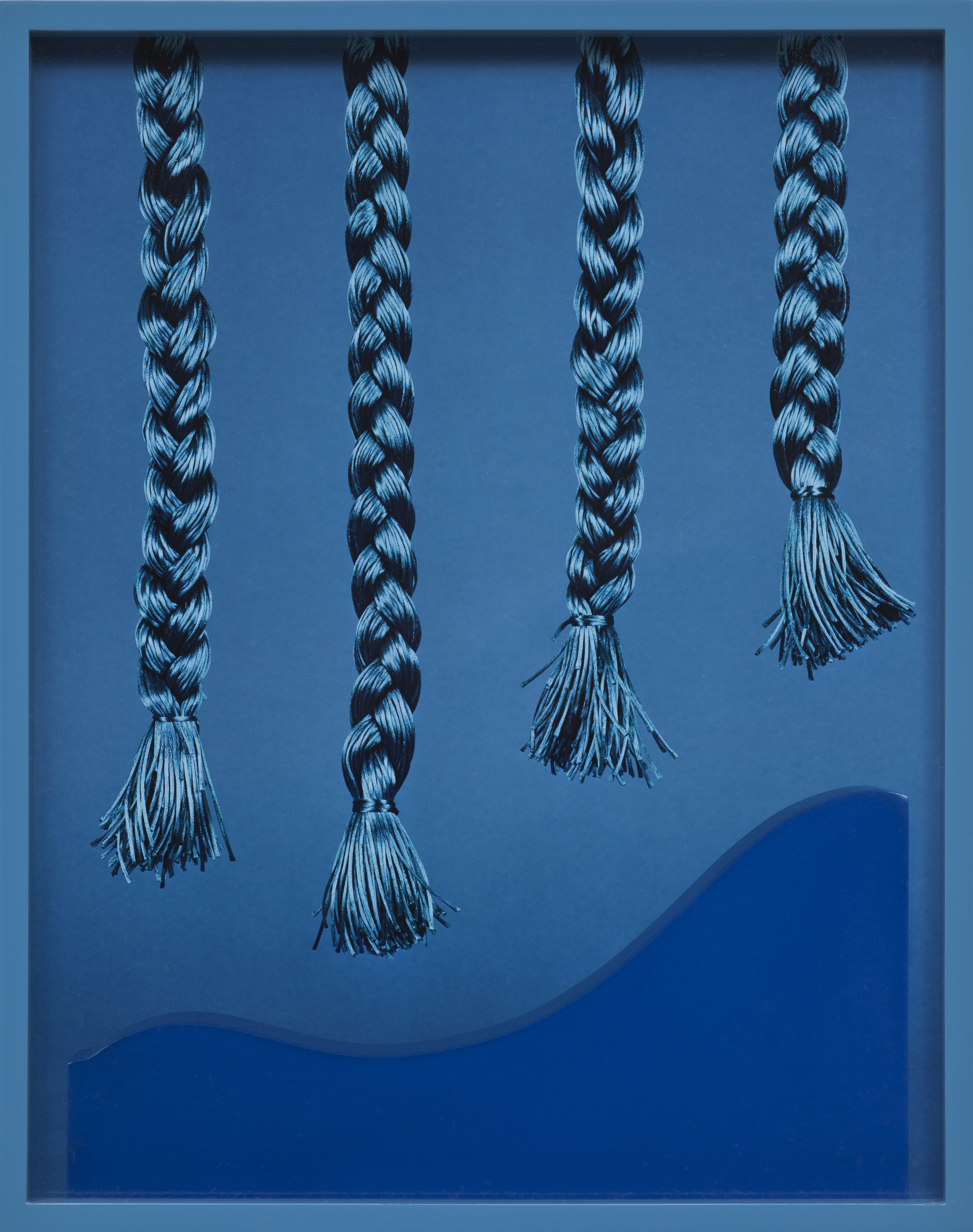
Elad Lassry, Four Braids (Blue), 2012, C-print, Courtesy Massimo De Carlo

Elad Lassry, Three Men, 201, C-print, Courtesy Artist e White Cube
There are also three 16mm mute colour films running in loop on modified projectors.

Elad Lassry, Untitled (Passacaglia), 2010, Super 16 mm mute film, 15:27 minutes, Courtesy Massimo De Carlo

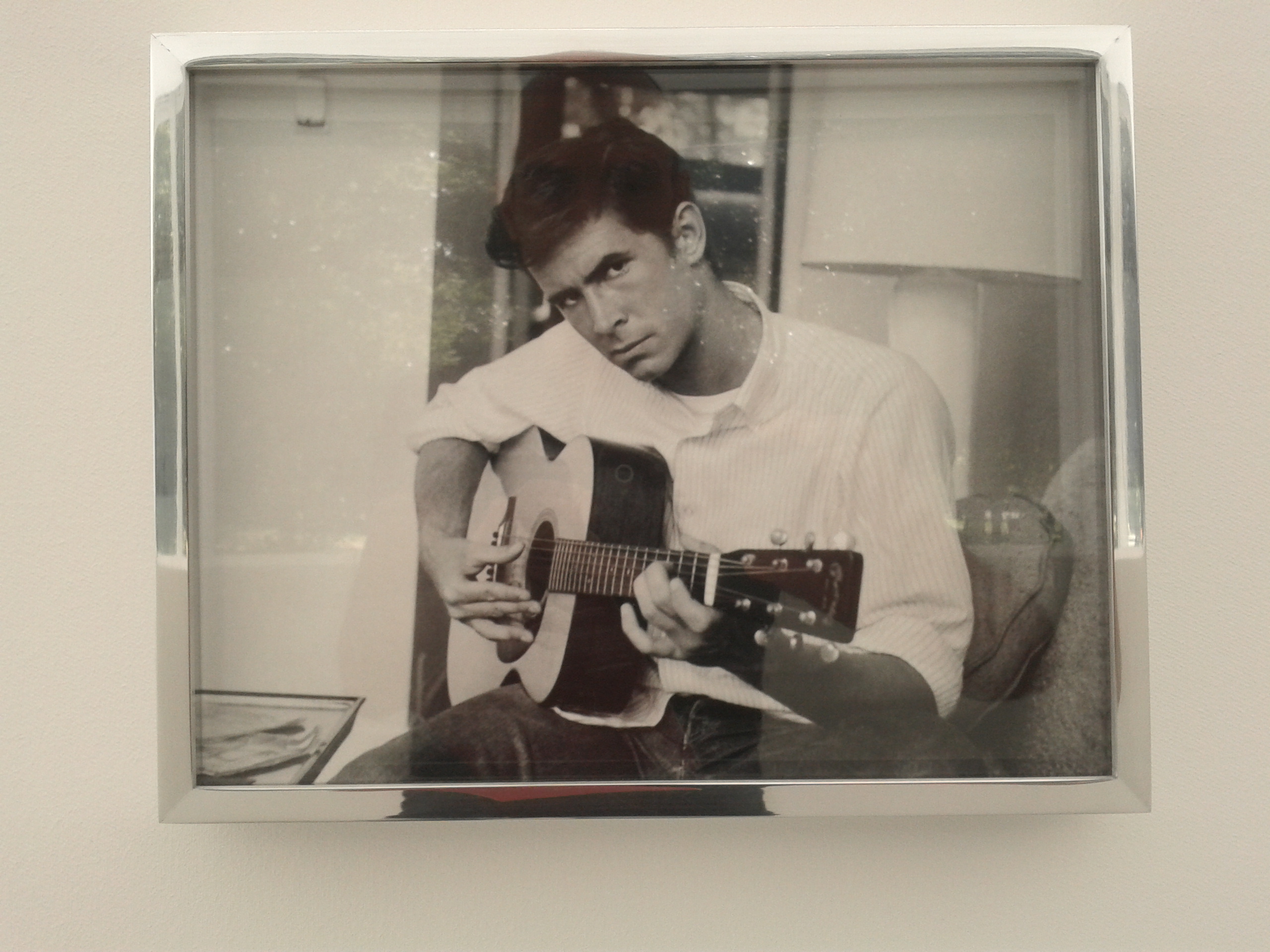
And last but not least, in the gallery facing the glazing to the garden, a series of pictures from a shooting of Anthony Perkins with guitar!

The cityscape is origin and destination of Lassry’s inventory of icons.
Elad Lassry, Cityscape, 2009, offset print on metal,Courtesy private gallery
Professional pictures are from Studio Pesci where you can also download the critical text of the exhibition’s curator Alessandro Rabottini.
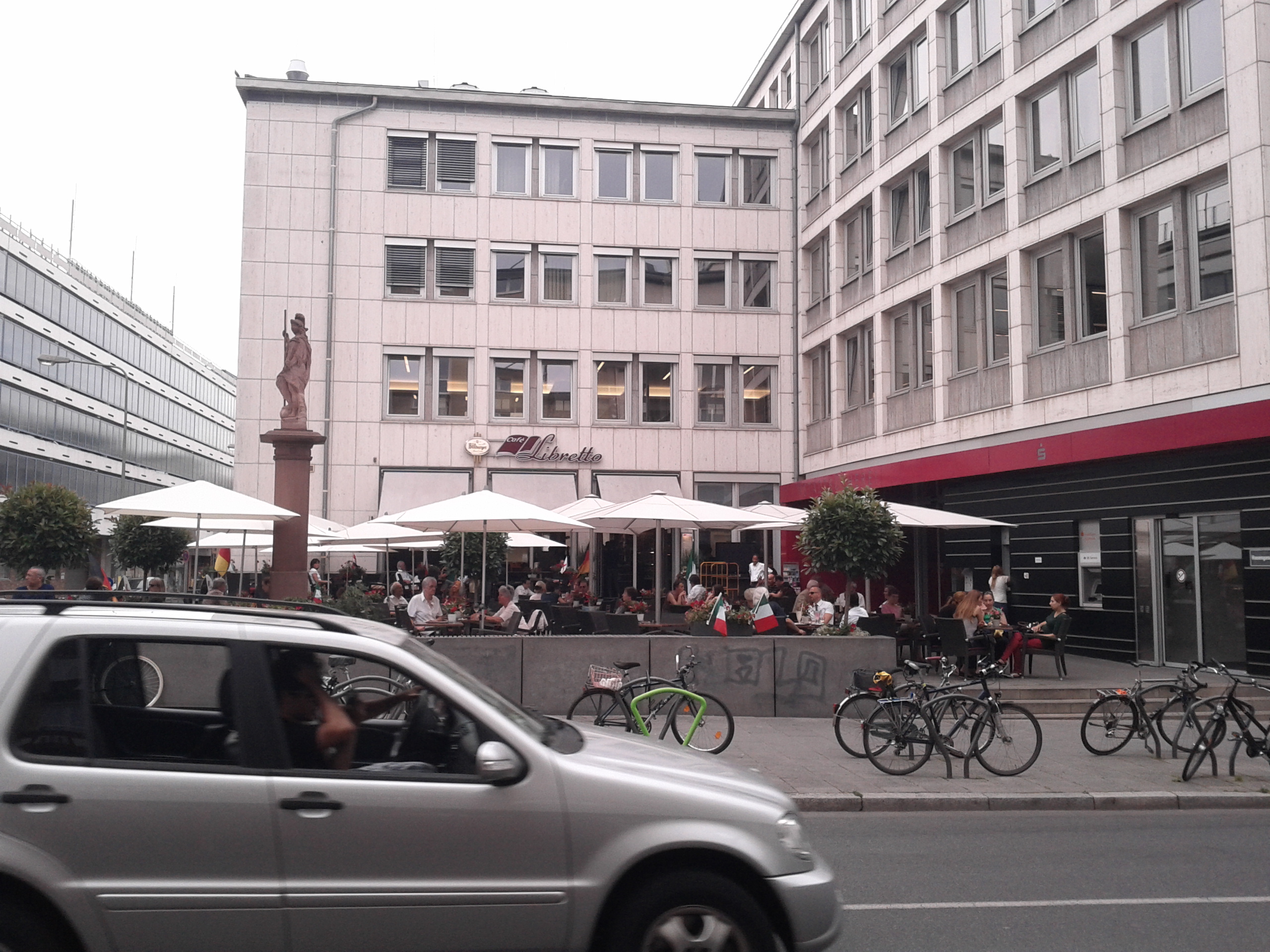
One the main features of European cities is density and variety that allows you in a few minutes walk to access radically different places and experiences. In the following pictures (I know it’s the fourth post about Frankfurt, I promise it’s the last one) I document the walk from Zum Gemahlten Haus (below) – the most famous place to drink (gorgeous!) Apfelwein in Sachsenhausen – to the hearth of frankfurter consumerism (Zeilgalerie department store) located on one of the most expensive retail streets (Zeil) of Europe. From its roof terrace bar you can enjoy a nice view over some highrise buildings of the city (the highest is the Kommerzbank tower designed by Norman Foster).
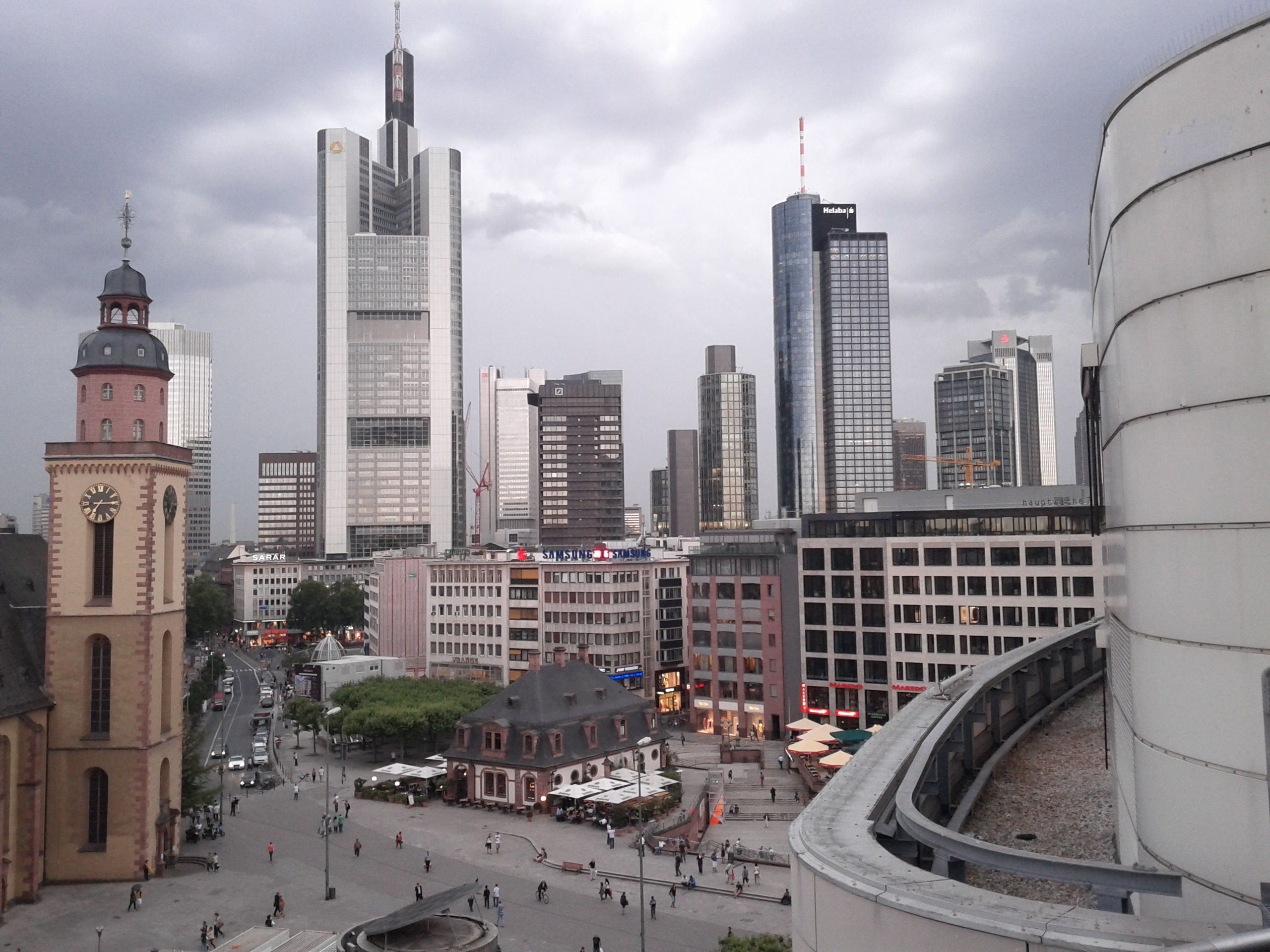
Having looked at this skyline from various points of view my impression is of a heterogeneous and incremental landscape, born out of the identity of the city and its actors, more than from the need to show off of many Mayors or entrepreneurs around the world. The skyline in Frankfurt is the result of a rather slow accumulation of highrise buildings (started by the Deutsche Bank in 1979 and not yet completed), whereby the competition to be the tallest, the most attractive or the most peculiar is not immediately evident. The slow rate of speed and the understatement outlook of the buildings, together with some attention for the impact on urban environment and infrastructure, makes this bunch of skyscrapers in a way sustainable.
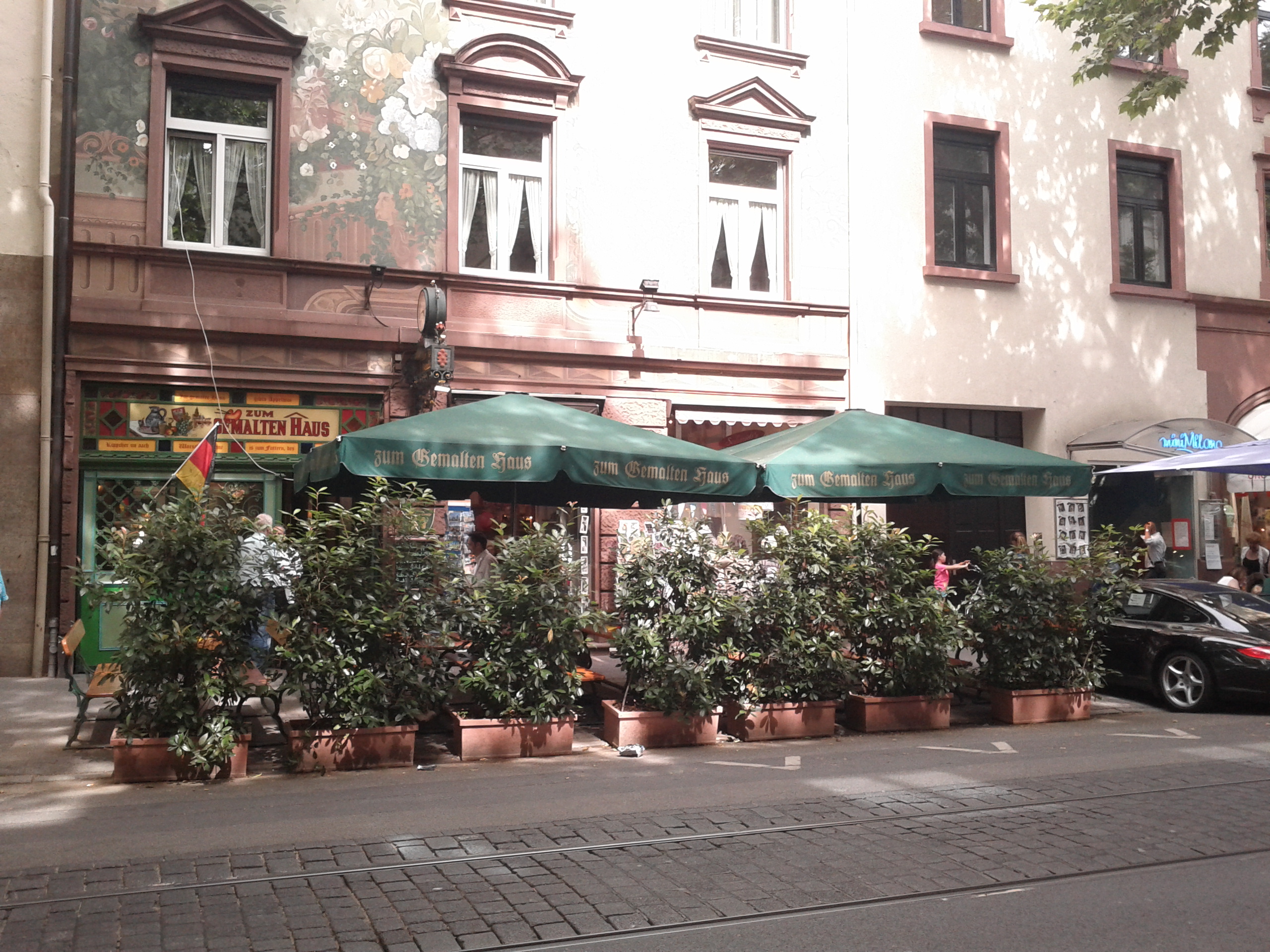
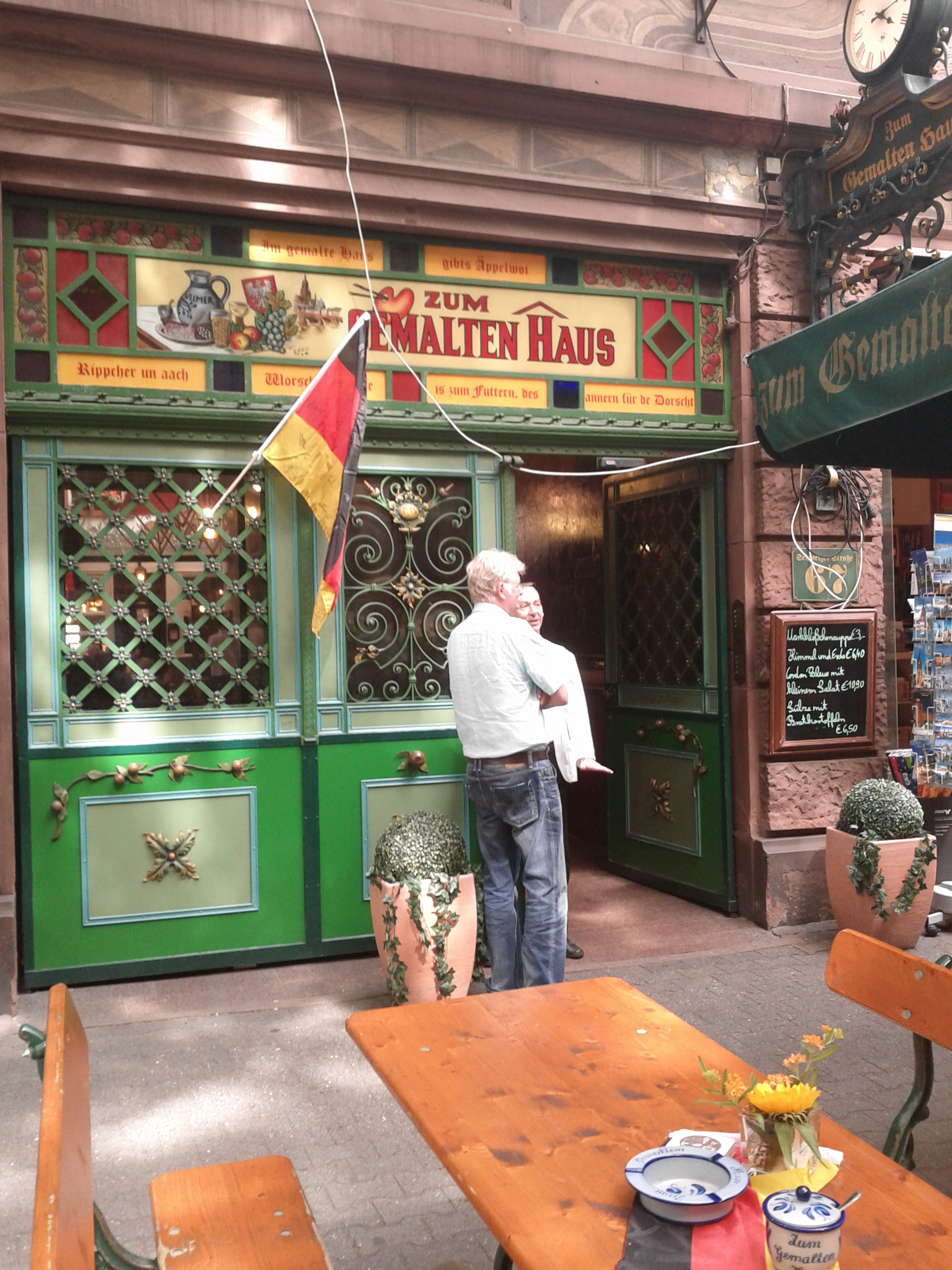
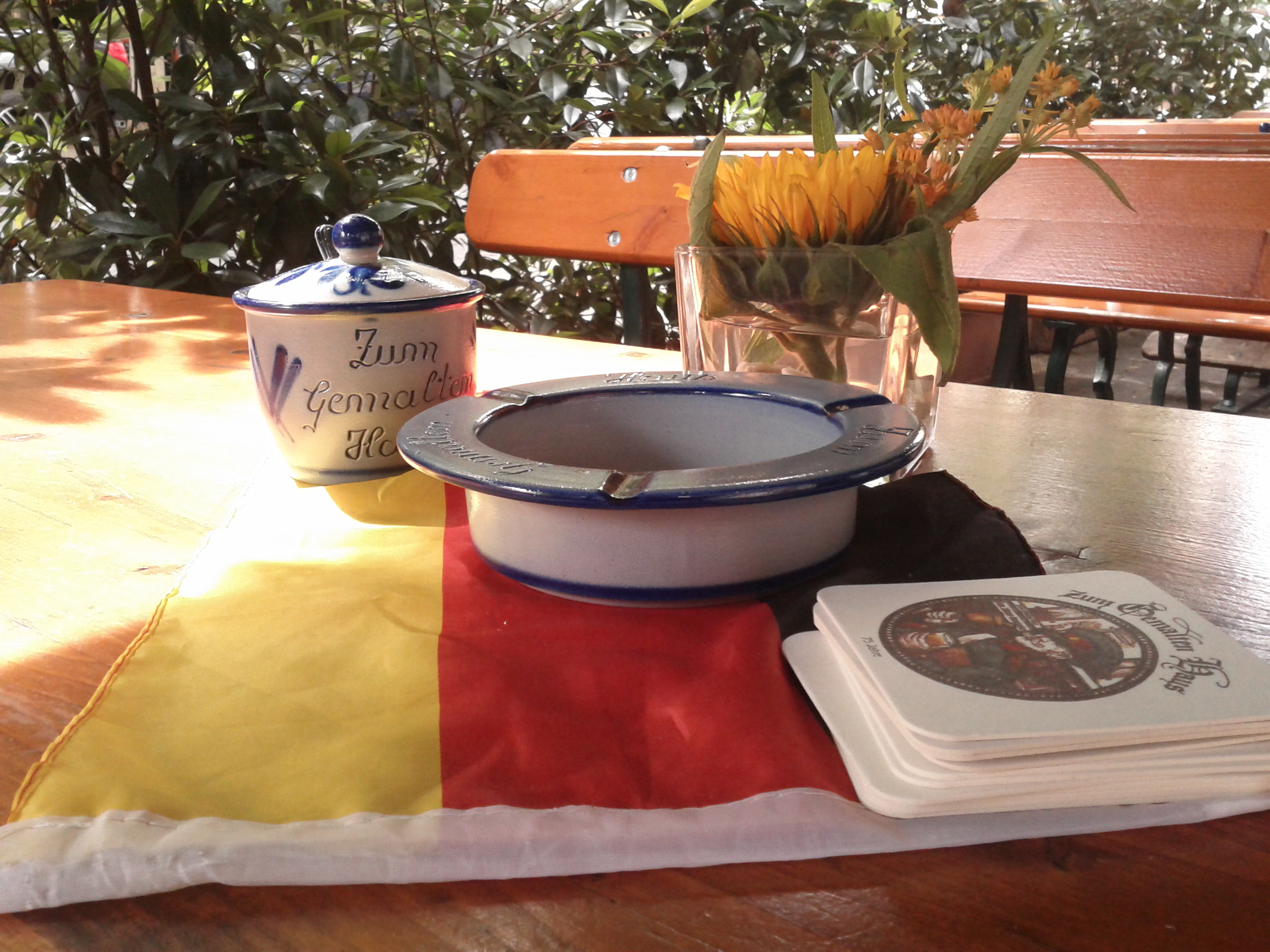
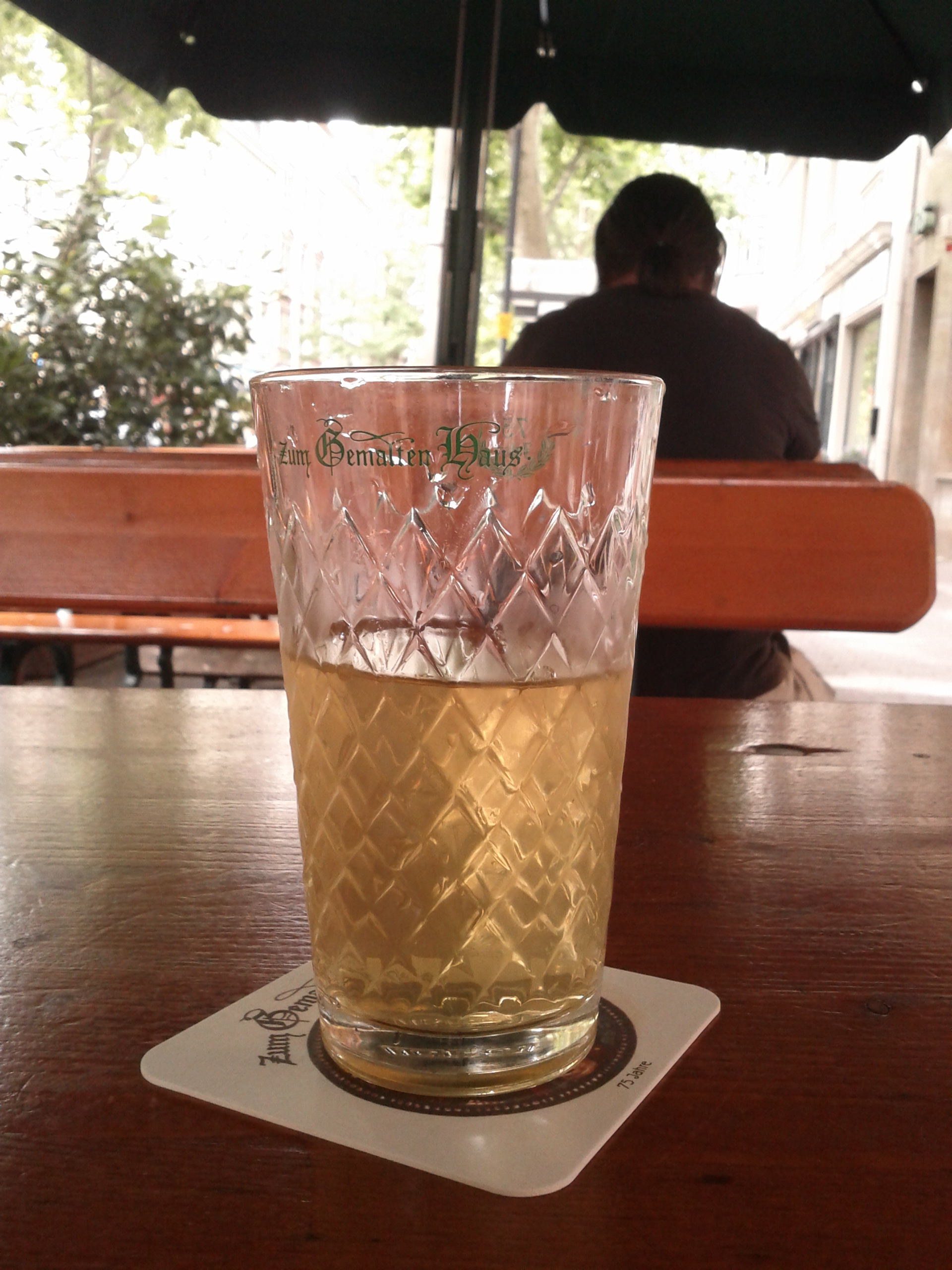
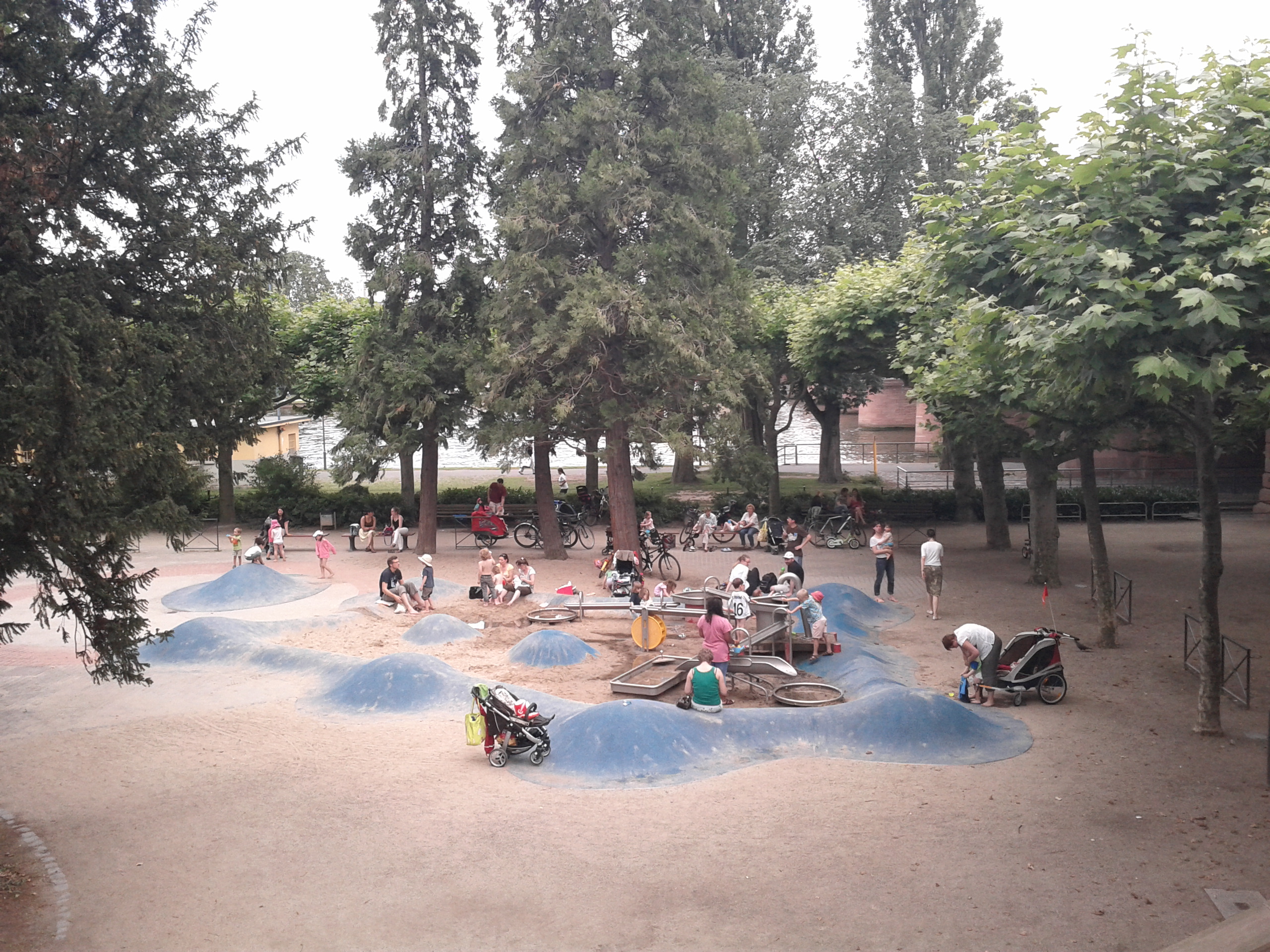
This is something I really miss from Germany: the possibility to seat on nice bank along the street, have a quick apfelwein (or two…) and continue my walk. Luckily in Milan I can often enough enter a nice bar and have a good coffee. Below a playground for children along the Main river.
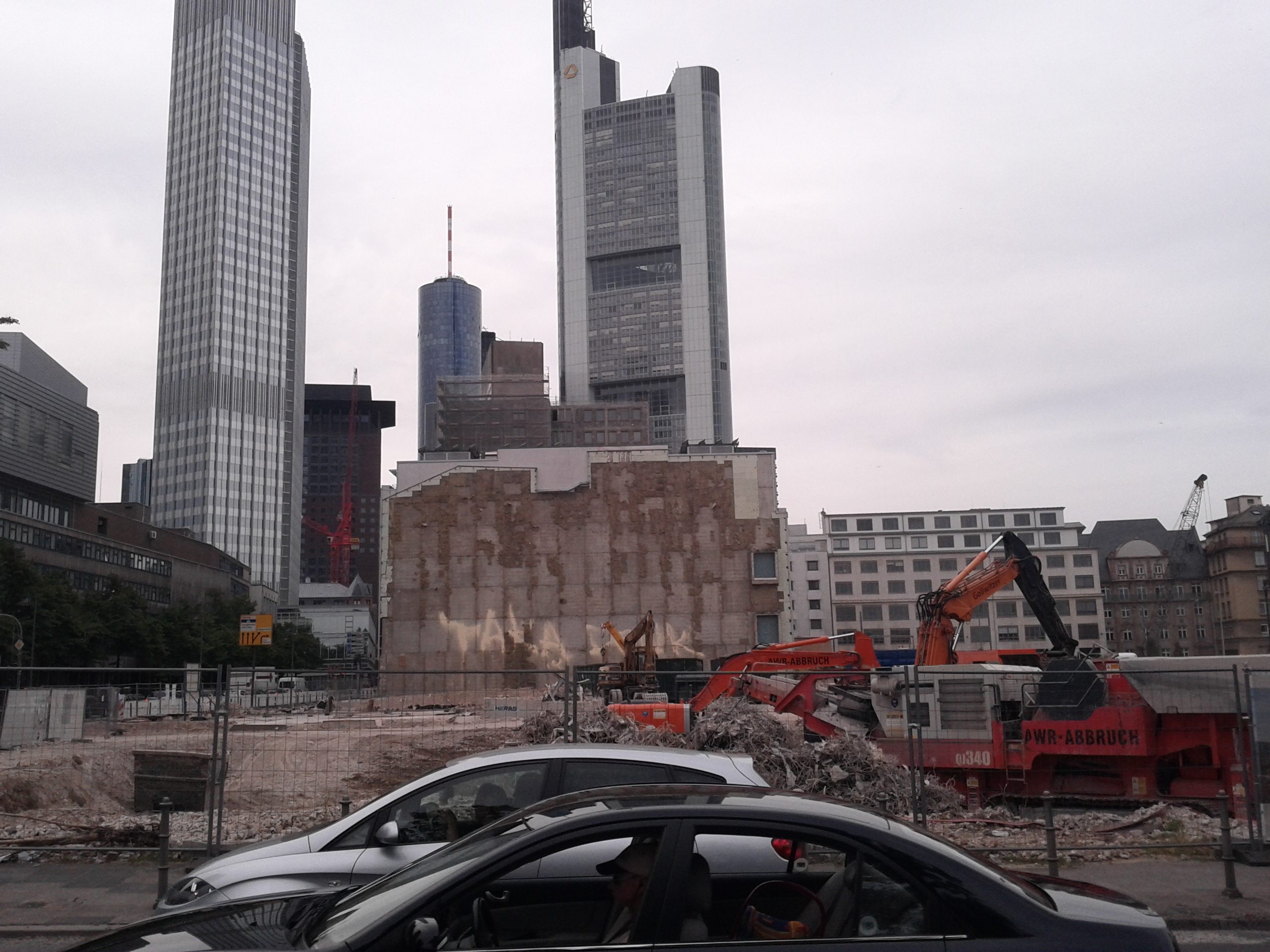
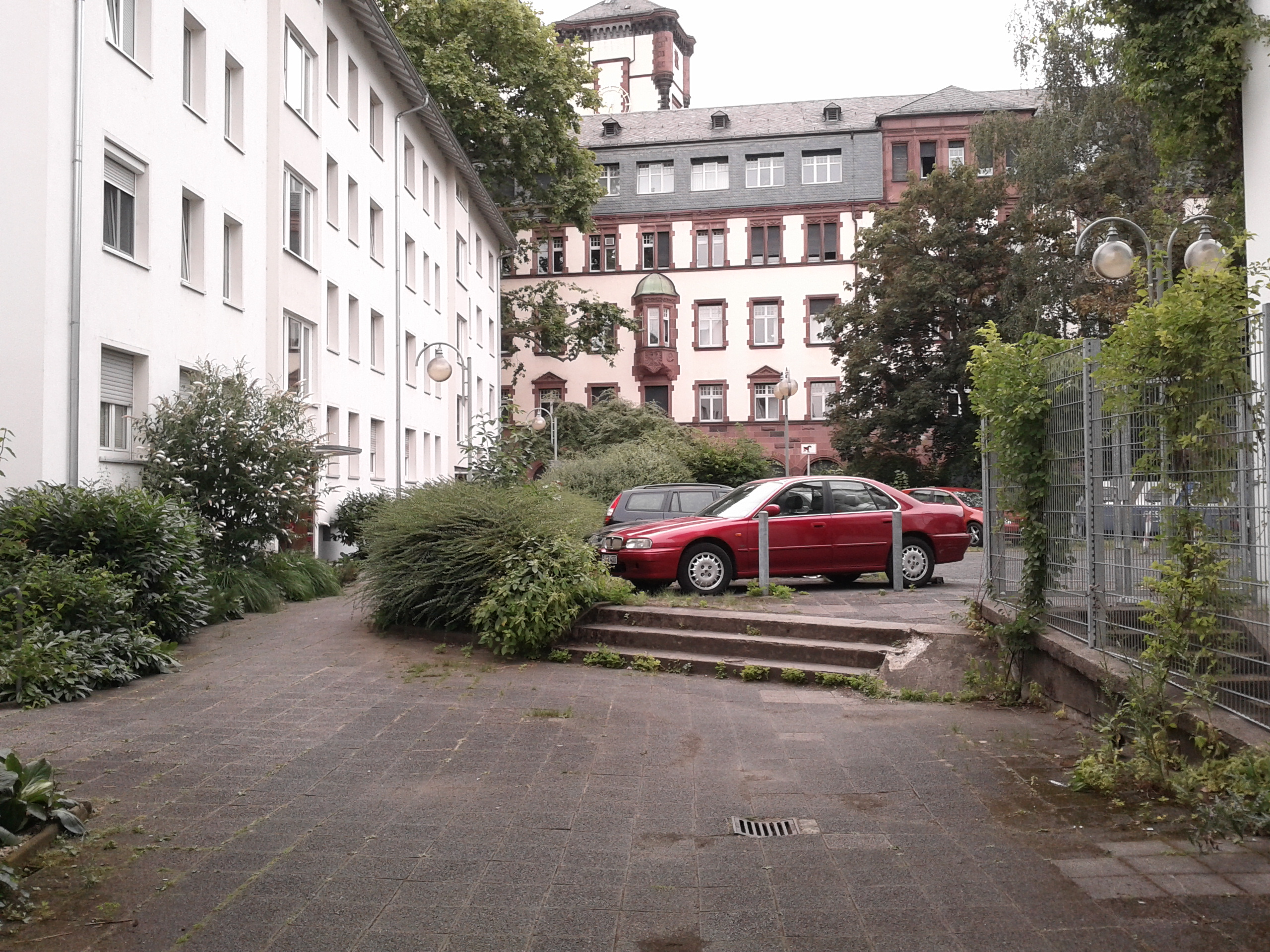
Above the building site of a new museum, between the river bank and the historical city center. In the background the financial city. Below an ordinary inner yard, at a very prominent place. Adjacency and interlacements of prominent buildings and representatives public spaces with more ordinary ones is another pleasant feature of the European compact city.
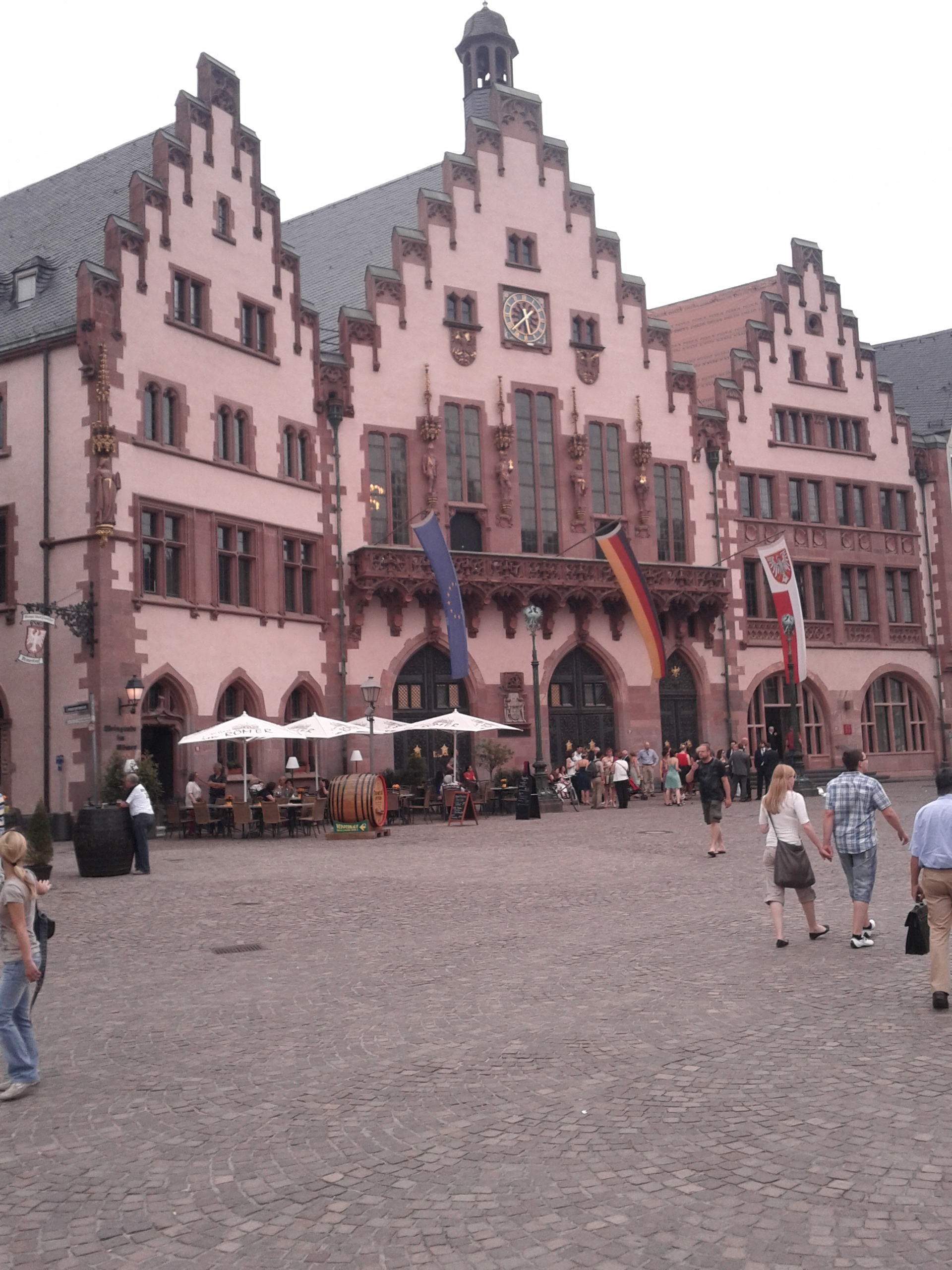
Below the main building of the Municipality of Frankfurt, the so-called Roemer
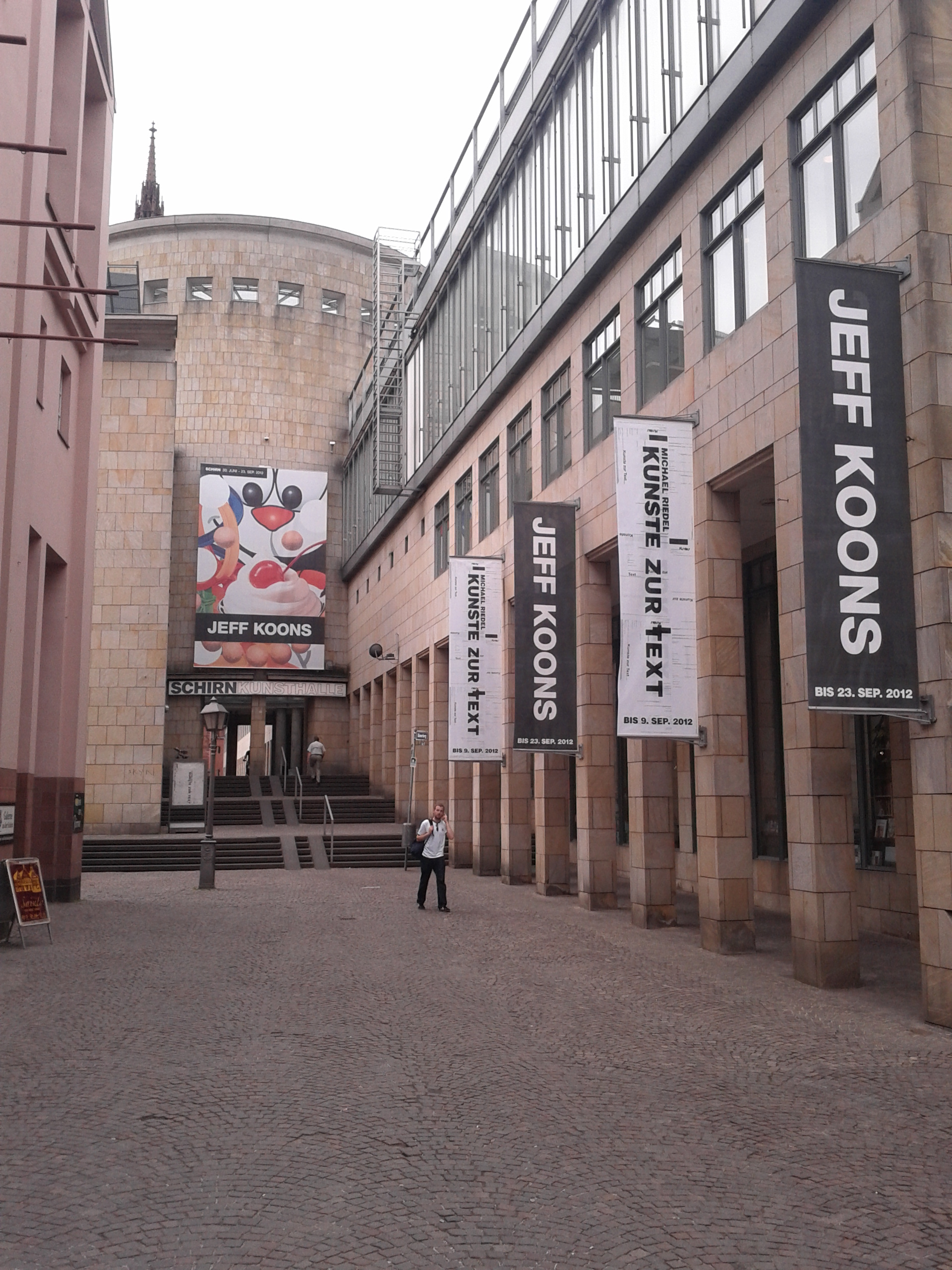
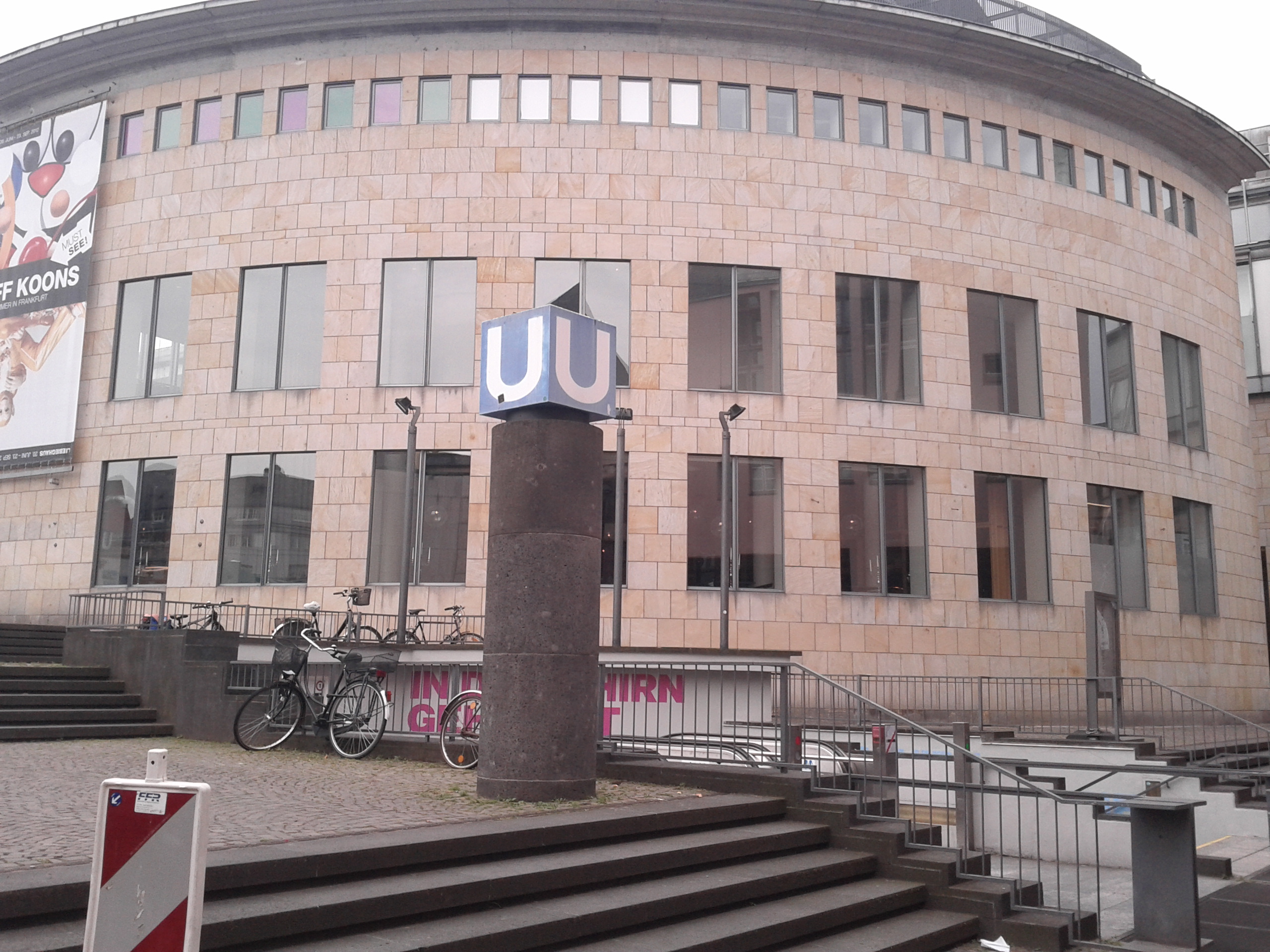
The Schirn Kunsthalle (Museum of Fine Art) is home of contemporary and modern art exhibitions. To my knowledge this was the first of a long list of new museums buildings realised in Frankfurt and it is still among the most appreciated. It was designed by BBJS architects (Dietrich Bangert, Bernd Jansen, Stefan Jan Scholz und Axel Schultes) and opened 1986.
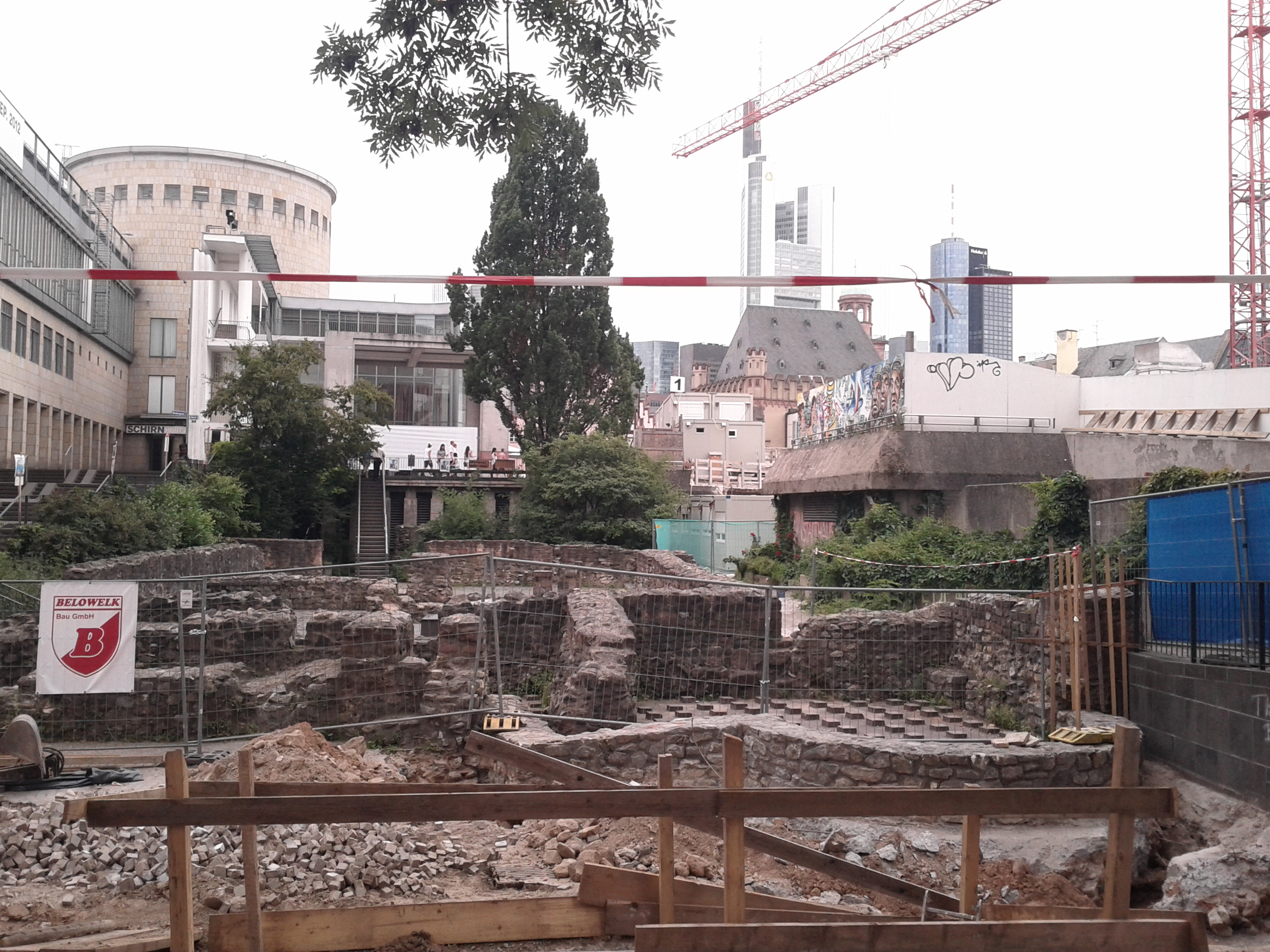
Archeological excavations provide abundant justification to the name of this central square of Frankfurt.
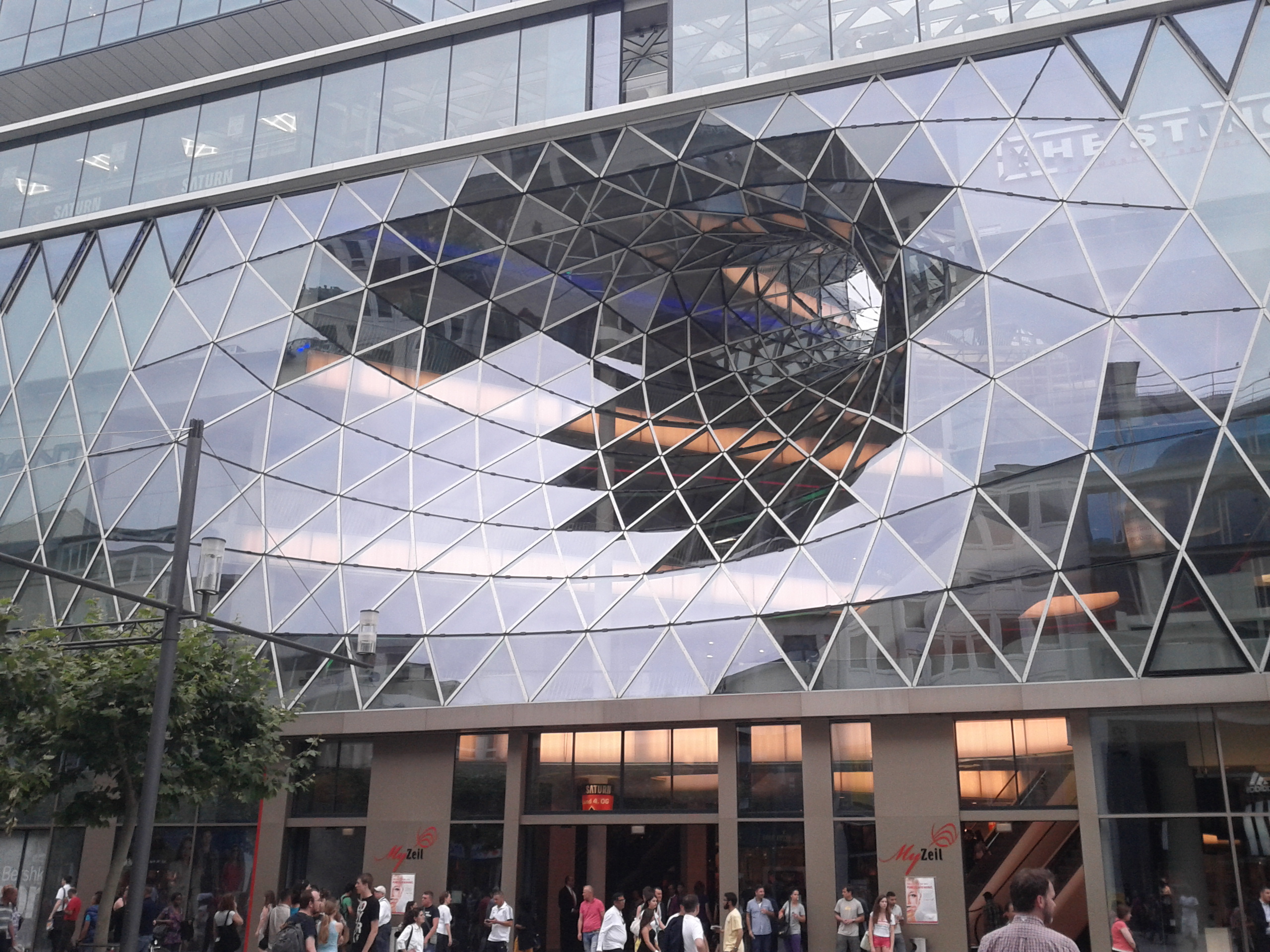
This is another department store on the Zeil, one of the most unnecessary and pointless buildings I have ever seen (by Massimiliano Fuksas). Not to talk about how this hole ( a formal exercise borrowed by the roof construction of the new fairground in Milan, where it has a fully other dimension and sense) this glazed hole makes the facade unfit to the most common weather conditions (snow, wind and rain comes through with consequences that are easy to imagine). Most aberrantly this facade also makes any reasonable brand communication or visual link between the inner space and the public space outside impossible. Better take a bike taxi to the train station and head back home.
Das Neue Frankfurt

Another walk in Frankfurt to visit some architectural and urban highlights. Starting with the most recent one, the new residential developments along the river (Westhafen), passing by a masonry brick kindergarten from the early 90es (KITA 124 Bernhard Grzimek Allee, designed by Hans Kollhoff and Helga Timmerman) back to Bornheim to one of the famous Ernst May’s Siedlungen (Am Bornheimer Hang 1926-30) and the Künstlerhaus Mousonturm, celebrated theater for performing arts housed in the administrative building of a former soap and parfum factory, since 1988.

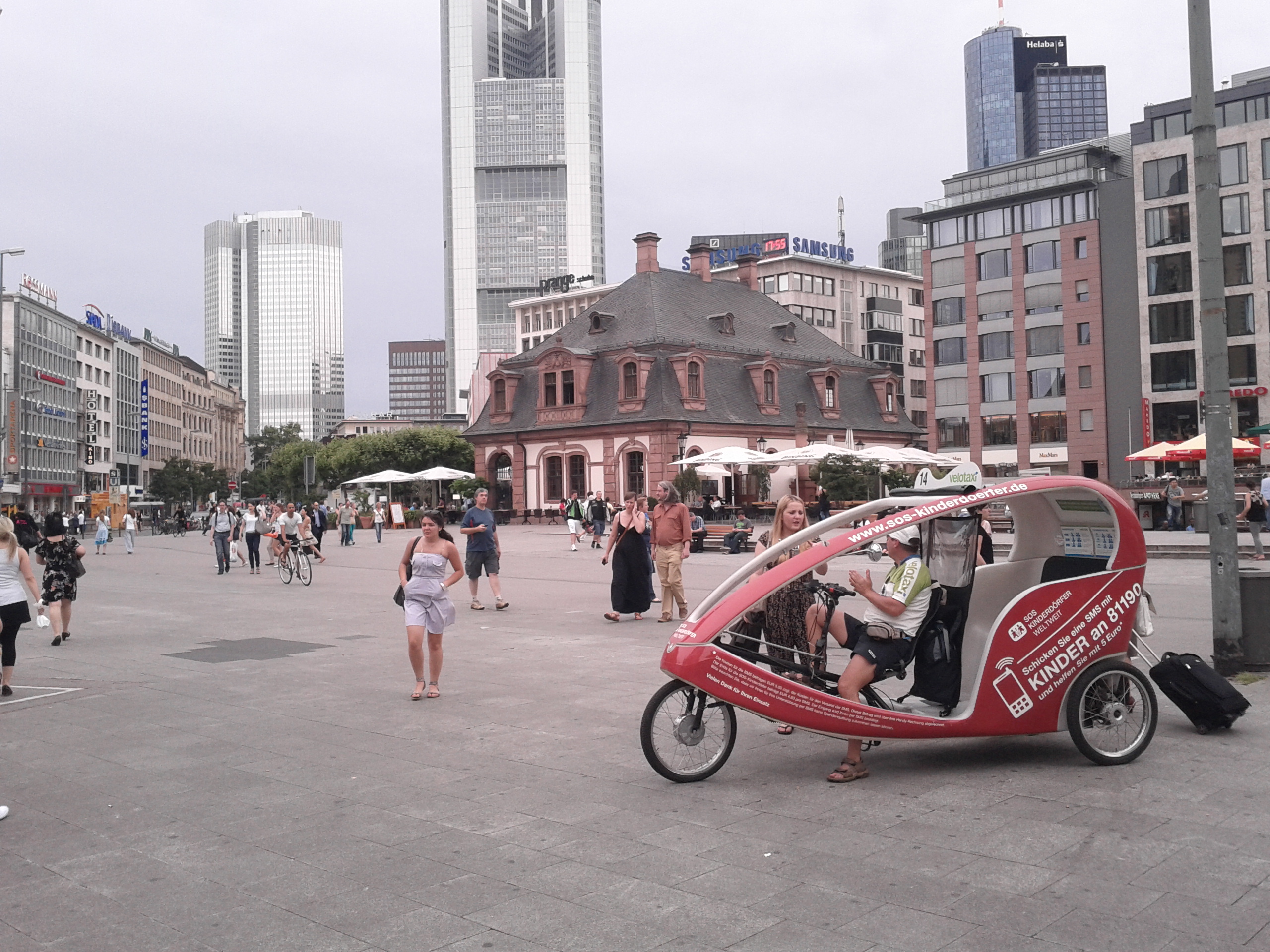
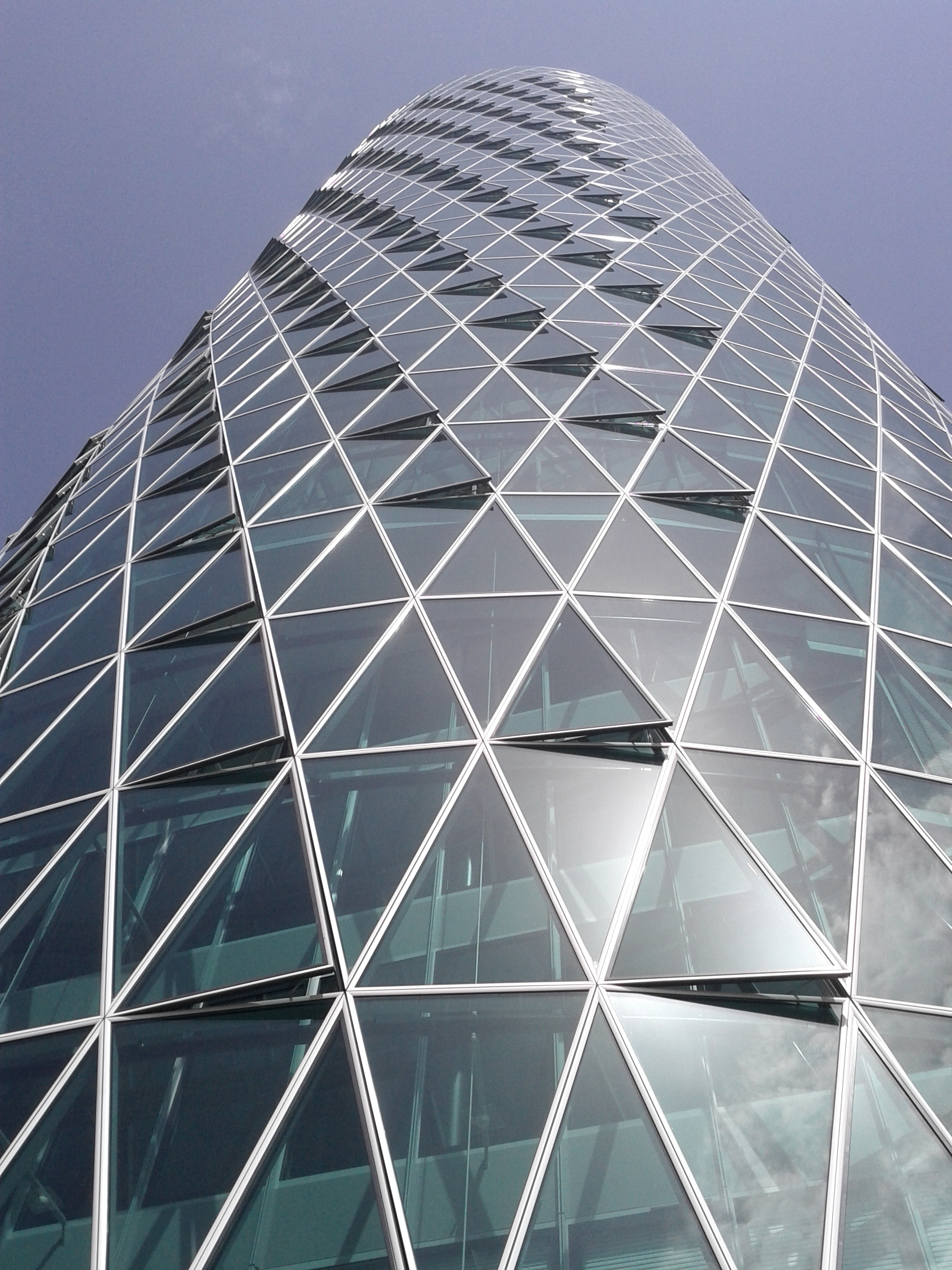
A steel glass cylindrical highrise (Westhafentower designed by Schneider+Schumaker) marks the access to the Westhafen, the old city commercial harbour transformed into an upper class residential and office quarter.



The concept is quite similar to the one of the former slaughterhouse, urban villas with generous balconies in decent variations of shapes and colours. The relationship with water is what makes the difference, although at first glance the potential of the inner basin does not seem to be fully exploited.


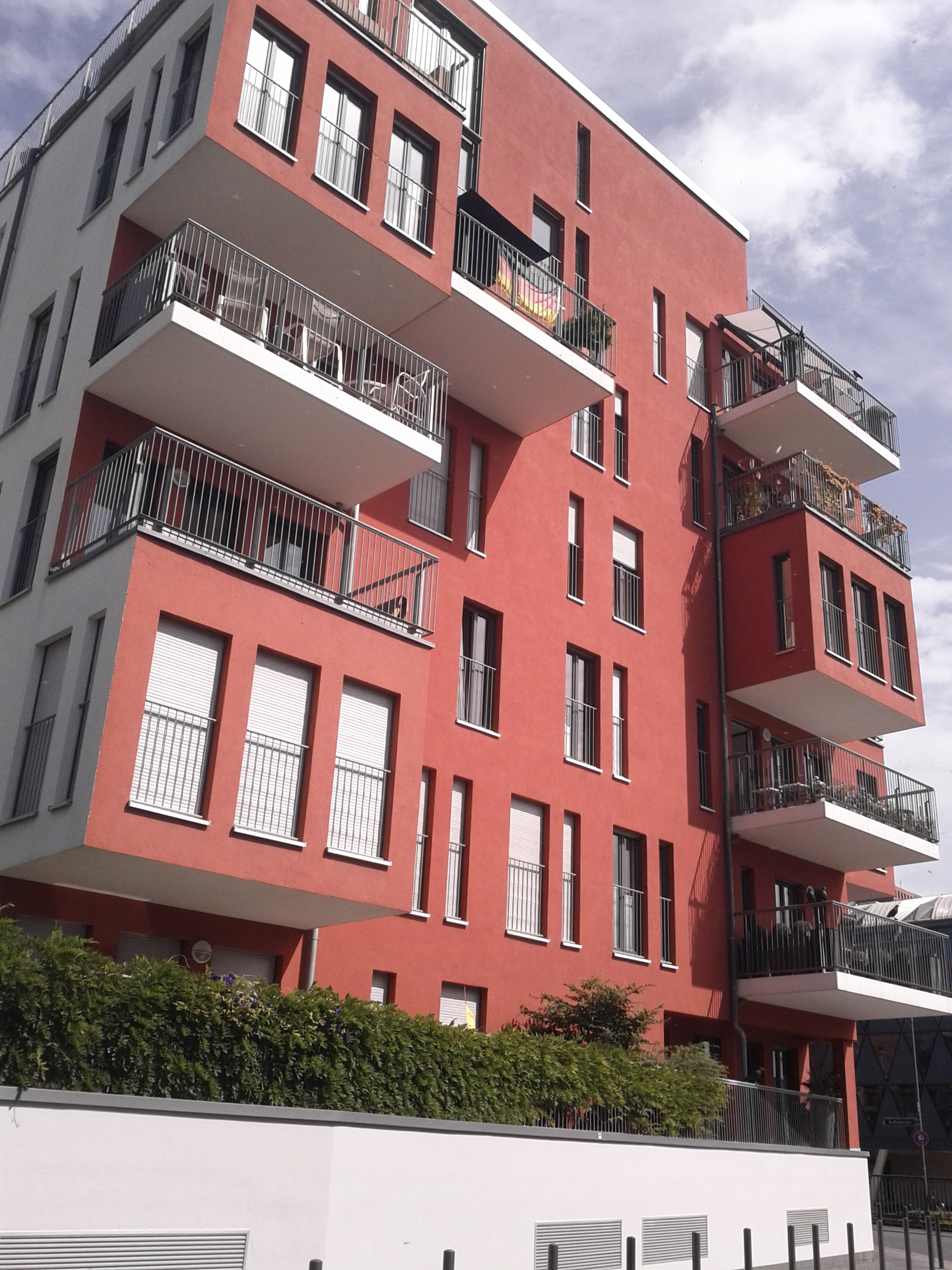
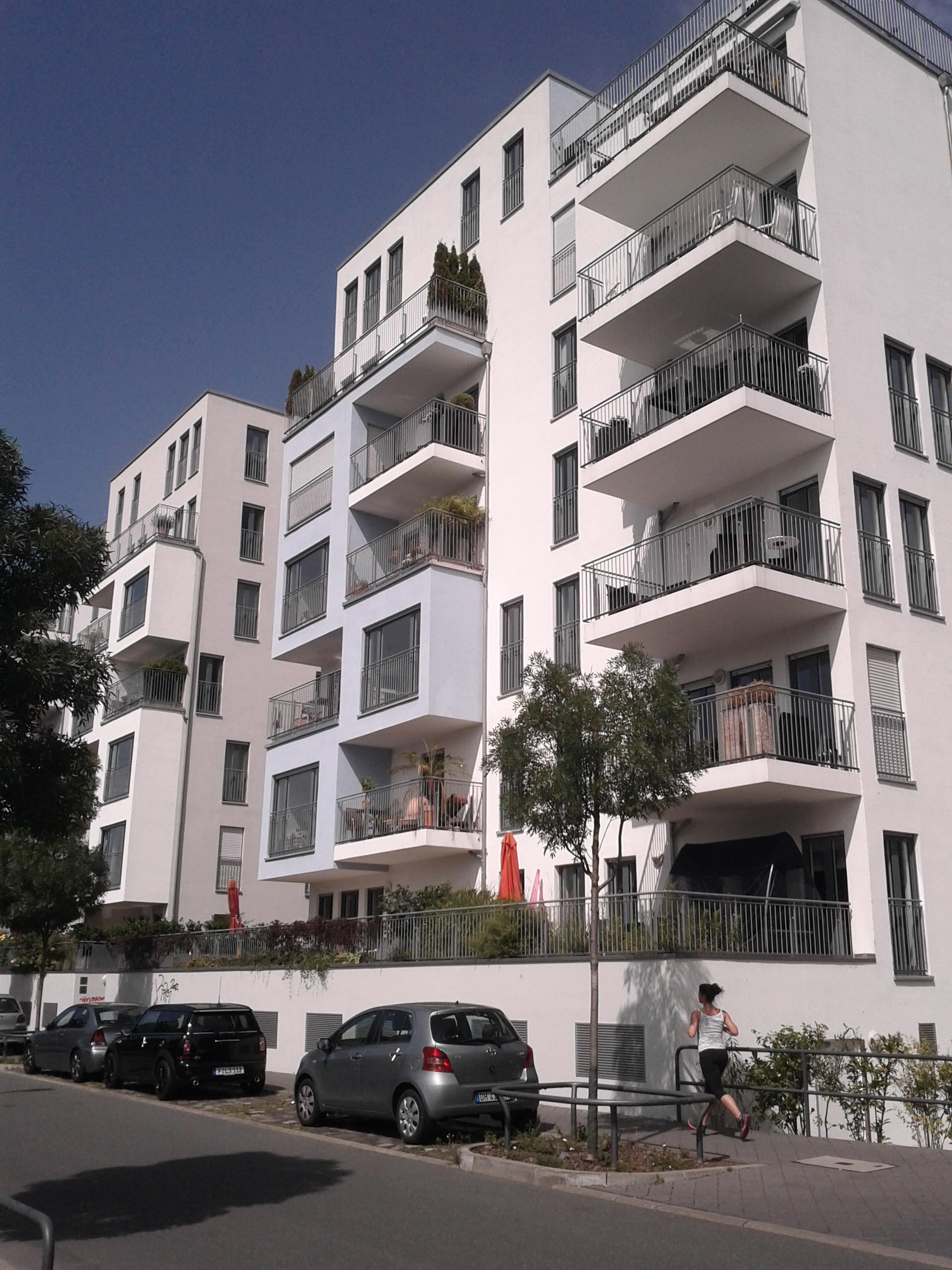
White plaster, red bricks, large balconies, french windows and glazed penthouses are what the wealthy german like to live in. An elegant and solid environment without luxurious or eccentric solutions. 


The view of the city from the other side of the river offers a rather ordinary skyline where highrises are well balanced by water and trees. 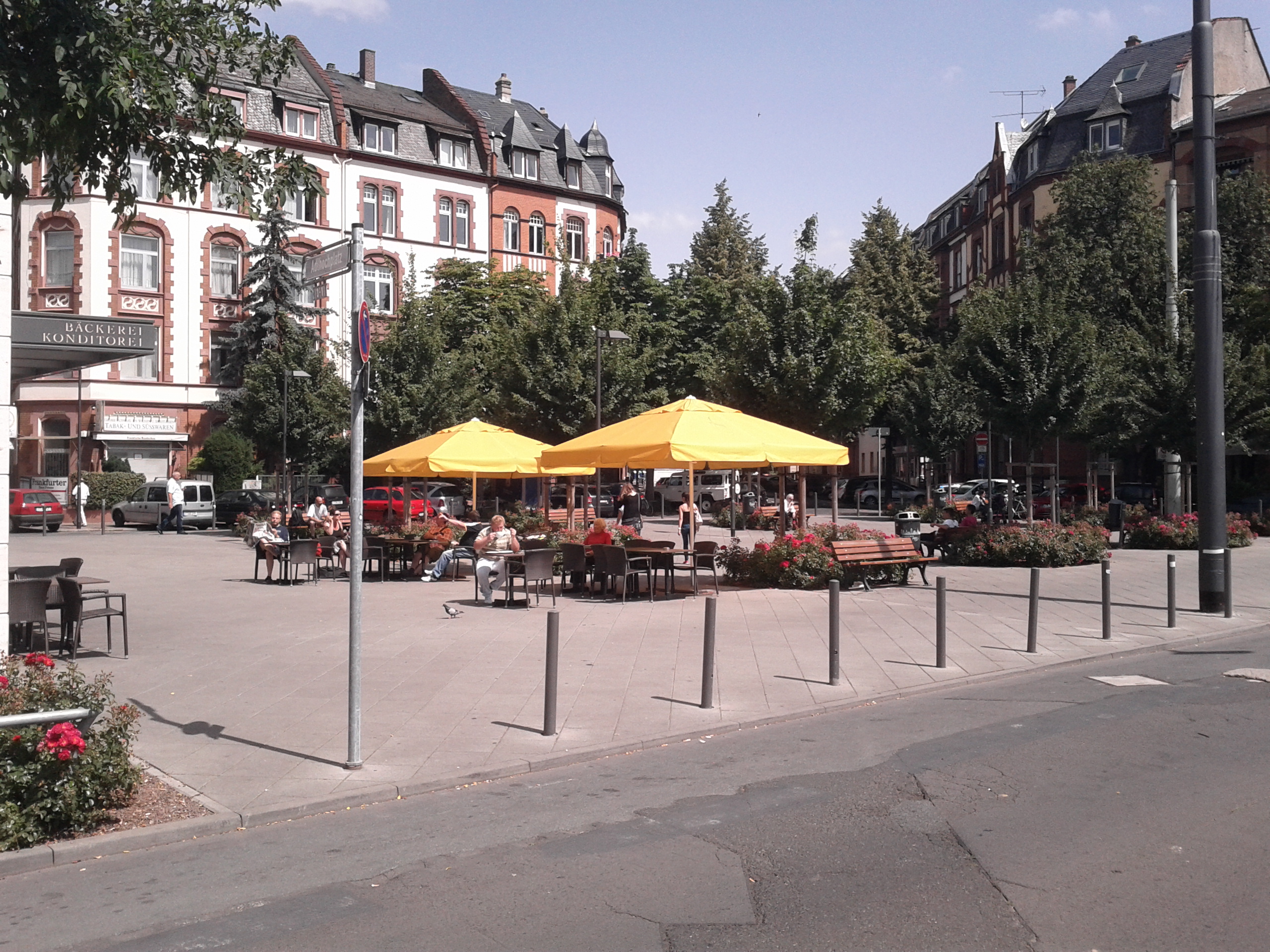
Walking to Westbahnhof to take the tram back to Bornheim I enjoy the widespread and solid quality of public realm.

The inside of this old train station is a strange mix between a church and a swimming pool, but it works well.

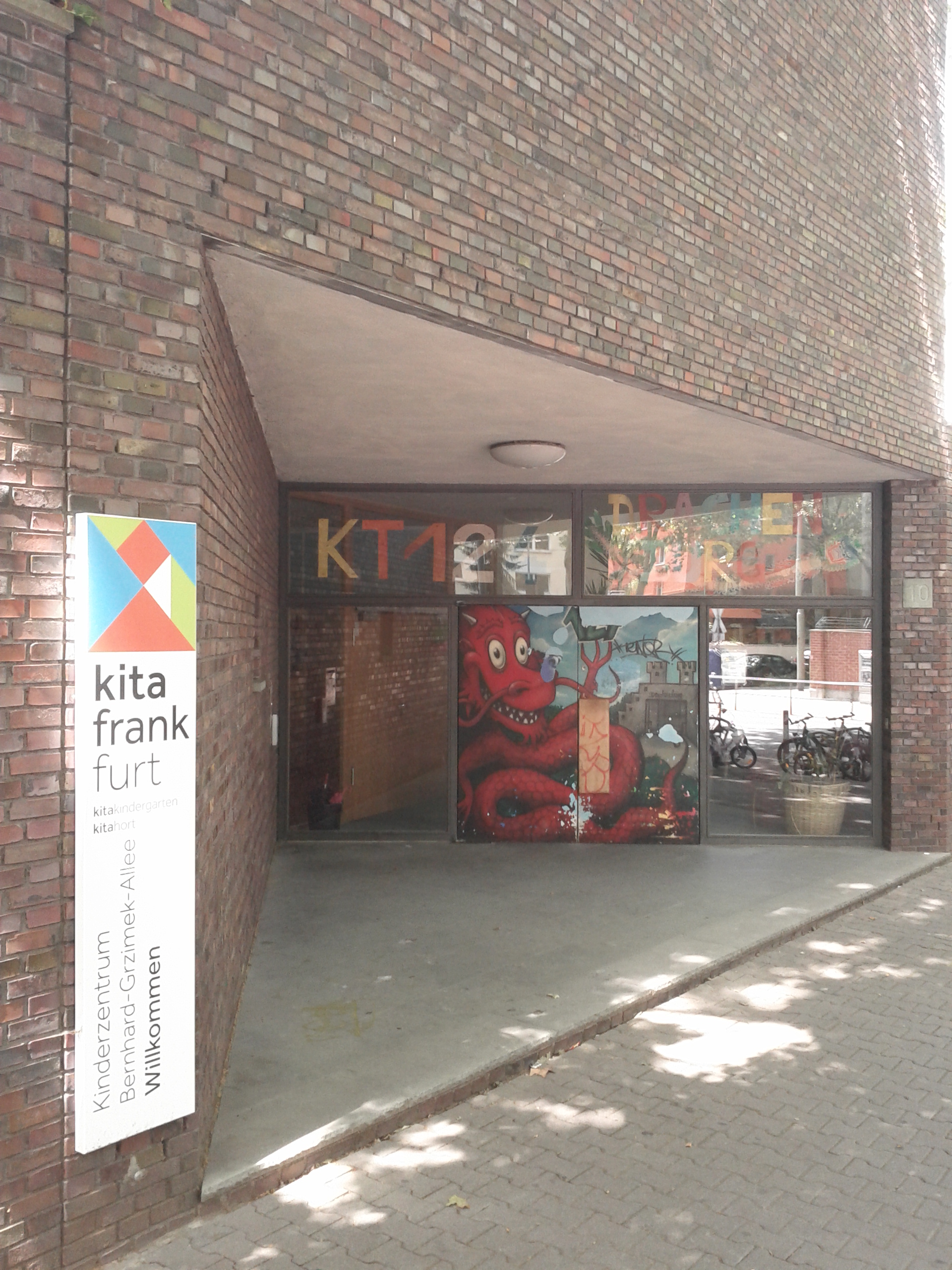
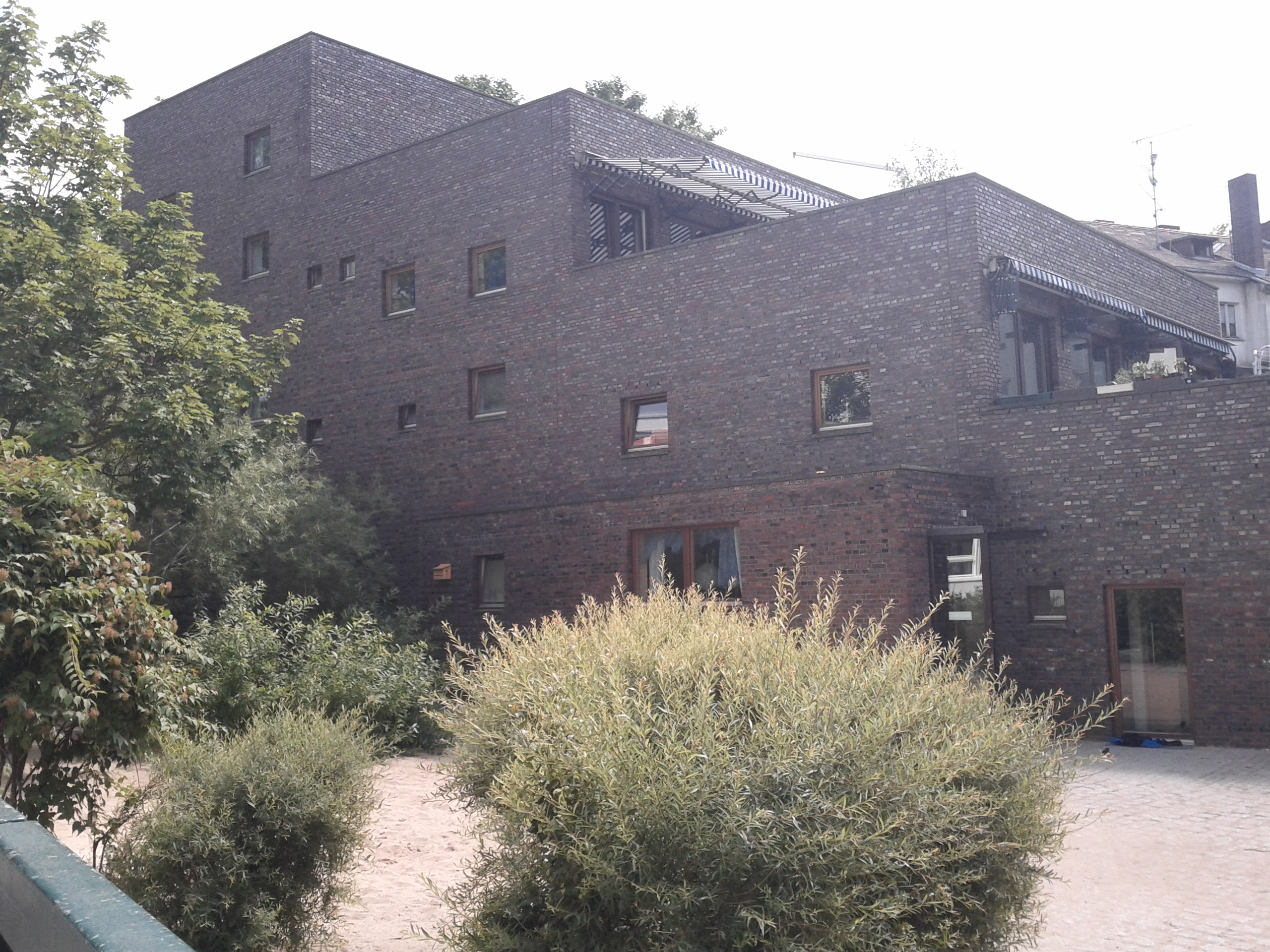
On my way to Bornheim I recognise a building I visited several years ago, as it still was under construction. It is the Kita 124 in Ostend, one of the many new kindergartens built in Frankurt in the last 2 decades. In this case the project is by Hans Kollhoff and Helga Timmerman, featuring hand made dark bricks wall cladding that remind industrial architecture of the past. The whole building is rather closed to the street, more open and terraced towards the south oriented court used as playground. A beautiful building!


The title of this post is stolen from the housing program promoted in Frankfurt by Oberbuergermeister Ludwig Landmann between 1925 and 1930. In that period City Architect Ernst May was head of a team planning and realising some 12.000 housing units using the most advanced industrial processes, but also keeping a remarkable human scale with immediate contact with nature, urban infrastructure and public space . The Siedlungen (residential settlements) built in that period became immediately an icon of Modern architecture and were thoroughly documented and promoted by the famous architectural journal bearing the same name during the same period (1926-1931).
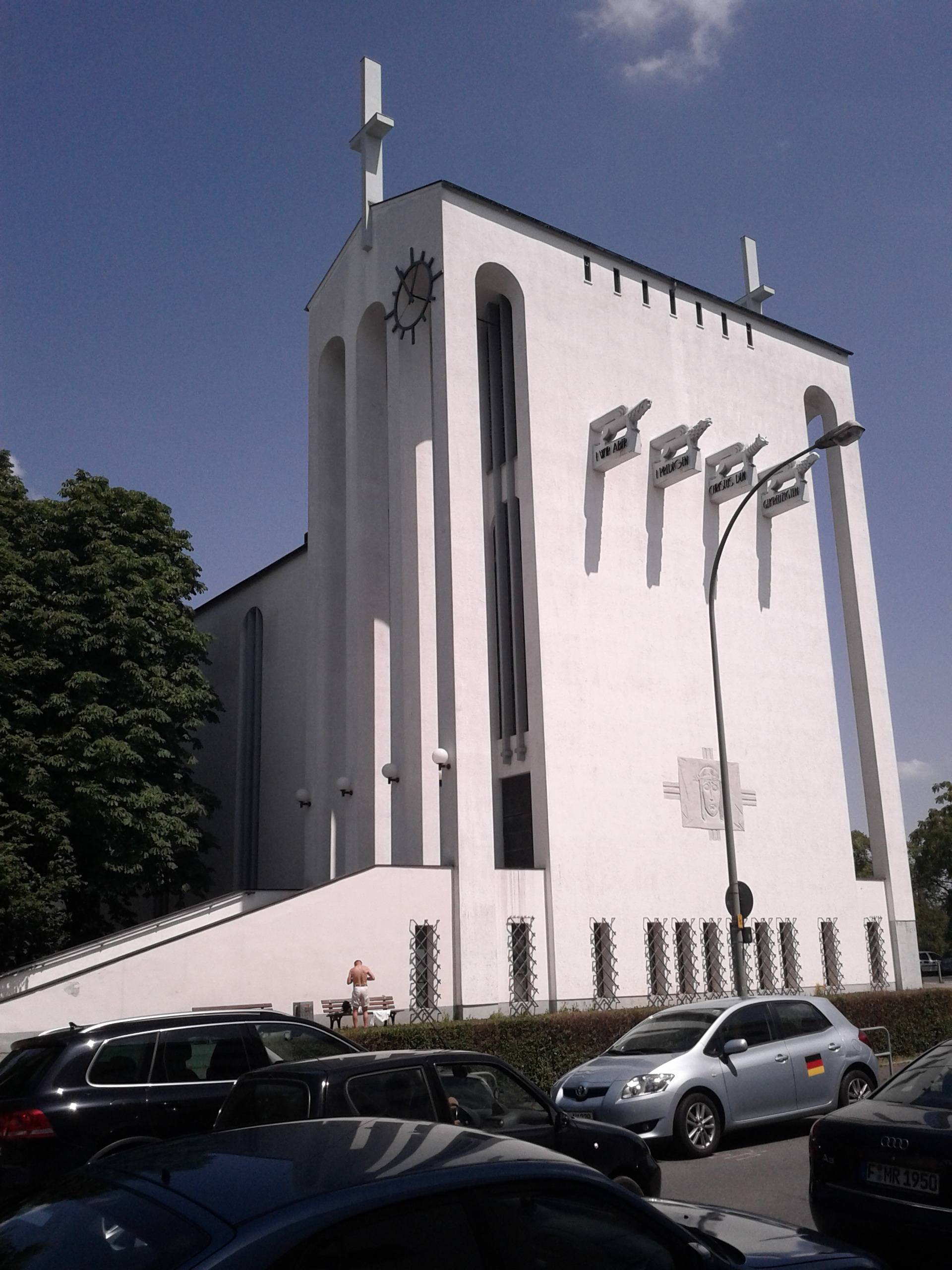
The first impact with this Siedlung is provided by the Church, a public building with the (maybe too obvious) task of delivering a landmark to the new settlement.

Right across the street the settlement borders with an open landscape of public gardens and small family gardens (Scherebergarten) and invaluable resource both for leisure time and for homegrown vegetables. 


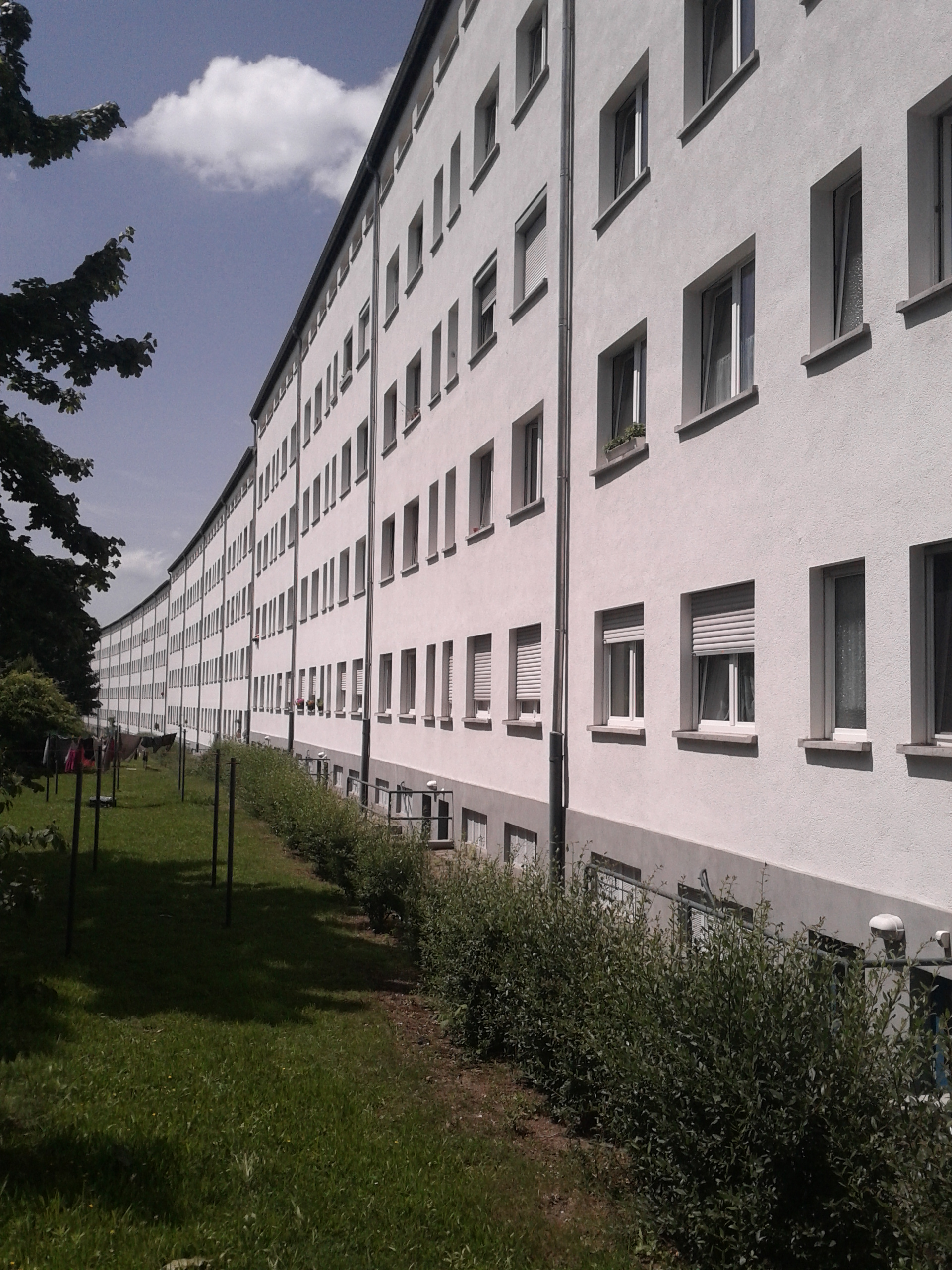
The facades look brand new and I guess the buildings became a new insulating layer and new windows in recent times, to comply with the strict energy saving norms. 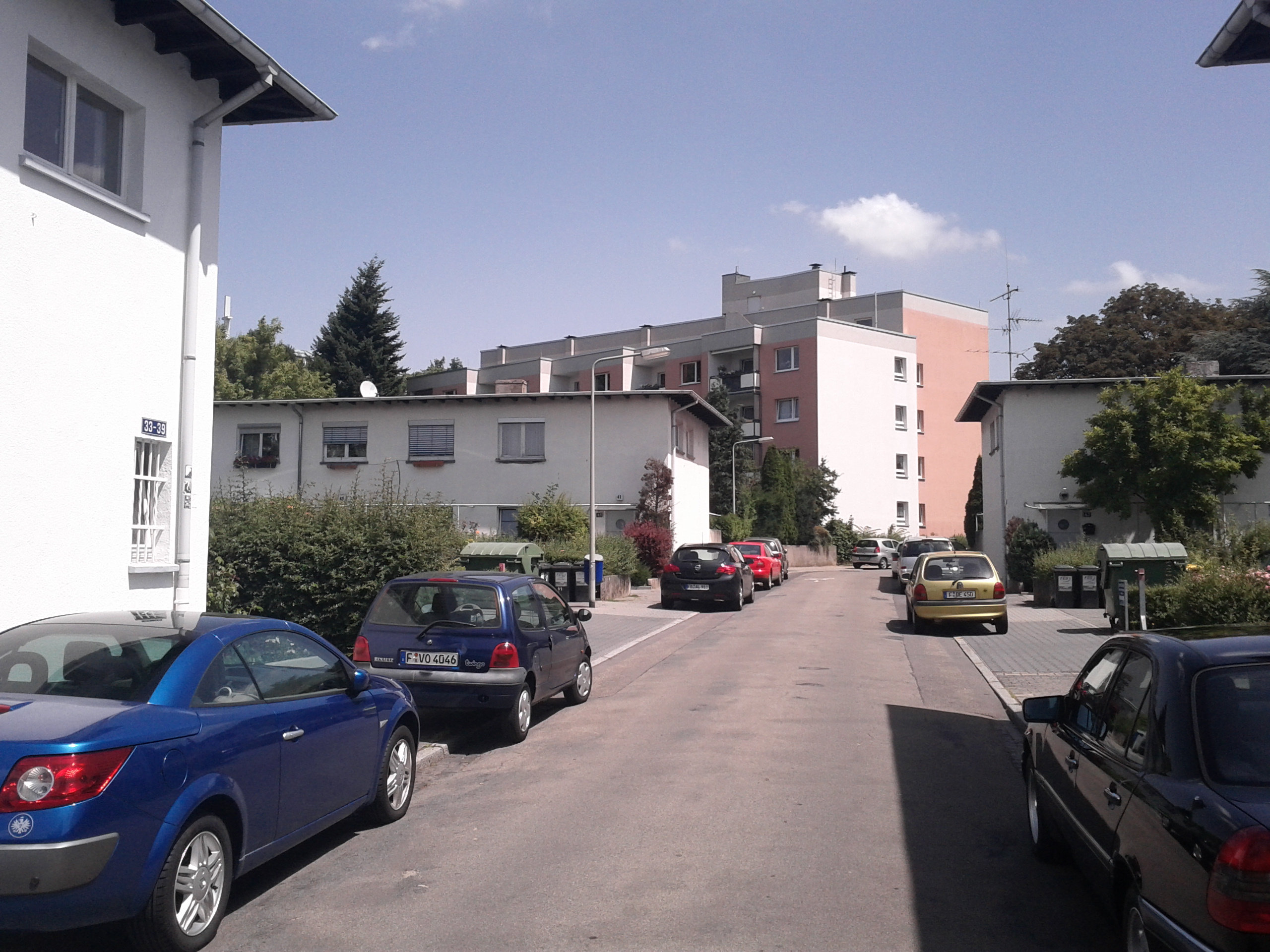

The buildings do not offer many stimulations in terms of details, materials and colours, on the contrary they are rather monotonous. The quality of this settlement is in urban design: proportions and relationship between public (street and pavement, parks, etc), semipublic (private garden, backyards) and private spaces.

Borders are clear, but also friendly and permeable. It is evident that urban culture and collective behaviour makes the public realm work and be even aesthetically appreciable. Should the residents lose their sense of ownership and the public administration stop taking good care of the infrastructure also this neighbourhood would rapidly become a degraded area, like many others social housing deprived neighbourhoods all over Europe.
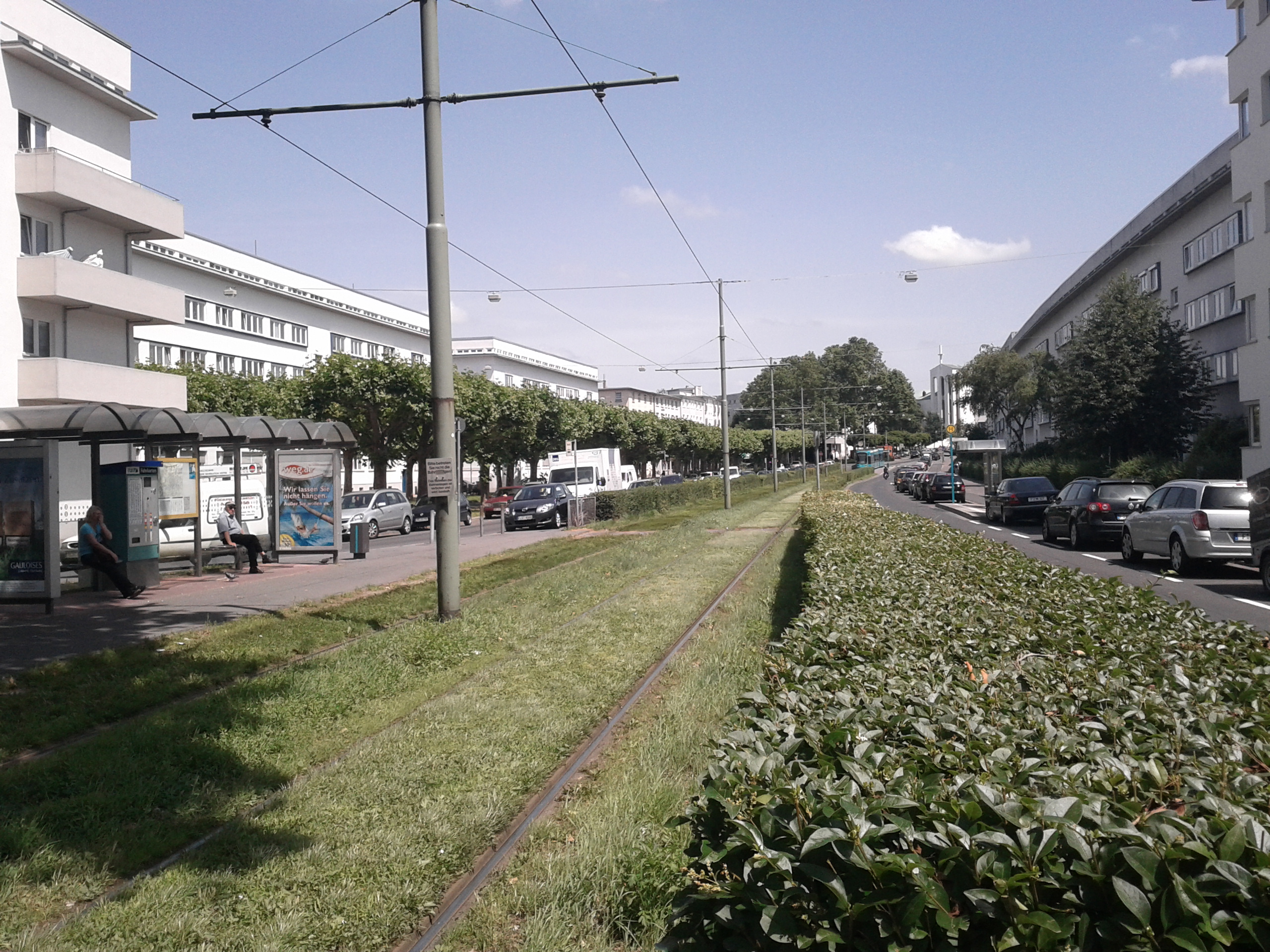

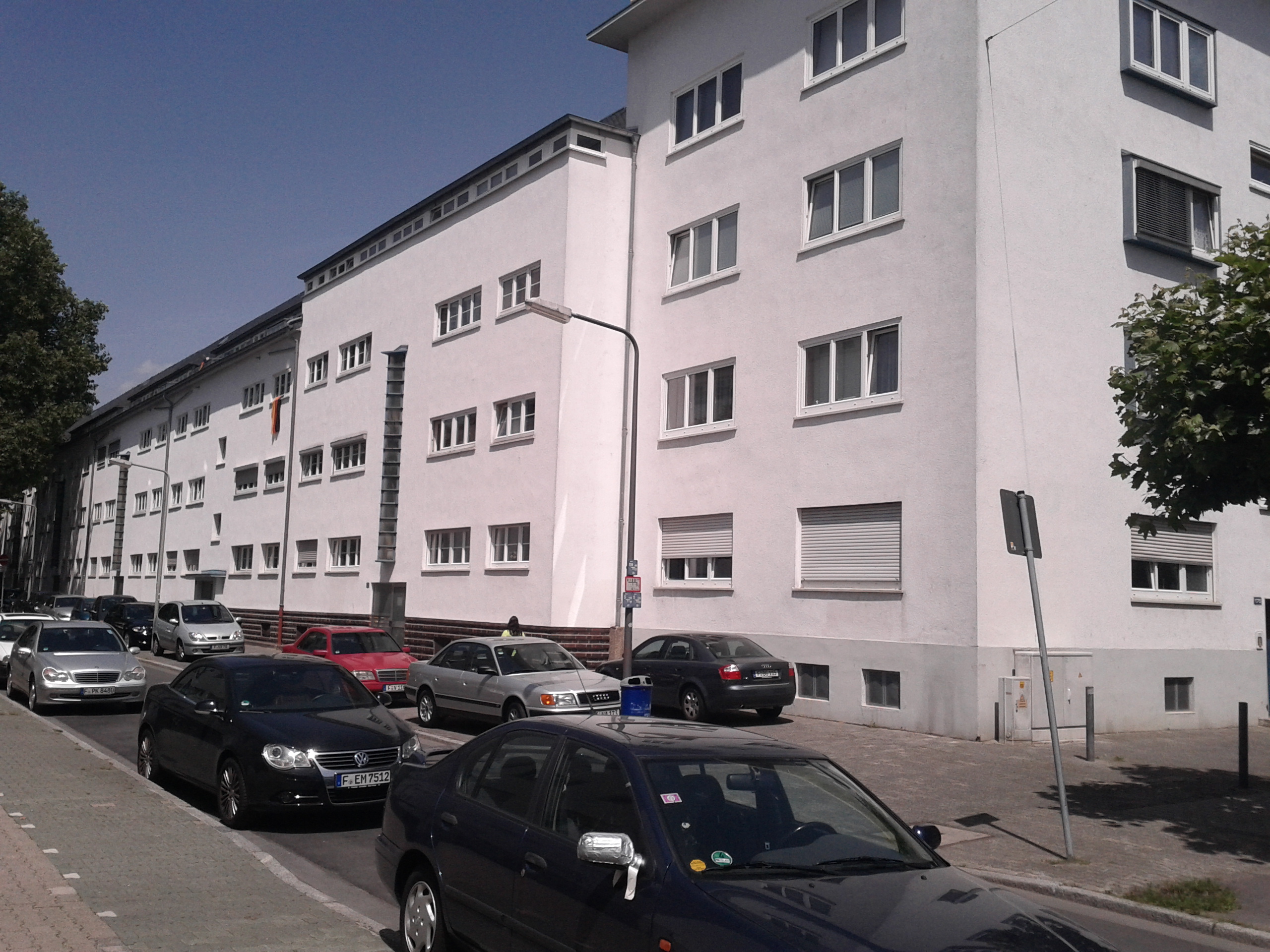
By the way it is worth noting that here parking is free, which is quite incredible for a city like Frankfurt. The good quality of public transport and responsible citizens behaviour makes restrictive regulations not necessary.

I have always been impressed by these warning signs that appeal to anything but our conscience. Judging from the graphic design they are there since decades, unchanged and effective! Even when I am in my homeland or elsewhere, thinking about crossing a street by red light, this warining comes to my mind (more or less it says ‘Crossing only by green light as a good example for kids’). 
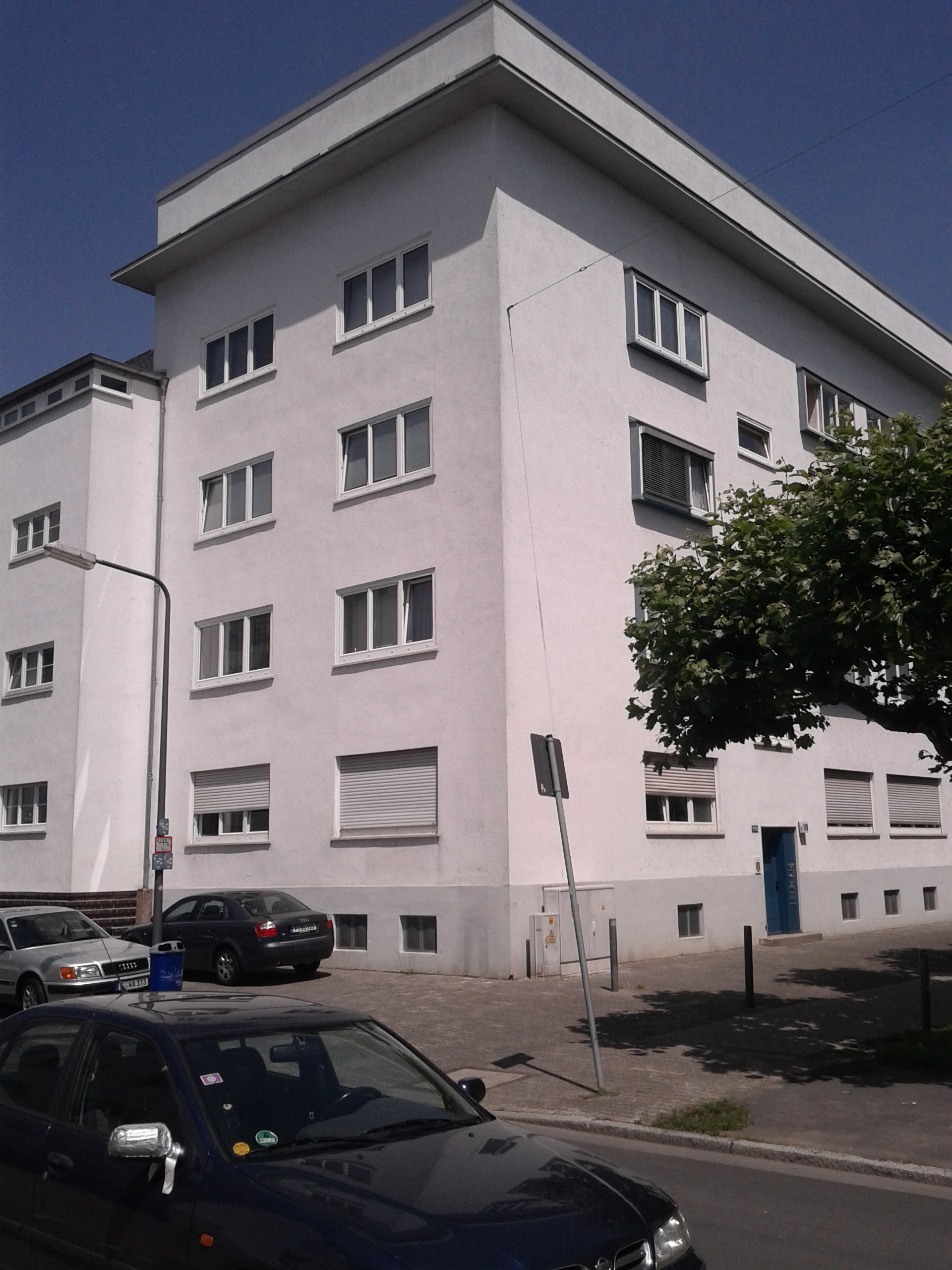
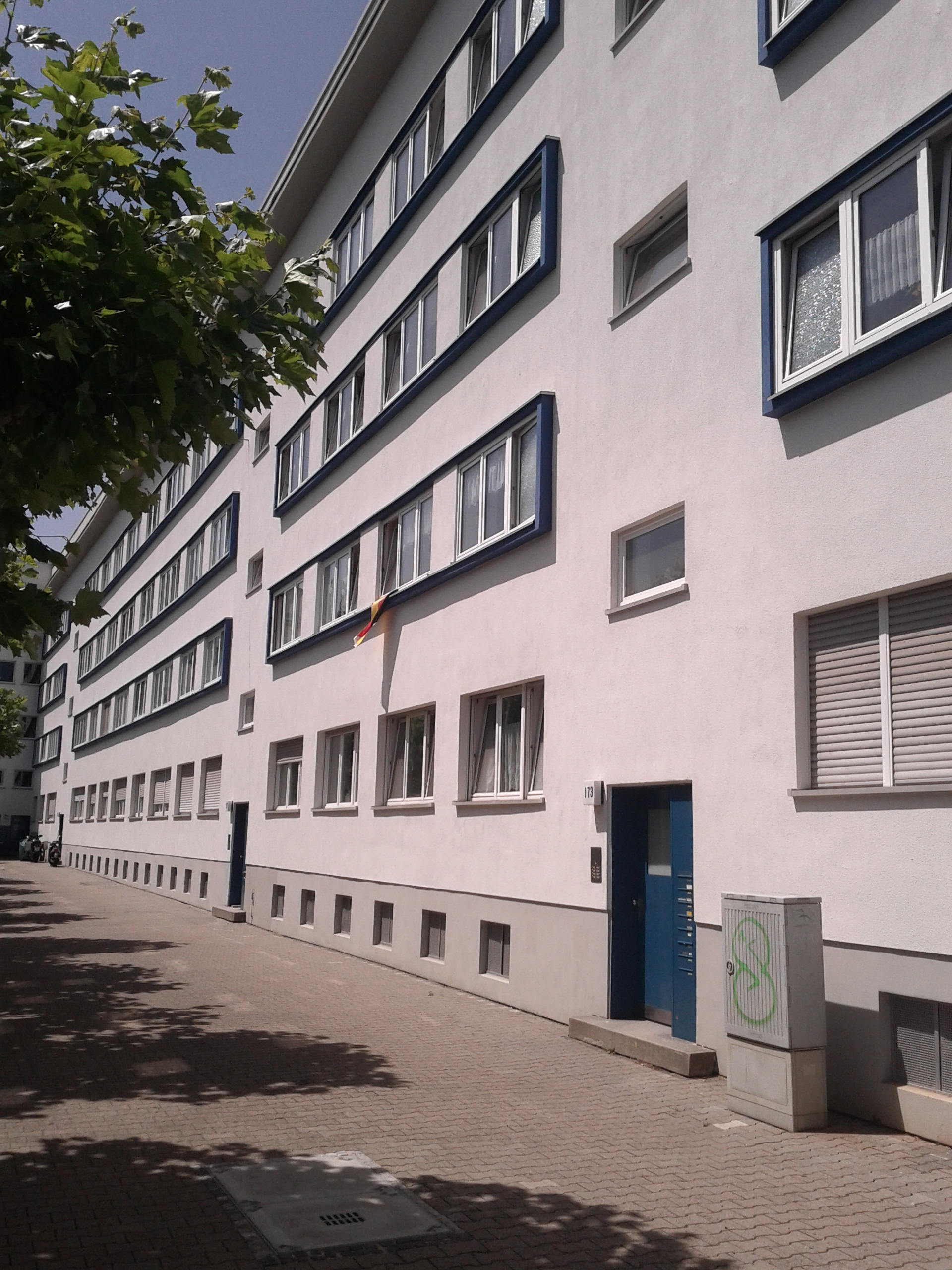

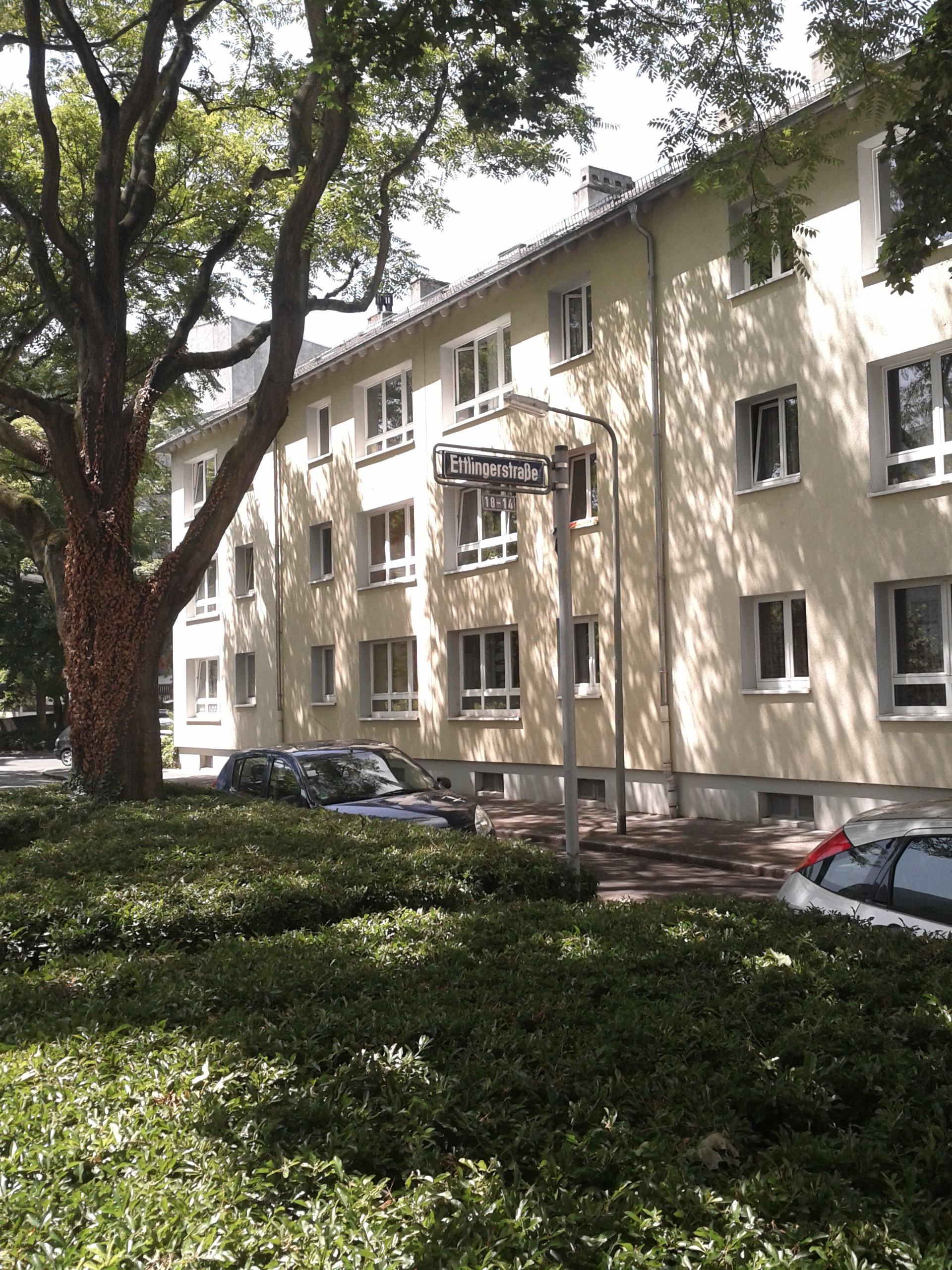

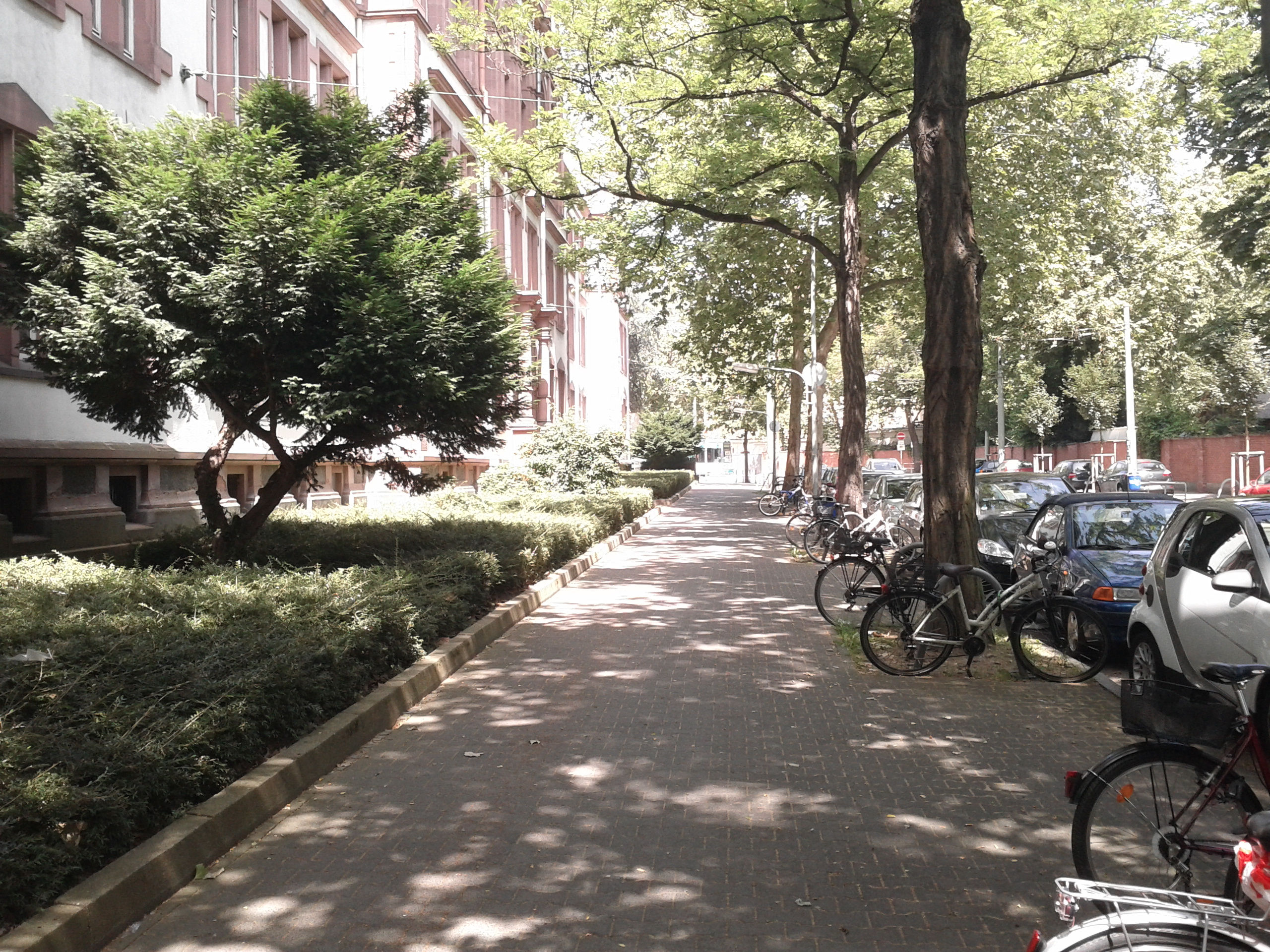
From the white modern architecture back to the traditional (Gruenderzeit) architecture of the Westend. 

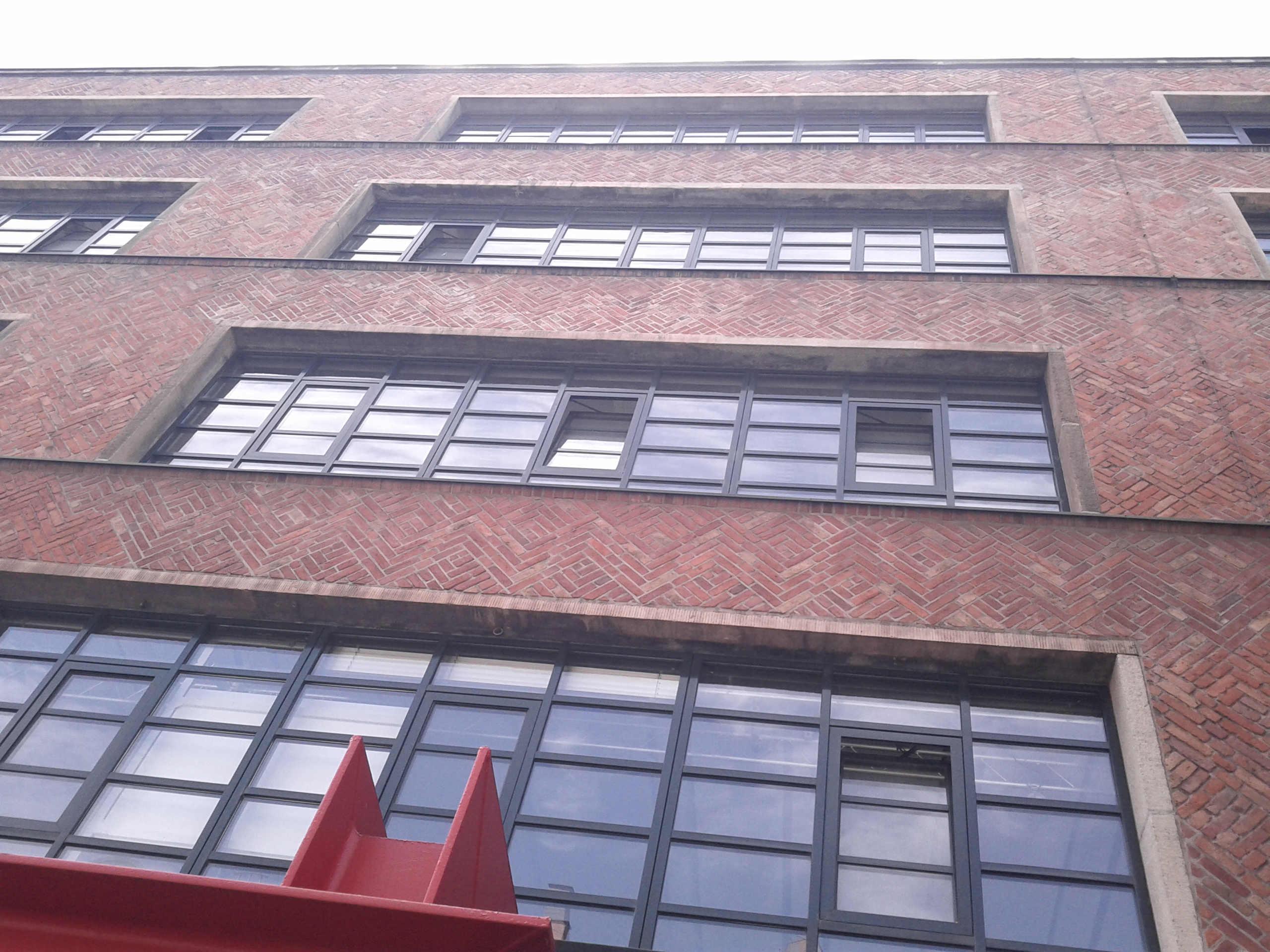
Here is another highlight of Bornheim, the Mousonturm, a former industrial building refurbished as a theater, famous for contemporary dance performances and music concerts. The bricks and terraced shape reminds me the Kita 124 (see above).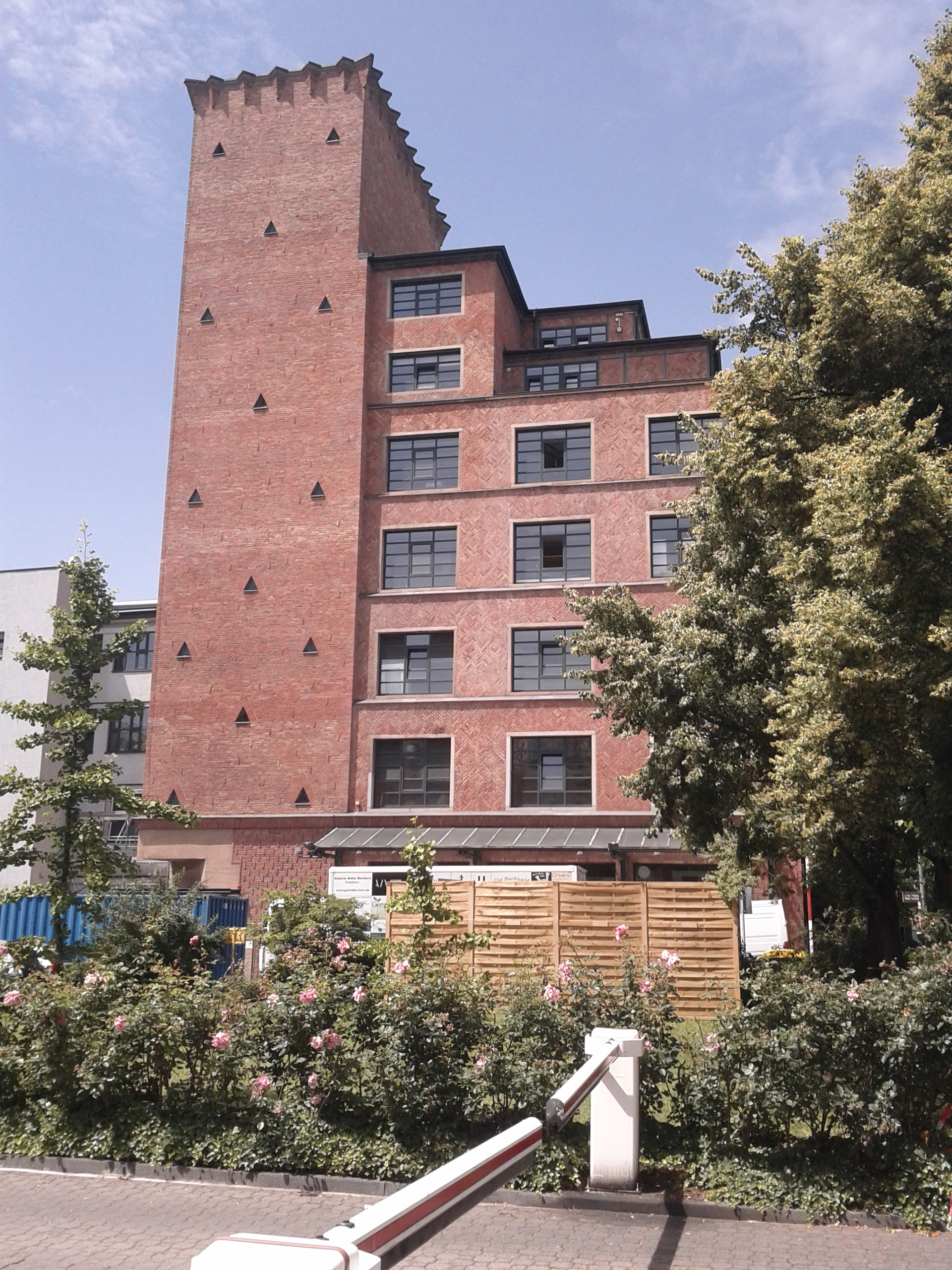

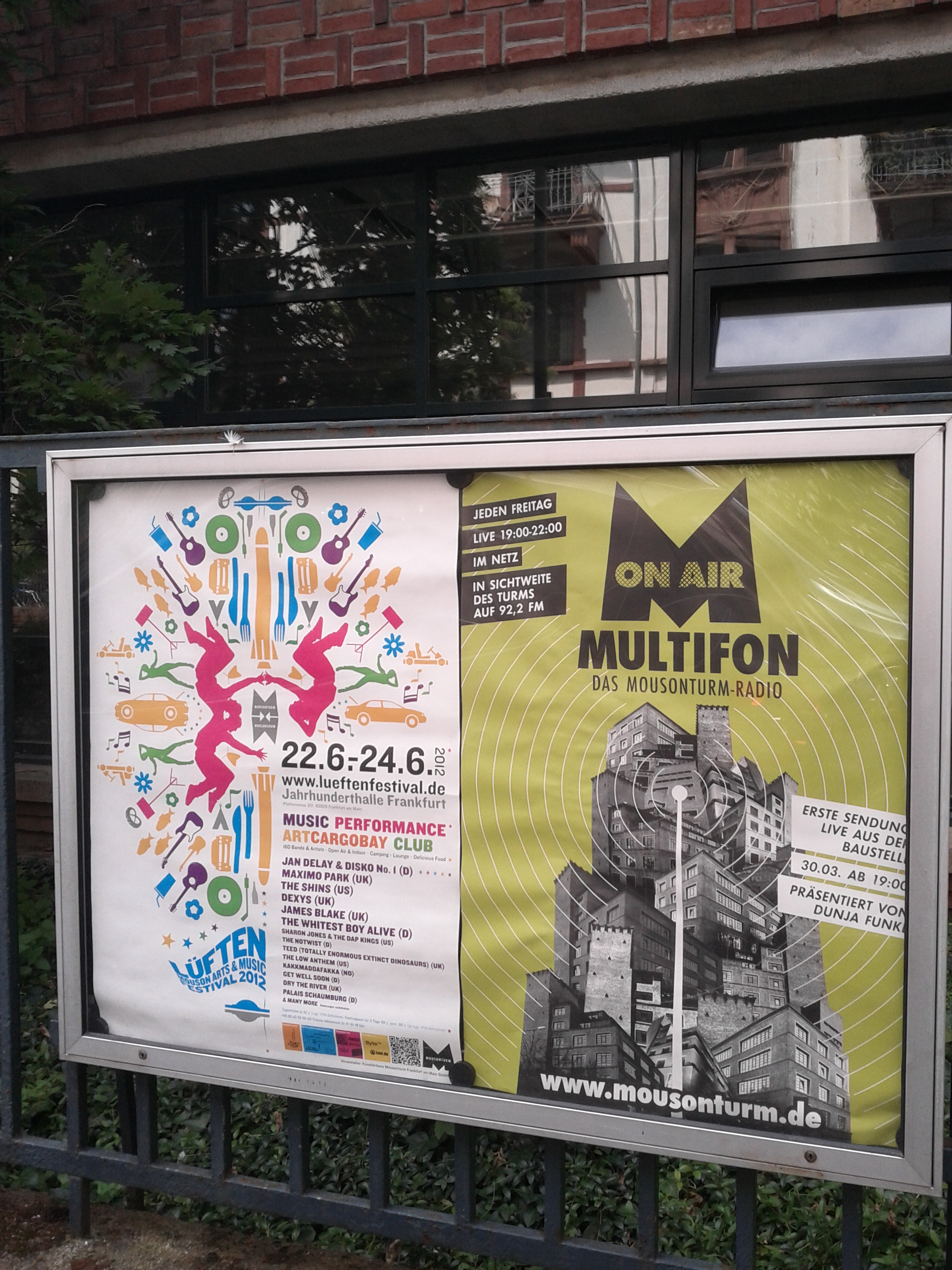
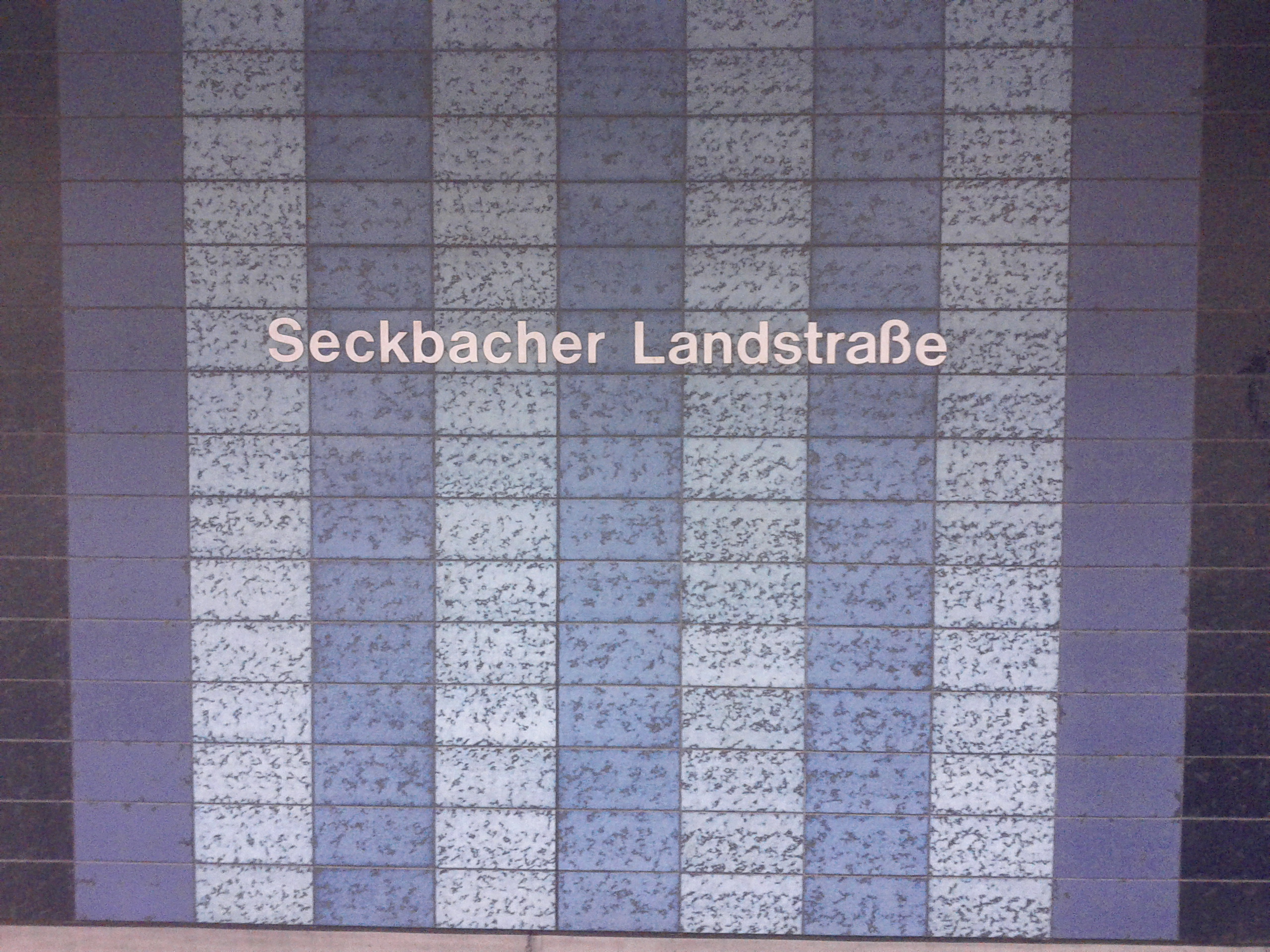
Frankfurt Seckbacher Landstrasse Underground
Marbled clinker bricks in different nuances of basic colours decorate the underground stations in Frankfurt and their sober furniture.

Below an interesting case of passengers adaptation to public realm’s colour concept 🙂
 Well Designed and Built